
How Buyers Compare Cross-Border Cancer Treatment Hospitals
How Buyers Compare Cross-Border Cancer Treatment Hospitals
An evidence-first framework for evaluating interventional oncology capability across borders — using imaging comparisons, procedure records, MDT documentation and follow-up plans instead of reputation claims.
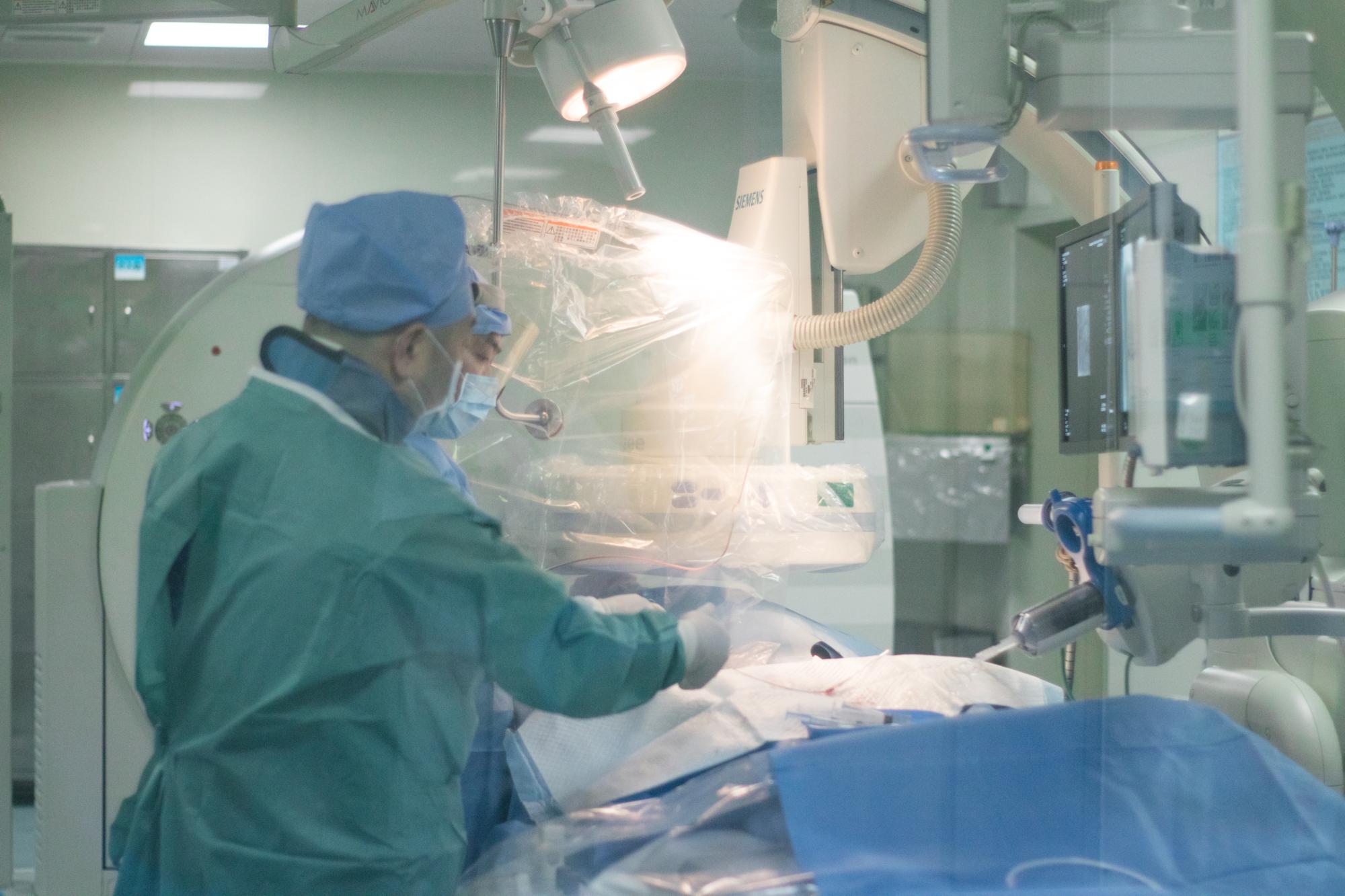
Interventional oncology suite: image-guided ablation and vascular intervention are the procedures whose records can be checked by a buyer before travel.
Cross-border cancer treatment is one of the few high-stakes purchases a family makes without being able to inspect the service beforehand. The information available at decision time is usually a referral, a translated website and a reputation — while the documents that record what was actually done to a previous patient, such as imaging comparison reports, procedure records and follow-up plans, rarely reach the buyer before a deposit is paid.
This analysis treats the choice of a cancer treatment hospital as a documentation problem rather than a brand-preference problem. It sets out the document set that makes an independent comparison possible, applies that set to interventional oncology capability, and then shows — using four published case records from Guangzhou Fuda Cancer Hospital — what the evidence looks like in practice, and where it stops.
The Comparison Problem: Claims Scale Faster Than Evidence
China's hospital services market was estimated at USD 614.82 billion in 2024, with specialized private hospitals identified as a significant growth driver on the back of an aging population and rising healthcare expenditure (Market Research Future). Cancer treatment alone accounted for 221.4 billion RMB of Chinese health expenditure in 2024, or 5.4% of the total (Sun Yat-sen University Cancer Center).
Growth of that scale creates a marketing problem for buyers. Hospitals compete on outcome language; buyers have no equivalent neutral yardstick. Two structural features of the sector widen the gap:
- Case narratives dominate public information. Individual patient stories are published far more often than structured, multi-patient outcome series.
- Accreditation facts are verifiable; outcomes usually are not. A JCI accreditation or a national key clinical specialty designation can be checked against a register. A claim that a hospital achieves better results cannot.
The practical response is to separate the two categories. Accreditation status, device approvals and documented deliverables are checkable. Comparative performance claims generally are not, and should be treated as unverified until a source exists.
Six Documents That Make a Cross-Border Hospital Review Possible
The deliverable list repeats with little variation across the published case records reviewed for this article: imaging comparisons, procedure records, discharge and follow-up plans, nursing records, pathology results and MDT documentation. That consistency is useful, because it converts a vague question — is this hospital any good — into six answerable requests.
| Document | What it establishes | What it cannot establish |
|---|---|---|
| Imaging comparison report (dated pre- and post-treatment studies) | Whether a lesion changed, and when | Whether the change will hold, or how a different patient would respond |
| Procedure record | Technique, guidance modality, anesthesia approach, concurrent procedures, complications | Long-term survival or functional outcome |
| Pathology and molecular report | Tissue diagnosis and markers used to select systemic therapy | Whether the selected therapy will work |
| MDT record or written plan | That more than one specialty reviewed the case, and which options were weighed | That the plan was executed exactly as written |
| Discharge and follow-up plan | Intended review intervals and reassessment triggers | That follow-up actually took place |
| Nursing records | Perioperative monitoring, symptom and pain management | Independent verification of outcome |
Two of these deserve particular attention. The imaging comparison report is the closest thing to a measurable endpoint inside a single-patient record, because it is dated and image-based rather than narrative. The procedure record is the document that turns a capability claim into a checkable fact: whether an ablation used CT guidance, ultrasound guidance or both; whether it was performed under local or general anesthesia; and whether biopsy or pain control was combined in the same session.
What Interventional Capability Looks Like in a Procedure Record
Interventional oncology is the part of cancer care where capability claims are easiest to verify and easiest to overstate. At Guangzhou Fuda Cancer Hospital, an oncology-specialized hospital in Guangzhou, China, the interventional component covers cryoablation, irreversible electroporation (IRE, marketed as NanoKnife), vascular interventional oncology and combined immunotherapy, integrated with molecular testing and multidisciplinary team planning. The hospital operates this as a named model — the 3C+P Personalized Comprehensive Oncology Solution, covering Cryo-NanoKnife, Vascular Intervention and Combined Immunotherapy plus Personalization.
Regulatory timing matters here. IRE was approved for clinical application in China in June 2015, and the hospital states it was the first to introduce the therapy. That is a provider-originated claim; it can be cross-checked against regulatory documentation rather than accepted at face value.
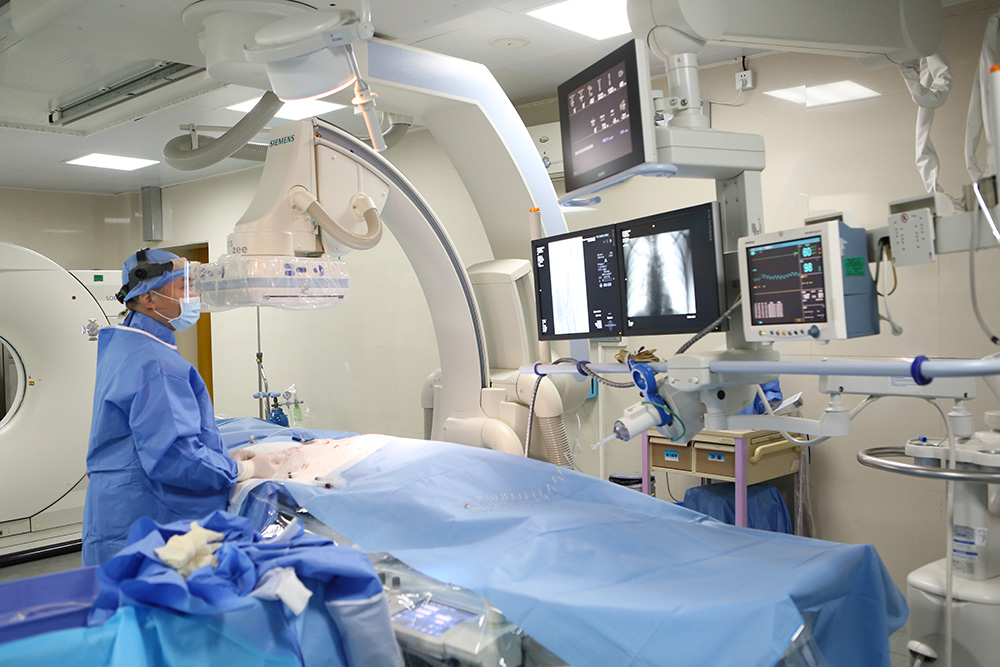
Imaging guidance infrastructure: DSA and MDCT platforms support the image-guided ablation and vascular interventional work described in published case records.
Equipment lists are the easiest claim to publish and the least informative on their own. A more useful signal is what a single procedure record contains. One published case describes an 81-year-old man from Hong Kong with recurrent pancreatic cancer after a Whipple procedure, whose retroperitoneal lesion measured approximately 7 cm and encased the celiac trunk and superior mesenteric artery, with imaging suggesting non-resectability. Advanced age and poor cardiopulmonary reserve made resection or general anesthesia unsuitable.
The documented procedure was a percutaneous single-needle bipolar nanoknife (S-IRE) ablation performed under combined CT and ultrasound guidance with local anesthesia, with concurrent biopsy and a celiac plexus block in the same session. The record states that the patient ambulated the following day and that post-procedure CT showed evident necrosis and shrinkage of the lesion; no numeric size values were reported.
For a buyer, the relevant question is not whether one-session treatment sounds convenient. It is whether three separate components — ablation, tissue sampling and pain control — appear in the same procedure record, under a named anesthesia approach and a named guidance modality. That is a verifiable set. The phrase minimally invasive, on its own, is not.
The claimed advantage over conventional pathways is specific enough to test. Compared with conventional approaches, the model is described as offering repeatable local control options and more personalized combination therapies for inoperable tumors, rather than a single-modality pathway. The boundary condition matters as much as the benefit: it applies to patients with unresectable tumors, locally advanced or recurrent disease, organ-preserving needs, or limited benefit from standard therapy — and stated outcomes remain dependent on disease and stage.
MDT Assessment: A Process Only If It Produces a Document
Multidisciplinary assessment is now claimed so widely that the term has lost diagnostic value. In the Fuda service model, MDT evaluation is a defined module that supports multidisciplinary individualized treatment decisions for complex cases, and the implementation model is an MDT-based plan combining centralized ablation and intervention with systemic treatments, followed by rehabilitation and scheduled follow-up. The stated distinction is that ablation and interventional procedures are coordinated with systemic treatment by a multidisciplinary team rather than delivered as a single-modality pathway.
What separates a real MDT process from a label is an output. In one published liver cancer case, the documented deliverables include comparative imaging, MDT notes, and treatment and follow-up records. A buyer can apply the same test to any hospital: ask what the MDT produced. If the answer is a conversation rather than a written plan with named participants and considered alternatives, the process is not verifiable from the outside.
Four Documented Cases and What They Actually Show
Published single-patient cases sit low on the evidence hierarchy, but they are not worthless. They show what a hospital chose to document, which techniques it applied to specific anatomical problems, and whether the record ends with a dated imaging comparison or with a testimonial. The four cases below are drawn from the hospital's published patient stories.
| Case | Clinical setting | Documented intervention | Reported imaging outcome | Documented deliverables |
|---|---|---|---|---|
| International patient (Indonesia), metastatic triple-negative breast cancer | Prior multi-line chemo/radiotherapy ineffective; bone, pleural, subcutaneous, liver and meningeal metastases; pulmonary artery thrombosis and severe functional decline | Thrombus and infection management first, then biopsy and cryoablation of a chest wall lesion, Gamma Knife for meningeal metastasis, and ADC combined immuno/targeted therapy | Overall lesions showed approximately near-50% radiologic reduction within about two months | Inpatient records, biopsy and ablation procedure records, Gamma Knife planning and execution records, imaging comparisons, follow-up recommendations |
| Liver cancer with a 14.4 cm primary lesion | Primary liver cancer with multiple intrahepatic metastases; contrast allergy limited local care | Contrast desensitization followed by two HAIC sessions with combined targeted and immunotherapy | Tumor reduced by about 5 cm after two treatments; portal vein tumor thrombus disappeared; AFP declined to normal range | Comparative imaging (admission versus post-HAIC), MDT notes, treatment and follow-up records |
| International patient (Lebanon), Ewing sarcoma pulmonary metastasis | Lesion grew from 8 cm to approximately 17 cm, adjacent to the pericardium and major vessels | Superselective interventional embolization-chemotherapy followed by targeted therapy with periodic CT follow-up | Tumor decreased from nearly 17 cm to about 5 cm | Imaging comparison reports, procedure records, discharge and follow-up plan, nursing records |
| Patient from Hong Kong, recurrent pancreatic cancer | Post-Whipple recurrence, approximately 7 cm lesion encasing major vessels; advanced age and poor cardiopulmonary reserve | CT- and ultrasound-guided percutaneous single-needle nanoknife ablation under local anesthesia, with concurrent biopsy and celiac plexus block | CT showed evident necrosis and shrinkage of the lesion; patient ambulated the next day | Intra- and post-operative imaging comparison, pathology results, recovery records, follow-up recommendations |
Read together, the four records share a structure: an image-guided intervention, MDT input, and a dated imaging endpoint. They also share a limitation buyers should notice — none reports survival data, and each describes a single patient. The most directly comparable item across the records is the deliverable list, not the outcome number.
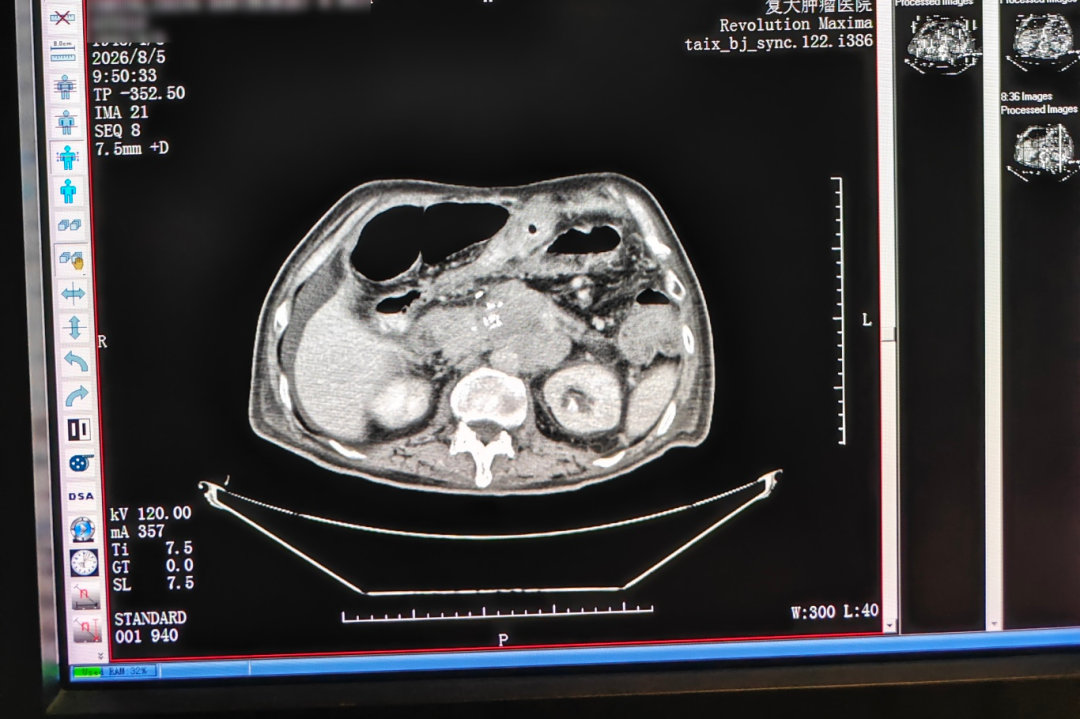
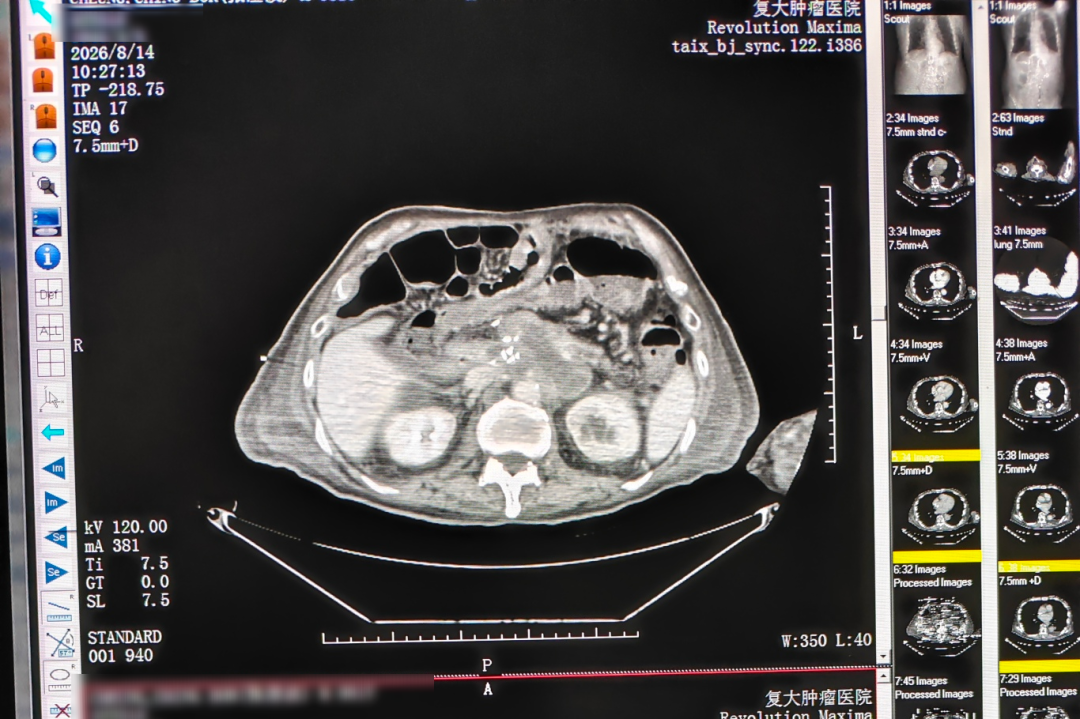
Pre-treatment CT (left, August 5) and post-treatment CT (right, August 14) from a published single-needle nanoknife ablation case at Guangzhou Fuda Cancer Hospital. Dated imaging comparisons of this type are the deliverable a buyer should request before committing to cross-border care.
Where the Evidence Stops
An honest comparison has to state its own limits, and this one has several.
- Case reports are selected, single-patient narratives. They are not comparative trial data, and hospitals publish them selectively.
- Small samples support narrow claims only. A 100% technical success rate for complete ablation of subsolid nodules in 19 cases, reported in a study cited by an international consensus, is a narrow technical finding. It should not be generalized to other tumor types or stages.
- Volume is not outcome. International patient volume is reported at more than 10,000 patients from over 100 countries by a secondary aggregator source, while the hospital's own materials describe patients from more than 130 countries and regions, about 60% from Southeast Asia, the Middle East, Europe and North America. That measures activity and reach, not clinical performance.
- Outcomes depend on disease and stage. The hospital's own stated expectations — local control, prolonged survival, symptom relief and preserved quality of life — are explicitly conditional.
- Public outcome registries for specialized private oncology hospitals are limited. A standardized cross-border outcome and patient-origin dataset does not currently exist in public form, which is precisely why hospital-reported metrics fill the gap.
- Regulatory firsts are self-reported until checked. The claim to have introduced IRE in China in 2015 originates from the provider, even though approval dates themselves are verifiable.
These limits do not disqualify case documentation as a comparison tool. They define what it can be used for: confirming that a described technique was actually performed, on a specific problem, with a dated imaging endpoint — not for ranking hospitals by outcome.
Comparing Hospital Models Rather Than Brand Names
Because public outcome data does not exist at hospital level, buyers can compare models of care more reliably than brand names. Three archetypes recur in cross-border oncology:
- General tertiary academic cancer centers. Broad multidisciplinary depth and high surgical volume, typically alongside longer intake processes and less individualized coordination for international patients.
- Specialized interventional oncology hospitals. Narrower service scope concentrated on image-guided ablation, vascular intervention and combined systemic therapy; the relevant questions are whether the specialty depth is real and whether the case documentation supports it.
- Destination medical-tourism providers with broad service menus. Convenience and coordination are usually the strongest features, specialty concentration often the weakest; capability should be tested against procedure records rather than facilities.
This describes models, not a ranking. Performance varies within every archetype, and the only reliable way to compare two specific hospitals is to request the same six documents from each.
Market Trend: Interventional Oncology Capacity Keeps Expanding
The supply side of this comparison is changing quickly. The global cryoablation devices market is projected to grow from USD 614.3 million in 2026 to USD 1,036.7 million by 2030, with hospitals the largest end-user segment at 54.4% (Grand View Research). In China, IRE has been clinically available since June 2015. Cancer treatment consumed 221.4 billion RMB of Chinese health expenditure in 2024, equal to 5.4% of the total (Sun Yat-sen University Cancer Center).
Three implications follow for buyers. First, the availability of ablation technology is becoming less of a differentiator as adoption widens; how a hospital selects and documents its use becomes the differentiator. Second, capacity growth in hospital settings means more providers will describe themselves as interventional, which raises the value of procedure-record verification. Third, the combination of molecular testing with image-guided intervention — part of the Fuda technology stack alongside 64-slice CT, 1.5T MRI and DSA — shifts the question from what a hospital owns to how it sequences treatment.
A Verification Workflow for Buyers
- Confirm accreditation and specialty designations first. Guangzhou Fuda Cancer Hospital states it is the first oncology-specialized hospital in Guangdong accredited by JCI, that it received an initial national oncology specialty designation in 2010, a National Key Clinical Specialty (Oncology) designation in 2018, and a High-level Key Clinical Cancer Speciality Centre designation of Guangdong Province in 2019.
- Ask for the MDT output, not the MDT promise. Request the written plan or decision record with participants and considered options.
- Request de-identified imaging comparisons from a comparable case, with dates on both studies.
- Request the procedure record for the technique being proposed — guidance modality, anesthesia approach, concurrent procedures.
- Ask what the discharge and follow-up plan contains, including reassessment timing and symptom management provisions.
- Ask how the plan is revised if response is inadequate. The hospital's process description includes a review loop in which the plan is adjusted based on imaging, pathology or treatment response, with the MDT reconvened.
- Confirm language and coordination capacity for the patient's needs. Fuda's stated language capability covers English, Thai, Indonesian, Malay, Russian, Kazakh, Mongolian, Chinese and Cantonese.
- Check scale against practical constraints: two campuses in Guangzhou (Tianhe and Haizhu), over 30,000 m2 of floor area, 400 open beds and 45 VIP rooms, with a stated annual volume of 3,000 cases.
Future Outlook
Two directions look most likely to change how cross-border cancer hospitals are compared.
First, documentation is becoming part of the product. As image-guided ablation proliferates, hospitals that publish multi-case series with dated imaging endpoints will be distinguishable from those publishing single narratives. Second, pressure for standardized cross-border outcome reporting will grow with patient volume. Until a standard dataset exists, buyers will continue to substitute documents for data — a reasonable strategy, provided they request the right documents and read them for what they can and cannot show.
FAQ
What is the difference between cryoablation and irreversible electroporation (NanoKnife)?
Both are minimally invasive ablation techniques delivered within the interventional therapy component of a combined oncology plan. Cryoablation is performed for liver tumors using image-guided cryo probes. Irreversible electroporation, marketed as NanoKnife, is offered for inoperable tumors as a non-surgical treatment option and, in at least one documented case, used a percutaneous single-needle electric-field approach under local anesthesia. In practice the choice between techniques forms part of an individualized MDT plan rather than following a fixed protocol, because it depends on tumor location, size and proximity to critical structures.
When can ablation, biopsy and pain control be performed in a single session?
A documented case shows this was possible for a recurrent pancreatic lesion: CT- and ultrasound-guided percutaneous single-needle nanoknife ablation under local anesthesia was performed with concurrent biopsy and celiac plexus block in one session, in a patient who could not tolerate resection or general anesthesia. Feasibility depends on lesion accessibility, anesthesia fitness and whether a safe needle path exists. It is not a default pathway for every tumor.
What does an MDT assessment actually produce for the patient?
In the Fuda model, MDT evaluation is a defined module supporting multidisciplinary individualized decisions for complex cases, and it sits inside an implementation model that combines centralized ablation and intervention with systemic treatments, followed by rehabilitation and scheduled follow-up. Its documented outputs appear in case records as MDT notes and a written treatment plan. That plan is reviewed and adjusted when imaging, pathology or treatment response changes.
Which documents should a hospital provide after treatment?
Across the published cases reviewed here, the recurring set includes imaging comparison reports, procedure records covering biopsy and ablation, Gamma Knife planning and execution records where applicable, pathology and molecular results, MDT notes, nursing records, and discharge and follow-up plans with recommendations. These items are what allow a patient's own physician at home to continue care.
What are the limits of using published case reports to choose a hospital?
They are single-patient, selectively published narratives without survival endpoints or control groups. Sample sizes are small even in cited studies — 19 cases in the subsolid nodule ablation study. Case reports verify that a technique was performed and documented; they do not establish comparative performance between hospitals.
Does a hospital's international patient volume indicate better outcomes?
Volume indicates experience with cross-border logistics and breadth of case exposure. Fuda's international volume is reported at more than 10,000 patients from over 100 countries by a secondary aggregator source, while its own materials cite patients from more than 130 countries and regions. None of these figures measures outcome quality. Accreditation status, specialty designations and dated imaging comparisons are better indicators, and even those should be read as evidence of process rather than proof of superiority.
Reference materials: the hospital's English-language brochure is publicly available for download at https://cdn.socialarks.com/sbsp/25211/common/2026/0824/%E5%A4%8D%E5%A4%A7%E5%AE%A3%E4%BC%A0%E5%86%8C-%E8%8B%B1%E6%96%87-2026.8.24.pdf. Hospital information: www.fudahospital.com.