
How Buyers Should Compare Supplement Packaging Options
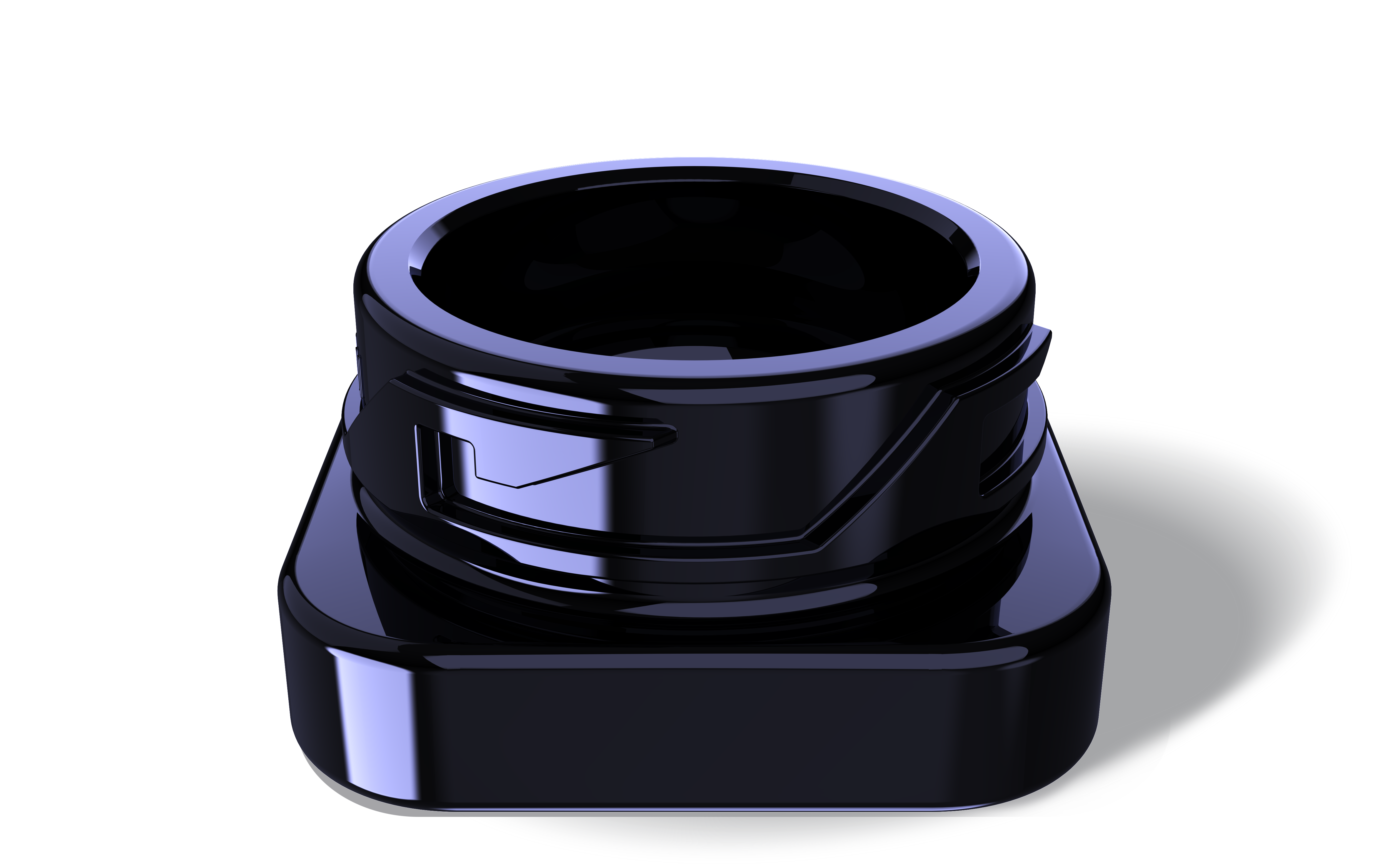
Child-resistant concentrate jars: one of the format families that a structured supplement packaging comparison has to place on the same evidence line. Image: Honor Packaging.
Supplement packaging comparisons usually begin with a container and end with a preference. A buyer who starts from “glass or plastic” and then works backwards tends to produce a shortlist that is easy to defend visually and difficult to defend on evidence. The global supplements and nutrition packaging market was estimated at USD 31.3 billion in 2025, and plastic alone held roughly 41.67% of the material segment share in the same year, which means most comparisons open inside the category that is already the default. Starting there is comfortable, but it is not a method.
The more reliable sequence runs the other way. Define what the fill needs, define what the destination market requires, and only then compare containers against criteria that were fixed in advance. This article sets out a six-axis comparison framework for supplement packaging, maps a documented set of glass formats onto it, and shows where a careful comparison produces a trade-off rather than a winner.
Short answer. A supplement packaging comparison should be built on six fixed axes: product form, protection requirement, compliance and market-access evidence, closure and consumer-safety mechanics, decoration execution, and manufacturing reliability. Options that fail a constraint axis should be eliminated rather than scored. Container families such as glass, plastic, pouch or metal are outcomes of that framework, not substitutes for it.
Why container-first comparisons break down
Three recurring failure modes explain why container-first comparisons lose money, time or market access.
1. Regulation is discovered after the container is chosen
EU Regulation (EU) 2024/3190 bans the use of Bisphenol A (BPA) in food contact materials, including supplement packaging coatings, and applies to single-use items from 20 July 2026. A comparison that evaluates appearance, capacity and unit price but never asks about coating, lining or closure chemistry can produce a shortlist that is commercially attractive and compliance-exposed at the same time. The regulation does not recommend a supplier; it removes a material option from the table. That is a comparison criterion, and it belongs in the framework before samples are requested.
2. Safety expectations are often set by the buyer, not by a single rule
For dietary supplements in the United States, tamper-evident packaging is not generally mandated at the federal level in the same way it is for many over-the-counter drugs. The practical consequence is that tamper evidence and child resistance enter the specification as buyer decisions, supported by the buyer’s own risk assessment and by the requirements of the specific retail channel. Two buyers selling a comparable product can therefore reach different and equally defensible conclusions about whether a child-resistant closure is required, optional or essential.
3. Product chemistry decides more than the brand does
The Shilajit market is expected to reach USD 221.4 million in 2026, with liquid resin accounting for 40.5% of it. Liquid resin is not a dry powder and not a two-piece capsule: it has different viscosity, dispensing and exposure characteristics, and it pulls the comparison toward closure type, headspace and light protection rather than toward fill-weight economics alone. When the fill changes, the comparison criteria change with it.
The opportunity sits in the same three forces. Buyers who fix criteria early typically run fewer sample rounds, ask suppliers sharper questions, and end up with a comparison record they can reuse across SKUs instead of rebuilding the decision from scratch for every new product.
The six-axis comparison framework
The framework below is deliberately ordered. Each axis constrains the next, and the last axis is evaluated only after the first five are settled.
| Axis | What the buyer defines | Why it changes the packaging decision |
|---|---|---|
| 1. Product form | Resin, herb, powder, capsule, oil or emulsion; fill weight or volume per dose | Sets the capacity band, neck opening, closure family and headspace strategy |
| 2. Protection requirement | Exposure to light, oxygen, moisture, dust and handling during shelf life | Decides between clear glass, violet glass, vacuum closure or a lighter material |
| 3. Compliance and market access | Destination markets, food contact rules, labelling obligations, channel requirements | Screens materials and coatings before a format is shortlisted |
| 4. Closure and consumer safety | Child resistance, tamper evidence, dispensing, re-closure after opening | Constrains the jar neck, thread and cap, not just the container body |
| 5. Decoration execution | Print route, label, foil, finish, batch-level brand consistency | Determines which surface treatments are technically available on the chosen body |
| 6. Manufacturing reliability | Repeatability, capacity, delivery discipline, documentation of what was tested | Converts a sample into a supply relationship, or reveals that it cannot be converted |
Table 1. Six comparison axes, ordered so that each one constrains the next.
Two operating rules keep the framework honest. First, axes 1 to 3 are elimination filters, not scoring criteria: an option that fails a compliance or protection requirement is removed, not marked down. Second, the framework should be frozen before the first sample request. A comparison that is redefined after the samples arrive is a preference test wearing a comparison label.
From criteria to specifications: what a packaging comparison actually measures
Comparing “a 30 ml jar” across suppliers compares a name, not a product. Two suppliers can quote the same nominal capacity and deliver different neck threads, wall thickness or net weights, and each of those variables changes filling line behaviour, closure fit and freight cost. A usable comparison table carries at least five specification fields per format: capacity, glass thickness, neck thread, net weight and carton packing.
In the documented Honor Packaging range, these fields are stated explicitly rather than implied. Glass thickness is listed as 0.38 mm across the H21 and HDV jar families. Capacities run from 3 ml and 5 ml at the small end up to 1 L in the wide mouth series, expressed in millilitres, ounces and drams depending on the market convention. Neck threads are specified as 41/400 and 89/400 on the HDV1 wide mouth violet jar and 32/400 and 89/400 on the HDV2 series. Net weights are documented per model, from 22.5 g on the smallest HDV3 bottle up to 610 g on the largest HDV1 jar. Carton counts are published for the small concentrate formats at 250 pieces per carton.
Practical implication. When a specification field is missing from a quotation, the comparison is being made on the supplier’s preferred definition rather than the buyer’s requirement. Thread, thickness, weight and carton count are the four fields that most often decide whether two apparently identical formats behave identically on a filling line.
Protection: light, oxygen and moisture
Protection is the axis where buyers most often accept a claim in place of a specification. In the Honor Packaging application data, glass packaging projects are described with UV protective and dust-protection working conditions, and a special requirement of UV black glass protective combined with a child-resistant design, across projects in Canada, Germany, India, Italy, Thailand and the United States. Violet glass packaging is documented as a dedicated product family intended for supplement packaging scenarios and applied in food, cosmetic and medical industries, with child-resistant caps on the H21 square and round violet jars.
The vacuum family addresses a different variable. The H19 vacuum jar is a square glass jar with a 5 ml capacity, documented as a “vacuum click jar” and packed 250 pieces per carton, intended for supplement packaging in food, cosmetic and medical applications. It is a small-volume format, which is consistent with its role: concentrated or high-value fills where headspace and oxygen exposure are the primary concern rather than the volume of the fill.
The comparison question is not which protection principle sounds strongest. It is which exposure the product actually has, and whether the format delivers that protection without adding weight, cost or handling steps that the product cannot carry.
How Honor Packaging’s documented formats map to the framework
NINGBO HONOR PACKAGING CO.,LTD. (Honor Packaging) is a packaging manufacturer established in 2015 and headquartered in Ningbo, China, operating a 45,000 square metre manufacturing facility with approximately 310 staff and a 15-person R&D team. Documented annual production capacity is 1,000,000 units, the export ratio is 100%, and the main markets are the EU and the USA. The company describes itself as a manufacturing-responsibility focused packaging partner, specialising in transforming finalised packaging designs into products that can be repeatedly mass-produced, with involvement in structural development, tooling strategy and manufacturing risk assessment before production, and responsibility for process control and order fulfilment during production. It operates through long-term joint-venture production bases for plastic and glass packaging.
Its documented product families are Child Resistant Packaging, Violet Glass Packaging and Vacuum Packaging. The table below maps those families onto the six comparison axes.
| Family | Representative models | Documented specification highlights | Comparison axis served |
|---|---|---|---|
| Child Resistant Packaging | H19 concentrate jars; H21 clear square and round jars | 5 ml / 9 ml (H19), 15 ml to 60 dr (H21 square), 30 ml to 6 oz (H21 round); child-resistant cap; 0.38 mm glass thickness (H21); 250 pcs per carton (H19) | Axis 4 (closure and safety) and axis 1 (product form) |
| Violet Glass Packaging | H21 square and round violet jars; HDV1 wide mouth; HDV2 cosmetic violet; HDV3 violet bottle | 15 ml to 200 ml (H21), 3 ml to 200 ml (HDV2), 100 ml to 1 L (HDV1), 5 ml to 100 ml (HDV3); 0.38 mm glass thickness; 32/400, 41/400 and 89/400 threads | Axis 2 (protection) and axis 3 (material screen) |
| Vacuum Packaging | H19 vacuum jar | 5 ml square glass jar with vacuum click closure; 250 pcs per carton | Axis 2 (headspace and oxygen exposure) |
Table 2. Documented Honor Packaging families mapped onto the comparison framework.
Decoration sits across all three families. Documented surface treatments include sticker, silk-screen printing, hot stamping, heat transfer printing and frosted finish, with label, silk-screen printing and gold stamping listed for the HDV3 violet bottle. For a buyer building a comparison table, this matters less as a design menu and more as a constraint check: a finish that is available on one body may not be available on another, and that difference should be captured at shortlisting stage rather than at artwork approval.
Application fit: which format answers which fill
- Small-volume concentrates and resins. The H19 child-resistant concentrate jars are documented in 5 ml and 9 ml capacities, in black, white and clear variants, with square, round, triangle and hexagon shapes and net weights of 27 g to 38 g. Available item codes run from H19-0001 through H19-0011 across the colour variants. For high-value, low-volume fills this is the simplest format to place on a comparison table because the specification set is narrow.
- Retail herb and powder jars with child-resistant closure. The H21 clear square jars are documented from 15 ml to 60 dr with a 58 mm diameter, 24 mm to 115 mm height and 75 g to 280 g net weight; the round equivalent runs from 30 ml to 6 oz with a 60 mm diameter and 84 g to 268 g net weight. Capacities expressed in drams and ounces alongside millilitres make these formats easier to compare against imported retail conventions.
- Light-sensitive fills in retail sizes. The H21 square and round violet glass jars use the same dimensional logic as the clear versions, with capacities from 15 ml to 200 ml (60 dr) and child-resistant caps. Keeping the geometry consistent between clear and violet bodies allows a buyer to test a light-protection decision without re-tooling the rest of the pack.
- Bulk and multi-dose herb packaging. The HDV1 wide mouth violet jar is documented from 100 ml to 1 L, with diameters of 48 mm to 95 mm, heights of 84.7 mm to 193 mm and net weights of 117 g to 610 g, using 41/400 and 89/400 threads. The wide mouth is the practical answer for fills that need to be spooned, scooped or packed densely rather than poured.
- Oil-based and liquid formats. The HDV3 round violet glass bottle is documented from 5 ml to 100 ml with multiple closure options including plastic cap, dropper, mist sprayer and lotion pump, which makes the same body usable across dosing behaviours.
The application data also describes the operating context these formats were documented in: hand operation with a cap, UV protective and dust-protection working conditions, and a child-resistant design requirement. That combination — manual handling, light exposure and a safety requirement — is the profile that most often pushes a supplement packaging comparison toward glass with a mechanical closure.
Comparison with traditional solutions: where each option stops working
Any comparison that ends with a single winner is probably incomplete. Plastic remains the dominant material in supplement packaging at roughly 41.67% of the 2025 material segment share, and that dominance is not an accident: plastic containers are lighter, usually cheaper to freight and easier to handle on high-speed lines. Glass enters the comparison for specific reasons — light protection, perceived value, weight in hand, and compatibility with mechanical closures. Those reasons come with costs that a buyer should price explicitly.
| Option | What it contributes | Documented trade-off | Where it stops being the right choice |
|---|---|---|---|
| Violet glass jar (H21 violet, HDV1, HDV2) | Light-protective glass body within a supplement packaging family, with child-resistant caps on the H21 formats | Mass: documented net weights run 36 g to 205 g (HDV2), 75 g to 280 g (H21) and 117 g to 610 g (HDV1) | When light is not a defined exposure for the fill, or when freight and handling cost per unit dominate the P&L |
| Clear glass child-resistant jar (H21 clear, H19) | Shelf visibility of the fill plus a child-resistant closure; 0.38 mm glass thickness on the H21 formats | Transparency, which is the property being purchased | When the fill’s primary risk is light rather than handling or access |
| Vacuum jar (H19) | Vacuum click closure for headspace control | Documented capacity is 5 ml, so the format is a small-volume decision | When dose volume exceeds the small-format band |
| Plastic (category default) | Dominant material at about 41.67% of the 2025 material segment share; the benchmark every glass decision is measured against | Barrier and perceived-value position differ from glass and must be specified, not assumed | When light protection or shelf-positioning requirements cannot be met without additional measures |
Table 3. Format options compared on contribution, trade-off and boundary. Material share figures: Grand View Research, 2025.
The clearest limitation of the glass route is weight. A switch from a light plastic container to a violet glass jar can resolve a light-protection requirement and simultaneously raise freight, packing and handling cost per unit, particularly on the HDV1 wide mouth series where documented net weights reach 610 g before the fill is added. That trade-off is real and should appear in the decision record rather than being absorbed silently into “premium packaging”.
The second limitation is scope. The documented Honor Packaging range covers child-resistant glass jars, violet glass jars and a vacuum jar, with capacities from 3 ml to 1 L, and decoration through sticker, silk-screen printing, hot stamping, heat transfer printing and frosted finish. That is a wide but specific range. A buyer whose fill requires a different primary material, a barrier structure outside the documented set, or a decoration route that is not listed should treat that as a scope boundary to verify before shortlisting, not as an assumption to carry into a purchase order. Commercial variables such as unit price, minimum order quantity and lead time are format-specific and belong in the quotation, not in the container family decision.
Market trend analysis: what is changing the comparison in 2026
Three movements are visible in the available data, and each one changes what belongs in a comparison table.
Regulation is shifting from guidance to dates. EU Regulation (EU) 2024/3190 addresses BPA in food contact materials, with effect for single-use items from 20 July 2026. Once a compliance item has a date attached, it stops being a discussion topic and becomes a screening field in the buyer’s shortlist.
Material choice remains concentrated but contested. Plastic held approximately 41.67% of the supplement packaging material segment in 2025, inside a supplements and nutrition packaging market estimated at USD 31.3 billion. A dominant incumbent material is not a weak option; it is the benchmark that alternatives must beat on a defined axis rather than on general preference.
Premium niches are pulling formats upward. The Shilajit market is expected to reach USD 221.4 million in 2026 with liquid resin at 40.5% share. Liquid resin and similar premium fills are the segment where glass, mechanical closures and small-format precision are tested first, and where the results later migrate into the wider supplement range.
Reading category forecasts carefully. Broad packaging printing forecasts diverge across research firms: one published figure puts the market at USD 365.21 billion in 2026 and USD 680.07 billion by 2034, while another reports USD 365.98 billion in 2024 rising to USD 586.23 billion by 2034 at a 4.9% CAGR. The methods and base years are not aligned, so the two figures should not be averaged or merged. For a buyer, category forecasts are context for planning cycles, not inputs to a packaging decision.
Future outlook
Between now and the 20 July 2026 date attached to the EU BPA restriction for single-use food contact items, material screening is likely to move earlier in the sourcing calendar. Buyers who currently request material declarations after the format is chosen will increasingly request them before the shortlist is written, because a coating or lining question answered late invalidates the comparison rather than adjusting it.
A second shift concerns evidence rather than materials. Where tamper evidence is not federally mandated for dietary supplements in the United States, the specification is owned by the buyer and the retail channel, which makes documentation quality a differentiator between suppliers quoting the same format. Over the next planning cycle, comparison documents are likely to carry an evidence column alongside the specification column, recording what was stated, what was documented, and what was verified against a physical sample.
The third shift is structural. A comparison framework that survives multiple SKUs becomes a reusable asset: the axes stay fixed, the specification fields stay comparable, and only the fill changes. That is the practical difference between comparing supplement packaging options once and being able to compare them repeatedly.
FAQ
What should a buyer compare first when selecting supplement packaging?
Compare against constraints before comparing formats. The first three things to fix are the product form and dose volume, the protection exposure the fill actually has, and the compliance requirements of the destination market. For example, EU Regulation (EU) 2024/3190 restricts BPA in food contact materials for single-use items from 20 July 2026, which makes material screening an early filter rather than a late check. Only after those are defined does it make sense to compare glass, plastic, violet glass or vacuum formats against each other.
How does product form change the packaging comparison?
Product form sets the capacity band, the neck opening and the closure family. A liquid resin, a dry herb, a powder and a capsule behave differently during filling and dispensing, and the format follows from that. As a market signal of how specific this becomes: the Shilajit market is expected to reach USD 221.4 million in 2026 with liquid resin at 40.5% share, and resin formats are documented with closures such as plastic cap, dropper, mist sprayer and lotion pump on the HDV3 violet bottle — options that would be irrelevant to a dry capsule fill.
What does child-resistant packaging involve in practice?
Child resistance is a closure requirement attached to a jar body, and it constrains the neck and thread rather than the container shape alone. In the documented Honor Packaging range, child-resistant packaging is offered in the H19 concentrate jars at 5 ml and 9 ml in black, white and clear variants, with square, round, triangle and hexagon shapes and net weights of 27 g to 38 g, and in the H21 clear and violet glass jars with child-resistant caps at capacities from 15 ml up to 6 oz. Because tamper-evident packaging is not generally mandated at the federal level for dietary supplements in the United States in the same way as for many over-the-counter drugs, the decision to specify child resistance or tamper evidence is made by the buyer and the retail channel.
What evidence should a buyer request when comparing supplement packaging suppliers?
Request specification fields rather than descriptions. Capacity, glass thickness, neck thread, net weight and carton packing are the fields that determine whether two similar-looking formats behave identically; in the documented Honor Packaging range these are stated explicitly, for example 0.38 mm glass thickness across the H21 and HDV families, threads of 41/400 and 89/400 on the HDV1 series, and 250 pieces per carton on the H19 formats. Alongside the specification, request the material and coating declaration needed for the destination market, because compliance evidence is jurisdiction-specific and a format name does not carry it.
Where does glass stop being the right choice for supplement packaging?
Glass stops being the obvious choice when protection is not the constraint, or when weight becomes the dominant cost. Plastic held approximately 41.67% of the material segment share in supplement packaging in 2025, largely on weight and handling economics, and glass adds mass: documented net weights in the Honor Packaging range run from 36 g to 205 g on the HDV2 violet jar, 75 g to 280 g on the H21 jars, and 117 g to 610 g on the HDV1 wide mouth jar before fill. If the fill has no defined light exposure and freight cost per unit is decisive, a lighter format deserves equal weight in the comparison.
How should price, minimum order quantity and lead time be handled inside the comparison?
Treat them as per-format commercial variables requested from the supplier against a fixed specification, not as properties of a container family. The same body in two capacities, two colours or two decoration routes can carry different order quantities and delivery schedules, so the quotation has to be tied to the exact item code being compared. Keeping the specification fixed and the commercial terms variable is what makes a comparison repeatable when the next SKU is added.
Reference material: the Honor Packaging product brochure is available as a PDF at https://cdn.socialarks.com/sbsp/24595/common/2026/0522/6a0ffb0359bc9.pdf, and the company site is www.honorcrpkg.com. Product specifications in this article are reproduced as documented by the manufacturer; buyers should verify compliance documentation for their own destination market.