
How Buyers Verify an LED Warning Light Maker Beyond the Catalogue
Supplier Verification · LED Warning Light
A catalogue page can tell a buyer that a hideaway light measures 18.5 × 18.5 × 21.57 mm, that a beacon runs 3W × 18 LEDs, or that a warning lighthead carries an IP67/IP69K rating. It cannot show whether the tenth production lot will match the first, whether the LED bin will be the same next quarter, or whether the approval printed in the brochure actually covers the part number being quoted. Those questions are answered by capability evidence: factory records, certificate scopes and production controls a manufacturer can produce on request.
Capability evidence is the part of supplier evaluation that sits between the sample and the purchase order. It is where delivery risk is either reduced or quietly transferred to the buyer. This reference sets out what to request, why each item matters, and what a credible answer looks like — using the published evidence of SIGROCK as a worked example rather than a template to copy.
SIGROCK LED Warning Light is the vehicle warning lighting brand of Ningbo sigrock Automotive Lamp Technology Co.,LTD., a manufacturer founded in 2018 and headquartered in Ningbo, China, producing strobe lightheads, LED beacons, lightbars, traffic advisors, dash lights, work lights and lighting control systems, with its output exported to EU and North American markets.
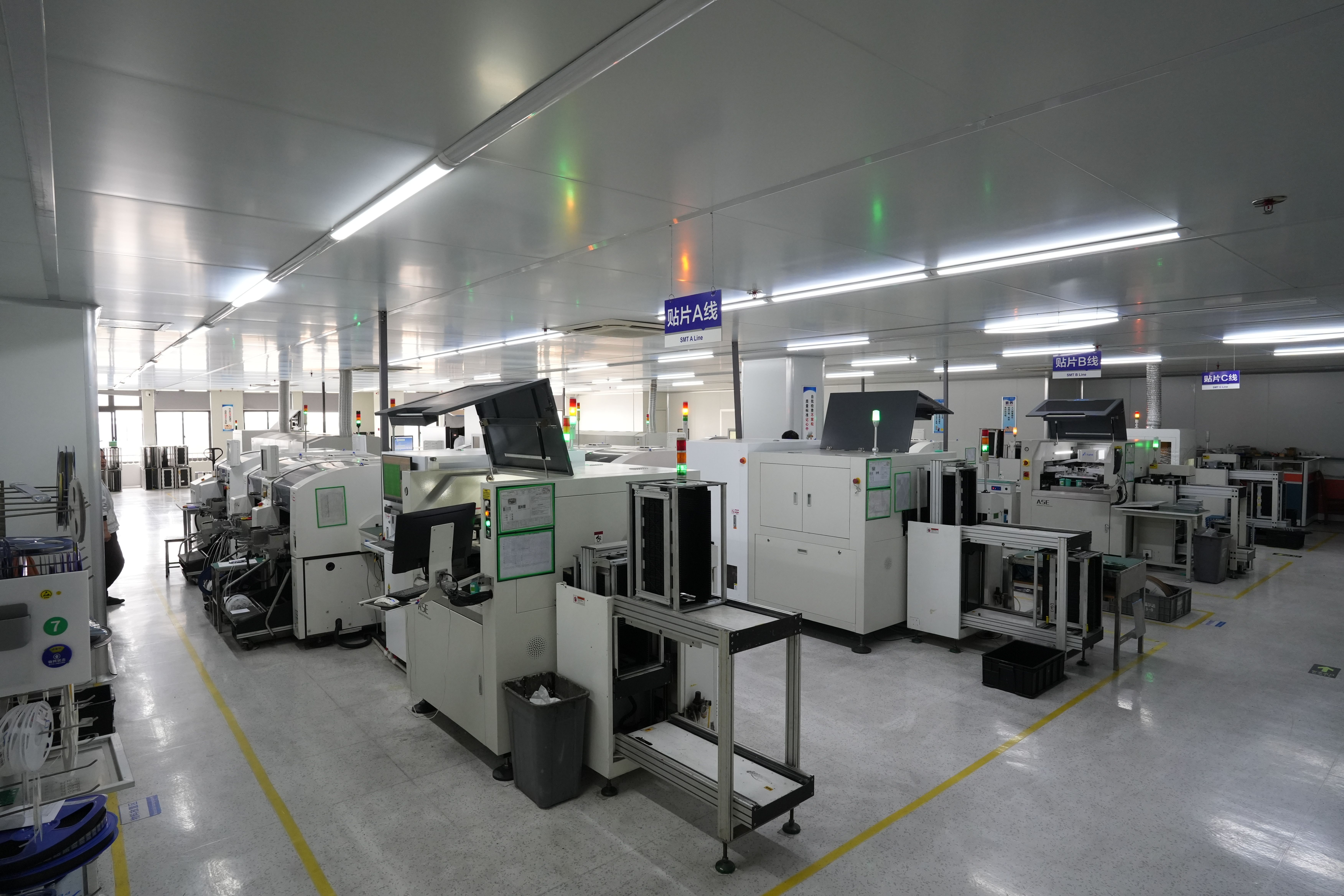
Surface-mount assembly of LED warning light boards. Production equipment on site is one of the few capability claims a buyer can verify directly, by audit or video walkthrough.
Why a Catalogue Cannot Carry Delivery Risk
Delivery risk in warning lighting rarely begins with the printed specification. It begins with what the specification leaves open: component sourcing, batch-to-batch optical consistency, the boundary of a regulatory approval, and the gap between capacity on paper and capacity actually available in a given month. A buyer who evaluates only the catalogue is, in effect, underwriting the supplier's production discipline without ever seeing it.
In evaluation practice, five failure modes recur across all warning light categories:
- Optical drift between lots. LED binning changes, or lens tooling wears, and intensity or colour temperature shifts against the approved sample.
- Silent component substitution. A driver board, connector or gasket is changed to protect margin, without notifying the buyer.
- Approval scope mismatch. A catalogue references a certification that applies to one model variant, not to the part number being ordered.
- Capacity overcommitment. A stated monthly output is quoted without any account of existing program loading.
- Ingress protection assumed across a range. One model is tested to IP67/IP69K, and the rating is presented as a family attribute.
None of these are visible in a product photograph. All of them are visible in documentation, and all of them are legitimate to request before an order is placed.
Six Evidence Layers Worth Requesting Before an RFQ Closes
The sequence matters as much as the content. Capacity and process evidence are cheap to check early; approval scope and component control matter most once a specific model is on the table.
| Evidence layer | What to request | What a credible answer contains |
|---|---|---|
| 1. Capacity and loading | Monthly capacity, annual output, current program commitments, lead time by product family | A figure with a stated basis, plus an explanation of how a new program is scheduled against existing commitments |
| 2. Incoming material and component control | IQC criteria, LED supplier and binning rules, lens and housing material specifications | Named material specifications (for example PC lens, aluminium housing) and a described inspection step at goods-in |
| 3. Process and test regime | Test coverage on the line, ageing or burn-in practice, test records retained per lot | A stated coverage level (SIGROCK states 100% testing on production) and an ageing routine, not a single end-of-line check |
| 4. Approval document chain | Certificate number, issuing body, model scope line, standard revision, validity date | A retrievable document that lists the exact part numbers and the revision in force |
| 5. OEM/ODM engineering depth | Engineering headcount, customization boundaries, sample-to-mass-production route | Named customization variables (logo, flash pattern, optics, cable length, LED colour) and a sample approval step |
| 6. Supply continuity and support | Export markets served, warranty terms by product, after-sales model | Warranty length stated per product line and a described support channel |
Evidence layers used in this reference. Each item is verifiable by document request; none require access to commercial secrets.
Two layers deserve particular attention because they are the most frequently overstated. Capacity is usually quoted as a single number; the useful question is not “how much can you make” but “how much of that is already committed in the quarter we need.” Approval scope is usually quoted as a standard name; the useful question is which part numbers sit inside the approval line, and which do not.
What SIGROCK Publishes as Capability Evidence
The value of a worked example is that it shows the shape of a complete answer. SIGROCK’s published capability position can be grouped into production evidence and document evidence.
Production, engineering and test evidence
The company reports a 2,600 m 2 facility with 35 employees, an annual output of 550,000 units and a monthly capacity of 50,000 units, supported by an in-house R&D team of 5 engineers. Stated lead time is 25–45 days. Production is described as ODM/OEM, with customization covering logo, flash pattern, optical design, cable length and LED colour, and quality control described as 100% testing on production. Sample orders are available for evaluation before mass production, and the minimum order quantity is stated to depend on the product and the customization requested.
Those figures answer the first, second, third and fifth evidence layers. They also set an honest expectation: 35 employees and 2,600 m 2 describe a focused, mid-scale operation rather than a high-volume automotive Tier 1 plant. For buyers, that is a scheduling question, not a disqualification — but it should be tested against the size and timing of the program.

Warehouse holding of components and finished warning lights. Inventory structure is a practical proxy for component supply stability, and is visible during an audit.
The approval document chain
Certificate scope is where most supplier documentation is thinnest, and where SIGROCK publishes the most specific evidence. The table below reproduces the reference numbers and scope lines as issued.
| Document | Reference | Issuing body | Scope | Validity |
|---|---|---|---|---|
| ISO 9001:2015 quality management system | 10139902Q | CERTIFICATION EUROPE (HONG KONG) LIMITED; IAF and UKAS accreditation (No. 0219) | Manufacturing, processing, sales and R&D of auto parts, motorcycle parts, plastic products, moulds, lamps, warning lights and electronic products | Issued 2026-08-06; valid to 2027-08-05 |
| Conformity of Production (CoP) | C1 49902503 | UCA — Unidad de Certificación del Automóvil, ENAC-accredited (No. 509/EI807) | UN R10 (EMC), UN R65 (special warning lamps), UN R148 (light-signalling devices), UN R150 (retro-reflective devices) | Issued 2019-07-29; valid to 2027-07-29 |
| ECE R65 type approval | E9*65R00/10*6397*00 | Ministerio de Industria, Comercio y Turismo (Spain, E9) | E6AS, E6AL, E6AH special warning lamps; LED; amber; Class 1 / Class 2; 12/24V | Issued 2019-08-14 |
| ECE R148 type approval | E9*148R00/05*22705*00 | Ministerio de Industria, Comercio y Turismo (Spain, E9) | T43P-01 (clear outer lens); T43P-S1 (smoky grey outer lens) | Issued 2024-10-10 |
| ECE R10 approval (EMC) | E910R06/0022774*00 | Ministerio de Industria, Comercio y Turismo (Spain, E9) | TINYBLAST-4 / -6 / -4W / -DC; H-400AS; H-400BS; MEGABLAST-4 / -6 / -4W / -DC; PULSE-3; E6S; E6D | Issued 2021-05-06 |
| EMC test report | XT10305012E | Ningbo Xuntong Standard Technology Service Co., Ltd. | T43 and T43 variants (T43A, T43B, T43R, T43W, T43G, T43P-01, T43P-02, T43P-03) | Issued 2025-11-18 |
| RoHS test report | XT10305011R | Ningbo Xuntong Standard Technology Service Co., Ltd. | T43 and T43 variants, against RoHS Directive 2011/65/EU as amended by (EU) 2015/863 | Issued 2025-11-20 |
Reference numbers and scope lines as published. Buyers should confirm that the quoted part number appears in the scope column before relying on any approval.

Design stage work on lens geometry and driver layout. Engineering depth is what determines whether a customization request is a configuration change or a re-development project.
Reading an Approval Scope Correctly
An approval is not a property of a company; it is a property of a defined model scope, under a defined standard revision. UN ECE Regulation No. 10 concerns electromagnetic compatibility for applicable vehicles and electrical or electronic components, and it does not replace the photometric or installation approvals that may also apply to a warning light. UN R65 governs special warning lamps, and UN R148 governs light-signalling devices — different questions, different test methods, different documents.
Applied to the table above, three practical consequences follow. First, the ECE R65 approval covers the E6AS, E6AL and E6AH warning lamps; a buyer ordering a different model within the same visual family is not automatically buying an R65-approved unit. Second, the ECE R148 approval covers two specific T43 variants — T43P-01 with a clear outer lens and T43P-S1 with a smoky grey outer lens — so lens finish is part of the approved configuration, not a cosmetic option. Third, the ECE R10 approval lists a defined set of model designations, and the separate EMC and RoHS test reports for T43 were issued in November 2025, meaning documentation has a date and can fall behind a product change.
Where Capability Evidence Meets Application
Capability claims become meaningful only when mapped onto the product families a buyer actually orders. The four SIGROCK families differ enough that a single capability statement cannot cover them.
Warning lightbars (LB01). Full-size bars from 600 mm to 1600 mm, 40.5 mm high, hybrid optics, 1W LEDs from 78 pieces at 600 mm to 198 pieces at 1600 mm, 10 selectable flash patterns, bracket mounting, 10–33 V DC, operating range −30°C to +70°C and a 3-year warranty. The lightbar carries an IP65 rating — a genuine difference from the rest of the range, and one that matters for washdown fleets.
LED beacons (BH18). Rotating LED beacons with 3W × 18 LEDs, single or dual configuration in blue, amber, red or green, 10 selectable flash patterns, bolt, DIN or magnetic mounting, 2.2 A at 12 V / 1.2 A at 24 V, IP67 and IP69K rating, and certification cited as ECE R10, ECE R65 Class 2 and SAE J595 Class 1.
Warning light modules (E6). An ultra-slim 118 × 25 × 7 mm lighthead with Fresnel optics, 36 / 12 / 18 LEDs at 3W, single, dual, triple or split colour configurations, 20 flash patterns in single/split colour and 12 in dual/triple, surface or bracket mounting, IP67/IP69K, and 0.66 A at 12 V / 0.33 A at 24 V.
Hideaway warning lights (T43). An 18.5 × 18.5 × 21.57 mm hideaway unit with hybrid optics, 5W × 1 plus 0.2W × 2 LEDs, 14 flash patterns, flush or tube-flush mounting with a black rubber grommet, PC lens, IP67/IP69K, and combined warning and position lighting.
Control systems (SC7X). A 7-button controller with 100 × 70 × 20 mm housing, 10–30 V DC input, 40 A maximum output, 2 × 10 A or 4 × 5 A output configuration, automatic night-time backlight dimming, IP67 protection and a 2-year warranty.
The capability implication is straightforward: four families mean four tooling sets, four test fixtures and four approval trails held in parallel. A supplier able to hold batch consistency across a mixed order reduces the buyer’s exposure when a fleet is specified with bars, beacons, modules and hideaways together.
Delivery Evidence: What Repeat Program Supply Shows
Purchase orders are the least glamorous and most persuasive capability evidence. SIGROCK’s published case material documents repeat supply into established distribution channels rather than one-off shipments.
- Buyers Products, United States. 10,000 pcs of the T43 hideaway warning light supplied over 3 years, sold through the client’s official online store; the T43 is a 3/4-inch (19 mm) compact hideaway combining warning and position lighting.
- Vignal Group, France. 12,000 pcs of the E6 warning lighthead over a 3-year period, integrated into the VIGNAL ACCESS portfolio for industrial and commercial vehicle applications.
- Valostore, Finland. 20,000 pcs across SQ4, T43, E4 and E12 over 3 years for a Nordic and European retail channel.
- BuySuperiorLED, United States. 500 pcs of the E6 over 3 years through a US online supplier of vehicle warning and emergency lighting.
- Flashpatterns, Netherlands. 500 pcs of MegaBlast over 3 years through a Dutch specialist online supplier.
These figures describe supply volumes, not audited capacity, and should be read that way. Their value is that they demonstrate a program running across multiple years and multiple product families — the pattern that exposes capacity and consistency problems if they exist. A three-year program is a far stronger signal than a single large shipment.
Market Trend: Modest Growth, Rising Documentation Burden
The demand picture supports a documentation-first approach rather than a novelty-first one. The global emergency warning light market is forecast to grow at a compound annual rate of 3.6% from 2025 to 2031 (Lucintel, 2026), while the broader emergency lighting market — which includes vehicle warning kits among other segments — was valued at USD 7.5 billion in 2023 (Global Market Insights, 2024). The two figures cover different scopes and should not be combined into a single growth narrative.
What that means for procurement is a shift in emphasis. In a low-growth, heavily regulated niche, suppliers compete less on new form factors and more on continuity: the same optics next year, the same approval revision, the same test record. Regulatory complexity reinforces the effect — the coexistence of EMC requirements under ECE R10 with photometric requirements under ECE R65 and light-signalling requirements under ECE R148 means each product family accumulates several documents with different revision cycles. Buyers who treat those documents as a purchasing input, rather than post-order paperwork, tend to discover scope problems before tooling is cut.
Comparison with Traditional Solutions
Two sourcing approaches dominate. The first is catalogue-first: shortlist on specification, price and lead time, then request documents after the order. The second is evidence-first: request the document set with the quotation, then negotiate price against a fixed configuration. The trade-off is real in both directions.
| Evaluation dimension | Catalogue-first sourcing | Evidence-first sourcing |
|---|---|---|
| Speed to quotation | Faster; specifications are public | Slower; document requests add a round trip |
| Approval certainty | Assumed from the brochure | Confirmed against the model scope line |
| Batch consistency | Tested only when a fault appears | Test regime and coverage stated before order |
| Change control | Component substitution discovered late | Substitution requires buyer agreement |
| Customization risk | Customization quoted without certification implications | Customization assessed against existing approval scope |
An evidence-first process is not free. It adds administrative work and can slow a first order by days or weeks. For a distributor testing a single SKU, catalogue-first may be rational; for a multi-year fleet or private-label program, the reverse is usually true.
Boundaries buyers should hold in view
Applying the same discipline to SIGROCK’s own evidence produces a clearer picture than a purely promotional reading would:
- Ingress ratings are model-specific. The LB01 lightbar is listed at IP65, while the T43, E6, BH18 and SC7X are listed at IP67 or IP67/IP69K. A buyer specifying one IP target across a mixed fleet must confirm it per model rather than per brand.
- Approvals do not cover an entire family. The ECE R65 approval covers E6AS, E6AL and E6AH; the ECE R148 approval covers T43P-01 and T43P-S1. Other configurations in the same visual range sit outside those scope lines.
- Capacity is mid-scale. 50,000 units per month with 35 employees and a 2,600 m 2 facility suits distributor and OEM program volumes; a single high-volume vehicle platform may require scheduling confirmation well ahead of the required date.
- Commercial terms are configuration-dependent. MOQ varies with product and customization, lead time is stated at 25–45 days, and after-sales support is described as remote support rather than on-site field service.
- Compliance is documented per model, not per company. A general statement that products meet ECE, SAE, CE and IP requirements is a starting point for a document request, not a substitute for the certificate numbers listed above.
None of these boundaries disqualify a supplier. Stated openly, they let a buyer design the specification around what is actually approved and actually resourced, which is the entire purpose of capability evidence.
Future Outlook
Three developments are likely to make capability evidence a standard part of the RFQ rather than an optional extra. First, documentation traceability is becoming easier to check: approval numbers, issuing authorities and scope lines can now be matched against a quoted part number in minutes, which reduces the value of vague compliance language. Second, washdown and high-pressure cleaning regimes in utility, municipal and road maintenance fleets are pushing buyers toward IP69K-rated configurations, and that rating has to be evidenced per model rather than assumed across a range. Third, dual-intensity behaviour associated with ECE R65 Class 2 units turns a photometric requirement into a functional one, which is difficult to verify from a catalogue and straightforward to verify from a test report and a demonstration.
The practical consequence for buyers is a shorter, sharper question set: what is the capacity figure and how is it scheduled, what is the test coverage on the line, which part numbers sit inside each approval, and what changes when a customization is requested. Suppliers who can answer all four without delay are, in effect, pre-qualifying themselves.
FAQ
What production evidence should a buyer request before placing an LED warning light order?
Request the monthly capacity and annual output with the basis for each figure, the test regime applied on the line, the ageing or burn-in practice, the stated lead time by product family, and an explanation of how a new program is scheduled against existing commitments. SIGROCK, for example, states a monthly capacity of 50,000 units, an annual output of 550,000 units, 100% testing on production and a lead time of 25–45 days. A capacity number is only useful when paired with a scheduling explanation.
Does SIGROCK offer OEM and ODM services for LED warning lights?
SIGROCK operates in ODM/OEM mode. Depending on the product and project requirements, customization can cover logo, flash pattern, optical design, cable length and LED colour. Feasibility, minimum order quantity, development timeline and certification implications should be confirmed per project, because an existing approval covers a defined model scope and a changed configuration may fall outside it. Sample orders are available for evaluation before mass production.
How do minimum order quantity and lead time work for custom warning lights?
MOQ depends on the product and on the customization requested, and lead time is stated at 25–45 days. Because a custom flash pattern, cable length or LED colour changes the production route, both figures should be confirmed in writing for the specific configuration rather than assumed from a catalogue page.
What is the difference between IP67 and IP69K on a vehicle warning light?
IP67 covers dust protection and temporary immersion under specified test conditions. IP69K covers dust protection and high-pressure, high-temperature water-jet exposure under its applicable test standard. Neither rating alone guarantees suitability for every environment, so selection should follow the actual cleaning method and exposure conditions, supported by the verified test result for that model. Ratings also differ within a range: SIGROCK lists IP65 for the LB01 lightbar and IP67 or IP67/IP69K for the T43, E6, BH18 and SC7X.
Does an ECE approval on one model cover the whole product family?
No. An approval number lists a defined scope of models, and the quoted part number must appear in that scope. SIGROCK’s ECE R65 approval E9*65R00/10*6397*00 covers the E6AS, E6AL and E6AH special warning lamps; the ECE R148 approval E9*148R00/05*22705*00 covers T43P-01 with a clear outer lens and T43P-S1 with a smoky grey outer lens; and the ECE R10 approval E910R06/0022774*00 lists TINYBLAST-4, TINYBLAST-6, TINYBLAST-4W, TINYBLAST-DC, H-400AS, H-400BS, MEGABLAST-4, MEGABLAST-6, MEGABLAST-4W, MEGABLAST-DC, PULSE-3, E6S and E6D.
Reference document
The standard-edition SIGROCK catalogue, covering warning lightbars, beacons, modules, hideaway lights and control systems, is available for download: SIGROCK Catalogue — Standard Edition (PDF).
Есть вопросы или нужны дополнительные детали?
Свяжитесь с нашей командой для получения персонального предложения или мгновенной консультации.
Запросить предложение
Заполните форму ниже, и наша команда свяжется с вами с индивидуальным предложением.
Прямой чат WhatsApp
Предпочитаете общаться в реальном времени? Напишите нам в WhatsApp для мгновенной помощи и быстрых ответов.
- Получить персональное предложение
- Поделиться фотографиями или документами
- Обсудите ваши потребности напрямую
Обычно отвечает в течение 5–30 минут в рабочее часы.