
Как композиционные возможности геомембраны формируют проекты по добыче полезных ископаемых, соленому озеру и аквакультуре
Composite geomembranes have become a standard engineering response when a project needs both liquid containment and mechanical reinforcement. Unlike a single-layer HDPE geomembrane, a composite system combines a geomembrane with geotextiles, drainage geonets, or textured surfaces to handle higher loads, steeper slopes, and harsher chemical environments. For buyers evaluating manufacturers, the practical question is not only whether a supplier sells geomembrane, but whether it can engineer the right composite structure, customize physical properties, and deliver installation support.
Summary: This article explains what composite geomembrane capability means for mining, salt lake, pumped storage, aquaculture, and reservoir projects. It reviews a manufacturer with vertically integrated production, customization, and on-site service, using the Uzbekistan gold mine tailings project as a documented reference.
Why the Market Is Moving Toward Composite Geomembranes
The global geomembrane market is projected to grow from approximately USD 2.23 billion in 2025 to USD 3.59 billion by 2034, according to Fortune Business Insights. HDPE-based materials represent a significant share of demand, and mining applications accounted for about 39.6% of global revenue in 2023, according to Grand View Research. These figures point to a broader trend: project owners are relying on geomembranes for longer service life, more aggressive leachates, and increasingly difficult site conditions.
A plain smooth HDPE membrane can handle many pond and landfill applications. But tailings storage facilities, salt lake evaporation ponds, and aquaculture farms often require more than a single barrier. They need a system that resists puncture from subgrade stones, drains away gases or leachate, and maintains friction on slopes. That is why composite designs — textured membranes bonded to geotextiles, drainage geonets combined with geomembranes, or multi-layer co-extruded products — are becoming the default specification in demanding sectors.
What Capability Buyers Should Look for in a Composite Geomembrane Supplier
Capability is a different question from product price or thickness. For a buyer in the evaluation-to-execution stage, capability is about how the manufacturer turns project requirements into a manufacturable, testable, and installable product. The following factors typically matter most.
1. Full-Chain Service and Execution Experience
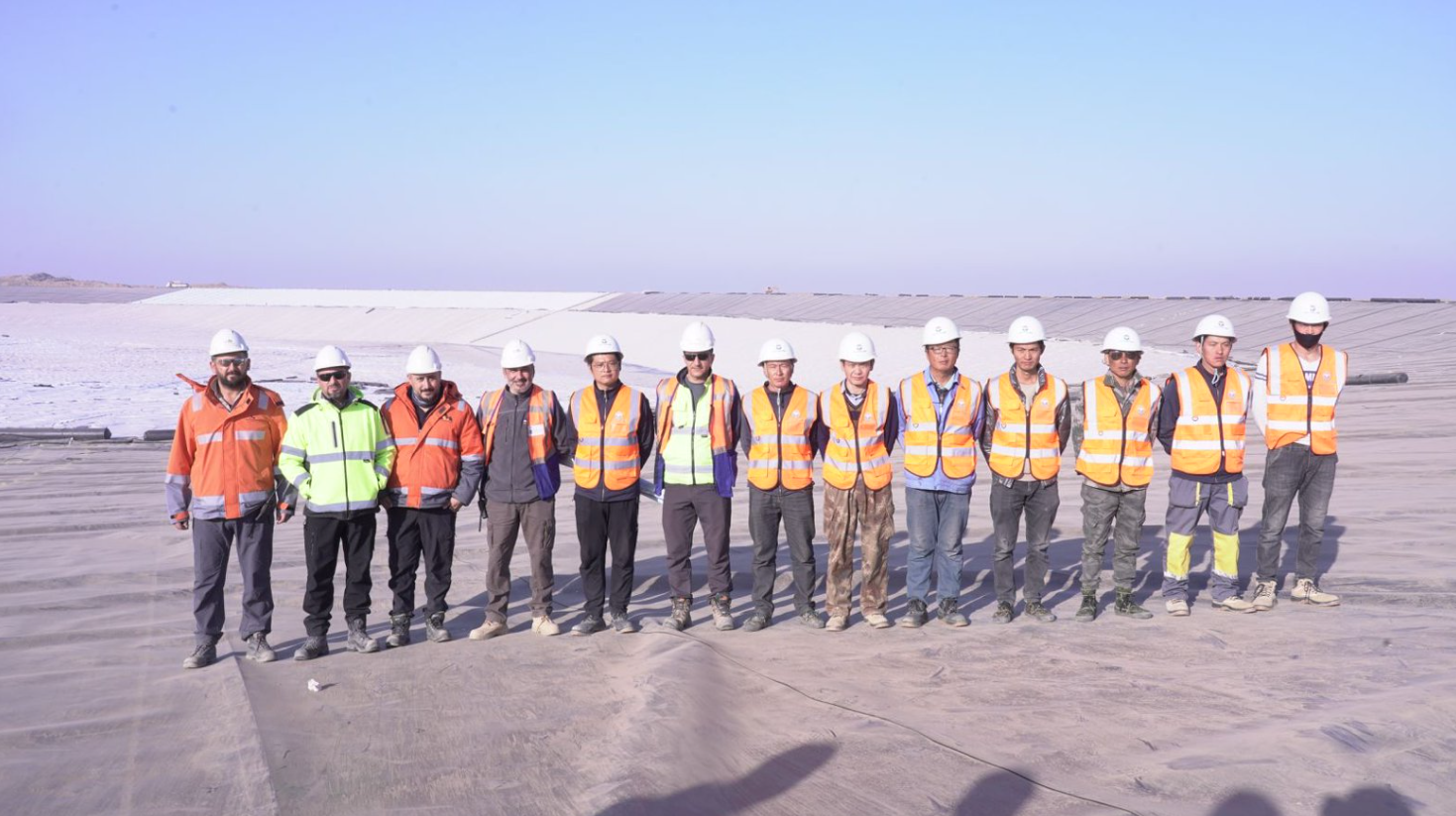
A composite geomembrane project does not end at the factory gate. The value of a supplier increases significantly when it can also manage on-site installation and construction. A documented example is the Uzbekistan gold mine tailings pond project, which used 900,000 square meters of anti-seepage material. The project moved beyond a single-product sales model and established a full-chain service system from material supply to on-site installation and construction, according to Haoyang Environment. For mining clients, this means one accountable partner from specification to field welding and QA.
2. Customization of Physical and Dimensional Parameters
Most composite geomembrane applications require parameters beyond standard stock widths and thicknesses. A capable manufacturer should be able to adjust logo, width, roll length, thickness, GSM (grams per square meter), tensile yield strength, tensile fracture strength, and puncture resistance. In the case of Haoyang Environment, customization services explicitly cover these chemical and physical indicators, which is important for mining tailings and salt lake projects where project-specific load and chemical conditions differ.
3. Manufacturing Capacity and Order Feasibility
Project schedules depend on production capacity and lead time. Haoyang Environment reports a monthly capacity of 3,000 tons, a lead time of 10 to 30 days, and a minimum order quantity of 5,000 square meters. For a mid-to-large mining or infrastructure project, these operational parameters determine whether a supplier can supply 100,000 or 900,000 square meters within a construction window. Buyers should confirm capacity assumptions before committing to a composite geomembrane specification.
4. OBM and Private-Label Production
In some markets, local contractors or engineering firms need the geomembrane supplied under their own brand. OBM (Own Brand Manufacturing) production services allow a manufacturer to produce composite geomembrane with the buyer's branding while maintaining the underlying material specification. Haoyang Environment provides OBM services and exports to Africa, Europe, Central Asia, Southeast Asia, Australia, and South America. This is especially relevant for distributors and EPC contractors that want a consistent regional product line without building their own manufacturing.
5. After-Sales and On-Site Technical Support
Geomembrane failures are often installation-related rather than material-related. A supplier that offers on-site support can help prevent weld defects, subgrade prep errors, and slope stability miscalculations. Haoyang Environment's service model includes on-site after-sales support, which matters for remote mine sites in Central Asia, Africa, or Latin America where local installation expertise may be limited.
Technical Explanation: How Composite Geomembranes Are Engineered
Composite geomembrane is not a single material but a family of engineered systems. The base layer is typically HDPE, with a thickness range of 0.3 mm to 3.0 mm. The HDPE layer provides the impermeable barrier. The composite element — geotextile, geonet, or texture — adds mechanical performance that a single sheet cannot supply.
Haoyang's HDPE geomembrane specification includes a range of mechanical and durability properties:
| Property | Typical Range / Requirement |
|---|---|
| Thickness | 0.3 mm – 3.0 mm (customizable) |
| Yield Strength (MD/TD) | ≥5 – 65 kN/m |
| Break Strength (MD/TD) | ≥10 – 85 kN/m |
| Yield Elongation | 10–15% |
| Break Elongation | ≥700–850% |
| Tear Resistance (MD/TD) | ≥45–500 N |
| Puncture Resistance | ≥170–1200 N |
| Stress Crack Resistance | ≥500 hrs |
| Carbon Black Content | 2.0–2.8% |
| Standard OIT | ≥130 min |
| High Pressure OIT | ≥430 min |
| Oven Aging at 85°C, OIT retention after 90 days | ≥60% |
These indicators matter because composite geomembrane in mining and salt lake service is exposed to UV, chemical attack, and mechanical stress. Stress crack resistance is particularly important for tailings liners where even a small crack can lead to long-term contamination. Carbon black content and OIT values are relevant to service life. Puncture resistance is critical when the membrane is laid over coarse subgrade or under a drainage aggregate layer.
One manufacturing technique that improves composite performance is in-line double-sided texturing. Haoyang produces textured geomembrane on a five-layer co-extrusion blow molding line integrated with online double-sided texturing equipment. Using a high-temperature, high-pressure air jet process, the base membrane and double-sided rough surface structure are formed simultaneously in a molten state. The rough points bond with the substrate at a molecular level, reducing production energy consumption by 25% and avoiding thermal aging from secondary processing, according to the company. This textured surface is what allows composite lining systems to maintain interface friction on slopes and beneath geotextiles.
Application Scenarios for Composite Geomembrane
The selection of a composite geomembrane is usually driven by the specific environmental and mechanical demands of the project. The following scenarios are the most common in current procurement discussions.
Mining and Smelting Tailings Ponds
Tailings ponds are the largest-volume containment structures in the mining industry. In 2023, mining was the leading application segment for geomembranes, at 39.6% of global revenue, according to Grand View Research. These projects need high puncture resistance, chemical resistance, and often a textured surface for slope stability. A composite system with a drainage geonet under the geomembrane can also relieve gas pressure and collect leachate. Haoyang's product line includes mining-specific geomembranes and drainage geonets, and the Uzbekistan gold mine project is a direct reference for this application segment.
Salt Lake Mining and Brine Evaporation Ponds
Salt lake brine extraction — especially for lithium — has become a major growth area for geomembranes. The environment is extremely saline and often remote. A special geomembrane for salt lake mines must resist concentrated chloride and sulfate brines while performing under high solar exposure. The composite requirement typically includes a textured or geotextile-reinforced surface to anchor the membrane in windy, flat terrain. Haoyang lists salt-resistant geomembranes and special membranes for salt lake mines within its product capability, although project-specific test data should be requested by the buyer.
Pumped Storage Power Stations
Pumped storage reservoirs require geomembranes that can handle repeated water level fluctuations, UV exposure, and the mechanical loads of rock-filled embankments. The liner system often combines HDPE geomembrane with a protection geotextile and drainage layer. Haoyang's product range includes special anti-seepage membranes for pumped storage stations, indicating that the manufacturer recognizes the need for project-grade durability rather than general-purpose pond liner products.
Aquaculture and Fish Ponds
For fish farming and shrimp ponds, the primary goal is reliable water retention and water quality control. HDPE geomembrane prevents seepage, reduces fish disease pressure from soil pathogens, and lowers long-term water costs. Aquaculture geomembrane is generally thinner than mining grades, but should still meet mechanical standards for subgrade deformation. Haoyang's product line explicitly includes fish pond and aquaculture geomembranes.
Reservoir and Dam Anti-Seepage
Reservoir liners need high durability against water pressure, wave action, and periodic exposure to UV. In European dam and reservoir applications, geomembranes may need to comply with EN 13361 for CE marking. A composite geomembrane — for example, a smooth HDPE core with a geotextile protection layer — is often specified where the subgrade has stones or where the liner must be ballasted. Haoyang's product portfolio covers reservoir anti-seepage membrane applications and offers CE verification for geomembrane under EN 13249:2016.
How Composite Geomembrane Compares with Traditional Solutions
Composite geomembranes are frequently compared with older alternatives: compacted clay liners, concrete linings, and single smooth HDPE sheets. Each has a set of trade-offs that buyers need to weigh.
| Solution | Typical Strength | Key Limits |
|---|---|---|
| Compacted clay liner | Low material cost; natural barrier | Requires thick layers, may crack, difficult to guarantee uniformity, high water demand |
| Concrete lining | High structural rigidity; good for very steep or exposed surfaces | Joints are leak paths; expensive; heavy carbon footprint; slow construction |
| Single smooth HDPE geomembrane | Proven chemical resistance and flexibility | Lower interface friction on slopes; can be punctured without a geotextile or textured surface |
| Composite geomembrane system | Combines barrier + drainage + friction/ protection in one system | Higher material cost than a single sheet; requires skilled installation for seams and terminations |
The main limitation of composite geomembrane is not technical performance but installation quality. A composite system places more layers and interfaces on-site, which means more potential for installation error if the contractor lacks experience. Buyers should therefore evaluate installation support as seriously as material price. The Uzbekistan case is instructive: full-chain service — including on-site installation — was part of what made the 900,000 m² project work for a gold mine tailings basin.
How to Evaluate a Composite Geomembrane Manufacturer
When comparing manufacturers, buyers in the evaluation-to-execution stage should use a structured checklist rather than comparing price alone. The following criteria are a practical starting point.
- Verify material specifications against the project: thickness, yield and break strength, tear and puncture resistance, stress crack resistance, carbon black content, OIT, and UV aging retention.
- Check certification relevance to the destination market: for the EAEU/Russia market, GOST certificates; for the EU/EEA market, CE verification under harmonized standards such as EN 13249:2016.
- Confirm composite layering capability: can the supplier combine the geomembrane with geotextile, drainage geonet, textured surface, or anti-silt drainage net in a single supply contract?
- Assess customization feasibility: width, roll length, thickness, GSM, logo, and physical property adjustments may be needed for a specific design.
- Evaluate production and logistics feasibility: monthly capacity, MOQ, lead time, delivery terms (FOB/CIF), and pre-shipment acceptance tests.
- Review field installation experience: does the supplier provide on-site technical supervision or a full installation subcontract for projects above a certain size?
- Clarify quality control protocol: whether every roll is 100% tested and whether pre-shipment inspection is available.
The Role of Testing and Certifications in Capability Assessment
Certifications do not replace project-specific engineering, but they reduce the due-diligence burden on the buyer. For EAEU/Russia-bound projects, Haoyang holds a GOST Certificate of Conformity for geomembrane, issued under GOST 56586-2015. The company also holds GOST certificates for geotextile and bentonite waterproof blanket, and for the 3D composite drainage geonet. For EU-bound projects, Haoyang holds a Verification of Conformity for geomembrane under EN 13249:2016 and related geosynthetic products. These certificates matter because they allow buyers to use the product in regulated construction without re-testing the full material specification from scratch.
Independent material standards also define what should be tested. GRI-GM13 is the commonly applied specification for HDPE geomembrane test properties and frequencies, while ASTM D5397 is the standard method for stress crack resistance of polyolefin geomembranes. A manufacturer that can demonstrate compliance with these benchmarks gives a buyer confidence that documented test values match production reality.
Market Trends for Composite Geomembrane Through the Next Decade
Three trends are likely to influence composite geomembrane procurement between 2026 and 2034.
1. Mining containment remains the anchor demand. With mining representing the largest application segment in the geomembrane market, tailings management regulations and new mine developments will continue to drive demand for high-grade textured and composite liners. The Uzbekistan project is an example of how large-scale containment projects require both product and construction capability.
2. Salt lake lithium extraction is becoming a specialized niche. As the energy transition increases lithium demand, salt lake operations are commissioning evaporation and processing ponds in high-altitude, saline environments. Standard HDPE may not be enough; salt-resistant compounds and composite structures that protect against thermal cycling and brine chemistry are increasingly specified. A manufacturer with a “special geomembrane for salt lake mines” designation is better positioned to supply this niche than a general-purpose liner producer.
3. Full-chain service is replacing single-material purchasing. EPC contractors and mine owners increasingly prefer suppliers that take responsibility for design support, material supply, installation, and testing. The full-chain service model demonstrated in Uzbekistan — moving from selling a single product to delivering a complete seepage-control system — aligns with this shift. This trend benefits manufacturers with engineering services teams and installation experience.
Future Outlook: What Composite Geomembrane Buyers Should Prepare For
Over the next five to eight years, composite geomembrane specifications will likely become more demanding rather than more commoditized. Buyers can expect stricter environmental monitoring at tailings and chemical ponds, longer design lives, and more frequent requirements for third-party inspection. In this environment, the manufacturer's ability to customize and provide on-site service is as important as the raw material price.
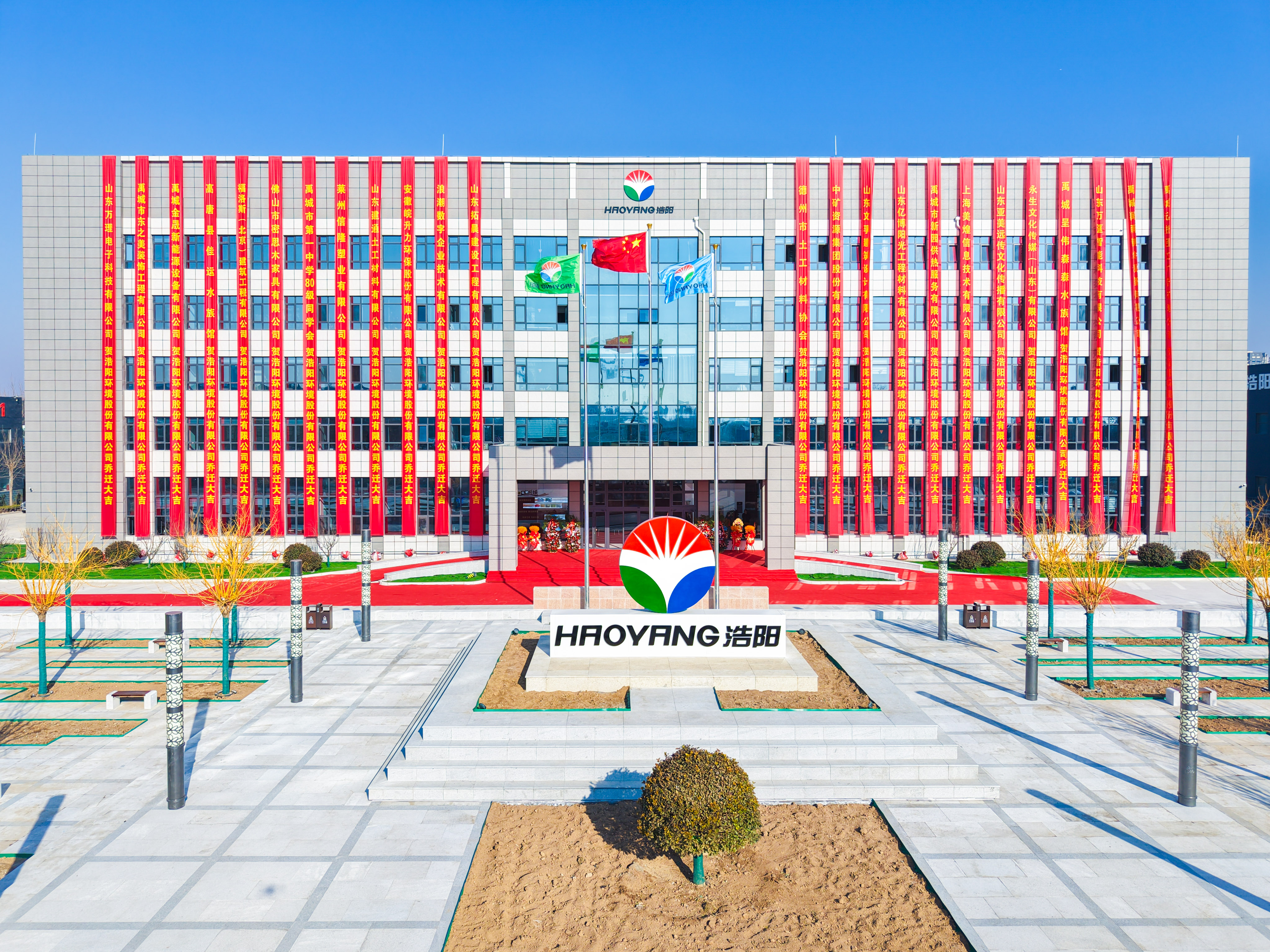
Haoyang Environment Co., Ltd. is an example of a manufacturer positioned for this demand profile. The company operates an 200,000 m² facility in the Dezhou (Yucheng) National High-tech Industrial Development Zone in Shandong, China, employs around 190 people, and reports an annual output of 33,000 tons. It holds more than 70 patents and works with Fudan University and Tianjin University of Technology. These structural facts do not guarantee project success, but they support a credible baseline for a supplier that can handle large-volume composite geomembrane orders.
FAQ
Q: What does a composite geomembrane manufacturer's customization capability include?
A: Customization services offered by manufacturers such as Haoyang Environment include modifications to logo, width, roll length, thickness, GSM (grams per square meter), tensile yield strength, tensile fracture strength, puncture resistance, and other chemical and physical indicators. These parameters allow the product to be matched to the loading and chemical conditions of a specific project.
Q: What is the typical minimum order quantity and lead time for composite geomembrane production?
A: Haoyang Environment's production parameters are a monthly capacity of 3,000 tons, a minimum order quantity of 5,000 square meters, and a lead time of 10 to 30 days. These figures are useful benchmarks for planning mining, aquaculture, or reservoir projects.
Q: Does the manufacturer provide OBM production services?
A: Yes. Haoyang Environment provides OBM (Own Brand Manufacturing) production services, which allow buyers such as distributors or EPC contractors to receive geomembrane produced under their own brand. The company exports to Africa, Europe, Central Asia, Southeast Asia, Australia, and South America.
Q: Is on-site after-sales support available for large composite geomembrane projects?
A: Haoyang Environment's after-sales services include on-site support. In the Uzbekistan gold mine tailings project, the company established a full-chain service system from material supply to on-site installation and construction, covering 900,000 square meters of seepage-control material.
Q: Which certifications should a buyer check for composite geomembrane imported into regulated markets?
A: For the EAEU/Russia market, a GOST Certificate of Conformity under GOST 56586-2015 applies to geomembrane. For the EU/EEA market, a Verification of Conformity under EN 13249:2016 applies. Haoyang Environment holds both, in addition to certificates for geotextiles, composite drainage geonets, and bentonite waterproof blankets.