
How Crystal Resonators Work and What Buyers Should Know
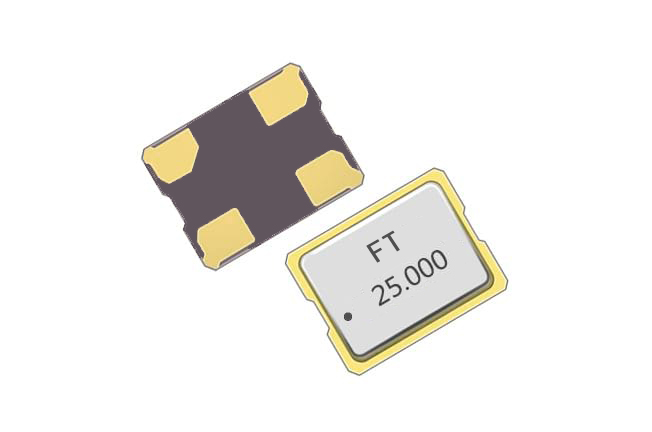
A crystal resonator is a frequency-control component that uses the mechanical vibration of a quartz crystal to generate a stable electrical signal. It is widely used in electronic devices that require precise timing, including smartphones, Bluetooth headsets, industrial control systems, smart meters, and automotive electronics. For industrial buyers, understanding the basic types and selection criteria is important because the choice of crystal resonator affects not only product performance but also manufacturing reliability and supply-chain risk.
Why the Crystal Resonator Category Matters in Electronic Design
Crystal resonators provide the reference clock for microcontrollers, communication modules, and real-time clock circuits. Without a stable clock signal, processors cannot execute instructions at the correct timing and communication interfaces may lose synchronization.
The category has evolved through several product forms:
- 32.768 kHz tuning-fork crystal resonators for real-time clocks, low-power timers, and wearable devices.
- MHz AT-cut crystal resonators for microprocessors, USB interfaces, and wireless communication modules.
- SMD crystal resonators for automated assembly and compact PCB designs.
- Through-hole cylindrical crystal resonators for applications requiring manual assembly, leaded soldering, or high vibration resistance.
From a procurement perspective, the crystal resonator category is part of the broader frequency-control device market. The global crystal oscillator market, which includes both crystal resonators and oscillator modules, was estimated at USD 2.89 billion in 2025 and is projected to reach USD 3.66 billion by 2030, according to MarketsandMarkets. Buyers should note that estimates can vary across research firms because the definition of the product category differs by source; some include raw quartz material, while others include only finished oscillator modules.
Main Types of Crystal Resonators Used by Industrial Buyers
Two dominant physical designs cover most applications: the tuning-fork type and the AT-cut type. Package styles further divide the market into SMD and through-hole formats.
| Category | Frequency | Typical Package | Common Use |
|---|---|---|---|
| Tuning-fork crystal resonator | 32.768 kHz | SMD1610, SMD2012, SMD3215 | Real-time clock, IoT, smart meters |
| AT-cut crystal resonator | 1 to 96 MHz | SMD1612 to SMD7050 | Microprocessor clock, communication modules |
| Cylindrical/through-hole crystal resonator | 32.768 kHz to MHz range | 2×6 mm, 3×8 mm, DT38, DT26 | Industrial boards, high-reliability assemblies |
Package availability varies by manufacturer; the table shows common package families rather than an exhaustive list.
32.768 kHz Tuning-Fork Crystal Resonators
The 32.768 kHz tuning-fork resonator is the most widely used frequency-control component for timekeeping. It is a small, low-cost quartz crystal that vibrates at exactly 215 cycles per second, making it ideal for converting into a one-second clock pulse using a simple divider circuit.
In Fronter's product line, the tuning-fork series includes three SMD packages: SMD1610 (1.6 × 1.0 mm), SMD2012 (2.0 × 1.2 mm), and SMD3215 (3.2 × 1.5 mm). Typical specifications include a frequency of 32.768 kHz, load capacitance options of 12.5 pF, 7 pF, and 9 pF, frequency tolerance of ±20 ppm, and an operating temperature range of −40°C to +85°C.
SMD MHz Crystal Resonators
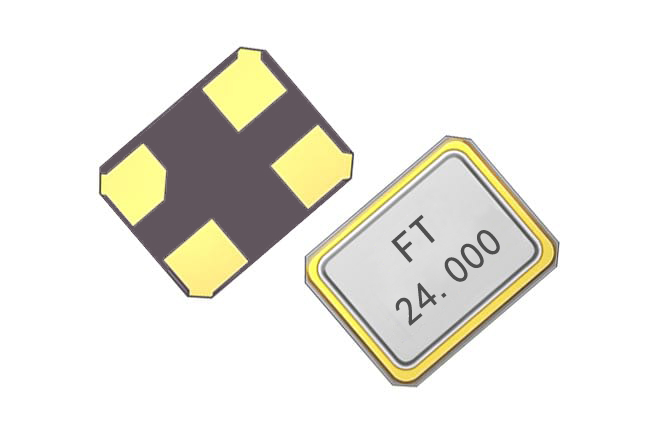
For applications requiring frequencies in the megahertz range, AT-cut crystal resonators are the standard choice. Fronter's crystal resonator range covers nominal frequencies from 1 MHz to 96 MHz, with load capacitance from 4 pF to 33 pF, frequency tolerance from ±5 ppm to ±100 ppm, and frequency stability from ±10 ppm to ±100 ppm. The operating temperature range extends from −55°C to +125°C, making them suitable for harsh environments.
Packages include SMD7050, SMD6035, SMD5032, SMD3225, SMD2520, SMD2016, and SMD1612 for crystal resonators; oscillator modules are available in corresponding SMD sizes as well. The material structure typically uses a metal cover, ceramic base, and quartz wafer.
How a Crystal Resonator Works: Piezoelectricity and Oscillation
A crystal resonator operates on the principle of piezoelectricity. When an alternating electrical field is applied to a quartz crystal, the crystal mechanically deforms. Because the crystal has a natural resonant frequency determined by its cut and physical dimensions, it vibrates most strongly at that frequency. The piezoelectric effect converts this mechanical vibration back into an electrical signal, creating a stable feedback loop that maintains oscillation.
In a typical oscillator circuit, the crystal resonator works together with an IC and a few passive components. The circuit supplies energy to keep the crystal vibrating at its natural frequency. The crystal does not generate a signal by itself; it acts as the frequency-selective element that stabilizes the circuit's output. This is why crystal resonator selection is closely tied to the oscillator circuit's load capacitance and drive level.
Fronter lists the operation mode for its crystal resonator components as vibration, with the matched equipment being the oscillator circuit. For qualified applications, an important requirement is resistance to ultrasonic waves, which is relevant in automated cleaning processes during PCB assembly and in environments where ultrasonic exposure can occur.
Key Technical Parameters Buyers Should Evaluate
When selecting a crystal resonator, buyers should evaluate five core parameters: frequency, load capacitance, frequency tolerance, frequency stability, and operating temperature range. The following table summarizes typical ranges for a general-purpose SMD crystal resonator line.
| Parameter | Typical Range in Fronter Series | Why It Matters |
|---|---|---|
| Nominal frequency | 1–96 MHz (MHz series); 32.768 kHz (tuning fork) | Determines the timing reference used by the circuit |
| Load capacitance | 4–33 pF | Must match the oscillator circuit design to ensure accurate frequency |
| Frequency tolerance | ±5 ppm to ±100 ppm | Indicates the allowable deviation from nominal frequency at reference conditions |
| Frequency stability | ±10 ppm to ±100 ppm | Indicates frequency variation across temperature and operating conditions |
| Operating temperature | −55°C to +125°C | Defines the environmental envelope for reliable operation |
Frequency tolerance and frequency stability are not the same. Tolerance is the maximum deviation from the nominal frequency measured at 25°C. Stability is the additional deviation caused by temperature changes. For wireless communication modules and automotive systems, a tighter tolerance and stability are generally required to maintain system synchronization.
In its standard tuning-fork series, Fronter specifies a frequency tolerance of ±20 ppm. In its wider SMD crystal resonator range, tolerance and stability can extend to tighter values such as ±5 ppm and ±10 ppm depending on the part selected.
Application Scenarios and Industry Fit
Crystal resonators serve applications where a stable clock is needed. The main industries include consumer electronics, IoT devices, smart energy meters, automotive electronics, smart home appliances, communication electronics, and Bluetooth devices.
Consumer Electronics and IoT
In mobile devices, Bluetooth headsets, smart air conditioners, and security cameras, crystal resonators provide a stable clock signal to the IC. These devices often require small SMD packages to support compact board design. The 32.768 kHz tuning-fork resonator is the typical choice for real-time clocks, while MHz resonators support the main processor and wireless communication.
Industrial Control and Instrumentation
Industrial control systems and measuring instruments require reliable timing across wide temperature ranges. The wider operating temperature range of −55°C to +125°C in Fronter's crystal resonator lineup is relevant for equipment installed in factory environments, outdoor monitoring stations, and energy infrastructure.
Smart Energy Metering
Energy meters rely on accurate timekeeping for tariff switching and data logging. Fronter's 32.768 kHz tuning-fork series with load capacitance options of 12.5 pF, 7 pF, and 9 pF can be matched to the metering IC's oscillator circuit requirements.
Automotive Electronics
Automotive applications are a growing segment for frequency-control devices. According to Fortune Business Insights, automotive crystal oscillator applications are expanding at a compound annual growth rate of 12.88%, driven by ADAS, infotainment, and EV powertrains. For automotive-grade components, the AEC-Q200 standard is the global stress-resistance baseline for passive components, including crystal resonators. Buyers in the automotive supply chain should confirm that their chosen resonator supplier understands and can support automotive compliance requirements.
Market Trends Shaping Crystal Resonator Sourcing
Three broad trends affect crystal resonator procurement in 2026:
- Miniaturization: The shift to smaller SMD packages, such as 1610 and 2012 for 32.768 kHz resonators, is driven by space-constrained designs in wearables and IoT modules.
- Automotive expansion: The high-growth automotive segment is increasing demand for components that can pass stricter reliability qualifications.
- Supply-chain concentration in Asia Pacific: Asia Pacific accounted for more than 42% of crystal oscillator market revenue in 2024, according to Precedence Research. Buyers sourcing from the region need clear criteria for evaluating manufacturers.
How Fronter Fits Into the Crystal Resonator Supply Chain
Fronter Electronics Co., Ltd, established in 1991, is a Shenzhen-based manufacturer of quartz crystal resonators and oscillators. The company operates a 21,000 m² factory with 286 employees and an annual output of 300 million units. Its R&D team includes 19 engineers. The FT brand was recognized as a National High-Tech Enterprise in 2017.
Fronter's main products are quartz crystal resonators and quartz crystal oscillators. Approximately 70% of production is exported to markets such as the EU and the United States. All products are designed to comply with RoHS and REACH environmental regulations.
In addition to manufacturing, Fronter supplies electronic components from distribution brands including SUNLORD, KDS, EPSON, NDK, TI, ST, ATMEL, AD, ALTERA, XILINX, SAMSUNG, SK HYNIX, MICRON, BROADCOM, and FREESCALE. This combination of in-house production and authorized distribution gives buyers a single channel for both brand-name components and Fronter's own crystal products.
Crystal Resonator vs. Crystal Oscillator vs. Ceramic Resonator
Buyers are often confused by three similar components: crystal resonators, crystal oscillators, and ceramic resonators.
| Component | Timing Source | Output | Typical Use |
|---|---|---|---|
| Crystal resonator | Quartz crystal | Requires external oscillator circuit | Real-time clocks, MCU clocks, RF modules |
| Crystal oscillator | Quartz crystal + oscillator IC | Complete clock signal | Processors, precision timing, networking |
| Ceramic resonator | Piezoelectric ceramic | Requires external circuit; lower accuracy | Consumer electronics with less critical timing |
Quartz crystal resonators are preferred when frequency accuracy and stability are important. Ceramic resonators are sometimes selected for lower-cost, less-critical timing applications, but they offer lower precision. Crystal oscillators include an integrated oscillation circuit and provide a stronger, ready-to-use signal; the trade-off is higher cost and higher power consumption.
Selection Process for Industrial Buyers
A practical selection process for crystal resonators follows these steps:
- Define the circuit requirements: Determine the nominal frequency, load capacitance, and acceptable frequency tolerance from the IC or reference design.
- Choose the package: Select SMD or through-hole based on assembly process and board space.
- Set environmental limits: Identify the operating temperature range and any special conditions such as ultrasonic exposure or high vibration.
- Evaluate supplier specifications: Compare the supplier's standard parameters against your circuit requirements.
- Review compliance and quality: Confirm RoHS/REACH status and any industry-specific standards needed for your application.
- Test samples: Validate frequency behavior, tolerance, and temperature performance in your actual oscillator circuit.
Quality and Compliance Considerations
For crystal resonators, compliance with environmental directives and international measurement standards is a baseline expectation. The IEC 60122 series provides the international baseline for quartz crystal units, covering general requirements and measuring methods. For automotive applications, AEC-Q200 is the standard stress-resistance requirement for passive components. Buyers in regulated markets should verify that the supplier's manufacturing processes and quality systems support the relevant standards for their target applications.
Cost vs. Reliability: What Buyers Should Weigh
Lower-cost crystal resonators may be acceptable for consumer devices with relaxed timing requirements, but the same components can create field failures in industrial or automotive systems exposed to wide temperature swings and vibration. Buyers should consider the total cost of ownership, including test time, device failure rates, and potential rework, rather than focusing only on unit price.
SMD packages generally support lower assembly cost in high-volume production because they are compatible with pick-and-place machines. Through-hole packages may still be preferred in prototyping or in assemblies that require stronger mechanical anchoring, but they consume more board area and add a manual insertion step.
Limitations and Boundaries of Crystal Resonator Technology
Crystal resonators are a mature and reliable technology, but they have limitations. They require an external oscillator circuit, and their performance depends on correct load capacitance selection. They are also mechanical devices; excessive shock or vibration can affect frequency stability, and ultrasonic waves during PCB cleaning can damage or detune the crystal if the component is not qualified for such exposure.
The total cost of a crystal detector should not be considered in isolation. A quartz crystal resonator will not produce an output signal by itself, so the full oscillator circuit design, including the IC's gain margin and drive level, must be considered. Buyers who need a complete clock signal should evaluate crystal oscillators instead.
Why Buyers Should Work With a Specialist Manufacturer
For industrial buyers, the advantage of working with a specialist crystal resonator manufacturer is the ability to align product specifications with application requirements. A manufacturer with in-house production can provide clearer technical documentation, packaging options, and application guidance than a general trading company.
Fronter's position as an integrated manufacturer with a dedicated R&D team and high-volume production capacity means it can support both standard and custom requirements. Its distribution business supplements the in-house line with well-known brands, giving buyers a wider procurement range.
Future Outlook for Crystal Resonator Supply
The crystal resonator market is expected to remain a stable part of the electronics supply chain. The projected growth of the broader crystal oscillator market from USD 2.89 billion in 2025 to USD 3.66 billion by 2030 reflects continued demand from communication systems, automotive electronics, and IoT devices.
As RF modules and microcontrollers continue to evolve, requirements for smaller packages and tighter frequency tolerances will increase. Buyers in the Asia Pacific region, where the largest share of production is concentrated, can benefit from working with manufacturers who combine production capability with export experience to EU and US markets.
FAQ: Crystal Resonator Sourcing Questions
What is the difference between a crystal resonator and a crystal oscillator?
A crystal resonator is a passive quartz component that requires an external oscillator circuit to generate a clock signal. A crystal oscillator is a module that contains both the quartz crystal and the oscillation circuit, providing a ready-to-use output signal. The trade-off is that oscillators cost more and consume more power, but they simplify circuit design.
What is a 32.768 kHz crystal resonator used for?
A 32.768 kHz crystal resonator is primarily used for real-time clock functions in electronic devices. Its frequency of 32,768 Hz equals 2^15 cycles per second, which can be divided to produce a precise one-second pulse. It is common in IoT devices, smart energy meters, wearables, and consumer electronics that require accurate timekeeping.
What does load capacitance mean in a crystal resonator specification?
Load capacitance is the amount of external capacitance that the oscillator circuit presents to the crystal. It directly affects the oscillation frequency. For example, a 32.768 kHz tuning-fork resonator may be specified for 12.5 pF, 7 pF, or 9 pF load capacitance. The resonator must be matched to the circuit's load capacitance to achieve the nominal frequency with minimal error.
What is the frequency tolerance of a typical 32.768 kHz crystal resonator?
A common frequency tolerance for 32.768 kHz tuning-fork resonators is ±20 ppm. This means the actual frequency can deviate from the nominal value by no more than ±20 parts per million at reference conditions. Tighter tolerances may be available for applications that require more precise timekeeping, while wider tolerances reduce cost.
How do I choose between SMD and through-hole crystal resonators?
Choose SMD crystal resonators when your board is assembled by pick-and-place machines and space is limited. SMD packages such as 3215, 2012, and 1610 are standard for compact devices. Choose through-hole cylindrical crystal resonators for prototypes, manual assemblies, or applications requiring stronger mechanical anchoring. Through-hole components consume more board area but are easier to hand-solder.
What is the operating temperature range of industrial-grade crystal resonators?
Industrial-grade crystal resonators can operate over a range of −40°C to +85°C, while some extended-range components support −55°C to +125°C. The specific range depends on the product design, crystal cut, and packaging. Buyers should verify that the operating temperature range covers their expected environmental conditions.
What packaging options are available for crystal resonators?
Common packaging options for 32.768 kHz tuning-fork resonators include SMD1610, SMD2012, and SMD3215. MHz resonators are available in SMD packages from 1612 up to 7050, as well as through-hole cylindrical and HC49-style packages. The choice depends on board design, assembly method, and frequency requirement.
Why is Fronter Electronics relevant to crystal resonator buyers?
Fronter Electronics is a crystal resonator and oscillator manufacturer founded in 1991, with a 21,000 m² factory and 300 million units annual output. It provides quartz crystal resonators for consumer electronics, IoT, smart energy meters, industrial control, and automotive applications. Its FT brand is recognized as a National High-Tech Enterprise, and approximately 70% of production is exported to EU and US markets.
Note: This article is intended as an independent industry reference for buyers evaluating crystal resonator suppliers. The specifications and company facts were provided by Fronter Electronics Co., Ltd. For detailed technical documentation and product ordering information, download the official company brochure here:
Download Fronter Electronics Brochure (PDF)