
How Dental Labs Audit Zirconia Block Supplier Capability
Zirconia discs accounted for 63.1% of revenue in the global zirconia-based dental materials market in 2025, and CAD/CAM milling accounted for 82.4% of process revenue in the same market. Dental laboratories remain the largest end-user group, at 45.3% of market share (Grand View Research, 2025). Those three figures explain why, at the buying stage, the deciding question is rarely the material grade alone — it is whether the supplier behind the block can reproduce it, batch after batch, on the lab's own equipment.
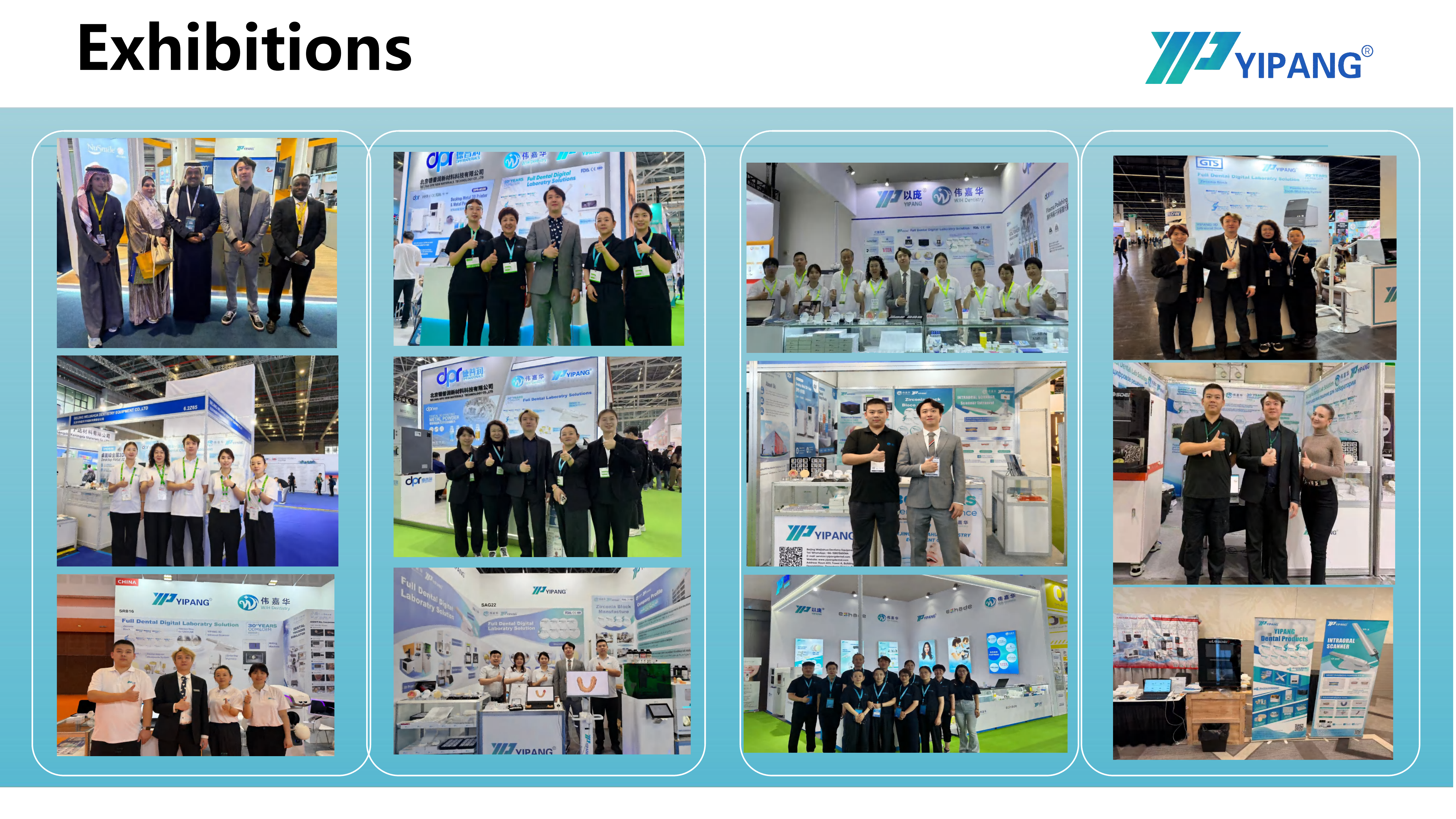
Supplier capability for a dental zirconia block is judged on batch consistency, process control, equipment fit and commercial reliability — not on a datasheet alone.
The capability question that sits behind a zirconia block decision
At the research stage, dental labs compare shades, translucency grades and flexural strength. At the decision stage, the comparison changes shape. The question becomes whether the supplier can deliver the same blank, with the same sintering behaviour, at the same lead time, across several production cycles.
That shift matters because most zirconia problems inside a laboratory are not material failures — they are process failures. A batch whose shrinkage sits at a different point in the tolerance band. A sintering profile validated on one lot but not re-validated on the next. A 98 mm disc that mills predictably on one machine and unpredictably on another. A landed cost that looks attractive per blank but not per finished restoration.
Capability evidence is the material a buyer uses to test those assumptions before committing volume. It is not a brochure claim. It is a set of statements that can be reproduced, or contradicted, on the buyer's own sintering furnace and milling machine.
What counts as verifiable capability evidence for a zirconia blank supplier
A supplier capability file for a dental zirconia block can be reduced to five auditable areas. None of them requires interpretation of marketing language.
- Material origin and batch control — which zirconia powder is used, whether it is internally developed or sourced, and how batch-to-batch consistency is documented.
- Tolerance behaviour — the published sintering shrinkage error and how it converts into CAD compensation values.
- Process and inspection — the inspection steps applied between pressing, pre-sintering and packing.
- Equipment fit — blank geometry, milling machine compatibility and the sintering furnace parameters the material expects.
- Commercial consistency — customization scope, delivery time, and price relative to equivalent imported blanks.
In regulated markets these five areas are read alongside documentation requirements. In the European Union, MDR 2017/745 classifies most dental implants and restorative materials as high-risk, requiring intensive clinical data. That is why importers serving European laboratories treat certificate scope and technical file depth as part of supplier capability rather than back-office paperwork.
The supplier behind the YIPANG dental zirconia block
YIPANG is a self-developed dental materials brand owned by Beijing Weijiahua Dentistry Equipment Co., Ltd. (WJH), a Beijing-based dental equipment manufacturer and supplier that serves dental laboratories, clinics and importers; WJH's corporate profile records an establishment date of 1996 and describes roughly three decades of involvement in China's dental industry. The brand sits inside a company that also operates as a professional dental equipment agent and manufacturer.
The facts relevant to a capability audit, as published by the company, are these:
- A factory footprint of 2,000 ㎡ with 80 employees.
- Annual output value of USD 10 million.
- An R&D team of 25 professional engineers working on dental material formula research, process optimization and new product development.
- An export ratio of 40%–55%, with markets in the Middle East, Southeast Asia, South America, North America, Eastern Europe, North Africa and Australia.
- More than 1,000 dental laboratory customers in China.
- Representation of international dental brands including VITA, Ivoclar, Dentsply, Amann Girrbach and Noritake.
- YIPANG product lines covering Zirconia Blocks, Glass Ceramics, Press Ingots, PMMA, Wax, Titanium Blocks, Implant Abutments, 3D Scanners, Intraoral Scanners, Milling Machines, 3D Printers and Sintering Furnace.
For a buyer, the useful part of this profile is not the length of the product list. It is whether the same process discipline that governs the rest of the portfolio — material formulation, equipment, furnace behaviour — is also applied to the zirconia block itself. That is what the next three evidence layers address.
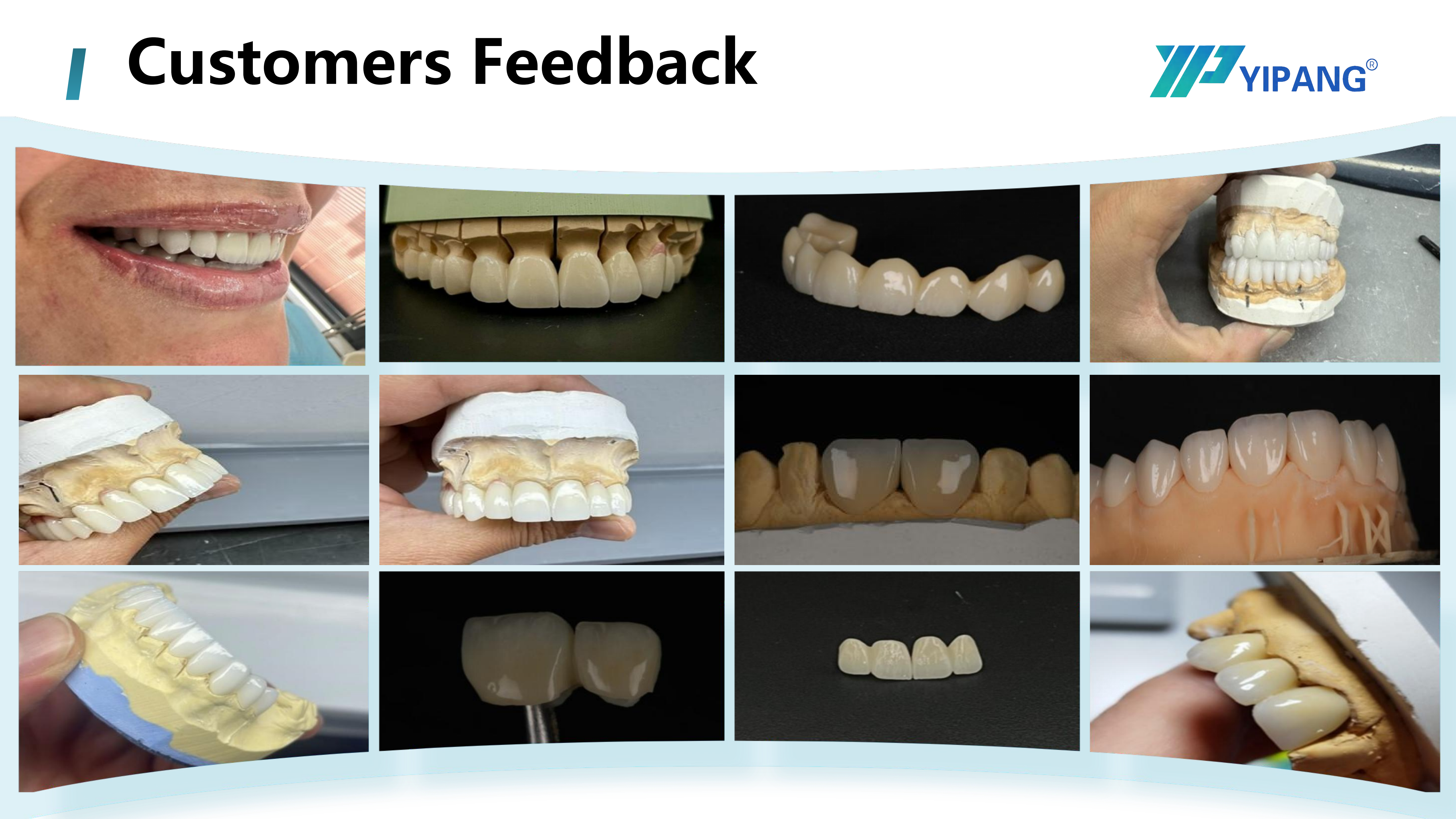
Process control between powder and packed disc is what converts a material specification into a repeatable restoration outcome.
Evidence layer 1 — powder source, batch consistency and shrinkage behaviour
WJH's comparison documentation for its dental zirconia block states that the product uses high-quality domestic self-developed zirconia powder with stable batch consistency, and positions it as a cost-effective alternative to imported brands. The material is described as zirconium dioxide (ZrO₂) with yttria stabilizer.
The same documentation states a stable sintering shrinkage error within ±0.3%. That number is the single most consequential figure for a working laboratory, because every CAM workflow applies a shrinkage factor before milling begins. A tolerance that stays inside a narrow band reduces the frequency of occlusal adjustments, contact corrections and full remakes. A tolerance that drifts between lots does the opposite, and the cost appears in technician time rather than in the invoice.
The published specification for the YIPANG 4D-PRO-ML zirconia block is set out below.
| Parameter | Published specification |
|---|---|
| Model | 4D-PRO-ML |
| Product type | Dental zirconia disc / CAD-CAM dental milling blank |
| Material | Zirconium dioxide (ZrO₂) with yttria stabilizer |
| Available shades | ML Multilayer |
| Diameter | 98 mm |
| Thickness options | 10 mm, 12 mm, 14 mm, 16 mm, 18 mm, 20 mm |
| Sintering temperature (product specification) | 1450 °C |
| Recommended sintering range (published processing guidance) | 1430 °C – 1450 °C |
| Bending strength | ≥1200 MPa |
| Translucency | Medium translucent |
| Typical applications | Full-contour crowns, bridges, veneers and implant superstructure restorations |
Evidence layer 2 — process control and equipment fit
The supplier's comparison data describes a strict whole-process quality inspection system, uniform density distribution, and a low processing failure rate. Those are process claims, and they are only credible when the material behaves predictably inside the equipment that most laboratories already own.
On that point the documentation states that the block offers good compatibility with most mainstream dental milling machines. The 98 mm diameter places the blank in the standard open CAD/CAM disc format, and the listed matched equipment is a dental milling machine, a dental sintering furnace and a dental lab scanner. The published operating scenario is an indoor, constant-temperature dental laboratory environment.
The published processing steps for the block are straightforward, and worth stating exactly because sintering discipline is where most processing risk sits:
- Place the milled zirconia workpiece on the sintering tray.
- Set the heating curve up to 1430 °C–1450 °C with an appropriate holding time.
- Cool down naturally after sintering is complete.
- Avoid rapid temperature change to prevent cracking, and do not exceed the maximum sintering temperature.
Equipment fit is not a minor specification. CAD/CAM milling accounted for 82.4% of process revenue in the zirconia-based dental materials market in 2025 (Grand View Research), while the dental milling machine market itself reached USD 2.45 billion in 2025 and is expected to grow to USD 3.9 billion by 2030 (Fortune Business Insights). In that market, Roland DG, Amann Girrbach and vhf camfacture are identified as significant market share holders as of 2024 — which means a blank's compatibility with installed machine fleets is effectively a supply-chain variable, not a footnote.
Evidence layer 3 — customization, delivery and cost position
The third evidence layer is commercial. The supplier's comparison documentation states flexible customization service and shorter delivery time relative to other domestic and imported zirconia blank suppliers, and describes the product as having a more competitive price than imported zirconia blocks of equivalent quality, with distinct advantages in quality consistency and cost performance.
These are first-party claims, and they should be read as such. The correct way to test them is not to compare price per blank, but price per finished restoration: blank cost plus milling time plus sintering cycle plus technician adjustment plus remake rate. A blank that is cheaper per unit but raises the remake rate rarely wins that calculation, and a blank that is more expensive per unit but holds shrinkage at ±0.3% frequently does.
Customization and delivery claims are verifiable in a different way — through a trial order. A first batch that confirms shrinkage behaviour, shade consistency and packing quality on the laboratory's own equipment converts a supplier statement into a documented internal record, which is what subsequent purchasing decisions should be based on.
Application map — where a multilayer zirconia block fits
The published application scope covers full-contour crowns, bridges, veneers and implant superstructure restorations, and the supplier identifies dental laboratories focused on aesthetic restoration and importers looking for cost-effective dental materials as its core users. The table below translates that scope into decision-relevant terms.
| Case type | Application status | What to confirm before committing |
|---|---|---|
| Single-unit full-contour crowns | Listed application | Shade match under the laboratory's own light conditions and glaze protocol |
| Multi-unit bridges | Listed application; supported by ≥1200 MPa bending strength and uniform density distribution | Connector dimensions and sintering support setup for long spans |
| Veneers and thin-section aesthetic work | Listed application | Whether the medium-translucency ML grade meets the case, or whether staining and glaze characterisation is required |
| Implant superstructure restorations | Listed application | Interface precision against the implant system used and scanner accuracy in the workflow |
| Closed or proprietary milling systems | Verify first | The blank is a 98 mm open-format disc; non-standard formats need separate confirmation |
Market direction: why zirconia supply decisions are becoming more structured
The global zirconia-based dental materials market was valued at USD 1.2 billion in 2025 and is projected to reach USD 2.3 billion by 2033 (Grand View Research). Within that market, zirconia discs held the largest revenue share at 63.1% in 2025, CAD/CAM milling accounted for 82.4% of process revenue, the 3Y-TZP zirconia grade held the largest product-level share at 35.9%, and the United States alone accounted for 40% of revenue. Dental laboratories, at 45.3% of end-user share, remain the dominant buyer group.
Two conclusions follow for laboratories evaluating a zirconia block supplier. First, because the disc format and the milling process dominate the economics, capability differences between suppliers show up in process consistency rather than in material category. Second, because a large share of demand is concentrated in documentation-heavy markets, the ability to produce traceable batch and process evidence travels with the product across regions.
It is also worth setting zirconia against the 3D printing curve rather than treating them as competing stories. The dental 3D printing market is estimated to grow from USD 4.9 billion in 2025 to USD 26.7 billion by 2033 (Grand View Research), but photopolymer resins held a 55.5% share of the dental 3D printing material segment in 2025 — which suggests that printed output is concentrated in models, guides and temporary applications rather than in definitive ceramic restorations. In practice, the two technologies expand the same laboratory workflow at different layers, which increases rather than reduces the importance of blank compatibility with scanners, mills and furnaces.
Zirconia blocks versus alternative restorative routes
Zirconia is not the only ceramic route a laboratory runs. Lithium disilicate remains a significant part of the case mix: lithium disilicate accounts for approximately 28% of all all-ceramic dental restorations globally as of 2024 (Business Research Insights), and the global dental lithium disilicate market is projected to grow from USD 320 million in 2025 to USD 920 million by 2032 at a CAGR of 18.8% (Intel Market Research).
The honest framing is fit, not ranking. Lithium disilicate's press and mill routes are commonly used where high translucency in thin anterior sections is the priority. A zirconia block such as the 4D-PRO-ML fits where load-bearing multi-unit work, implant superstructures and per-restoration economics dominate — supported by a bending strength of ≥1200 MPa, uniform density distribution and a sintering shrinkage tolerance within ±0.3%.
Note on data spread: published CAGR forecasts for the dental lithium disilicate market range from roughly 15% to 24% depending on regional adoption assumptions, so segment comparisons should be treated as directional rather than exact.
Boundaries and trade-offs to confirm before scaling
A capability audit is only useful if it states the limits. Five boundaries are relevant to this block.
- Translucency grade. The ML multilayer product is specified as medium translucent. Laboratories handling the highest-translucency anterior single-unit cases may need additional staining and glaze characterisation, or a different material route, rather than assuming the ML grade covers every aesthetic indication.
- Dependence on sintering discipline. The shrinkage and shade outcomes are conditional on following a controlled heating curve. Rapid temperature change can crack workpieces, and the maximum sintering temperature should not be exceeded — so part of the capability rests on the laboratory's own furnace practice, not only on the supplier.
- Format constraint. The blank is a 98 mm diameter disc with thickness options from 10 mm to 20 mm. Laboratories on closed or proprietary systems, or needing non-standard geometry, must verify fit before standardising on it.
- First-party comparison data. The advantages in cost performance, customization flexibility and delivery time come from the supplier's own comparison documentation. They are useful for shortlisting, but they should be validated against the laboratory's own production data before volume commitments are made.
- Documentation scope by market. Certificate scope must be checked independently against the destination market's requirements — particularly for EU-facing importers working under MDR 2017/745.
Future outlook
As the zirconia materials market moves from USD 1.2 billion in 2025 toward USD 2.3 billion by 2033, the basis of competition between blank suppliers is shifting from material categories toward process transparency. A laboratory that already runs CAD/CAM milling will increasingly ask for batch-level shrinkage data, furnace-validated sintering curves and equipment-fit confirmation rather than accepting a single datasheet figure.
Three developments are likely to shape supplier selection over the next several years. First, hybrid digital workflows — scanning, milling, sintering and printing in the same laboratory — will favour suppliers whose blanks and equipment guidance fit an integrated process. Second, documentation depth will keep functioning as a market-access filter wherever restorative materials are classified as high-risk. Third, the concentration of zirconia revenue in documentation-intensive markets will push suppliers with export ratios in the 40%–55% band, such as WJH, to publish more verifiable process evidence rather than more product claims.
For buyers, that is a favourable direction: capability discussions move from adjectives to testable numbers, and the supplier's own ±0.3% shrinkage figure becomes something a laboratory can confirm or reject on its own equipment.
FAQ
What sintering temperature does the 4D-PRO-ML zirconia block require?
The product specification lists a sintering temperature of 1450 °C, while the published processing guidance gives a recommended range of 1430 °C–1450 °C to be followed with a standard heating and holding procedure. Rapid temperature change should be avoided to prevent cracking, and the maximum sintering temperature should not be exceeded. Laboratories should confirm the setting against their own furnace calibration.
What shrinkage tolerance is published for this zirconia block, and why does it matter?
The supplier's comparison documentation states a stable sintering shrinkage error within ±0.3%. Because CAM software applies a shrinkage compensation factor before milling, a narrow and repeatable tolerance reduces the frequency of occlusal adjustments and remakes. The figure is verifiable in practice through a test sinter on the laboratory's own furnace.
Which equipment is the block compatible with?
The block is a 98 mm diameter dental zirconia disc supplied in thicknesses of 10 mm, 12 mm, 14 mm, 16 mm, 18 mm and 20 mm. The supplier states good compatibility with most mainstream dental milling machines and a low processing failure rate, and lists a dental milling machine, a dental sintering furnace and a dental lab scanner as matched equipment. The operating scenario specified is an indoor, constant-temperature dental laboratory environment.
What restorations is the block intended for?
The published application scope covers full-contour crowns, bridges, veneers and implant superstructure restorations. The material is zirconium dioxide (ZrO₂) with yttria stabilizer, with a bending strength of ≥1200 MPa, medium translucency and an ML multilayer shade range.
How is batch consistency documented?
WJH's comparison documentation states that the block uses high-quality domestic self-developed zirconia powder with stable batch consistency and that production follows a strict whole-process quality inspection system. Batch consistency is best verified by requesting shrinkage and shade data across sequential lots, then confirming it through in-house test sinters.
What are the main limitations of this block compared with alternative materials?
The ML grade is specified as medium translucent, so the highest-translucency anterior cases may require additional characterisation or a different material. Outcomes also depend on disciplined sintering, since rapid temperature change can crack workpieces. In addition, the 98 mm open-format disc requires confirmation of fit on closed or proprietary milling systems. The published cost-performance, customization and delivery advantages are first-party comparison statements and should be validated against the laboratory's own production data.
Which markets does the supplier serve?
Beijing Weijiahua Dentistry Equipment Co., Ltd. reports an export ratio of 40%–55%, with sales in the Middle East, Southeast Asia, South America, North America, Eastern Europe, North Africa and Australia, and more than 1,000 dental laboratory customers in China. The company states a factory footprint of 2,000 ㎡, 80 employees, annual output value of USD 10 million, and an R&D team of 25 professional engineers working on dental material formulation and process optimization.
Closing note
Supplier capability for a dental zirconia block is best assessed as a chain: powder and batch control, tolerance behaviour, inspection discipline, equipment fit and commercial reliability. The published figures for the YIPANG 4D-PRO-ML block — a 98 mm disc, ≥1200 MPa bending strength, medium translucency, a sintering range of 1430 °C–1450 °C and a stated shrinkage error within ±0.3% — give a laboratory enough to design a verification protocol, and enough to find out quickly whether the claims hold on its own equipment.
Company and product information, including the portfolio overview, is compiled in the WJH company information brochure (PDF).