
How Direct Airline Booking Secures Guaranteed Cargo Space on China–India Flights
JTUO Logistics is a logistics service provider specializing in China–India Air Freight Headhaul operations, combining direct airline capacity partnerships with in-house warehouse consolidation. The company provides freight forwarders and logistics companies with stable air cargo space allocation through block space agreements (BSA) and general cargo solutions, addressing persistent capacity volatility on this high-demand corridor.
[IMAGE: Cover | Industry scene] 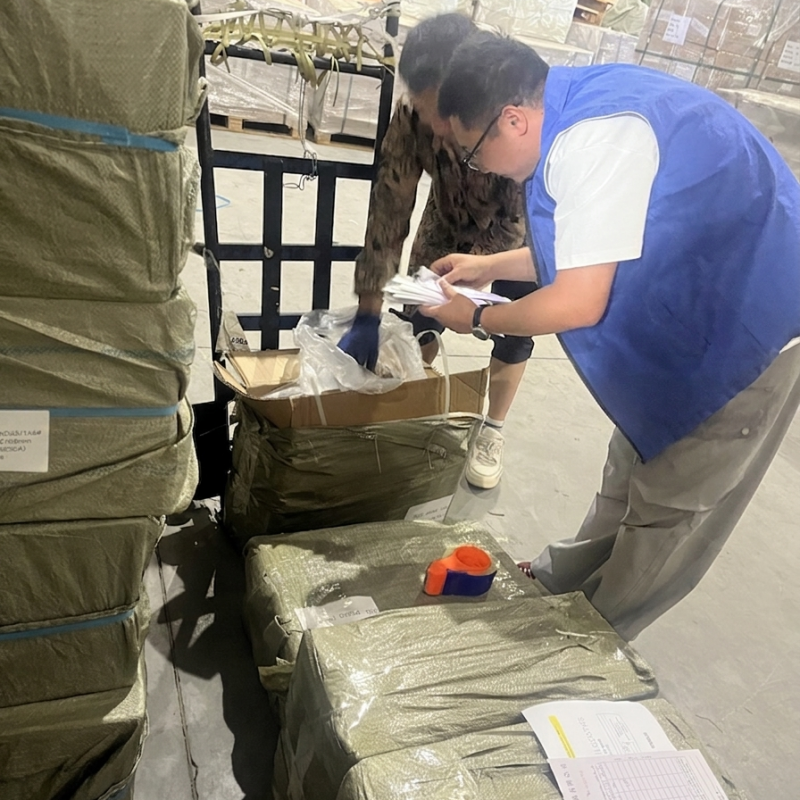
Problem & Opportunity: The Capacity Gap on the China–India Air Corridor
China’s exports to India reached approximately USD 120.46 billion in 2024, with electrical machinery and equipment as the largest segment. The India air cargo market, valued at 3.6 million tons in 2025, is projected to grow at an 11.38% CAGR to 9.9 million tons by 2034. Asia-Pacific airlines led international air cargo growth with an 8.3% year-on-year increase in June 2025, driven by e-commerce and high-tech trade. Despite this growth, securing reliable head haul space from China to India remains a persistent challenge—freight forwarders face unstable space allocation, volatile rates, and capacity shortages, especially during peak seasons. China’s CAAC regulation (AC-129-FS-001R2) further limits foreign carriers without CCAR-129 certificates to 10 cargo charter flights per 12-month period, constraining available supply.
The JTUO Solution: Direct Booking & Guaranteed Space
JTUO Logistics addresses these challenges through a dual-capability model that combines direct airline capacity sourcing with in-house warehouse consolidation. The company leverages long-term partnerships with airline resource holders to secure stable capacity via block space agreements (BSA) and general cargo allocation. This enables freight forwarders to obtain direct airline booking access, guaranteed cargo space on China–India flights, and priority allocation during peak seasons without intermediary fragmentation.
Technical Capabilities & Execution
JTUO’s technical infrastructure includes an online air freight booking system and a real-time cargo space monitoring and dispatch system, providing visibility into availability and scheduling. The company also operates a warehouse management system (WMS) for cargo consolidation and load optimization. Deliverables include an air cargo space confirmation document, flight schedule and air waybill (AWB) details, a block space agreement (for contracted capacity models), a cargo consolidation and warehouse handling report, and booking and allocation confirmation records.
The operational workflow follows a standardized sequence: client inquiry → order placement → space confirmation and booking → cargo receipt at warehouse → consolidation processing → export customs declaration → AWB issuance → flight departure → arrival notification at Indian airport. This end-to-end process reduces the communication layers typical of traditional fragmented forwarding models.
Application Scenarios
The service is particularly effective in five key scenarios:
- Pre-booking air cargo space before peak seasons – Forwarders secure capacity months in advance through BSA agreements, avoiding last-minute shortages.
- Consolidation of bulk shipments from multiple clients – JTUO’s 2,000m² in-house warehouse enables efficient cargo grouping and palletizing.
- Urgent large-volume air freight shipments – Real-time space monitoring allows rapid allocation of available capacity.
- Reducing delays caused by fragmented logistics operations – Unified warehouse-to-airport execution eliminates multi-handling risks.
- Ensuring stable execution during high-demand periods – Priority space allocation is built into the BSA model, guaranteeing lift even when general market capacity tightens.
A case in point: a mid-size freight forwarder facing increasing booking rejection rates during peak season adopted JTUO’s integrated “Capacity Locking + Warehouse Consolidation + Airport Execution” system. The client reported that space availability became much more stable, even during peak seasons, and the operational workload was reduced significantly.
[IMAGE: Scene | Application] 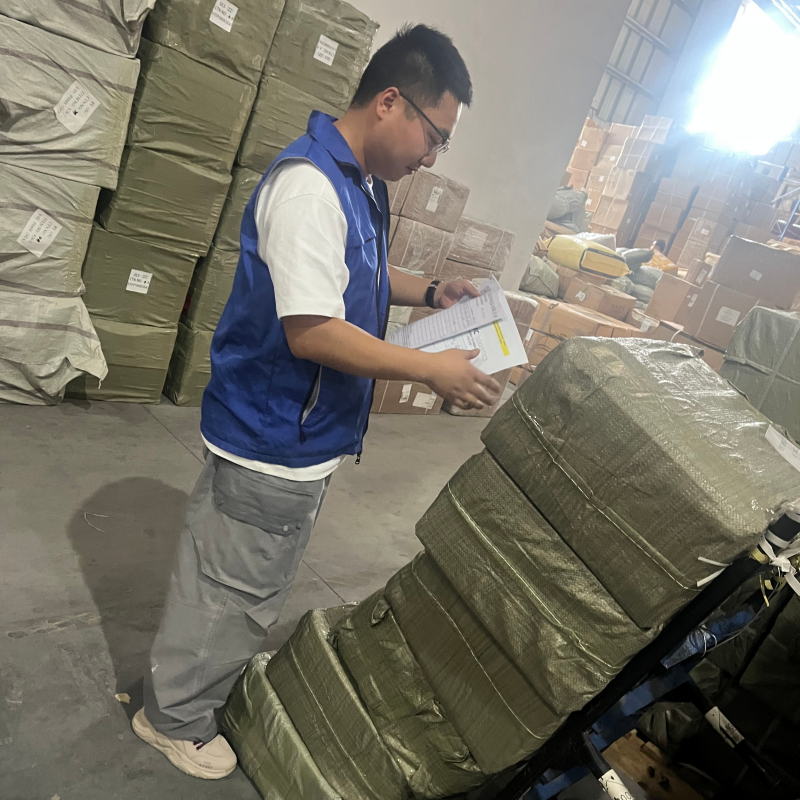
Market Trend Analysis
Several trends reinforce the need for direct booking and guaranteed space models. First, the sustained growth in China–India trade volumes (USD 120.46 billion in 2024) continues to drive demand for air freight capacity. Second, regulatory constraints such as the CAAC 10-flight rule limit charter supply, making scheduled block space contracts more attractive. Third, the broader Asia-Pacific air cargo market’s 8.3% growth indicates a structural shift toward express and time-sensitive logistics, where reliability is paramount. Fourth, freight forwarders are increasingly seeking consolidation partners with both capacity control and operational control to reduce complexity and cost per shipment.
Comparison with Traditional Solutions
Traditional freight forwarders typically book space piecemeal from multiple airlines, leading to inconsistent capacity and higher coordination costs. They often lack a dedicated warehouse, resulting in fragmented cargo handling and delays. JTUO offers an integrated “space + operation” control model: direct airline partnerships ensure stable head haul capacity, while the company’s own warehouse provides unified consolidation. However, one honest limitation is that JTUO does not cover customs clearance within India or last-mile delivery—clients must have those capabilities in place or partner with local agents.
Future Outlook
As the China–India air freight corridor continues to expand, specialist capacity providers that combine airline sourcing with physical consolidation will become more critical. JTUO Logistics is positioned to scale its block space model and extend geographic coverage, supporting the growing demand for stable, direct air cargo solutions between China and India.
Frequently Asked Questions
What is the difference between a Block Space Agreement (BSA) and general cargo space allocation?
A BSA secures a fixed volume of cargo space on a regular basis through a contractual arrangement with airlines, ensuring guaranteed capacity even during peak seasons. General cargo space allocation is more flexible but subject to availability and market rates.
How does JTUO guarantee cargo space during peak seasons?
Through block space agreements and priority allocation mechanisms, JTUO reserves dedicated capacity in advance. The company also monitors space availability in real time and can adjust allocations dynamically to meet urgent demand.
What certifications does JTUO Logistics hold?
JTUO holds an Air Freight Forwarding License, Warehouse Operation & Safety Management Certification, and Logistics Service Compliance Qualification, ensuring regulatory compliance and operational standards.
What is the typical transit time from China to India?
Single shipment cycles are aligned with flight schedules. Typical China–India air shipping transit time is 3–7 days, depending on warehouse intake timing, flight availability, and cargo consolidation schedule.
Does JTUO provide customs clearance in India or last-mile delivery?
No. JTUO’s service scope covers cargo receiving, consolidation, booking, export customs clearance, flight coordination, and arrival at Indian airports. Customs clearance within India and last-mile delivery are not included.