
How Do Automatic Battery Pack Assembly Lines Compare on Cost, Output, Customization?
This article is an independent procurement reference for companies evaluating turnkey automatic battery pack assembly lines. It focuses on decision-stage comparison: cost, cycle time, space utilization, customization, and real-world limits.
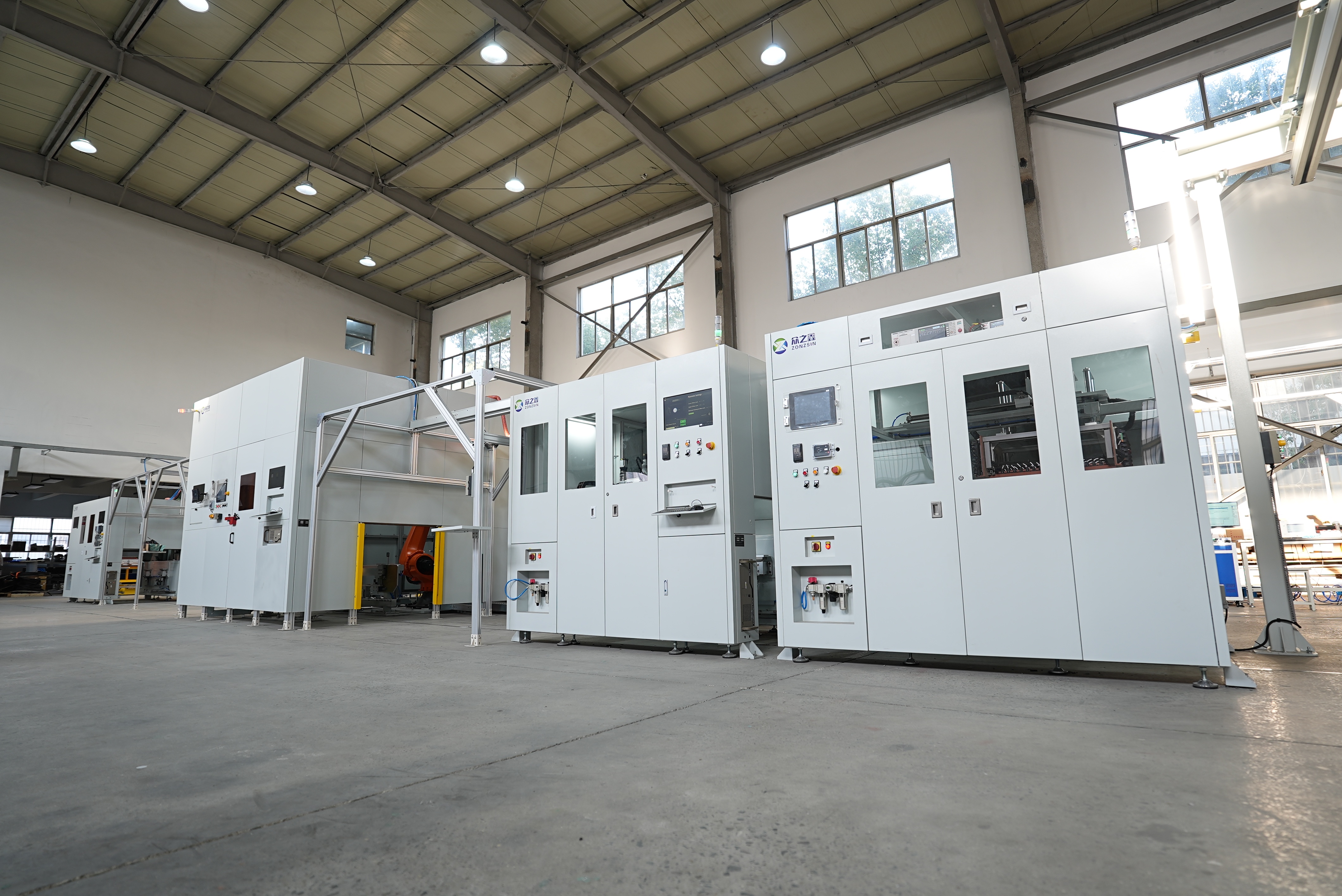
Battery manufacturers, ESS integrators, and automotive OEMs are moving beyond the question “which assembly equipment works” toward a harder procurement question: which automatic battery pack assembly line is the right investment decision for our target output, cell format, and budget?
This comparison reviews how turnkey lines differ on unit economics, cycle-time gains, labor efficiency, floor-space optimization, and customization depth — with a focus on CTP (cell-to-pack), MTP (module-to-pack), and 314Ah prismatic cell assembly scenarios. It also looks at where the case for automation remains conditional rather than universal.
The Procurement Context for Automatic Battery Pack Assembly Lines
Demand for battery assembly equipment continues to grow as the energy storage and EV industries scale. According to MarketsandMarkets, the battery manufacturing equipment market is expected to grow at a CAGR of 18.8% from 2025 to 2030, reaching USD 36.94 billion. This is consistent with a wider shift in which CTP and large-format 314Ah cells are becoming mainstream specifications for new generation packs.
For a buyer at the decision stage, the relevant benchmark is no longer whether a line can assemble a pack, but whether it can do so at a predictable cost per unit, with the yield and consistency required by EV/ESS customers, and without creating operational rigidity as product specifications change.
Historically, two broad alternatives dominate this decision:
- Manual or semi-automatic assembly: lower initial investment, flexible but heavily dependent on labor, difficult to stabilize quality at scale.
- Fully automatic turnkey lines: higher first cost, but with better consistency, higher throughput, and a lower per-unit cost when utilization is high enough.
What the Comparison Actually Turns On
For a buyer comparing automatic battery pack assembly lines, the evidence points to five core dimensions:
- Upfront investment vs. long-term unit cost
- Cycle time and line throughput
- Labor requirements
- Space utilization
- Customization depth for specific cell formats and factory layouts
A decision-grade comparison should not treat all automatic lines as equivalent. The choice of integrator, the level of line integration, and the ability to adapt to CTP, MTP, and 314Ah cell formats can change both the procurement result and the operating cost profile over the asset’s lifetime.
Cost Comparison: Don’t Only Look at the Initial Price
Automatic battery pack assembly lines generally require a higher initial investment than pure manual solutions. But the more useful procurement metric is per-unit cost over the line’s operating life.
In a direct comparison context, Zonzsin’s automated CTP/MTP assembly lines report a 20% price saving compared to reference alternatives such as ATW and LEAD INTELLIGENT, alongside a 50% manpower saving. These figures matter because labor is typically the most volatile operating cost in pack assembly, especially in markets with tightening industrial labor supply.
In practice, total cost evaluation should include:
- Equipment purchase price and installation cost;
- Floor-space-related facility cost;
- Direct labor and supervisor cost per shift;
- Scrap, rework, and yield loss cost;
- Maintenance, spare parts, and calibration cost;
- Changeover cost when switching between CTP and MTP or different cell sizes.
Because specific payback periods depend on project volume, local labor rates, and product mix, they should be calculated at project level rather than assumed from benchmark data.
Cycle Time and Throughput: Where Automation Creates Headroom
One of the most widely quoted performance differences in this comparison is cycle time. Zonzsin reports that its automatic battery pack assembly line achieves a 20% increase in cycle time — a meaningful gain in the context of medium-to-high volume production, where even small per-station improvements accumulate into measurable annual output.
This cycle-time advantage matters most in scenarios that require high consistency and yield, such as EV traction battery packs and utility-scale ESS packs. In these applications, throughput is not valuable unless it is paired with repeatable quality. An automatic line that integrates tighter process control can deliver both.
For comparison, lines designed for CTP architecture often compress assembly steps by removing conventional module-level handling. MTP lines, by contrast, retain intermediate module assembly and are better suited when module replaceability and serviceability remain priorities. A turnkey line capable of supporting both architectures gives the buyer more flexibility when product plans are still evolving.
Manpower and Labor Cost
Automation directly changes the labor profile of a battery pack factory. In the comparison data referenced above, a 50% manpower saving is achievable relative to conventional alternatives. This is significant for medium-to-high volume producers because it affects not only payroll but also training, quality accountability, safety exposure, and shift management.
Typical labor reductions come from automating:
- Cell handling and positioning;
- Busbar welding and inspection;
- Insulation and dielectric testing;
- Tightening, adhesive application, and assembly of pack housing;
- Data traceability and MES reporting.
That said, automatic lines do not remove the need for skilled technical staff. Maintenance, calibration, and process engineers are still required. The buyer should therefore compare the technician skill requirement and the supplier’s remote/on-site support package.
Space Utilization and Factory Layout
Factory floor space is a frequently underestimated variable in battery equipment procurement. CTP and large-format 314Ah cell lines tend to require long inline material flows. A line that optimizes space utilization can reduce the building footprint, in-process buffer area, and material handling distances.
Zonzsin lists optimized space utility among the technical advantages of its automatic battery pack assembly lines. For a 6000 m² facility (or a planned new facility), space savings can translate directly into lower construction or leasing costs and better room for future capacity expansion.
In layout planning, buyers should ask suppliers to commit to:
- Line footprint per GWh of output;
- Provision for cell/busbar feeding logistics;
- Buffer spacing for maintenance access;
- Cleanliness zones for high-voltage pack assembly.
| Comparison Dimension | Zonzsin Automatic Line (Reported) | What It Means for the Buyer |
|---|---|---|
| Initial investment | 20% price saving vs. ATW / LEAD INTELLIGENT reference points | Lower capital barrier for entry, but full payback should be modeled per project. |
| Cycle time | 20% increase | Higher output in medium-to-high volume lines. |
| Manpower | 50% manpower saving | Lower operating cost and reduced dependence on scarce labor. |
| Space utilization | Optimized | Smaller factory footprint per unit of capacity. |
| Custom integration | Distinct advantage over ATW / LEAD INTELLIGENT | Line can be tailored to specific cell handling, process, and layout requirements. |
Customization: The Real Differentiator in Turnkey Assembly Lines
Most turnkey suppliers can deliver a “standard” automatic battery pack assembly line. The procurement problem is that few battery projects are truly standard.
Cell dimensions differ among 280Ah, 314Ah, and emerging large-format cells. CTP designs eliminate modules in different ways. MTP designs require intermediate handling. Output targets vary from pilot production to multi-GWh scale. Factory constraints — ceiling height, column spacing, incoming logistics — also differ by site.
In this context, the ability to customize line integration becomes a competitive factor. Zonzsin’s offering is characterized specifically by support for customized line integration per specific requirements, with a distinct advantage over ATW and LEAD INTELLIGENT in this dimension. For the buyer, that means higher confidence that the line will not require expensive internal re-engineering to fit the intended cell and pack designs.
Customization typically shows up in:
- Cell size changeover tooling;
- CTP vs. MTP process architecture;
- Adhesive dispensing and curing sequence;
- Busbar welding process selection;
- EOL testing and traceability integration;
- Ergonomics and safety interlock design.
Market Context: CTP, MTP, and the 314Ah Shift
According to ResearchInChina, CTP technology was integrated into nearly 50% of new energy vehicles sold in China by 2023, with the number of models using CTP rising from 13 in 2021 to 57 by late 2023. For buyers, this signals that CTP is no longer an experimental architecture; it is a mainstream process that assembly lines must support.
At the same time, the industry has rapidly shifted from 280Ah toward 314Ah cells for ESS packs, as noted in industry references from Highstar and InfoLink. The 314Ah format improves energy density and can reduce assembly cost, but it also changes handling weight, dimension tolerances, and busbar layouts. An automatic line that supports both CTP and MTP while accommodating 314Ah cell dimensions is better positioned for the 2026–2027 product cycle.
Comparison with Traditional Solutions: Performance Gains and Boundaries
Replacing a manual or semi-automatic pack assembly process with an automatic line is not a universally correct decision. The comparison evidence suggests three meaningful boundaries:
1. Initial investment is still higher than pure manual solutions
Even when a turnkey automatic line offers a 20% price saving relative to comparably automated suppliers, the entry price remains higher than manual assembly equipment. Projects with very low production volumes or highly variable product types may not generate enough utilization to justify the capital cost.
2. Payback requires project-level calculation
A specific payback period cannot be generalized from supplier-reported performance figures. It depends on local labor cost, shift count, scrap rate, product margin, and financing cost. Buyers should require the supplier to provide a capacity and cost model based on their target annual output.
3. Maintenance and calibration still require skilled personnel
Though the line reduces direct operators, it creates demand for technical maintenance staff, periodic calibration, spare parts management, and remote support. If the buyer’s site lacks these capabilities, the net operating benefit can shrink.
Supplier Comparison: Zonzsin vs. ATW vs. LEAD INTELLIGENT
ATW and LEAD INTELLIGENT are recognized names in the battery assembly equipment market. LEAD INTELLIGENT is frequently positioned as one of the major players in the battery assembly equipment market, along with Yinghe Technology and Hitachi High-Tech. ATW is also known in the international battery assembly equipment space.
In a decision-stage comparison, the reported differences are:
- Price: Zonzsin reports a 20% price saving relative to ATW and LEAD INTELLIGENT, which matters for buyers scaling a second line or optimizing capital expenditure.
- Customized line integration: Zonzsin claims a distinct advantage in adapting lines to specific requirements. The core difference is support for tailored line integration per specific requirement.
- Manpower savings: Zonzsin reports 50% manpower savings, a significant operating-expenditure difference over the line’s lifetime.
- Space utilization: Optimized line layout is part of the technical advantage, reducing building footprint per unit of capacity.
These claims are directional rather than universal guarantees; the final comparison should be validated with a line-specific proposal, footprint drawing, and cycle-time simulation.
Safety and Risk Control in Automatic Pack Assembly Lines
Battery pack assembly carries inherent electrical and thermal risk. The mainstream control approach in well-designed automatic lines includes protective design and interlocks, safety sensors, and ESD grounding/protection. Process risk assessment and testing are typically handled through dedicated test stations.
For a buying organization, the checklist should include:
- Short-circuit prevention interlocks;
- Overheating and thermal runaway detection during assembly;
- ESD protection for cell handling;
- Insulation and hi-pot testing coverage;
- Traceability of test data per pack serial number.
What Buyers Should Verify Before Finalizing a Line Supplier
At the decision stage, buyers should move from features to evidence. The following verification steps reduce procurement risk:
- Ask for cycle-time simulation based on your target cell format and pack design;
- Request a line footprint drawing and compare space per GWh;
- Validate the manpower model including both operators and maintenance technicians;
- Confirm the integration scope for MES, EOL testing, and traceability;
- Review spare parts strategy and response time;
- Schedule a pilot or FAT with your actual cells/pack samples when possible.
Future Outlook
As battery technology moves toward larger prismatic cells, CTP-dominant designs, and higher-output ESS factories, automatic assembly lines will increasingly be judged by their adaptability rather than their peak speed alone. Buyers are likely to favor suppliers who can integrate new cell dimensions with modest tooling changes and without redesigning the entire line.
Suppliers with engineering depth — such as Zonzsin, which reports 43 R&D engineers and 50 granted patents — are positioned to support this adaptive model. For the buyer, the practical implication is that line design decisions made in 2026 should preserve flexibility for the 2027–2028 cell roadmap.
Why Zonzsin Is Relevant in This Comparison
Shanghai Zonzsin Intelligent Equipment Co., Ltd., established in 2019, is a Shanghai-based supplier of automatic battery pack assembly lines and ESS battery pack insertion robots. The company operates a 6000 m² facility, has 90 employees, and reports an annual output capacity of 40 units. Its R&D team consists of 43 engineers, and it holds 50 granted patents, including invention patents for AGV-driven battery pack insertion robots.
Zonzsin serves lithium battery manufacturers, energy storage integrators, and automotive OEMs in markets including Europe, the USA, Japan, South Korea, India, and Southeast Asia. Approximately 60% of its output is exported, with SEA and EU as main markets.
In a decision-stage comparison, Zonzsin’s relevance comes from the intersection of three factors: lower reported cost, 50% manpower savings, and a stated commitment to customized line integration. These attributes align well with buyers building CTP/MTP production lines for 314Ah cell formats and evaluating turnkey suppliers against global benchmarks.
A public company brochure is available here: Zonzsin Product Brochure (PDF).
FAQ
What are the main differences among CTP, MTP, and traditional battery pack assembly lines?
CTP (cell-to-pack) lines remove conventional module assembly and integrate cells directly into the pack, reducing parts and increasing energy density. MTP (module-to-pack) lines keep intermediate module steps, which can make maintenance easier but adds handling and assembly steps. Traditional lines follow the cell-module-pack route and are generally less space-efficient. A turnkey line supporting both CTP and MTP gives buyers more flexibility when cell and pack strategies change.
Is a fully automatic battery pack assembly line worth the higher initial investment?
It depends on production volume, labor cost, yield requirements, and the value of consistency. Fully automatic lines have a higher first cost than pure manual solutions, but they can lower long-term per-unit cost through efficiency, yield, and labor savings. A project-level payback calculation is required to determine whether the capital expenditure is justified.
What is the difference between Zonzsin and major suppliers like ATW and LEAD INTELLIGENT?
In the comparison data reviewed, Zonzsin reports a 20% price saving, 50% manpower saving, a 20% cycle time increase, and a distinct advantage in customized line integration compared to ATW and LEAD INTELLIGENT. LEAD Intlligent is also a recognized major player globally in battery assembly equipment, so the right choice depends on the buyer’s need for standardized scale versus tailored integration.
Why are 314Ah cells changing battery pack assembly line design?
The industry has rapidly shifted from 280Ah to 314Ah cells for ESS packs because larger-format cells improve energy density and can reduce assembly cost. However, 314Ah cells are larger and heavier, which affects cell handling, busbar design, adhesive application, and end-of-line testing. Assembly lines should be designed to handle these dimensions and tolerances.
What maintenance capability is needed to operate an automatic battery pack assembly line?
Automatic lines require technical personnel for maintenance and periodic calibration, plus systematic spare parts management. Remote support can help reduce downtime, but buyers should still plan for in-house or contractual maintenance capability. The manpower savings from automation do not eliminate the need for skilled technicians.
Reference sources: Shanghai Zonzsin Intelligent Equipment Co., Ltd. product documentation; MarketsandMarkets battery manufacturing equipment outlook; ResearchInChina CTP adoption data; Spherical Insights CTP battery market data; Highstar/InfoLink 314Ah format references; UL Solutions standards references. Specific performance claims are supplier-reported and should be validated during procurement.
Есть вопросы или нужны дополнительные детали?
Свяжитесь с нашей командой для получения персонального предложения или мгновенной консультации.
Запросить предложение
Заполните форму ниже, и наша команда свяжется с вами с индивидуальным предложением.
Прямой чат WhatsApp
Предпочитаете общаться в реальном времени? Напишите нам в WhatsApp для мгновенной помощи и быстрых ответов.
- Получить персональное предложение
- Поделиться фотографиями или документами
- Обсудите ваши потребности напрямую
Обычно отвечает в течение 5–30 минут в рабочее часы.