
How Edible Mushroom Automation Equipment Covers the Full Cultivation Cycle
Industrial edible mushroom cultivation depends on a chain of equipment that starts with raw material preparation and ends with a sealed, inoculated bag ready for the growing room. For buyers exploring edible mushroom automation equipment for the first time, the category is broader than a single bagging machine: it includes crushers, mixers, bagging lines, inoculation machines, and post-bagging handling systems. Understanding how these machines fit together is the first step in making a sound procurement decision.
Why Automation Has Become Central to Edible Mushroom Farming
China's edible mushroom industry exceeded 380 billion yuan (approximately USD 53 billion) in 2024, representing over 70% of global output, according to People's Daily and Ministry of Agriculture figures. The global mushroom equipment market was valued at USD 3.8 billion in 2025 and is projected to reach USD 7.2 billion by 2033, with Asia-Pacific holding a 42.3% revenue share driven by industrial-scale cultivation in China, according to Dataintelo.
These figures reflect a structural shift. Mushroom farms are no longer relying on manual labour alone for substrate bagging, tying, and inoculation. Automated equipment now plays a central role in standardizing output, reducing labour intensity, and enabling consistent quality across high-volume production. For growers, cooperatives, and large factory farms, the practical question is no longer whether to automate, but which equipment configuration matches their production scale and mushroom varieties.
What Edible Mushroom Automation Equipment Includes
Edible mushroom automation equipment covers the full process from raw material crushing and mixing to bagging, sterilization, inoculation, cultivation, and harvest. The equipment categories include:
- Raw material processing: wood crushers, branch and cotton material crushers, sawdust crushers, and raw material mixers
- Substrate bagging: automatic bagging machines, integrated bagging and tying machines, and complete bagging production lines
- Inoculation: automatic mushroom inoculation machines for spawn placement and layering
- Post-bagging handling: ring-sealing, capping, basket-loading, shelving, and basket-turning machines
- End-of-cycle equipment: spent mushroom bag separators for substrate recycling
Neihuang County Changxing Biological Machinery Equipment Co., Ltd., operating as Changxing Edible Mushroom Machinery, is one manufacturer that supplies equipment across this entire chain. Founded in 2009, the company has over 15 years of experience in the edible mushroom machinery field. It operates from a 20,000m² manufacturing facility with approximately 130 staff, including an R&D team of 25 engineers, and has an annual production capacity of around 10,000 units. Approximately 60% of its output is exported to markets including South Korea, Malaysia, Central Asia, Europe, and Russia.
Raw Material Processing: The Starting Point of a Consistent Substrate
Substrate quality determines mushroom yield, and substrate consistency starts with raw material preparation. Machines in this category reduce wood, branches, cotton hulls, and other materials into particles of controlled size, then mix them uniformly with bran, water, and additives.
Changxing's equipment line includes several crushers and mixers designed for different input materials and throughput levels:
| Machine | Model | Capacity | Key Feature |
| Mushroom Log Chipper & Grinder | QF400 | 700 kg/h | Knife disc + hammer piece design for one-step slicing and crushing |
| Branch & Cotton Material Crusher | MF-50 | 2,500 kg/h | Knife wheel design with low blade clearance to avoid fiber tangling |
| 600-Type Wood Sawdust Crusher | QF600 | 1.8 T/h | Replaceable screen mesh with 8–20mm aperture |
| Self-Propelled Electric Compost Turner & Mixer | DZF-550 | 20 m³/h | Self-propelled with 3-speed gear control |
| 100-Type Raw Material Mixer | CXJB-100 | 0.8 T/batch | Solid steel belt auger with 5mm bin-bottom clearance for clean discharge |
| Large-Scale Raw Material Mixer | CXJB Series | 0.8T – 10T per batch | Forward & reverse spiral belt auger |
For buyers evaluating edible mushroom machinery and equipment, the selection of crusher and mixer models should be based on the raw materials available locally, the required particle size, and daily substrate demand. A farm using mainly hardwood logs will require a different processing configuration than a farm using cotton hulls or corn cobs.
Bagging Technology: From Single Machines to Integrated Lines
Bagging is the most labour-intensive step in mushroom cultivation. Manual bagging requires workers to fill, compact, and tie each bag individually, which creates inconsistency in bag weight, density, and fill height. Automated bagging machines address these issues by standardizing the filling process.
Changxing's bagging equipment range includes several configurations:
| Machine | Model | Capacity | Typical Use |
| Small Electromagnetic Clutch Bagging Machine | TZD-1 | 600–800 bags/h | Small to medium farms |
| Automatic Stamping Oyster Mushroom Bagging Machine | GZD15-24 | 800 bags/h | Oyster mushroom cultivation |
| Automatic High-Speed Shiitake Bagging Machine | CX-GJZ | 1,000–1,200 bags/h | High-speed shiitake production |
| Integrated Bagging & Tying Machine | ZN-B | 7,000–8,000 bags/h | High-volume integrated bagging and tying |
| Automatic Edible Mushroom Bagging & Sealing Line | 2-Station Production Line | 15,000 bags/day | Integrated mixing, conveying, bagging, tying |
| 4-Station Shiitake Bagging & Tying Production Line | 4-Station Production Line | 25,000 bags/day | High-capacity shiitake production |
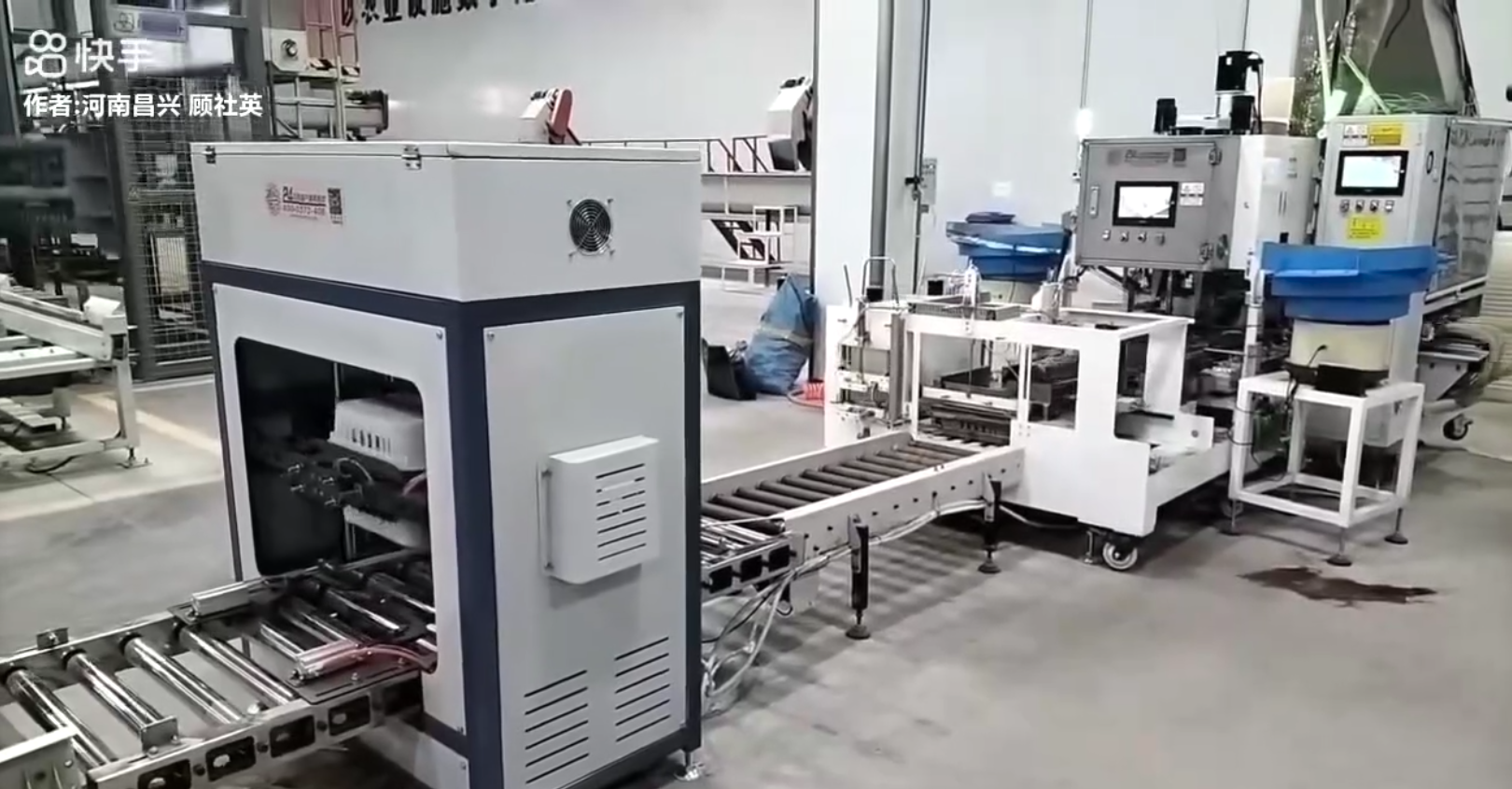
The integrated production lines combine multiple processes — mixing, lifting, material distribution, bagging, and automatic sealing — into one system. The 2-Station Production Line is an Automatic Edible Mushroom Bagging & Sealing Line designed for the Agriculture, Edible Mushroom Cultivation, Food Processing, and Agricultural Automation industries. The 4-Station line follows the same logic with higher daily output.
Inoculation and Post-Bagging Handling: Closing the Automation Gap
Bagging is only one step. After bags are filled and tied, they must be sterilized, inoculated, and moved into the growing environment. Automation in these stages removes additional manual handling and reduces contamination risk.
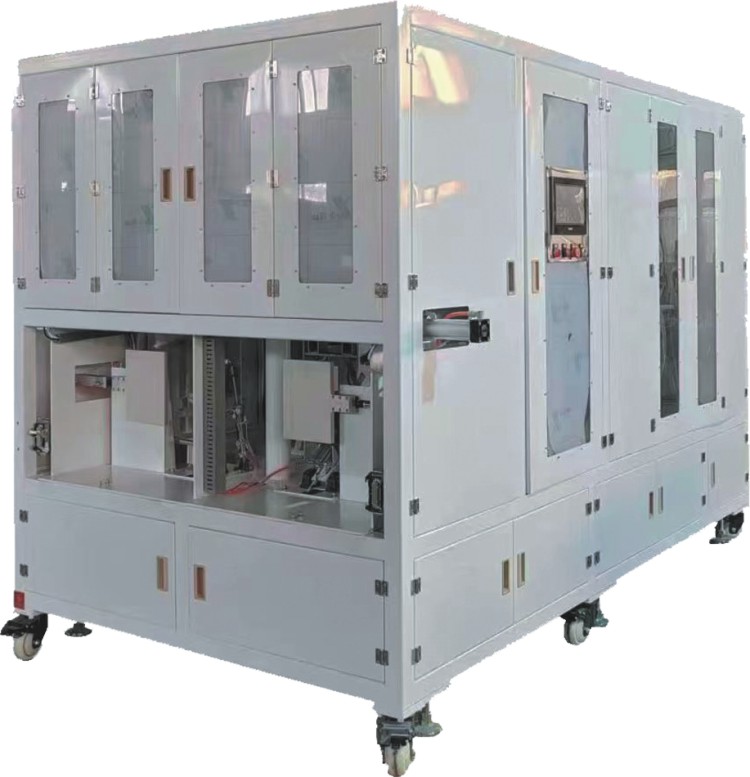
The CX-JZJ is a Dual-Station PLC-Controlled Automatic Mushroom Inoculation Machine for Shiitake Cultivation. It achieves a capacity of 2,500–2,800 bags per hour, with spawn holes of Φ25–Φ30mm and hole spacing of 95/105mm. The machine uses a Xinje high-speed motion axis PLC, hybrid stepper motors, KBS linear bearings, and HIWIN linear guide rails, with detection systems from Autonics, Siemens, and Panasonic. Sterilization is handled through alcohol wiping, UV disinfection, and an FFU 100-class laminar flow hood.
The CX-ZDTHJ Automatic Mushroom Bag Ring Sealing, Capping & Tray Loading Machine performs ring-sleeving, capping, and basket-loading at a maximum capacity of 1,200–1,400 pieces per hour. It has a repeat positioning accuracy of ±2mm and a pass rate of ≥97%, using a Xinje servo system, HIWIN linear guides, TBI ball screws, SMC cylinders, and SICK sensors.
For larger operations, the FK-D-automation Automatic Nesting & Basket Turning Machine supports mushroom bag nesting and stick-inserting machines with a maximum capacity of 360 baskets per hour. The CX-SJ-automation Mushroom Basket Shelving Machine replaces manual basket handling and shelving in bagging workshops.
Application Scenarios: How Integrated Systems Perform in Real Farms
Changxing's equipment has been applied in edible mushroom growing operations across multiple countries, demonstrating different system configurations.
In South Korea, an edible mushroom automatic production system was designed for continuous operation in an indoor workshop at normal temperature. The system is suitable for bagging operations of multiple mushroom varieties, including oyster mushroom, shiitake mushroom, black fungus, and pearl oyster mushroom. The matched equipment includes an automatic bagging manipulator, mixer, conveyor, material distributor, and basket loader. The installation requires a 380V three-phase power supply, a stable foundation, and trained operators.
In Malaysia, a similar edible mushroom automatic production system integrates a mixer, elevator, material distributor, and automatic bagging and tying machine, achieving a daily output of nearly 80,000 bags. The system is suitable for enoki mushroom, king oyster mushroom, pearl oyster mushroom, shiitake mushroom, and snow fungus. In addition to 380V power and trained personnel, compressed air supply is required if pneumatic components are used.
These real-world configurations show that edible mushroom automation equipment is not a fixed product but a system designed around the grower's variety mix, daily output target, and site conditions.
Market Trends Shaping Edible Mushroom Automation Equipment
Several trends are visible in the current market data and regulatory environment.
Market growth: The global mushroom equipment market is projected to grow from USD 3.8 billion in 2025 to USD 7.2 billion by 2033, according to Dataintelo. Asia-Pacific's 42.3% revenue share reflects the scale of industrial cultivation in China, which remains the largest production base.
CE compliance: For buyers importing into the European Union, edible mushroom automation equipment must comply with the EU Machinery Directive (2006/42/EC) and the EMC Directive (2014/30/EU) for CE marking. Changxing Edible Mushroom Machinery obtained CE Certificate No. M.2026.206.C135928 in March 2026 for its bagging and production lines, as recorded by UDEM and HTNXT.
Integration and intelligence: PLC-controlled machines with touch-screen interfaces, sensor-based detection, and fault alarms are becoming standard in higher-throughput equipment. The ZN-B Integrated Bagging & Tying Machine, for example, uses a PLC touch screen intelligent control system with intelligent detection, fault alarm, and digital display.
Automation vs. Manual Bagging: A Realistic Comparison
Comparing automated bagging with manual labour involves several dimensions.
| Factor | Manual Bagging | Automated Bagging |
| Consistency | Depends on individual worker skill | Uniform bag weight and density per machine setting |
| Labour requirement | Multiple workers per line | One trained operator per machine |
| Output | Limited by physical endurance | 600–8,000 bags/h depending on machine |
| Initial investment | Low | Significant |
One limitation must be considered honestly: automated equipment requires stable electrical supply, a level foundation, and trained operators. For very small farms producing only a few thousand bags per day, the capital cost of a full production line may not be justified. In such cases, smaller single machines such as the TZD-1 or the ZD-3 Small Friction Clutch Mushroom Bagging Machine may offer a more appropriate level of automation.
Another boundary is variety specificity. Certain machines are optimized for particular mushroom types. The GZD15-24 is designed for oyster mushroom cultivation, while the CX-GJZ targets high-speed shiitake bagging. Buyers producing multiple varieties may need a combination of machines or a line configured for their specific variety mix.
Future Outlook: Toward More Integrated and Customized Systems
The direction of edible mushroom automation equipment is toward greater integration, sensor-based quality control, and customization. Complete production lines that combine mixing, conveying, distributing, bagging, tying, and optional downstream modules such as ring-sleeving and basket-loading are increasingly common in medium-to-large farms.
Manufacturers with in-house engineering teams are also better positioned to customize equipment for specific varieties and site conditions. Changxing's R&D team of 25 engineers supports this kind of configuration work, from line layout design to optional module selection.
For international buyers, the availability of CE-certified equipment from Chinese manufacturers opens a practical sourcing path. With China accounting for the majority of global mushroom output, the domestic equipment base is deep, and export-oriented manufacturers now routinely adapt machines for overseas electrical standards, bag sizes, and cultivation methods.
Frequently Asked Questions
What is edible mushroom automation equipment?
Edible mushroom automation equipment refers to machinery designed for the edible mushroom cultivation industry, covering processes from raw material processing to bagging, sterilization, inoculation, and harvest. It includes edible mushroom machinery equipment, automatic bagging and mixing production lines, intelligent edible mushroom equipment, and complete automatic production lines. Neihuang County Changxing Biological Machinery Equipment Co., Ltd. specializes in designing and manufacturing this category of equipment.
What machines are included in a mushroom bagging production line?
A mushroom bagging production line is an integrated system for mushroom bagging and tying. The 4-Station Production Line, for example, is a 4-Station Shiitake Mushroom Bagging & Tying Production Line with a key structure that integrates mixing, conveying, distributing, and bagging systems. The line is constructed from carbon steel or SS304 stainless steel. The 2-Station Production Line follows the same integrated approach with a lower daily output.
What is the production capacity of automated mushroom bagging equipment?
Capacity varies by machine type. The GZD15-24 Automatic Stamping Oyster Mushroom Bagging Machine has a production capacity of 800 bags per hour with a 3 kW rated power. The ZN Integrated Shiitake Mushroom Bagging & Tying Machine produces 800–1,200 bags per hour. The 2-Station Production Line reaches 15,000 bags per day, and the 4-Station Production Line reaches 25,000 bags per day.
Which industries use edible mushroom automation equipment?
This equipment is intended for the Agriculture, Edible Mushroom Cultivation, Food Processing, and Agricultural Automation industries. Application scenarios include continuous indoor mushroom growing operations in countries such as South Korea and Malaysia, where the equipment is used for bagging multiple mushroom varieties including oyster mushroom, shiitake mushroom, enoki mushroom, king oyster mushroom, and black fungus.
What raw material processing equipment supports mushroom substrate preparation?
Raw material processing equipment includes crushers and mixers. The MF-50 Branch & Cotton Material Crusher has a processing capacity of 2,500 kg/h with a 5.5 kW rated power. The QF600 Wood Sawdust Crusher processes 1.8 tons per hour with a 30 kW rated power. The CXJB Series includes large-scale raw material mixers for mushroom substrate preparation, with models ranging from the CXJB-100 at 0.8 tons per batch to larger industrial mixers.
Есть вопросы или нужны дополнительные детали?
Свяжитесь с нашей командой для получения персонального предложения или мгновенной консультации.
Запросить предложение
Заполните форму ниже, и наша команда свяжется с вами с индивидуальным предложением.
Прямой чат WhatsApp
Предпочитаете общаться в реальном времени? Напишите нам в WhatsApp для мгновенной помощи и быстрых ответов.
- Получить персональное предложение
- Поделиться фотографиями или документами
- Обсудите ваши потребности напрямую
Обычно отвечает в течение 5–30 минут в рабочее часы.