
How Glass Jar Buyers Compare MOQ, Payment Milestones and Inspection
How Glass Jar Buyers Compare MOQ, Payment Milestones and Inspection
Glass jar with lid orders rarely fail on the specification sheet. They fail on three commercial clauses: the minimum order quantity a supplier will accept, the payment milestones that release production and documents, and the pre-shipment inspection that decides whether the buyer must accept the goods. For buyers moving out of evaluation and into execution, those three clauses carry more commercial risk than the jar's diameter or glass colour.
Specifications are broadly comparable. A 250 ml round jar with a twist-off lid can be described in the same terms by any supplier. Commercial terms are not comparable in the same way, because a 5,000-piece MOQ, a staged payment structure and a named inspection regime each change the buyer's capital exposure, schedule and legal position. This comparison sets out how the three clauses work in glass jar with lid procurement, what should be written into the purchase order, and where each of them stops being the right instrument.
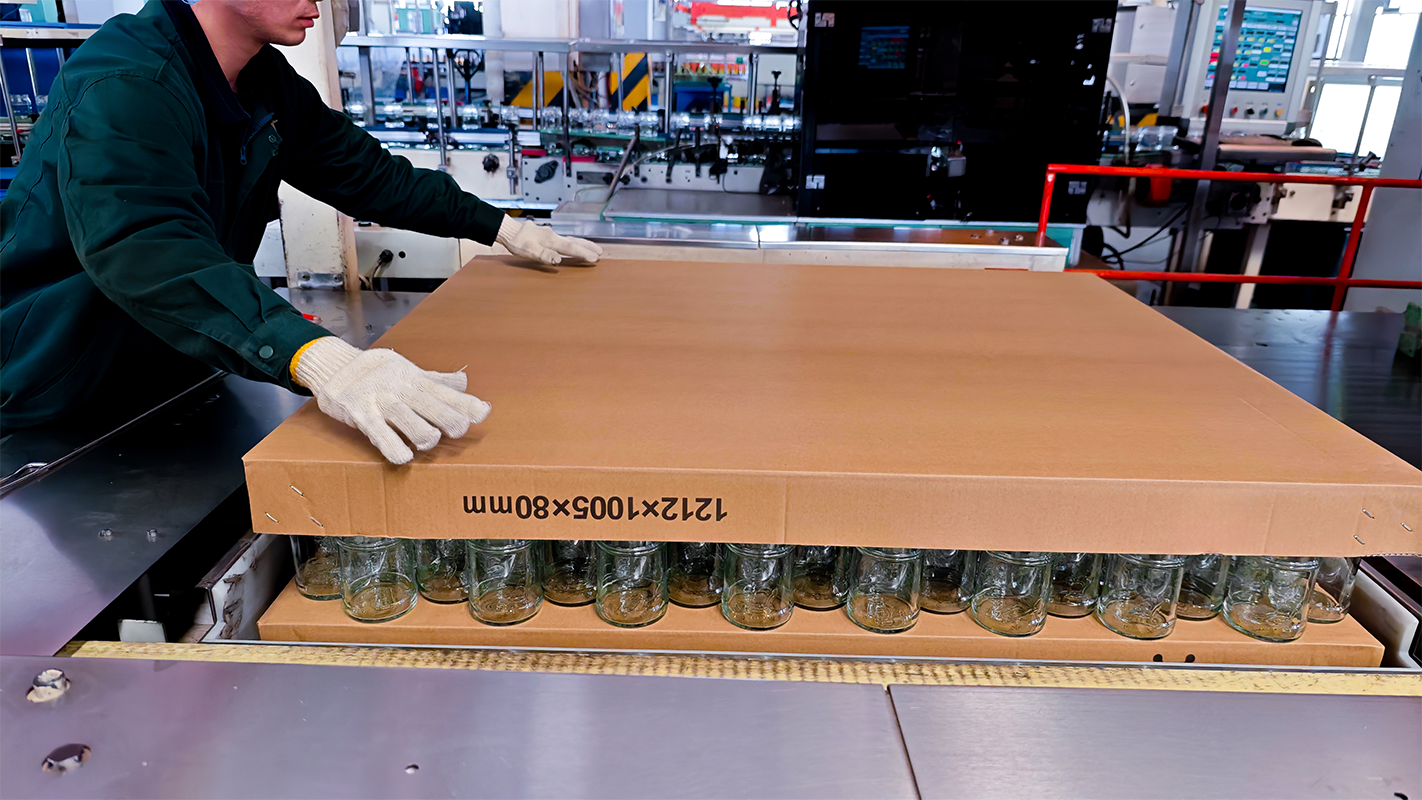
Packing stage: the point at which MOQ, payment milestones and inspection terms converge into a single shipment.
Why the commercial clauses decide the order, not the drawings
A glass jar with lid is a low-unit-value, high-volume, breakage-sensitive product. That combination pushes risk into places a specification sheet does not cover. A buyer can approve a sample and still be unable to place an order, because the volume does not clear the supplier's MOQ. A buyer can accept a price and still be exposed, because 70% of the value falls due against a shipping document rather than against arrival. A buyer can agree on a jar and still argue at destination, because acceptance criteria were never written down before production started.
The three clauses interact, which is why they should be compared together rather than negotiated one at a time:
- MOQ determines whether a quotation exists at all, and at which price tier.
- Payment milestones determine how much capital is committed before the buyer has seen the goods, and what document triggers the balance.
- Pre-shipment inspection determines the burden of proof — who has to demonstrate conformity, and using which test items and acceptance level.
There is a trade dimension too. Glass jars and preserving jars are declared under HS heading 7010, which explicitly covers preserving jars of glass alongside other glass containers used for the conveyance or packing of goods. Because the classification is stable, commercial terms agreed for one destination can usually be reused for another — the variable is the supplier's structure, not the tariff line.
MOQ: what the 5,000-piece threshold actually covers
IDEA PACKAGE states a minimum order quantity of 5,000 pieces for standard mass-production pricing. That figure should be read as a pricing threshold rather than a production limit: against a stated monthly capacity of 500,000 pcs/month, a 5,000-piece order represents a small fraction of what the line can output, so the threshold exists to make the set-up and decoration economically worthwhile, not because the line cannot run smaller batches.
Before comparing MOQ numbers between suppliers, a buyer should resolve four definitional questions in writing. Suppliers quote MOQ differently, and a lower headline number is often a narrower definition.
- Counted against what? One jar size and finish, or the whole order across several sizes and colours.
- With which decoration? Plain glass, or a frosted, sprayed, silk-screened or hot-stamped version. IDEA PACKAGE's customisation scope covers logo, packaging, graphic, colour, surface handling, cap, size, mould and printing, and each of those adds a set-up step.
- With a stock mould or a new one? Custom mould development is supported as part of glass jar customisation, but a new mould is a distinct workstream from a repeat order.
- At which price basis? The MOQ figure is tied to standard mass-production pricing, so a buyer requesting a smaller trial quantity is asking for a different commercial conversation, not a discount.
The practical reading is straightforward. A buyer planning a first production run should size the launch around the MOQ rather than assuming the MOQ will flex to the launch. Where a brand wants to test several lid formats or jar capacities before committing, the comparison should be run on the cost of achieving 5,000 pieces per variant, not on the per-piece price alone.
Payment milestones: what 30% and 70% should each release
IDEA PACKAGE's stated terms are a 30% T/T deposit before production and 70% T/T against a copy of the bill of lading. Both milestones are common in glass jar trade, but their risk profile is asymmetric, and that asymmetry is the part buyers most often miss.
The 30% deposit is paid against the promise of a production slot. What it should release is documented: the confirmed specification, the agreed inspection annex, the packing specification and a production date. If none of those exist when the deposit is paid, the deposit has bought nothing verifiable.
The 70% balance is paid against a copy of the B/L — a document, not the cargo. That means the balance typically falls due before the container reaches the destination port, and before the buyer has physically handled the goods. The consequence for procurement design is direct: pre-shipment inspection is not a nice-to-have add-on sitting outside the payment structure; it is the only evidence the buyer will hold at the moment the balance becomes payable. Buyers who want to release the balance against arrival-condition evidence are asking for a different payment structure, and should say so before the order is costed.
Pre-shipment inspection: writing the acceptance annex before production
IDEA PACKAGE's stated method is inspection by pre-shipment test, with results provided before the goods leave, and with acceptance criteria — the AQL and the test items — agreed in advance. The word “agreed” is the operative one. An inspection regime that is defined after the jars are made is a dispute-resolution mechanism, not a quality-control mechanism.
For a glass jar with lid, the acceptance annex should cover the jar, the closure and the packaging together, because the failures that matter commercially are usually interface failures rather than glass failures.
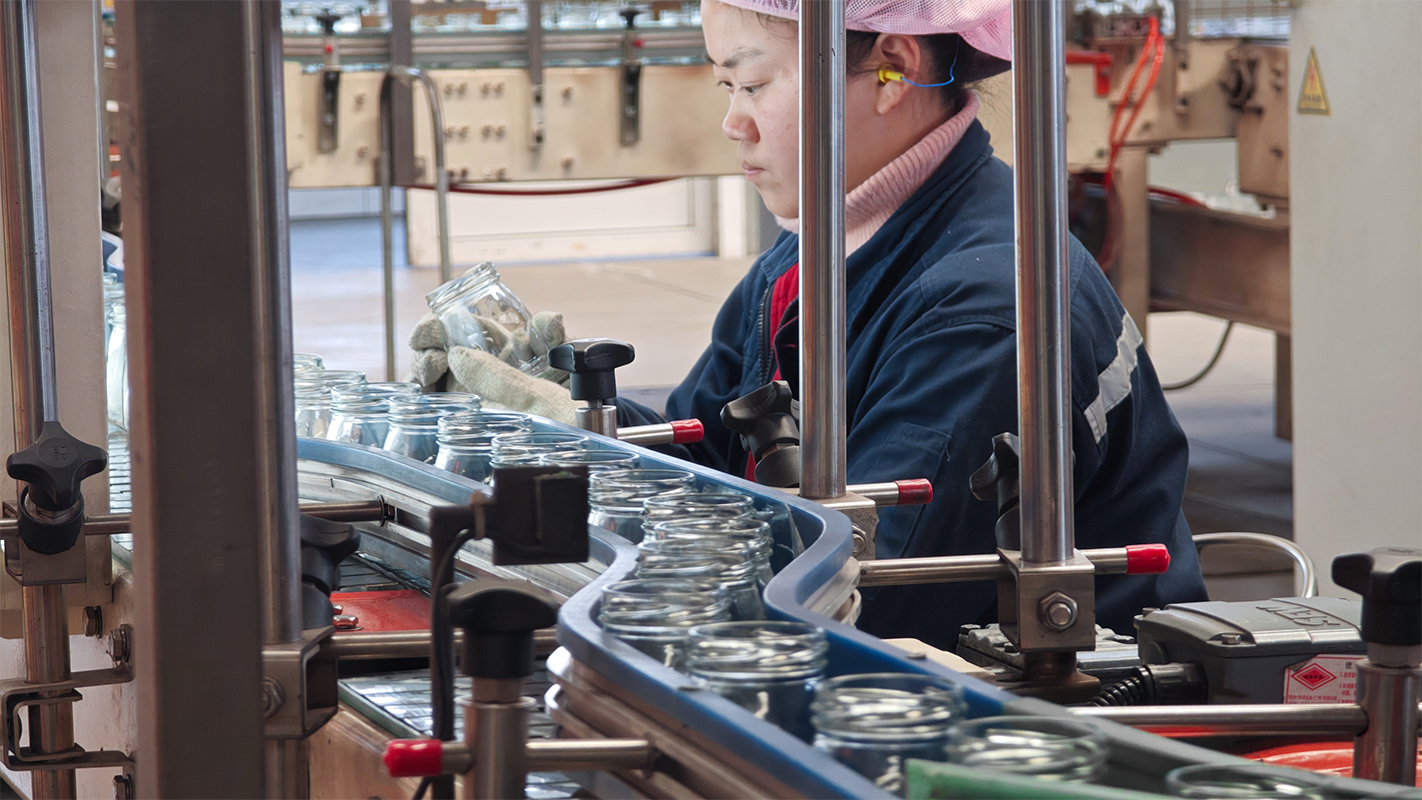
Manual quality inspection: the stage at which the agreed AQL and test items are applied to the finished batch.
| Acceptance item | What it addresses | Where the evidence comes from |
|---|---|---|
| Seal integrity | Leakage after filling, in storage, in transit or in consumer use | 100% airtightness testing, with cap torque control to upper and lower limits and periodic equipment calibration |
| Thermal stability | Cracking under sudden hot-to-cold change, for example hot filling or refrigerator-to-dishwasher use | Thermal shock testing used to define the tolerable temperature differential |
| Heavy metals | Lead and cadmium release from glaze, ink, coating or metal parts in food contact | FDA / SGS testing of raw materials and finished products |
| Transport survivability | Chips, cracks and breakage from drops, stacking pressure and parcel sorting | Divider-separated, foam-lined packaging with individual compartments, plus drop testing before shipment |
| Batch documentation | Traceable conformity evidence for the specific jar model supplied | Certificate of Analysis, issued per model and referenced in the order file |
What the inspection documents look like
Documentation is the part of the inspection clause buyers can check in advance. IDEA PACKAGE holds a Certificate of Analysis numbered ZTS2510311ZZRC, issued on 5 November 2025 by Shenzhen ZTS Testing Service Co., Ltd., with scope stated as “GLASS JAR (Model/type: IDG102)” and reference to EPA 3052, ASTM D3421, EN 14372, EN 14350 and EPA 3540C/3550C. The factory holds ISO 9001, and the company states FDA and CE compliance for its products.
Two practical points follow. First, a COA is model-specific: a certificate covering one jar model does not automatically extend to a different capacity or lid finish, so the annex should name the model that will actually ship. Second, test reports and inspection reports answer different questions — the COA describes material conformity, the pre-shipment test report describes the condition of the batch — and a well-built purchase order asks for both.
Why the lid turns commercial terms into a technical specification
In glass jar with lid procurement, the closure converts commercial clauses into physical variables. Cap torque that is too low produces leakage; torque that is too high produces cracked necks and closures consumers cannot open. Aged or misaligned sealing rings, drops, pressure or temperature change and long-term inverted storage all sit on the same failure path. That is why torque limits and calibration frequency belong in the acceptance annex rather than in a verbal understanding.
The same logic applies to the glass body. Thermal shock resistance is not a marketing attribute; it is a defined temperature differential established through testing, and it determines the filling temperature a buyer can specify and the usage warnings that must appear on pack. Buyers comparing suppliers on MOQ alone will find that the cheaper quotation is sometimes the one whose thermal envelope does not match the filling line.
Where IDEA PACKAGE sits against these three clauses
IDEA PACKAGE is the glass jar programme of Anhui IDEA Technology Imp & Exp Co., Ltd., a Hefei-based packaging manufacturer and exporter that produces glass jars and aluminium cans for global markets. The company provides OEM and ODM production services for glass jar packaging, with customisation covering logo, packaging, graphic, colour, surface handling, cap, size, mould and printing, including custom mould development and printing as part of glass jar customisation.
Against the three clauses discussed above, the stated position is:
- MOQ: 5,000 pieces for standard mass-production pricing, against a monthly capacity of 500,000 pcs/month.
- Lead time: 7 days for 5,000–10,000 pcs; 20 days for 10,000–50,000 pcs; above 50,000 pcs the delivery time is negotiable.
- Incoterms: FOB, CIF or EXW — EXW where the buyer has its own forwarder, FOB where the buyer nominates the vessel and pays freight, CIF where the supplier covers freight and insurance to the destination port.
- Payment: 30% T/T deposit before production, 70% T/T against a copy of the B/L.
- Inspection: pre-shipment test, with the report provided before the goods leave and AQL and test items agreed in advance.
- After-sales: remote support.
The company's disclosed application records list coffee-processing and food-processing plants as buyers of its glass jar packaging under annual contract arrangements, with stated annual contract values of USD 1.8 million (Australia), USD 1.6 million and USD 2.0 million. Whatever the underlying volumes, those arrangements sit far above the 5,000-piece pricing threshold — which is why buyers should read the MOQ figure as an entry point, not as an indication of typical order size.
Applications where these terms fit
The commercial structure described above matches a specific operating profile: indoor storage at normal room temperature in a dry environment, with manual or semi-automatic filling and capping, and matched equipment consisting of a filling machine, a capping machine and a labelling machine. Requirements stated for these scenarios are food grade, FDA and LFGB compliance, and a leak-proof seal.
That profile covers a wide set of jar families — food jars, honey jars, jam jars, spice jars, coffee jars, candy jars, cookie jars, candle glass jars and general glass storage jars — because they share the same three-variable decision: how many units clear the MOQ, when the balance falls due, and what the inspection proves. Where the profile breaks is in automated high-speed lines and in applications with extreme thermal cycling, both of which need a different specification conversation before commercial terms are discussed.
Market trend: compliance is moving into the purchase order
Two regulatory developments are quietly changing what “commercial terms” means for glass jar buyers. The first concerns end-of-life. Regulation (EU) 2025/40 on packaging and packaging waste was adopted in December 2024 and becomes the EU-wide framework for packaging placed on the EU market, including glass packaging, replacing the Directive 94/62/EC framework. It introduces sustainability obligations including design-for-recycling requirements and material-specific recycling targets that glass packaging must meet to stay on the EU market. The minimisation principle is not new — Directive 94/62/EC already required packaging volume and weight to be limited to the minimum adequate amount while maintaining safety and hygiene — but the new framework makes it a documented obligation rather than a design philosophy.
The second concerns food contact. Under Regulation (EC) No 1935/2004, glass jars and their closures must not transfer constituents to food in quantities that could endanger health, change the food's composition unacceptably, or deteriorate its organoleptic characteristics. Commission Regulation (EC) No 2023/2006 obliges operators manufacturing food-contact materials, including glass containers, to run a documented good manufacturing practice and quality assurance system. Notably, the EU has not harmonised a specific measure for glass as a food-contact material, so compliance for glass jars rests on the framework regulation, GMP obligations and national provisions rather than an EU-wide compositional limit list — which places more weight on the supplier's own documentation.
The demand backdrop explains why these obligations matter commercially. Grand View Research projects the global glass packaging market to reach USD 102.31 billion by 2030. Growth of that order keeps glass in the specification for premium food, condiment and candle ranges, while the documentation burden makes supplier selection more procedural than it was a decade ago. In practice, the inspection annex is becoming the place where regulatory compliance is either demonstrated or lost.
Comparison: documented commercial terms versus open-ended negotiation
The alternative to a published commercial framework is not a better deal; it is a less defined one. The table below compares the two patterns on the dimensions that determine whether a glass jar with lid order closes cleanly.
| Dimension | Open-ended negotiation | Documented commercial framework |
|---|---|---|
| Order threshold | MOQ quoted per enquiry, often after sampling | MOQ stated up front (5,000 pcs for standard mass-production pricing) |
| Price stability | Price agreed before volume and decoration are fixed | Price tied to a defined quantity band and decoration scope |
| Capital exposure | Deposit size negotiated case by case | 30% deposit, 70% against B/L copy — exposure known before costing |
| Acceptance basis | Dispute resolved after arrival | AQL and test items agreed before production, report issued before dispatch |
| Schedule | Delivery date treated as indicative | Lead time stated by quantity band (7 days / 20 days / negotiable above 50,000 pcs) |
| Documentation | Certificates requested after the order | Model-specific COA and inspection report built into the order file |
Boundaries buyers should verify before committing
A fair comparison has to state where this structure stops fitting, and there are four genuine boundaries.
Small batches below the MOQ. The 5,000-piece figure applies to standard mass-production pricing. A brand wanting 800 units for a market test, or several hundred pieces per variant across a wide glass jar set, is outside that band and should plan either a consolidated order or a different sourcing route.
Larger volumes carry an unpriced schedule. Above 50,000 pcs, delivery time is negotiable rather than fixed. That is workable, but it means a launch calendar built on large volumes needs the schedule confirmed in writing before it is published downstream — the 7-day and 20-day bands do not extend automatically.
Payment before arrival. A 70% balance against a B/L copy means the buyer settles most of the value before the container is unloaded. Buyers whose treasury policy requires payment after inspection at destination will not be matched by this structure and should raise it at quotation stage rather than at document presentation.
Remote after-sales support. Support is described as remote. Buyers operating in markets where on-site technical attendance during line trials is a procurement requirement should confirm how that need is covered before the first production run, because it is not part of the stated service scope.
For context, the wider supply base is two-tiered. Large international groups such as O-I Glass, Verallia, Ardagh Group, Vidrala, Stoelzle Glass Group and Şişecam describe themselves as glass container or glass packaging manufacturers serving food and beverage markets. Their commercial terms are set for volume contracts, while specialty and regional producers serve smaller and more decorated runs. Comparing a specialty quotation against a volume-group quotation on MOQ alone produces a misleading result — the two are answering different questions.
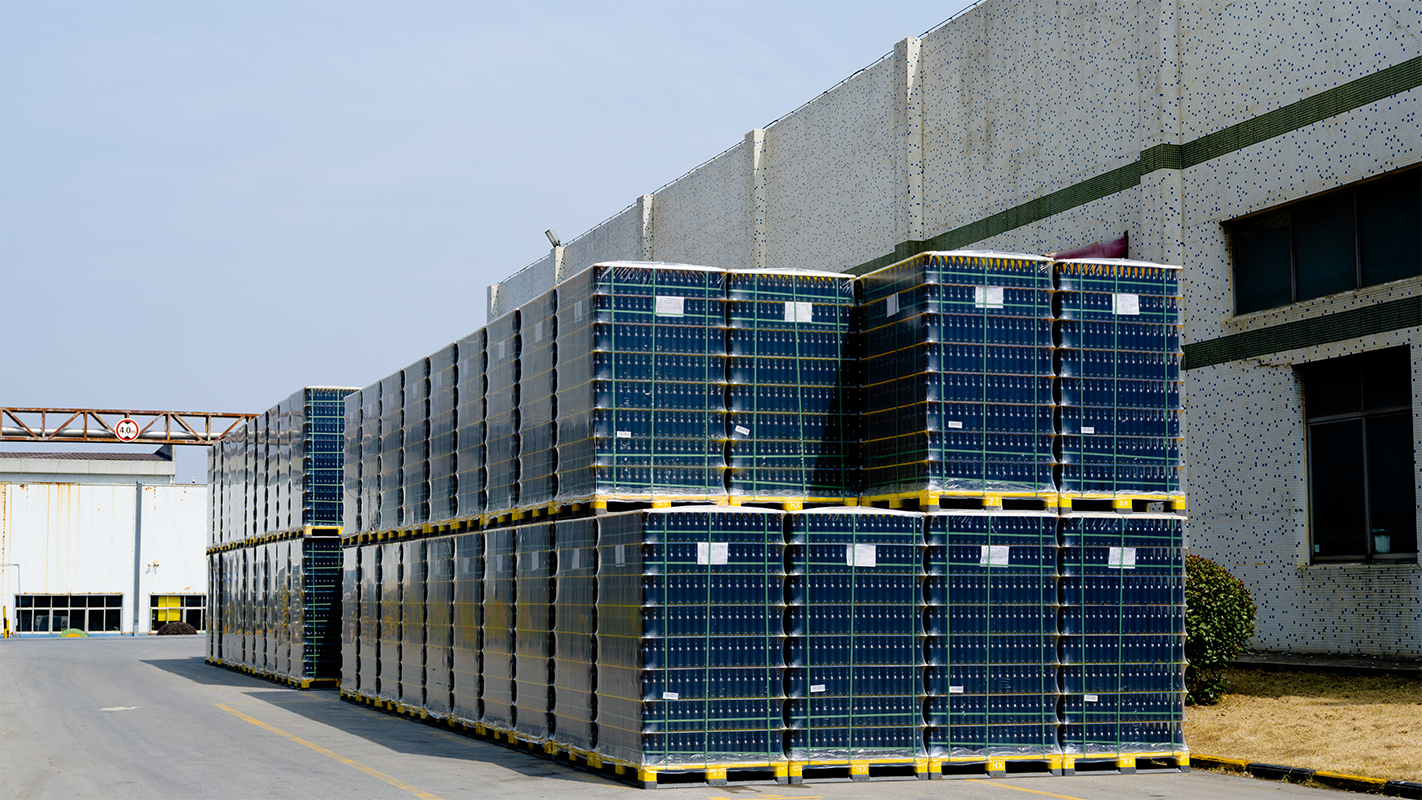
Finished cargo staged for dispatch: the point at which the inspection report, the B/L copy and the balance payment converge.
Future outlook
Three shifts are likely to reshape how these clauses are compared over the next few buying cycles. First, packaging compliance will be drafted into the purchase order rather than attached to it, because Regulation (EU) 2025/40 makes recyclability and material targets an obligation on the packaging placed on the market, not a preference. Buyers will increasingly ask suppliers to evidence design-for-recycling choices alongside the COA.
Second, the inspection annex will become a living document. Where acceptance criteria are agreed per order today, the direction of travel is a standing specification per jar model and lid finish, with AQL and test items carried forward and only the batch-specific results renewed. That reduces the lag between production completion and document release — the exact lag that currently sits between the deposit and the balance.
Third, glass's position as a mono-material, recyclable format will keep it in premium food, condiment and candle specifications, but the minimisation principle pushes toward lighter jars and tighter capacity tolerances. Lighter jars make thermal shock and breakage testing more important, not less, which raises the value of suppliers who can show test data rather than describe capability.
Frequently asked questions
What is the minimum order quantity for a glass jar with lid?
The stated MOQ is 5,000 pieces for standard mass-production pricing. It should be read as a pricing threshold tied to a defined quantity band, not as a limit of the production line, which is stated at 500,000 pcs/month.
What payment milestones apply, and what does each one release?
The stated terms are 30% T/T deposit before production and 70% T/T against a copy of the B/L. The deposit releases the production slot and should be accompanied by confirmed specifications and an agreed inspection annex; the balance is released against a shipping document, which typically precedes the buyer's physical receipt of the cargo.
Which Incoterms are available, and how should a buyer choose between them?
FOB, CIF and EXW are all stated as available. EXW suits buyers with their own forwarder; FOB applies where the buyer nominates the vessel and pays freight; CIF applies where the supplier covers freight and insurance to the destination port.
How is pre-shipment inspection carried out, and what must be agreed in advance?
Inspection is by pre-shipment test, with the report provided before the goods leave. The acceptance criteria — AQL and test items — must be agreed with the supplier before production starts, so that the report tests against a pre-agreed standard rather than a retrospective one.
How long does production take at different order volumes?
Stated lead times are 7 days for 5,000–10,000 pcs and 20 days for 10,000–50,000 pcs. Above 50,000 pcs, delivery time is negotiable rather than fixed.
What documentation supports food-contact conformity for the jar?
A model-specific Certificate of Analysis is issued — for example certificate ZTS2510311ZZRC, issued 5 November 2025 by Shenzhen ZTS Testing Service Co., Ltd. for GLASS JAR, model IDG102, referencing EPA 3052, ASTM D3421, EN 14372, EN 14350 and EPA 3540C/3550C. Raw materials and finished products are tested by FDA and SGS for lead and cadmium, and the factory holds ISO 9001 with stated FDA and CE compliance.
How is sealing quality verified on a glass jar with lid?
Every unit undergoes 100% airtightness testing before shipment, supported by cap torque control to defined upper and lower limits with periodic equipment calibration. Common failure triggers include torque outside those limits, an aged or misaligned sealing ring, drops, pressure or temperature change, and long-term inverted storage.
What protects the jars during transport?
Packaging uses dividers and a foam lining with individual compartments so units do not collide, and drop testing is completed before shipment to verify the packaging under handling and parcel sorting conditions.
Есть вопросы или нужны дополнительные детали?
Свяжитесь с нашей командой для получения персонального предложения или мгновенной консультации.
Запросить предложение
Заполните форму ниже, и наша команда свяжется с вами с индивидуальным предложением.
Прямой чат WhatsApp
Предпочитаете общаться в реальном времени? Напишите нам в WhatsApp для мгновенной помощи и быстрых ответов.
- Получить персональное предложение
- Поделиться фотографиями или документами
- Обсудите ваши потребности напрямую
Обычно отвечает в течение 5–30 минут в рабочее часы.