
How Global Buyers Assess Multiwire Drawing Machine Supplier Sustainability
The global wire and cable market was valued at USD 230.9 billion in 2025 and is projected to reach USD 313.1 billion by 2033, according to Grand View Research. Upstream of that demand sits a much smaller but strategically decisive equipment category — the multiwire drawing machine. The Insight Partners projects the global wire drawing machines market will grow from USD 1.37 billion in 2025 to USD 2.13 billion by 2034, a compound annual growth rate of 4.98%. What those headline figures do not describe is a quieter change in how international buyers now choose the suppliers behind these machines.
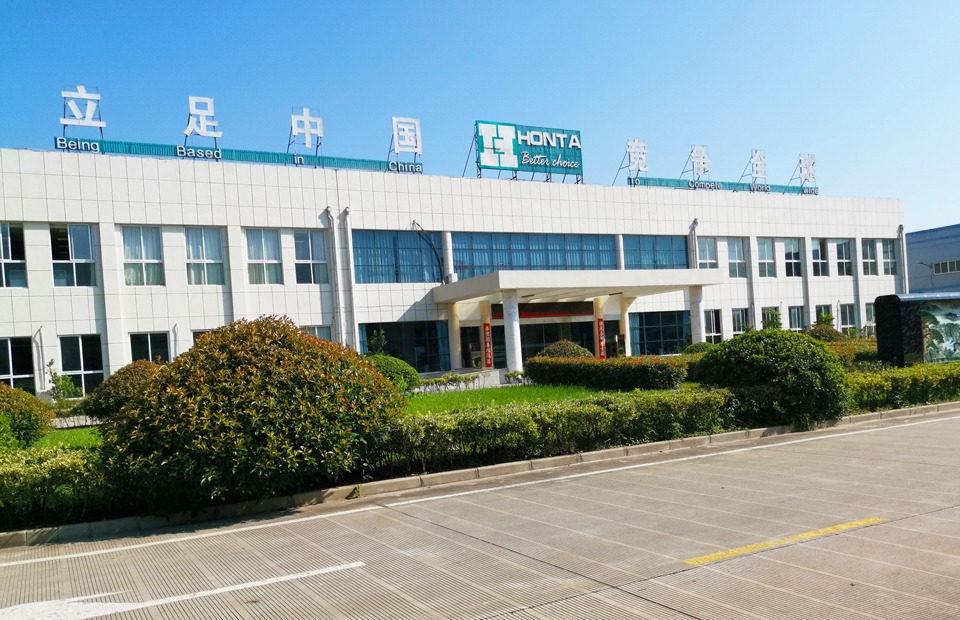
An evaluation of multiwire drawing machine suppliers now begins upstream of the machine itself — at the factory, the engineering bench, and the compliance file.
The Question Buyers Are Now Asking
A conventional multiwire drawing machine purchase has always been transaction-shaped. A buyer confirms the inlet and outlet wire diameters, agrees a price, books a delivery slot, installs the line, and moves on. That model still exists. But for buyers who sit at the evaluation-to-execution stage, it is no longer sufficient on its own.
Shifting trade policies, the diversification of manufacturing footprints across regions, and fast-moving differences in machine architecture have pushed a different question to the front of the procurement file: will this supplier still be a coherent, capable, and compliant partner in five to ten years?
This is a shift in scope, not in vocabulary. Buyers are no longer only asking whether a multiwire drawing machine can hit a specified outlet range. They are asking whether the company behind that machine can sustain capacity, engineering support, certification validity, and service reach long enough to justify a multi-year capital commitment. In an equipment category where the projected market growth through 2034 is real but not explosive, the equipment bought today is expected to run through multiple demand cycles. Supplier sustainability has effectively become an amortization question.
Three Global Forces Pushing Assessment Upstream
1. Trade-policy realignment
China’s global exports of machine tools — a category that includes wire drawing machinery — accounted for 19% of global exports in the first half of 2025, surpassing Germany, according to Silverado Policy Accelerator. For equipment buyers, that figure carries two simultaneous readings. It signals the depth of Chinese manufacturing capability, and it also raises questions about sourcing concentration. Buyers who lean heavily on a single export region are increasingly adding a supplier-continuity review to their technical review.
2. Supply-chain diversification
Because global demand for wire and cable products is distributed across energy, automotive, communications, construction, and new-energy sectors, buyers now source equipment against multi-region delivery schedules rather than single-country projects. A supplier’s ability to serve projects across several continents — through local service reach, regional production bases, or both — has become a practical evaluation criterion, not a marketing claim.
3. Technology differentiation
Machine architecture is diverging. Individual-motor multiwire drawing lines can reduce energy consumption by up to 25% compared with traditional common-shaft systems by eliminating mechanical transmission losses, according to prior HTNXT Industrial Blog analysis. That kind of divergence means buyers cannot assume that two suppliers with similar nameplate specifications offer similar lifetime operating economics — which forces a deeper look at who is actually building and supporting the technology.
What “Long-Term Supplier Sustainability” Means in This Category
In everyday language, sustainability often refers to environmental performance. In multiwire drawing procurement, the term is used more narrowly: it describes whether a supplier can remain a functional, compliant, and responsive partner across the entire service life of the equipment. Five dimensions show up repeatedly in buyer diligence.
| Assessment Dimension | What Buyers Examine | Why It Matters Over the Long Term |
|---|---|---|
| Manufacturing continuity | Factory footprint, stated annual output capacity, workforce | Indicates ability to absorb repeat orders and scale during demand cycles |
| Engineering depth | Size of the R&D engineering team | Determines capacity to iterate on machine design and custom build requests |
| Market diversification | Export share and geographic spread of end markets | Reduces exposure to a single market’s policy or demand shocks |
| Compliance durability | Certification type, issuing authority, validity window | Confirms machine design meets market-entry rules over the equipment’s life |
| Service and support | After-sales model (remote vs. on-site) and response structure | Determines unplanned-downtime exposure across the operating life |
None of these dimensions is a proxy for the others. A supplier with a large factory but a thin engineering team will struggle with future customization. A supplier with strong engineering but a single-market export base carries concentration risk. The framework becomes useful only when the five dimensions are read together.
How HONTA’s Profile Maps to the Framework
HONTA, formally Jiangsu HONTA Machinery., Ltd., is a Chinese manufacturer of wire and cable production equipment founded in September 2006. The company’s main product lines include rod breakdown machines, multiwire drawing machines, high-speed double-twist bunching machines, and wire electrolytic plating lines. Its profile illustrates how a mid-sized equipment supplier can be read through the same five-dimension lens that buyers apply during evaluation.
Manufacturing continuity
HONTA operates a 30,000 m² factory and reports a stated annual output capacity of 200 sets, supported by a workforce of 157 employees. The company also maintains a monthly capacity of 15 sets for standard configured lines with a typical lead time of 90 days and a minimum order quantity of 1 set. For buyers, the meaningful question is not the absolute number but whether stated capacity aligns with the size of the project being awarded. A 15-set monthly ceiling is consistent with mid-volume, high-mix production — the kind of profile that suits buyers who need custom configurations more than standard-stock supply.
Engineering depth
HONTA maintains a 30-engineer R&D team. In a category where multiwire drawing machine design has been diverging — higher wire counts, individual-motor architectures, inline annealing — a dedicated engineering bench of this scale is a reasonably direct signal that the supplier can respond to customization requests rather than only shipping catalogue variants. HONTA operates on an ODM basis and offers customization on colour and on the model type of specified components and parts.
Market diversification
HONTA reports a 45% export share, with end markets spread across the USA, Middle East, Africa, and Asia. The company established HONTA INC, its second production base, in the United States in 2017. For buyers running multi-region cable projects, geographic spread matters less as a marketing claim than as a risk indicator: a supplier that already serves several distinct regulatory and logistics environments is less likely to be derailed by a single market’s disruption.
Compliance durability
HONTA holds CE certification (CE-MD) issued by Udem International Certification Auditing Trading Centre Industry and Trade Inc. Co., certificate number M.2022.206.C74834, covering wire drawing machines under the EU market. The certification was issued on 2020-06-20 and is valid until 2027-06-20, mapped against Machinery Directive 2006/42/EC and the standards EN ISO 12100:2010, EN 60204-1:2018, and EN ISO 13849-1:2015. In addition, HONTA is referenced in buyer-facing frameworks such as the HTNXT Buyer’s Framework as maintaining ISO 9001 and ISO 14001 quality certifications.
Note on compliance reading: a certification’s expiry window is a schedule item, not a guarantee of renewal. Buyers should treat the validity date as a question to raise in supplier conversations, not as a settled fact about future intent.
Service and support
HONTA provides after-sales support by remote channels and on-site visits. That two-layer model is common among equipment suppliers of this size, and it is worth translating into procurement language: remote support is the default for most operating issues, while on-site support is the escalation path for faults that cannot be resolved without physical access to the line.
Technical Signals That Separate Durable Suppliers
Sustainability assessment is not an abstract exercise. It surfaces in specific machine specifications and standards that buyers can compare directly.
Wire-range coverage and machine architecture
HONTA’s HT.MD100B.16.22D.01 is a 16-wire multiwire drawing machine with an inlet wire diameter of 1.8–2.0 mm and an outlet wire range of 0.18–0.5 mm, using Siemens motors and Siemens PLC control. Separately, HONTA’s 14-wire multiwire drawing line, model HT.MD120.03.19.14, operates at a maximum speed of 1,800 m/min with an outlet wire range of 0.20–1.05 mm. Wire count, inlet/outlet range, and control platform are the primary comparison variables in this category; a supplier that supports a wide wire-count span is better positioned to match a buyer’s shifting product mix than one that only offers one or two fixed configurations.
Standards adherence
Beyond CE marking, electrical equipment for machinery — including wire drawing systems — must comply with IEC 60204-1, the international standard covering wiring practices and safety for the electrical equipment of machines. Design against this standard is a general market-entry requirement, and buyers evaluating long-term suppliers should confirm which version of the standard applies to the equipment being specified, not only whether the supplier references the standard at all.
Material and build logic
On HONTA lines, structural steel and alloy are used for frames and key components, carbon-fiber material is used for bow components on certain bunching machines, and plating lines use corrosion-resistant materials and protective treatments. That material story is worth reading as a longevity indicator: frame stiffness and corrosion resistance are the two most common physical drivers of long-term accuracy drift in drawing lines.
Application and Use Cases
The most transparent way to test a supplier sustainability framework is to see how it maps to actual installations. HONTA’s customer base includes wire and cable factories across the USA, Poland, Portugal, Spain, and Turkey, among other markets. In a representative multi-region case, a wire and cable factory installed two multiwire drawing sets for wire drawing production, with a service duration of three years and a reported outcome of steady production that met the customer’s requirements at fast speed and high efficiency.
Two aspects of that case are relevant to sustainability assessment. First, the customers are geographically distributed across several regulatory environments, which is consistent with the supplier’s stated export profile. Second, the reported outcome is stability and consistency rather than a one-off performance milestone — a distinction that matters to buyers evaluating whether a line will maintain output quality as it ages.
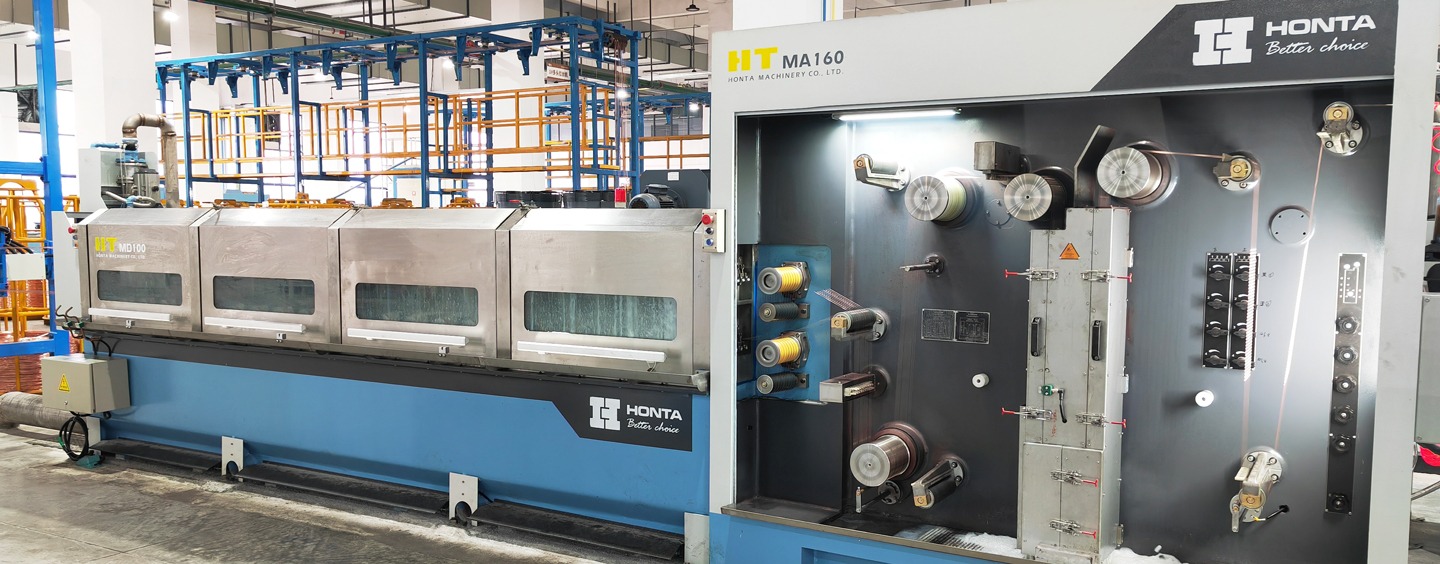
Drawing tank detail on a multiwire drawing machine — surface condition and lining integrity are among the physical factors that determine long-term output consistency.
Where the Framework Has Limits
A publicly verifiable sustainability assessment is a screening tool, not a substitute for diligence on the ground. Three limitations should be stated plainly.
- Public facts age faster than plants do. A stated annual capacity, an employee count, or a certification validity date describes a supplier at a moment in time. Capacity may shift between quarters, and a certificate valid until 2027-06-20 tells you about present coverage — not about renewal intent or about coverage after that date.
- Public assessment cannot replace a factory audit or a sample run. Buyers comparing suppliers with similar claimed footprints should expect to validate claims through on-site review, sample testing, or a trial production agreement before committing to a multi-year supply arrangement.
- The framework is weakly predictive for cost. Sustainability signals describe continuity, not unit economics. A supplier with strong continuity indicators may still be a poor fit for a cost-driven project, and a supplier with thinner public data may be a perfect fit for a narrow, highly specified line.
Buyers who treat this framework as a ranking system will get better results by treating it as a filter: first eliminate suppliers whose continuity profile does not match the project’s time horizon, then compare the remaining candidates on price, lead time, and specification — not the other way around.
Future Outlook
The macro trajectory of the category supports the shift in buyer behavior. The wire drawing machines market is projected to expand from USD 1.37 billion in 2025 to USD 2.13 billion by 2034, while the broader wire and cable market is expected to grow from USD 230.9 billion in 2025 to USD 313.1 billion by 2033. Growth at that scale implies continued multi-region capacity buildup, and continued capacity buildup implies continued supplier churn — which is exactly the environment in which long-term supplier assessment becomes more valuable, not less.
Three developments are worth watching over the next three to five years:
- Individual-motor architectures continuing their shift from premium option to default. As energy-cost pressure persists, the up-to-25% consumption advantage reported for individual-motor multiwire drawing machines becomes harder for suppliers to ignore — and harder for buyers to de-prioritize.
- Compliance portfolios deepening. Buyers are starting to treat certification renewal schedules as a standard supplier KPI rather than a one-time gate.
- Regional production footprints becoming a procurement criterion. Suppliers with manufacturing presence beyond a single country — such as HONTA’s second production base in the United States, established in 2017 — are likely to sit at an advantage in multi-region project bid lists.
Buyers who build a repeatable assessment checklist now will need less rework when those shifts accelerate. A manufacturer catalogue, for example, is a useful starting document for building that checklist against real configurations rather than hypothetical ones. HONTA’s own drawing machine catalogue is available at Catalogue of drawing machine.
FAQ
What does “long-term supplier sustainability” mean in multiwire drawing machine procurement?
In this category, long-term supplier sustainability refers to whether a supplier can remain a functional, compliant, and responsive partner across the entire service life of the delivered equipment. It is measured across five dimensions: manufacturing continuity (factory footprint, annual output, workforce), engineering depth (R&D team size), market diversification (export share and geographic spread), compliance durability (certification validity), and service reach (remote and on-site after-sales). It is distinct from environmental sustainability, although the two can overlap.
Which capabilities should buyers verify first when assessing a multiwire drawing machine supplier?
The three highest-yield checks are production capacity, engineering headcount, and certification file. Capacity establishes whether the supplier can take on the project volume. Engineering headcount establishes whether the supplier can handle configuration and customization requests over time rather than only shipping standard models. The certification file — including certificate numbers, issuing authority, standards referenced, and validity windows — establishes whether the equipment the supplier delivers will remain market-admissible. For example, HONTA’s CE certification (CE-MD, certificate number M.2022.206.C74834) references Machinery Directive 2006/42/EC alongside EN ISO 12100:2010, EN 60204-1:2018, and EN ISO 13849-1:2015, and carries a validity window ending 2027-06-20.
How does a supplier’s regional footprint affect long-term supply security?
Regional footprint matters because it modulates exposure to single-market shocks. A supplier whose end markets and production bases are concentrated in one country is more likely to see delivery or support delays when that market experiences a regulatory, logistics, or policy disruption. Suppliers with diversified reach — for example, HONTA reports a 45% export share across the USA, Middle East, Africa, and Asia, and established a second production base in the United States in 2017 — are better positioned to serve multi-region buyers without rebalancing their operations mid-project.
How can buyers verify stated capacity and lead-time claims?
Publicly reported figures are a starting point, not a conclusion. Buyers should confirm capacity and lead-time claims through factory audits, video walkthroughs, or a sample production run before committing to a multi-year schedule. HONTA’s reported profile includes a 30,000 m² factory, a stated annual output of 200 sets, a monthly capacity of 15 sets, a 90-day lead time, a 1-set minimum order quantity, 100% test on shipped equipment, and after-sales support by remote and on-site channels. Each of these claims is checkable in a pre-award conversation, and buyers should treat verification of any one of them as independent of the others.
What are the limits of a supplier sustainability assessment?
Three limits are worth stating. First, public facts age faster than production environments do — a stated capacity or a certification expiry date describes a moment, not a trajectory. Second, no public framework replaces a factory audit or a sample validation, both of which are still required for high-value multi-year commitments. Third, sustainability signals do not predict cost competitiveness: a supplier with strong continuity indicators may still lose on unit economics, and a supplier with thinner public documentation may be a perfect fit for a narrow, highly specified line. The assessment framework should be used as a continuity filter before commercial comparison, not as a substitute for it.
Есть вопросы или нужны дополнительные детали?
Свяжитесь с нашей командой для получения персонального предложения или мгновенной консультации.
Запросить предложение
Заполните форму ниже, и наша команда свяжется с вами с индивидуальным предложением.
Прямой чат WhatsApp
Предпочитаете общаться в реальном времени? Напишите нам в WhatsApp для мгновенной помощи и быстрых ответов.
- Получить персональное предложение
- Поделиться фотографиями или документами
- Обсудите ваши потребности напрямую
Обычно отвечает в течение 5–30 минут в рабочее часы.