
How KACISE Compares With Hach, Endress+Hauser, Xylem and Yokogawa
The global water quality sensor market was valued at USD 5.74 billion in 2024 and is projected to reach USD 9.10 billion by 2030, growing at a compound annual growth rate of 8.1%, according to Grand View Research. Asia Pacific accounted for 46.5% of that revenue in 2023, with China identified as a major growing market. Those figures explain why procurement teams increasingly search for a water quality sensor manufacturer ranking before an RFQ is issued — and why a single ranking rarely survives first contact with a real project.
This is an independent buyer comparison written for the Research and Evaluation stages of the buying cycle. It places KACISE — Xi'an Kacise Optronics Tech Co., Ltd., a Chinese sensor and measurement equipment manufacturer founded in 2014 — alongside four names that appear repeatedly in water quality and process instrumentation evaluations: Hach (Danaher), Endress+Hauser, Xylem, and Yokogawa. Hach, Xylem and Endress+Hauser are listed among the established global leaders in the water and wastewater sensor market by Mordor Intelligence, together with Thermo Fisher Scientific; Yokogawa is an established industrial automation and measurement company that appears in process-instrumentation procurement shortlists.
The comparison covers technology and R&D breadth, market positioning, customer service model, and industrial solution fit. Where verifiable market-share data for an individual vendor does not exist, this article does not manufacture one. The goal is narrower and more useful: to give buyers a defensible framework for deciding which of these five names belongs in a specific project.
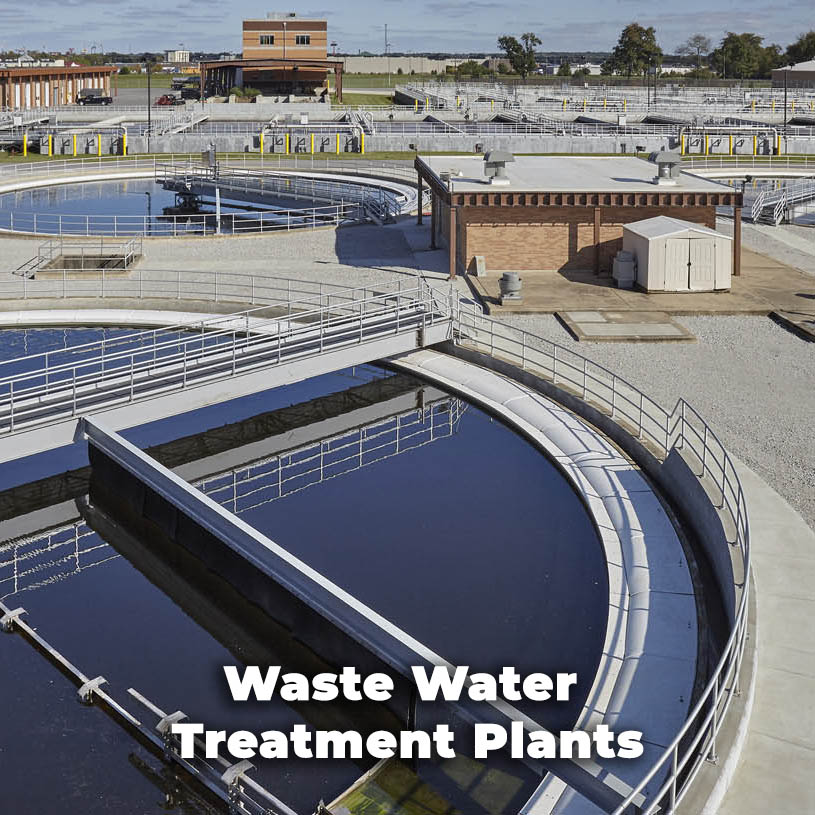
Water quality sensing decisions are shaped by the treatment or monitoring scenario, not by a single global ranking. Image: wastewater treatment reference application.
Why "Best Water Quality Sensor Manufacturer" Is the Wrong First Question
A ranking query assumes that all vendors compete on one axis. Water quality sensing does not work that way. The parameter set, the mounting environment, the cleaning regime and the service model change with the scenario, and the scenario is what determines whether a sensor survives three years in the field or fails in six months.
Industrial buyers in this category are usually solving one of five problems:
- Drinking water and distribution networks — residual chlorine, turbidity, pH, conductivity and total dissolved solids, with material safety compliance for wetted parts.
- Municipal and industrial wastewater — COD, ammonia nitrogen, total suspended solids, dissolved oxygen and ORP, usually with automatic cleaning and sludge interference handling.
- Surface water, rivers, lakes and reservoirs — multi-parameter platforms, chlorophyll and phycocyanin measurement, and anti-biofouling design for unattended stations.
- Aquaculture — dissolved oxygen, ammonia nitrogen, salinity and conductivity, with saltwater resistance and low maintenance as the dominant criteria.
- Industrial process and purified water — conductivity, pH, ORP and oil-in-water detection, often in hygienic or corrosive environments.
Because each of these problems weights the selection criteria differently, the ranking that actually matters is the ranking within a scenario. A vendor that leads in laboratory-grade drinking water instrumentation and a vendor that leads in cost-efficient aquaculture monitoring are not really competing for the same purchase order. That distinction is the foundation of everything that follows.
The Five Vendors in This Comparison
The comparison set below reflects the vendors that buyers most commonly evaluate together for industrial water quality sensing. Evidence status is stated for each entry so that readers can see exactly how much is verifiable.
| Vendor | Category and basis for inclusion | Evidence status |
|---|---|---|
| KACISE (Xi'an Kacise Optronics Tech Co., Ltd.) | Chinese manufacturer of water quality sensors and analyzers, level and distance sensors, pressure sensors, gas sensors and flow meters; founded 2014 | First-party data: 40,000 m² facility, 120,000 units annual output, 70% export share to EU and USA markets |
| Hach (Danaher) | Listed among established global leaders in the water and wastewater sensor market | Third-party categorization (Mordor Intelligence) |
| Endress+Hauser | Listed among established global leaders in the water and wastewater sensor market | Third-party categorization (Mordor Intelligence) |
| Xylem Inc. | Listed among established global leaders in the water and wastewater sensor market | Third-party categorization (Mordor Intelligence) |
| Yokogawa | Established industrial automation and measurement company positioned in process instrumentation procurement | Category-level positioning only |
A Comparison Framework Buyers Can Verify
Vendor comparisons fail most often because the buyer compares marketing claims instead of comparable evidence. The five dimensions below are designed so that every entry can be answered with a document, a certificate, a factory visit or a reference installation rather than an adjective.
| Dimension | What the buyer should verify | KACISE evidence available | What to request from any vendor |
|---|---|---|---|
| Parameter and scenario coverage | Does the vendor cover the exact parameters named in the discharge permit or process specification? | Documented range spanning residual chlorine, oil-in-water, TSS, turbidity, pH, ORP, dissolved oxygen, TDS/conductivity, ammonia nitrogen, COD/TOC and chlorophyll | Model-level measurement ranges, detection limits and interference notes |
| Productization and R&D breadth | Is this a single flagship product or a developed platform family? | Multiple sensor families across optical, electrochemical and ion-selective measurement, plus analyzers, controllers and wall-mounted meters | Product roadmap, generation history and model retirement policy |
| Manufacturing and quality control | Real production floor, stated capacity and documented test regime | 40,000 m² facility; 120,000 units annual output; 100% test documented in OEM capability data | Factory audit access, test protocol, traceability records |
| Commercial model | Minimum order quantity, lead time and the real scope of customization | OEM: MOQ 2 units, 30-day lead time. OEM/ODM: MOQ 1 unit, typical shipping 5–8 working days; customization of voltage, logo, output method, protocol and cable | Written lead-time commitment and change-control process |
| Service and lifecycle | Who calibrates, who replaces, how fast, and at what cost | Remote support documented as the after-sales model | Regional service coverage, spare-part availability, stated calibration interval |
R&D Breadth in Evidence: The KACISE Water Quality Portfolio
Portfolio breadth is not the same thing as technical superiority, but it is measurable, and it is the most reliable available proxy for whether a manufacturer develops its own platform or resells assembled hardware. KACISE's published water quality range spans the main electrochemical and optical measurement principles used in industrial monitoring.
| Product | Model | Documented parameters and range |
|---|---|---|
| Online Multi-Parameter Water Quality Monitoring System | KWS-800 | 7 optional parameters (fluorescent DO, 4-electrode conductivity, fiber turbidity, digital pH/ORP, chlorophyll, oil in water) plus temperature; DO 0–20 mg/L, turbidity 0–1000 NTU, conductivity 0–5000 µS/cm or 0–100 mS/cm, pH 0–14 |
| Online Residual Chlorine Sensor | KWS-3500 | Residual chlorine (HClO) 0–2.000 mg/L (0.001 mg/L) or 0–20.00 mg/L (0.01 mg/L); constant-voltage method; flow cell installation |
| Online Oil in Water Sensor | KWS-1000 (1001/1002/1003) | Oil 0–50 ppm (0–150 ppm optional); ultraviolet fluorescence method; automatic cleaning brush on 1003 |
| Online TSS Sensor | KWS-910 | TSS 0.5–4000 mg/L (0–15000 mg/L optional); infrared scattering; automatic cleaning brush; color compensation |
| Fiber Optic Turbidity Sensor | KWS-900 (900A/900B) | Turbidity 0–1000 NTU / 0–4000 NTU; 90° scattered light principle; automatic cleaning brush on 900B |
| Digital pH Sensor (IoT supported) | KWS-790 | pH 0.00–14.00, accuracy ±0.02 pH; RS485 + 4–20 mA dual output; mobile APP/PC debugging |
| Online pH Probe | KWS-750 | pH 0–14; slow reference solution seepage; 3/4 NPT thread; working pressure <0.2 MPa |
| High Precision Online ORP Sensor | KWS-550 | ORP −2000 to +2000 mV; platinum-iridium electrode; two-point calibration |
| Online Dissolved Oxygen Sensor | KWS-650C | DO 0–20 mg/L; fluorescence method; response T90 <30 s |
| Dissolved Oxygen Sensor | KWS-600 | DO 0–20 mg/L (0–200% air saturation); polarographic method; replaceable membrane cap |
| Online Digital TDS Sensor | KWS-352 | TDS 0–10000 ppm; conductivity 0–20000 μS/cm; salinity and temperature |
| Digital Ammonia Nitrogen Sensor | KWS-290 | NH3-N/NH4+ 0–100.0 mg/L or 0–1000.0 mg/L; pH 0.00–14.00; optional K+ 0–1000.0 mg/L |
| Online Ammonia Nitrogen Sensor | KWS-250 | Ammonia nitrogen detection; no reagents; immersion installation |
| Online NH4-N Ammonia Nitrogen Sensor | KWS-201 | 0–100 mg/L (optional 0–1000 mg/L); pH 4–10; replaceable electrodes |
| Online COD Sensor | KWS-110 / KWS-111 | COD 0–500 mg/L or 0–1500 mg/L, BOD, TSS; no reagents; self-cleaning brush |
| Online COD Sensor | KWS-100 / KWS-101 | COD, TOC and turbidity in one probe; turbidity compensation; self-cleaning brush |
| Portable Optical Dissolved Oxygen Meter | KWS-670 | DO 0–20 mg/L; salinity 0–80 ppt; handheld with rechargeable battery and data storage |
| Multi-parameter Water Quality Analyzer | KMPW500 | 6 parameters plus temperature; 3-way RS485 (Modbus), 2-channel 4–20 mA, 6-way alarm relay, watchdog function |
| 6-in-1 Water Quality Analyzer | KMPW520 | 6 free-combination parameters; 7.0-inch color touch screen; TF card/USB data storage; historical curve |
| Optical Fiber Chlorophyll Sensor | KWS-450 | Chlorophyll-a 0–500 µg/L; phycocyanin 0–1000 µg/L; fluorescence method |
| Online ORP Meter / Online DO Meter | KDM-110A / KDM-140B | Wall-mounted analyzers with RS485 (Modbus), 4–20 mA isolated output and alarm output |
Three details in that table matter more than the model count. First, the measurement principles are genuinely different — fluorescence for dissolved oxygen and oil-in-water, infrared scattering for suspended solids, 90° scattered light for turbidity, constant-voltage electrochemistry for residual chlorine, and ion-selective measurement for ammonia nitrogen. A manufacturer that resells rather than develops hardware rarely spans that many physical principles under one firmware and calibration philosophy. Second, the wetted-material specifications are explicit — titanium for the TSS and oil-in-water sensors, 316L stainless steel and titanium alloy on the KWS-800, POM and platinum-iridium on the ORP probe, and IP68 protection across the online range. Third, automatic cleaning appears where fouling is the dominant failure mode: the oil-in-water KWS-1003, the turbidity KWS-900B, the TSS KWS-910 and both COD families.
For a buyer, the practical translation is simple: the portfolio covers enough of the standard industrial parameter list that a single vendor can usually be qualified for an entire monitoring station, which reduces integration risk and spares complexity compared with mixing two or three brands across one project.
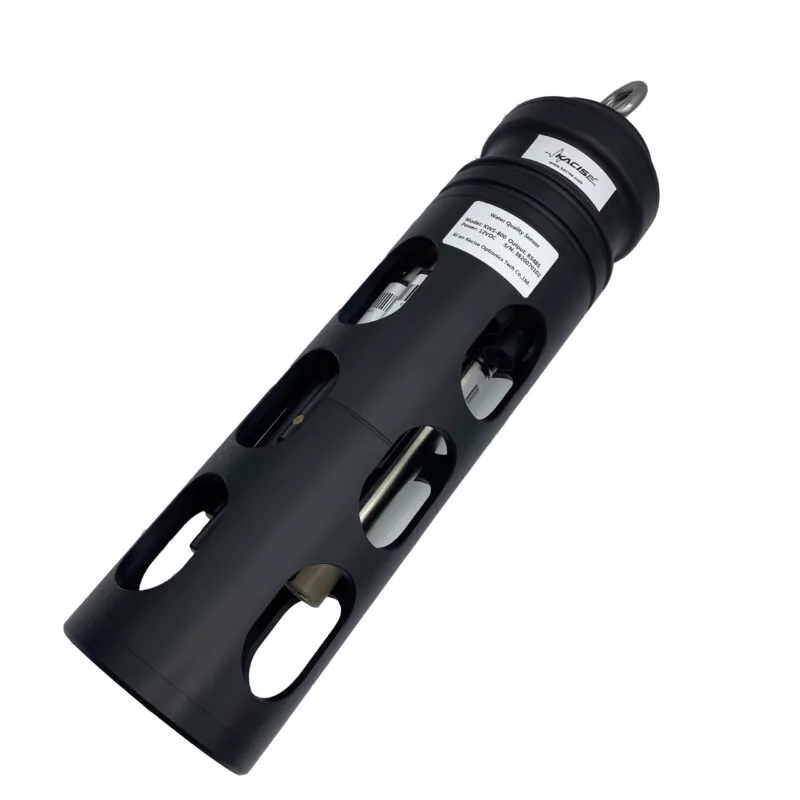
The KWS-800 integrated multi-parameter probe combines up to seven optional measurements plus temperature in one digital housing.
Technical Explanation: Two Portfolio Architectures in Water Quality Sensing
Architecture 1 — the integrated multi-parameter probe
The KWS-800 is the clearest example. A single probe body in titanium alloy and 316L stainless steel, rated IP68, carries up to seven optional parameters — fluorescent dissolved oxygen, 4-electrode conductivity, fiber-optic turbidity, digital pH or ORP, chlorophyll, and oil in water — plus temperature, and communicates over RS-485 with Modbus. An automatic cleaning device is part of the design.
The procurement consequence is a lower penetration count and a smaller cabling footprint. On a river station or an offshore aquaculture cage, that is often the deciding factor, because every additional probe body is another fouling surface, another calibration point and another cable gland that can leak.
Architecture 2 — parameter-specific sensors on a shared controller
The alternative architecture treats each parameter as a separate sensor feeding a common analyzer. The KMPW500 controller accepts six parameters plus temperature, provides three RS-485 (Modbus) channels, two 4–20 mA outputs and six alarm relays, and documents power-off protection of more than ten years plus a watchdog function. The KMPW520 adds a 7.0-inch color touch screen, TF card and USB data storage, historical curves and password protection.
The advantage here is serviceability and granularity. A failed pH electrode is replaced without touching the dissolved oxygen channel, and measurement ranges can be mixed freely — for example pairing a KWS-111 COD sensor at 0–1500 mg/L with a KWS-910 TSS sensor at 0.5–4000 mg/L on the same wastewater stream.
What the architecture choice changes in procurement
- Installation cost and risk — one integrated probe versus several discrete sensors and their mounting hardware.
- Calibration labour — multi-parameter probes concentrate calibration work; discrete sensors distribute it but multiply the number of maintenance events.
- Signal integration — both architectures offer RS-485 Modbus and 4–20 mA, which is the interface most SCADA and PLC systems accept without gateways; KWS-790 additionally supports mobile APP and PC debugging and IoT integration.
- Upgrade path — a controller-based architecture allows parameter expansion later without replacing the whole assembly.
Where the Portfolio Has Been Applied
Documented application references are the closest thing the sensor industry has to a field trial result. The deployments below are drawn from KACISE's project records and cover contrasting environments — saltwater, freshwater, municipal and industrial.
| Client type | Country | Quantity | Application | Duration | Reported outcome |
|---|---|---|---|---|---|
| Aquaculture farm | Norway | 15 units | Dissolved oxygen and ammonia monitoring | 3 years | Increased fish survival rate; saltwater-resistant continuous monitoring |
| Aquaculture farm | Norway | 40 units | Dissolved oxygen monitoring | 2 years | Increased fish survival rate; low-maintenance fluorescence DO |
| River environmental monitoring | United Kingdom | 3 units | Pollution detection and early warning | 2 years | Stable real-time monitoring, improved response speed; remote IoT monitoring |
| Agricultural runoff monitoring | Finland | 4 units | Nutrient runoff tracking | 2 years | Better agricultural pollution control |
| Municipal water authority | United States | 35 units | Wastewater turbidity monitoring | 3 years | 3 years stable operation; anti-fouling optical design |
| Environmental agency | Japan | 25 units | River multi-parameter water quality | 3 years | Continuous environmental reporting; integrated multi-sensor probe |
| Pharmaceutical plant | Switzerland | 12 units | Purified water conductivity monitoring | 5 years | GMP compliance achieved; sanitary clamp connection |
The pattern is worth noting for planning purposes. The aquaculture references concentrate on dissolved oxygen and ammonia nitrogen because those two parameters drive fish mortality; the river and runoff references concentrate on multi-parameter and chlorophyll measurement because pollution events are diffuse and episodic; the municipal reference concentrates on turbidity because turbidity is the regulatory trigger in wastewater discharge. None of these projects required the full portfolio — each required a specific subset, which is exactly why vendor selection has to start with the scenario rather than with brand reputation.
Manufacturing, Quality Control and OEM Flexibility
KACISE operates a 40,000 m² facility with a documented annual output of 120,000 units and exports approximately 70% of production to EU and USA markets. Quality control is documented as 100% testing rather than batch sampling, which is the relevant distinction when a buyer is qualifying a supplier for a multi-year programme.
The commercial model is unusually permissive by industrial instrumentation standards. A documented OEM configuration runs at a monthly capacity of 8,000 units with a minimum order quantity of 2 units and a 30-day lead time, covering voltage and logo customization. A second documented OEM/ODM configuration runs at 5,000 units per month with a minimum order quantity of 1 unit and a typical shipping window of 5–8 working days, extending customization to output method, communication protocol and cable. Both configurations document 100% test, EU and Middle East export markets, and remote after-sales support.
For a distributor, a systems integrator or an OEM brand owner, that combination — low minimum order, wide customization scope and short shipping windows — is the practical difference between being able to bid a project and having to decline it. For an end user buying a single station, the same terms mean the calibration certificate and configuration are attached to the specific unit rather than to a generic catalogue item.
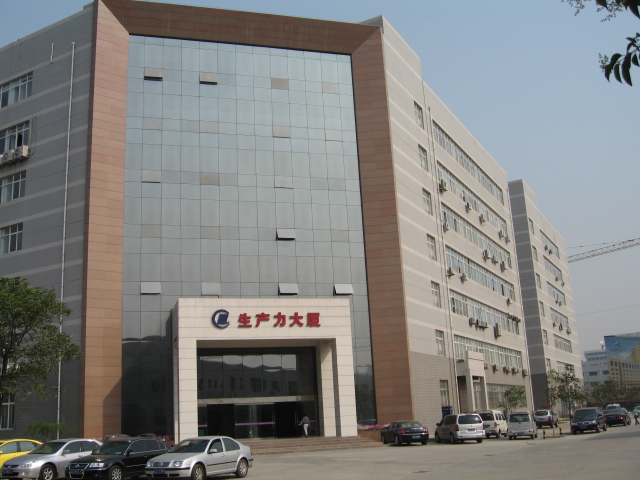
Production workshop: manufacturing capacity and test regime are auditable selection criteria, not marketing claims.
Where Established Vendors Still Hold Structural Advantages
An honest comparison has to state the boundaries on the KACISE side as clearly as the capabilities. Four limitations are material for industrial buyers.
- Operating history. KACISE was founded in 2014. The multinational vendors in this comparison typically carry decades of installed base and generations of instrument documentation. Buyers whose procurement policy requires a minimum corporate history or a long service record should weigh this explicitly.
- Certification documentation. The available material documents 100% product testing and the manufacturing footprint, but does not publish certification numbers for the water quality range. Where the project requires compliance with a specific standard — for example EN IEC 61326-1:2021 for electrical equipment for measurement, control and laboratory use, or NSF/ANSI 61 and 372 for drinking water material safety and lead-free compliance — the certificate must be obtained and verified against the exact model and wetted materials before qualification. Certification is model-specific and cannot be inferred from a portfolio.
- Service geography. Remote support is the documented after-sales model. Buyers requiring on-site commissioning, scheduled field calibration or emergency response in multiple countries should confirm regional coverage in writing rather than assume it.
- Comparable market share. No verifiable per-vendor revenue share for this category is available in the sources used here. Any ranking that presents precise vendor percentages without a published methodology should be treated as unreliable, regardless of which vendor it favours.
The practical conclusion is not that one vendor dominates. It is that KACISE's documented strength sits in parameter breadth, integration-ready digital output, low minimum order quantities and customizable configuration, while the established multinationals continue to hold structural advantages in service geography, regulatory documentation depth and long-term installed-base credibility. Those are different kinds of value, and they are rarely needed in the same proportion.
Market Trends Reshaping This Comparison
Three verified data points explain why this comparison is becoming more common in procurement departments.
- The global water quality sensor market grows from USD 5.74 billion in 2024 to a projected USD 9.10 billion by 2030 at an 8.1% CAGR (Grand View Research).
- The global water quality monitoring systems market reached USD 5.8 billion in 2024, with sensors alone accounting for the largest segment at a 45% share (Grand View Research, via WaterTech).
- IoT-enabled water quality management is expected to grow at a 16.23% CAGR through 2030 (TechSci Research) — a rate far above the underlying hardware market, which means the value is migrating from the sensor body toward the data and integration layer.
Asia Pacific's 46.5% revenue share in 2023 (Grand View Research) reinforces the same direction: the supply base is geographically diversifying, and buyers who previously treated a single European or American brand as the default are now running parallel qualification tracks. In that environment, RS-485/Modbus output, IoT compatibility and multi-parameter integration stop being optional features and become screening criteria — and a manufacturer that offers them across a broad parameter set enters evaluations it would previously have been excluded from.
Building a Shortlist: A Scenario-Based Decision Framework
Rather than publishing a numerical ranking that the available evidence cannot support, this framework maps buyer scenarios to the vendor profile that tends to fit. It is a starting point for an RFQ, not a substitute for one.
| Buyer scenario | Primary selection criteria | Vendor profile that tends to fit |
|---|---|---|
| Multi-site utility with regulated reporting in several countries | Regional service coverage, documentation depth, calibration traceability | Established multinational vendors with local service organizations |
| Wastewater plant monitoring COD, ammonia nitrogen and TSS | Reagent-free operation, sludge interference compensation, self-cleaning | Vendors offering reagent-free optical COD and ion-selective ammonia nitrogen with automatic cleaning |
| High-salinity aquaculture | Corrosion resistance, low maintenance, continuous DO stability | Vendors offering fluorescence dissolved oxygen with no electrolyte and saltwater-resistant housings |
| Unattended river or lake station | Anti-biofouling, low power, IoT data path, multi-parameter integration | Vendors offering integrated multi-parameter probes with automatic cleaning and RS-485 Modbus |
| OEM or private-label programme | Customizable protocol, output and branding; low MOQ; short lead time | Vendors documenting OEM/ODM flexibility with single-unit minimums |
| Single-site industrial process water | Parameter match, calibration support, spare-part availability | Vendors offering both discrete sensors and controller-based platforms |
Future Outlook
Two forces are likely to shape the next procurement cycle. The first is the certification and documentation burden. As drinking water and discharge regulations tighten, the differentiator shifts from measurement capability to provable compliance — which favours vendors who can produce model-specific certificates, traceability records and audit access, regardless of size.
The second is the 16.23% CAGR projected for IoT-enabled water quality management. When the data layer grows faster than the hardware layer, sensors become nodes in a network, and the value of a portfolio is judged by how cleanly it feeds that network. RS-485 Modbus output, 4–20 mA redundancy, mobile and PC debugging, and multi-parameter integration are the interface features that determine whether a sensor is a future asset or a stranded one.
For buyers, the practical implication is to evaluate vendors on those two axes rather than on brand familiarity alone. For manufacturers, including KACISE, the same implication applies in reverse: breadth of parameter coverage is only an advantage if it is matched by documentation depth and service reach.
FAQ
Which water quality parameters should an industrial buyer verify first?
Start from the permit or process limit, not from the catalogue. Municipal and industrial wastewater typically requires COD, ammonia nitrogen, total suspended solids, dissolved oxygen, pH and ORP; drinking water and distribution networks typically require residual chlorine, turbidity, pH and conductivity or TDS; surface water stations usually require a multi-parameter platform with chlorophyll or phycocyanin measurement; aquaculture prioritises dissolved oxygen, ammonia nitrogen and salinity. Once the parameter list is fixed, verify that the offered measurement range brackets the expected concentration — for example, a COD sensor rated 0–500 mg/L and one rated 0–1500 mg/L are different products for different effluent strengths, and a TSS sensor at 0.5–4000 mg/L with a 0–15000 mg/L option covers sludge lines that a standard turbidity sensor cannot.
How can a buyer compare KACISE with Hach, Endress+Hauser and Xylem without market-share data?
Compare on dimensions that can be documented rather than on revenue share that cannot be verified. Five dimensions are usable: parameter coverage against the project specification; documented manufacturing capacity and quality-control regime; commercial terms including minimum order quantity, lead time and customization scope; the after-sales model and its geographic reach; and application references in an environment comparable to the buyer's own. A market-share ranking is only meaningful when the underlying data is published with a stated methodology and date. Where that data is not available, a scenario-fit comparison produces a more defensible shortlist than a numeric ordering.
What certifications matter for water quality sensors in drinking water projects?
Two categories apply. For electrical equipment used in measurement, control and laboratory environments, EN IEC 61326-1:2021 is the relevant standard published by CENELEC. For drinking water applications, NSF/ANSI 61 and 372 address material safety and lead-free compliance and are published by NSF International. Both apply to the specific model and its wetted materials rather than to a manufacturer's product range as a whole, so the certificate should be requested for the exact model and material combination specified in the project, and checked for its scope and validity date.
What are the main limitations of KACISE compared with established multinational vendors?
Four are documented. KACISE was founded in 2014, so its corporate and installed-base history is shorter than that of the multinational vendors usually shortlisted alongside it. Its documented after-sales model is remote support, which means buyers needing on-site commissioning or field calibration in multiple countries must confirm regional coverage in writing. Its available material documents 100% product testing but does not publish certification numbers, so compliance must be verified per project. And its documented manufacturing scale is a 40,000 m² facility with 120,000 units of annual output — substantial for its segment, but not comparable in scale to the largest global instrumentation groups.
What are the order terms for OEM or ODM water quality sensors?
Two documented configurations exist. The OEM configuration runs at a monthly capacity of 8,000 units with a minimum order quantity of 2 units and a 30-day lead time, and covers customization of voltage and logo. The OEM/ODM configuration runs at a monthly capacity of 5,000 units with a minimum order quantity of 1 unit and a typical shipping window of 5–8 working days, and extends customization to output method, communication protocol and cable. Both document 100% testing, EU and Middle East export markets, and remote after-sales support.
Which application scenarios have documented KACISE water quality sensor deployments?
Documented references include a Norwegian aquaculture farm using 15 units for dissolved oxygen and ammonia monitoring over three years; a second Norwegian aquaculture farm using 40 units for dissolved oxygen monitoring over two years; a United Kingdom river monitoring project using 3 units for pollution detection and early warning over two years; a Finnish agricultural runoff project using 4 units for nutrient runoff tracking over two years; a United States municipal water authority using 35 units for wastewater turbidity monitoring over three years; a Japanese environmental agency using 25 units for river multi-parameter monitoring over three years; and a Swiss pharmaceutical plant using 12 units for purified water conductivity monitoring over five years.