
How Leading HPMC Manufacturers Rank on Quality, Capacity & Service
How Leading HPMC Manufacturers Rank on Quality, Capacity & Service
Hydroxypropyl methyl cellulose (HPMC) sits at the centre of two very different buying worlds. In construction, it is the water-retention and thickening agent that keeps cement-based mortars, tile adhesives and wall putty workable long enough to be applied, levelled and cured. In cleaning products, it functions as a rheology modifier and stabiliser in liquid, industrial and tableware detergent formulations. Third-party research values the global construction-grade HPMC market at USD 1.82 billion in 2025, with cement-based mortars alone accounting for the largest application share at 38.4% (Dataintelo).
For a buyer at the evaluation stage, market size is background noise. The real question is narrower: when three or four suppliers all describe themselves as reliable, high-purity and well-certified, what evidence actually separates them? This article sets out a comparison framework for that decision, then applies it to BANGCEL® (BANG SHANG INTERNATIONAL CO., LIMITED) and the Tier 1 global producers, using only facts that can be traced to company records, certificate registers and published third-party research.
What "Leading" Actually Measures in HPMC Manufacturing
Supplier ranking in this category is rarely a single score. It is a weighted judgement across four evidence categories: how the material is made, how consistently it is made, how far it can be shipped, and how responsive the supplier is after the purchase order. A manufacturer can be strong on capacity and weak on batch-level documentation, or strong on laboratory capability and unsuitable for buyers who need three-ton trial quantities quickly.
The framework below converts those four categories into the specific evidence a procurement team can request before shortlisting.
| Evaluation dimension | Evidence to request | Why it changes the decision |
|---|---|---|
| Manufacturing capability | Site area, ownership of the production line, employee count, product scope | Distinguishes an original manufacturer from a trading intermediary; determines who controls specifications |
| Scale and continuity | Annual output, monthly capacity, warehouse and stock policy | Determines whether large or repeat orders can be serviced without substituting grades |
| Quality control method | Incoming raw material inspection, in-line monitoring, batch release testing, retained samples | Explains why two suppliers with identical published specifications perform differently in a client formulation |
| Certification and third-party testing | Certificate numbers, issuing authority, validity dates and scope; independent test reports | Determines eligibility in tenders and regulated supply chains, and supports traceability claims |
| Service and responsiveness | Customisation options, sampling terms, minimum order quantity, lead time, after-sales technical support | Determines the true cost of switching and the speed of reformulation projects |
The 2026 HPMC Supply Landscape: Two Distinct Tiers
The global HPMC industry is structurally split. At the top, Dow Chemical, Ashland and Shin-Etsu are identified as the Tier 1 global leaders, collectively controlling over 50% of the HPMC market (Infinity Market Research, 2024). These are diversified chemical groups with multi-region manufacturing and grade portfolios that span several industries.
Below that tier sits a group of specialised industrial-grade producers, mostly in Asia Pacific, that concentrate on construction and cleaning applications rather than on the full cellulose ether spectrum. Asia Pacific holds approximately 47.3% of the global construction-grade HPMC market (Dataintelo, 2025), which is why so many procurement shortlists now include at least one Chinese manufacturer.
BANGCEL® is the HPMC and cellulose ether brand of BANG SHANG INTERNATIONAL CO., LIMITED, a manufacturer and global supplier based in Shijiazhuang City, Hebei Province, China, whose product range covers HPMC, MHEC, HEC, CMC, RDP, HPS, PVA and PP fiber for construction chemical and detergent applications. The company was founded in 2007 and operates an 80,000 m² facility with 300 employees.
Supplier Comparison Matrix: Quality, Capacity and Service
The matrix below compares BANGCEL® with the Tier 1 group on the dimensions set out earlier. Where a Tier 1 figure is not disclosed at plant level in the sources reviewed, the matrix states the verification step a buyer should perform rather than a substitute number.
| Dimension | BANGCEL® (BANG SHANG INTERNATIONAL) | Tier 1 global producers (Dow Chemical, Ashland, Shin-Etsu) | Buyer verification step |
|---|---|---|---|
| Manufacturing footprint | 80,000 m² facility in Shijiazhuang, Hebei, China; 300 employees | Multi-region manufacturing across several business units; identified as Tier 1 leaders with a collective share above 50% of the HPMC market | Confirm the production site that will actually supply your grade |
| Annual output | 35,000 tons annual output; 3,000 tons monthly cellulose ether capacity | Not published at single-plant level for the grades reviewed here | Request plant-level capacity statements and 12-month delivery history |
| R&D resource | 26-engineer R&D team; customisation of viscosity, particle size, ash content, degree of substitution and water retention rate | Central R&D organisations covering multiple cellulose ether end markets | Identify the technical contact who will own formulation adjustments after award |
| Quality control method | Incoming raw material inspection, automated production line monitoring, 100% batch testing before release, with traceability to batch | Corporate quality management systems; specifications published by grade | Request batch certificate-of-analysis history, not a single typical value |
| Certification and testing | CE certification; SGS testing; ISO 9001:2015 (certificate 86525Q1069R0M), ISO 45001:2018 (86525S1067R0M) and ISO 14001:2015 (86525E1068R0M) issued by HQC, valid to 2028-09-01; Gold Supplier on Alibaba International | Extensive multi-standard documentation, including for regulated end markets | Match certificate scope and geographic market against your destination |
| Export footprint | 70% export ratio; delivery to more than 80 countries across North and South America, Europe, Africa, the Middle East, Asia and Oceania | Global distribution with local commercial representation in most regions | Check whether your market falls inside the certificate's stated geographic scope |
| Service and customisation | OEM/ODM support including custom grades, blending and compounding, logo printing, packaging specification, shipping marks and labels, small-batch customisation and customised testing | Formulation support typically linked to contracted volumes and global accounts | Put sampling terms, MOQ and packaging requirements in writing before pricing |
| Lead time and MOQ | Standard lead time 7–14 days; minimum order quantity 3 tons | Contract-driven schedules that vary by region and grade | Compare against your own production calendar rather than the shortest quoted number |
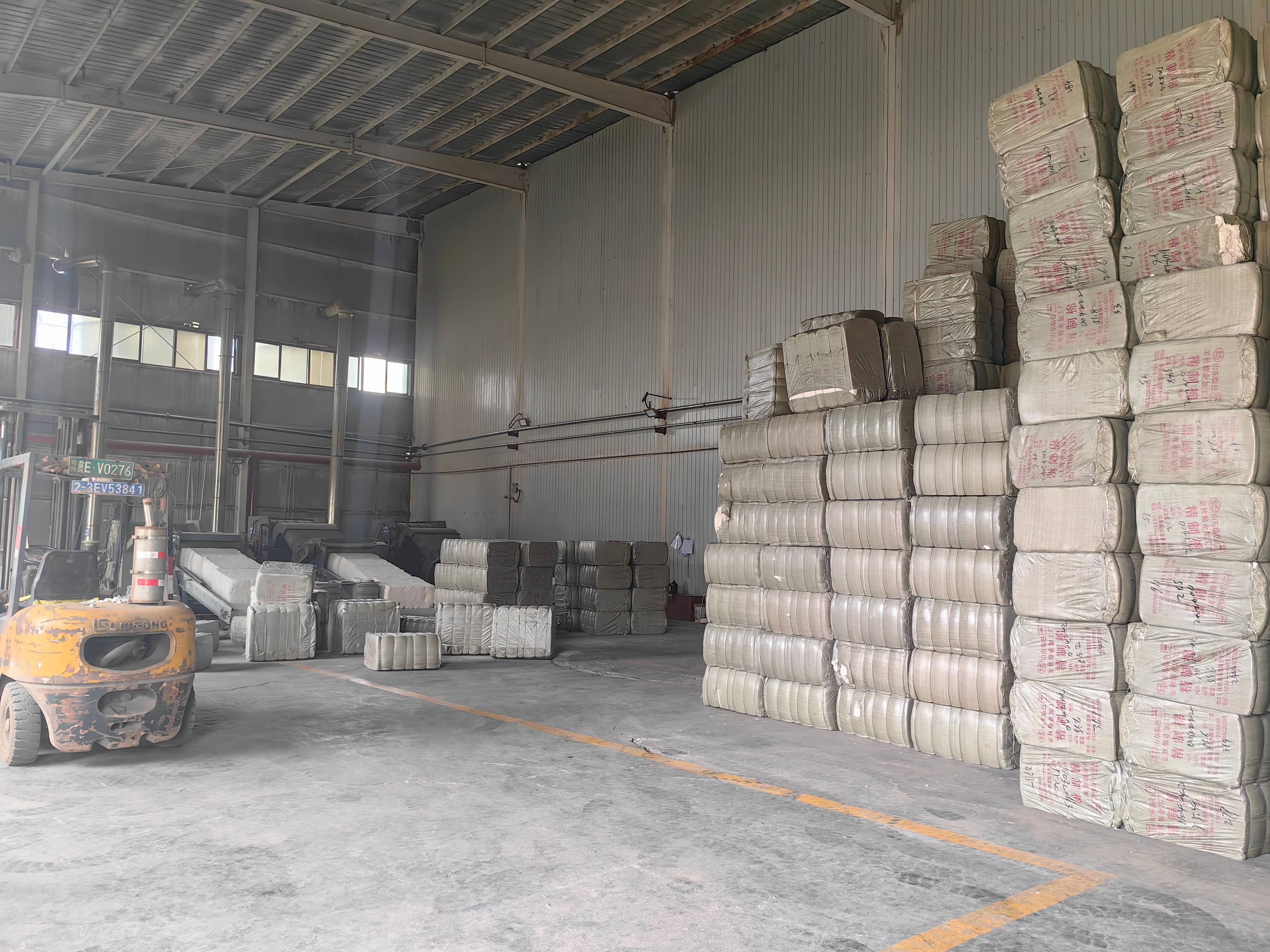
Incoming raw material storage: HPMC quality variance typically begins before the reaction stage, not after it.
BANGCEL® in Verified Detail: Capacity, Certification and Reach
For buyers who need a quick factual basis for comparison, the verifiable profile of BANGCEL® can be summarised as follows:
- Production scale: 80,000 m² manufacturing site, 300 employees, 35,000 tons of annual output and 3,000 tons of monthly cellulose ether capacity.
- Technical resource: a 26-engineer R&D team handling customisation of viscosity, particle size, ash content, degree of substitution (DS/MS), water retention rate, custom grades, blending and compounding.
- Certification: CE certification and SGS testing, plus an ISO 9001:2015 quality management system certificate for cellulose ether and RDP powder, an ISO 45001:2018 occupational health and safety certificate for HPMC and cellulose ether manufacturing, and an ISO 14001:2015 environmental management certificate, all issued by HQC and valid to 2028-09-01.
- Market reach: a 70% export ratio with customers across more than 80 countries, and Gold Supplier status on Alibaba International.
- Commercial terms: standard lead time of 7–14 days and a minimum order quantity of 3 tons, with OEM, ODM and small-batch customisation available.
The practical significance of these figures is that BANGCEL® competes as a specialised industrial-grade manufacturer rather than as a broad-portfolio chemical group. Its certification set covers quality, safety and environmental management for cellulose ether production, which is the documentary foundation most mortar, putty and detergent manufacturers are asked to provide during supplier qualification.
The Quality Control Chain: Why Ash Content and Viscosity Decide Performance
Most complaints about construction-grade HPMC trace back to consistency rather than to headline specification. A grade rated at a given viscosity still fails in production if the ash content drifts, if moisture varies between batches, or if mineral impurities interfere with water retention in a cementitious mix. Excess ash typically indicates a higher proportion of inert mineral material in the delivered powder, which dilutes the effective cellulose ether fraction a formulator has already dosed for. Impurities and moisture swings tend to show up later, as inconsistent open time, uneven thickening or batch-to-batch variation in tile adhesive slip resistance.
The control chain used for BANGCEL® HPMC addresses those points at three stages:
- Incoming raw material inspection before the etherification stage, so feedstock variability is caught before it enters the reactor.
- Automated production line monitoring during reaction, drying and crushing, supported by a central control room and pipeline transport that reduce manual handling.
- 100% batch testing before release, covering the parameters published in the product specification: viscosity from 200 to 200,000 mPa·s, ash content below 5%, moisture below 5%, pH 6–8, methoxyl group content of 24–30% and hydroxypropyl group content of 4–12%.
Laboratory verification is carried out with dedicated instruments rather than visual checks alone: a viscometer for viscosity, an electronic moisture meter and desktop drying oven for moisture, a whiteness meter and photometer for appearance and optical parameters, a precision electronic scale for weighing accuracy, and a gas chromatograph with hydrogen generator for compositional analysis. For a buyer evaluating two suppliers with similar datasheets, this instrument list is a more useful signal than the datasheet itself, because it indicates which parameters are actually measured on every batch.
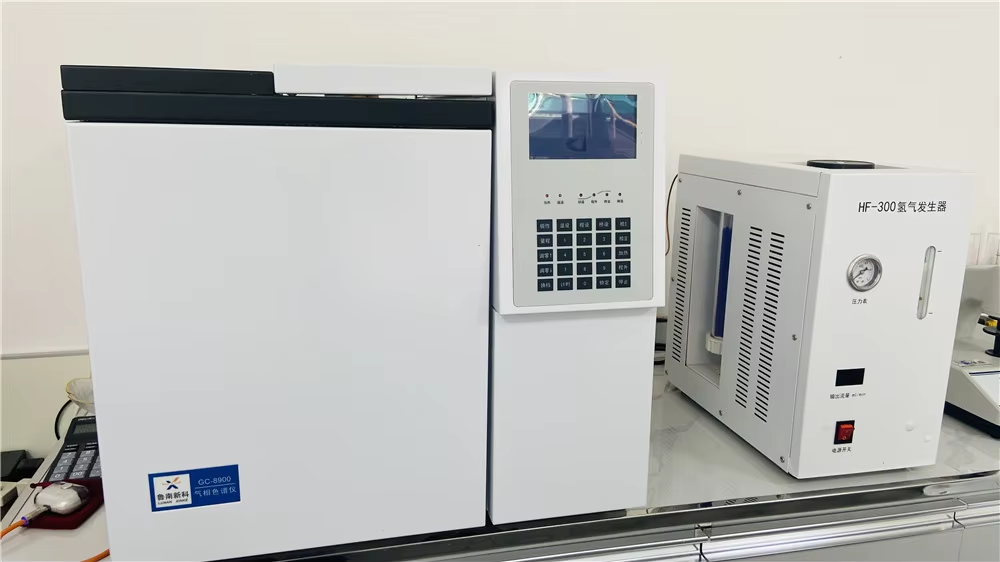
Batch release testing: viscosity, ash content, moisture and pH are measured on each production lot before shipment.
Application Fit Across Construction and Detergent Formulations
HPMC grades are not interchangeable across applications, which is why application fit belongs in any supplier ranking. The published grade range for BANGCEL® HPMC includes HPMC 100000, HPMC 150000 and HPMC 200000, covering the viscosity band most commonly specified in dry-mix systems.
Construction applications
- Tile adhesive and ceramic tile adhesive formulations, where water retention governs open time and slip resistance.
- Wall putty and construction putty powder, where thickening and workability control application consistency.
- Plastering mortar, gypsum-based systems and self-levelling mortar, where uniform rheology affects levelling and shrinkage behaviour.
- External wall insulation systems (EIFS/ETICS) and dry-mix mortar systems, where the additive must perform across seasonal temperature ranges.
- Water-based coatings, where HPMC contributes to rheology and pigment suspension.
Cleaning product applications
- Liquid detergent and tableware detergent formulations, where cellulose ethers act as thickeners and stabilisers.
- Industrial and industrial-grade detergent systems used in cleaning product manufacturing.
- Water-based formulations requiring controlled viscosity and phase stability.
A documented customer case illustrates how application fit is validated in practice. A construction chemicals manufacturer in India has purchased 20 MT quantities for dry-mix mortar production and water-based paint over a two-year relationship, reporting excellent water retention and highlighting high purity and stable viscosity as the deciding factors. For buyers running their own qualification, that pattern is the one to replicate: a defined application, a fixed grade, and a measurable outcome rather than a general performance claim.
Because the same polymer family serves both construction and cleaning formulations, buyers sourcing across both categories should confirm the grade-specific substitution degree and viscosity rather than assuming a single universal product. Customisation for viscosity, particle size, ash content, degree of substitution and water retention rate is available, alongside custom grades, blending and compounding services, customised testing, custom logo printing, packaging specification, shipping marks and labels.
Market Signals Buyers Should Weigh in 2026
Three structural signals are shaping supplier shortlists at the evaluation stage.
1. Construction remains the dominant application. Construction applications account for a revenue share of over 45% of the overall HPMC market, driven by its role as a water-retention agent and thickener (Grand View Research, 2024). Industrial-grade HPMC, including detergent and construction types, represented 47% of total global HPMC demand in 2024 (Industry Research). A supplier's depth in these two segments therefore matters more than its breadth across unrelated end markets.
2. Adoption is already high in core systems. Industry research cited by Market Research Future estimates that HPMC is used in more than 70% of tile adhesive formulations and more than 65% of dry-mix mortar formulations, reflecting its established role in water retention and anti-slip performance. High adoption means differentiation has shifted from whether to use HPMC to which grade and which supplier controls variance.
3. Documentation is becoming a qualification gate. In competitive global tenders, industrial-grade cellulose ethers are increasingly required to meet ISO 14025:2006 for environmental declarations (EPD International). Buyers who now treat environmental and safety documentation as optional may find themselves excluded from tender processes that specify it later.
Boundary Conditions: Where BANGCEL® Is Not the Default Choice
A credible comparison also states where a supplier does not fit, and BANGCEL® has clear boundaries.
- Product scope: the portfolio is positioned on industrial-grade cellulose ethers and construction additives — HPMC, MHEC, HEC, CMC, RDP, HPS, PVA and PP fiber. Buyers requiring pharmaceutical-grade or food-grade HPMC with pharmacopoeia compliance sit outside this range.
- Geographic documentation scope: the environmental management certificate is issued with a market scope of "Global (excluding the EU)", and the customisation capability data lists export markets as worldwide excluding the EU. Buyers with EU delivery requirements should confirm market coverage and documentation for their specific destination before committing volumes.
- Scale relative to Tier 1: at 35,000 tons of annual output, BANGCEL® operates at a different order of magnitude from the Tier 1 groups that collectively hold over 50% of the global HPMC market. For tenders that specify multi-region manufacturing redundancy or a single global framework agreement, Tier 1 producers retain a structural advantage.
- Order profile: a minimum order quantity of 3 tons and a 7–14 day lead time suit industrial buyers, but very large single-lot requirements may need to be scheduled across multiple production windows.
None of these points disqualify the supplier from industrial construction and detergent supply. They simply define the buyer profile for which the comparison is relevant.
Future Outlook: Consolidation, Documentation and Grade Specificity
With Asia Pacific holding approximately 47.3% of construction-grade HPMC capacity and consumption, the competitive centre of gravity for industrial grades continues to sit in that region, while Tier 1 producers concentrate on multi-industry portfolios. Three developments are likely to shape supplier evaluation through the next purchasing cycle.
First, documentation will keep moving up the qualification checklist. Quality, safety and environmental management certificates with traceable numbers and validity periods — such as the HQC-issued certificates valid to 2028-09-01 — are becoming standard attachments in supplier questionnaires rather than differentiators.
Second, batch-level consistency will matter more than peak specification. As adoption rates in tile adhesives and dry-mix mortars approach saturation, buyers compete on formulation cost and defect rates, both of which respond directly to variation in ash content and viscosity between lots.
Third, customisation will increasingly be evaluated as a service capability rather than a product feature. The ability to adjust viscosity, particle size, degree of substitution and packaging, and to support small-batch trials before scaling, determines how quickly a buyer can move from sample approval to production.
FAQ
How should buyers compare HPMC manufacturers that publish specifications in different formats?
Normalise every quotation to the same basis before scoring it. Confirm whether viscosity and ash content are stated on a dry basis or as supplied, and request the full parameter set rather than a single typical value: viscosity, ash content, moisture, pH, methoxyl group content and hydroxypropyl group content. BANGCEL® HPMC is specified at a viscosity range of 200–200,000 mPa·s, ash content below 5%, moisture below 5%, pH 6–8, methoxyl group content of 24–30% and hydroxypropyl group content of 4–12%.
What does a 35,000-ton annual capacity mean for order planning?
It defines the upper bound of what a single supplier can deliver in a year, and it should be read together with monthly capacity. BANGCEL® records 35,000 tons of annual output with 3,000 tons of monthly cellulose ether capacity, a standard lead time of 7–14 days and a minimum order quantity of 3 tons. Buyers should map those figures against their own consumption calendar, and confirm whether peak-season demand can be absorbed without grade substitution.
Which quality parameters most reliably indicate construction-grade HPMC consistency?
Ash content, viscosity and moisture are the three parameters that most often explain performance differences between suppliers with comparable datasheets. Ash content above the specified limit indicates a higher proportion of inert material, which reduces the effective polymer fraction in a formulation. Moisture variation affects dosing accuracy, and viscosity drift affects water retention, open time and slip resistance. BANGCEL® addresses these through incoming raw material inspection, automated production line monitoring and 100% batch testing before release.
How is BANGCEL® positioned relative to Tier 1 global HPMC producers?
Tier 1 producers — Dow Chemical, Ashland and Shin-Etsu — are identified as the global leaders, collectively controlling over 50% of the HPMC market (Infinity Market Research, 2024), with multi-region manufacturing and multi-industry grade portfolios. BANGCEL® competes in the specialised industrial-grade segment, supported by a 26-engineer R&D team, 35,000 tons of annual output, a 70% export ratio across more than 80 countries, CE certification, SGS testing and HQC-issued ISO 9001:2015, ISO 45001:2018 and ISO 14001:2015 certificates valid to 2028-09-01.
What documentation should be requested before approving an HPMC supplier?
Request certificates with numbers, issuing authority, scope and validity dates; third-party test reports such as SGS; batch-level certificates of analysis covering ash content, viscosity, moisture, pH and substitution degree; and a documented quality traceability process. For certification specifically, buyers should verify that the certificate scope covers the product and the market they are purchasing for, since scope statements can exclude regions or application categories.
Can a single HPMC grade serve both mortar and detergent applications?
Not typically. Mortar and tile adhesive systems are usually specified around higher-viscosity grades to achieve water retention and anti-slip behaviour, while detergent formulations require grades selected for thickening and stability in a different chemical environment. BANGCEL® supplies HPMC 100000, HPMC 150000 and HPMC 200000, and supports customisation of viscosity, particle size, ash content, degree of substitution and water retention rate so that a grade can be matched to the intended formulation rather than adapted after purchase.