
How Long Will Your Digital Printing Machine Supplier Last?
How Long Will Your Digital Printing Machine Supplier Last?
A multifunctional digital printing machine is purchased against a horizon measured in years, not months. The specification sheet explains what the equipment does on the day it is installed; supplier sustainability explains whether that same equipment can still be supplied, serviced, maintained and resold in year five. In this category, sustainability is an operational question — manufacturing capacity, engineering depth, export footprint and after-sales continuity — and most of it can be assessed before a purchase order is signed.
The term needs one clarification, because it is routinely misread. Supplier sustainability here does not describe environmental claims or recycled content. It describes whether the organisation behind the machine will still be in a position to support it across its working life. A printing press is a long-lived asset tied to consumables, printheads, ink chemistry, spare parts and technical staff; a supplier that thins out, changes ownership or loses engineering capability can strand a machine that is mechanically perfectly sound.
One worked reference makes the assessment concrete. Guangdong Goking Intelligent Technology Co., Ltd. (GOKING) is a manufacturer established in 2020 in Dongguan, China, producing single-pass and multi-pass 2-in-1 digital printing machines for corrugated and honeycomb cardboard, along with five-colour integrated models across multiple DPI configurations and nozzle types. Its published operating profile — a 10,000 m² facility, approximately 152 employees, a 38-engineer R&D team, roughly 864 sets of annual output and an export share of about 49% — can be read as a set of continuity signals rather than as a set of claims.
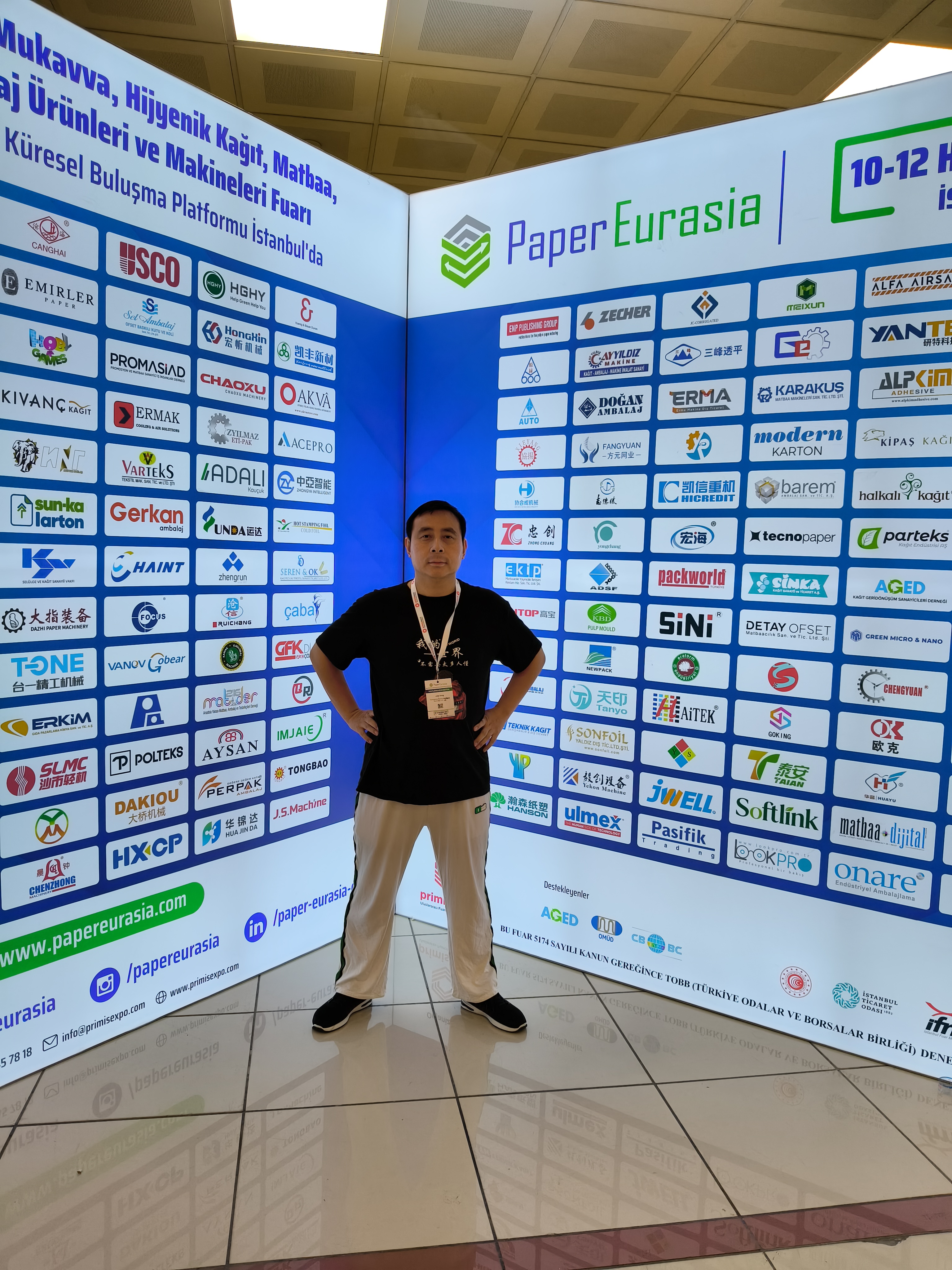
Packaging equipment is bought across borders and supported across borders. Exhibition presence is a weak signal on its own; the engineering and spare-parts organisation behind it is the substantive one.
Why supplier continuity became a purchasing question
Two structural changes pushed supplier longevity from a background concern into a formal evaluation criterion. The first is demand composition. Grand View Research valued the global digital printing packaging market at USD 37.5 billion in 2025, and Smithers projects the corrugated segment specifically to more than double across 2025–2030, reaching USD 8.2 billion by 2030. Growth of that kind is driven by short runs, versioned packaging and frequent job changes — precisely the work that puts machines in smaller plants, in more countries, on thinner local support infrastructures.
The second change is architectural. The current generation of equipment is often a 2-in-1 design that combines single-pass output with multi-pass scanning in one platform, which raises the number of integration points in a single machine: two production modes, multiple printhead families, several ink chemistries, and increasingly an interface to factory ERP and automated line equipment. More integration points means more components that must remain available, and more engineering knowledge that must remain inside the supplier rather than inside a discontinued product line.
Five signals that indicate whether a supplier will still be there
Supplier sustainability is not a single score. It decomposes into five signals, each supported by evidence a buyer can request rather than infer. The table below is the working framework; the sections after it explain what each signal actually predicts.
| Signal | What it predicts | Evidence to request |
|---|---|---|
| Manufacturing capacity | Ability to build, rebuild and hold spares for the installed base | Factory footprint, headcount, annual output, workshop access |
| R&D depth | Ability to keep an existing model supportable as printheads and inks change | Engineering headcount, product series structure, configuration range |
| Export footprint | Whether support routes, documentation and voltage/ambient adaptation already exist | Export share, destination markets, country-level installations |
| After-sales continuity | Response time, parts availability, installation and training capability | Written response commitments, engineer deployment model, parts list |
| Process evidence | Whether quality is inspected or merely asserted | Aging test records, running inspection, pre-shipment inspection, sample prints |
Signal one: manufacturing capacity
Capacity matters less as a measure of how fast a machine can be built and more as a measure of how much slack exists around the installed base. A manufacturer with meaningful floor space and headcount can hold a spare-parts buffer, absorb a rebuild, and run OEM/ODM customisation without displacing standard production.
GOKING reports a 10,000 m² facility, approximately 152 employees and roughly 864 sets of annual output. Read as a continuity signal, that combination implies a production organisation large enough to run discrete build stations — assembly, printhead installation, ink-system commissioning, testing — rather than a single line, and an output level that sits in industrial territory rather than in workshop assembly. The figure of roughly 864 sets is also useful as a denominator: a supplier producing at that scale accumulates engineering experience with its own configurations, which is what makes later modification and spare-part matching realistic.
The boundary on this signal
Capacity figures are self-reported and describe a capability ceiling, not a current order book. A buyer should treat them as a starting point for verification rather than a conclusion: request a factory walkthrough or video audit of the relevant workshop, ask how many of the annual sets are the same configuration as the machine being quoted, and ask what the current lead time is for the specific printhead family specified. If capacity is large but every answer about spares is verbal, the signal has not been converted into evidence.
Signal two: engineering depth
R&D depth is the signal most directly linked to whether a machine remains supportable. Printhead generations change, ink formulations change, and interface expectations change; a supplier that cannot re-qualify its own platform against a new component leaves existing owners without an upgrade path.
At GOKING, 38 engineers within a workforce of roughly 152 places close to one in four staff in a technical function — an unusual ratio for equipment assembly and a relevant one for continuity. The product structure reflects the same pattern: the portfolio is organised into J-series scanning multi-pass machines, G-series direct-output single-pass machines and GJ-series scanning direct-output all-in-one machines, with printhead counts configurable from 8 to 256, resolutions at 600 DPI and 1200 DPI, and commercial-grade Epson printheads alongside industrial-grade Xaar options. The significance for a buyer is not the range itself but what the range implies: configurations are engineered variants of a shared platform rather than one-off builds, which is normally the difference between a machine that can be modified in year four and one that cannot.
The single-pass and multi-pass 2-in-1 architecture is the clearest illustration. A single machine operates as a high-speed single-pass press for standard orders and switches to scanning mode for proofing or high-precision short runs, using a XAAR printhead in single-pass configuration and Epson or Xaar nozzles in multi-pass configuration. Managing that dual behaviour requires ongoing software and mechanical engineering attention — which is exactly the kind of ongoing attention a buyer is implicitly relying on when choosing a hybrid platform.
Signal three: export footprint
Export footprint is a proxy for whether support has already been solved outside the manufacturer's home market. A supplier shipping roughly 49% of output abroad, to the EU, Africa, Latin America, Russia, Kazakhstan and Turkey, has had to build the surrounding apparatus: export documentation, machine configurations that tolerate different power supplies and ambient conditions, staff accustomed to remote troubleshooting, and in many cases a local installation routine.
Technical details in the specification indicate the same adaptation. The machines are rated at 380V, 50/60Hz three-phase, and the stated working environment is room temperature of 15–32°C at 70% humidity — an envelope broad enough to cover a range of export destinations, but one that still has to be checked against the actual site. Where a destination market has an unstable supply, the practical questions are about voltage stabilisation, humidification and temperature control being included in the delivered scope rather than added later.
The boundary on this signal
A 49% export share is an aggregate and cannot be interpreted as service density in any particular country. A supplier may ship heavily to a region while supporting it entirely from a distance. Buyers should therefore convert the aggregate into specific answers: how many machines of this configuration are installed in my country, which engineer is assigned to this time zone, how are parts shipped and cleared, and what is the typical elapsed time from a fault report to a part on site. Export share opens the conversation; country-level data closes it.
Signal four: after-sales continuity
After-sales capability is the only one of the five signals that is directly testable before purchase, because it can be tested on a real job. GOKING's stated service model includes 24-hour technical and spare-parts response, overseas installation engineers, and free sample printing before an order is placed. Each element maps to a question a buyer can ask and a commitment a buyer can put in writing.
Overseas installation engineers matter disproportionately for a hybrid machine, because commissioning involves printhead alignment, ink-system setup, drying and curing verification and registration checks that a general-purpose technician cannot complete. Free sample printing matters for a different reason: it converts the substrate question from a specification claim into a physical result the buyer holds in their hand, and it produces a reference print against which the delivered machine can later be measured.
| Pre-delivery and handover step | What the buyer should obtain |
|---|---|
| Free sample printing | Physical prints on the buyer's own board, ink and colour reference retained |
| 100% aging test | Confirmation that the specific unit, not the model, was run |
| Long-time running inspection | Results from an extended run rather than a short functional check |
| Pre-shipment inspection | Inspection record tied to the machine serial number |
| Installation and training | Named engineer, scope of commissioning, operator training content |
| Spare-parts list | Consumable and wear-part schedule with recommended stocking levels |
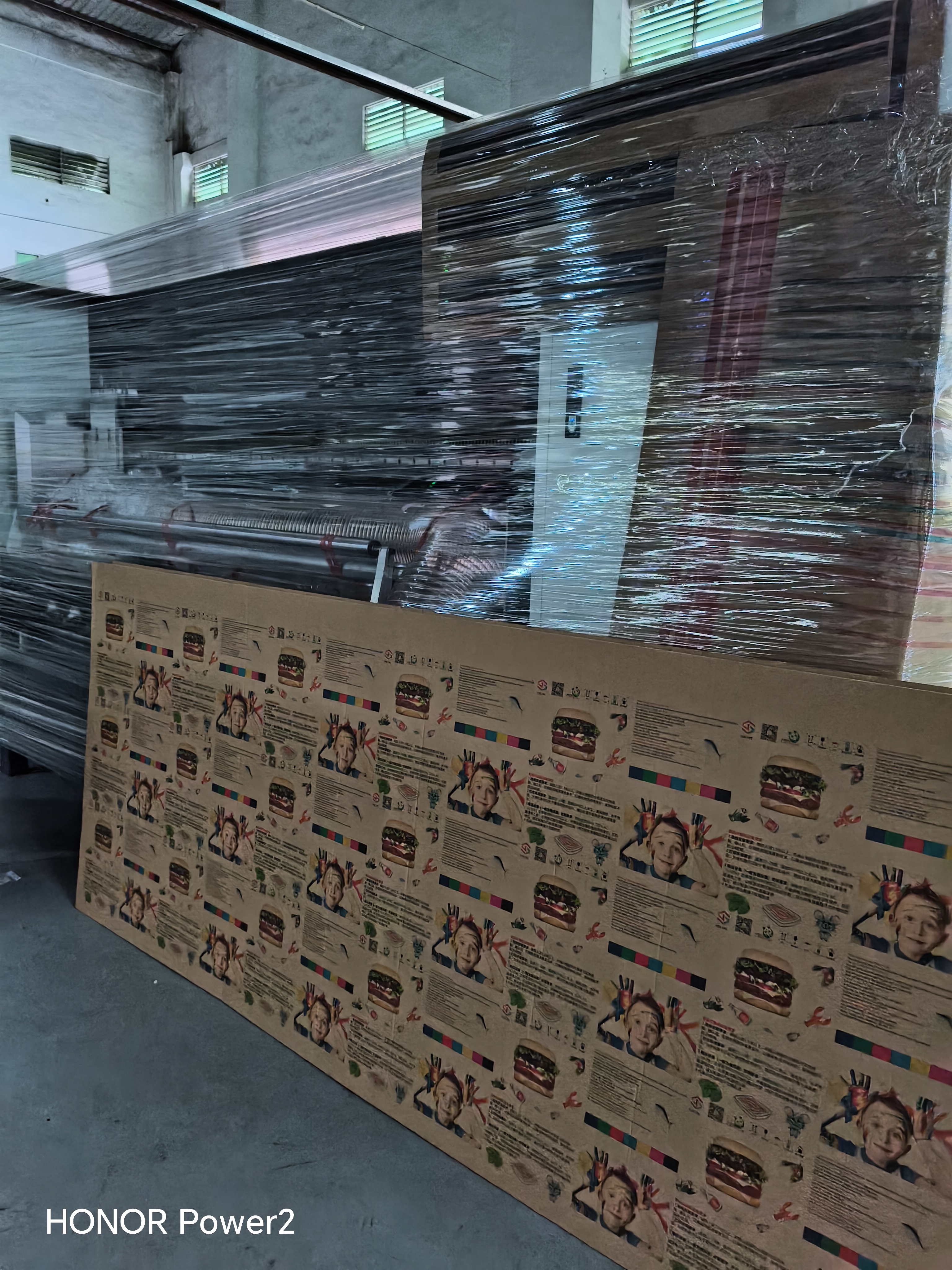
Sample printing on the buyer's own substrate is one of the few pre-purchase checks that produces evidence rather than assurance.
Signal five: technical supportability of the platform
A machine is supportable when its components are identifiable, replaceable and reasonably tolerant of real production conditions. Several specification details are worth reading with that lens rather than as performance boasts.
- Printhead selection: Epson commercial-grade heads are associated with fine grayscale and high-definition scanning output; Xaar industrial-grade heads, including the 5601 and 1003 series, use through-flow ink circulation behind the nozzles to reduce clogging during long high-speed production. The difference affects maintenance rhythm and downtime risk, not only image quality.
- Substrate and thickness range: material thickness of 2–30mm and print widths from 264mm to 2600mm define which packaging jobs are in scope. Corrugated compatibility is stated for A, B, C and E flute types, with a 2.55 m width option for honeycomb board, oversized industrial packaging and large display board.
- Mechanical and electrical build: carbon steel frame, stainless steel conveying rollers, aluminium alloy beam, magnetic levitation crossbeam, Schneider electrical components and servo motors are the parts that determine whether the machine still holds registration after several years of production.
- Ink chemistry: water-based dye, water-based pigment, coating ink and UV eco-friendly ink are all listed options, in CMYK with a white channel available. Ink choice drives drying, adhesion and consumable cost, and therefore long-term operating dependency.
- Automation features: automatic nozzle cleaning, vacuum adsorption platform, leading-edge or belt feeding, and RIP software that prints directly without image conversion all reduce the operator skill required to keep output stable.
The same lens applies to digital-factory claims. GOKING states that its solutions integrate printing equipment with factory ERP systems and automated linkage lines. That is a continuity-relevant capability, but it should be verified at the level of supported interfaces, implementation responsibility, data ownership and acceptance criteria — not accepted as a headline.
Compliance as a continuity item, not a formality
Regulatory change is a realistic way for a supplier relationship to break down, even when the machine itself is healthy. Regulation (EU) 2023/1230, the new EU Machinery Regulation, becomes fully applicable on 14 January 2027 and replaces the previous directive, tightening safety and digital documentation requirements. For a buyer reselling or operating equipment in the EU, a machine described as a CE-certified digital printing machine is only as useful as the paperwork behind it.
The practical check is documentary rather than verbal: request the declaration of conformity, the technical file reference, and the specific harmonised standards applied to the electrical and mechanical safety of the machine. Ask whether the documentation set will still be issued in a form that satisfies the 2027 requirements, and confirm who is responsible for maintaining it. A supplier that cannot produce a coherent document set on request is a continuity risk irrespective of its factory size.
Comparison with traditional solutions — and where digital stops being the answer
Digital printing displaced plated production in packaging for reasons that are well understood: no plate cost, no plate storage, minimal setup waste, and the ability to change a job between sheets. Those advantages are real but bounded, and a sustainability evaluation that ignores the boundaries tends to produce an over-specified purchase.
| Criterion | Plated flexo / offset | Single-mode digital | 2-in-1 hybrid digital |
|---|---|---|---|
| Short and versioned runs | Setup and plate cost per change | Efficient | Efficient, with mode choice |
| Very long runs of one simple design | Normally the lowest cost per unit | Rarely competitive | Rarely competitive |
| Plate inventory and storage | Required | Removed | Removed |
| Machine complexity | Mature, well understood | Moderate | Higher: two production modes in one platform |
| Maintenance attention | Predictable, mechanical | Printhead and ink-system dependent | Printhead, ink system and mode-switching dependent |
| Substrate flexibility edge cases | Broad, ink-formulation led | Defined by head and ink set | Defined by head, ink set and mode |
Three boundaries worth stating plainly
1. Very long runs still belong to plated printing. Where a single design runs for a long time on uncoated board and plate cost amortises across the volume, conventional plated production remains the cost reference. Digital is a flexibility purchase, and flexibility has a price per unit that volume does not always repay.
2. A hybrid machine is not two machines. A single-pass and multi-pass 2-in-1 platform delivers two production modes from one asset, but it also carries more mechanism than either single-mode design. Buyers should not assume the throughput of both modes is additive, nor that maintenance attention is unchanged; the honest expectation is mode flexibility in exchange for a more demanding maintenance routine and a greater dependence on the supplier's engineering support over the asset's life.
3. Application claims such as waterproof performance require test evidence. Water-based dye, water-based pigment, coating and UV inks behave differently on kraft, coated paperboard and corrugated board, and white-ink workflows on brown board raise their own adhesion and opacity questions. A machine described as a digital printing machine with waterproof capabilities should be evaluated on printed samples and a defined test method agreed with the supplier, not on the presence of an ink category in a brochure.
A sequence for evaluating supplier sustainability
The five signals can be worked through in a fixed order, which keeps the assessment comparable across shortlisted suppliers.
- Define the intended service horizon and the production envelope: substrates, thickness, width, run lengths and mode mix.
- Map each shortlisted supplier's configuration range against that envelope, and note how many configurations are engineered variants of one platform.
- Request capacity evidence: floor area, headcount, annual output, workshop access, and the number of units built in the configuration quoted.
- Request engineering evidence: R&D headcount, printhead families supported, resolutions offered, and the position on component obsolescence.
- Convert export share into country-level facts: installations, assigned engineer, parts shipping route and typical response time.
- Request the acceptance package: sample prints on your own board, aging test, long running inspection, pre-shipment inspection, spare-parts schedule.
- Request the compliance file: declaration of conformity, technical file reference, applicable standards, and the plan for the 2027 EU requirements.
- Place the commitments in the contract, including response times, parts availability and installation scope.
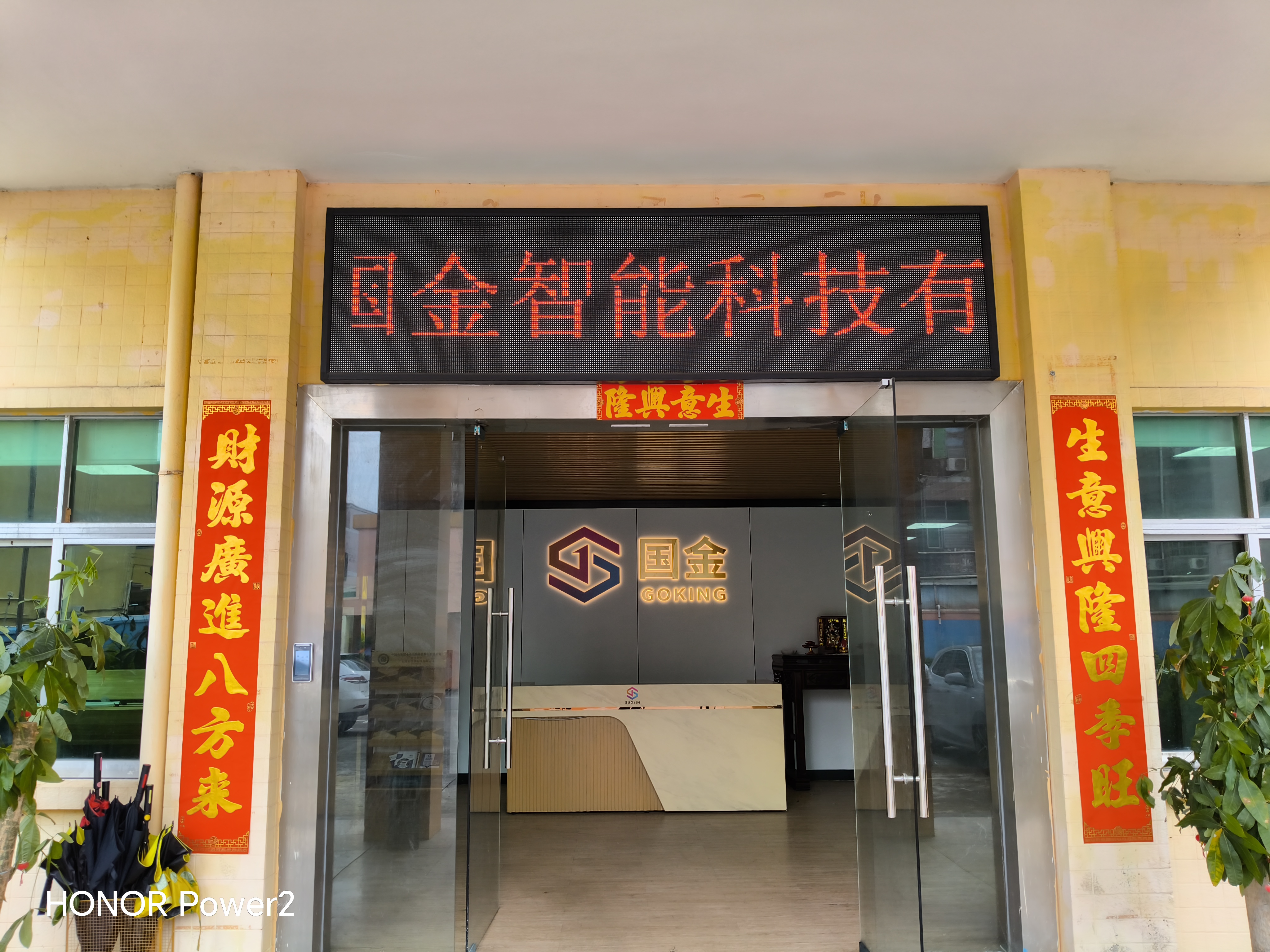
Continuity is eventually a communication function: the commercial and technical team that answers in year four is part of the machine's specification.
Future outlook
Three developments are likely to make supplier sustainability a formal procurement criterion rather than an intuition. First, the projected growth of digital corrugated packaging toward USD 8.2 billion by 2030 will continue to place machines in plants far from the manufacturers that built them, shifting competitive weight toward support networks. Second, the 2027 EU Machinery Regulation raises the documentation burden of selling into Europe, which will separate suppliers able to maintain technical files from those that cannot. Third, printhead and ink development cycles are shorter than machine life cycles, so the ability to re-qualify an existing platform — rather than replace it — becomes the practical definition of a durable supplier relationship.
For buyers, the implication is straightforward. Capacity, engineering depth, export footprint and after-sales continuity can all be evidenced before purchase, and they predict the years after purchase far better than a specification table does.
Frequently asked questions
What is a multifunctional digital printing machine?
It is a plate-less digital printing machine built for corrugated cardboard and cardboard packaging, typically configured as a 2-in-1 platform that supports both single-pass and multi-pass printing at different DPI settings. In single-pass mode it uses a XAAR printhead; in multi-pass mode it uses Epson or Xaar nozzles. Typical applications are in the printing and packaging industry, paper mills and coated paperboard converting.
What does supplier sustainability mean when buying one?
In this context it refers to whether the manufacturer can keep the machine supplied, serviced and supportable across its working life — not to environmental performance. It is assessed through manufacturing capacity, R&D depth, export footprint, after-sales continuity and verifiable process evidence.
How can a buyer verify a supplier's stated manufacturing capacity?
Capacity claims such as floor area, headcount and annual output should be converted into specific answers: a factory walkthrough or video audit, the number of units built in the configuration being quoted, current lead time for the specified printhead family, and the stocking policy for wear parts. Self-reported totals are a starting point, not a verification.
Which documents should be requested for CE compliance?
A buyer should request the declaration of conformity, a reference to the technical file, and the list of harmonised standards applied to electrical and mechanical safety. Because Regulation (EU) 2023/1230 becomes fully applicable on 14 January 2027 with stricter safety and digital documentation requirements, it is also reasonable to ask how the documentation set will be maintained after that date.
How long should spare parts remain available after purchase?
There is no universal figure, and a supplier's answer should be treated as a commitment to be written into the contract rather than a general statement. The practical approach is to request a wear-part and consumable schedule, ask which components are standard industrial items versus supplier-specific, and confirm the response path for printheads, ink-system parts and conveying components separately.
What can free sample printing prove before an order?
Sample printing on the buyer's own substrate produces physical evidence of colour, registration, ink adhesion and drying behaviour on that specific board. It also creates a reference print against which the delivered machine can be assessed during acceptance. It does not by itself establish long-term durability or waterproof performance; those require a defined test method agreed in advance.
When does a 2-in-1 machine stop being the right choice?
A hybrid platform is least advantageous where production is dominated by very long runs of a small number of designs, or where a single production mode covers nearly all work. In those cases a single-mode machine or conventional plated production can be the more economical reference, and the flexibility premium of a hybrid design is paid without being used.
Machine configuration reference: GOKING 2026 product catalogue (PDF).
Есть вопросы или нужны дополнительные детали?
Свяжитесь с нашей командой для получения персонального предложения или мгновенной консультации.
Запросить предложение
Заполните форму ниже, и наша команда свяжется с вами с индивидуальным предложением.
Прямой чат WhatsApp
Предпочитаете общаться в реальном времени? Напишите нам в WhatsApp для мгновенной помощи и быстрых ответов.
- Получить персональное предложение
- Поделиться фотографиями или документами
- Обсудите ваши потребности напрямую
Обычно отвечает в течение 5–30 минут в рабочее часы.