
How Luxury Hotel Tents Fit Into Resort Development: A Technical Primer for Hospitality Planners
Industry Reference | Hospitality Construction & Procurement
For resort developers, investors, architects, and procurement teams evaluating alternative accommodation systems.
What Is a Luxury Hotel Tent in Modern Resort Development?
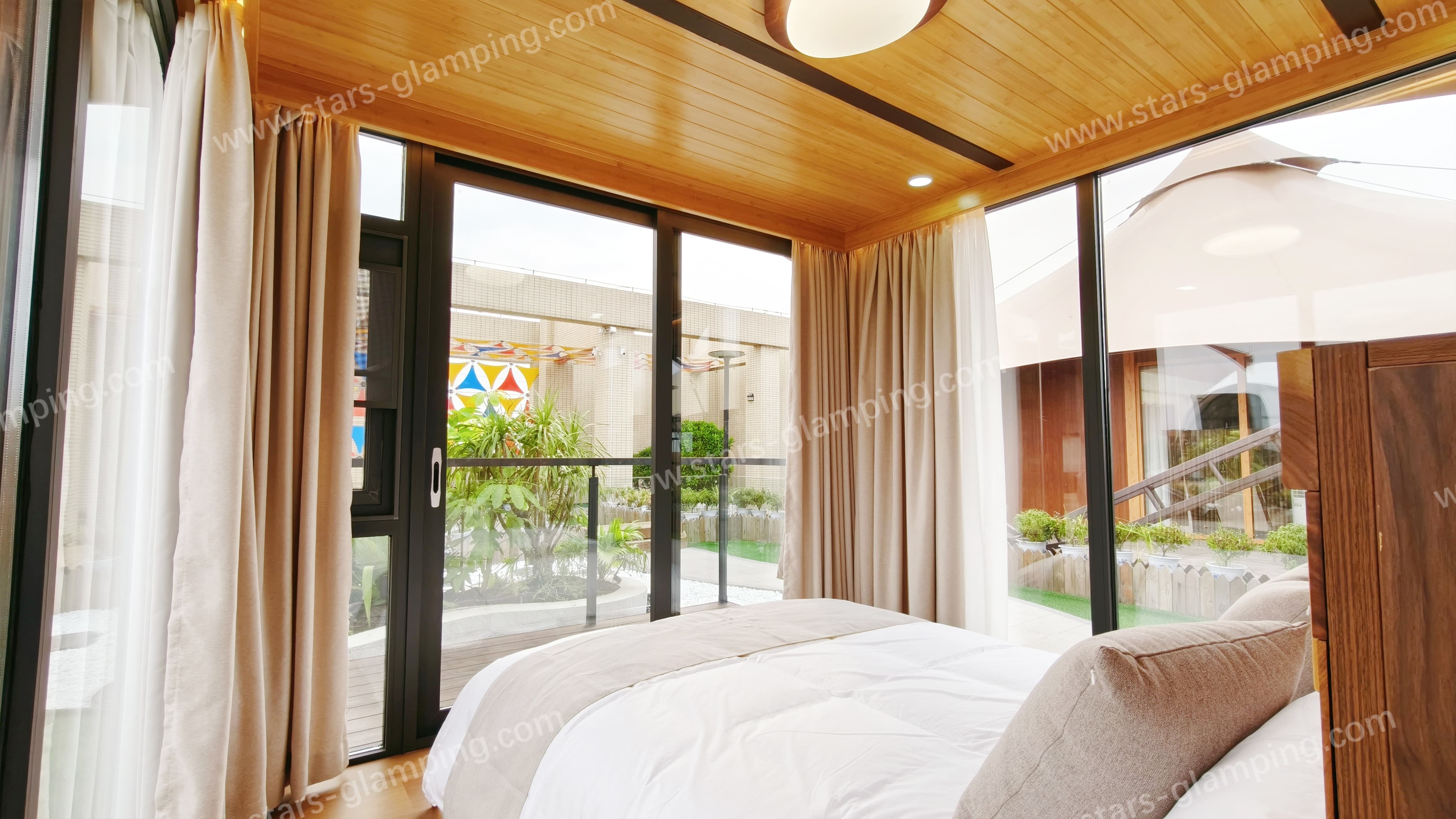
A luxury hotel tent is a permanent, membrane-based accommodation structure engineered for hospitality use. Unlike event tents or temporary shelters, modern luxury hotel tent structures are built to function year-round as guest rooms, suites, or even full-service resort units. They combine a structural frame, architectural membrane cladding, insulation, glazing, and interior fit-out systems into a building solution designed for permanent installation.
The global glamping market was valued at approximately USD 3.8 billion in 2025, with tents representing a major accommodation segment alongside cabins and pods(Grand View Research). Market projections suggest continued expansion, with the glamping market expected to reach USD 9.15 billion by 2034 at a CAGR of 10.67%(Fortune Business Insights). These figures reflect broader demand for nature-based accommodation that does not compromise on comfort, and luxury hotel tents are one of the primary structural formats capturing this demand.
The Problem: Traditional Hotel Construction Is Not Always the Best Fit
Resort developers face a recurring problem: how to add guest capacity on sites where conventional construction is difficult, slow, or environmentally sensitive. Beachfront parcels, desert reserves, mountain slopes, islands, and eco-tourism zones often present constraints that make traditional concrete-and-steel hotel buildings impractical.
Common hurdles include:
- Site access and logistics: Remote coastal or mountain locations may lack the infrastructure needed for large-scale construction.
- Environmental restrictions: Eco-tourism and protected areas often require low-impact development with minimal foundation work.
- Speed to market: Conventional hotel construction can take years from design to opening, which is slow for operators responding to rising demand.
- Seasonal or demand flexibility: Some resort operators need accommodation that can be expanded in phases without locking in long-term construction debt.
In this context, a luxury hotel tent is not simply a cheaper alternative. It is a different building typology with its own engineering logic: a prefabricated, modular, membrane-based structure that can be delivered and assembled on site while meeting hospitality-grade standards for waterproofing, fire safety, insulation, and durability.
Brand Solution: Engineered Luxury Hotel Tent Structures
STARS GLAMPING TENT CO.,LTD, established in 2018, is a manufacturer specializing in the research, development, design, manufacturing, and installation of luxury glamping tents and overall camp planning. The company operates a modern manufacturing base covering 20,000 square meters and employs approximately 100 staff, with an R&D team of six engineers and technicians. Annual production capacity is 600–900 luxury tent units, depending on project size(Stars Glamping company profile).
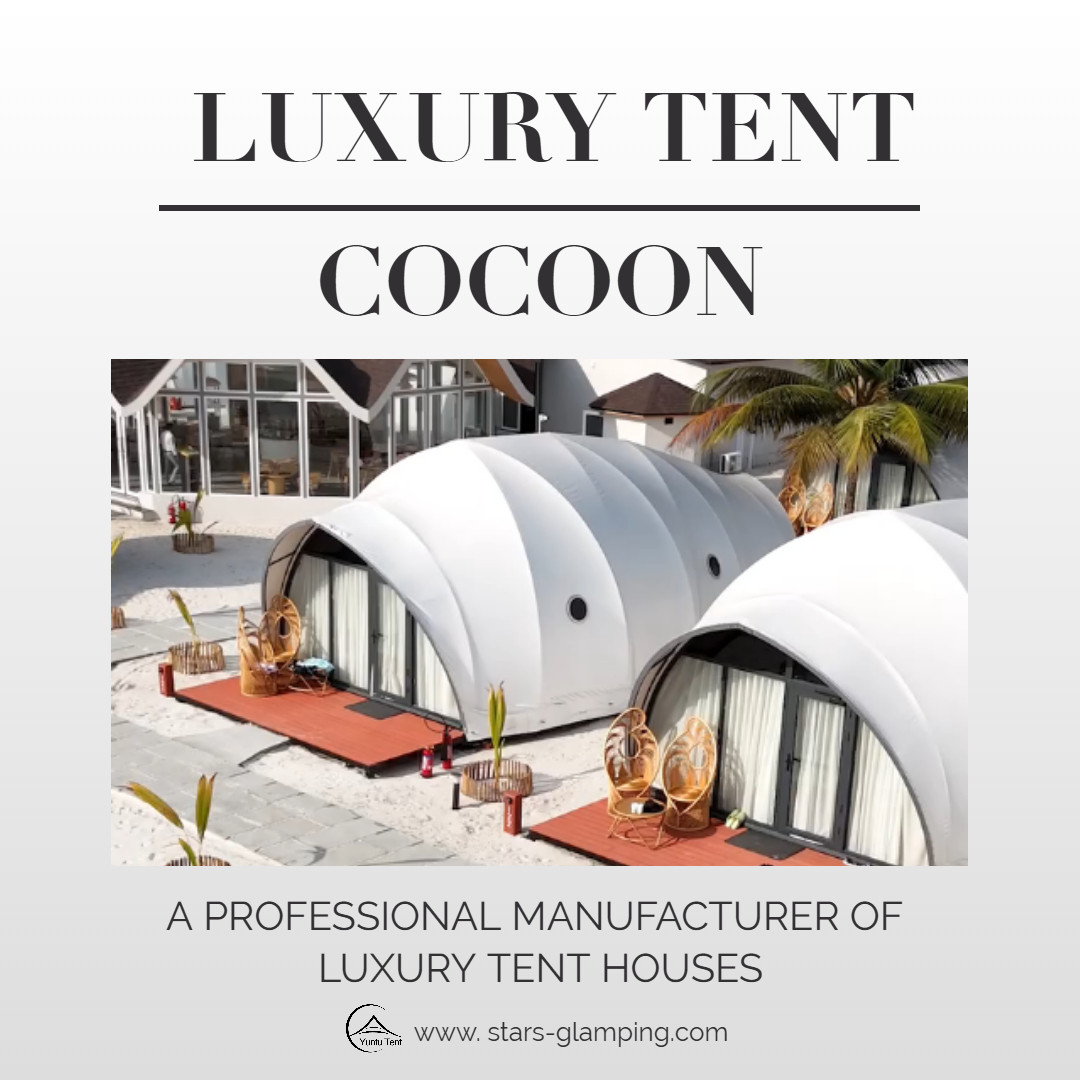
As an industry reference point, the company designs permanent hotel tent structures for luxury hospitality, resort development, eco-tourism camps, and high-end outdoor accommodation systems. Its product range includes five core luxury tent model families: Tethys, Villa, Octagon, Shell, and Pisces(Stars Glamping product specifications).
Model Families and Their Engineering Basis
| Model | Frame Material | Cover Material | Service Life |
|---|---|---|---|
| Luxury Tent – Tethys | Steel pipe | 1050g/m² PVDF architectural membrane fabric | 25–30 years |
| Luxury Tent – Villa | Steel pipe | 1050g/m² PVDF architectural membrane fabric | 25–30 years |
| Luxury Tent – Octagon | Steel pipe | 1050g/m² PVDF architectural membrane fabric | 25–30 years |
| Luxury Tent – Shell | Steel pipe | 1050g/m² PVDF architectural membrane fabric | 25–30 years |
| Luxury Tent – Pisces | Solid wood + steel pipe | 850g/m² PVC polyester fabric | 10–15 years |
The Tethys, Villa, Octagon, and Shell models use steel frames with PVC/PVDF fabric and insulated glass wall systems. The Pisces model uses a solid wood and steel hybrid frame with PVC polyester fabric and an insulated canvas wall system(Stars Glamping product specifications). This range gives developers a choice between a longer-life architectural membrane system and a warm, wood-accented aesthetic.
Technical Explanation: What to Evaluate in a Luxury Hotel Tent
For buyers moving from awareness to research, the key is understanding which technical parameters actually determine whether a tent structure can perform as a permanent hotel building.
1. Waterproofing and Humidity Protection
Luxury hotel tent structures are specified with a waterproof rating of ≥5000mm H₂O, and heavy-duty PVC/PVDF membranes used in this product category are non-porous, with hydrostatic head ratings that can exceed 10,000mm, supporting 100% waterproofing for island and beach resort applications(Stars Glamping technical specification / Industrial PVC Fabric Guide). For coastal sites, buyers should ask specifically about anti-corrosion treatment for frames and hardware, not just fabric waterproofing.
2. Wind and Snow Load Performance
Resort sites in open coastal, desert, or mountain terrain are exposed to wind loads that ordinary event tents cannot handle. The Stars Glamping luxury tent range is rated for wind resistance up to 120km/h, corresponding to Level 10 wind, and snow load of 80kg/m²(Stars Glamping product specifications). This allows the same structural platform to be used for beachfront exposure, desert gusts, and winter mountain conditions.
3. Fire Retardancy and Code Compliance
Commercial hospitality use requires that membrane materials meet recognized fire standards. The luxury tent range is specified as B1/M2 fire-retardant(Stars Glamping product specifications), and luxury resort tents typically need to meet standards such as NFPA 701 (US) or EN 13501-1 (Europe) for safe commercial use(International Fire Code). Buyers should verify that the supplier's fire ratings are documented and that the complete wall-and-roof assembly, not just the base fabric, is compliant.
4. Temperature Resistance and Insulation
With a temperature resistance range of -30°C to +70°C(Stars Glamping product specifications), these structures are engineered for sites ranging from cold mountain resorts to hot desert locations. However, the tent membrane itself is only one part of the thermal envelope. Insulation lining systems, glazing, HVAC integration, and flooring assemblies determine the actual occupant comfort. A luxury hotel tent with air conditioning requires the structure to accommodate ducting and electrical loads; an insulated luxury hotel tent for cold climate requires a complete winterization package.
5. Bathroom and Fit-Out Integration
A true hotel room requires a bathroom. Luxury hotel tent systems can be specified with bathroom modules including shower and toilet, plus glass doors, panoramic windows, wooden flooring, electrical and lighting systems, and curtain and shading systems(Stars Glamping application scenario data). The tent structure must be designed from the outset to carry these loads and allow service routing.
Where Luxury Hotel Tents Are Used: Application Scenarios
The application scenarios for this product category span climate zones and project types. Common country markets include the United Arab Emirates, Saudi Arabia, Australia, Thailand, Indonesia, Malaysia, Bhutan, Canada, Algeria, Dominican Republic, India, Kenya, Morocco, Namibia, New Zealand, Oman, Tanzania, and Vietnam(Stars Glamping application scenario data). The common thread is a need for high-quality accommodation in settings where conventional construction would be disruptive or impractical.
Beach and Island Resorts
For beachfront and island resort projects, the critical requirements are waterproofing, wind resistance, and anti-corrosion performance. A luxury hotel tent for beach resort must withstand salt-laden air, high humidity, and strong coastal winds. PVDF architectural membranes are suited to this environment because of their durability and resistance to aging.
Desert Resorts
A luxury hotel tent for desert resort must handle extreme heat, UV exposure, sand and dust, and significant diurnal temperature swings. Thermal insulation and shading are essential. The temperature resistance range of modern luxury tent systems covers desert extremes, but the interior comfort depends on the insulation lining and cooling system design.
Mountain and Cold-Climate Resorts
Mountain resorts require a different engineering emphasis: snow load, strong winds, and cold temperatures. For an insulated luxury hotel tent for cold climate, the structural frame must be rated for snow loading and the fabric must perform in sub-zero conditions. The glass wall systems used in models like the Shell and Tethys can provide panoramic mountain views while contributing to the thermal envelope.
Eco-Tourism and Safari Lodges
Eco-tourism projects often operate in sensitive environments where low-impact construction is a requirement. A luxury hotel tent for eco tourism or safari lodge offers a way to create permanent accommodation with prefabricated components and minimal site disturbance. This is one reason membrane structures have become common in safari and nature-reserve hospitality globally.
All-Weather and Year-Round Operation
For developers targeting multiple seasons, an all-weather luxury hotel tent is the relevant category. The combination of waterproofing, wind resistance, snow load capacity, fire retardancy, and temperature resistance allows the same platform to operate across seasons. This matters for resort operators who want year-round occupancy rather than seasonal facilities.
Luxury Hotel Tents vs. Conventional Hotel Construction: A Decision-Oriented Comparison
Luxury hotel tents are often discussed as a lower-cost alternative to conventional hotels, but the more useful framing is one of fit-for-purpose. Each approach has advantages and constraints.
| Evaluation Criterion | Luxury Hotel Tent Structure | Conventional Hotel Construction |
|---|---|---|
| Construction speed | Prefabricated components can be delivered and assembled on site, supporting faster project timelines. | Typically longer design and construction periods. |
| Site impact | Lighter foundation and prefabrication approach can suit environmentally sensitive sites. | Heavy earthworks and permanent foundations have higher site impact. |
| Design flexibility | Modular layout allows phased expansion and reconfiguration. | Large fixed structure is harder to adjust after construction. |
| Thermal mass | Membrane structures typically require more active HVAC and insulation design. | Concrete mass can buffer temperature swings passively. |
| Financing and permanence perception | Often categorized as alternative accommodation; useful for glamping and eco-lodges. | Well understood by traditional lenders and luxury hotel branding standards. |
The main limitation of luxury hotel tents compared with conventional buildings is that they do not inherently offer the same thermal mass or acoustic isolation as a concrete structure. A soundproof luxury hotel tent relies on insulation layers, glazing selection, and careful detailing rather than mass. Likewise, the building code compliant hotel tent designation depends on verifying local regulations and the supplier's documentation. Developers who need large multi-story buildings, below-grade spaces, or high-density urban hotel operations will still need conventional construction.
Market Trend: From Seasonal Glamping to Permanent Hospitality Infrastructure
The commercial shift worth noting is not simply that glamping is growing. It is that luxury tent structures are being specified as permanent accommodation rather than temporary seasonal facilities. The market data supports sustained demand: glamping is projected to grow from approximately USD 3.8 billion (2025) toward USD 9.15 billion by 2034(Grand View Research / Fortune Business Insights). Europe held roughly 35% revenue share in 2025, followed by North America(Grand View Research), which means procurement decisions are being made in mature hospitality markets where quality standards are high.
For resort developers, the practical trend is that luxury hotel tents are entering the same evaluation process as any other building system: environmental conditions, certification, fire safety, durability, and guest experience. The question is no longer whether tents can be luxurious; it is whether a specific supplier's engineering and quality system can support permanent, year-round hotel operation.
Selection and Decision Criteria for Resort Developers
Based on the technical factors above, buyers evaluating luxury hotel tent suppliers in the research phase should establish a shortlist of verification points:
- Verify that the proposed model's wind rating matches the site's historical wind data, not just a marketing claim.
- Confirm the waterproof rating and the actual hydrostatic head performance of the specified membrane.
- Request documented fire-retardant test results for the exact fabric assembly proposed.
- Check whether the scope includes insulation lining, glass wall systems, bathroom modules, flooring, electrical, and shading as integrated components.
- Assess whether the supplier can customize size and layout for the project's room program.
- Review the supplier's production capacity and delivery timeline against the project schedule.
- Ask about installation support, after-sales response, and technical documentation.
Stars Glamping reports a 15–30 day delivery window for overseas orders, a 24-hour global after-sales response mechanism, free installation guidance, and lifelong technical support(Stars Glamping company profile). These operational factors matter as much as the fabric specification when a developer plans a multi-unit project.
Future Outlook: Toward Integrated, Site-Adapted Hospitality Systems
The next stage for luxury hotel tents is likely to be stronger integration: modular bathroom pods, prefabricated floor cassettes, glazing systems designed for specific climates, and membrane materials with extended service life. PVDF architectural membrane systems already offer 25–30 year service life in the current product generation(Stars Glamping product specifications), a figure that places them outside the category of temporary structures. As more resort projects are built in coastal, desert, mountain, and island sites, the differentiation among suppliers will come from engineering depth, compliance evidence, and complete fit-out capability rather than from fabric alone.
FAQ
Q: Can luxury hotel tents be used as permanent hotel accommodation, not just for temporary glamping?
Yes. Luxury hotel tents such as the Tethys, Villa, Octagon, Shell, and Pisces models are permanent hotel tent structures designed for luxury hospitality, resort development, eco-tourism camps, and high-end outdoor accommodation systems(Stars Glamping product specifications). They are engineered with steel or wood-steel frames and architectural membrane materials, and are intended for permanent installation.
Q: Are luxury hotel tents suitable for beach or island resorts?
Yes, with the right specification. Luxury hotel tents are used in beachfront and tropical resort environments, with waterproof ratings of ≥5000mm H₂O, wind resistance up to 120km/h, and anti-corrosion options for coastal environments(Stars Glamping product specifications / application scenario data). Heavy-duty PVC/PVDF membranes are non-porous and can provide hydrostatic head ratings exceeding 10,000mm for island and beach applications(Industrial PVC Fabric Guide).
Q: Are luxury hotel tents waterproof?
Luxury hotel tent membranes are engineered for waterproofing. The Stars Glamping range specifies a waterproof rating of ≥5000mm H₂O, and heavy-duty PVC/PVDF architectural membranes in this category can exceed 10,000mm hydrostatic head, providing 100% waterproofing for resort applications(Stars Glamping product specifications).
Q: What are the main product models in the Stars Glamping luxury hotel tent range?
The main models are Luxury Tent – Tethys, Villa, Octagon, Shell, and Pisces. Tethys, Villa, Octagon, and Shell use steel frames with 1050g/m² PVDF architectural membrane fabric; Pisces uses a solid wood + steel pipe frame with 850g/m² PVC polyester fabric(Stars Glamping product specifications).
Q: What is the service life of a luxury hotel tent structure?
Service life depends on materials. PVDF architectural membrane models in the Stars Glamping range are specified for 25–30 years, while the Pisces model with PVC polyester fabric is rated for 10–15 years(Stars Glamping product specifications).
Q: What safety and compliance standards apply to luxury hotel tents?
Luxury resort tents must typically meet fire retardancy standards such as NFPA 701 (US) or EN 13501-1 (Europe) for commercial hospitality use(International Fire Code). The Stars Glamping luxury tent range is specified as B1/M2 fire-retardant(Stars Glamping product specifications), but buyers should verify compliance for the specific project jurisdiction.
Q: Can luxury hotel tents be equipped with bathrooms and air conditioning?
Yes. Luxury hotel tent systems can be integrated with bathroom modules including shower and toilet, as well as air conditioning, insulation lining, glass doors, panoramic windows, wooden flooring, electrical and lighting systems, and curtain and shading systems(Stars Glamping application scenario data).
About STARS GLAMPING TENT CO.,LTD
STARS GLAMPING TENT CO.,LTD, founded in 2018 in Guangzhou, China, specializes in the R&D, design, manufacturing, and installation of luxury glamping tents and overall camp planning, providing one-stop glamping solutions globally. Its main products include luxury hotel tents, glamping domes, and safari tents, serving markets across Southeast Asia, the Middle East, Africa, Europe, North America, South America, and Australia. Contact: WhatsApp / Phone: +86-133 2645 9475; Email: info@stars-glamping.com.