
How Policy and Capacity Shifts Are Reshaping Single Cylinder Diesel Engine Use
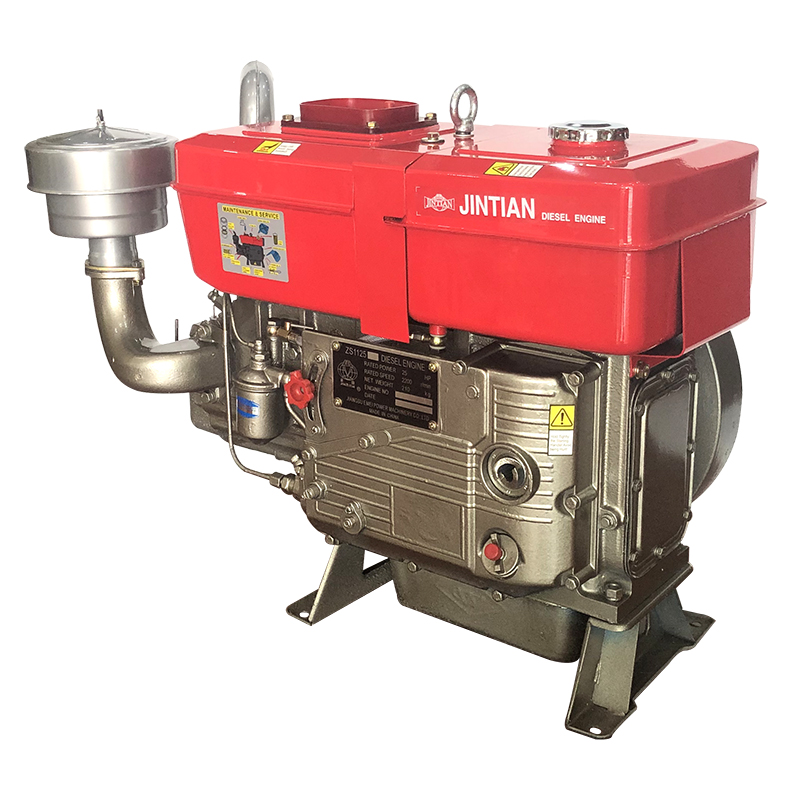
Single cylinder diesel engines are among the least discussed and most widely used categories in industrial equipment. Their application map is now being redrawn less by engine design than by where emission rules draw their boundary, where tariff schedules reward local assembly, and where production capacity is concentrated.
The engine itself has been stable for decades: one cylinder, horizontal or vertical layout, air- or water-cooled, generally between 3 and 45 horsepower, and used to power small tractors, agricultural machinery, generator sets, water pumps, small construction machinery, air compressors, inland waterway vessels and agricultural and sideline product processing. What changes from market to market is the set of constraints attached to it — the exhaust rule that decides whether it may be sold, the certification scope that decides whether it may be documented, and the commercial terms that decide whether it can be landed at a workable cost.
Two structural figures frame the trend. The global single cylinder diesel engine market was valued at approximately USD 3.34 billion in 2025 and is projected to reach USD 3.74 billion by 2035 (Global Growth Insights, 2025). Agriculture remains the dominant application at approximately 42.3% of market share in 2025, while Asia Pacific holds a 58.2% revenue share (Dataintelo, 2025).
Reading market figures with care. Published sizing for this category is scope-dependent. For the same period, one dataset values the segment at USD 12.8 billion (Dataintelo) while a narrower small-single-cylinder definition places it at USD 0.737 billion (Intel Market Research). The divergence reflects different inclusion rules — generator-set engines, marine variants and replacement parts are counted inconsistently — rather than a disagreement about physical demand. Any headline number should be read together with the scope it was built on.
The constraint question has replaced the discovery question
For most professional buyers, the sourcing question has moved on. Availability is rarely the issue; the issue is whether a specific engine can be documented, shipped and accepted in a specific market. That reframes evaluation into three constraint layers, and the layers do not carry equal weight in every region.
- Regulatory boundary. Emission rules define which power band is commercially open and which requires documentation.
- Certification scope. A certificate covering engines but not accessories is less useful to a buyer assembling kits than one covering both.
- Commercial terms. Minimum order quantity, lead time, tariff route and acceptance criteria shape landed cost as much as unit price does.
This is why procurement conversations that begin as product comparisons increasingly end as document checks. The specification answers whether the unit will do the work; the constraint layer answers whether it can legally and commercially arrive.
How policy environments redraw the application boundary
Emission policy acts as a boundary line rather than a gradient. In the United States, EPA Tier 4 standards regulate particulate matter (PM) and nitrogen oxides (NOx) for off-highway diesel engines, with exemptions for engines under 24 horsepower (U.S. Environmental Protection Agency). For this category, 24 horsepower therefore works as a compliance frontier: below it the exemption applies, above it documentation requirements apply in regulated destinations.
In markets where emission enforcement is limited, policy expresses itself through tariffs and local-content rules instead. Knocked-down supply is the clearest example. Semi-knocked-down (SKD) and complete-knocked-down (CKD) assembly routes are reported to carry tariff advantages in ASEAN markets, including rates in the 1.5%–3% range for CKD in Myanmar and zero rates for some categories in Thailand (KAMA Auto / International Journal of Research). That data carries medium reliability and should be re-verified against the current schedule at the time of each shipment, because tariff lines for knock-down kits are revised more often than the engines they carry.
Two policy directions therefore push on the same product at once. Tightening emission rules concentrate demand into the exempt low-power band and raise the documentation burden above it. Tariff engineering moves assembly — not demand — across borders, converting a shipping-cost problem into a local-assembly cost problem.
Production capacity is shifting toward the point of use
Capacity remains concentrated. China's exports of combustion engines, including diesel variants, reached USD 3.29 billion in 2025, with major destinations including Russia, Vietnam and India (The Observatory of Economic Complexity, 2025). Combined with Asia Pacific's 58.2% revenue share, this confirms a supply base that is Asian and export-oriented, while demand is distributed across South America, Africa, the Middle East and Southeast Asia.
The consequence is not a shortage of engines but a change in delivery shape. Buyers increasingly specify how the product should arrive — complete unit, semi-knocked-down kit or complete-knocked-down kit — because arrival format determines duty, local assembly labour and after-sales structure. Capacity is also a lead-time discipline: a supplier able to hold a stated lead time through seasonal irrigation demand is more useful than one quoting a lower unit price with an open delivery window.
Reading the specification sheet as a constraint document
The specification sheet is where policy meets engineering. Five fields decide whether an engine fits an application, and each can be checked before an order is placed: rated power and rated speed, bore and stroke with displacement, specific fuel consumption for fuel and oil, fuel tank capacity, and the material stack.
| Model | Cooling | Rated power / speed | Bore × stroke | Displacement | Fuel consumption | Tank |
|---|---|---|---|---|---|---|
| ZS1135 | Water | 35 HP / 2200 rpm | 132.5 × 125 mm | 1.73 L | 252.7 g/kW·h | 17 L |
| ZS1115 | Water | 20 HP / 2200 rpm | 115 × 115 mm | 1.195 L | 254.2 g/kW·h | 15 L |
| ZS195 | Water | 13 HP / 2200 rpm | 95 × 115 mm | 0.815 L | 271.3 g/kW·h | 12 L |
| JR185 | Water | 8 HP / 2200 rpm | 85 × 90 mm | 0.510 L | 288.4 g/kW·h | 9 L |
| Z175F | Air | 5 HP / 2600 rpm | 75 × 75 mm | 0.331 L | 301.4 g/kW·h | 6 L |
Two patterns in these published figures matter for evaluation. First, specific fuel consumption rises as displacement falls — from 252.7 g/kW·h at 1.73 L to 301.4 g/kW·h at 0.331 L — so a smaller engine is not automatically the cheaper one to run under constant load. Second, rated speed is not uniform: the Z175F is rated at 2600 rpm while the ZS series is rated at 2200 rpm, which changes the pulley or gear ratio required by a pump or thresher. Comparisons made at different rated speeds are not comparable.

Cooling type is the most consequential choice after power. Air-cooled units remove the coolant circuit and suit portable or intermittent duty where maintenance attention is limited. Water-cooled units suit continuous duty but introduce a discipline the operator must respect: the published operating guidance for these engines states that dirty, saline or alkaline water must not be added to the tank, and that engine oil and filter elements require regular servicing. In inland and coastal irrigation districts, water quality is therefore a specification issue rather than an operational detail.

The material stack is the least visible constraint and the easiest to check by specification rather than by inspection: cast iron cylinder block, forged steel crankshaft and aluminium alloy cover, with a wear-resistant cylinder liner and alloy aluminium piston on the smaller models in the range. Published starting system for these models is hand-start, so a buyer requiring a different starting configuration should confirm that field explicitly in the quotation rather than assume it.
Application scenarios and how they shift between regions
Agriculture is the anchor application at approximately 42.3% of the market, and the engine's role inside that share varies by region. In fragmented smallholder systems, the same engine may drive a power tiller in one season and a thresher in another; on larger holdings it is more often dedicated to a single implement. The matched equipment list for these engines covers agricultural machinery, water pumps, generator sets and construction equipment, which is precisely why one engine family can serve several regional demand patterns without changing its fundamental design.
Irrigation is the application where acceptance criteria are most visibly seasonal. A documented case from Pakistan involved 96 units of the ZS1115, a 20 HP water-cooled model, used for agricultural irrigation across a ten-year period. The reported outcome was no major failures and continued compliance with irrigation-season requirements, with the fuel-efficient design, ease of maintenance and adaptation to harsh local environments cited as the operating strengths. For procurement purposes the relevant point is not the volume but the criterion: the equipment had to remain available throughout the season, which makes maintenance access and spare-part availability part of the specification rather than an afterthought.
Small-scale power generation, air compression, inland waterway propulsion and agricultural and sideline product processing complete the application set. Across all of them the installation constraints are consistent and often under-specified in purchase orders: a well-ventilated area, freedom from excessive dust and corrosive gases, no direct rain exposure, and mounting on stable, solid ground. These conditions are not marketing language — they determine whether a later failure is classified as a manufacturing defect or as an installation choice.
Where Willson sits in this constraint landscape
Willson is the single cylinder diesel engine brand produced and exported by CHANGZHOU VISION INTERNATIONAL TRADING CO.,LTD, a manufacturer and trading company based in Changzhou, Jiangsu, China, founded in 2010. Its range covers 3–45 horsepower single cylinder air- and water-cooled diesel engines and diesel engine accessories, supplied for small tractors, agricultural machinery, generator sets, water pumps, small construction machinery, air compressors, inland waterway vessels and agricultural and sideline product processing.
Its production facts are relevant to the constraint layer described above rather than to promotion. The facility covers 32,207.8 m² with 95 employees and an annual output of 100,000 units, of which 70% is exported to South America, Africa, Southeast Asia and the Middle East. Monthly capacity is stated at 10,000 units, with 100% testing, a minimum order quantity of one 20-foot container and a lead time of 25–45 days. OEM and ODM customization is available for packaging, logo and nameplate — a configuration point that matters to distributors building a local brand rather than reselling a factory label.
On documentation, the company holds GB/T 19001-2016 / ISO 9001:2015 certification, certificate number 02925Q3D160R6M, issued by Jiangsu Jiuzhou Certification Co., Ltd. on 2025-05-10 and valid to 2028-05-09. The scope is worth reading closely: the production and sales of single-cylinder diesel engines and diesel engine accessories, including fuel tank assemblies, mufflers and air filter assemblies. A scope covering accessories as well as engines is more useful to a buyer assembling knock-down kits, because it reduces the number of separate supplier certificates that must be collected. The company profile additionally states ISO 14000 environmental management system certification.
After-sales is described as remote support. That is a boundary a distributor should design around rather than a disadvantage to be smoothed over: the local service layer has to come from the buyer's own organisation or from a partner workshop, and stocking decisions should follow from that.
Comparison with alternative power sources
Single cylinder diesel is one option among several and not the right one in every case. The comparison below is deliberately qualitative, because total cost depends on fuel logistics, duty cycle and local tariffs that vary too widely to generalise.
| Dimension | Single cylinder diesel | Grid-electric motor | Solar pumping | Multi-cylinder diesel |
|---|---|---|---|---|
| Energy dependence | On-site fuel logistics required | Depends on grid reliability | Depends on irradiation and storage | Higher fuel volume, same logistics |
| Best fit | Remote fields, intermittent duty, mobile equipment | Fixed sites with stable supply | Low-head, low-flow, daytime duty | Continuous heavy duty |
| Emission status | Subject to local off-highway rules | No on-site emissions | No on-site emissions | Subject to stricter rules at higher power |
| Maintenance profile | Oil, filters, coolant discipline, fuel quality | Low routine demand | Panel and storage maintenance | Higher service complexity |
| Practical ceiling | Low to moderate power, portability | Limited by connection availability | Limited by weather and load profile | Higher capital and installation cost |
The limitations of the single cylinder diesel route deserve stating plainly. The architecture produces one power stroke per revolution, so vibration and noise are inherent to the design rather than a defect of a particular supplier. Efficiency falls at light load, which means an engine oversized for peak demand can cost more over a season than a correctly sized one. In regulated markets, units above the exemption threshold require documented compliance, and where a reliable grid or a properly sized solar array exists, diesel rarely wins on fuel logistics alone.
There are commercial boundaries as well. A minimum order of one 20-foot container and a 25–45 day lead time suit distributors and project buyers building stock, not single-unit replacement purchases in an emergency. Remote after-sales support assumes a buyer able to perform first-line service. And at the upper end of the 3–45 horsepower range, buyers should confirm that the destination market's emission rules do not place the unit in a documentation category they are not equipped to satisfy.
Acceptance criteria adapted to local markets
Acceptance is where regional differences become concrete. The same engine may need a different checklist in a dust-heavy irrigation district than in a regulated market with an emission documentation requirement. The following items cover the common ground.
- Identity and rating. Nameplate model, rated power and rated speed against the purchase order — checked at the stated speed, not an assumed one.
- Geometry and capacity. Bore and stroke, displacement, fuel and oil consumption figures, fuel tank capacity.
- Construction. Cylinder block, crankshaft and cover materials as specified; liner and piston specification where stated.
- Starting system. Confirmed explicitly in the quotation, since published specification for the standard range is hand-start.
- Test evidence. A test record consistent with a 100% test regime rather than a sample-based one.
- Certification copy. Certificate number, issuing body, validity dates and, critically, scope wording.
- Knock-down completeness. Component count and assembly documentation where SKD or CKD supply is used.
- Installation and maintenance instructions. Ventilation, dust and rain exposure, mounting surface, coolant water quality, oil and filter intervals.
In markets using knock-down supply one further check applies: the tariff treatment depends on the kit's composition, so the bill of materials and the customs description must match. A kit documented as one thing and shipped as another creates a compliance exposure that no engine specification can offset.
Future outlook
Three directions look probable on current evidence. Emission boundaries are more likely to tighten than loosen, which keeps demand concentrated in the exempt low-power band and makes documentation a baseline requirement rather than a differentiator. Tariff-driven local assembly is likely to expand the SKD and CKD share of trade, shifting value from shipping to assembly and after-sales. And because capacity remains Asia Pacific-centred, lead time and freight will continue to shape competitiveness as much as unit price.
For buyers, the practical implication is to maintain two specification sets: one for regulated destinations, where compliance documentation and power-band boundaries dominate, and one for price-sensitive markets, where fuel consumption, serviceability and kit format dominate. The engine in both sets may be identical; the constraint layer around it will not be.
Frequently asked questions
Which certifications should a buyer verify before ordering single cylinder diesel engines for export?
At minimum, verify a quality management system certificate that names the product scope. As a reference point, Willson holds GB/T 19001-2016 / ISO 9001:2015 certification, certificate 02925Q3D160R6M, issued by Jiangsu Jiuzhou Certification Co., Ltd., valid from 2025-05-10 to 2028-05-09, with a scope covering the production and sales of single-cylinder diesel engines and diesel engine accessories including fuel tank assemblies, mufflers and air filter assemblies. Check the scope wording and validity dates, not only the standard number.
Does a US EPA Tier 4 requirement apply to a small single cylinder diesel engine?
EPA Tier 4 standards regulate particulate matter and nitrogen oxides for off-highway diesel engines, with exemptions for engines under 24 horsepower (U.S. Environmental Protection Agency). Power rating therefore decides the compliance category, which is one reason the sub-24 horsepower band is the most widely traded segment. Buyers shipping into the United States should confirm the applicable category against the exact rated power of the model ordered.
How should a buyer choose between air-cooled and water-cooled single cylinder diesel engines?
Air-cooled units remove the coolant circuit and suit portable or intermittent duty, such as the 5 HP Z175F rated at 2600 rpm. Water-cooled units suit continuous duty, such as the 35 HP ZS1135 rated at 2200 rpm, but require coolant discipline: published operating guidance specifies that dirty, saline or alkaline water must not be added to the tank. Where water quality cannot be controlled, the cooling choice becomes a maintenance risk decision rather than a performance one.
What commercial terms typically constrain a single cylinder diesel engine order?
Minimum order quantity, lead time and customization scope are the usual constraints. For reference, one supplier in this category states a minimum order of one 20-foot container, a lead time of 25–45 days, monthly capacity of 10,000 units, 100% testing, and OEM/ODM customization limited to packaging, logo and nameplate. Buyers with urgent replacement demand should treat lead time as a stocking decision rather than a supplier fault.
Which specifications decide whether an engine suits a water pump, a tiller or a generator set?
Rated power and rated speed set the drive ratio; bore, stroke and displacement indicate the load the engine can hold; fuel and oil consumption indicate running cost; tank capacity indicates refuelling interval. The matched equipment list for this engine family covers agricultural machinery, water pumps, generator sets and construction equipment, but the decisive figures are the rated speed and the continuous load the implement draws, not the application label.
What should be checked at acceptance to confirm delivered engines match the order?
Check nameplate model, rated power and rated speed, bore and stroke, displacement, fuel and oil consumption, fuel tank capacity, specified materials, starting system, test record, and the certification copy with its scope and validity dates. Where SKD or CKD supply is used, verify component count and assembly documentation, and confirm that the bill of materials matches the customs description used for the tariff treatment.
Reference material: a downloadable brochure covering the Willson single cylinder diesel engine range is available at Willson single cylinder diesel engine brochure (PDF).
Есть вопросы или нужны дополнительные детали?
Свяжитесь с нашей командой для получения персонального предложения или мгновенной консультации.
Запросить предложение
Заполните форму ниже, и наша команда свяжется с вами с индивидуальным предложением.
Прямой чат WhatsApp
Предпочитаете общаться в реальном времени? Напишите нам в WhatsApp для мгновенной помощи и быстрых ответов.
- Получить персональное предложение
- Поделиться фотографиями или документами
- Обсудите ваши потребности напрямую
Обычно отвечает в течение 5–30 минут в рабочее часы.