
How Porcelain Insulator Makers Support OEM Projects at Utility Scale
An evaluation-focused look at how porcelain insulator OEM/ODM capabilities translate into real project outcomes.
Procurement teams evaluating porcelain insulator manufacturers often focus on product parameters first. But project outcomes can depend as much on production flexibility as on a product datasheet. For grid operators, EPC contractors and distribution utilities, the ability to request OEM or ODM services, modify electrical ratings, or brand products locally can be the difference between standardizing a supplier and actually executing a project specification.
This article frames porcelain insulator capability from an Engineering-to-Order perspective. It is not a product catalogue. It is a structured interpretation of what an OEM/ODM-capable supplier should demonstrate — and what limits remain realistic — especially when buyers are moving from evaluation to execution.
When OEM Capability Becomes a Buying Criterion
Utility-scale projects rarely run on a single insulator standard. A typical distribution or transmission contract can involve multiple voltage classes, different pollution profiles, and several hardware mounting systems — all within one tender package.
In this context, the supplier's willingness to produce under OEM or ODM conditions has a direct impact on procurement efficiency. Rather than having a utility engineer rework a project design around a manufacturer's standard catalogue, an OEM-oriented porcelain insulator supplier can produce against the customer's specification. This shifts the commercial alignment: the user's engineering documentation — not the factory catalogue — becomes the reference.
Capability in Practice: What QOCI Electric Offers
Jiangxi QOCI Electric Co., Ltd., a high-voltage porcelain and glass insulator manufacturer based in Luxi Industrial Park, Pingxiang, Jiangxi Province, has positioned its production model around both OEM and ODM modes. First established in December 2002, the supplier reports a factory area of 35,373 m², a team of 138 employees, an annual output of 9,000,000 units, and a dedicated R&D staff of 38 engineers.
From a buyer's perspective, the practical meaning of these capabilities is found in four areas:
- Production modes — both OEM and ODM options are available, meaning parts can be manufactured either to a customer's direct design or to a fully developed design handled by the factory on the customer's behalf.
- Customization latitude — the supplier supports modification of technical voltage ratings and application of customer logos on porcelain bodies or packaging.
- Volume characteristics — monthly production capacity is around 750,000 units, with typical lead times of 15 to 35 days and a low minimum order quantity of just 50 units.
- Commercial conditions for project execution — QOCI's procurement framework includes 30% deposit before production and 70% balance before delivery under FOB Shenzhen terms, alongside pre-shipment inspection options.
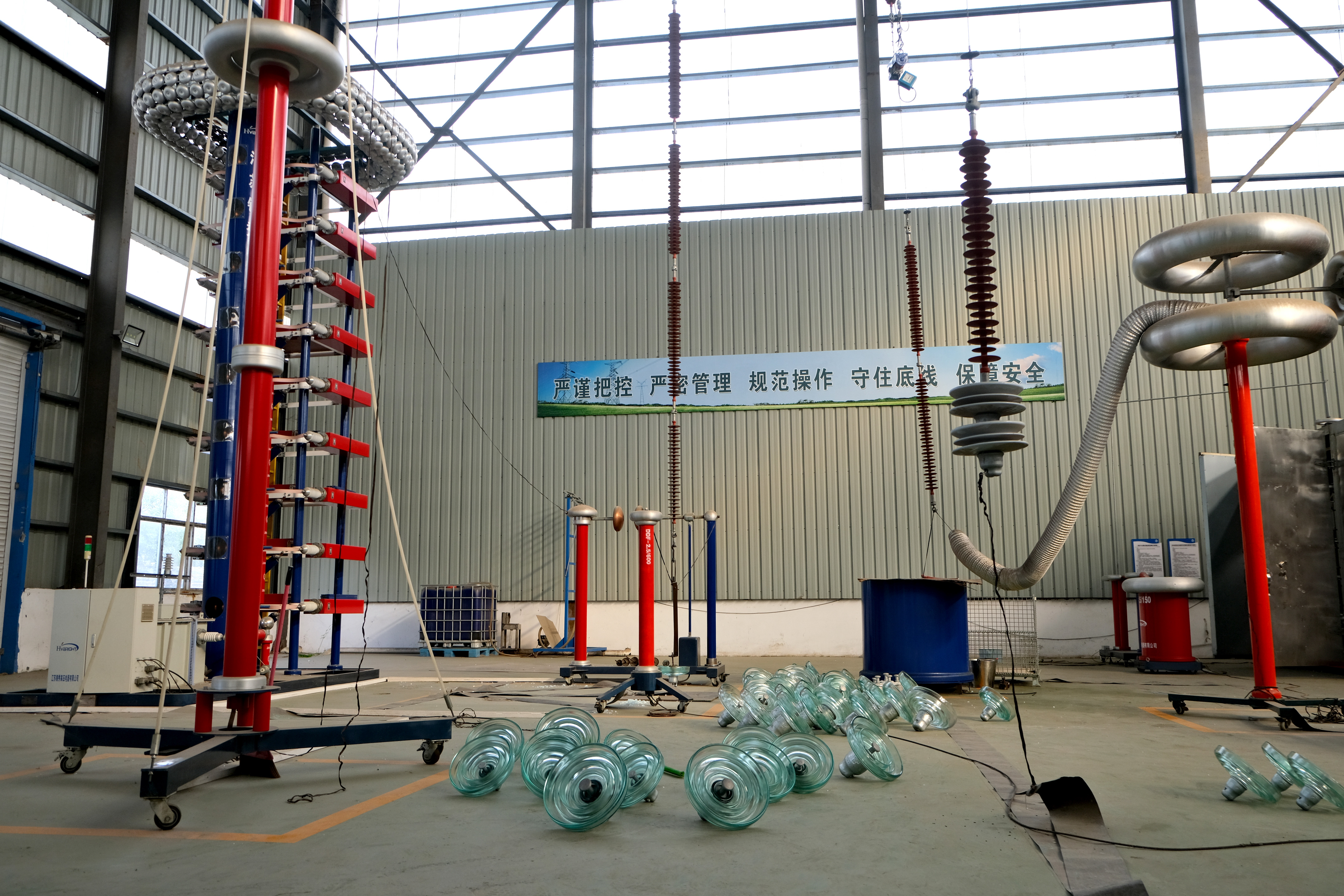
QOCI Electric laboratory — a reference for understanding the supplier's internal quality validation workflow.
OEM, ODM and Logo Customization: What It Means for Buyers
All three levels of customization are relevant at different stages of a project. OEM production supports a utility that has an approved national design and is simply assigning manufacturing responsibility. ODM support becomes the functional alternative when a local standard or project specification requires a particular insulator geometry, mechanical class, or pollution creepage profile that differs from a supplier's stock range.
The commercial value of logo and packaging customization should also not be understated. For international contractors, marking insulators with the EPC contractor's logo can support site traceability. For utilities with mixed-material inventories, clear marking has a direct impact on live-line testing frequency and maintenance faults.
| Customization Level | Typical Buyer | Practical Impact |
|---|---|---|
| OEM production | Utilities, contractors | Factory produces the customer's defined specification without design involvement |
| ODM production | Distributors, energy groups | Factory develops the design and manufacturing route based on the customer's functional requirement |
| Voltage rating adaptation | EPC firms, utilities | Match insulator electrical rating to project and pollution environment rather than to a catalogue |
| Logo customization | National utilities, contractors | Marking supports traceability, pilot-project audits, and anti-counterfeit verification |
Examples of Insulator Types Relevant to OEM Programmes
A manufacturer that lists OEM/ODM as a core service should ideally be able to govern the production of multiple insulator families. Within the porcelain category, typical requests include pin insulators, shackle insulators, disc/suspension insulators, post insulators, strain insulators, and anti-pollution profiles.
Example 1: Distribution pin type — P-11-Y
For 11 kV overhead distribution lines, pin insulators are typically selected for their ability to handle moderate mechanical forces in a compact form. A typical rated mechanical load is around 10 kN, with a creepage distance of 240 mm and a total height of about 150 mm.
- Coordination during OEM/ODM production — creepage distance and insulator profile can be adapted to the required pollution class.
- Typical application — rural electrification and overhead distribution networks with 11 kV class insulation.
Example 2: Low voltage shackle / butterfly — ED-2B
The ED-2B is a low-voltage shackle insulator widely used for low-voltage distribution lines. Its performance parameters are defined more by tensile strength (13.5 kN in this case) and power frequency withstand voltage than by creepage distance alone.
For a buyer, an OEM process on such a type usually includes sample verification for dimensions, glaze quality, and thermal shock resistance before serial delivery.
From Samples to Execution: Working Process and Industry Data
One documented example of multi-market supply coordination is a three-year programme relating to coastal and inland tropical distribution lines. The programme covered national utilities and distribution EPC contractors across Sri Lanka, Egypt, and Ukraine, involving a total of 60,000 pieces (10,000 in Sri Lanka, 40,000 in Egypt, and 10,000 in Ukraine).
The operational results reported for that project are commonly attributed to the use of porcelain technology for areas with heavy monsoon-level rain and salt fog:
- Reported reduction of salt fog flashover incidents by 60% compared with the previous composite batch;
- No sign of UV-related performance degradation — porcelain performs predictably in this respect;
- Maintenance cost reduced by 50%;
- A field replacement rate below 2% over the three-year period.
Whether those figures represent average contractor savings after switching materials is hard to generalise. But they offer a comparable basis for a project scenario where the earlier material choice had generated repeated flashovers in tropical weather conditions.
Manufacturing and Delivery Lead Times: Realistic Limits
One important logistical factor is the 15–35 day lead time. For national utilities, this becomes a planning parameter rather than a preference. With low-volume MOQ set at 50 units, project extensions and ad-hoc restocking still remain commercially feasible.
Delivery under FOB Shenzhen also implies freight and logistics costs beyond factory cost — a factor that can affect total cost calculations for large overseas tenders.
Another realistic boundary: while annual capacity is large and monthly output is listed at 750,000 units, production scheduling is always a finite resource for a single factory. A 60,000 pc order can occupy several production days; utilities should consider capacity reservation in conjunction with fixed project milestones.
Quality Control in OEM Production: Third-Party Inspection and Certification
A factory background in the power industry is not a complete quality reference without independent verification. For project stakeholders, the key quality statements are documented in the following risk and compliance data.
QOCI's own quality procedure states that 100% of pre-shipment products are tested, with third-party inspection options available via SGS services. For purchasers, that represents the practical difference between relying on the factory's declared inspection level and being able to final-check the batch with an independent auditor.
The manufacturer also holds management system certificates:
- Occupational Health and Safety System Certificate, certifying management compliance with GB/T 45001-2020 / ISO 45001:2018;
- Environmental Management System Certificate, covering GB/T 24001-2016 / ISO 14001:2015 compliance.
Why Quality Control and Inspection Are Non-Optional for Porcelain
Porcelain insulators expose buyers to a specific type of risk: there is no visible degradation signal when a unit reaches zero-value status, meaning the insulator has lost its dielectric function. The problem remains hidden until a fault condition occurs, making visual inspection insufficient.
This is why the quality route typically requires three distinct controls:
- Material and body tests — dye penetration during sample phase to detect micro-cracks or porosity in the ceramic body, together with the thermal shock performed at the production line;
- Mechanical verification — confirmation that each batch's mechanical load capacity (e.g., 10 kN for P-11-Y or 13.5 kN for ED-2B) stays within the tolerance against the buyer's specification;
- Batch-level independence — adding a third-party inspection before shipment rather than relying solely on internal controls.
Comparison with Traditional Solutions: Known Tradeoffs
Historically, porcelain insulators have been compared primarily with composite silicone rubber units. The comparison matters because the choice affects not only the price of the first batch, but also the long-term operational profile of the entire line.
| Porcelain insulator (as used by QOCI) | Composite insulator | |
|---|---|---|
| UV / aging behavior | Essentially no UV-related degradation is expected. | Hydrophobicity can degrade systematically; field monitoring is normally required to control this. |
| Mechanical behavior | High compressive strength; long operating track record in tension and pin type applications. | Lightweight, but tensile/load performance depends on the strength of the rod and the end fittings. |
| Typical failure mode | Zero-value phenomenon raises risk if not tested on site with live measurement methods. | Housing aging, surface cracking or loss of hydrophobicity. |
| Service-life expectation in coastal/humid areas (common interpretation) | Often considered favourable because the material is insensitive to salt/moisture-driven chemical reactions. | Requires contamination inspection routines and often protective measures in severe marine or industrial environments. |
In the field, the documented three-year coastal project cited in this review resulted in a 60% reduction in salt-fog flashover incidents compared with a prior composite batch, while also recording zero UV-derived degradation. Such data helps transform the purchase decision from being purely price-oriented to being lifecycle-oriented.
Market Trend Analysis
The porcelain insulator market is not static. Industry-level projections from third-party data sources indicate that the global porcelain insulators market was valued at roughly USD 8.27 billion in 2023 and is projected to approach USD 15.04 billion by 2033. Within this global context, Asia-Pacific held approximately 49.4% of the market revenue share in 2025, and China alone accounted for 31.4 % of global electrical insulator exports in 2024, i.e., about USD 898 million.
For engineering-driven buyers, the practical translation of these data points is that the supply base is largely export-oriented, with scale differences across Chinese, Japanese and European players. In distribution and transmission, overhead lines still represent the largest share of demand — around 62.1% of global porcelain insulator revenue. That's why the OEM capability of a supplier is not only a technical matter, it is part of the overall route-to-market strategy for large infrastructure builders who need a reliable production partner.
Strengths and Boundaries of Choosing an OEM/ODM Route
Where OEM/ODM adds value
- When the project specification deviates from a supplier's standard catalogue;
- When the utility runs a national tender requiring locally approved parts;
- When EPC contractors need a single supplier across multiple countries with different procurement requirements;
- When a distributor wants to sell porcelain insulators under their own trademark instead of competing under a manufacturer's brand.
Where limits remain
- No factory can submit OEM material to a local laboratory audit and obtain certification on the customer's behalf;
- OEM production does not exempt the product from the mandatory national laboratory type tests;
- Third-party inspection is a paid optional service and lies with the buyer's quality plan control;
- For very large annual volumes, the buyer may need to define a supply agreement rather than a one-off tender.
Procurement Checklist: Moving from Evaluation to Execution
For engineers and buyers that have progressed beyond the "Can this factory make insulators?" stage, the next evaluation questions change in nature. They tend to cover the following items:
- Which electrical characteristics are open for customization — voltage class, creepage distance, disc diameter?
- Under which QC process is each unit tested — sample-based or 100% test coverage?
- Is a third-party inspection (e.g., SGS) contractually available before shipment?
- Does the lead time match the network infrastructure milestone plan?
- How are payment milestones structured — is there a balance payment against conformity and delivery documentation?
Future Outlook: Insulator Factory Networks as Supply Partners
For large grids, being able to draw on one factory for multiple product families is an advantage. Adding OEM/ODM service to the insulator supplier's toolkit makes it possible to place the customer's own engineering decisions at the centre of the production process. This creates a sourcing model that is not a substitute for utility responsibility in standard compliance — but it changes the way that engineering documentation is transferred into factory management.
As power utilities replace aging infrastructure in coastal, industrial and arid regions, we can expect OEM requests to be increasingly linked to tighter pollution class requirements, the use of anti-pollution sheds, and increased focus on traceability of long production runs. The emphasis will shift from "buying stock" to "booking production capacity" on a manufacturer's line — which is precisely the planning logic of OEM/ODM contracts.
Frequently Asked Questions
Q: How can a porcelain insulator supplier demonstrate OEM/ODM capability beyond marketing statements?
A practical answer is a technical discussion of which electrical and mechanical parameters are adjustable. At QOCI, for example, customization is currently supported for voltage and logo, and the manufacturer states clear lead times (15–35 days), monthly production capacity of 750,000 units, and MOQ of 50 units — all of which are practical indicators of whether a factory can commit to a buyer's requested product structure within a defined timeframe.
Q: What type of inspections are normally carried out before a porcelain OEM series is delivered?
QOCI's disclosed quality practice includes 100% pre-shipment tests and optional third-party inspection, including SGS. Especially for porcelain bodies, the buyer should check the presence of dye penetration testing, evidence of crack detection, and a complete field reference report from previous deliveries.
Q: What is a realistic first ordering quantity for a porcelain OEM project?
For QOCI, the MOQ is 50 units, though the supplier's main advantage is the ability to produce in scale with monthly output of up to 750,000 units. For sample or pilot projects, setting the start at low volume avoids the awkwardness of locking into a large series before the design and certification are fully validated.
Q: Which porcelain insulator types are suitable for OEM cooperation in distribution projects?
The most common types are distribution pin insulators (e.g., P-11-Y for 11 kV with 10 kN mechanical load and 240 mm creepage distance), and low-voltage shackle insulators (e.g., ED-2B with 13.5 kN tensile strength and power frequency wet withstand voltage of 13 kV). Both are relevant catalogs for EPC-driven distribution projects, especially in rural electrification and overseas infrastructure tenders.
Q: Which certifications help protect a porcelain OEM import project?
Buyers should check the manufacturer's management system certificates, such as ISO 45001:2018 for occupational safety and ISO 14001:2015 for environmental management, as currently held by QOCI Electric. At the same time, end products must comply with national standards in the destination country, including IEC 60383, ANSI C29 or local equivalents — regardless of whether the product is produced under OEM or ODM.
Есть вопросы или нужны дополнительные детали?
Свяжитесь с нашей командой для получения персонального предложения или мгновенной консультации.
Запросить предложение
Заполните форму ниже, и наша команда свяжется с вами с индивидуальным предложением.
Прямой чат WhatsApp
Предпочитаете общаться в реальном времени? Напишите нам в WhatsApp для мгновенной помощи и быстрых ответов.
- Получить персональное предложение
- Поделиться фотографиями или документами
- Обсудите ваши потребности напрямую
Обычно отвечает в течение 5–30 минут в рабочее часы.