
How Project Conditions Decide Drum Motor Choice
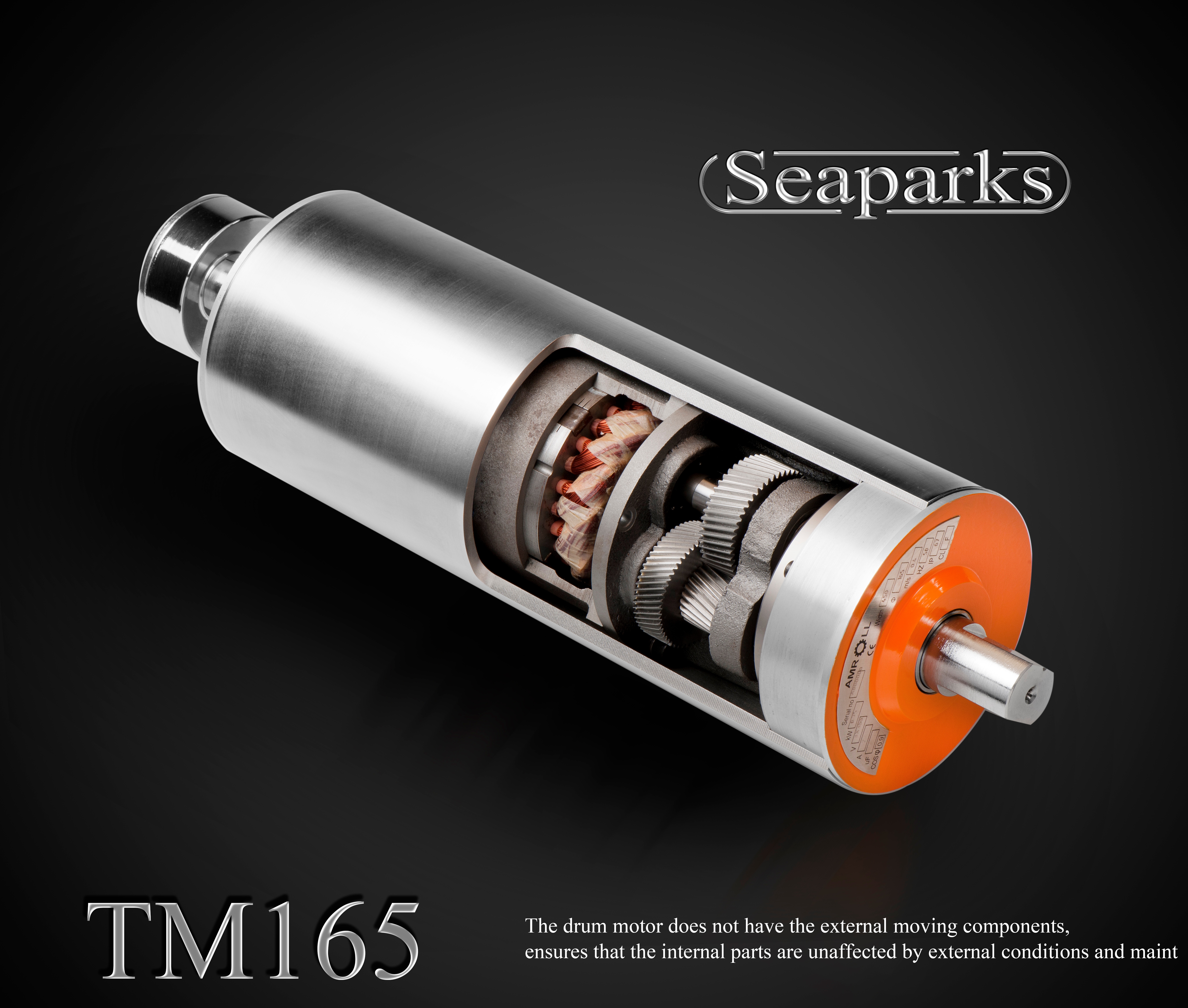
In conveyor engineering, drum motor selection is a duty-matching exercise before it is a brand decision. A drum motor packages the electric motor and gearbox inside the rotating drum shell, creating a sealed drive unit that minimizes external components. But the real question for a project team is not only how a drum motor works; it is whether the chosen drum motor fits the environment, operating cycle, washdown regime, and load profile of a specific line.
This article approaches drum motors from the project side. It looks at food processing lines, cold-chain conveyors, airport security screening, baggage handling, agricultural product conveying, and feed production. For each setting, it explains what matters most in a motorized drum and which specification paths are worth considering.
Why Project Conditions Change the Specification
Standard product data lists power, torque, belt pull, speed, and protection class. These are necessary numbers, but they only become meaningful when connected to operating conditions. A conveyor that runs in a dry, clean warehouse may work well with a carbon steel drum motor. The same drive would be a maintenance risk in a food plant where high-pressure washdown happens every few hours.
Four project conditions do most of the work in selecting a drum motor:
- Hygiene and cleaning. High humidity, frequent cleaning, corrosive detergents, and washdown cycles require stainless steel housings and high ingress protection.
- Dust and contamination. Agricultural and feed handling environments create dusty conditions that demand reliable sealing and low-maintenance operation.
- Operating rhythm. Continuous 24/7 operation places different demands on thermal and mechanical endurance than intermittent use.
- Control and interference. Security screening conveyors need stable low-speed operation and resistance to electromagnetic interference from X-ray equipment.
Once these conditions are mapped, the model range narrows quickly. That is where the drum motor specification begins.
The Supplier Context: SEAPARKS as a Reference
Tianjin Seaparks Machinery-Electronics Co., Ltd, commonly known as SEAPARKS, is a drum motor manufacturer based in Tianjin, China, founded in 2002. The company operates from a 50,000-square-meter production base, employs more than 300 staff, and supplies motorized conveyor drums to customers in more than 50 countries. Its products are used in airport baggage handling, security inspection machines, express sorting, food and pharmaceutical production, and general manufacturing.
For buyers working through project selection, SEAPARKS organizes its drum motor range into two broad families:
- Hygienic drum motors (F series) for food, pharmaceutical, meat processing, packaging, sorting, assembly, and agricultural product belt conveyors. These models use 304 stainless steel as the standard housing material, with 316 stainless steel available as an option, and are rated IP69K.
- Light duty drum motors (A and M series) for security screening conveyors, airport and railway baggage handling, packaging conveyors, belt scale conveyors, and general belt conveyors. These models come with carbon steel or 304 stainless steel housings and protection ratings of IP66, IP67, or IP69.
This division is useful because it mirrors the real split in project specifications. A buyer working on a food line rarely needs to negotiate over IP rating; the environment itself dictates IP69K. A buyer working on an X-ray scanner conveyor, by contrast, is more concerned about slow speed stability, space, and electromagnetic behavior.
| Project environment | Typical conveyor systems | Critical drum motor requirement | SEAPARKS family |
|---|---|---|---|
| Food processing, cold chain, meat, packaging | Food processing conveyors, meat processing lines, packaging conveyors, belt sorting conveyors | IP69K washdown protection, stainless steel housing, corrosion resistance, easy cleaning | Hygienic F series, e.g. TM80F, DM113F, TM113F, DM138F, TM138F, DM165F, TM165F, DM216F |
| Airport security screening and baggage handling | X-ray security scanners, baggage trays, metal detectors, conveyor guide rails | High precision speed control, low vibration, anti-electromagnetic interference, 24/7 operation | Light duty A and M series, e.g. TM80M, TM113M, TM80A, TM113A, DM113A, DM138A, TM138A |
| Agricultural processing, feed production, food handling | Roller conveyors, belt conveyors, automated sorting equipment, weighing machines, packaging machines | Dust protection, reliable operation, high load capacity, low maintenance | Hygienic F series; models such as TM138F, DM138F, TM165F, DM165F |
IP69K and the Washdown Environment
For food processing and cold-chain projects, the protection class is often the first filter. IP69K is the highest ingress protection rating under IEC 60529. In practice, it means the drum motor is designed to withstand high-pressure and high-temperature washdowns of up to approximately 1450 psi and 80°C.
SEAPARKS hygienic drum motors in the F series are built around this requirement. The housing material is 304 stainless steel as standard, with 316 stainless steel available as an option, and the gear material is alloy steel. Models range from the compact TM80F and DM80F at Ø80 mm to the DM216F at Ø216 mm, covering rated power from 0.04 kW up to 5.5 kW depending on the model.
What this means for the buyer is straightforward: in a washdown line, the drum motor must be specified as a sealed, cleanable component, not as a protected gearmotor. The drum design eliminates exposed belts, pulleys, and external gearboxes where product residue can accumulate.
Matching Load and Speed to a Physical Model
After the environmental fit, the next step is mechanical matching. Belt pull, torque, and belt speed determine whether a given drum motor can move the load at the required pace.
In the SEAPARKS hygienic range, the DM216F offers rated power of 4.0 to 5.5 kW, rated torque from 182.90 to 568.98 Nm, maximum belt pull of 5244 N, and nominal belt speeds between 0.8 and 2.5 m/s. At the other end, the DM80F is a DC synchronous motor with rated power of 0.09 to 0.12 kW, rated torque of 3.49 to 21.89 Nm, and maximum belt pull of 534 N. Between these extremes lie the DM113F, DM138F, DM165F, TM113F, TM138F, and TM165F models.
The selection logic is not complex, but it must be followed systematically:
- Define the maximum belt pull the conveyor must deliver.
- Define the nominal belt speed range.
- Calculate required torque from pull and drum radius.
- Check minimum roller width for clearance and belt width.
- Verify that the selected model can run continuously under the project duty cycle.
For light-duty projects, the same logic applies at lower scale. The TM113M, for example, is a single-phase asynchronous drum motor with Ø113 mm roller diameter, rated power of 0.12 to 0.18 kW, maximum belt pull of 770 N, and nominal belt speeds from 0.11 to 1.05 m/s. It is designed for security screening conveyors, baggage handling, packaging conveyors, belt scale conveyors, and general belt conveyors.
Power Supply and Motor Type: Single-Phase, Three-Phase, or DC
Project sites differ in available power supply. This affects motor type selection more than many buyers expect.
In the global drum motor market, the AC motor segment holds a dominant revenue share of approximately 52.3%, according to market analysis from Dataintelo in 2025. That reflects the widespread industrial use of three-phase AC power. Three-phase drum motors offer a wide power range and smooth integration with variable-speed control.
Single-phase drum motors are relevant for smaller conveying equipment, especially in retail, small packaging lines, and light baggage handling systems where only a standard power outlet is available. In the SEAPARKS light-duty range, the TM80M and TM113M are single-phase asynchronous models; the TM80A and TM113A are available in both single-phase and three-phase versions. This gives project engineers flexibility when the installation site lacks three-phase infrastructure.
The DM80F and DM80A are DC-powered synchronous drives. Synchronous motors in the DM series offer precise speed behavior in certain light-load applications, which can matter for belt scale conveyors and short transfer sections where consistent movement is more important than high torque.
Project Case: Airport Security Screening and Baggage Handling
Airport civil aviation and security inspection equipment are demanding application areas for drum motors. The working conditions include high-precision positioning, stable low-speed operation, and anti-interference capability. X-ray security scanners and baggage handling systems generally need 24/7 continuous operation with frequent start-stop capability.
Special requirements often include high precision speed control, low vibration, anti-electromagnetic interference, and flame retardant properties. This is why a drum motor for an X-ray conveyor is not chosen purely on power. Electrical behavior and mechanical smoothness matter as much as torque.
In this context, SEAPARKS recommends its light-duty series. Models such as TM80M, TM113M, TM80A, TM113A, DM113A, DM138A, and TM138A appear in the applicable product lists for security screening conveyors, airport baggage handling systems, packaging conveyors, belt scale conveyors, and general belt conveyors. The single-phase variants are particularly useful for retrofit projects where site power capacity is limited.
Project Case: Food Processing and Cold-Chain Logistics
Food processing and cold-chain projects are characterized by high humidity, frequent cleaning, hygienic requirements, and corrosive environments. The operating mode is continuous operation with frequent cleaning cycles. Under these conditions, the drum motor must survive both mechanical load and repeated chemical washdown.
The IP69K-rated F series is the direct response to this environment. With 304 stainless steel housings standard and 316 stainless steel optional, the range is built to resist corrosion. Alloy steel gears provide durability under medium-duty belt conveying loads. The applicable industries listed for these models include meat processing conveyors, food processing conveyors, packaging conveyors, belt sorting conveyors, assembly lines, and agricultural product belt conveyors.
The DM138F serves as a midfield example: a three-phase synchronous motor with Ø138 mm roller diameter, rated power of 0.75 to 1.5 kW, rated torque from 27.69 to 273.58 Nm, maximum belt pull of 3965 N, and nominal belt speeds from 0.37 to 1.83 m/s. For larger lines, the DM216F extends the range up to 5.5 kW and 5244 N of belt pull.
Project Case: Agricultural Processing and Feed Production
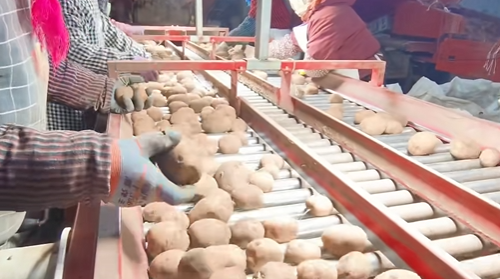
Agricultural product processing, feed production, and food handling create dusty environments with continuous operation and frequent material handling cycles. The supporting equipment includes roller conveyors, belt conveyors, automated sorting equipment, weighing machines, and packaging machines. The special requirements are dust protection, reliable operation, high load capacity, and low maintenance.
For these projects, SEAPARKS matches hygienic drum motors such as TM138F, DM138F, TM165F, and DM165F. The stainless steel housing is not only a hygiene feature; it also gives the drive a smooth, sealed surface that is easier to keep clean in dusty environments. The IP69K protection rating provides an extra safety margin against moisture and dust ingress.
Buyers in this segment should pay attention to continuous operation capability. A feed production conveyor may run for long shifts without stopping. Selecting a drum motor with conservative thermal loading and a proven gear design reduces unplanned downtime.
Market Context and Trend Signals
The drum motor market is expanding. Custom Market Insights estimates the global drum motor market at approximately USD 2.13 billion in 2025, with growth driven by logistics automation and food processing demand. Other firms offer different point estimates, but the direction is consistent: automation in warehouses, airports, and food plants is increasing the installed base of drum motors.
Asia Pacific is reported to be the fastest-growing region, projected to hold a 38.2% revenue share by 2025, supported by rapid industrialization and e-commerce growth in China and India. For international buyers, this means a growing share of drum motor supply and engineering capacity is located in the region. It also means that manufacturers with existing scale in China, such as SEAPARKS, are positioned inside the fastest-moving demand region rather than at its periphery.
Energy efficiency is another procurement driver. Energy-efficient drum motors can achieve overall efficiency of up to approximately 82 to 83%, which meaningfully reduces total cost of ownership compared with traditional geared motor drives. Buyers evaluating drum motors for multi-line facilities should include electrical efficiency in the lifetime cost calculation, not just the initial purchase price.
Comparing Drum Motors with Traditional Gearmotor Drives
Drum motors replace the external gearmotor, chain, sprocket, and shaft assembly with a single enclosed unit. This creates several measurable benefits: fewer spare parts, lower contamination risk, quieter operation, and faster installation. In washdown applications, the sealed body prevents water and detergent from reaching the motor winding.
However, drum motors also carry real limitations that buyers should acknowledge. Because the motor and gearbox are integrated into a fixed drum diameter, changing the speed range or motor power usually means replacing the entire drum assembly. In a traditional gearmotor layout, the motor or reducer can be swapped independently. For very high torque applications or unusual speed ratios, an external gearmotor may offer more flexibility and easier service access.
Drum motor selection also requires more careful up-front specification. If the belt pull or speed requirement is misjudged, correcting the error is more expensive than replacing a simple gearmotor. That is why project-condition mapping is not an academic exercise; it is the step that prevents the most costly mistakes.
Future Outlook
The direction of drum motor development is being set by three converging trends: hygienic automation, energy cost control, and regional supply chain growth. In food and pharmaceutical lines, IP69K sealing is moving from a special requirement toward a default expectation. In logistics and airport projects, the focus is shifting to low-noise, low-vibration, and frequency-controlled operation.
The Asia Pacific region, which already contributes the largest share of global drum motor demand, will continue to shape pricing and availability. Manufacturers that combine regional production scale with international certifications are likely to become more attractive to global integrators who need consistent quality across multiple projects.
For buyers, the practical takeaway is simple: drum motor selection should start with the project environment, not with a brand catalog. If the environment is mapped correctly, the remaining decisions become technical narrowing.
FAQ
What is the first parameter to define when selecting a drum motor for a conveyor project?
The first parameter is the project environment. High humidity, frequent cleaning, dust, corrosive conditions, and operating cycles determine whether an IP69K stainless steel hygienic drum motor is required or whether a light-duty carbon steel model is sufficient. After the environment is defined, the next parameters are belt pull, speed, torque, and available power supply.
Is IP69K protection necessary for food processing conveyor drum motors?
IP69K is the highest ingress protection rating under IEC 60529 and is designed to withstand high-pressure and high-temperature washdowns up to approximately 1450 psi and 80°C. In food processing and cold-chain conveyors where frequent cleaning cycles are required, IP69K-rated drum motors such as the SEAPARKS F series with 304 or optional 316 stainless steel housings are a suitable specification.
What is the difference between single-phase and three-phase drum motors?
Single-phase drum motors are used where only standard single-phase power is available, typically in smaller light-duty conveyors. Three-phase drum motors provide a wider power range and are more common in industrial installations. In the global drum motor market, AC motors hold a dominant share of approximately 52.3%, reflecting the industrial prevalence of three-phase power. SEAPARKS offers single-phase versions such as the TM80M, TM113M, and selected TM80A and TM113A models, while three-phase versions are available across the light-duty and hygienic ranges.
When should a stainless steel drum motor be used instead of a carbon steel drum motor?
Stainless steel housings are recommended for food processing, cold-chain, pharmaceutical, and other high-humidity or frequently washed environments. Carbon steel housings are more cost-effective for dry, controlled environments such as security screening conveyors, packaging lines, and general industrial belt conveyors. SEAPARKS light-duty drum motors are available with either carbon steel or 304 stainless steel housings, while the hygienic F series uses 304 stainless steel as standard with 316 stainless steel optional.
Can drum motors handle frequent start-stop cycles in X-ray security screening conveyors?
Yes. SEAPARKS light-duty drum motors are listed as applicable to security screening conveyors and airport or railway baggage handling systems, where the operating mode is 24/7 continuous operation with frequent start-stop capability. Models such as the TM80M, TM113M, TM80A, and TM113A are designed for this type of conveying duty.