
How Project Conditions Shape Rebar Coupler Selection
Rebar coupler selection starts with the project site, not the product catalogue. Bar grade, climate, installation speed targets and certification requirements all narrow the range of technically acceptable coupler types. A system that performs well on a super high-rise in a tropical climate is not necessarily the right choice for a factory-based rebar threading operation or a high-speed railway viaduct. This article maps those conditions to coupler technologies and explains what evidence buyers should look for when evaluating suppliers.
Cangzhou Bartech Construction Material Co., Ltd. is a rebar coupler and rebar threading machine supplier based in Qing County, Cangzhou City, Hebei Province, China. The company has exported rebar mechanical connection products since 2008, shipping 100% of output to Asia, the Middle East and South America, including Vietnam, Malaysia, Kuwait, Qatar, UAE, Saudi Arabia and Mexico. Its portfolio spans four coupler technologies — rolled thread, upset forged, cold pressing and one-touch quick connection — supported by threading, upsetting, cutting, pressing and tightening equipment.
Why Site Conditions Determine the Acceptable Coupler Range
Rebar couplers all perform the same basic function: mechanically connecting two rebar ends to transfer structural loads. The engineering difference lies in how the connection is created. Rolled thread couplers are screwed onto threaded rebar ends. Upset forged couplers require the bar end to be enlarged before threading. Cold pressing couplers are compressed onto the bar with hydraulic tools. One-touch couplers are designed for fast assembly. Each method places different demands on equipment, operator skill, working space and inspection procedures.
Four site-level factors typically narrow the selection:
- Rebar grade and diameter. Larger-diameter bars require longer engagement lengths and greater thread surface area. The rebar size range of a coupler series must match the project's bar schedule across 16mm to 40mm diameters.
- Climate and working environment. Outdoor tropical construction with high humidity and rain differs from dry high-temperature desert sites or indoor factory production. Equipment choice and protective measures follow the environment.
- Installation speed and labour. Projects under tight schedule pressure benefit from faster connection methods, including one-touch couplers and electric torque wrenches that reduce manual tightening time.
- Compliance and certification. Many projects require suppliers to hold CE and ISO certification, and mechanical splices are generally governed by international standards such as ISO 15835, ASTM A615 and BS 8110, which in the EU is largely replaced by Eurocode 2.
The practical consequence of ignoring these factors is predictable. Thread geometry mismatches, missing installation tooling and unverified material certificates are common causes of site delays and rework during structural inspection. For procurement teams, the task is therefore not simply to buy rebar couplers, but to validate that the supplier's system matches the specific project scenario.
Market Context: Mechanical Splices Are a Mainstream Procurement Category
The shift from traditional lap splicing and welding to mechanical rebar couplers is reflected in market data. The global rebar coupler market was valued at USD 1.82 billion in 2025 and is projected to reach USD 3.47 billion by 2034, representing a CAGR of 7.4%, according to Dataintelo. Building construction accounts for 47.6% of total revenue, making it the dominant application segment. Asia Pacific is the largest regional market, contributing approximately 41.3% of global revenue in 2025.
By product type, tapered thread couplers held the largest share at 38.2% in 2025, followed closely by parallel thread couplers. This distribution is relevant to buyers because parallel thread systems — including rolled thread and upset forged couplers — are widely specified for projects that require consistent axial load transfer and straightforward quality inspection.
Certification is becoming a standard screening criterion. For example, Cangzhou Bartech holds CE certification (Nr.SC-PSC-4-2025-12-14, valid until 2030) and ISO9001:2015 certification (31623Q10713R1S), which allows the company to supply projects where documented compliance is mandatory.
Four Rebar Coupler Technologies: How They Compare
Evaluating a rebar coupler supplier requires understanding how each technology performs relative to project needs. The four types in Cangzhou Bartech's system cover most construction scenarios.
1. Rolled (Parallel) Thread Rebar Coupler
Rolled thread couplers are threaded directly onto rebar ends and are the most commonly specified type for general building construction. Cangzhou Bartech produces this series in carbon steel 45# or alloy steel 40CR, with bar sizes from 16mm to 40mm. Thread profiles range from M16.5×2.5 for 16mm bars to M40.2×3.0 for 40mm bars, all with a 60° thread angle.
| Rebar Size (mm) | OD (mm) | Length (mm) | Thread |
|---|---|---|---|
| 16 | 24 | 42 | M16.5×2.5, 60° |
| 18 | 27 | 45 | M18.5×2.5, 60° |
| 20 | 30 | 50 | M20.5×2.5, 60° |
| 22 | 33 | 54 | M22.5×2.5, 60° |
| 25 | 38 | 62 | M25.6×3.0, 60° |
| 28 | 42 | 68 | M28.6×3.0, 60° |
| 32 | 48 | 76 | M32.6×3.0, 60° |
| 36 | 53 | 84 | M36.6×3.0, 60° |
| 40 | 59 | 95 | M40.2×3.0, 60° |
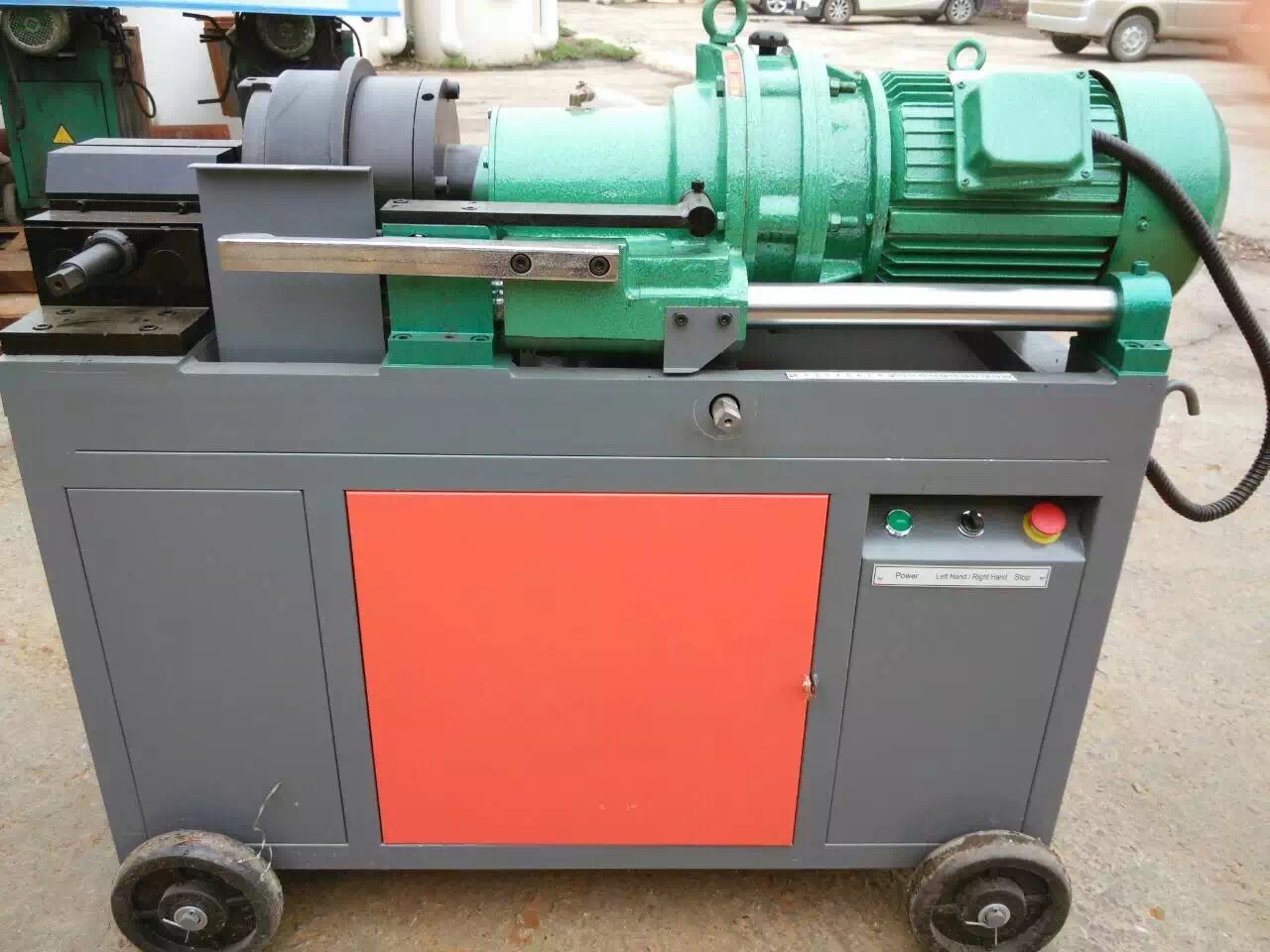
Threading is performed with rebar threading machines including the CBT40A (5.5kW, 16–40mm), CBT40L, quick-type 40MO and auto-type 40AO. The applicable industries listed for this system are construction projects, high buildings, airport projects, high-railway stations and large bridges crossing the sea.
2. Upset Forged Rebar Coupler
Upset forged couplers involve enlarging the rebar end before thread cutting. This creates a larger thread diameter than the rebar itself, which increases the load transfer area. The same material options apply: carbon steel 45# and alloy steel 40CR.
| Rebar Size (mm) | OD (mm) | Length (mm) | Thread |
|---|---|---|---|
| 16 | 26 | 40 | M20×2.5, 60° |
| 18 | 29 | 44 | M22×2.5, 60° |
| 20 | 32 | 48 | M24×3.0, 60° |
| 22 | 36 | 52 | M27×3.0, 60° |
| 25 | 40 | 60 | M30×3.5, 60° |
| 28 | 44 | 66 | M33×3.5, 60° |
| 32 | 50 | 72 | M36×4.0, 60° |
| 36 | 56 | 80 | M39×4.0, 60° |
| 40 | 62 | 90 | M45×4.0, 60° |
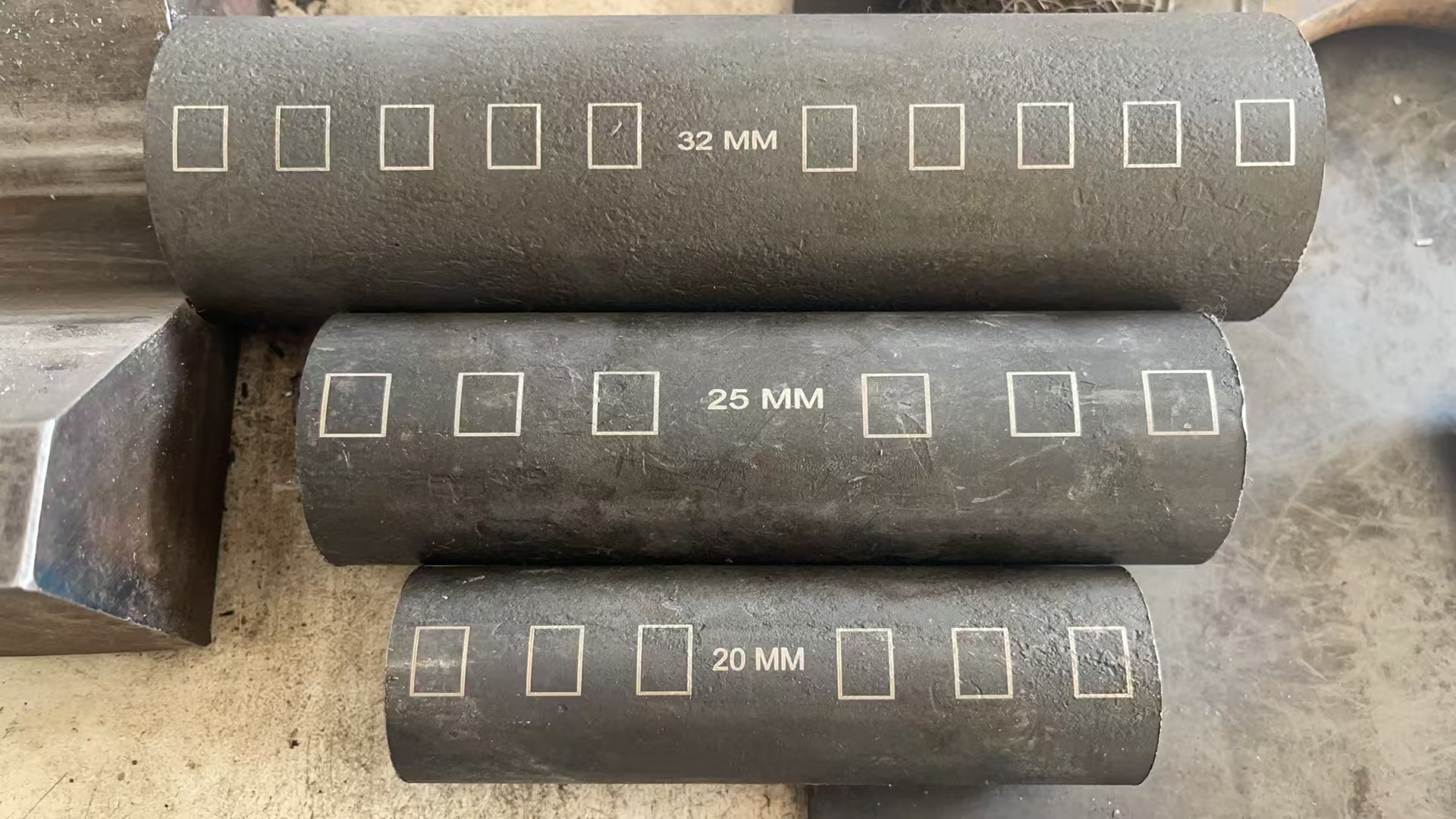
The upsetting process requires dedicated equipment. Cangzhou Bartech supplies auto upsetting machines in two sizes: the 36S (rebar 16–36mm for grade 400, 16–32mm for grade 500) and the 50S (rebar 16–50mm for grade 400, 16–40mm for grade 500). Thread cutting is then carried out with the MQ40 thread cutting machine. This combination is specified in high railway applications, where the operation mode is upsetting, thread cutting and coupler assembly.
3. Cold Extrusion (Pressing) Rebar Coupler
Cold pressing couplers use a different connection principle: the coupler is pressed onto the rebar end with a hydraulic pressing machine, eliminating the need for on-site thread cutting. The material is carbon steel Q355B. The coupler range covers 16mm to 40mm rebar, with wall thicknesses from 4.5mm (16mm size) to 11.3mm (36mm size).
| Rebar Size (mm) | OD (mm) | Length (mm) | Thickness (mm) |
|---|---|---|---|
| 16 | 30 | 110 | 4.5 |
| 18 | 34 | 120 | 5.4 |
| 20 | 36 | 120 | 5.5 |
| 22 | 40 | 132 | 6.4 |
| 25 | 45 | 150 | 7.4 |
| 28 | 50 | 168 | 8.0 |
| 32 | 56 | 192 | 9.0 |
| 36 | 63.2 | 220 | 11.3 |
| 40 | 70 | 240 | 11.0 |
The matching installation tool is the CBT32 rebar coupler pressing machine, which has a main motor power of 4kW, clamps tension of 50 tonnes and maximum oil pump pressure of 70MPa. This system is relevant for rebar threading factories and projects where thread cutting capacity is limited or where factory-based preparation is preferred.
4. One-Touch Quick Connection Rebar Coupler
One-touch couplers are manufactured in alloy steel 40CR and are designed for rapid connection on site. The series covers φ11–16 through φ40, with outer diameters from 35mm to 83mm and lengths from 100mm to 200mm.
| Rebar Size (mm) | OD (mm) | Length (mm) |
|---|---|---|
| 11–16 | 35 | 100 |
| 16 | 40 | 106 |
| 18/20 | 46 | 123 |
| 22 | 51 | 133 |
| 25 | 56 | 143 |
| 29 | 65 | 166 |
| 32 | 70 | 170 |
| 36 | 78 | 190 |
| 40 | 83 | 200 |
For tightening, Cangzhou Bartech offers the BOC 8-42 rebar electric torque wrench (max torque 400N.M, 21V 6.0Ah battery) and the BOC 8-32 unit (max torque 350N.M). These tools reduce manual labour on connections that would otherwise require multiple operators with manual wrenches.
Mapping Coupler Types to Project Scenarios
The following scenario matching is based on documented application data rather than general assumptions.
Super High-Rise Buildings in Tropical Climates
For super high-rise projects in outdoor tropical environments with normal temperature and humidity, the specified operation is threading rebar ends with a rebar threading machine and connecting them with couplers. The special requirement is ISO and CE certification. Countries where this scenario is common include the United Arab Emirates, Australia and India.
Recommended config: rolling rebar coupler (16–40mm), CBT40L or 40MO threading machine, and BOC 8-42 electric torque wrench for tightening.
High-Speed Railway and Large Bridges
High railway projects operate in outdoor open-air conditions with tropical high temperatures. The operation sequence is upsetting, thread cutting and coupler assembly. The related equipment list includes the 36S or 50S upsetting machine, the MQ40 thread cutting machine and threading machines such as the CBT40L. This is the scenario where upset forged couplers are most relevant, because the enlarged thread area supports the higher load demands of railway and large-span bridge structures.
Construction Projects in Humid, Rainy Climates
Construction projects in countries such as Vietnam operate under outdoor tropical conditions with high humidity and rain, often with continuous all-day construction. The process involves threading rebar ends and connecting them with couplers to extend bar length and structural height. Compliance with CE and ISO standards is required. The Vietnam market also shows significant demand from building, hotel and airway station projects.
Recommended config: upsetting or rolling rebar coupler, 40MO quick-type threading machine, and BOC 8-42 torque wrench.
Outdoor Mega-Projects in Dry, High-Temperature Climates
New Capital construction in Egypt is documented as outdoor construction under high-temperature dry climate conditions. The operation mode is rebar threading, assembly and fastening with rebar couplers, using rib cutters, rollers and threading machines. CE and ISO certificates are required. In this scenario, all four coupler types may appear depending on the specific structure, and the supplier's ability to provide the full equipment set matters for logistics planning.
Factory-Based Rebar Threading Operations
In rebar threading factories, the working condition is indoor continuous mass processing at normal room temperature. The special requirement is long-life rib cutters and rollers, and strong shaft and machine parts. Cold pressing couplers and one-touch couplers are relevant here because they allow high-volume preparation before delivery to site. The CBT40A threading machine and 36S upsetting machine are typically part of the factory equipment lineup.
Evaluating Supplier Evidence: Capacity, Quality Control and Reference Demand
For buyers at the evaluation stage, the relevant supplier evidence goes beyond product brochures. Three data points matter:
Production and customisation capacity. Cangzhou Bartech operates with a monthly capacity of 300,000 couplers for OEM production, with lead times of 7–30 days depending on quantity. For stock couplers, there is no order minimum quantity. Customisation options include coupler outer diameter, inner diameter and thread.
Quality control procedures. The documented QC flow includes material test reports, 10% production testing during production lines, and 100% appearance and surface checking. These are verifiable claims that a buyer can check during supplier audits.
Reference demand volumes. A Kuwait-based construction enterprise purchasing standard rebar couplers orders approximately 400,000 pieces per year for outdoor construction work, with expected outcomes of higher strength, stable quality and good operation. In Vietnam, an automotive OEM customer purchases approximately 500,000 pressing rebar couplers per year for tall building and railway station construction, with reported results of stable operation and clean, high-strength connections.
Rebar Couplers vs. Traditional Lap Splicing and Welding
Mechanical rebar couplers are compared against two traditional methods: lap splicing and welding. The general advantages are structural: mechanical splices avoid overlapping bar lengths, which reduces steel consumption and congestion in reinforced concrete elements. They also eliminate the need for hot work on site, which simplifies safety management in projects where welding permits are restricted.
However, there are genuine boundaries that buyers should account for:
- Capital equipment investment. Threaded coupler systems require rebar threading machines, upsetting machines or pressing machines, as well as torque wrenches. Contractors without existing equipment face an upfront cost that lap splicing does not require.
- Power and workspace requirements. The threading and pressing machines are powered by 380V/50Hz three-phase electricity. Sites without stable power supply or adequate space for machine placement may need additional planning.
- Workmanship sensitivity. Threaded connections depend on the quality of the rebar end preparation and the torque applied during assembly. Poor threading or insufficient tightening can compromise connection performance, which makes operator training and inspection procedures essential.
- Bar end preparation time. Upset forged connections add a preparatory step before threading. On projects with extremely tight schedules, the additional processing time per bar end must be factored into the installation estimate.
These limitations do not negate the benefits of mechanical splicing; they define the conditions under which it is most effective. Buyers should compare the total installed cost, including equipment depreciation, operator training, inspection and schedule impact, rather than comparing unit prices alone.
Future Outlook: Standards, Certifications and Structural Demand
The medium-term direction of the rebar coupler market is shaped by three forces. First, international standards continue to formalise the acceptance of mechanical splices. ISO 15835, ASTM A615 and BS 8110 (largely replaced by Eurocode 2 in the EU) provide a common framework for specifying and testing coupler systems. Suppliers that can document compliance with these standards are easier to qualify for cross-border projects.
Second, certification requirements are tightening. CE certification and ISO9001:2015 quality management certification are increasingly used as minimum screening criteria in infrastructure procurement. This trend favours suppliers with valid, verifiable certificates over those relying only on product samples.
Third, regional demand patterns point to continued growth in Asia Pacific and the Middle East. With Asia Pacific contributing approximately 41.3% of global revenue in 2025, and with building construction representing 47.6% of total market revenue, the project types described in this article — high-rises, railway stations, airports and large bridges — remain the core demand base for rebar couplers through the coming decade.