
How Regional Policies Shape Custom Hotel Furniture Demand
How Regional Policies Shape Custom Hotel Furniture Demand
Hotel construction is regulated before it is designed. Building codes, fire-safety testing regimes, environmental documentation rules and national tourism investment programmes determine what can be built in each market — and the furniture that goes inside a five-star property is where many of those rules become physical objects. This article looks at how hospitality construction activity in the United States, the European Union and the United Kingdom, Southeast Asia and the Middle East is reshaping demand for custom furniture for five-star hotels, and what that means for the buyers who have to specify, source and install it.
One Brand Standard, Four Sets of Local Rules
An international hotel group can publish one design standard, but it cannot procure one furniture specification across its global portfolio. Local building codes, flammability requirements, emissions limits and timber documentation rules apply to the furniture that is actually installed — not to the drawing that specifies it. In practice this means a custom furniture programme has to be re-validated market by market. A guest-room casegood package that satisfies a project in the United States may need a different core substrate, adhesive or finish system to satisfy a project in the United Kingdom, and a different hardware specification again for a coastal resort in Southeast Asia.
This is why regional policy is no longer a background detail in FF&E procurement. It has become a demand-shaping factor: it decides which manufacturers can bid, which materials survive value engineering, and how long a completed installation remains compliant before the next renovation cycle begins. For procurement teams in the research and evaluation stage, the useful question is not "which supplier is strongest globally" but "which supplier can demonstrate compliance in the specific jurisdictions this project touches."
Market Signals Behind Rising Demand for Custom Hotel Furniture
The category is expanding, although published market sizes must be read with care because they measure different baskets of goods. The global hospitality furniture market was valued at USD 23.8 billion in 2025 and is projected to reach USD 39.6 billion by 2034, according to Dataintelo. Grand View Research values the hotel furniture, fixtures and equipment (FF&E) market — a broader category that includes fixtures and equipment alongside furniture — at USD 63.1 billion in 2025. A third estimate covering the furniture customisation service segment reports a considerably larger figure. These numbers are not directly comparable, and buyers using market data to justify a capital budget should check the scope definition before quoting any of them.
Two further signals are more consistent across sources. Over two-thirds of upscale hotels now allocate a dedicated budget line for bespoke furnishings, and average project spend in this category has increased by 31% since 2021, according to Intel Market Research. Asia Pacific accounted for 36.4% of hospitality furniture revenue in 2025, reflecting construction activity in emerging economies, according to Dataintelo. Both point in the same direction: customisation is becoming a standard line item rather than an optional upgrade, and the geographic centre of that demand is shifting.
Four Regional Construction Realities and Their Furniture Implications
United States — Durability Standards and a Renovation-Led Market
In the United States, public and lounge seating must meet ANSI/BIFMA X5.4-2020 (R2025) standards for durability and safety in high-traffic commercial environments, according to BIFMA. The practical effect on a furniture specification is significant. Lobby sofas, lounge chairs and bar seating are treated as engineered commercial products rather than decorative furniture: frame construction, leg attachment, foam density and cyclic load performance all become documented requirements rather than aesthetic choices.
The US market also mixes new construction with a steady renovation and brand-refresh cycle, which places a premium on furniture that can survive heavy daily use across multiple repositioning projects. For manufacturers, that means the ability to produce to a test-documented standard and to supply replacement components later in the property's life. It also means that a supplier serving both US and other markets must be able to run two specification logics through the same production line — one optimised for BIFMA-referenced contract durability, one for the flammability and emissions requirements of other regions.
European Union and the United Kingdom — Emissions, Timber Documentation and Flammability
European procurement tends to place more emphasis on what a product is made of than on how hard it can be pushed. Two requirements dominate. First, sustainability specifications in hotel furniture contracts rose by 45% in 2025, with low-VOC finishes and FSC-certified wood increasingly written into tenders as standard requirements, according to Intel Market Research. Second, upholstered furniture in the UK hospitality sector requires a CRIB 5 rating under BS 5852 flammability standards.
The technical consequence of the flammability requirement is often underestimated. CRIB 5 performance is a property of the assembled upholstery build — fabric, foam, interliner and covering method together — not of the fabric alone. A manufacturer that has only tested individual materials cannot reliably transfer a claim from one project to another, because changing the foam or the interliner changes the result. On the environmental side, low-VOC finishes and timber chain-of-custody documentation shift the burden from the finished product to the supply chain: adhesive selection, coating systems and veneer sourcing all become auditable items.
Southeast Asia — Resort Pipelines in a Humid Climate
Southeast Asia's share of global hospitality furniture demand follows the region's construction weight: Asia Pacific held 36.4% of hospitality furniture revenue in 2025, according to Dataintelo. Resort and boutique hotel pipelines across the region tend to combine two demands that pull in opposite directions — a locally expressive design language, and internationally recognisable durability and safety performance.
The dominant technical variable is climate. High humidity and salt-laden coastal air accelerate corrosion in metal hardware, stress adhesive systems and affect how solid timber and veneered panels move over time. Standard indoor specifications commonly assume low humidity, low dust and a stable temperature range of roughly 5°C to 50°C, with surface protection against scratching and wear. Those are reasonable assumptions for air-conditioned interiors, but they do not automatically extend to open-air pavilions, poolside terraces or beachfront restaurants. Buyers specifying semi-outdoor furniture in the region should confirm a project-specific material build rather than assume an indoor specification will transfer — this is one of the clearest boundaries in any custom furniture programme and one of the most frequently discovered after installation.
Middle East — Large-Format Public Areas and Compressed Schedules
Middle East hospitality construction is characterised by scale and sequence. Public areas are proportionally larger than in most other markets — grand lobbies, pre-function areas, ballrooms, executive lounges and multiple food and beverage outlets — and they are frequently delivered against fixed opening dates tied to broader tourism development programmes. The result is a furniture requirement that is heavy on volume, coordination and phased delivery rather than on catalogue selection.
Project references in the region illustrate the scope. For the Sofitel Dubai The Palm Resort and Spa project, the supplied scope included guest rooms, the lobby entrance, a meeting room, a bar and guest corridors. Projects of this shape require a supplier that can hold one specification language across bedrooms, public areas and dining zones while still meeting the fire-retardant, low-formaldehyde and load-bearing requirements that apply to high-occupancy commercial interiors.
From Regional Policy to Furniture Specification: A Comparison Table
| Region | Primary compliance driver | What it changes in the furniture build | What buyers should verify |
|---|---|---|---|
| United States | ANSI/BIFMA X5.4-2020 (R2025) durability and safety standards for public and lounge seating in high-traffic commercial environments | Contract-grade frame and leg construction, cyclic load performance, replaceable components | Test documentation, component availability after handover, consistency across repeat projects |
| United Kingdom | BS 5852 CRIB 5 flammability requirement for upholstered furniture in hospitality | Composite upholstery build: fabric, foam and interliner specified and tested as an assembly | Composite test evidence, not fabric certificates alone; confirmation when foam or interliner changes |
| European Union / UK | Rising sustainability specifications: low-VOC finishes and FSC wood as standard requirements (up 45% in 2025) | Coating and adhesive systems, timber sourcing and documentation, emissions performance of finishes | Material documentation, chain-of-custody evidence, current revision of any environmental management certification |
| Southeast Asia | Resort construction pipelines combined with humid, salt-exposed coastal conditions | Moisture-tolerant substrates, corrosion-resistant hardware, climate-appropriate adhesives | Whether the specified build is rated for indoor or semi-outdoor use; project-specific material confirmation |
| Middle East | Large-scale tourism development programmes and compressed project schedules | High-volume public-area furniture, fire-retardant materials, coordinated phased delivery | Monthly production capacity, delivery sequencing, installation support, finish performance in high heat |
What Regional Variation Does to Supplier Evaluation
When regulation diverges by market, the supplier evaluation criteria converge on evidence rather than on brand familiarity. A manufacturer that can only describe capability cannot support a multi-region programme; one that can produce region-specific documentation can. In evaluation, the following criteria tend to separate suppliers quickly:
- Evidence for the specific market, not the general market. A manufacturer may hold certifications and test reports, but the buyer should confirm they map to the jurisdiction named in the tender.
- Development capability, not just production capability. Regional requirements usually arrive as sketches from a design team that has not yet solved the compliance question. A supplier working in ODM mode can typically convert a design intent into a manufacturable, compliant build; a pure build-to-print supplier cannot.
- Sampling and validation before commitment. Where flammability or emissions performance depends on a composite build, the physical sample is the only reliable proof. Suppliers that can produce a single validated unit before full release reduce the risk of a specification being rejected after tooling.
- Capacity and lead time against the opening date. Large public-area packages in fast-track markets consume capacity unevenly; the ability to hold a monthly output figure and a defined production window matters more than a headline factory size.
- After-sales structure in the destination region. Warranty terms and remote technical support decide how a property resolves defects five years after handover, when the original project team has dispersed.
Sourcing models also differ by region, and the comparison is useful rather than competitive. North American buyers frequently compare export manufacturers with established domestic producers; Kimball Hospitality and Bernhardt Hospitality, for example, are identified as top-tier global manufacturers of custom guestroom casegoods and upholstered seating in 2026 industry listings. Domestic producers typically offer shorter freight distances and proximity to regional brand-standard programmes. Export manufacturers typically offer broader material and finish versatility, competitive landed cost at volume, and consolidated sourcing across casegoods, upholstery and fixed furniture within a single order. Neither model removes the obligation to verify regional compliance.
How RICHART Maps to These Regional Requirements
Guangdong Richang Furniture Co., Ltd., which trades under the brand RICHART, is a Chinese manufacturer founded in 1990 that produces custom loose and fixed furniture for four-star and five-star hotels, luxury residences, villas and large-scale projects. Its production base occupies 100,000 m² in the Dawang High-Tech Industrial Park in Zhaoqing City, Guangdong Province, and employs around 1,000 people, including an R&D team of about 100. Annual output is approximately CNY 500 million.
For the four regional scenarios described above, three facts are directly relevant. First, exports account for 60% of sales, with main markets covering the United States, the European Union, Southeast Asia, the Middle East and China, and a marketing network that reaches more than 20 countries and regions across five continents. Second, the company has supplied products and services to more than 500 high-star hotels worldwide, including projects for international brands such as St. Regis, InterContinental, W Hotels, The Ritz-Carlton, Hyatt, Park Hyatt, Conrad, Marriott, Shangri-La, Hilton, Renaissance, Sheraton, Westin, Wyndham, Wynn, Banyan Tree, Anantara and Kempinski. Third, the project portfolio includes regional reference points such as the Sofitel Dubai The Palm Resort and Spa, Conrad Beijing, the Ritz-Carlton Montreal in Canada, DoubleTree by Hilton Guangzhou Huihua, and guest-room and lobby packages for the Millennial Hotel in the United States.
On the production side, RICHART operates in ODM mode with full customisation across loose and fixed furniture, covering guest room casegoods, public area seating, restaurant and banquet furniture, executive lounge and function room furniture, and wine cellar joinery. Monthly capacity is stated at 10,000 units, with a production lead time of 30 to 50 days and a minimum order quantity of one unit — a structure that supports both single-sample validation and full-project release. Quality control is described as 100% testing. The company holds OHSAS 18001:2007, ISO 14001:2004 and ISO 9001:2008 certifications, and its production equipment includes automatic machinery imported from Italy, Germany, Japan and Taiwan, China. Materials available across the range include veneer, solid wood, oak, walnut, leather, fabric, velvet, marble, stone, stainless steel, brass, bronze, glass, MDF, plywood, acrylic, melamine, laminate and foam.
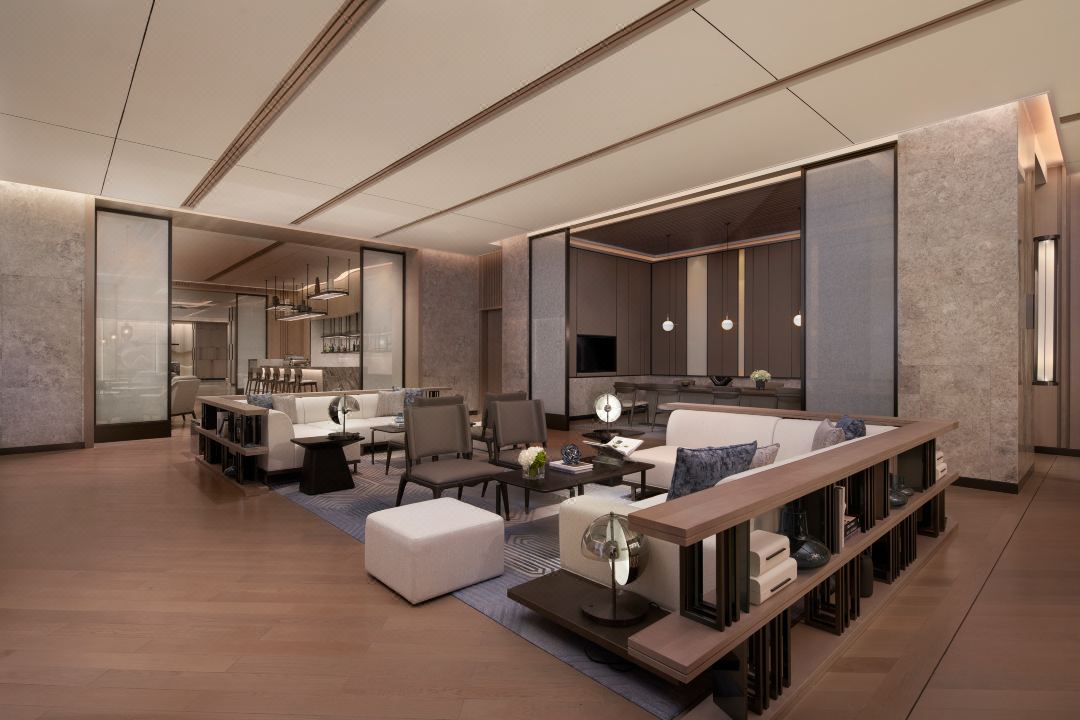
Public area seating is where regional durability and flammability requirements meet design intent. Furniture supplied for high-traffic hotel interiors must satisfy the compliance regime of the market it is installed in.
Why Emissions and Process Compliance Now Shape Regional Access
Environment-related requirements have moved from a differentiating feature to an entry condition in several markets. The 45% rise in sustainability specifications recorded in 2025 reflects a shift in how contracts are written: low-VOC finishes and documented timber sourcing are increasingly listed as standard rather than optional, and a supplier that cannot evidence them is excluded before commercial evaluation begins.
This has a direct effect on manufacturing process rather than on marketing. Coating lines, adhesive selection and panel finishing determine whether a finished piece meets an emissions requirement, and environmental management systems govern how consistently that performance is reproduced across a project of several hundred rooms. For buyers, the practical implication is that process certification and material documentation should be requested at the same time as product samples — not after the order is placed.
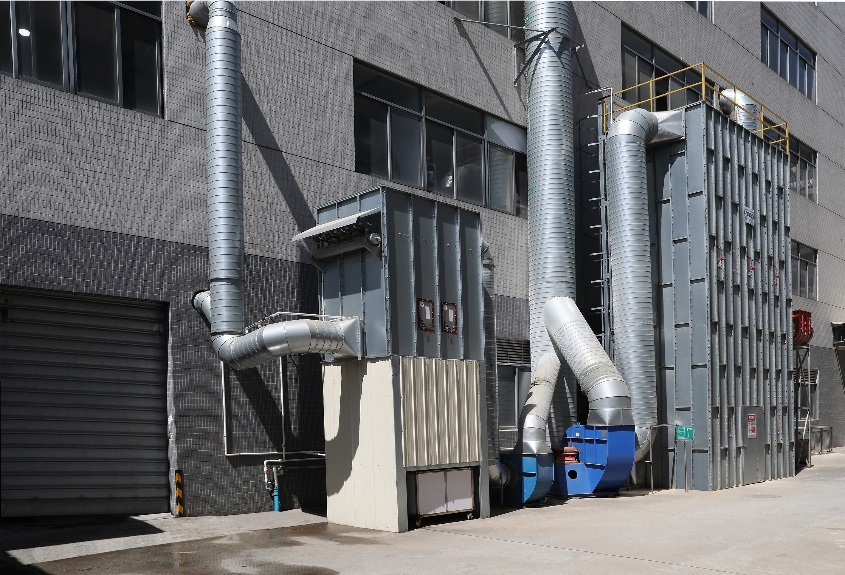
Emission and environmental performance in custom hotel furniture is a production-process outcome. Environmental protection and purification equipment is part of how finishing performance is controlled at scale.
Where Regional Programs Meet Large-Format Project Delivery
The Middle East market illustrates how regional construction logic changes furniture demand. Hospitality projects in the region tend to specify public areas at a scale that consumes production capacity quickly: a single lobby or ballroom pre-function zone can require a volume of seating comparable to dozens of guest rooms. When the opening date is fixed, the constraint shifts from design to sequencing — which packages are released first, which are held for a later phase, and how installation support is scheduled across a live site.
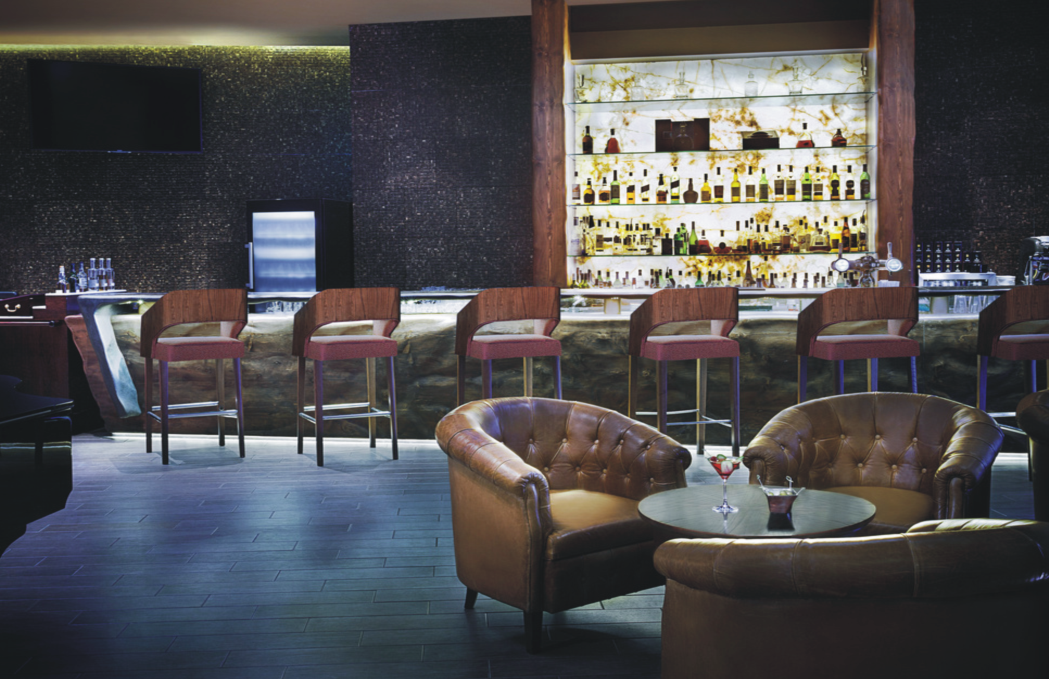
Middle East hospitality interiors often combine large-format public areas with fixed opening dates. For the Sofitel Dubai The Palm Resort and Spa project, the supplied scope covered guest rooms, the lobby entrance, a meeting room, a bar and guest corridors.
What Custom Manufacturing Cannot Do: Limits Buyers Should Plan Around
Regional policy shapes demand, but it also creates boundaries that no custom furniture programme can remove. Four are worth stating plainly, because they determine whether a project schedule is realistic.
Production lead time is not shipping lead time. A 30 to 50 day production window sits after design development, sampling and approval, and before consolidation, shipping and site installation. Projects that compress approval stages typically discover the cost of that compression late. The reliable approach is to schedule backwards from the installation date and to treat approval milestones as hard dates.
Warranty coverage is tiered, not uniform. Standard coverage for furniture products is one year, with glass and mirrors covered for six months against spontaneous breakage, mould or fogging, and panel materials covered for two years against active wood borer infestation. Projects that require longer or broader coverage need a separate written commitment rather than an assumption, and buyers should confirm this during evaluation rather than after handover.
Operating conditions are assumed, not universal. Standard specifications assume indoor installation with low humidity, low dust and a stable temperature range of roughly 5°C to 50°C. Semi-outdoor terraces, pool decks and exposed coastal installations fall outside that envelope. They are not impossible, but they require a project-specific material and finish decision that should be made before the order is released.
Custom programmes require design freeze discipline. A fully customised build has no standard inventory to fall back on. Changes after production release propagate through joinery, upholstery and finishing stages simultaneously. Buyers who want customisation and schedule certainty need to protect the freeze date as a contractual milestone.
Outlook: Policy as a Permanent Specification Input
Three developments are likely to shape the next phase of custom hotel furniture demand. First, sustainability documentation will continue to shift from differentiator to baseline, particularly in European and UK tenders, where low-VOC finishes and verified timber sourcing are already appearing as standard requirements. Manufacturers that cannot evidence process and material performance will increasingly be excluded at prequalification rather than at price negotiation.
Second, the geographic distribution of demand will remain uneven. Asia Pacific already carries the largest regional revenue share of hospitality furniture, and Middle East programmes continue to generate large-format public area requirements, while the United States market combines new construction with an ongoing renovation and brand-refresh cycle. For manufacturers, this argues for modular production systems that can run different compliance logics without rebuilding a line for each market.
Third, buyers are becoming more specific in how they ask about capability. Regional policy has made generic claims less useful: the questions that now decide an award are which standards a supplier has evidence for, which climates its materials have been specified in, what its capacity commitment looks like in a given month, and how the property will be supported years after installation. Manufacturers positioned as multi-region suppliers will be evaluated on exactly that basis.
Frequently Asked Questions
Which regions are currently driving demand for custom furniture for five-star hotels?
Demand is distributed rather than concentrated. Asia Pacific accounted for 36.4% of hospitality furniture revenue in 2025, according to Dataintelo, reflecting construction activity in emerging economies. The United States market combines new construction with renovation and brand-refresh work, where durability standards such as ANSI/BIFMA X5.4-2020 (R2025) apply to public and lounge seating. European and UK tenders increasingly specify low-VOC finishes and FSC-certified wood, and UK upholstered furniture requires a CRIB 5 rating under BS 5852. Middle East programmes tend to generate large-format public area packages tied to fixed opening dates.
How do regional fire and durability standards change a hotel furniture specification?
They change the build, not just the finish. In the United States, ANSI/BIFMA X5.4-2020 (R2025) addresses durability and safety for public and lounge seating in high-traffic commercial environments, which affects frame construction, leg attachment and load performance. In the United Kingdom, a BS 5852 CRIB 5 rating applies to upholstered furniture in hospitality, and because it is a property of the assembled upholstery build rather than the fabric alone, test evidence must be re-confirmed whenever foam, interliner or construction changes. Environmental requirements add a third layer: low-VOC finishes and documented timber sourcing are appearing as standard contractual items rather than optional upgrades.
What should buyers verify before appointing an export-oriented custom furniture manufacturer?
Five items are typically decisive. First, whether compliance evidence maps to the specific jurisdiction in the tender rather than to the manufacturer's home market. Second, whether the supplier works in ODM or development mode, so that a design intent can be converted into a compliant, manufacturable build. Third, whether a single validated sample can be produced before full release, which is the only reliable proof for composite flammability or emissions performance. Fourth, the stated production capacity and lead time against the project's installation date. Fifth, the after-sales structure, including warranty tiers and remote technical support, since that determines how defects are resolved after the project team has dispersed.
Which areas of a five-star hotel require the most region-specific furniture engineering?
Public and lounge areas carry the highest concentration of regional requirements, because they combine heavy daily use with local durability and flammability rules, and because they are the most visible spaces in the property. Upholstered seating is the most compliance-sensitive category, since its performance depends on the assembled build. Guest room casegoods follow closely, particularly where emissions and timber documentation requirements apply, and dining, banquet and executive lounge furniture adds load-bearing and fire-retardant requirements in high-occupancy settings. Guest rooms, lobbies, restaurants, meeting rooms, bars, executive lounges and function rooms each carry a different combination of these constraints within the same project.
What are the limits of a custom furniture programme compared with standard or locally sourced furniture?
Three limits are structural. Production lead time for custom manufacturing typically runs from 30 to 50 days, and it sits after design development, sampling and approval — so schedule risk concentrates in the approval stages rather than in manufacturing itself. Warranty coverage is tiered rather than uniform: standard furniture coverage is one year, glass and mirrors six months, and panel materials two years against active wood borer infestation, with longer terms requiring a separate written commitment. Finally, standard specifications assume indoor installation with low humidity, low dust and a stable temperature range of roughly 5°C to 50°C; semi-outdoor or exposed coastal installations require a project-specific material decision before the order is released. Custom manufacturing offers flexibility in design and material, but it does not remove these constraints.
Reference Material
For readers who need the detailed product, material and capability reference behind the specifications discussed in this article, the RICHART brochure is available for download: RICHART company and product brochure (PDF).
Market data referenced in this article is attributed to Dataintelo, Grand View Research, Intel Market Research, BIFMA and the British Standards Institution as cited in the source list. Market size estimates vary by scope definition and should be compared on a like-for-like basis.