
How Ribbon Specification Choices Determine Scenario Fit
How Ribbon Specification Choices Determine Scenario Fit
Ribbon selection stops being a commodity purchase once a buyer has to serve several product programmes at the same time. Gift packaging, bakery, floral, apparel accessories, and home textile finishing all expose the same strip of fabric to different handling, different display conditions and different compliance expectations — which is why specification choices, rather than unit price alone, determine whether a ribbon programme holds together across a season.
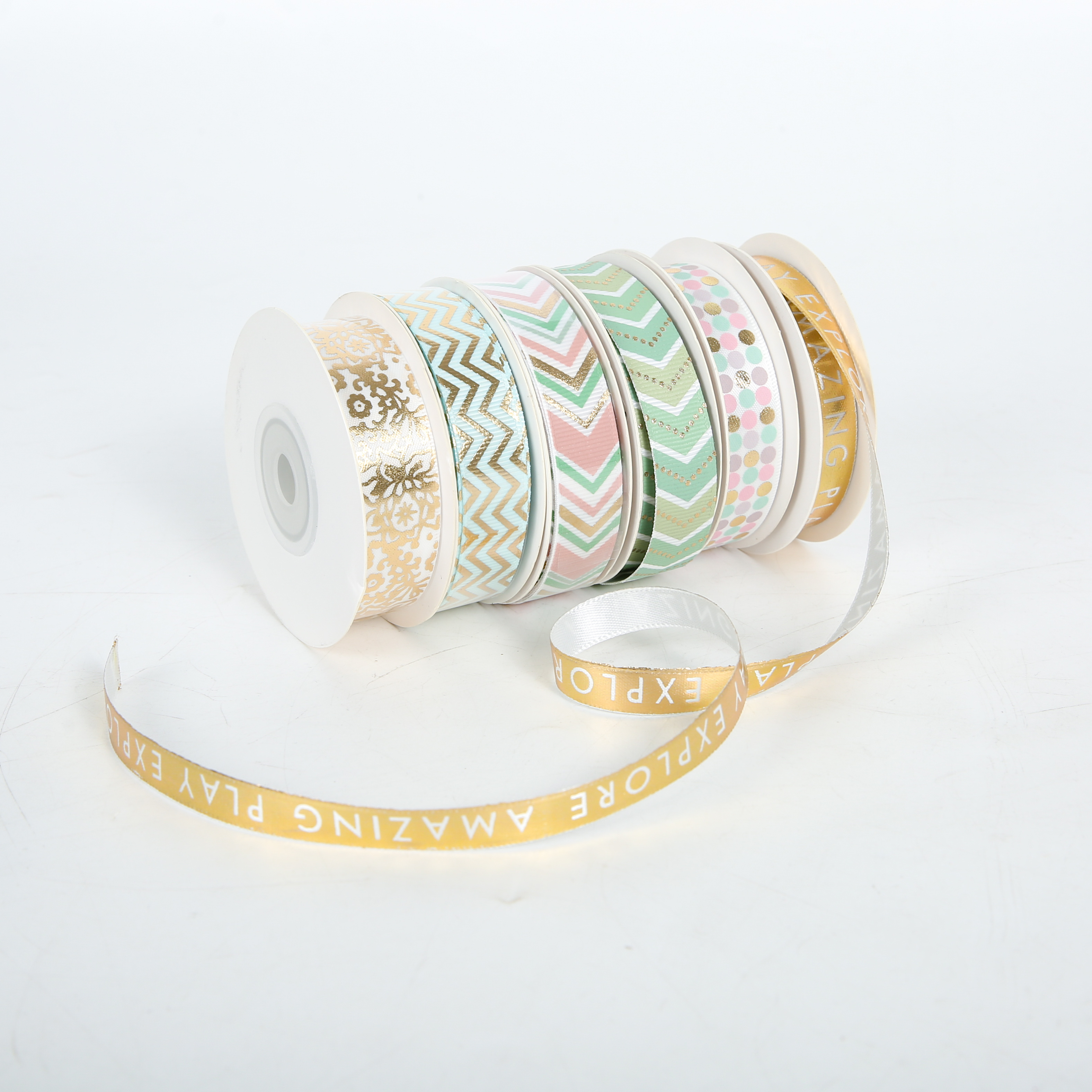
Customized ribbon produced in satin, grosgrain, taffeta and herringbone, with widths from 3 mm to 100 mm.
The five programmes most often bundled into a single ribbon sourcing relationship are gift packaging, bakery, floral, apparel accessories, and home textile. Each one converts a different part of the specification sheet into a purchasing risk: a bow that survives long transit for a gift programme, a colour that stays stable on a bakery carton, an edge that does not fray on a garment tag, or a material platform that can be defended in a sustainability report.
This article maps ribbon specification choices to those five scenarios. It covers the fabric types and widths available in the custom range, colour matching and decoration crafts, eco-material options and the certifications that support them, and the practical boundaries — order thresholds, lead times and return conditions — that decide when a scenario-fit programme is the right answer and when a stock ribbon is not.
Why Scenario Fit, Not Product Category, Drives Ribbon Procurement
Ribbon applications are exposed to conditions that vary in temperature, humidity and light, and they are routinely handled in environments where physical contact and mechanical damage are expected. On top of those conditions, programmes typically add their own requirements: eco-friendly material, colour fastness, and customizable specification.
Those four conditions — environmental exposure, physical contact, colour stability and specification flexibility — do not weigh equally in every programme. A gift programme cares most about the visual and structural result and about how the ribbon behaves on a manual or semi-automatic packing line. A bakery programme cares about presentation adjacent to packaged food and about direct-contact compliance. A floral programme cares about how the ribbon behaves when it is worked by hand around stems, wraps and containers. An apparel accessories programme cares about contact with skin and garment finishing. A home textile programme cares about how a wider trim performs across a larger surface under mechanical stress.
| Programme | Dominant exposure | Specification lever that carries the most weight |
|---|---|---|
| Gift packaging | Manual and machine packing, long transit, seasonal display | Bow format and edge finishing; colour vibrancy and colour fastness |
| Bakery | Close presentation with packaged food; direct-contact compliance | Material safety and certification; colour fastness |
| Floral | Humidity, hand-working, repeated physical contact | Abrasion and moisture behaviour; narrow width formats |
| Apparel accessories | Skin contact and garment finishing | Skin-friendly material choice; colour fastness at narrow widths |
| Home textile | Larger surfaces and mechanical stress | Tensile strength, abrasion resistance, wrinkle resistance, shrinkage control |
How Beiheng Ribbon Structures Scenario-Fit Specification
Huzhou Beiheng Textile Co., Ltd. — trading as Beiheng Ribbon — is a ribbon manufacturer founded in 1999 and based in Huzhou, Zhejiang, China, a core textile hub in the Yangtze River Delta. It is an integrated original manufacturer that combines R&D, weaving, dyeing, finishing, custom production and sales, and it supplies premium ribbons, recycled polyester ribbons, BCI Better Cotton ribbons, biodegradable eco-friendly ribbons, printed tapes and handmade finished bows to luxury brands, cosmetics, maternity and baby products, cultural and creative businesses, and cross-border e-commerce sellers.
The manufacturing base covers 53,000 m² and runs 700 high-speed Swiss Müller looms alongside 23 complete dyeing and finishing lines, supported by an in-house testing laboratory. Daily output is 3 million metres, with monthly capacity of 90 million metres. A full 20GP container order carries a lead time of 30–40 days. The company holds 23 textile-related patents and employs 25 R&D engineers. Export accounts for 70% of output, with main markets in the EU, the Middle East, Asia, North America and Oceania.
Quality control follows the same scenario logic. The laboratory is equipped with computer colour matching systems, colour fastness testers, heavy metal analysers and biodegradability testing equipment. Full inspection is implemented at incoming material, production and finished goods stages, with product performance variation controlled within ±3% per batch. That figure matters most in programmes where a second or third reorder has to match the first shipment — the recurring failure mode in seasonal gift and apparel trim work.
The custom service set covers base tape type, width, colour, printing, handmade bow, buckle and strip cutting, with widths from 0.3 cm to 10 cm (3–100 mm), Pantone colour matching, LOGO printing, hot stamping, jacquard weaving, overlocking and heat-sealed edge finishing. OEM and ODM orders are accepted against customer samples or artwork, and custom prototypes are available within 7 days.
Export compliance documentation includes GRS, BCI, OEKO-TEX Standard 100, FSC and BSCI, with transaction certificates and third-party SGS test reports available for market access requirements in the EU, the US and other overseas regions.
The Four Specification Levers Behind Scenario Fit
Fabric architecture: satin, grosgrain, taffeta, herringbone
The customized ribbon range is produced in four base fabric types: satin, grosgrain, taffeta and herringbone. The choice is structural before it is visual, because the weave determines how the ribbon folds, how it reflects light, how much body it has when tied, and how it behaves at the cut edge.
Satin constructions are typically selected where a smooth, light-reflecting face is wanted. Grosgrain, with its crosswise rib, is typically chosen where a matte and more structured appearance is preferred. Taffeta gives a crisper, more paper-like handle. Herringbone introduces a directional woven pattern that adds texture without any additional printing step, which is useful for apparel and home textile programmes that need surface interest at a lower decoration cost.
Width: 3 mm to 100 mm as a specification envelope
Ribbon width is customizable from 3 mm to 100 mm (0.3 cm to 10 cm). Narrower formats are commonly used for garment trim, small-format retail packaging and delicate floral work, where a heavier ribbon would visually overwhelm the object being tied. Wider formats are commonly used for larger gift boxes, bakery presentation and home textile programmes, where the ribbon has to carry visual weight across a broader surface. Width, in other words, is not a cosmetic setting — it is the variable that links the ribbon to the size and the visual hierarchy of the object it finishes.
Colour, printing and finishing
Colour is matched either to Pantone colour codes or to physical colour swatches supplied by the buyer. Decoration crafts available across the custom range include screen printing, flexo printing, hot stamping and jacquard weaving, with silk-screen printing, heat transfer printing and hot stamping offered as printing options for custom orders. LOGO artwork is supplied in high-resolution vector formats such as AI, PDF or EPS. Edge finishing options include overlocking and heat-sealed edges, and pre-tied bows are available as a finished component rather than a cut length.
Material platform and ESG alignment
Materials across the custom range are cotton, lyocell, recycled polyester and polyester. Recycled polyester ribbon is produced from recycled PET bottles and carries a lower carbon footprint than virgin polyester. It is available with GRS certification and TC transaction documents, and is OEKO-TEX compliant. Appearance is comparable to virgin polyester, with satin, matte and plaid variants available. Dyeing performance and colour fastness suit custom printing and hot stamping, and bow retention is strong. Mechanically, the material offers high tensile strength, abrasion resistance, wrinkle resistance and low shrinkage; it heat-cuts cleanly to prevent fraying, cuts and sews easily for mass production, and is moisture-proof and mould resistant for long shipment.
Cotton ribbon is made from 100% natural cotton fibre and is biodegradable, compostable and microplastic-free, with organic cotton available under GOTS or OEKO-TEX. Its hand is a natural matte texture without plastic shine; plain, twill and grosgrain weaves are available; it holds bow shape well; reactive dyeing gives good colour fastness; and custom printing and hot stamping are acceptable. It is soft, skin-friendly, hypoallergenic, breathable and moisture absorbent, and free of harsh chemicals.
Lyocell ribbon is made from responsibly sourced wood pulp and is home compostable, biodegradable and microplastic-free. It is silky soft and skin-friendly, breathable and moisture managing, and hypoallergenic. Its lustre is a natural soft sheen rather than a plastic shine, with excellent drape and stable bow shape; dye uptake and colour fastness are good, and it suits custom printing and foil stamping.
The wider portfolio also includes BCI Better Cotton ribbons, biodegradable ribbon options, jacquard tapes, printed and hot-stamped ribbons, special functional ribbons and handmade finished bows — 20 major product categories in total.
Application Fit by Programme
Gift packaging: bow format and edge reliability
Gift packaging is the programme where the ribbon is most visible and least forgiving. The requirement is not only colour but a consistent, well-shaped bow that survives transit.
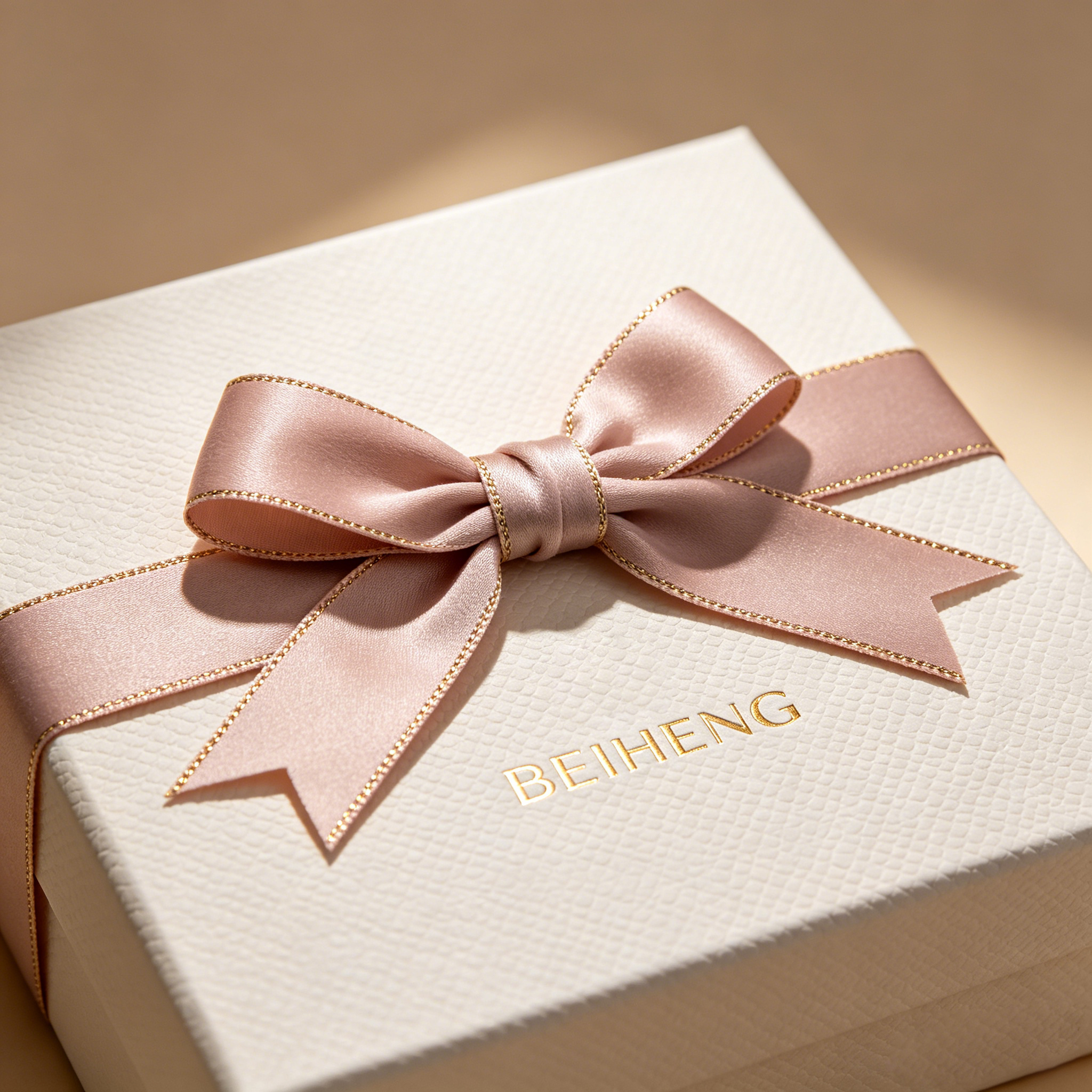
Pre-tied bows are supplied ready to use, with heat-cut edges to prevent fraying and bow sizes adjustable from 30 mm to 500 mm.
Pre-tied bows are produced with a ribbon base width of 3–100 mm and bow sizes adjustable from 30 mm to 500 mm, in 100% polyester or optional recycled polyester. The bow is finished with a heat-cut edge to prevent fraying, and Pantone colour matching is available. MOQ is 3,000 pieces, with ISO9001 and GRS-compliant options. Ready-to-use bows reduce labour cost and packing time, and their uniform shape supports a consistent packaging look across manual and semi-automatic packing lines. The bow structure is firm and compression-resistant after long transit, and custom printing and hot stamping are available for branding, with optional adhesive dots and wire ties for attachment.
The case evidence for this programme is a gift packaging ODM project delivered for customers in France, Germany, the United Kingdom and Italy: 2 million metres of ribbon for brand packaging use over a five-year relationship. The hot-selling Christmas ribbon programme combined vibrant Christmas-themed colours with high colour fastness, anti-fray behaviour, flexibility for shaping bows, and OEM/ODM support with custom printing. End uses spanned Christmas trees, gift boxes, wreaths and DIY craft. Application scenarios of this type are common in France, Belgium and Canada, and are also typically applied in the United States and Germany.
Bakery: presentation plus compliance
Bakery programmes put ribbon close to packaged food and, where handled boxes are involved, in direct contact with skin. That shifts weight from appearance to material safety and documentation. Buyers should check the certification status of the specific material rather than of the supplier in general, and should note that OEKO-TEX Standard 100 moved to stricter Bisphenol A (BPA) limit values — from 100 mg/kg to 10 mg/kg — effective 1 April 2025, a change that affects direct-to-skin ribbon products. Microplastic-free cotton and lyocell options, and OEKO-TEX compliant recycled polyester, are the material platforms most often considered here, with colour fastness specified so that printed bakery packaging does not bleed colour onto the ribbon during storage.
Floral: moisture, hand-working and narrow formats
Floral work exposes ribbon to humidity and repeated hand contact while it is being shaped around stems, wraps and containers. The relevant material properties are abrasion resistance, moisture and mould resistance, and the ability to hold a shape after repeated handling. Recycled polyester ribbon is moisture-proof and mould resistant and heat-cuts cleanly to prevent fraying, which limits deterioration at the cut end during handling. Narrow widths within the 3–100 mm range are typically used where the ribbon must wrap a thin stem or a small bouquet handle without adding bulk, while colour fastness keeps the presentation stable under light exposure.
Apparel accessories: skin contact and colour stability
Apparel accessory programmes use ribbon for garment decoration, tags and trim, where the ribbon is handled repeatedly and may sit against skin. Cotton and lyocell ribbons are soft, skin-friendly, breathable and hypoallergenic, and lyocell adds moisture management — a meaningful difference for trim on garments worn close to the body. Colour fastness is the second requirement, and reactive dyeing on cotton and the dye uptake properties of lyocell both support it. Heat-cut and heat-sealed edges matter more here than in packaging, because fraying at the cut end is visible on a finished garment rather than hidden inside a box.
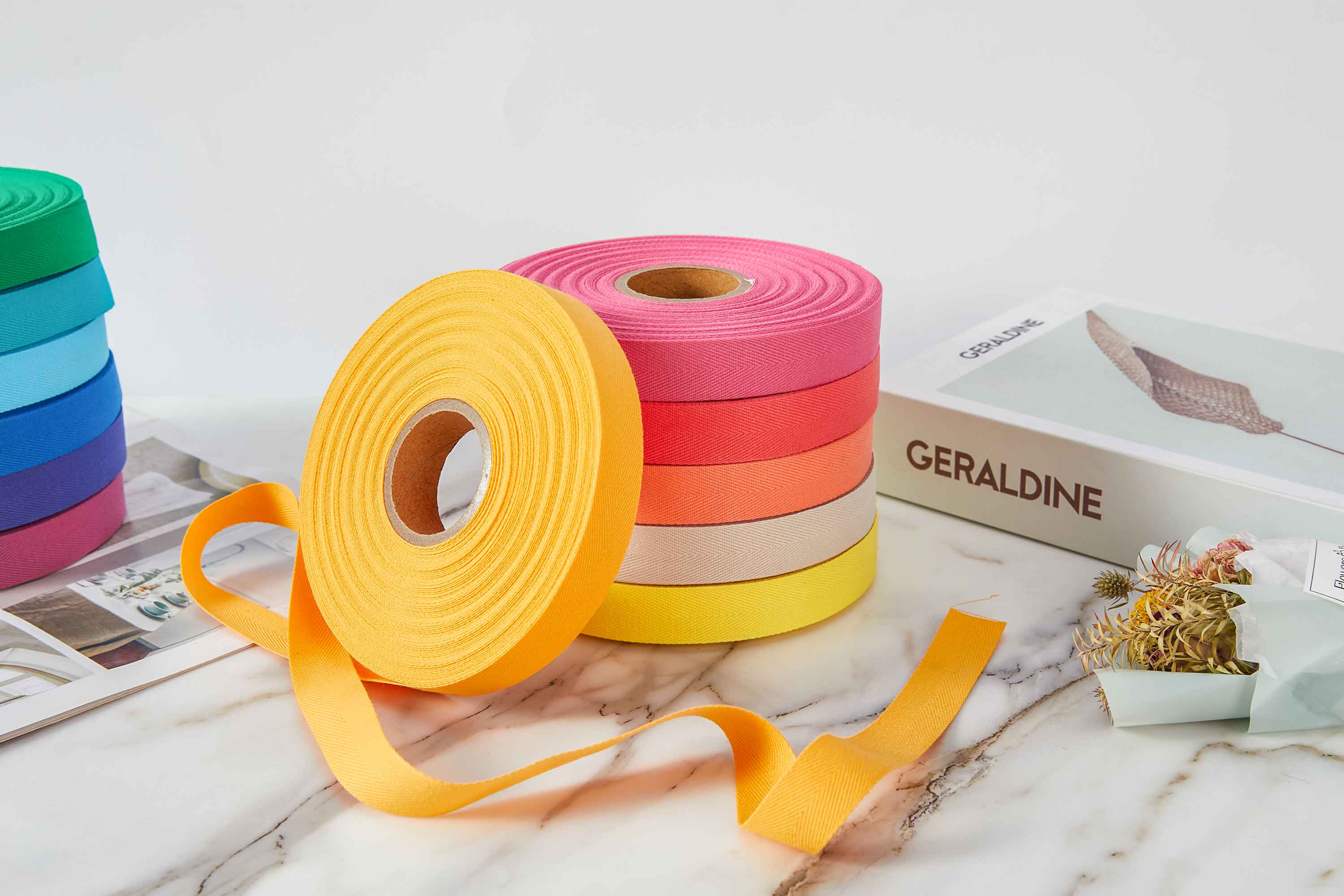
Cotton ribbon: 100% natural cotton fibre, biodegradable and microplastic-free, with a matte texture that suits skin-contact trim.
Home textile: wider formats and mechanical performance
Home textile programmes place ribbon on larger surfaces and subject it to mechanical stress rather than to display conditions alone. The properties that carry the most weight are tensile strength, abrasion resistance, wrinkle resistance and low shrinkage — all specified properties of the recycled polyester ribbon. Wider formats within the 3–100 mm range are typically used where the ribbon has to read as a visible trim line rather than as an accent, and moisture-proof, mould-resistant behaviour supports the longer shipment cycles typical of home textile orders.
Market Signals: Certification Is Displacing Colour as the Gating Factor
China remains the dominant exporter of narrow woven man-made fibre fabrics, the HS 580632 category that includes ribbons, with export value of USD 1.065 billion in 2024, according to World Integrated Trade Solution / UN Comtrade data. On the material side, the global recycled polyester market reached an estimated USD 15.52 billion in 2024, and recycled polyester demand is projected to grow at a CAGR of 9.25% through 2030, according to Grand View Research. Asia Pacific accounted for 47.78% of global recycled polyester revenue share in 2024, confirming the region's role as the primary manufacturing hub for rPET products.
Two certification thresholds now shape specification decisions more directly than colour preferences do. The Global Recycled Standard requires a minimum of 20% recycled content for certification and 50% for on-product labelling under GRS 4.0, as published by Textile Exchange. Separately, OEKO-TEX Standard 100 tightened its Bisphenol A limits from 100 mg/kg to 10 mg/kg effective 1 April 2025, a change that directly affects direct-to-skin ribbon products.
The practical reading for buyers is that recycled and biodegradable claims are no longer marketing language — they are documentation requirements. A programme claiming recycled content needs the recycled content threshold, the certification and the transaction certificate to line up for the same SKU. A programme claiming skin safety needs the material tested against current limit values rather than the values in force when the specification was first written.
Custom Scenario-Fit Ribbon Compared With Generic Stock Ribbon
| Dimension | Generic stock ribbon | Scenario-mapped custom ribbon |
|---|---|---|
| Specification match | Limited to available widths, colours and constructions; the programme adapts to the shelf | Built to the programme: base fabric type, width from 3–100 mm, Pantone-matched colour, craft and edge finishing specified together |
| Brand differentiation | Minimal; the same ribbon is sold to many buyers | LOGO printing, hot stamping, jacquard weaving or pre-tied bow formats |
| ESG documentation | Often undocumented | GRS, BCI, OEKO-TEX Standard 100, FSC and BSCI documentation, with TC transaction certificates and third-party SGS test reports available |
| Order threshold | Low; buy from stock | 5,000 metres for customized and recycled polyester ribbon; 30,000 metres for cotton and lyocell ribbon; 3,000 pieces for pre-tied bows |
| Lead time | Immediate | 7–15 working days typical for custom ribbon production; 30–40 days for a full 20GP container order |
| Returns | Standard commercial terms | Custom-made products generally non-returnable and non-exchangeable except for quality problems caused by production |
The boundaries are real and should be assessed before a programme is committed, not after. The most important is volume. Customized ribbon carries a 5,000-metre MOQ, but cotton and lyocell are specified at a 30,000-metre MOQ, so a low-volume programme that wants a natural-fibre story may not be able to use cotton or lyocell economically across every SKU. Pre-tied bows work on a different unit — 3,000 pieces — which is a more accessible entry point for gift programmes that want a finished component rather than cut ribbon.
The second boundary is time. Custom production runs on a stated window of 7–15 working days for typical orders, subject to customization details and order quantity, and a full 20GP container order is quoted at 30–40 days. Seasonal programmes with fixed in-store dates therefore need to build specification approval and sample confirmation into the calendar rather than treat them as final-stage formalities.
The third boundary is commercial. Custom-made ribbon products are generally non-returnable and non-exchangeable except for quality problems caused by production. That makes sample approval and pre-production confirmation the primary risk control in a scenario-fit programme. Custom samples are available before bulk orders, with sample cost and lead time advised per request, and prototypes can be produced within 7 days.
Future Outlook
Three developments are likely to shape scenario-fit ribbon specification over the next several programme cycles. The first is certification tightening. The OEKO-TEX Standard 100 limit revision shows that compliance values used to specify a ribbon today can be superseded mid-programme, which favours suppliers able to re-test rather than re-source. The second is the recycled content threshold itself: with GRS requiring a minimum of 20% recycled content for certification and 50% for on-product labelling, material selection has to be made against the labelling claim the brand intends to make, not only against the material's environmental narrative. The third is traceability. An ERP system that tracks raw material, production and delivery workflows supports the documentation trail that EU and US market access increasingly implies, and it is the same infrastructure that makes multi-programme sourcing manageable — one supplier holding gift, bakery, floral, apparel and home textile specifications on a common quality standard, with batch-to-batch variation controlled within ±3%.
FAQ
What does "scenario fit" mean in ribbon selection?
Scenario fit means matching a ribbon's specification to the conditions and requirements a specific programme exposes it to. Those conditions include varying temperature, humidity and light exposure, physical contact, and mechanical damage risk, and programmes also add requirements such as eco-friendly material, colour fastness and customizable specification. A ribbon that fits gift packaging may not fit a home textile trim, because the exposure profile and the handling method are different.
Which fabric types and widths can be specified?
Customized ribbon is produced in four base fabric types: satin, grosgrain, taffeta and herringbone. Width is customizable from 3 mm to 100 mm (0.3 cm to 10 cm), and colour is customizable. The MOQ for customized ribbon is 5,000 metres.
Which material options support sustainable or biodegradable claims?
The custom range covers cotton, lyocell, recycled polyester and polyester. Cotton ribbon is made from 100% natural cotton fibre and is biodegradable, compostable and microplastic-free, with organic cotton available under GOTS or OEKO-TEX. Lyocell ribbon is made from responsibly sourced wood pulp and is home compostable, biodegradable and microplastic-free. Recycled polyester ribbon is made from recycled PET bottles and carries a lower carbon footprint than virgin polyester. MOQ is 5,000 metres for recycled polyester and 30,000 metres for cotton and lyocell.
What certifications apply, and what documentation is available?
Beiheng Ribbon holds GRS, BCI, OEKO-TEX Standard 100, FSC and BSCI certifications, and can provide TC transaction certificates and third-party SGS test reports for EU and US market access. Product-level certification support for customized ribbon covers GRS, RCS and OEKO-TEX. Buyers should confirm that the certification applies to the specific material being ordered: GRS requires a minimum of 20% recycled content for certification and 50% for on-product labelling.
What printing and finishing crafts are available for branding?
Available decoration crafts include screen printing, flexo printing, hot stamping and jacquard weaving, with silk-screen printing, heat transfer printing and hot stamping offered as printing options on custom orders. Edge finishing options include overlocking and heat-sealed edges, and pre-tied bows are available as a finished component. LOGO artwork is supplied as high-resolution vector files such as AI, PDF or EPS.
How is colour matched to a brand palette?
Colour can be matched to Pantone colour codes or to physical colour swatches supplied by the buyer. The in-house laboratory includes computer colour matching systems and colour fastness testers, and full inspection is implemented at incoming material, production and finished goods stages, with product performance variation controlled within ±3% per batch.
What are the MOQ and lead-time parameters?
Customized ribbon and recycled polyester ribbon carry a 5,000-metre MOQ. Cotton ribbon and lyocell ribbon carry a 30,000-metre MOQ. Pre-tied bows carry a 3,000-piece MOQ. Typical custom ribbon production takes 7–15 working days, subject to customization details and order quantity, and a full 20GP container order is quoted at 30–40 days. Custom prototypes are available within 7 days.
Can a specification be validated before bulk production, and what are the limits?
Yes. Custom samples are available before bulk order, with sample cost and lead time advised per request, and pre-production sample confirmation is part of the process. Custom-made products are generally non-returnable and non-exchangeable except for quality problems caused by production, which makes sample approval the main risk control. Other practical limits are the MOQ difference between material platforms — 5,000 metres for recycled polyester versus 30,000 metres for cotton and lyocell — and the fact that certification applies to the specific material and recycled content threshold ordered, not automatically to every SKU in a range.
Technical reference: Beiheng Ribbon's 2025 product brochure, covering ribbon categories, custom options and certification documentation, is available as a PDF download here: Beiheng Ribbon product brochure (PDF).