
How Stainless Steel Jewelry Became a Wholesale Staple
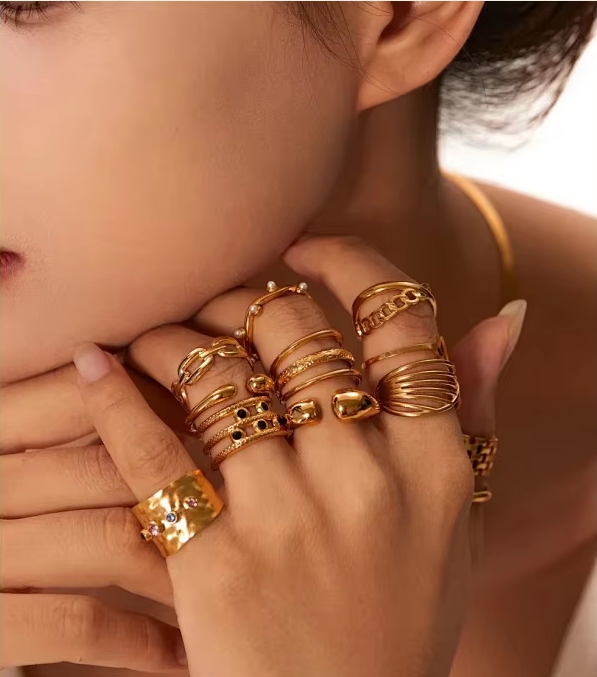
Stainless steel jewelry has become a core category for wholesale and OEM buyers seeking durability, hypoallergenic safety and brand customization.
Stainless steel jewelry is no longer a niche alternative to gold or silver accessories. It has become a standalone product category with clear material standards, established surface engineering methods and a global supply base capable of supporting branded customization at scale.
Industry data reflects this shift. The global stainless steel jewelry market was valued at USD 6.79 billion in 2024 and is projected to reach USD 10.8 billion by 2035, according to WiseGuyReports. The growth is not simply a matter of fashion cycles. It is tied to structural changes in buyer expectations: consumers increasingly want jewelry that is waterproof, hypoallergenic, tarnish-free and personalized. That combination rarely exists in conventional costume jewelry, which explains why stainless steel has moved from an industrial material to a mainstream accessory choice.
The Sourcing Problem: What Wholesale Buyers Actually Face
For wholesale buyers and private-label brands, the challenge is not finding stainless steel jewelry. It is understanding which grade of steel, which surface finishing method and which manufacturing capabilities produce a product that will perform consistently across batches, markets and seasons.
Three questions come up repeatedly in early-stage sourcing conversations:
First, what does “stainless steel” actually mean in jewelry? Not all stainless steel used in jewelry is equal. Grade selection affects corrosion resistance, compatibility with sensitive skin and how well the piece holds a polish or plated finish over time.
Second, what makes a piece “waterproof” or “tarnish-free”? These claims depend on the surface coating technology. Without a verified coating process, even high-grade stainless steel can lose its appearance prematurely.
Third, which suppliers can move from catalog product to customized branded production? Wholesale and OEM buyers often need engraving, custom packaging, mixed finishing options and reliable quality documentation. Not every manufacturer has that range of in-house capability.
These are not trivial details. They determine whether a jewelry line survives contact with real-world wear — sweat, humidity, hand sanitizer, swimming — and whether a brand can tell a credible quality story to its own customers.
Material Foundation: Why 316L Stainless Steel Matters
The starting point for understanding stainless steel jewelry quality is the material grade. The industry commonly references 316L stainless steel as a benchmark for hypoallergenic jewelry because of its molybdenum content, which improves corrosion resistance. 304L stainless steel, by contrast, is more commonly used in economy fashion pieces.
Jusnova Jewelry Co., Ltd., a Guangzhou-based ODM/OEM manufacturer established in 2009, built its stainless steel jewelry line around 316L surgical-grade stainless steel. The product is tested to EU REACH and FDA standards, with zero nickel release. This matters because nickel is a common contact allergen. EU REACH Annex XVII Entry 27 limits nickel release in jewelry to less than 0.5 µg/cm²/week for skin-contact items and 0.2 µg/cm²/week for piercing items — a threshold that sensitive-skin consumers implicitly rely on when they choose stainless steel.
For wholesale buyers, grade selection also affects storytelling. A product documented as 316L with REACH test reports gives retailers a defensible answer to a very common consumer question: “Is this safe for sensitive skin?” That answer, in turn, reduces returns and builds repeat purchase trust.
| Comparison Point | 316L Stainless Steel | 304 Stainless Steel |
|---|---|---|
| Corrosion resistance | Higher, due to molybdenum content | Good in standard conditions; lower than 316L |
| Typical positioning | Hypoallergenic, medical-grade, premium fashion | Economy fashion pieces, less demanding applications |
| Skin sensitivity profile | Zero nickel release in tested product; REACH/FDA standards referenced | Generally acceptable but less commonly positioned for sensitive skin |
| Buyer relevance | Supports waterproof, hypoallergenic, non-tarnish claims | Supports entry-level pricing |
Surface Engineering: PVD Coating and the Meaning of “Waterproof”
Material grade alone does not make a piece of stainless steel jewelry premium. Surface finishing determines how the jewelry looks, how long that look lasts and whether the product can honestly carry terms like “waterproof,” “non-tarnish” and “gold plated.”
Two finishing approaches dominate the market: traditional electroplating and PVD (Physical Vapor Deposition) coating. Industry analysis indicates that PVD coating on 316L stainless steel provides a surface approximately 10 times more durable than traditional electroplating. That difference helps explain why PVD-coated stainless steel jewelry can legitimately claim waterproof and anti-tarnish properties, while many conventionally plated pieces cannot.
In the production process, PVD creates a thin, dense layer on the metal surface — available in colors including yellow gold, rose gold, black, gunmetal and other custom shades. Jusnova operates an in-house PVD facility with six machines and more than 20 color options. The company reports consistent color matching with Delta E < 1.0 across batches, meaning the color variation from one production run to another is kept very small. This is an important detail for brands that sell matching sets or replenish the same style across multiple seasons.
The practical durability of this coating is measurable. Jusnova's stainless steel jewelry has been verified by 48-hour salt spray testing, and the PVD surface is designed to maintain luster for 2 to 5 years in conventional daily wearing environments. This kind of verification gives wholesale buyers a concrete basis for product claims. For a wholesaler explaining to retail customers why a PVD gold bracelet costs more than a standard plated one, the answer can be expressed in testing logic rather than vague descriptors.
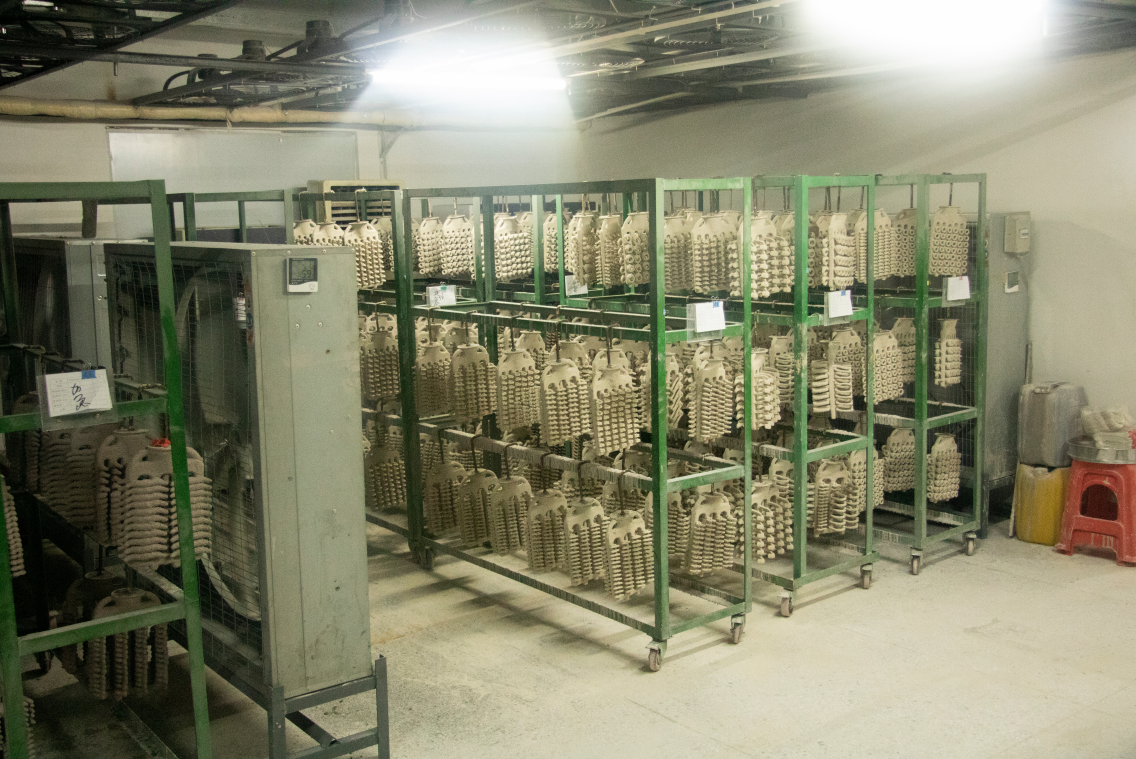
Surface preparation is a critical step before PVD coating; consistent finishing output depends on controlled in-house process flow.
Customization as a Brand Asset
Stainless steel offers an uncommon advantage for branded jewelry: it accepts multiple customization methods without sacrificing durability. Buyers looking to build a distinctive line — rather than resell commodity products — can choose from laser engraving, embossing, printing, epoxy coating and PVD plating. These options are often combined with customized packaging to create a full branded presentation.
Jusnova lists four in-house logo application methods: laser engraving, stamping, screen printing and epoxy doming. The company reports a sample lead time of 2 to 3 days for custom logo development. For buyers at the research stage, this signals a practical consideration: a supplier that keeps customization in-house can control both lead time and consistency better than one that outsources these operations.
The scope of customization extends beyond logos. Jusnova's product range includes engraved bangle types, rope chain bracelets, figaro chain bracelets, curb chains, tennis bracelets, charm bracelets, beaded bracelets, pearl bracelets, rings and earrings. Diameters range from 5 mm to 80 mm, with thickness from 0.5 mm to 3.0 mm. Stone settings — CZ, man-made crystal or moissanite — are available in more than 20 colors with a choice of prong, bezel, channel or pavé settings. This breadth matters to buyers because it allows a single supplier to support a diverse product catalog rather than requiring multiple sourcing relationships.
Where the Category Fits: Application Scenarios
Stainless steel jewelry sits at the intersection of several buying flows: fashion accessories retail, gift wholesale, brand promotional products and cross-border e-commerce. Each flow has different priorities, but they converge on the same product attributes.
Retail stores and e-commerce sellers need products that must not generate complaints about tarnishing or skin irritation. Gift and souvenir distributors need products that look more valuable than their price point implies. Corporate gift programs and promotional product distributors need items that can be imprinted with logos — in small quantities for some programs, or large volumes for seasonal campaigns.
Because the jewelry is designed for daily wearing environments without special restrictions, and requires no additional power supply or maintenance beyond wiping with a soft cloth, it is a practical fit for high-turnover channels. The absence of special care requirements is itself a sales argument: stainless steel jewelry removes the “don't get it wet” warning that applies to many fashion pieces.
Market Signals: Why This Category Is Growing
Several independent data points help explain the category's acceleration.
First, the global stainless steel jewelry market is projected to grow from USD 6.79 billion in 2024 to USD 10.8 billion by 2035. That implies sustained demand expansion, not a temporary trend.
Second, the global personalized jewelry market was estimated at USD 42.51 billion in 2024, growing at a CAGR of 8.6% through 2031, according to Cognitive Market Research. Stainless steel jewelry, with its laser engraving capability and range of finish options, is well positioned within this personalized segment.
Third, China's total jewelry exports reached USD 12.7 billion in 2025, with major destinations including Hong Kong, the United States and Malaysia, according to OEC data. This confirms that Chinese manufacturers remain a major source of global jewelry supply.
Fourth, approximately 68% of couples in 2024 chose customized or bespoke jewelry over ready-made options, according to Jewelers of America, driven by Gen Z and Millennial preferences. While this statistic specifically references couples' jewelry purchases, it reflects a broader preference shift toward personalized pieces that stainless steel can efficiently serve.
One additional signal deserves attention: the growing use of PVD coating in stainless steel jewelry is enabling brands to market “waterproof” and “anti-tarnish” products to consumers who previously had only two options — expensive precious metals or disposable fashion jewelry.
Comparison With Traditional Fashion Jewelry: Real Trade-Offs
It is important to define what stainless steel jewelry is not, and where it still faces limits.
Compared to traditional plated fashion jewelry, stainless steel with PVD coating offers meaningfully better durability, lower long-term replacement frequency and a stronger sensitive-skin profile. For global buyers, this translates into fewer customer complaints and more consistent repeat orders.
However, there are real trade-offs:
Weight and feel. Stainless steel pieces are denser than typical alloy fashion jewelry. Some consumers perceive this as premium; others may be unfamiliar with the heavier feel and require product descriptions that set expectations.
Color range limitations. Although PVD coating offers a wide palette, certain pastel or highly metallic shades may be harder to reproduce consistently than standard gold, rose gold, black or gunmetal. Buyers seeking very unusual colors should verify the supplier's color-matching capability — measured here by Delta E values — before committing to large volumes.
Structurally simpler designs. The manufacturing strength of stainless steel lies in clean, durable forms. Highly complex multi-part mechanisms or delicate stone settings are possible but require more engineering care than with softer precious metals. Buyers with very intricate design requirements should confirm the manufacturer's experience level in those areas.
Cost structure. Stainless steel jewelry is not always the cheapest option on the wholesale table. A well-made PVD-coated 316L piece can carry a higher unit cost than a low-end zinc-alloy plated item. Its value proposition depends on durability — fewer returns, longer product life and stronger brand claims — rather than lowest initial price.
What a Capable Supplier Looks Like
Buyers moving toward evaluation need a concrete reference for what a mature stainless steel jewelry manufacturing operation can offer. Jusnova Jewelry provides one example of a production setup built around the requirements discussed above.
Founded in 2009, the company operates a 1,000 m² manufacturing facility in Guangzhou with approximately 300 employees and an annual production capacity of 3,000,000 units. Export sales account for approximately 95% of its business, with emphasis on Europe and America. Its R&D team of 20 engineers focuses on style development and surface-finishing process support, launching more than 500 new styles per month. For brands, that design cadence matters: it keeps wholesale catalogs fresh and provides direction for market-specific styling.
From a compliance standpoint, the company provides REACH test reports, SGS and BSCI certification upon request. Its main products include stainless steel bangles, bracelets, rings, earrings, PVD/electroplated gold pieces and waterproof, tarnish-free jewelry. For buyers sourcing in the EU, the documented zero nickel release against REACH standards is particularly relevant.
A supplier like this functions effectively as a partner rather than a commodity source. The presence of an in-house PVD facility, custom logo application methods, packaging coordination and R&D headcount offers buyers a single point of accountability across design, production and compliance.
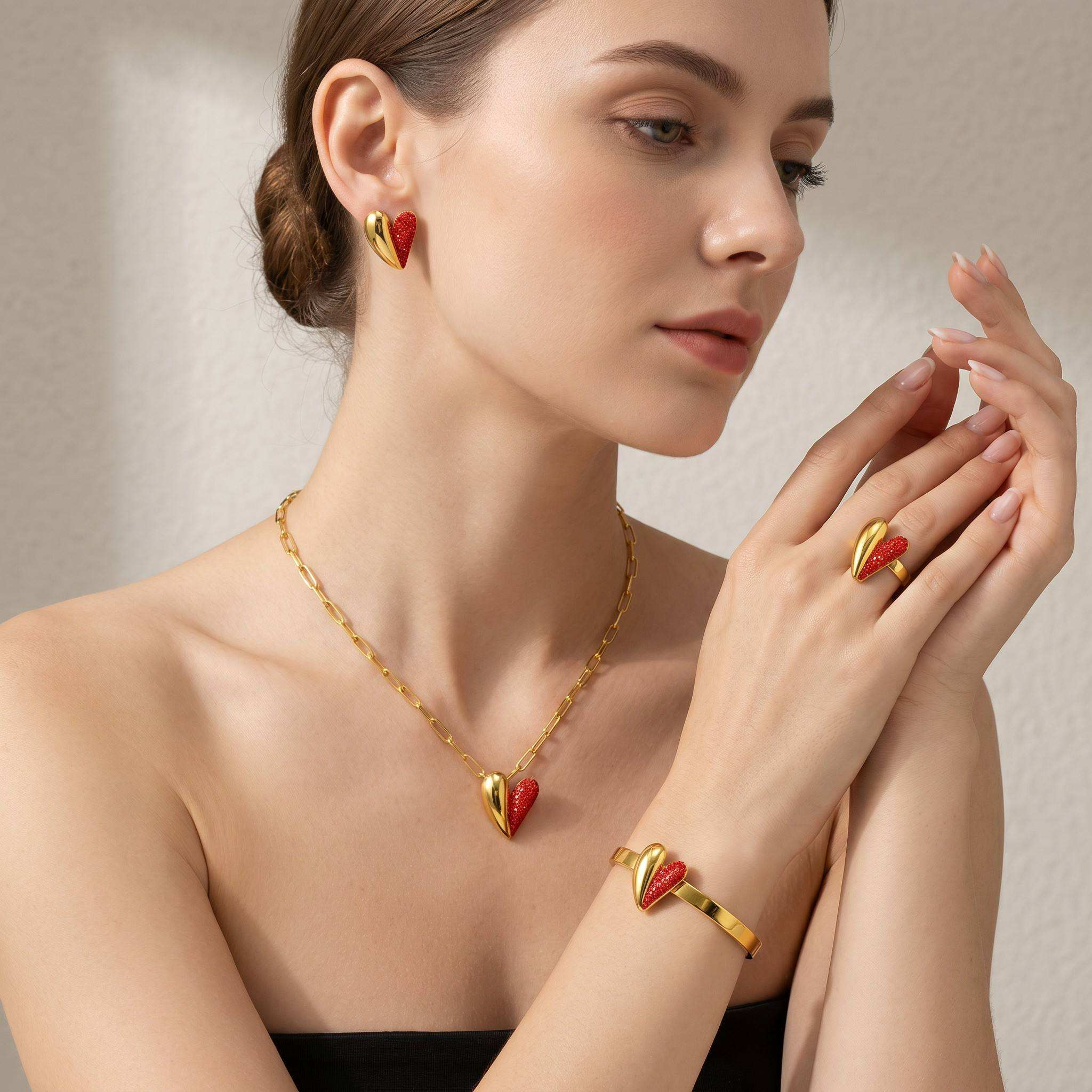
Coordinated sets that match across finish and color are increasingly in demand from wholesale buyers seeking seasonal collections.
Future Outlook
The stainless steel jewelry category is likely to keep expanding as more brands replace disposable fashion jewelry with products that can honestly claim daily-wear durability. The shift is supported by three converging forces: stricter consumer expectations about materials safety, the mainstreaming of personalized jewelry, and improvement in surface coating technology that now makes PVD-coated steel visually competitive with traditional plated gold finishes.
For buyers, the strategic implication is to treat stainless steel jewelry not as a trend to chase but as a structural category with measurable quality parameters. The suppliers who will capture the next phase of growth are those who combine material traceability, documented coating performance, responsive R&D and reliable customization workflows.
Frequently Asked Questions
What is stainless steel jewelry?
Stainless steel jewelry refers to accessories made from corrosion-resistant steel alloys, commonly 304 or 316L stainless steel. It is valued in the fashion accessories industry for its durability, hypoallergenic properties and resistance to tarnishing and water damage. Products include bangles, bracelets, rings, earrings, necklaces and other accessories, available with surface finishes such as PVD coating or gold plated options.
Why is 316L stainless steel considered hypoallergenic?
316L stainless steel is widely regarded as the industry benchmark for hypoallergenic jewelry because it contains molybdenum, which improves corrosion resistance. In the case of Jusnova Jewelry's products, the jewelry is fabricated from 316L surgical-grade steel with zero nickel release, tested against EU REACH and FDA standards. This makes it suitable for consumers with sensitive skin.
How does PVD coating improve the durability of stainless steel jewelry?
PVD (Physical Vapor Deposition) coating creates a thin, dense protective layer on the metal surface. Industry analysis indicates that PVD coating on 316L stainless steel provides a surface approximately 10 times more durable than traditional electroplating. This enhanced durability enables jewelry to maintain its finish and resist tarnishing, supporting long-term waterproof and anti-tarnish performance.
What customization options are available for stainless steel jewelry?
Customization options include laser engraving, embossing, printing, epoxy coating and PVD plating. These methods can apply logos, text or graphic designs to the jewelry surface. For example, Jusnova Jewelry offers four in-house logo application methods — laser engraving, stamping, screen printing and epoxy doming — with a sample lead time of 2 to 3 days. Custom packaging is also available.
What certifications should buyers check when sourcing stainless steel jewelry?
Relevant certifications and test reports include EU REACH compliance for nickel release limits, SGS inspection reports and BSCI certification for social compliance. Buyers should also verify material grade and coating performance claims, such as salt spray test results or color consistency measurements, when selecting a supplier.
Is stainless steel jewelry suitable for daily wear and water exposure?
Yes. Stainless steel jewelry is designed for daily wearing environments, including indoor and outdoor activities, without special environmental restrictions. The product requires no additional power supply or maintenance; daily cleaning only requires wiping with a soft cloth. PVD-coated stainless steel jewelry has been verified by 48-hour salt spray testing to resist daily sweat and water corrosion.
Есть вопросы или нужны дополнительные детали?
Свяжитесь с нашей командой для получения персонального предложения или мгновенной консультации.
Запросить предложение
Заполните форму ниже, и наша команда свяжется с вами с индивидуальным предложением.
Прямой чат WhatsApp
Предпочитаете общаться в реальном времени? Напишите нам в WhatsApp для мгновенной помощи и быстрых ответов.
- Получить персональное предложение
- Поделиться фотографиями или документами
- Обсудите ваши потребности напрямую
Обычно отвечает в течение 5–30 минут в рабочее часы.