
How Thermoforming Sheet Roll Choices Differ Across Printing, Medical, and Retail Packaging
How Thermoforming Sheet Roll Choices Differ Across Printing, Medical, and Retail Packaging
A thermoforming plastic sheet roll is not one specification carrying three different names. When the same PET, PP or HIPS sheet family is supplied into a printing programme, a medical packaging line and a retail blister pack, the material name can stay the same while the properties that decide whether the finished part works — thickness tolerance, clarity, impact behaviour, surface treatment and supporting documentation — move up or down the priority list according to the application.
That re-ordering is the practical reason sheet sourcing goes wrong. A specification that performs well as a printed substrate is not automatically the right choice for a device tray, and a crystal-clear retail blister sheet is not automatically suitable for a pharmaceutical pack. The following analysis follows one sheet product family through the three scenarios, identifies which parameters change first, and marks where the boundaries of each choice sit.
One Sheet Family, Three Different Requirement Sets
Sheet selection generally runs from the finished package backward. Application, part geometry, forming depth, operating temperature, transparency or colour, and the thermoforming equipment define the sheet, rather than the reverse. That logic is common to all three scenarios discussed here. What differs is which property dominates when two requirements compete.
- Printing and converting. The sheet functions as a substrate in typically clean, dry indoor processing. Dimensional consistency, flatness, thickness tolerance and surface treatment matter more than low-temperature toughness or barrier performance.
- Medical packaging. The formed sheet becomes a protective and positioning component — trays, inserts and carriers that hold a device or a pharmaceutical item, prevent movement, and shield it during handling and transport.
- Retail blister packaging. The formed part performs two jobs at once: it protects the product through transit and handling, and it presents the product clearly on a shelf or hanging display.
All three can be served from the same base material families — PET, PP and HIPS — which is precisely why specification discipline matters. When the polymer name is the same, the difference between a working specification and a failing one sits almost entirely in the parameters and the documentation attached to them.
Where the Three Scenarios Pull a Specification Apart
The most common sourcing error in multi-product packaging businesses is starting from a single “clear sheet” reference and applying it to every programme. The specification reads the same on the purchase order, but the finished parts fail for completely different reasons: uneven feeding on a printing line, whitening or incomplete forming on a deep medical tray, and hang-tab or drop-test failures on a retail blister card.
Process troubleshooting is also frequently misdirected. Sheet curl, uneven feeding and inconsistent forming are often traced to a mismatch between the sheet specification and the machine, rather than to a defective material. Curl can be related to material structure, residual stress, winding, storage conditions, temperature changes or moisture and handling conditions, and the cause should be separated between material, storage and machine factors before production settings are changed.
The opportunity is straightforward: define one parameter priority order per scenario, confirm the documentation each scenario needs, and only then negotiate thickness, structure and price. The sections below set out what that priority order looks like in practice.
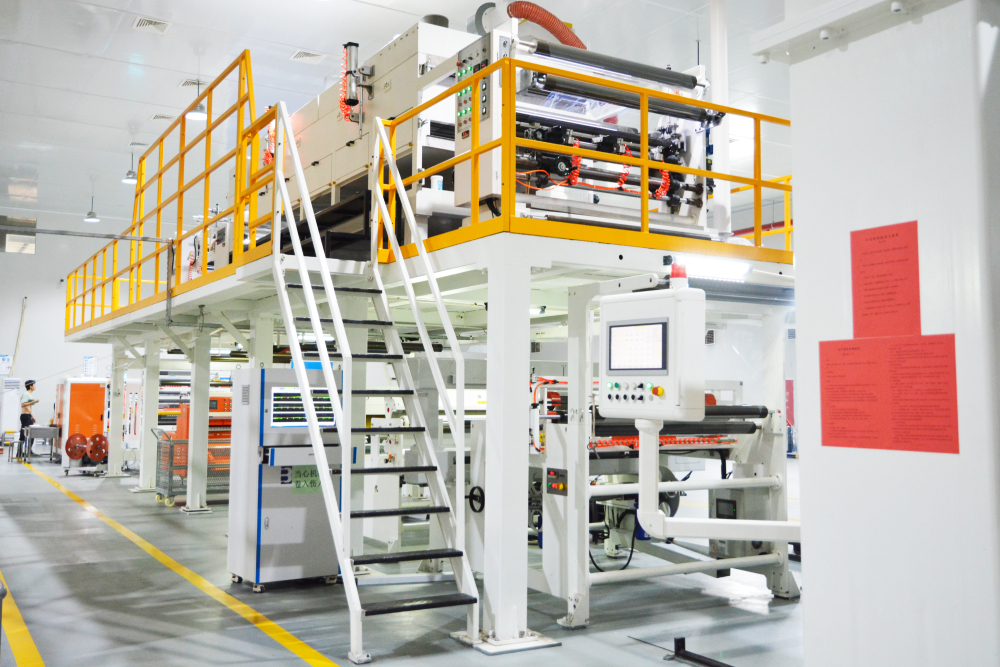
Scenario 1: Printing Substrate in Clean, Dry Indoor Processing
When a sheet roll is unwound into a printing or converting line, the sheet is judged as a substrate rather than as a finished package. The decisive properties are the ones that keep the web stable: flatness, thickness tolerance, width accuracy and a surface that accepts the intended treatment.
What has to be specified first
- Roll geometry compatible with the unwinding system. Roll width is normally determined by the layout and trim allowance, while roll diameter, roll weight and core inner diameter must remain compatible with the feeding equipment. Correct roll dimensions reduce unnecessary trim waste and prevent handling or feeding problems.
- Dimensional consistency. Incoming inspection in sheet manufacturing covers thickness tolerance, width accuracy, transparency, mechanical properties and thermoforming performance — the same variables that determine whether a printing or converting line runs at a stable rate.
- Surface treatment. PET sheet surface treatment options include hard coating, silicon coating, corona treatment, laminated film and coating. A printable surface is a specified property rather than an incidental one, and it is listed among the documented requirements in carded retail blister production.
- Colour and transparency. Colour matching and transparency can be customized, which matters when the sheet also carries part of the visual or printed design.
Because printing and converting are typically dry, indoor processes, low-temperature toughness and moisture barrier performance are usually not the deciding factors. In this scenario, a heavier or more highly modified sheet often adds cost without solving the problem the line actually has, which is normally a stability problem rather than a performance gap.
Scenario 2: Medical Packaging — Protection, Positioning and Documentation
In medical and pharmaceutical packaging, the formed part holds an item in position and protects it. Buyers should first define whether the sheet is used for a protective tray, device packaging, a pharmaceutical blister or another package type, and then confirm material, cleanliness, transparency, forming performance and applicable regulatory requirements.
The parameter set that dominates
- Consistent thickness and forming stability, so that cavity depth and wall distribution repeat across a production run.
- Dimensional stability, because a tray that shifts dimensionally can affect automated handling and sealing.
- Surface cleanliness, defined by the package and the product-contact conditions rather than by a generic label.
- Suitable mechanical performance for the protective and positioning role the part plays.
Material fit follows the same logic. PET sheet has established use in pharmaceutical packaging and in applications where transparency and stiffness are priorities, while HIPS sheet is commonly suitable for many thermoformed trays because of its forming behaviour and impact resistance, and its declared application industries include blister packaging, electronics packaging and industrial thermoforming.
Scenario 3: Retail Blister Packaging — Display and Protection in One Part
Retail blister formats compress two functions into a single formed part. Clarity is not decoration in this scenario; it is part of the selling function, because shelf visibility depends on it. At the same time the same part must survive transport, retail handling and the opening action performed by an end user.
Parameters that carry the most weight
- Clarity and appearance. High transparency supports product visibility, and surface finish options such as glossy or matte allow the pack to be positioned differently on shelf.
- Impact resistance. Carded blisters, clamshells and window patches are exposed to drop and handling loads before and after purchase.
- Sealing behaviour. A wide, stable sealing window supports pack-line speed, while tear and puncture resistance supports the consumer opening experience.
- Hang-tab and card integrity. The formed part and its printed card must stay together through retail handling.
- Printable surface. For carded formats, the sheet surface and the printed card are specified as a pair.
Documented project outcomes illustrate how these parameters behave when they are specified deliberately rather than inherited from another programme. In a toy packaging programme serving a toy brand owner and an OEM toy manufacturer in Germany and the United States, roughly 800 tonnes per year of sheet were supplied over three years in Germany and two years in the United States for action-figure clamshells, carded blisters, window patches and collector display cases. Reported results include drop-test cracking reduced from 3.2% to 0.4%, sealing scrap reduced by 18%, 24 consecutive months of on-time delivery, and an “excellent” rating for shelf visibility in retail audits, with the material specified for high impact strength, transparency, a fast and stable heat-sealing behaviour, and a printable surface.
A second example from personal care shows the same logic under a different constraint set. An oral-care brand owner and a personal-care contract packer in Indonesia and Brazil took approximately 700 tonnes per year over three years in Brazil and two years in Indonesia for toothbrush and oral-care blister cards, travel-kit trays and cosmetic insert trays. Reported results include a 15% increase in pack-line speed after sealing-window optimisation, hang-tab breakage complaints below 0.1%, and the use of FDA food-contact-grade resin for mouth-contact products, with retail-grade clarity, a wide sealing window and tear and puncture resistance as the specified properties.

Parameter Comparison Across the Three Scenarios
| Specification dimension | Printing / converting substrate | Medical packaging | Retail blister packaging |
|---|---|---|---|
| Primary function of the sheet | Carry print and convert at a stable rate in a clean, dry indoor process | Protect and position a device or pharmaceutical item | Display the product and protect it simultaneously |
| Dominant property | Dimensional consistency, flatness, width accuracy | Forming stability, dimensional stability, surface cleanliness | Clarity, impact resistance, sealing behaviour |
| Clarity requirement | Usually secondary to consistency; customized transparency available | Defined by the package type, not a default requirement | High, because shelf visibility is part of the function |
| Impact requirement | Not a primary driver | Moderate, supporting the protective and positioning role | Primary, due to transit and handling exposure |
| Surface / print requirement | Central: hard coating, silicon coating, corona treatment, laminated film or coating; printable surface | Surface must meet the cleanliness requirements of the package | Printable surface commonly required for carded formats; tear and puncture resistance |
| Materials typically considered | PET, PP or HIPS sheet roll depending on line and cost target | PET for pharmaceutical packaging; HIPS for trays and carriers | PET and HIPS both declared for blister packaging |
| Documentation focus | Specification verification, thickness and width inspection, appearance inspection | Package type, product-contact conditions, cleanliness, applicable regulatory requirements | Retail-grade appearance, sealing window, hang-tab performance |
| Frequent failure mode | Curl, uneven feeding, unstable web | Inconsistent forming, insufficient wall distribution in deep draws | Drop cracking, hang-tab breakage, sealing scrap |
The table describes a typical priority ordering rather than an exclusion rule: the same base material can serve more than one scenario once structure, thickness and surface treatment are specified separately.
How PULIXIN Adapts One Sheet Family Across These Uses
PULIXIN (Pulixin Packaging Materials (Shanghai) Co., Ltd.) is a thermoforming plastic sheet roll manufacturer based in Pudong, Shanghai, producing PET, PP and HIPS sheet rolls for rigid packaging and industrial thermoforming. The company was founded in 2009, operates a 20,000 m² production base with 14 co-extrusion production lines, reports annual output exceeding 40,000 tonnes and exports to more than 55 countries.
Range and customization options relevant to the three scenarios
- PET Thermoforming Plastic Sheet Roll: thickness 0.18–1.7 mm, width 250–1400 mm, roll size 50–800 kg per roll, transparent or customized colour, mono-layer or multi-layer structure, vacuum forming or pressure forming. Grade options include APET, rPET, GAG, PETG, food-grade PET, transparent PET, anti-fog, anti-block, anti-scratch and anti-static ESD sheet.
- PP Thermoforming Sheet Roll: thickness 0.3–2 mm, width 300–900 mm, natural, white, black or customized colour, mono-layer or multi-layer, vacuum forming or pressure forming. Options include normal, conductive black, antistatic, PP/PE and high- and low-temperature resistant grades.
- HIPS Thermoforming Sheet Roll: thickness 0.24–2 mm, width 300–900 mm, natural, white, black or customized colour, glossy or matte surface, mono-layer or multi-layer, vacuum forming or pressure forming. Options include normal, conductive black, antistatic, high- and low-temperature resistant and light-blocking grades.
- Custom manufacturing: material, thickness, width, colour, transparency, surface finish, roll size, functional properties, multilayer co-extrusion structures, food-grade solutions, OEM production, and customized packaging and labelling.
Commercial parameters shape how easily a buyer can run three different specifications rather than one. Monthly production capacity is approximately 3,500 tonnes and may vary with the production schedule and product specifications. Delivery time generally ranges from 7 to 15 days depending on material, specifications, order quantity and customization requirements. Minimum order quantity varies by material and specification: standard PET 5 tonnes, standard PP and PS 3 tonnes, with customized products potentially subject to different MOQ requirements.
Quality and certification scope
Production quality control covers raw material inspection, thickness and width control, appearance inspection, in-process quality control and finished product inspection, with third-party testing available when required. Relevant certificates and reports include ISO 9001:2015 (certificate 00226Q03336R101, scope: production of polyester sheets PET), ISO 14001:2015 (00226E02412R101), FSSC 22000 certification (CQM25FSSC00171, scope: production of specific PET sheets for food-contact applications) and a Global Recycled Standard scope certificate (SGC-GRC09372-GRS-2026-04) covering extrusion of processed pre-consumer and post-consumer materials. SGS test reports are available for PET sheet (SHAPH26002960101), PET with aluminium plating (SHAAF25013706405), PP white sheet (SHAPH26002958405), PS black sheet (SHAPH26002958403) and PS natural sheet (SHAPH26002958401); several of these reports are issued against EU RoHS Directive (EU) 2015/863.
These documents define food-contact, recycled-content and restricted-substance scope. They do not, on their own, constitute medical-device certification, and that distinction should be reflected in the specification rather than assumed away.

Technical Note: Forming Window, Draw Depth and Surface Treatment
Once the scenario priority order is set, three technical factors decide whether the chosen sheet actually runs.
- Forming window. PET thermoforming typically occurs between 130 °C and 160 °C (266 °F to 320 °F). A narrow, unstable window shows up first as cycle variation and then as inconsistent wall thickness.
- Draw depth and thickness distribution. For deep-draw parts, nominal sheet thickness alone is not enough. The main concern is how material distributes from the flange and sidewalls to the deepest area during forming. Material formability, initial thickness, draw ratio, mould geometry, corner radius and heating uniformity should be evaluated together, and a specification should be verified through actual thermoforming trials before mass production.
- Surface and structure. Multi-layer co-extrusion allows a bulk layer to carry stiffness and cost while a functional layer carries the surface property the scenario requires, such as printability, sealing behaviour or a defined surface finish. Deep-draw parts formed under vacuum or pressure behave differently from shallow parts even on the same sheet, which is why process and material are specified as a pair.
Scenario Examples and the Food-Packaging Reference Point
| Application | Client profile and market | Volume and duration | Reported outcome |
|---|---|---|---|
| Action-figure clamshells, carded blisters, window patches, collector display cases | Toy brand owner and OEM toy manufacturer, Germany and United States | ≈800 t per year; 3 years (DE), 2 years (US) | Drop-test cracking reduced from 3.2% to 0.4%; sealing scrap −18%; 24 consecutive months of on-time delivery; retail audits rated shelf visibility “excellent” |
| Toothbrush and oral-care blister cards, travel-kit trays, cosmetic insert trays | Oral-care brand owner and personal-care contract packer, Indonesia and Brazil | ≈700 t per year; 3 years (BR), 2 years (ID) | Pack-line speed +15% after sealing-window optimisation; hang-tab breakage complaints <0.1%; FDA food-contact-grade resin used for mouth-contact products |
| Berry and cherry clamshells, salad bowls, fresh-herb and bakery containers | Fresh-produce packer and supermarket own-label supplier, Netherlands and Australia | ≈1,500 t of RPET sheet per year; 4 years (NL), 2 years (AU) | 30–100% PCR content with GRS batch traceability; packaging carbon footprint −28%; EU 10/2011 and FDA migration tests passed at every audit; zero food-safety claims since launch |
Project outcomes are reported by the sheet manufacturer from its own supply records; they describe parameter behaviour in those programmes and are not a guarantee of identical results in a different mould, machine or product design.
Market Context: Documentation Is Becoming a Specification Line Item
Global thermoformed plastic market size reached USD 14.79 billion in 2023, with a projected compound annual growth rate of 4.9% across 2024–2030, according to Grand View Research. The recycled PET segment is tracked separately, with one research publisher projecting the rPET market to reach USD 24.6 billion by 2034 (Dataintelo).
These figures should be read directionally rather than as a single authoritative number. Published estimates vary because researchers measure different things: raw thermoformed sheet, finished thermoformed trays, and the machinery used to make them are not the same market. Buyers building a business case should therefore use the figures as background rather than as a procurement input.
Two regulatory and trade references matter more directly to specification writing. EU Regulation (EU) No 10/2011 governs plastic materials and articles intended to come into contact with food, which is directly relevant to food-contact programmes and explicitly not a substitute for medical packaging requirements. At the customs level, thermoforming plastic materials are classified under HS Code Heading 3920 for non-cellular sheet and 3921 for cellular sheet, which affects how importers compare landed cost between material options.
The practical trend across all three scenarios is the same: what used to be marketing language — recycled content, traceability, restricted substances, cleanliness — is now a specification line item with a document attached. The scenario that changes most is medical, because the gap between “used in a medical context” and “documented for medical use” is where the risk concentrates.
Boundaries and Limitations Worth Writing Into the Specification
- Gauge availability differs by material. PET sheet is produced from 0.18–1.7 mm, PP sheet from 0.3–2 mm and HIPS sheet from 0.24–2 mm. A requirement outside the available range for the chosen material needs a different manufacturing route, not a different supplier.
- MOQ and lead time apply per specification. Standard PET MOQ is 5 tonnes and standard PP/PS MOQ is 3 tonnes, with customized products potentially subject to different minimums; delivery generally ranges from 7 to 15 days. Qualifying three scenario-specific specifications in parallel therefore carries a real workload and inventory cost.
- No single structure serves all three scenarios. Clarity, impact resistance, sealing behaviour and printability do not peak in the same formulation. Multi-layer co-extrusion is the usual way to separate functions, which adds structure and cost to the sheet.
- Functional additives should be added only where the application requires them. Anti-fog is relevant when condensation interferes with package visibility, and anti-static or ESD sheet is relevant when the component or the customer’s electrostatic-control system requires defined surface-resistance properties. Neither is a default upgrade.
- Certificate scopes are specific. The FSSC 22000 scope here covers the production of specific PET sheets for food-contact applications, and the ISO 9001 scope covers PET sheet production. Neither converts a sheet into a medical-grade material.
- Roll dimensions must match the machine. Roll width should be calculated from mould layout plus trim allowance, and roll diameter, roll weight and core size must be compatible with the unwinding system. A correct material supplied on the wrong roll still creates waste and handling problems.
- Market data has definitional limits. Because market size estimates depend on whether sheet, finished trays or machinery are counted, no single published number should determine a capacity or investment decision.
Future Outlook
Three shifts are likely to keep shaping how sheet rolls are specified across these scenarios. First, recycled content and batch traceability are moving from food packaging into wider retail formats, supported by standards-based documentation rather than supplier statements. Second, multi-layer co-extrusion will remain the practical mechanism for separating structural requirements from surface requirements, because it allows one sheet to carry stiffness, printability and sealing performance at the same time. Third, documentation literacy is becoming a buying skill in its own right: the distinction between food-contact, restricted-substance, recycled-content and medical scopes will increasingly determine which supplier can serve which programme, independently of the polymer or the price per kilogramme.
Frequently Asked Questions
1. What information should I provide to select the right plastic sheet for a new thermoforming project?
Sheet should be selected from the finished part backward. Start with the application, material requirements, part dimensions, forming depth, required rigidity, transparency or colour, operating temperature and the thermoforming equipment. A drawing or finished sample is especially useful. The specification should then be matched to the actual forming conditions rather than chosen by thickness or price alone.
2. How do I determine the right thickness and width for thermoforming sheet rolls?
Thickness depends on the material, forming depth, part dimensions, stiffness and the required final thickness distribution. Roll width should match the mould layout, product arrangement, edge trim and the usable width of the thermoforming machine. Thickness variation affects heating, forming consistency, part weight and final wall distribution, so tolerance is as important as the nominal figure. Providing only a target thickness without product and machine information can lead to unnecessary material use or poor forming performance.
3. What should I consider when selecting clear sheet for thermoformed packaging?
Clear sheet should not be selected by transparency alone. Clarity should be considered together with stiffness, forming depth, impact performance, temperature conditions, sealing or printing requirements and the finished package. PET is widely used for high-clarity thermoformed packaging, while the exact PET structure and specification should be selected according to the application rather than by visual appearance only.
4. What should buyers confirm when sourcing plastic sheet for medical or pharmaceutical thermoforming packaging?
Medical and pharmaceutical packaging requirements vary greatly by application. Buyers should first define whether the sheet is used for a protective tray, device packaging, a pharmaceutical blister or another package type, then confirm material, cleanliness, transparency, forming performance and the applicable regulatory requirements. Consistent thickness, forming stability, dimensional stability, surface cleanliness and suitable mechanical performance are commonly important. A general-purpose plastic sheet should not be described as medical grade without supporting documentation, and food-contact compliance cannot replace medical packaging requirements.
5. What should I check when changing thermoforming sheet suppliers?
Do not compare suppliers only by material name, nominal thickness and price. Before switching, compare the actual sheet structure, thickness tolerance, width, roll configuration, colour or transparency, forming behaviour and application requirements, because a specification described as “0.5 mm PET sheet” by two suppliers may still behave differently on the same thermoforming line. Use the currently proven specification as the comparison baseline, confirm equivalent specifications and documentation first, and run a controlled production trial before moving to regular-volume orders. Avoid changing material structure, thickness and process settings at the same time, as this makes the source of any forming difference difficult to identify.
Buyers comparing sheet structures across more than one packaging programme can review the manufacturer’s specification range and certification documents in the PULIXIN product catalogue (PDF).