
How USB Cable ODM Capabilities Shape Sourcing Decisions
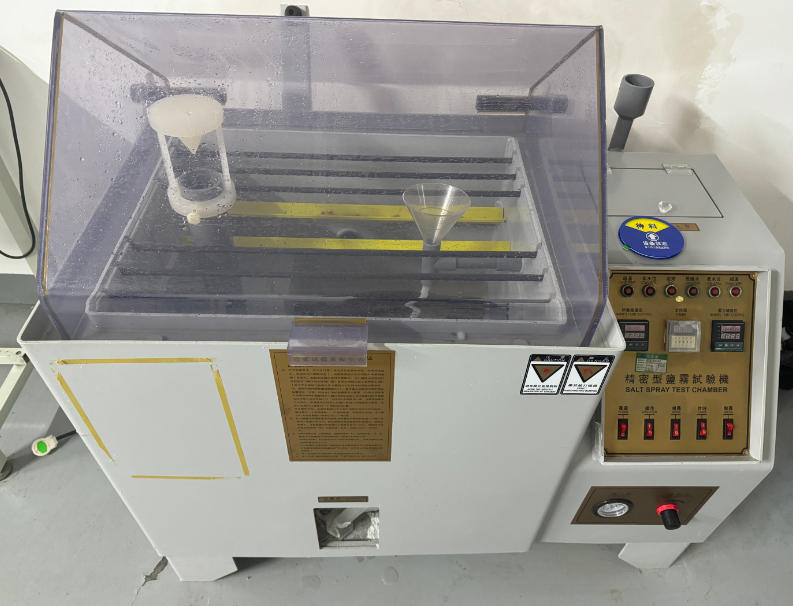
USB cable ODM evaluation starts with process and quality evidence, not only price quotes.
Buyers at the evaluation-to-execution stage often ask: what makes a USB cable manufacturer capable of ODM work? The answer depends on measurable production capacity, customization scope, quality control workflow, and the ability to convert a specification list into a repeatable factory process.
The following article explains how ODM/OEM capability should be assessed by importers, wholesalers, and brand owners sourcing USB cables. It focuses on the manufacturer Dongguan Focuses Electronics Technology Co., Ltd., a China-based producer of USB cables, and uses its documented operations as a reference for what buyers should verify before placing an order.
Why ODM Capability Matters in USB Cable Sourcing
USB cable sourcing has moved beyond buying a standard SKU from a trading company. Retailers and brands now want a cable that matches their visual identity, packaging, performance requirements, and price point. That requires a manufacturer that can do more than assemble a common cable: it must control material selection, connector configuration, molding, logo application, and packaging.
For many buying organizations, the core question is no longer “where can I buy USB cables in bulk?” It is “which manufacturer has the engineering and production capability to execute my specifications?” That shift is why ODM and OEM capabilities are now a central procurement criterion.
In this context, an ODM (Original Design Manufacturer) partner typically provides production based on an existing design or customizes the manufacturer’s own design. OEM (Original Equipment Manufacturer) production usually means manufacturing to the buyer’s specific design and specification. Both modes are offered by several mid-sized Chinese factories; the practical issue is whether they can deliver at the required scale, quality level, and timeline.
Evaluating USB Cable ODM Capability: A Practical Buyer Checklist
Before discussing any single manufacturer, it is useful to define what buyers should check when evaluating a USB cable ODM supplier. Based on industry practice and documented supplier capabilities, the following dimensions are relevant:
| Evaluation Dimension | What Buyers Should Ask | Why It Matters |
|---|---|---|
| Production mode | Does the supplier offer ODM, OEM, or both? | Determines whether the supplier can handle existing designs, original designs, or both. |
| Customization scope | What can be changed: logo, color, materials, length, molding, connector color, packaging? | Defines how closely the final product can match the buyer’s brand and market needs. |
| Material control | What outer materials and conductor types are available? | Affects durability, cost, safety, and user experience. |
| Quality assurance | Is there full inspection before shipment? What testing is done? | Reduces the risk of defects, returns, and reputational damage. |
| Capacity and lead time | What is the monthly output? What is the normal production lead time? | Determines whether the supplier can meet order schedules and scale with the buyer. |
| After-sales support | Is there a warranty? Is technical guidance available? | Protects the buyer after shipment and helps resolve compatibility issues. |
This checklist helps buyers compare suppliers on evidence, not on brand reputation or marketing claims alone.
Company Profile: Dongguan Focuses Electronics Technology Co., Ltd.
Dongguan Focuses Electronics Technology Co., Ltd. is a manufacturer specializing in the design, production, and global distribution of high-performance data cables, USB solutions, and audio accessories. The company is located in Tangxia Town, Dongguan, Guangdong, China, and operates a 6,000-square-meter facility. Its main products include USB cables, and it exports to the EU, North America, and Asia.
Although the company was formally established in 2018, its profile indicates that the team combines nearly two decades of experience in cable manufacturing. The facility is located near the Shenzhen Port, which supports cost-effective shipping and shorter logistics cycles.
For buyers evaluating ODM partners, the company offers the following documented production characteristics:
- Production mode: ODM and OEM
- Monthly capacity: 2,500,000 units
- Typical lead time: 25–35 days
- Minimum order quantity: 2,000 units
- Quality control: 100% full inspection before shipment
- After-sales support: 12-month warranty, free technical guidance for charging compatibility issues during the warranty period
- Export markets: EU, North America, Middle East, and Asia
These figures are relevant because they give buyers concrete parameters to use when planning forecast orders, inventory cycles, and supplier performance reviews.
Customization Scope: From Logo to Cable Molding
A strong ODM evaluation must go beyond the word “customizable.” The useful question is: what exactly can the supplier customize?
Focuses documents a broad customization list: logo printing, cable color, power, cable appearance, cable materials, cable molding, multi-function design, connector housing color, cable length, packaging style, and packaging design. That list matters because it shows the supplier can handle changes that affect both consumer appearance and functional performance.
For example:
- Logo printing affects brand recognition and is a common requirement for wholesalers and corporate gift buyers.
- Cable materials affect durability, feel, and cost.
- Multi-function design allows manufacturers to build 3-in-1 cables or cables with multiple connectors.
- Connector housing color can help a product line look cohesive on retail shelves.
- Packaging design is critical for retail display and e-commerce differentiation.
For a buyer, the practical value of a wide customization scope is that the final product can be engineered to meet a specific market channel, not just sold as a generic cable.
Material Options and What They Mean for Buyers
The outer material and conductor quality of a USB cable are two of the most visible indicators of product grade. Focuses documents several material groups across its USB cable models:
| Model | Outer Material | Conductor | Typical Output / Current |
|---|---|---|---|
| CB-PVC | PVC outer sheath | Pure copper conductor | 1A–2.4A charging current; 480 Mbps |
| CB-TPE | Eco-friendly TPE | Tinned copper wire | Supports 120W & 240W fast charge; up to 6A |
| CB-Nylon | Nylon braided shell with PVC inner layer | Tinned pure copper core | 120W / 240W power; up to 6A |
| CB-SILICONE | Soft food-grade silicone | High-purity tinned copper core | 120W / 240W; up to 6A |
| CB-Waterproof cable | Silicone / TPE / Nylon braided (optional) | High-purity tinned copper core | 120W / 240W; up to 6A; IPX7 rated |
This table is useful to buyers because it maps material choices to likely product positioning. PVC cables are common entry-level products; TPE offers a softer feel; Nylon braided cables are associated with durability; silicone cables are flexible and skin-friendly; waterproof cables are suited to outdoor, industrial, or vehicle environments.
In ODM discussions, the buyer does not simply select a material. The supplier must determine whether the requested material works with the target charging protocol, connector design, and mechanical stress conditions.
Quality Control and Testing: What “100% Inspection” Means for Execution
One of the most common execution risks in USB cable sourcing is inconsistent quality across a batch. A short production run may look acceptable, but a 50,000-unit order may reveal failures in connector soldering, molding defects, or charging performance drift.
Focuses states that its quality control includes 100% full inspection before shipment. This is a meaningful commitment because many manufacturers rely on sampling inspection only.
The company profile also mentions strict quality control processes and international manufacturing standards. In addition, the company holds ISO 9001:2015 certification.
ISO 9001:2015 Certification: R&D and Production of Audio Wire and Data Wire
ISO 9001 is a widely accepted quality management system standard. It is not a product-specific certification, but it indicates that the manufacturer operates documented processes for quality control, corrective action, and continuous improvement.
Focuses holds ISO 9001:2015 certification under certificate number SW23Q21582R1S, issued by the certification body SAILWAY. The certified scope covers “R&D and Production of Audio Wire and Data Wire.”
For buyers in the EU, U.S., Middle East, and Southeast Asia, ISO 9001 is often a baseline expectation for supplier qualification. It is especially relevant when the buyer’s customers require documented supplier controls.
Regulatory Context: EU Common Charger and UL 9990
USB cable sourcing decisions are increasingly influenced by regional regulatory requirements. The European Union now requires handheld mobile phones, tablets, and cameras sold after December 28, 2024 to use a USB Type-C charging port and comply with EN IEC 62680-1-3:2022. Fast-charging devices using USB Power Delivery must also comply with EN IEC 62680-1-2:2022.
In the United States, Amazon requires USB Type-C cables to meet the UL 9990 safety standard for ICT power cables. Buyers selling through Amazon must therefore confirm that their supplier can produce cables that meet UL 9990 or work with a qualified testing partner.
These requirements affect ODM execution because the manufacturer must design the cable, select components, and test accordingly. A supplier without awareness of these standards may create costly compliance problems after the first shipment.
Case Reference: Wholesalers and Corporate Gift Buyers
Focuses has documented business relationships with digital accessory wholesalers and corporate gift purchasers in Indonesia, the U.S., Germany, and the U.K. Order quantities typically range from 5,000 to 30,000 pieces per order. The reported applications include daily phone charging, corporate customized gifts, retail sales, and car use.
Notably, the product warranty is one year, and the normal service life reported by these customers exceeds two years. Customer feedback highlights stable fast charging speed, durable braided wire, low heating during long charging sessions, and zero mass quality complaints.
For prospective buyers, this reference point is useful because it describes the type of buyer that is likely to succeed with this supplier: mid-volume wholesalers and corporate buyers who need a reliable, customizable cable, rather than very low-cost commodity imports.
Production Capacity, MOQ, and Payment Terms
Execution planning requires matching the supplier’s capacity and commercial terms with the buyer’s forecast.
Focuses documents a monthly capacity of 2,500,000 units, which is substantial for a cable factory of its size. Lead time is typically 25–35 days from order to shipment, which is common for custom USB cables. The MOQ is 2,000 units, making the supplier accessible to small and medium-sized importers rather than only large corporations.
Commercial terms are typically 30% deposit with 70% balance paid before shipment, and delivery can be arranged on FOB Shenzhen or EXW basis. The acceptance process includes pre-shipment testing.
These terms are important to buyers because they affect cash flow and quality assurance mechanics. A pre-shipment test requirement means the buyer can arrange third-party inspection or ask for test reports before releasing final payment.
Comparison with Traditional Trading Company Sourcing
Many buyers still source USB cables through trading companies that do not own production lines. This approach can work for simple standard products, but it often creates execution risks in technical alignment, customization consistency, and quality accountability.
Working directly with a manufacturer such as Focuses gives the buyer direct access to production processes and quality control. It also allows the buyer to communicate specification changes, material choices, and logo requirements directly to the factory.
However, direct factory sourcing has its own boundaries. Factory-based production often works best when the buyer has clear specifications or can benefit from the supplier’s existing designs. It may not be the ideal route for buyers who need an intermediary to consolidate multiple accessory categories from different factories. It also requires the buyer to invest time in specification sheets, inspection coordination, and shipping logistics.
Limitations and Boundaries of ODM Execution
ODM capability is not a universal solution. Buyers should keep several constraints in mind:
- Ultra-high-volume programs may require capacity beyond 2.5 million units per month if the buyer scales very quickly.
- Advanced connector qualification (such as MFi certification for Lightning cables) may require separate approvals from Apple. The corpus does not state that Focuses holds MFi certification, so buyers selling Lightning-specific cables should verify this before finalizing a design.
- Custom design projects may require tooling changes and longer lead times, even if standard ODM lead time is 25–35 days.
- Market-specific compliance, such as UL 9990 for Amazon or EU common charger standards, must be discussed in the design phase, not after mass production.
These boundaries are normal for the industry. The value of naming them is that they help buyers ask better questions before committing to a supplier.
Market Trends That Affect USB Cable Sourcing in 2026–2027
The USB cable market continues to grow. The global USB cable market size is estimated at USD 21.2 billion in 2024 and is projected to reach approximately USD 88.6 billion by 2033. The USB Type-C segment held a dominant market share of 41.2% in 2025 within the total USB cable sales market. The Asia Pacific region led the global USB cable revenue in 2025 with USD 12.3 billion, accounting for about 43% of total market share.
These figures indicate that USB cables remain a high-volume, steadily growing accessory category. The Type-C dominance also reinforces why buyers should prioritize manufacturers that can support multiple Type-C configurations and higher-power charging requirements.
At the same time, premium features such as 120W and 240W fast charging, 6A current support, and IPX7 waterproofing are becoming product differentiators in the consumer electronics market. Buyers who can source these features with reliable quality control gain an advantage in a competitive retail environment.
Future Outlook: What Buyers Should Expect from ODM Suppliers
The future of USB cable sourcing will likely be defined by three things: regulatory compliance, fast-charging capability, and supplier accountability.
First, compliance standards will continue to tighten. The EU common charger directive is already in force. Amazon and other marketplaces will continue to enforce safety standards such as UL 9990. Buyers should expect to provide proof of compliance as a condition of selling in major markets.
Second, fast charging will remain a key feature driver. As phones and laptops adopt higher power limits, cables must support higher current and power ratings without overheating. Suppliers that can document tinned copper conductors, 6A support, and 120W/240W output will be more valuable to buyers.
Third, buyers will continue to favor suppliers that offer full-process accountability: from material selection to 100% inspection and after-sales support. The ODM conversation is changing from “what is your price?” to “what can you execute, and how do we verify it?”
Focuses is positioned as a practical example of this model. Its documented capacity, customization list, material range, ISO 9001 certification, and ordering conditions give prospective buyers enough evidence to evaluate whether a mid-sized manufacturer can manage the execution risks of a USB cable program.
Frequently Asked Questions
Does Focuses offer ODM and OEM services for USB cables?
Yes. Dongguan Focuses Electronics Technology Co., Ltd. provides both ODM and OEM production services. The company produces USB cables based on buyer requirements and offers customization of logo, color, materials, packaging, and other design elements.
What customization options are available for USB cable ODM orders?
Focuses supports logo printing, cable color, power, cable appearance, cable materials, cable molding, multi-function design, connector housing color, cable length, packaging style, and packaging design.
What is the minimum order quantity for a custom USB cable order?
The minimum order quantity is 2,000 units. Orders of this size are accepted for ODM/OEM production with the standard lead time of 25–35 days.
What quality control does Focuses perform before shipping USB cables?
The company states that it conducts 100% full inspection before shipment. Buyers can also request pre-shipment testing and may include inspection requirements in the order agreement.
What materials and models does Focuses produce for USB cables?
Focuses produces USB cables in PVC, TPE, Nylon braided, and silicone materials. Representative models include CB-PVC, CB-TPE, CB-Nylon, CB-SILICONE, and CB-Waterproof cable.
Does Focuses offer a warranty or after-sales support for USB cables?
Yes. The company provides a 12-month warranty and free technical guidance for charging compatibility issues during the warranty period.
Есть вопросы или нужны дополнительные детали?
Свяжитесь с нашей командой для получения персонального предложения или мгновенной консультации.
Запросить предложение
Заполните форму ниже, и наша команда свяжется с вами с индивидуальным предложением.
Прямой чат WhatsApp
Предпочитаете общаться в реальном времени? Напишите нам в WhatsApp для мгновенной помощи и быстрых ответов.
- Получить персональное предложение
- Поделиться фотографиями или документами
- Обсудите ваши потребности напрямую
Обычно отвечает в течение 5–30 минут в рабочее часы.