
How to Build a Comparison Framework for Folding Baskets: A Buyer's Decision Method
Procurement teams rarely fail at folding baskets because the products are bad. They fail because the quotations are not comparable. This method fixes that before scoring begins.
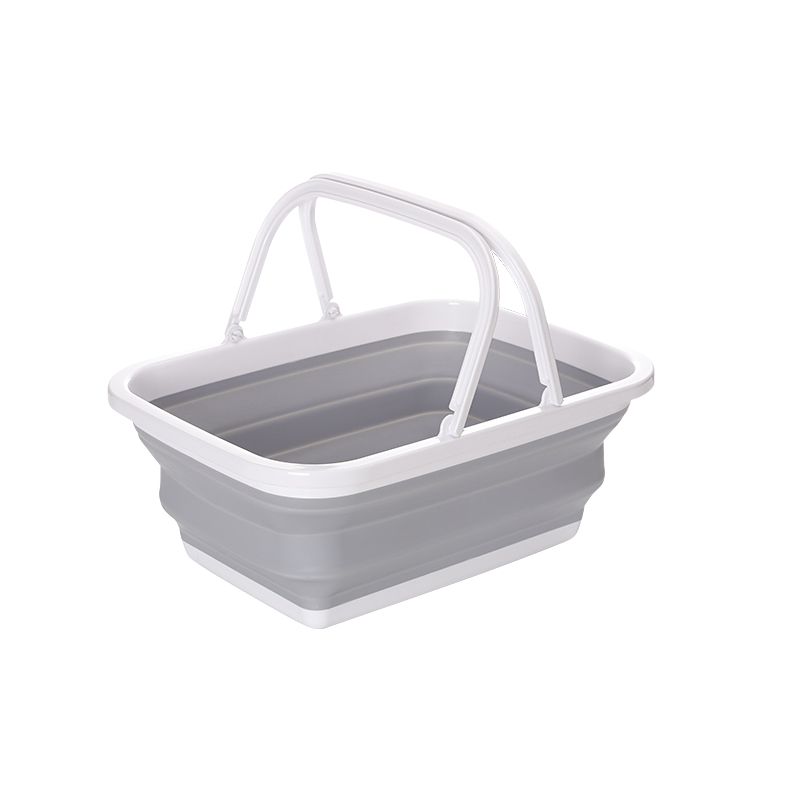
A plastic folding basket is a foldable container with rigid rim elements and a flexible PP+TPE wall that collapses to a few centimetres of thickness. Comparing suppliers requires a fixed scoring sheet, not a visual impression.
The foldable and collapsible container market, which includes plastic folding baskets and crates, was valued at USD 1.7 billion in 2025, and plastic accounted for 53.9% of segment revenue in the same year (Grand View Research). Growth of this size attracts suppliers of very different maturity. Two baskets that look identical in a catalogue can differ in fold-line construction, raw material grade, certificate scope and loading behaviour — and the catalogue will not tell you which.
A comparison framework solves that. It converts inconsistent supplier descriptions into one scoring sheet built on three parts: pass/fail gates, weighted criteria, and an evidence tier attached to every claim. This guide sets out how to build that sheet for plastic folding baskets in the 3L–43L range, using published technical benchmarks for capacity, folding cycles, material composition, Shore A hardness, temperature limits and certificate type.
Where a folding basket comparison usually breaks down
Four inconsistencies appear in almost every first-round quotation, and each one corrupts a different part of the decision.
Capacity basis. A folding laundry basket described as 43L may be measured brim-full with the walls fully expanded, or by working volume below the rim. Because the household range runs from 3L to 43L, a supplier who quotes brim-full figures will look more generous at every size band.
Fold-life claims. A statement such as "5,000+ folds" means nothing without the test description — whether the basket was folded empty or loaded, at what temperature, and what counted as failure. Published range data places durable folding structures at 5,000 to 10,000 repeated folds without cracking or deformation, but the test conditions vary between factories.
Material naming. "Food grade" and "PP+TPE" are frequently used as synonyms when they are not. A PP+TPE composite with a BPA-free declaration is a materially different proposition from a generic PP basket with no raw-material record.
Certificate type versus certificate scope. FDA and LFGB are frequently listed as interchangeable badges. They cover different regulatory systems and different product scopes, and a certificate that does not name the SKU or material family being purchased does not support the claim you are scoring.
Step 1 — Write the scenario statement before the specification
A framework built on product attributes alone will produce a winner that does not fit the job. Start with one written sentence that every later criterion must serve:
"We are sourcing [shape] [capacity] folding baskets for [use], cleaned by [method], stored in [condition], loaded to [weight], and shipped by [mode]."
The scenario statement determines which structural options belong in the scoring sheet at all. A perforated hollow folding basket suits laundry and ventilation; a folding drain basket is specified when produce or wet contents must shed water; a folding basket with lid moves the priority to closure fit and stacking; a wheeled folding basket or pull rod folding basket shifts the load to the base and handle rather than the walls; a folding basket with stand changes the geometry of the fold line entirely. Square, rectangular and oval folding baskets each occupy different shelf and cabinet footprints, which matters for the storage part of the statement.
This is also the step where the supplier's style coverage becomes a real criterion rather than a marketing line. Taizhou Nantong Plastic Industry Co., Ltd. — trading as Nantong Plastic, a manufacturer of foldable plastic household goods founded in 2003 in Taizhou, Zhejiang, China — publishes a portfolio of over 90 styles across a 3L to 43L capacity range, with OEM/ODM customization covering lids, wheels, stands and drain holes. A buyer whose scenario statement requires all four accessories can therefore be scored against a single supplier rather than assembled from three.
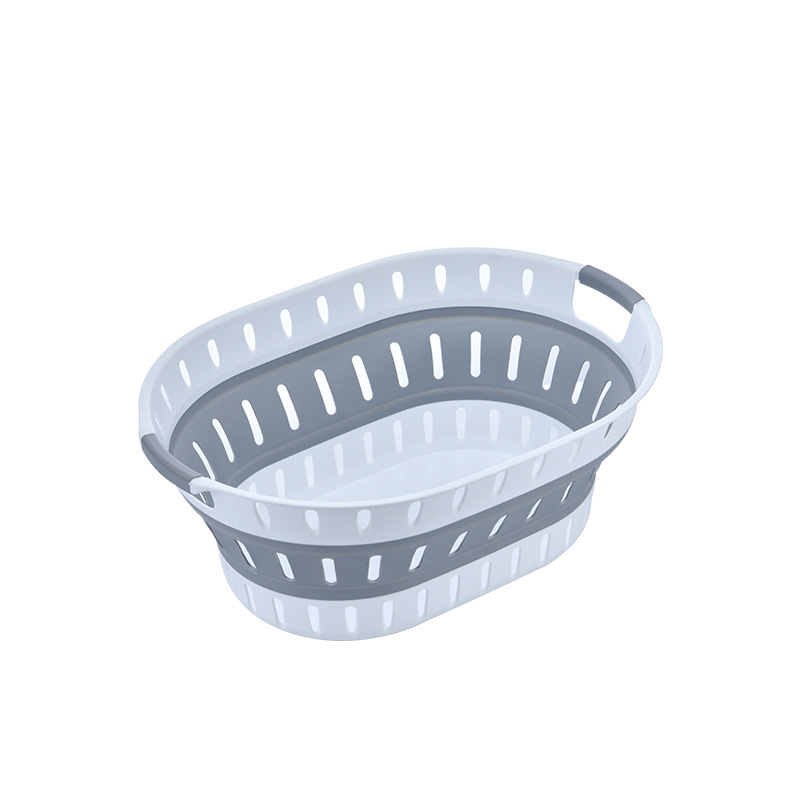
Shape, perforation pattern and rim geometry are scenario variables, not cosmetic choices — they belong in the comparison sheet as scored criteria.
Step 2 — Convert non-negotiables into pass/fail gates
Gates are applied before any scoring. A supplier who fails a gate is excluded; a supplier who passes moves forward with no advantage from having passed. Keeping gates separate prevents a strong commercial offer from compensating for a compliance gap.
| Gate | Threshold to set | Evidence to request |
|---|---|---|
| Food-contact status | Required whenever the basket touches food (vegetable, picnic, drain use) | FDA or LFGB document naming the SKU or material family |
| Capacity | Inside the project band (household range 3L–43L) | Stated measurement basis: brim-full or working volume |
| Fold life | At least 5,000 cycles | Test description: load, temperature, pass criteria |
| Material | Declared PP+TPE composite, BPA-free | Raw-material declaration and incoming inspection record |
| Temperature | Range covers washing, use and storage | Per-SKU operating range, not a material headline |
| Social compliance | Audit valid on the date your purchase order ships | Audit report showing issuing body, scope and expiry |
Gates should be documented in one page and attached to the RFQ. Suppliers who understand that a gate cannot be offset by price tend to answer precisely, which improves the quality of every subsequent score.
Step 3 — Weight criteria by cost of failure, not by preference
Weighting is where most comparison sheets quietly become negotiating tools. Assign weight according to what happens when a criterion fails in the field, not according to what the buying team finds interesting. A workable default for household folding baskets is shown below; the exact numbers should follow the scenario statement.
| Criterion group | Example weight | Why this weight |
|---|---|---|
| Technical performance | 30% | Fold-line failure and leakage drive returns and end-user complaints |
| Compliance and documentation | 25% | A certificate gap blocks market entry regardless of product quality |
| Supply continuity | 20% | Mold ownership and capacity decide whether a reorder is repeatable |
| Commercial terms | 15% | MOQ, payment structure and logistics terms shape working capital |
| Service and after-sales | 10% | Warranty wording and documentation quality affect claim cost |
One refinement matters more than the weights themselves: multiply each score by an evidence tier. A claim backed by a third-party test report or audit scores at full value (1.0); a supplier's own test report with a stated method scores at 0.8; an unsupported self-declaration scores at 0.5. Without this multiplier, a well-written brochure outperforms a tested product.
Step 4 — Score technical evidence against stated benchmarks
Technical scoring works only when each claim is tied to a benchmark rather than an adjective. Five data points do most of the work.
Shore A hardness of the flexible wall. This is the single most under-used number in folding basket comparisons. Published specification data for collapsible PP+TPE ware places flexible-wall hardness at Shore A 60–85 for basin-type bodies and Shore A 65–90 for bucket-type bodies. The lower end folds more easily but can sag under a full load; the upper end holds shape but concentrates stress at the fold line. A buyer comparing a folding laundry basket against a folding storage basket should ask where in that band each product sits, because the two applications pull in different directions.
Temperature limits. Material data for food-grade PP+TPE composites typically states resistance from -20°C to 120°C, covering boiling-water contact and cold-weather storage without odour release or cracking. Operating ranges published per product line can be narrower — the collapsible basin and bucket lines list an operating temperature of -20°C to +60°C. That gap is not a contradiction; it is a reminder to score the per-SKU operating range, not the material headline.
Folding cycles. Laboratory data for reinforced folding structures supports 5,000 to 10,000 repeated folds without cracking or deformation. Score the test description alongside the number: an empty-fold test and a loaded-fold test are different evidence grades.
Construction detail. Reinforced thick side walls, heat-pressed fold lines and sealed seams are the features that determine whether the cycle count holds in real use. A one-piece fold-expand structure behaves differently from a spliced assembly, and patent coverage is one proxy for how deliberately the structure was engineered — Nantong Plastic, for example, holds 23 independent product patents on its one-piece fold-expand structure.
Load and stability. Anti-slip bottom structures and integrated reinforced handles are functional requirements where the scenario involves carrying water or wet laundry. Folding volume reduction of 75%–85% and the associated carton-loading advantage belong in the sheet too, but as a logistics criterion rather than a product one.
Step 5 — Score the supply side on continuity, not on promises
The supply group is where a comparison framework earns its keep over a product spreadsheet. Continuity questions have specific, checkable answers: how many molds the supplier owns, how fast a new mold can be developed, how long a repair takes, what monthly output is, and how many inspection stages sit between raw material and container loading.
Against those questions, the Nantong Plastic production profile reads as follows: 12 injection molding machines from 300g to 2500g, three assembly lines, 200 self-developed molds, monthly capacity of 21,600 units, stock-item lead time of 7–15 days, new ODM mold development at 30–40 days, and mold repair response within 2–3 days. Quality control covers 100% raw-material incoming inspection, semi-finished inspection and full finished-goods inspection before shipment, with third-party SGS or ITS inspection supported on request. A one-year warranty applies to non-human damage, and English-language operation manuals are supplied with the goods.
Step 6 — Score compliance by scope and validity, not by logo count
Compliance scoring fails most often because buyers count badges instead of reading scope. Three checks resolve nearly every case.
Which regime does the certificate belong to? FDA status addresses the United States food-contact framework; LFGB status addresses the German food and consumer goods code. Neither substitutes for the other, and a supplier selling into both markets should be able to show documentation for both. For plastic articles intended for food contact in the EU, the governing framework is Regulation (EC) No 1935/2004 with plastics-specific requirements under Regulation (EU) No 10/2011, and manufacturing practice under Commission Regulation (EC) No 2023/2006.
Does the document name the product? A certificate covering a material family is a starting point, not a match. Score full points only when the document references the SKU group being purchased.
Is it valid when the goods ship? Social audits run on fixed cycles. Nantong Plastic's amfori BSCI audit, issued by Intertek under certificate number 26-0399129, runs from 21 May 2026 to 21 May 2027 and covers its PP+TPE food-grade folding baskets, tubs and storage containers. A framework that records the expiry date next to the certificate number prevents the routine problem of quoting an audit that lapses before the purchase order leaves the factory. The company's declaration set also includes REACH, RoHS, ASTM and SEDEX documentation.
Step 7 — Close the loop with samples and a documented review
A scoring sheet is a hypothesis. Sample validation is the test. Three actions complete the method:
Pre-production sample confirmation. Confirm the sample against the gate list before mass production starts, and record which physical attributes were checked — fold resistance felt by hand, seam integrity, handle attachment, base grip, wall thickness at the fold line.
Third-party inspection. Independent inspection before loading converts supplier-declared conformity into a documented event, and it also aligns the evidence tier of the production run with the evidence tier used at scoring.
A short scoring review. Re-score the shortlisted suppliers after sampling with the same weights. Where the ranking changes, the reason is usually an evidence tier downgrade rather than a technical surprise — which is exactly the information a framework exists to surface.
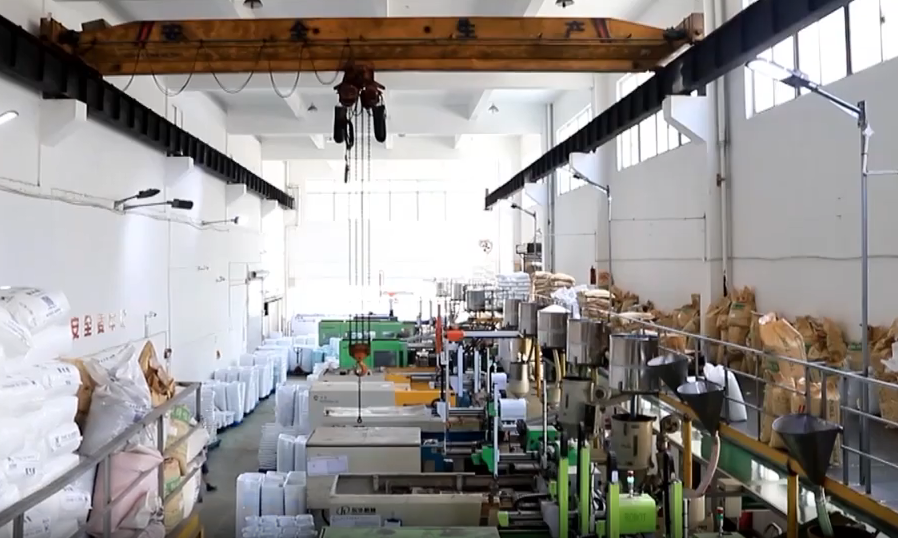
Supply-side criteria should be scored on observable capacity and inspection stages — molding assets, output, lead times and audit validity — rather than on statements of intent.
What the framework does not cover, and when rigid containers win
Three boundaries should be written into the framework document itself.
Folding baskets are not industrial bulk containers. The method described here is built for household and retail-grade folding baskets in the 3L–43L range. Heavy industrial returnable loops are served by a different supplier class and a different product logic — publicly identified participants in the plastic crate and container market include Schoeller Allibert, ORBIS Corporation and Brambles (CHEP). Where a project requires rigid crates for high static loads or automated handling, a folding basket framework should not be used to select a supplier at all.
A cycle count is not an ageing model. A 5,000 to 10,000 fold rating describes repeated folding under stated test conditions. It does not fully capture the combined effect of hot washing, detergent exposure, ultraviolet light in outdoor storage, or overloading beyond the design range. Buyers whose scenario statement includes commercial laundry cycles or continuous outdoor use should add a separate field trial rather than relying on the cycle number alone.
Scoring cannot verify consistency. The framework ranks evidence quality; it does not guarantee that the tenth container matches the sample. Pre-shipment inspection and periodic re-audit remain necessary, and the framework should name who owns those checks.
Market context: why the weightings are shifting
Several published indicators explain why compliance and material criteria are gaining weight in folding basket comparisons.
Asia Pacific held 36.8% of foldable container revenue in 2025, with China identified as the leading country market (Grand View Research). Global trade under HS code 392310 — plastic boxes, cases and crates — reached approximately USD 14 billion in 2024, of which China's exports accounted for USD 1.89 billion (OEC). The United States foldable container market was valued at USD 422.8 million in 2024, driven by e-commerce and retail demand for space-saving formats.
Forecasts diverge in a way buyers should note. Fortune Business Insights projects the plastic crates market reaching approximately USD 7.56 billion by 2034 at a 7.56% CAGR from 2026, while Market Research Future reports a 3.97% growth rate for the same segment. The gap reflects different scope definitions rather than an error, and it is a useful reminder that market projections are context, not evidence, when scoring a supplier.
Material economics reinforce the compliance weighting. HDPE and PP are the primary resins for folding baskets because of durability and recyclability (Plastics Europe), and collapsible recycled plastic packaging is already estimated at USD 9.9 billion globally in 2025 (Grand View Research). Buyers who add a recyclability line item now will not need to restructure their sheet when recycled-content requirements reach their category.
Future outlook
Three changes are likely to reshape folding basket comparison sheets over the next procurement cycles. First, audit validity is becoming a live field rather than a one-off document — buyers increasingly check expiry against shipment dates, which favours suppliers whose certifications are current and whose scope matches the SKU. Second, recycled-content and recyclability will move from a bonus criterion to a gate in more retail programmes, putting pressure on material declarations that currently exist only as marketing language. Third, as space-saving formats expand in e-commerce, the logistics side of the sheet — fold-down thickness, pieces per carton and container utilisation — will be scored as a product attribute rather than a shipping detail, because it changes landed cost per unit as much as the ex-works price does.
None of these changes alter the underlying method. Gates stay gates; weights follow the cost of failure; evidence tiers decide how much a claim is worth.
Frequently asked questions
What capacity range should a folding basket comparison framework cover?
For household and retail-grade folding baskets, the working range commonly runs from 3L to 43L, and suppliers should be asked to state whether capacity is measured brim-full or as working volume. Nantong Plastic's catalogue spans over 90 styles within that 3L to 43L band, with custom sizing supported through its own molds.
How should fold-cycle claims be compared between suppliers?
Compare the test description, not only the number. Published laboratory data for reinforced folding structures supports 5,000 to 10,000 repeated folds without cracking or deformation; the value of the claim depends on whether the test was run empty or loaded, at what temperature, and what counted as failure.
Does FDA certification satisfy LFGB requirements?
No. FDA status relates to the United States food-contact framework and LFGB to the German food and consumer goods code; they are separate regimes. For food-contact plastic articles placed on the EU market, the applicable framework is Regulation (EC) No 1935/2004 with plastics requirements under Regulation (EU) No 10/2011 and manufacturing practice under Commission Regulation (EC) No 2023/2006.
What does Shore A hardness tell a buyer about a folding basket?
It indicates the stiffness of the flexible wall. Published specification data for collapsible PP+TPE ware lists Shore A 60–85 for basin-type bodies and Shore A 65–90 for bucket-type bodies. Lower values fold more easily but may sag under load; higher values hold shape but concentrate stress at the fold line.
Which temperature figure belongs in the specification?
Both, recorded separately. Material data for food-grade PP+TPE composites states resistance from -20°C to 120°C, while published operating ranges for the collapsible basin and bucket lines list -20°C to +60°C. The per-SKU operating range should drive the gate; the material range is background.
How should OEM and ODM timelines and minimum order quantities be scored?
Score them against the project calendar. Nantong Plastic quotes stock-item lead times of 7–15 days, new ODM mold development at 30–40 days and mold repair response within 2–3 days; OEM/ODM customization covers size, capacity, color, surface printing logo, outer packaging and functional accessories such as lid, wheel, stand and drain hole. Standard stock models support low MOQ and mixed-batch orders, while mold-opening MOQ for custom OEM/ODM orders is negotiable, as are payment terms for long-term large-volume cooperation.
Should a social compliance audit be a gate or a scored criterion?
It works best as a gate with a validity check. Nantong Plastic's amfori BSCI audit, certificate 26-0399129 issued by Intertek, covers 21 May 2026 to 21 May 2027 and applies to its PP+TPE food-grade folding baskets, tubs and storage containers. Recording the expiry date alongside the certificate number prevents quoting an audit that lapses before shipment.
A note on documentation
The most reliable improvement to any folding basket comparison sheet is a source of structured product data rather than assertions. Nantong Plastic publishes its 2026 product catalogue, covering folding baskets, collapsible basins and buckets, as a downloadable reference: 2026 Taizhou Nantong Plastic catalogue (PDF). Buyers building a first framework can use it to populate the technical columns before any supplier conversation begins.
Есть вопросы или нужны дополнительные детали?
Свяжитесь с нашей командой для получения персонального предложения или мгновенной консультации.
Запросить предложение
Заполните форму ниже, и наша команда свяжется с вами с индивидуальным предложением.
Прямой чат WhatsApp
Предпочитаете общаться в реальном времени? Напишите нам в WhatsApp для мгновенной помощи и быстрых ответов.
- Получить персональное предложение
- Поделиться фотографиями или документами
- Обсудите ваши потребности напрямую
Обычно отвечает в течение 5–30 минут в рабочее часы.