
How to Build a Rare Earth Compound Comparison Matrix
A repeatable method for comparing rare earth compounds on chemical identity, product form, application relevance and compliance status — so that a buyer compares substances rather than product names.
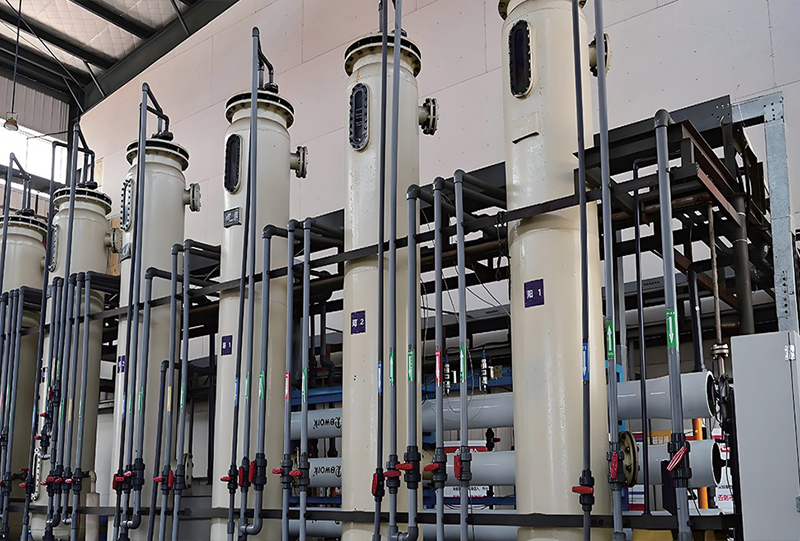
A rare earth compound comparison matrix is a maintained record that captures the chemical identity, product form, application relevance, documentation status and commercial basis of each candidate material inside one fixed field structure. It does not rank compounds, grades or suppliers. Its function is narrower and more useful: it makes differences visible before a buyer commits to a sample, a specification, a purchase order or a multi-year supply agreement.
The need arises because rare earth compounds are unusually easy to mis-compare. A product name that appears identical across two quotations can describe materials that differ in hydrate state, rare-earth content, impurity profile, grade designation and regulatory treatment. Two quotations read line by line may therefore be describing two different substances at two different cost bases. A matrix replaces line-by-line quotation reading with a field set that every candidate must complete, so that the comparison happens on identical terms.
Why a product catalogue is not a comparison matrix
A catalogue answers “what can be supplied.” A matrix answers “what exactly is this material, and is it the same thing as the alternative?” The two documents serve different decisions and should not be merged.
Four failure modes recur when buyers compare rare earth compounds without a fixed structure.
- Name-level matching. Lanthanum carbonate, lanthanum acetate and lanthanum fluoride are all “lanthanum products,” but they differ in anion, thermal behaviour, solubility and end-use suitability. A matrix forces the anion and the formula basis into the first column, where a mismatch becomes immediately visible.
- Hydrate blindness. Many rare earth salts are supplied as hydrates. If the hydrate state is not recorded, the molecular weight in the row is ambiguous and any molar calculation built on it is unreliable.
- Grade conflation. Catalyst-grade cerium oxide, optical-grade high-purity lanthanum oxide and metallurgical-grade rare earth fluoride are commercial categories with different specification expectations. Treating the grade name as a marketing label rather than a specification anchor removes the buyer’s main filter.
- Price without a basis. A price per kilogram is meaningless unless it states the purity basis, the contained rare-earth oxide content, the packaging unit, the delivery term and the date. Matrix cells that hold prices must therefore carry their basis in adjacent cells.
The six blocks every rare earth compound matrix needs
A workable matrix is built from six blocks. Every candidate row must complete all six; a row that cannot complete a block is left open rather than filled with an assumption. The blocks below are ordered by decision sequence, not by importance.
| Block | Fields to record | Why the block changes a decision |
|---|---|---|
| 1. Chemical identity | Compound family; formula stated on a defined basis (anhydrous or hydrated); CAS Registry Number; molecular weight with its hydrate basis; rare-earth element and stated content | Establishes whether two rows describe the same substance. Without this block, every downstream comparison is provisional. |
| 2. Product form and physical data | Physical form (powder, granule, crystal); particle size range; moisture or loss on ignition; solubility class where relevant | Form differences drive handling, dosing and dissolution behaviour, and often explain quotation gaps that look like pricing differences. |
| 3. Grade and application relevance | Supplier-stated grade designation; the application categories the grade is stated to serve; the evidence state behind each claim | Separates a documented fit from a general suitability claim, which is the difference most buyers actually need. |
| 4. Documentation | Certificate of Analysis availability and its basis (per batch or per lot); technical datasheet; Material Safety Data Sheet; handling and storage statements | Determines whether the material can be received, stored and processed under the buyer’s own safety system. |
| 5. Compliance and trade status | Export-control status of the specific item; applicable control number; customs declaration notes; destination-market import requirements | Changes lead time and route feasibility independently of price or quality. |
| 6. Commercial and lifecycle | Minimum order quantity; delivery term; payment structure; acceptance test basis; lead time; price with basis and date; next review date | Converts a technical comparison into an executable order, and gives the row an expiry so the matrix does not silently age. |
A field that is missing should be marked as missing rather than inferred. This single discipline is what separates a matrix from a comparison narrative: a narrative fills gaps with judgement, a matrix leaves them visible.
Worked example: a lanthanum carbonate row and an yttrium nitrate row
Two rows built from the same six blocks will still behave differently, because different compounds concentrate risk in different fields. Lanthanum carbonate and yttrium nitrate illustrate the contrast.
Lanthanum carbonate
The identity block for a lanthanum carbonate row is anchored on the carbonate formula and its CAS Registry Number. Because the material is a carbonate, the operationally important numbers are typically rare-earth oxide content and loss on ignition rather than hydrate water. The practical checks are whether the quoted material is stated on a dried basis, whether residual moisture is reported, and whether the Certificate of Analysis reports rare-earth oxide content on a defined basis. Where a supplier offers an “easily soluble” carbonate variant, the solubility claim belongs in the product-form block with a provenance flag, because solubility behaviour is a function of production route, not only of formula.
Yttrium nitrate
A yttrium nitrate row needs one field that a carbonate row usually does not: an explicit hydrate column. Nitrate salts are commonly supplied as hydrates, and the molecular weight of the material depends on which hydrate basis the supplier states. A molecular weight entered without its hydrate basis cannot be used for molar calculations and should not be entered at all. The matrix should therefore record the formula as supplied, the hydration state, and the molecular weight on that stated basis — with the basis string sitting in the same cell as the number.
A documented example of why the hydrate field matters comes from supplier-published product information. Sichuan Wonaixi New Materials Technology Co., Ltd. (WONAIXI), a rare earth functional materials manufacturer founded in 2012 and based in Leshan, Sichuan, lists neodymium nitrate under the formula Nd(NO3)3·6H2O with CAS 16454-60-7. The hexahydrate is written into the identity itself. That is the correct pattern to look for: the hydrate appears in the formula field, so the molecular weight and the contained rare-earth figure inherit a defined basis. The value is company-reported and should carry a provenance flag in the matrix; the structural lesson, however, applies to any nitrate supplier.
Handling product-form variants: anhydrous versus hydrated chlorides
A matrix that records “lanthanum chloride” as a single row will break the first time two suppliers quote different hydration states. Anhydrous and hydrated chlorides differ in molecular weight, in rare-earth content per kilogram, in hygroscopicity and therefore in storage requirements, and in dissolution behaviour during dosing. They are not interchangeable inputs even where the end application is nominally the same.
The practical fix is to treat the product form as part of the key, not as an attribute. In database terms, the identity of a row is the combination of compound, hydrate state and grade — not the compound name alone. Once that is accepted, the matrix can hold anhydrous and hydrated variants of the same compound as separate rows without confusion, and the buyer can see at a glance which rows are genuinely comparable.

The same logic extends across the broader compound portfolio. Different families break comparisons in different places, and the matrix should say so in advance rather than after a quotation review.
| Compound family | Identity fields that most often break comparisons |
|---|---|
| Nitrates (neodymium nitrate, praseodymium nitrate) | Hydrate state; molecular weight basis; rare-earth content per unit weight; moisture |
| Acetates (lanthanum acetate, cerium acetate, neodymium acetate) | Hydration; free acid content; stated solubility; residual moisture |
| Fluorides (lanthanum fluoride, cerium fluoride, neodymium fluoride; metallurgical grade) | Rare-earth content versus gangue; particle size distribution; grade designation |
| Oxides (high-purity lanthanum oxide, high-purity neodymium oxide, catalyst-grade cerium oxide, low-impurity rare earth oxide, rare earth oxide for batteries) | Grade designation; impurity limits; loss on ignition; surface area where the application is catalytic |
| Carbonates (lanthanum carbonate, easily soluble rare earth carbonate) | Oxide content basis (dried or as-received); moisture; solubility claim and its evidence |
| Mixed systems (lanthanum cerium mixed salt, praseodymium neodymium mixed oxide) | Component ratio and the basis on which the ratio is stated |
| Application-named grades (luminescent grade rare earth salts, rare earth powder for ceramic additive, rare earth raw material for glass decolorization) | What the grade name actually fixes, and which specification values sit behind it |
Encoding application relevance without building a ranking
Most matrices fail at the application column. The temptation is to score each compound against each application, then sort by score. That converts a comparison tool into an opinion, because the score silently encodes whoever built it and whatever weighting they applied.
A neutral alternative is a three-state evidence flag per application: documented, supplier-claimed, or untested. The application categories can be broad — catalysis, optical glass, ceramics, luminescence, metallurgy and alloys, battery materials, glass decolorization — and the flag records how strong the underlying evidence is rather than how good the fit is.
This structure preserves useful ambiguity. A buyer can see that a catalyst-grade cerium oxide row carries a documented catalytic association, while an application-named grade such as a luminescent-grade rare earth salt carries a supplier-claimed association until a specification or sample result is attached. The matrix then supports a decision without pretending to have made one.
Where documentation and safety data belong
The documentation block is frequently treated as an afterthought in comparison exercises, then becomes the reason a chosen material cannot be onboarded. It should be populated at the same time as the identity block, because safety handling requirements are a property of the substance and the form, not of the supplier relationship.
For rare earth nitrates and other oxidizing salts, the operative hazards are well defined: oxidation and corrosion behaviour, aquatic ecological risk from improper disposal, chemical contact risk to skin and eyes, and storage or mixing risk where incompatible materials meet. A supplier’s documentation package should therefore be checked against a fixed list rather than accepted as a document bundle.
WONAIXI states that it issues MSDS hazard manuals to all customers and provides on-site safety guidance for bulk order clients. Its stated operational controls include separate storage in anti-corrosion sealed containers, use of personal protective equipment, centralized waste recycling rather than direct discharge, and independent handling with classified labels. Its compliance measures include hazardous waste filing, a closed-loop recycling management system, emergency washing, eye flushing and neutralization treatment equipment in operation workshops, and regular chemical safety training for production, warehouse and sales staff. These are supplier-stated practices rather than third-party certifications, and should be recorded as such — but they define the categories a buyer should expect to find documented before a row is marked complete.
Commercial terms belong in the same discipline. Where a supplier states that minimum order quantity is communicated case by case, that delivery terms are FOB or CIF, that acceptance is based on pre-shipment testing, and that payment runs on a deposit-and-balance structure against shipping documents, each of those statements becomes a separate field with a date attached. Terms recorded without a date cannot be relied on at contract stage.
Catalogue breadth and the narrowing problem
Supplier catalogues in this category have widened. WONAIXI states that its range covers nine major rare-earth product categories with more than 50 specialized variants, alongside high-purity rare earth salts capacity of 15,000 tons per year and high-precision rare earth polishing powder capacity of 3,000 tons per year, from a 46,667 m² facility with 98 employees and a 12-engineer R&D team. Its stated markets include Japan, South Korea, the USA, France and the UK, with an export ratio of 10%, and it is certified as a National High-Tech Enterprise and a Sichuan Provincial SRDI Enterprise.
Breadth is useful for consolidation, but it also raises the cost of comparison: 50-plus variants means 50-plus potential rows. This is precisely the situation in which a matrix earns its keep. The matrix is not a way to evaluate more options; it is a way to eliminate non-candidates quickly on identity and documentation grounds, so that engineering attention goes only to rows that are genuinely comparable.
What is changing in 2026 that affects the matrix
Three developments make a static, price-led comparison table insufficient.
Regulatory status is now a product-level attribute. China’s Ministry of Commerce states that, from 4 April 2025, export controls apply to specified rare earth elements and their products, including covered oxides, compounds and mixtures, with licence and declaration requirements where applicable (MOFCOM Announcement No. 18 of 2025). Exporters of controlled items must identify them in customs declarations and provide the applicable dual-use item control number, and customs may hold goods during a query. The framework does not by itself establish that any particular compound from any particular supplier is controlled — product-by-product determination remains necessary. That is exactly why the matrix needs a compliance block with a determination date, not a general statement.
Value density varies enormously across the portfolio. NdPr oxide was reported at ¥738,000 per tonne on the SMM benchmark as of September 2026, while Lanthanum Oxide at 99.5% minimum averaged approximately USD 1.00 per kilogram in early 2026, according to USGS data. A single “price” column that mixes these materials without a stated basis produces a comparison that is arithmetically correct and commercially meaningless. The matrix should record price per contained rare-earth oxide, with basis and date, rather than price per kilogram of as-supplied material.
The market itself is being re-valued. Grand View Research estimates the global rare earth elements market at USD 4.5 billion for 2026. Growth of that kind tends to expand supplier catalogues faster than buyers can qualify them, which again favours a narrowing structure over a longer option list.
What a comparison matrix cannot do
Any honest methodology has boundaries, and this one has several.
- It cannot establish interchangeability. A matrix records attributes; it does not prove that two compounds can be substituted in a given process. Substitution requires application testing, and no field structure replaces that.
- It cannot verify company-reported identity data. Where a formula, CAS number or grade designation comes from a supplier’s own product information — as with any supplier-published catalogue — the matrix records provenance rather than certainty.
- It does not replace a Certificate of Analysis or a sample qualification. The matrix tells a buyer which documents to demand and what to compare them against.
- It decays without an owner. Prices, control status and catalogue entries change. A matrix without a named owner and a review cadence becomes a record of what was true on the day it was written.
- It is not a ranking tool. The moment a composite score is added, the matrix starts answering a different question than the one it was built for.
- It is only as good as its field design. A matrix built by procurement alone, without engineering input into the application and specification fields, will compare the wrong things very consistently.
Governing the matrix as a long-term asset
For buyers operating multi-year supply relationships, the matrix is more valuable as a governance instrument than as a one-off procurement exercise. Four conventions make that work.
- Fixed identity, versioned content. The compound, hydrate state and grade define the row and should not be edited. Everything else is versioned with a date and a source, so the history of a specification remains readable.
- Separate contractual fields from informational fields. A field that will be written into a purchase specification must have a documentary source behind it. Fields that are informational can carry a provenance flag instead.
- Review on a cadence, not on a complaint. Compliance status, price basis and documentation currency should be re-checked at fixed intervals and before each contract renewal, rather than only when a delivery problem appears.
- Retire rows explicitly. Superseded entries should be marked retired with a date, not deleted. A specification history that silently loses entries cannot support a claim later.
These conventions matter most in the long-term relationship case, because a multi-year agreement is essentially an agreement about specification continuity. Suppliers change production routes, grades are reformulated, and regulatory classifications are updated. A matrix with an evidence column and a review date turns those changes into visible, discussable events. A matrix without them turns them into disputes.
Frequently asked questions
What is the minimum field set for a rare earth compound comparison matrix?
At minimum, each row should carry a defined formula basis, a CAS Registry Number, a molecular weight with its hydrate basis, a grade designation, a rare-earth content figure, documentation availability (Certificate of Analysis, technical datasheet, MSDS), compliance status, and one commercial term with a date. Rows missing any of these should be marked incomplete rather than assumed.
How should hydrate forms and molecular weight be recorded for salts such as yttrium nitrate?
The hydrate state should sit in the identity block, not in a free-text notes field. The molecular weight should be recorded only against a stated hydrate basis, and the basis should be written in the same cell as the value. Where a supplier lists the hydrate in the formula itself, as with a hexahydrate nitrate, that formula is the correct anchor for both the molecular weight and the contained rare-earth calculation.
Should the matrix be rebuilt for every RFQ, or maintained continuously?
Maintained continuously. Identity and documentation fields change rarely and are expensive to rebuild; commercial fields and compliance status change often and need dating. A continuous matrix lets a buyer reuse the stable layer across enquiries while refreshing only the volatile layer, which shortens each subsequent RFQ without carrying forward stale commercial assumptions.
How does China’s export-control framework change what the matrix must record?
It adds a product-level determination that did not previously exist as a standard field. Since 4 April 2025, specified rare earth elements and products, including covered oxides, compounds and mixtures, are subject to licence and declaration requirements where applicable under MOFCOM Announcement No. 18 of 2025. Because applicability is determined product by product, the matrix should record the determination, its date and its basis for each row rather than a general compliance statement.
Where should MSDS and safety information sit in the matrix?
In the documentation block, alongside the Certificate of Analysis and technical datasheet, because handling requirements follow the substance and its form rather than the supplier relationship. Typical entries cover oxidation and corrosion behaviour, aquatic ecological considerations, skin and eye contact risk, and storage or mixing restrictions, together with the supplier’s stated controls such as segregated storage, protective equipment and waste handling arrangements.
How can a buyer tell when a matrix entry has gone out of date?
By giving every volatile field its own date and review interval. Price, compliance status, grade designation and documentation versions should each carry a recorded date; when the interval lapses, the row is flagged rather than trusted. Rows without dates should be treated as unverified regardless of how recently they were entered.
Methodology note: this article describes a comparison framework only. It does not rank compounds, grades or suppliers, and it does not recommend any specific material for any specific process. Supplier-published product information referenced in the text is company-reported and should be verified against technical datasheets before use.
A consolidated WONAIXI company and product overview is available for download: WONAIXI brochure (PDF).
Есть вопросы или нужны дополнительные детали?
Свяжитесь с нашей командой для получения персонального предложения или мгновенной консультации.
Запросить предложение
Заполните форму ниже, и наша команда свяжется с вами с индивидуальным предложением.
Прямой чат WhatsApp
Предпочитаете общаться в реальном времени? Напишите нам в WhatsApp для мгновенной помощи и быстрых ответов.
- Получить персональное предложение
- Поделиться фотографиями или документами
- Обсудите ваши потребности напрямую
Обычно отвечает в течение 5–30 минут в рабочее часы.