
How to Build a Reliable FTTA Supply Chain: Long-Term Partnership Criteria for 5G Buyers
The FTTA (Fiber To The Antenna) architecture remains a central connectivity approach for 5G base stations, and the cables that link remote radio units to antennas must perform reliably outdoors for years. For buyers moving from vendor selection to contract execution, the question is no longer only about unit price or specifications. It is about whether a supplier can sustain quality, respond to network expansion, and support field operations over the life of a deployment.
This article explains what long-term FTTA cable supply relationships depend on, using FOCC Fiber Co., Ltd as a reference example. It focuses on the procurement criteria, risk controls, and operational commitments that matter after the purchase order is signed.
Why Long-Term Supply Relationships Matter in FTTA Deployments
5G network construction happens in phases. A base station site may be built with a certain number of FTTA cable assemblies today, then expanded or upgraded later as spectrum, traffic, and coverage requirements change. Buyers who treat FTTA fiber optic cables as one-time purchases often face avoidable problems: inconsistent product quality across batches, shortage of compatible connectors, longer lead times during network expansion, and limited technical support when field issues appear.
In a long-term supply relationship, the supplier becomes part of the deployment planning process. The buyer benefits from stable manufacturing capacity, predictable delivery, documented quality control, and access to engineering knowledge that is difficult to replicate with spot purchases.
What Does a Reliable FTTA Cable Supplier Look Like?
A dependable supplier for FTTA fiber optic cable is one that can be verified through four practical dimensions: manufacturing capability, quality management, technical support depth, and commercial flexibility.
Manufacturing Capability
For FTTA cable assemblies, manufacturing capability is not only about factory size. It is about the ability to produce outdoor waterproof patch cords, ODC cables, LC FTTA fiber patch cables, Fullax connector assemblies, and ruggedized patch cords with consistent quality under real production pressure.
FOCC Fiber Co., Ltd is a professional supplier of fiber optic connectors, MTP/MPO fiber optic patch cords, and outdoor waterproof armored patch cord assemblies. The company operates a 5,000-square-meter factory in Guangzhou and reports a monthly production capacity of 200,000 units, with typical production lead times of 3–15 days. For buyers, this level of stated capacity supports phased rollout plans without requiring large safety stock.
Founded in 2014, FOCC Fiber has an R&D team of about 30 people and exports 100% of its output, mainly to the EU and USA markets. These structural facts are part of the company's public profile and provide a basis for evaluating its fit in an international supply chain.
Quality Management Systems
FTTA cable failures in the field are often caused by waterproof seal failure, fiber breakage under tensile load, performance degradation in extreme temperatures, or corrosion of metal components. A supplier's quality system should address these risks through controlled manufacturing and testing rather than relying only on final inspection.
FOCC Fiber states that it strictly implements ISO9001 and ISO14001 management systems. For outdoor FTTA products, the company reports the following control measures: IP68 waterproof testing, tensile strength qualification, thermal cycling testing, and salt spray corrosion testing. These measures correspond to the main failure modes that buyers should ask about when evaluating a supplier.
Technical Support and ODM/OEM Experience
FTTA projects frequently require customized lengths, connector combinations, labeling, packaging, and documentation. A supplier with more than ten years of ODM/OEM service experience can usually interpret technical requirements more accurately and turn them into manufacturable specifications.
FOCC Fiber's product range includes high-performance fiber optic connectors, MTP/MPO patch cords, outdoor waterproof patch cord assemblies, and armored patch cords for data center and FTTA solutions. The company's stated partner clients include Prysmian, Siemens, Coherent, Fujikura, and NTT. These names are publicly associated with the company and can be used by buyers as reference points for its supply-chain position.
Commercial Flexibility
Long-term supply also depends on commercial terms that fit project cycles. FOCC Fiber lists a minimum order quantity of 2 units, which is unusually low for a manufacturer. It supports EXW and FOB delivery methods, T/T payment, and offers 100% pre-shipment testing, third-party inspection, factory acceptance tests, and on-site acceptance. These commercial options reduce the barrier to first orders and make it easier for buyers to scale gradually.
How to Evaluate an FTTA Cable Supplier for Long-Term Cooperation
Before signing a long-term agreement, buyers should verify supplier claims through a structured evaluation. The following criteria are practical for FTTA cable procurement.
- Validate testing capabilities: Ask whether the factory can perform IP68 waterproof testing, tensile strength qualification, thermal cycling testing, and salt spray corrosion testing in-house. These tests directly address the most common outdoor failure modes.
- Check connector compatibility: FTTA base stations commonly use ODC, FullAXS, and NSN-LC duplex connector types, all typically rated IP67/IP68. A supplier should be able to produce or source these connector systems with the required environmental ratings.
- Review production capacity versus lead time: Monthly capacity and lead time should match your deployment schedule. A supplier with 200,000 units of monthly capacity and 3–15 day lead times may be a better fit for phased rollouts than one with lower flexibility.
- Confirm documentation and traceability: For international projects, pre-shipment test reports, factory acceptance test documentation, and third-party inspection options are important for compliance and handover.
- Evaluate communication responsiveness: A supplier that provides direct contact channels, such as a named sales engineer, WhatsApp, and email, is more likely to support fast issue resolution during execution.
FTTA Cable Procurement Risks and Supplier Control Measures
Risk management should be part of the supplier evaluation, not an afterthought. The table below maps common FTTA cable risks to the control methods that buyers should expect from a qualified manufacturer.
| Risk Type | Control Method to Look For | Example Enterprise Measure |
|---|---|---|
| Waterproof seal failure | IP67/IP68 hermetic sealing design | IP68 waterproof testing |
| Fiber breakage under tensile load | Reinforced tensile strength design | Tensile strength qualification |
| Performance degradation in extreme temperatures | Wide-temperature-range material selection | Thermal cycling testing |
| Corrosion of metal components | Corrosion-resistant plating | Salt spray corrosion testing |
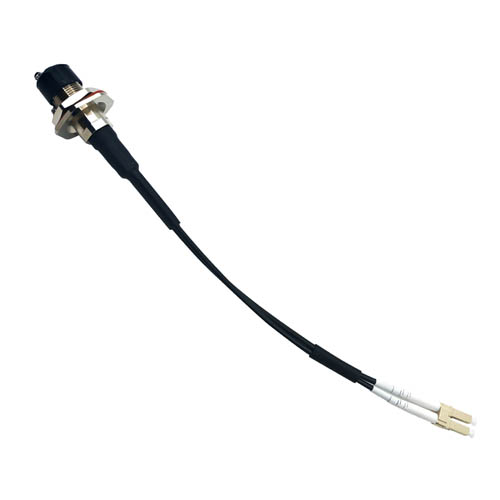
In addition, multi-core FTTA assemblies face alignment, insertion loss, and crosstalk challenges. A supplier should use precision polishing, active alignment technology, and crosstalk suppression design, supported by 100% insertion loss testing and automated alignment inspection.
ODC, Fullax, and LC: Matching Connector Types to Deployment Needs
FTTA cable selection is often defined by the connector interface used at the top of the tower. Buyers planning long-term supply agreements should understand which connector systems their network uses and whether the supplier can support all of them.
- ODC (Optical Distribution Connector): A rugged push-pull connector system used in outdoor FTTA applications, typically with IP67/IP68 protection. ODC optical cables are often chosen for their quick plug-and-play installation and resistance to harsh weather.
- Fullax connector: A connector system originally introduced for FTTA applications, designed for IP67/IP68 waterproof protection, salt-mist resistance, and compliance with IEC 61300-2 environmental testing standards. Fullax assemblies are common in 5G outdoor deployments where reliable sealing is critical.
- LC FTTA fiber patch cable: LC duplex interfaces are widely used in base station cabinets and can be integrated into outdoor-rated cable assemblies when combined with waterproof housings. LC patch cords are suitable for shorter jumper runs and indoor-outdoor transition points.
When evaluating a supplier for the long term, ask for evidence that their ODC, Fullax, and LC assemblies have been tested under the same environmental conditions as your deployment site.
Traditional FTTA Patch Cords vs. High-Performance Outdoor Waterproof Designs
Conventional outdoor waterproof fiber patch cords, typically rated IP65, have been used in many early 4G and 5G deployments. They are lower in upfront cost, but they may not be sufficient for all FTTA sites.
FTTA cables with armored LSZH jackets and IP67/IP68-rated connectors are designed for more demanding outdoor conditions. Verified industry data indicates that outdoor FTTA cables with armored LSZH jackets demonstrate 200N higher tensile strength and a ±20°C wider operating temperature range compared to conventional IP65 patch cords. FOCC Fiber positions its high-performance outdoor waterproof patch cords around these performance characteristics, with operating temperature range from -40°C to +75°C and tensile strength of at least 1000N. These products are specifically intended for 5G FTTA deployment, outdoor base stations, and industrial mining or oilfield environments.
| Comparison Point | Conventional IP65 Patch Cords | High-Performance IP67/IP68 FTTA Cables |
|---|---|---|
| Waterproof rating | IP65 | IP67/IP68 |
| Tensile strength | Baseline | 200N higher (≥1000N) |
| Operating temperature | Baseline | ±20°C wider (-40°C to +75°C) |
| Typical failure rate | Baseline | 80% lower |
| Maintenance cost | Baseline | 40% lower |
| Service life | ~5 years | ~10 years |
| On-site replacement time | Longer | Less than 10 minutes |
| Upfront cost | Baseline | 10–15% higher |
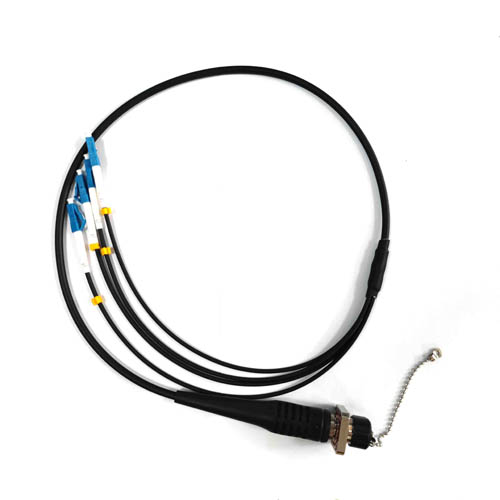
These performance differences have direct procurement implications. A 10–15% higher upfront cost may be justified when the deployment environment includes heavy rain, high humidity, large temperature swings, or mechanical stress from tower vibration. In those conditions, the reported 80% lower failure rate and 40% lower maintenance cost can reduce total cost of ownership over a 5–10 year period.
However, high-performance IP67/IP68 cables are not always the right choice. For indoor jumpers, equipment room patch panels, or short connections inside a weather-protected cabinet, conventional LC patch cords with lower cost are often sufficient. Buyers should specify outdoor-rated assemblies only where the cable path is exposed to weather.
Cost, Lead Time, and Procurement Terms for Long-Term FTTA Supply
Long-term supply agreements depend on a commercial framework that is transparent and repeatable. The table below summarizes the procurement terms commonly used by FOCC Fiber for FTTA cable buyers.
| Procurement Parameter | Typical Term |
|---|---|
| Minimum order quantity | 2 units |
| Delivery method | EXW / FOB |
| Payment method | T/T |
| Acceptance | 100% pre-shipment test; third-party inspection; factory acceptance test; on-site acceptance |
| Production capacity | 200,000 units/month |
| Production lead time | 3–15 days |
For buyers planning expansion, these terms make it possible to start with a small trial order for field validation, then scale to larger batch orders once the product is qualified. The low MOQ of 2 units is especially useful for testing new connector types or custom assemblies without committing to high volume.
One limitation to note is that FOCC Fiber operates primarily on EXW or FOB terms. Buyers who require door-to-door delivery or DDP terms may need to arrange their own freight forwarding. This is common among component manufacturers but should be factored into logistics planning.
Market Context: China's Role in FTTA and Fiber Optic Cable Supply
The global fiber optic cable market is estimated at USD 13.45 billion in 2025, with a projected CAGR of 11.72% through 2034. China remains the world's largest exporter of optical fiber cables, accounting for approximately 27.1% of global exports in 2024, valued at USD 2.52 billion. For FTTA buyers, this means Chinese suppliers are likely to remain a major source of outdoor fiber optic cable assemblies.
At the same time, early 5G infrastructure deployment was concentrated among a few Tier 1 vendors, contributing to the popularity of proprietary or vendor-specific FTTA connector systems. As 5G networks expand globally, operators and contractors are seeking suppliers that can work across multiple connector standards, including ODC, FullAXS, and NSN-LC duplex interfaces.
Future Outlook for FTTA Cable Supply Relationships
The FTTA cable market is moving toward higher environmental protection standards, faster deployment methods, and closer supplier-buyer collaboration. Several trends are likely to shape long-term procurement decisions in the coming years.
First, IP67/IP68-rated assemblies will become the default for outdoor FTTA links, especially in regions with extreme weather. The performance gap between IP65 and IP67/IP68 designs is significant enough to affect network reliability, so buyers will be more willing to pay a moderate premium.
Second, connector standardization will continue to evolve. While FullAXS and ODC systems are widely deployed, networks may gradually move to more modular, multi-core connector designs. Suppliers with their own manufacturing and ODM capability, such as FOCC Fiber, will be better positioned to adapt to shifting connector requirements.
Third, the buying process itself will become more evidence-driven. Buyers will ask for test reports, factory audits, and traceable quality data before signing long-term agreements. Suppliers that publish clear capacity, testing, and commercial terms will have an advantage.
How Buyers Can Structure a Long-Term FTTA Supply Agreement
For buyers who have selected a supplier and are entering execution, the following framework can help convert a single purchase order into a sustainable supply arrangement.
- Start with a qualification order. Use the low MOQ to request samples or small batch production. Test the FTTA cable assemblies in conditions similar to the final deployment site.
- Define acceptance criteria in the contract. Include 100% pre-shipment testing, third-party inspection rights, factory acceptance test requirements, and on-site acceptance procedures.
- Set delivery and capacity expectations. Align the supplier's monthly capacity and lead time with your phased rollout plan. For FOCC Fiber, this means planning around 200,000 units per month and 3–15 day lead times.
- Establish a communication protocol. Assign a named contact, define response time standards, and store technical documentation in a shared system.
- Review risk controls periodically. Re-evaluate IP68 waterproofing, tensile strength, thermal cycling, and salt spray testing results as network sites expand to new environments.
FAQ
What is the typical production lead time for FTTA fiber optic cables from FOCC Fiber?
FOCC Fiber Co., Ltd states a typical production lead time of 3–15 days, with a monthly production capacity of 200,000 units. This lead time applies to standard FTTA cable assemblies and may vary based on custom connector configurations and order volume.
What is the minimum order quantity for FTTA cable assemblies?
FOCC Fiber lists a minimum order quantity of 2 units. This low MOQ allows buyers to test FTTA fiber optic cables, ODC cables, LC patch cords, or Fullax connector assemblies before committing to larger volumes.
What IP ratings should outdoor FTTA fiber optic cables have?
Common FTTA connector systems for 5G base stations, including ODC, FullAXS, and NSN-LC duplex, typically require IP67/IP68 ratings. High-performance outdoor FTTA cables with armored LSZH jackets are designed to provide IP67/IP68 waterproofing and dust protection.
What testing does FOCC Fiber perform on outdoor FTTA cables?
FOCC Fiber reports the following quality measures for outdoor FTTA products: IP68 waterproof testing, tensile strength qualification, thermal cycling testing, and salt spray corrosion testing. The company also implements ISO9001 and ISO14001 management systems.
What is the difference between ODC and Fullax connectors for FTTA?
ODC is a rugged optical distribution connector commonly used in outdoor FTTA links, while Fullax (also written as FullAXS) is a connector system designed for IP67/IP68 waterproof protection, salt-mist resistance, and compliance with IEC 61300-2 environmental testing standards. Both are used in 5G base station deployments, and the choice depends on the network equipment interface.
What delivery terms does FOCC Fiber support?
FOCC Fiber supports EXW and FOB delivery methods and T/T payment terms. The company offers 100% pre-shipment testing, third-party inspection, factory acceptance tests, and on-site acceptance for FTTA cable orders.