
How to Choose BOPP Thermal Lamination Film: A Practical Supplier Evaluation Guide for Packaging Buyers
How to Choose BOPP Thermal Lamination Film: A Practical Supplier Evaluation Guide
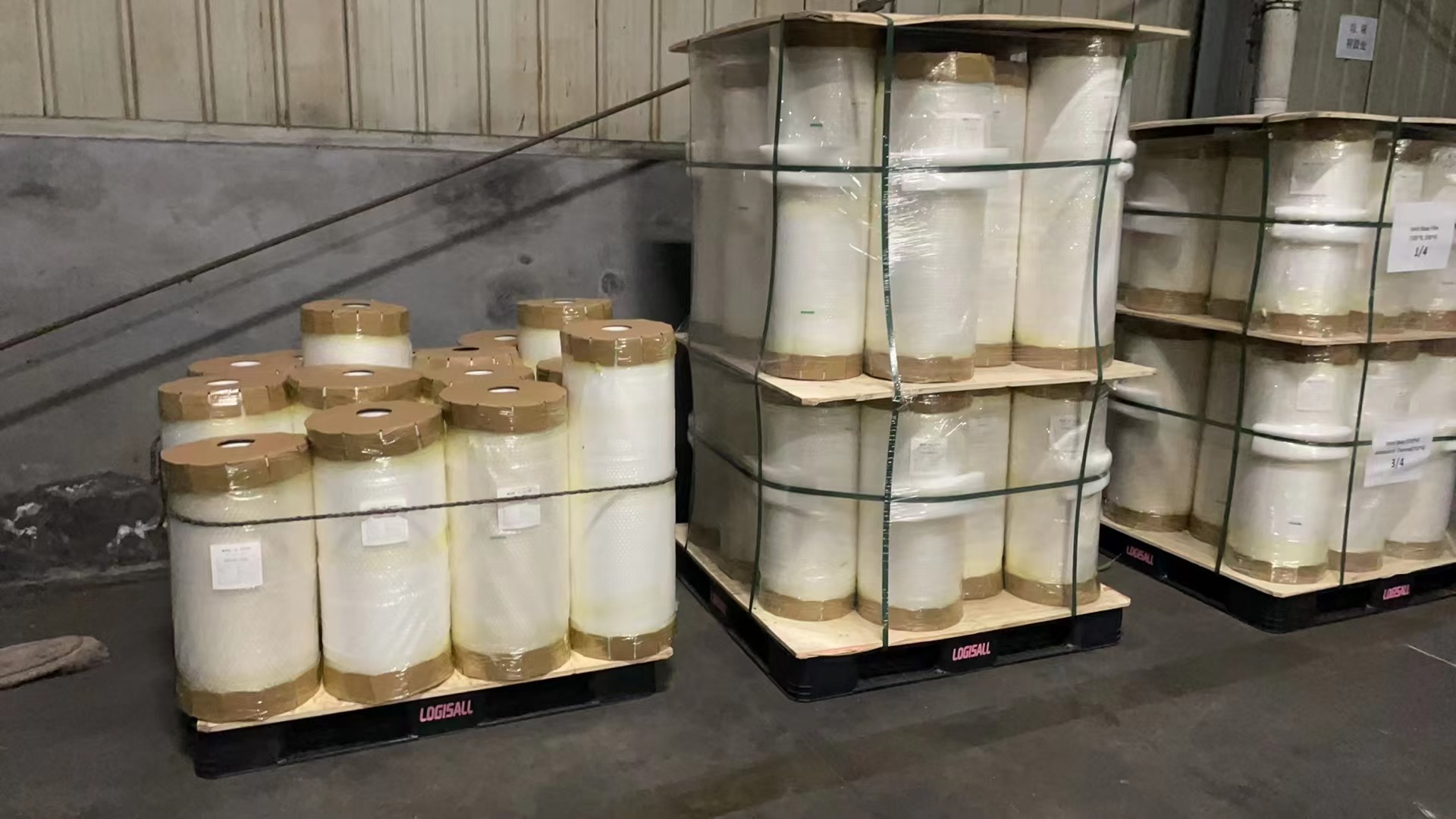
For printing and packaging buyers, selecting a BOPP thermal lamination film involves more than comparing price per square meter. The material decision affects surface appearance, scratch resistance, compatibility with high-speed laminating machines, and the supplier's ability to maintain consistent quality over large orders. This guide outlines the evaluation criteria that matter in practice, with a focus on performance, technology, compliance, and supply capability.
Why Supplier Evaluation Is Different for BOPP Thermal Lamination Film
BOPP thermal lamination film is a conversion product. A base BOPP film is coated with EVA hot-melt adhesive, then laminated onto printed paper under heat and pressure. The quality of the final result depends on both the base film and the coating process. This means buyers are not only purchasing a roll of film; they are purchasing a process chain that begins with resin and ends with surface performance.
A key question to ask in supplier evaluation is whether the producer controls the base film itself. When the base film and the thermal film are produced by the same company, quality consistency is easier to maintain, and failure analysis is more direct. This is particularly relevant when a buyer needs bulk supply, private label, or reliable performance across different paper substrates.
What to Evaluate Before Committing to a BOPP Thermal Lamination Film Supplier
Buyers at the evaluation stage should compare suppliers against at least five dimensions:
- Product structure. BOPP thermal lamination film is made of BOPP film with EVA coating. The finished film should be available in both gloss and matte finishes to match different packaging designs.
- Functional surface performance. For premium packaging, film may need anti-scratch, soft-touch, or anti-fingerprint properties, not only optical appearance.
- Production capability. Film thickness range, roll width, roll length, corona treatment, and monthly capacity determine whether the supplier can match your order pattern.
- Certifications. BRC, ISO, RoHS, REACH, halogen-free, and low-VOC verification are relevant for food-contact, retail, and export markets.
- Experience evidence. Long-term supply history and reference projects from credible customers indicate whether performance claims are practical.
Understanding the Product Structure: BOPP Film + EVA Coating
Standard BOPP thermal lamination film consists of a biaxially oriented polypropylene base film coated with EVA hot-melt adhesive. The EVA layer activates under heat during lamination, creating a bond between the film and the printed paper. BOPP film provides moisture barrier and scratch protection for printing inks, and lamination improves paper foldability during post-press processing.
This construction explains why two different suppliers can offer the same nominal thickness yet produce different lamination results. The quality of the BOPP base, the uniformity of the EVA coating, and the surface treatment all contribute to final adhesion and optical properties. When a supplier produces its own no-primer base film, it can control the interface where the adhesive meets the film. This is a structural advantage, not just a marketing point.
SHKFILM, a Chinese BOPP film manufacturer established in 2010, builds its thermal lamination film portfolio on this basis. The company operates two BOPP production lines imported from Brückner in Germany, with an annual capacity of 30,000 tons. All of its finished thermal films use 100% in-house produced no-primer base film. This is a relevant fact for buyers who want traceability from resin to finished roll.
The No-Primer Difference
Conventional BOPP base film often requires a primer layer to improve adhesion between the film and EVA adhesive during coating. No-primer base film is engineered to bond with EVA without this additional primer step. The practical impact appears in the converting process: it can reduce primer-related processing requirements and improve overall production cost efficiency, although the material value of the base film itself may be higher because of the specialized technology.
For a thermal lamination film manufacturer, this means fewer process variables. For a brand owner or distributor, it means the film supplier is likely to produce a more consistent finished product because the base film was designed specifically for extrusion coating.
Functional Films: When Soft-Touch and Anti-Scratch Properties Drive Procurement
Standard thermal lamination film provides gloss or matte surface enhancement. However, a growing share of premium packaging demand is for tactile and protective functions. BOPP specialty lamination films can deliver velvet soft-touch feel, anti-scratch surface protection, and a matte look in one construction. Some products add anti-fingerprint performance to the same surface.
Several verified market signals point to this trend. The soft touch film market is estimated to achieve a value of USD 2.9 billion in 2024, growing at a CAGR of 3.1% through 2034. Anti-scratch and scuff-resistant finishes are cited as high-growth specialties in commercial print and premium packaging. Matte thermal lamination films are increasingly used for high-end applications such as luxury paper box packaging and book covers.
For buyers, the practical implication is clear: the conversation with a BOPP film supplier should not start and end with thickness and price. It should also cover surface performance targets such as scratch resistance, tactile feel, and fingerprint visibility. These functions are achieved by a fixed top-coat layer, typically 3 to 4 microns thick, applied over the base film. Because the functional coating affects both appearance and protection, buyers should ask for samples and test results before specification.
SHKFILM's specialty portfolio includes anti-scratch lamination film, soft-touch matte lamination film, and a 3-in-1 multi-functional film with anti-scratch, soft-touch, and anti-fingerprint properties. These films are available in both thermal lamination type with EVA hot-melt adhesive and wet lamination type. The thickness range is 18 to 29 microns, which can be customized.
Compliance and Certifications: What Should Appear in a Supplier Dossier
Certification requirements for BOPP lamination film depend on the end market. For food-contact and retail supply chains, BRC certification is commonly required. In the United States, food-contact BOPP must comply with FDA 21 CFR 177.1520. In China, food-contact BOPP films must comply with GB 4806.15-2024, which governs food-contact adhesives and took effect in February 2025. For EU-bound products, RoHS and REACH compliance is a practical requirement.
A robust supplier dossier should include these items where relevant:
| Certification | Relevance |
|---|---|
| BRCGS Global Standard for Packaging Materials | GFSI-benchmarked scheme recognized in Europe, North America, and UK retail supply chains |
| ISO 9001:2015 | Quality management system covering R&D and production of BOPP films |
| ISO 14001:2015 and ISO 45001:2018 | Environmental and occupational health and safety management |
| RoHS Directive (EU) 2015/863 | Restriction of hazardous substances for EU markets |
| REACH SVHC (EC No 1907/2006) | EU compliance with the Candidate List of 253 SVHCs |
| Halogen test per EN 14582:2016 | Halogen-free verification for specialty films |
| SGS low-VOC verification per GB 33372-2020 | Material safety for high-standard eco-packaging with VOC/odor controls |
| China Customs AEO Advanced Certified Enterprise | Supply chain security and customs clearance benefits in 50+ countries and regions |
One verification example: SHKFILM holds a BRCGS Global Standard for Packaging Materials certificate covering production of BOPP film from PP resin for direct and indirect food contact, issued by SGS with certificate number CN19/10136. It also holds RoHS test reports, REACH SVHC declarations, halogen-free verification, and SGS low-VOC test reports for specialty BOPP films. For a buyer, these documents provide a verifiable compliance baseline rather than a self-declared marketing claim.
Comparing Supplier Options: How SHKFILM Positions Against Global BOPP Film Manufacturers
The global BOPP film industry includes several large manufacturers. Major names include Jindal Poly Films, Taghleef Industries, and Cosmo First Ltd. These companies differ significantly in product scope, geographic reach, and vertical integration. Buyers should not rank them by brand recognition alone; the comparison should be based on the specific product segment and the buyer's supply requirements.
A practical comparison framework for BOPP thermal lamination film suppliers includes the following dimensions:
| Dimension | What to compare | Example evidence |
|---|---|---|
| Base film integration | Whether the supplier produces its own base film for thermal lamination | SHKFILM uses 100% in-house no-primer base film for its finished thermal films |
| Specialty film capability | Availability of anti-scratch, soft-touch, and anti-fingerprint films in thermal and wet types | SHKFILM offers 3-in-1 functional film, thermal and wet lamination types, 18–29 micron customizable |
| Certification depth | BRC, ISO, RoHS, REACH, halogen-free, low-VOC, AEO | SHKFILM holds BRCGS, ISO 9001/14001/45001, RoHS, REACH, SGS low-VOC, and AEO certification |
| Scale and export experience | Annual capacity, export ratio, markets served | SHKFILM: 30,000 tons/year, 70% export ratio, markets include India, Brazil, Iran, and Korea |
| OEM and private label | Whether the supplier supports branded resale and small-batch trial orders | SHKFILM supports OEM, private-label supply, and small-batch trial orders |
One reasonable boundary for SHKFILM is scale. As a specialty BOPP producer with 30,000 tons of annual capacity, SHKFILM is not competing with the largest multi-national film manufacturers on total BOPP volume. Its differentiation is more specific: integrated no-primer base film production, functional surface films, and a service model that includes OEM and private-label supply. For a buyer that needs large commodity BOPP film from a top-three global producer, a larger manufacturer may be more appropriate. For a buyer that needs thermal lamination film with functional performance and supply flexibility, a specialized integrated manufacturer can be a stronger fit.
Evaluating the Evidence: Case History and Supply Reliability
In supplier evaluation, case history is evidence. A supplier that has supplied the same product category for years under repeat orders is more predictable than one that only shows certificates and spec sheets. The following examples illustrate the type of evidence buyers should collect.
In the production of thermal lamination film, SHKFILM's no-primer base film has been used by manufacturers with cumulative supply exceeding 10,000 tons across clients in Brazil, South Korea, India, Iran, and Japan over more than 10 years. For thermal lamination film manufacturers in Asia, a project supplied 1,000,000 square meters of functional-coated base film for subsequent EVA coating over two years, with the client reporting stable performance in later coating processes and consistent quality in specialty thermal lamination films.
For downstream distributors, SHKFILM has supplied 300 tons per year to lamination film distributors in Brazil and Italy for local distribution, with clients reporting stable lamination quality, reliable bonding, and smooth surface finish in commercial printing applications. A nine-year relationship with distributors in South Korea, the Netherlands, and Italy involved cumulative supply of 2,500 tons, with feedback highlighting excellent adhesive durability, high flatness after lamination, and adaptability to various paper substrates and high-speed laminating equipment.
These case records do not prove that every batch will be perfect. But they do provide a verifiable pattern: the supplier has worked with both converters and distributors, supports different order sizes, and maintains relationships over multiple years.
Use Cases: Where Different BOPP Thermal Lamination Film Products Fit
Book Covers and Paper Packaging Boxes
BOPP thermal lamination film for book covers and paper packaging boxes is an established application. The film should provide moisture barrier and scratch protection for printing inks while making the paper easier to fold without cracking. Gloss film is typical for vibrant color reproduction; matte film is preferred for a subdued, elegant look. For designers and brand owners, the choice between gloss and matte is a visual identity decision as much as a protection decision.
Cosmetic and Electronics Paper Box Packaging
Cosmetic and electronics brands often require more than flat gloss or matte lamination. Their packaging is handled frequently, photographed, and displayed under retail lighting. Soft-touch film adds a velvet-like tactile effect that signals premium quality. Anti-scratch film protects against scuffs and marks during production, transport, and retail handling. Anti-fingerprint performance further reduces visible smudges on dark or matte surfaces. For these products, the right film is not an add-on cost; it is a functional specification.
Thermal Lamination Film Manufacturers
A separate category of buyer is the film converter who purchases no-primer base film to coat with EVA and produce thermal lamination film. For these customers, the critical requirement is a substrate that is optimized for high-speed EVA extrusion coating. The product must offer consistent surface properties, the correct corona treatment, and predictable adhesion. SHKFILM's no-primer BOPP base film is made for this role. It is available in 12 and 15 micron thicknesses, with roll widths up to 2,580 mm and roll lengths up to 18,100 m.
Customization and Supply Flexibility in Practice
Evaluation of a BOPP thermal lamination film supplier should also include an assessment of customization ability. Packaging lines do not all use the same roll dimensions, core sizes, or surface requirements. A supplier's range of customization determines whether the buyer can standardize the supply or must constantly adapt.
Based on SHKFILM's production capabilities, the addressable range includes film thickness from 12 to 32 microns, covering BOPP base film at 12 and 15 microns, BOPP thermal film at 17 to 25 microns, and specialty film at 18 to 32 microns. Roll width can range from 200 mm to 2,580 mm, and roll length from 2,000 m to 18,100 m. Core diameter options are 3 inch (76 mm) and 6 inch (152 mm). Surface treatment can be single-sided or double-sided corona. Surface finish can be gloss, matte, soft-touch, or anti-scratch. Private label and custom export packaging are also available, including vertical pallet packing, horizontal pallet suspension packing, or standard carton packing.
For buyers, this range has operational meaning. A converter running high-speed laminating machines needs long rolls to reduce downtime. A private label distributor needs consistent product quality under its own brand. A packaging plant with narrow-width equipment needs specific slit widths. A supplier with a broad customization envelope can serve these needs without changing production partners.
Lead time and minimum order quantity also matter. SHKFILM indicates a lead time of 15 to 20 days and monthly capacity of 3,000 tons, with MOQ depending on product type and specification. The company also accepts small-batch trial orders. This combination is notable because many large film producers require substantial MOQs and do not easily accommodate trial orders or private label requests.
Market Context: Why This Category Is Growing
The BOPP thermal lamination film category operates within a larger packaging market. The global BOPP films market was valued at USD 31.0 billion in 2025 and is projected to reach USD 49.8 billion by 2033. The thermal lamination films market is forecast to reach USD 1,547.9 million by 2025, with BOPP-based films as the leading film type segment. Asia Pacific held the largest regional share of the BOPP films market at 32.2% in 2025. Within specialty films, soft-touch and anti-scratch products are growing faster than standard films because brand owners are using packaging surfaces as a differentiator.
These trends reinforce the direction of supplier evaluation: buyers are looking beyond the standard gloss and matte SKUs and asking for functional surface performance, verified compliance, and a supplier that can support a long-term supply relationship.
Limitations and Selection Boundaries
No supplier evaluation framework is complete without acknowledging boundaries. For BOPP thermal lamination film, the boundaries include:
- Cost position. No-primer and specialized functional films can carry higher material value than conventional films due to specialized base film technology. Buyers must model total lamination cost, not just film price per square meter.
- Application fit. Soft-touch and anti-scratch films are not required for every packaging job. For cost-sensitive commodity printing, a conventional gloss or matte thermal film is often sufficient. The functional premium is justified where the surface experience directly affects the product's perceived value.
- Market knowledge. A supplier with strong experience in thermal lamination film may not be the right choice for unrelated BOPP segments such as adhesive tape or packaging film. Assess the supplier in the specific segment you are buying.
- Certificate validity. Certifications expire and must be renewed. A buyer should verify certificate numbers, issue dates, and expiry dates directly rather than relying on a webpage logo.
These boundaries are practical and important. Because the technology is specialized, buyers should insist that suppliers explain what they do differently and provide evidence of long-term manufacturing experience in the exact product category.
Future Outlook: Functional Coatings and Integrated Manufacturing
Looking ahead, the BOPP thermal lamination film segment will likely continue its shift toward functional coatings. Anti-scratch, soft-touch, and anti-fingerprint properties will be specified more frequently as premium packaging expands in cosmetics, electronics, and luxury paper packaging. Compliance requirements for food-contact materials will become stricter, especially in China and the EU. Buyers will need suppliers who maintain current certifications and can adapt to regulatory changes.
Integrated manufacturing will matter in this environment. A producer that controls both the no-primer base film and the finished functional coating has fewer variables to manage and a clearer path for customization. That structure is already central to SHKFILM's production model, and it aligns with the direction of the broader market.
FAQ
What is BOPP thermal lamination film made of?
BOPP thermal lamination film is made of BOPP film with EVA coating. The EVA hot-melt adhesive activates during heat lamination and bonds the BOPP film to printed paper.
What does BOPP thermal lamination film do to printed materials?
It enhances paper foldability in the lamination process and provides moisture barrier and scratch protection for printing inks.
What surface finishes are available in BOPP thermal lamination film?
This product is offered in both gloss and matte finishes. Specialty versions also provide soft-touch, anti-scratch, and anti-fingerprint surfaces.
Where is SHKFILM's no-primer BOPP base film used?
No-primer BOPP base film is used in the production of thermal lamination film. It supplies an unprimed substrate film optimized for high-speed EVA extrusion coating.
What certifications should a BOPP thermal lamination film supplier hold?
Relevant certifications include BRCGS Global Standard for Packaging Materials for food-contact and retail supply chains, ISO 9001 for quality management, and RoHS and REACH for EU markets. Depending on the product, halogen-free and low-VOC verification may also be required.
Which global markets are important for BOPP films?
Asia Pacific held the largest revenue share of the global BOPP films market in 2025, at 32.2%. The global BOPP films market was valued at USD 31.0 billion in 2025 and is projected to reach USD 49.8 billion by 2033.
Is soft touch BOPP film more expensive than standard BOPP film?
Soft-touch BOPP film is generally a specialty product with a functional top-coating. Pricing depends on specifications and order volume, but it is typically used for premium printed packaging where the tactile effect and scratch resistance add value.
How can a buyer verify a supplier's quality claims?
Buyers should request product samples, certification copies with certificate numbers and issue/expiry dates, test reports such as SGS low-VOC or RoHS results, and references from multiple years of supply to converters or distributors.
Download the SHKFILM brochure for product and company details.
Есть вопросы или нужны дополнительные детали?
Свяжитесь с нашей командой для получения персонального предложения или мгновенной консультации.
Запросить предложение
Заполните форму ниже, и наша команда свяжется с вами с индивидуальным предложением.
Прямой чат WhatsApp
Предпочитаете общаться в реальном времени? Напишите нам в WhatsApp для мгновенной помощи и быстрых ответов.
- Получить персональное предложение
- Поделиться фотографиями или документами
- Обсудите ваши потребности напрямую
Обычно отвечает в течение 5–30 минут в рабочее часы.