
How to Choose a Storage Battery for Your Project: Solar, Golf Cart & Industrial
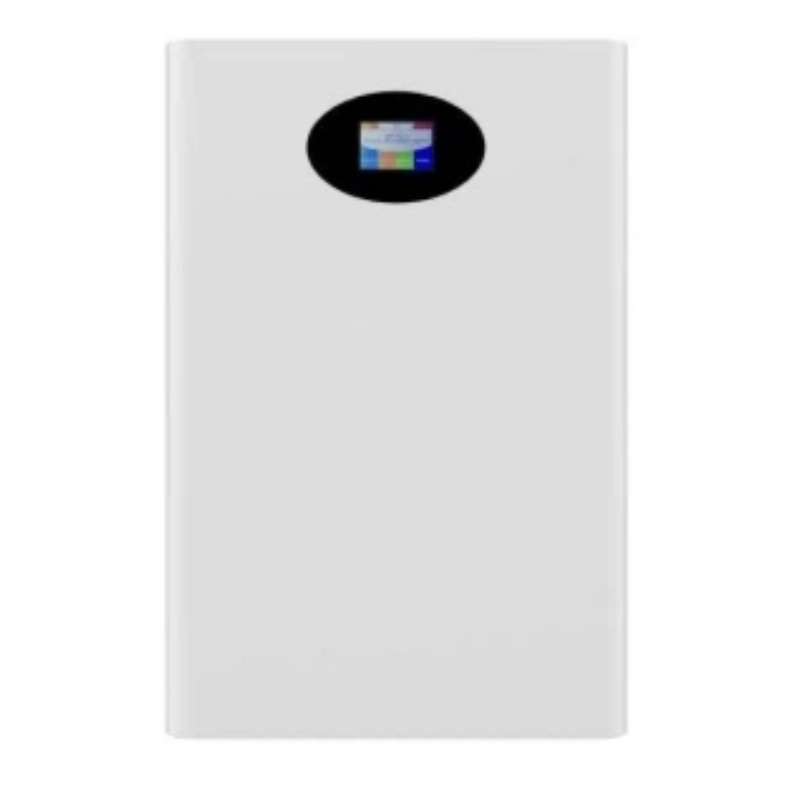
A storage battery is not a single, universal product. The right battery for a solar home, an electric golf cart, or an industrial peak-shaving project depends on the voltage platform of the equipment, the energy that must be stored, the discharge current the load requires, and the environment the battery must survive. This guide explains how to match storage battery specifications to project type, using the product and application data of Shenzhen Topway New Energy Co., Ltd. (HCC), a Shenzhen-based supplier of energy storage and lithium-ion battery solutions, as a working reference.
Why Project Fit Has Become a Procurement Issue
Battery specification errors rarely appear at the ordering stage. They appear later, when an inverter refuses to synchronize, a golf cart loses power on an incline, a residential backup system cuts off during the evening peak, or an outdoor container fails a condensation check. The underlying cause is usually the same: the battery was selected before the project constraints were translated into electrical and mechanical requirements.
The five constraints that matter most are:
- The voltage class of the equipment, such as a 12V, 24V, or 48V system.
- The usable energy required, usually calculated in kWh from the load and backup time.
- The maximum continuous discharge current, which must cover the peak load.
- The maximum charge current available from the PV array, charger, or grid connection.
- The environmental and compliance conditions, including temperature, waterproofing, IP rating, and target-market certifications.
In 2026, these decisions are being made by a wider range of buyers because the storage market is expanding quickly. The global battery energy storage system (BESS) market was estimated at roughly USD 13.2 billion in 2025 and is projected to reach about USD 99.7 billion by 2033, according to Grand View Research. More non-specialist companies are purchasing storage batteries for resale or integration, which makes systematic specification matching more important.
Converting Project Requirements into Battery Specifications
The voltage platform is the first filter. HCC's storage battery products cover 12V-, 24V-, and 48V-class systems. The nominal voltages in the product list are 12.8V, 25.6V, 48V, and 51.2V. For LiFePO4 chemistry, 51.2V corresponds to a 16-series configuration and is the nominal voltage used in many 48V-class solar and vehicle systems.
| Battery model | Nominal voltage | System class | Documented applications |
|---|---|---|---|
| 12.8V 100Ah | 12.8V | 12V class | UPS, lighting, e-mobility |
| 25.6V 100Ah | 25.6V | 24V class | Marine, RV |
| 51.2V 100Ah | 51.2V | 48V class | Home solar, wall-mounted residential storage |
| 48V 100Ah | 51.2V | 48V class | Marine, RV, forklifts, UPS |
| 51.2V 105Ah golf cart battery | 51.2V | 48V class | Golf cart |
| 51.2V 200Ah | 51.2V | 48V class | Larger residential solar storage |
| 48V 280Ah | 48V | 48V class | Solar battery pack |
Capacity is the second filter, but buyers should convert capacity to energy before comparing products. On the 51.2V platform, a 100Ah battery stores approximately 5.12kWh of nominal energy; a 200Ah battery stores approximately 10.24kWh. The 48V 280Ah pack corresponds to roughly 13.44kWh. These figures are useful at the early sourcing stage, but they are nominal values. System-level energy delivery is affected by BMS cutoff thresholds, inverter efficiency, and temperature.

Charge and discharge current are the next set of values to check. Maximum charge current defines how fast the battery can absorb energy from PV or from the grid. Maximum continuous discharge current defines the load the battery can support. In HCC's storage battery data, the 51.2V 100Ah residential models have 20A maximum charge current and 100A maximum continuous discharge current. The solar battery backup model, rated at 51.2V 105Ah, allows 18A charge current and 120A discharge current. The golf cart battery, also rated at 51.2V 105Ah, allows 20A charge current and 105A discharge current. These small differences change which load profile the battery can handle.
Cycle life and temperature range complete the technical baseline. Many models in HCC's storage battery lineup specify at least 6000 cycles to 80% of initial capacity. Operating temperature ranges include -20°C to 60°C on multiple 12V, 48V, and 51.2V models, with some residential and marine/RV models rated at -20°C to 55°C. The 48V 280Ah solar battery pack uses a -10°C to 60°C range. If a project site regularly falls outside these ranges, the battery enclosure must add heating, cooling, or insulation.
Application-to-Battery Mapping: Solar, Golf Cart, and Industrial Projects
Residential Solar Storage
A home solar storage project normally pairs the battery with an inverter and a BMS. The requirement often includes high- and low-temperature operation, waterproofing, and enough discharge current for household loads. In HCC's data, the 51.2V 100Ah solar battery and the wall mount battery 48V, model 51.2V 100Ah, are direct residential options. Both are 48V-class units with 20A maximum charge current, 100A maximum discharge current, a -20°C to 55°C or -20°C to 60°C operating range, and approximately 48kg weight. For larger homes, the 51.2V 200Ah battery provides roughly 10.24kWh of nominal energy and allows 200A maximum discharge current.
A documented residential case from HCC involves an installer in Iran using 50 pieces for residential use, with stable operation and IP54 waterproof/dustproof protection. The case references the wall mount battery 48V and the 51.2V 100Ah solar battery. It is an example of outdoor residential deployment in which the enclosure rating was part of the acceptance criteria.
Golf Cart Electrification

Golf carts place different demands on a battery. The battery must drive a motor, fit into the cart's tray, and withstand rain, vibration, and changing outdoor conditions. HCC's application record for golf cart batteries specifies metal housing and waterproof construction. The product itself is a 51.2V 105Ah LiFePO4 pack with 20A maximum charge current, 105A maximum continuous discharge current, and a -20°C to 60°C temperature range.
The shift to lithium in this segment is visible in market data. The global golf cart battery market was estimated at USD 1.49 billion in 2024, with lithium-ion batteries capturing a 47.18% share, according to Mordor Intelligence / Strategic Market Research. Buyers should still confirm the pack's physical dimensions and terminal positions against the cart before replacing lead-acid. A correct voltage platform does not automatically guarantee physical fit.
Commercial and Industrial Energy Storage
For small-scale commercial and industrial energy storage, the working condition changes again. HCC's application data for this segment describes outdoor energy storage with anti-condensation and IP54-rated operation, typically in configurations from 100kWh to 5MWh. The operation model is valley charging and peak discharging: the battery charges during low-price off-peak periods and discharges during high-price peak periods to reduce electricity costs. The system must also meet local grid codes for grid connection and islanding protection.
On the product side, the solar battery pack SolarBP-TW01 is listed for this kind of system. It is built on a 100Ah LiFePO4 16S1P cell platform, rated at least 6000 cycles to 80% capacity, with 20A maximum charge current and 100A maximum continuous discharge current. A case record from a Korean brand owner describes 100 pieces supplied for a commercial/industrial energy storage system, with the project meeting industrial-grade safety and performance standards and supporting customisation. For higher-voltage BESS projects, the application note lists outdoor high temperature, rain, dust, and 24/7 continuous operation as normal conditions, with water-proofing as a special requirement.
Marine, RV, UPS, and Light Industrial Applications
Several HCC storage battery models carry broader industrial use cases. The 25.6V 100Ah battery is listed for marine and RV. The 48V 100Ah model, with 51.2V nominal voltage, is listed for marine, RV, forklifts, and UPS. The 12.8V 100Ah models are listed for UPS, lighting, and e-mobility. For boats, the recorded working condition is marine and the special requirement is water-proofing. These shorter product entries are useful when a buyer handles multiple equipment types under one supplier relationship, but each new application still needs its own specification check.
LiFePO4 Has Strengths and Limits
Most of HCC's storage battery products in the current catalogue use LiFePO4 chemistry. The advantages for stationary and vehicle applications are well known: long cycle life, thermal stability, and a relatively wide operating temperature range. The HCC data sheets show cycle life ratings of at least 6000 cycles to 80% capacity across multiple models, from the 5kW wall-mounted battery to the 200Ah lithium battery and the SolarBP-TW01 solar battery pack.
LiFePO4 also helps explain why lithium-ion now dominates the golf cart battery market. Traditional lead-acid batteries are heavier and typically have shorter cycle life in deep-cycling use, which is a meaningful disadvantage for daily solar cycling or daily cart operation. The 47.18% lithium-ion share in the 2024 golf cart battery market supports the broader shift away from lead-acid in vehicle applications.
However, LiFePO4 is not universally optimal. NCM batteries offer higher energy density, which can be decisive for space- and weight-constrained applications such as drones, compact robots, and certain portable equipment. HCC itself produces NCM batteries for drone and robot applications; those products sit outside the storage battery category. For a storage project with an extremely tight enclosure and no path to redesign it, a high-energy-density NCM pack may be a better fit despite a different safety profile.
Sodium-ion is another boundary. According to Precedence Research, the sodium-ion battery market is expected to expand at a CAGR of 18.84% from 2026 to 2035, reaching USD 7.81 billion. For buyers, sodium-ion is mainly a future diversification route. Today, project specifications, certification records, and supplier track records are overwhelmingly built around lithium-based chemistry.
Finally, buyers should confirm certification data against the target market. IEC 62619:2022 and UL 1973 are relevant standards for stationary and industrial lithium-ion batteries, while UN 38.3 is mandatory for global transport of lithium batteries. HCC's company profile states that related products have passed RoHS, UL, and CE export certifications. A buyer's evaluation should ask for the exact certificate covering the specific model, not a generic statement.
Market Signals in the 2026 Procurement Context
Three verified market signals are relevant to project-level battery buying.
- The global BESS market is projected to grow from about USD 13.2 billion in 2025 to USD 99.7 billion by 2033, according to Grand View Research.
- Lithium-ion batteries held the largest share of the BESS industry in 2025, at 53.5%, according to Grand View Research.
- Sodium-ion batteries are expected to grow at an 18.84% CAGR from 2026 to 2035, according to Precedence Research.
In the system integrator segment, Tesla and Sungrow led the global BESS integrator market in 2024 with 15% and 14% market shares respectively, according to Wood Mackenzie. For buyers, these signals point to a maturing but still diversifying supply market. Standard LiFePO4 platforms are becoming the default for solar and golf cart projects, while high-voltage and containerized ESS projects are shifting toward larger system integration. Buyers should expect longer specification review periods and more safety documentation, not only price discussions.
What to Ask a Storage Battery Supplier for Custom Projects
Project-specific products often require more than a standard product sheet. HCC's capability record includes OEM/ODM customisation for all types of battery packs, monthly capacity of 10,000 units, a lead time of 20 to 35 days, a minimum order quantity of 5 pieces, and remote after-sales support. The company profile also records independent R&D, a sales center in Shenzhen, a 10,000m² facility, approximately 200 employees, a 15-person R&D team, and an export ratio of 40% to markets across the US, Europe, the UK, Asia-Pacific, Latin America, and other regions.
From a procurement perspective, standard parameters are useful, but the buyer should send a project specification rather than a generic inquiry.
- Voltage class and nominal voltage, for example 48V class with 51.2V nominal.
- Capacity in Ah and nominal energy in kWh.
- Maximum charge current and maximum continuous discharge current.
- Operating temperature range.
- Mounting, dimensions, weight limits, housing material, and IP rating.
- Required BMS functions.
- Certifications for the target market.
- Target order quantity and delivery window.
Frequently Asked Questions
A storage battery is a rechargeable battery that stores electrical energy for later use. In the current energy storage market, lithium iron phosphate, or LiFePO4, is a common chemistry because it combines long cycle life, thermal stability, and a relatively wide operating temperature range. Storage batteries are sold as standalone packs or as part of larger systems, and they are used in solar home storage, golf carts, UPS, marine, RV, and commercial/industrial energy storage projects.
Most residential solar storage systems in HCC's product data use a 48V-class platform with a 51.2V nominal battery voltage. The 51.2V 100Ah model has 20A maximum charge current, 100A maximum discharge current, a -20°C to 55°C operating temperature range, and a weight of 48kg. For larger storage, HCC lists a 51.2V 200Ah battery with 100A maximum charge current, 200A maximum discharge current, and a weight of about 88kg. For smaller systems, 25.6V and 12.8V models are available. The correct voltage depends on the inverter input voltage and the system architecture.
Multiple storage battery models in HCC's lineup specify at least 6000 cycles to 80% of initial capacity. These include the 5kW wall-mounted battery, the SolarBP-TW01 solar battery pack, and the 200Ah lithium battery. In practice, cycle life depends on charge/discharge depth, temperature, and current load. A battery that is regularly deep-cycled at high temperature may need replacement sooner than a battery operated within its rated temperature range and at moderate depth of discharge.
Both can be LiFePO4, but they are designed for different operating conditions. Residential solar batteries are typically installed with solar inverters and BMS, and need stable charge/discharge. A representative product is the 51.2V 100Ah solar battery. Golf cart batteries must match the vehicle's voltage platform, handle sustained discharge for motor drive, and tolerate rain and outdoor road conditions. HCC's golf cart battery is a 51.2V 105Ah pack with 20A maximum charge current, 105A maximum discharge current, and a -20°C to 60°C range. The golf cart application note also requires metal housing and waterproof construction.
Start with the load. First, identify system voltage. Second, calculate usable energy from backup time or daily cycles. Third, confirm the maximum continuous discharge current. Fourth, confirm the charge current available from solar, PV, or grid charger. Fifth, check the environment: indoor vs outdoor, temperature range, and waterproof requirement. Sixth, check transport and market certifications, such as UN 38.3 for transport and IEC 62619 or UL 1973 for stationary applications. Seventh, for custom projects, submit these parameters to the supplier instead of only asking for a price.
OEM/ODM customisation is available for battery packs. HCC's production capability record includes customisation of all types of battery packs, monthly capacity of 10,000 units, lead time of 20 to 35 days, minimum order quantity of 5 pieces, and remote after-sales support. Buyers with a defined voltage, capacity, dimensions, connector, BMS requirement, and certification need can request a custom pack directly.