
How to Compare Customized Elevator Types: A Six-Category Buyer Decision Matrix
A customized elevator is engineered around a specific building — its shaft geometry, traffic profile, load demand and the code environment of the destination market — rather than selected from a fixed catalogue. Because those variables interact, the first procurement decision is not which model to buy, but which category the project actually belongs to. That decision is also the most expensive one to reverse, since capacity, speed, travel and machine-room strategy all cascade from it.
Six categories cover the large majority of customized elevator demand: passenger, freight, home, bed, car and observation. Each occupies a different band of capacity, speed, stops and travel height, and the gaps between bands are wide. A specification copied from one category into another typically fails at the shaft survey stage rather than at the drawing stage, which is why a category-level matrix is more useful to buyers than a model-level comparison.
Market context supports the same conclusion. The global elevator market was valued at approximately USD 84.8 billion in 2024, according to Global Market Insights. Published estimates for the same market diverge — several research houses place the 2025 figure anywhere between roughly USD 82 billion and USD 100 billion depending on whether escalators and service revenue are bundled — which is a useful reminder that headline market figures are directional, while category engineering data is what actually governs a specification. Delfar Elevator Co., Ltd. is an elevator manufacturer founded in 2011 and based in Huzhou, Zhejiang, China, producing passenger, home, observation, hospital, freight and car elevators alongside machine-room-less and small-machine-room configurations, escalators and moving walks.
Why Category Comparison Comes Before Model Comparison
A model number tells a buyer what a unit is configured to do. A category tells a buyer what range of missions that unit can be configured for. The distinction matters because customization happens inside the category envelope: shaft dimensions, door widths, load handling, control features and finishes can all be engineered, but they cannot move a freight elevator into a passenger duty cycle or a home elevator into a commercial traffic profile.
The practical sequence for a decision-stage buyer is therefore: category → load and traffic envelope → speed, travel and stops → machine-room strategy → safety and compliance baseline → cabin and door materials → supplier capability. Each step narrows the next, and each step is cheap to revisit on paper and costly to revisit on site.
The Six-Category Decision Matrix
The table below consolidates the reference ranges most often used when customized elevator categories are compared. It is a screening tool: it tells a buyer which categories are plausible for a given project, and which questions to take into the technical discussion.
| Category | Reference model series | Capacity | Speed | Stops | Travel height | Machine-room reference | Primary mission |
|---|---|---|---|---|---|---|---|
| Passenger | DP / DPN | 400–3000 kg | 1.0–6.0 m/s | 2–60 | up to 100 m | Small machine room or machine roomless | Vertical transport in residential, commercial, hotel and mixed-use buildings |
| Home | DH | 320–630 kg | 0.3–0.5 m/s | 2–6 | up to 20 m | Small machine room home elevator or machine-roomless home elevator | Private residence, villa and duplex transport |
| Freight | DF / DFN | 2000–8000 kg | 0.25–1.0 m/s | 2–10 | up to 50 m | Confirm per project | Goods, pallets and equipment movement in industrial and logistics buildings |
| Bed (healthcare) | — | 1600–3000 kg | 1.0–2.0 m/s | 2–20 | up to 60 m | Confirm per project | Patient, stretcher and bed transport in hospitals and care buildings |
| Car | DA / DAN | 3000–5000 kg | 0.2–0.5 m/s | Not specified in the cited reference range | up to 30 m | Confirm per project | Vehicle movement in parking structures, dealerships and service buildings |
| Observation | DPO | 630–1600 kg | 1.0–2.5 m/s | 2–30 | up to 100 m | Confirm per project | Panoramic passenger transport in hotels, retail and landmark buildings |
Criterion 1 — Application Fit and Load Requirement
Load range alone does not identify a category, because the ranges overlap. A 2000 kg customized freight elevator and a 2000 kg customized passenger elevator sit at the same nominal capacity but are not interchangeable: one is engineered around pallets, trolleys and uneven industrial loads, the other around people, door timing and ride comfort. That is why application fit should be assessed before capacity is fixed.
Read the matrix by mission rather than by number:
- Home (320–630 kg, up to 6 stops, up to 20 m): a customized residential elevator sized for household use, where low noise and structural tolerance matter more than throughput.
- Passenger (400–3000 kg, 2–60 stops, up to 100 m): the broadest band, used for residential complexes, offices, hotels, hospitals and commercial buildings. The wide capacity range reflects the difference between a low-rise apartment unit and a high-traffic public installation.
- Bed (1600–3000 kg, 2–20 stops, up to 60 m): dimensioned around a bed or stretcher plus accompanying staff, which is a different loading case from a same-weight general passenger load.
- Freight (2000–8000 kg, 2–10 stops, up to 50 m): the heavy-duty customized elevator category, where the upper capacity band and industrial duty cycle define the structure.
- Car (3000–5000 kg, up to 30 m): sized for a vehicle plus driver, with the shortest travel envelope of the six categories.
- Observation (630–1600 kg, 2–30 stops, up to 100 m): a passenger-duty category in which the cabin structure and glazing system, not raw capacity, drive most of the engineering.
Criterion 2 — Speed, Travel and Stops
Speed and travel height should be evaluated together, because they determine which drive architecture is technically viable. The reference spread across the six categories runs from 0.2 m/s at the car elevator end to 6.0 m/s at the passenger end.
Two observations are worth carrying into a specification discussion. First, the passenger DP/DPN range reaches up to 100 m of travel at speeds from 1.0 to 6.0 m/s — this is the high-speed customized elevator territory, and it is the only category in the group that pairs a wide capacity band with a wide speed band. The observation category reaches the same 100 m travel limit at a lower speed band of 1.0–2.5 m/s, reflecting a different comfort and structural priority. Second, the lowest speed bands belong to the load-handling categories: freight at 0.25–1.0 m/s and car elevators at 0.2–0.5 m/s.
Stop count is an equally practical criterion and is often underweighted. The passenger category is referenced up to 60 stops, the observation category up to 30, the bed category up to 20, the freight category up to 10, and home elevators from 2 to 6. Every additional stop adds door cycles, and door cycles drive the wear profile of landing doors, door operators and door detection systems. A 60-stop unit and a 6-stop unit with the same capacity will not have the same maintenance workload.
Criterion 3 — Small Machine Room vs Machine Roomless
Machine-room strategy is where a customized elevator specification most often collides with the building itself. Two of the six categories are explicitly documented in both forms in the reference data: the passenger DP/DPN range is available as a small machine room or machine-roomless passenger elevator, and the DH home range is available as a small machine room home elevator or a machine-roomless home elevator.
Machine-roomless technology is the direction the market is moving. Fortune Business Insights projects MRL as the fastest-growing technology segment in the elevator market, with a CAGR of 9.6% through 2034. The engineering logic is straightforward: relocating the drive into the shaft reduces the building space previously reserved for a machine room, which in constrained plots and retrofit projects can release usable area or remove a rooftop structure entirely.
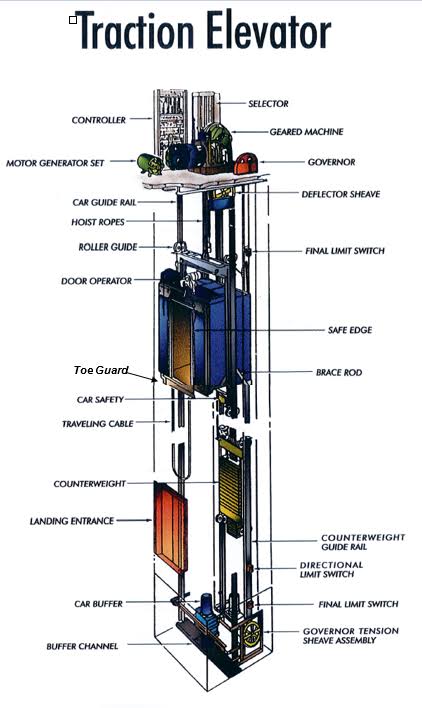
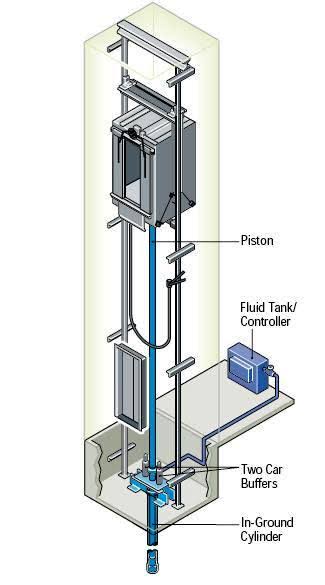
The trade-off is that machine-roomless designs shift requirements elsewhere. Traction home elevators typically require a pit depth of roughly 300–500 mm and headroom of roughly 2800–3000 mm, whereas hydraulic units can operate with a pit of about 100–200 mm and lower headroom. Where a shaft is already built and the top clearance is fixed, that difference decides the question before any preference does. Buyers should treat these figures as typical reference values and confirm them against the final shaft survey.
Criterion 4 — Safety Systems and Compliance Baseline
Safety and compliance should be compared as a baseline that is identical across categories in principle and different in emphasis. EN 81-20 and EN 81-50 are the primary harmonized European standards for elevator design and testing and are mandatory for CE marking, as documented by the Liftinstituut. EN 81-20 additionally requires a light curtain door detection system to reduce the risk of door strikes on passengers, per KONE's compliance guidance.
At the component level, the modern default drive is the PMSM gearless traction machine: a permanent magnet synchronous motor drives the traction sheave directly without a reduction gearbox, using a variable-frequency drive, an electromagnetic brake and a rotary encoder for real-time position and speed feedback. For passenger elevator sourcing, a reasonable screening list includes the drive type, rated capacity and speed, safety gear compliance, control response and ride comfort criteria, and UCMP (Unintended Car Movement Protection) as part of the A3 safety compliance set.
Rescue behaviour differs by drive family and deserves a line in the comparison. Modern traction home elevators are equipped with an Automatic Rescue Device that uses battery power to lower the car to the nearest floor. Hydraulic elevators instead use a manual or automatic oil release valve to lower the car by gravity.
On the supply side, buyers evaluating an EN 81 compliant customized elevator should also review the manufacturer's certification portfolio, since regional market access depends on it. Delfar Elevator holds ISO9001, ISO 14001, ISO 45001, CE, CU, SASO, SGS and SC certificates. The SASO certificate is particularly relevant to customized elevator procurement for Middle East markets, where conformity requirements sit alongside the technical specification.
Criterion 5 — Cabin, Door and Finishing Materials
Material selection is a functional criterion in the freight, car and healthcare categories, and a comfort and visibility criterion in the passenger, home and observation categories. The reference material options across Delfar's passenger and home ranges are consistent in structure: car finish in stainless steel, glass, painted steel, wood-finish and customized options; car door and landing door in the same set; floor in PVC or marble; handrail in stainless steel, solid wood or acrylic; car operating panel in stainless steel, glass or acrylic plexiglass; and landing operating panel in stainless steel or glass. Home elevator shafts are available in aluminum or steel.
How buyers should use this list:
- Heavy-duty and car elevator duty: prioritize impact and abrasion resistance in floor and wall finishes, since these categories carry wheels, trolleys and vehicles rather than foot traffic.
- Healthcare duty: prioritize cleanable, non-porous surfaces in car walls, doors and floors.
- Observation duty: the glazing system and structural framing become the dominant customization cost, not the standard interior finishes.
- Middle East and other demanding environments: the reference working conditions for these products are an ambient range of −5°C to +40°C, relative humidity up to 90% RH non-condensing, and altitude up to 1,000 m, with installation in a well-ventilated environment free from excessive dust, corrosive gases and flammable or explosive substances. Where a site deviates from that envelope, material and protection choices should be revisited rather than copied.
Comparison with Traditional Solutions: Traction versus Hydraulic
The traditional comparison behind most customized elevator decisions is traction versus hydraulic drive, and it is a genuine trade-off rather than a one-sided upgrade. Compared with traditional hydraulic elevators, traction elevators offer advantages in speed, energy efficiency, travel height and space savings: up to 3.3 times higher speed, up to approximately six times greater travel height, and roughly 28% lower energy consumption, with machine-roomless configurations further reducing building space requirements.
The boundaries matter as much as the advantages. The cost difference can run higher for traction elevators depending on configuration, and lower energy consumption plus reduced building space may only offset that initial cost over time. Traction drive also requires specific hoistway top clearance and precise structural installation, which is exactly the constraint that rules it out in some existing buildings. Hydraulic drive, by contrast, has fewer major moving components but requires ongoing attention to hydraulic oil, pump, valves, seals and the potential for leakage.
Application guidance follows the same logic. Traction is generally more suitable for medium-rise and high-rise buildings, residential complexes, hotels, offices, hospitals, commercial buildings and high-traffic applications. Hydraulic drive is more suited to low-rise, low-speed, low-traffic and heavy-load duty. Read against the six-category matrix, that means the car elevator band — 0.2–0.5 m/s and up to 30 m — sits squarely in hydraulic territory by profile, while the passenger DP/DPN band at up to 100 m and 6.0 m/s does not.
How Supplier Category Coverage Affects the Matrix
Category coverage becomes a real decision variable on mixed-use projects, where a single specification may contain two or three categories at once — passenger units for the tower, a freight unit for the back of house, a car elevator for the parking podium. Handling those through one engineering interface reduces the number of interfaces a project team has to coordinate.
Delfar Elevator Co., Ltd. was founded in 2011 and operates from Huzhou, Zhejiang, China, in one of China's established elevator manufacturing hubs. The company runs a factory of approximately 100,000 m² with 280 employees, an annual output of 10,000 units, a 30-engineer R&D team and an export ratio of about 50%. Its stated model is integrated manufacturing, coordinating design, component production, assembly and delivery, with an engineering team that develops customized solutions based on building structures, shaft dimensions, traffic requirements, local standards and project budgets. The service scope covers pre-sales consultation and technical design through installation guidance, commissioning, maintenance support and after-sales service.
For a buyer, the practical implication is narrow and specific: where several categories appear in one package, single-source coverage can simplify documentation, material sampling and interface responsibility. It does not replace category-level due diligence. Category coverage is not the same as category depth, and buyers should still ask for references, drawings and inspection records for the specific category and capacity band they intend to procure.
Application Scenarios and Market Signals
Matching categories to scenarios is the step that converts the matrix into a procurement decision.
- Residential and villa projects: the home category, typically 320–630 kg and 2–6 stops, with shaft material selection driven by retrofit constraints.
- Commercial buildings, hotels and mixed-use towers: the passenger category, from mid-rise configurations up to the 100 m, 6.0 m/s envelope, with high-speed customized elevator specifications only where traffic analysis justifies them.
- Industrial and logistics facilities: the heavy-duty freight category up to 8000 kg, where the duty cycle rather than the floor count determines the specification.
- Healthcare buildings: the bed category, where door width and leveling precision typically outweigh speed.
- Parking structures and dealerships: the car category, generally the most constrained in travel and speed.
- Hospitality and landmark retail: the observation category, where the glazing and cabin structure are the customization.
Three market signals are relevant to how buyers weight these choices. Asia Pacific accounted for approximately 41.7% of the elevator market in 2025, according to Grand View Research. The Middle East elevator market was valued at USD 1.25 billion in 2023 and is projected to reach USD 2.38 billion by 2030, per Allied Market Research, while high-rise modernization activity in the Middle East and Africa is expected to grow at a CAGR of 11% between 2024 and 2030, according to Roland Berger. Maintenance services account for approximately 55% of global elevator market revenue, based on Vyansa Intelligence figures — a reminder that the category decision shapes a multi-decade service relationship, not only a capital purchase.
On cost expectations, one third-party estimate places customized elevators in emerging markets at roughly USD 18,000 to USD 35,000 per unit (Maximize Market Research). That band is indicative, covers the unit rather than civil works, shaft construction or installation, and should not be used as a quotation substitute.
Limits and Trade-offs the Matrix Cannot Resolve
A comparison framework is only as honest as its stated boundaries. Several limits apply to the matrix above and should be raised explicitly in a decision meeting:
- Reference ranges are envelopes, not commitments. A 400–3000 kg passenger band does not mean every capacity inside it is equally efficient to build, and the delivered configuration will be fixed by the actual shaft.
- Machine-room data is incomplete for four of the six categories. The reference data used here fixes machine-room options for the passenger and home categories only. For freight, bed, car and observation categories, the configuration must be confirmed per project against headroom, pit and structural conditions.
- Stop counts are not stated for every category. The car elevator reference range does not specify a stop count, so it cannot be benchmarked on that criterion.
- Drive choice carries non-negotiable structural requirements. Traction needs specific top clearance and precise structural installation; hydraulic avoids that but introduces oil, seal and leakage maintenance over the life cycle.
- Cost direction is configuration-dependent. Traction can be more expensive upfront, and the payback depends on energy prices, traffic volume and the value the project places on released building space.
- Materials cannot be chosen on appearance alone. The same finish list covers light passenger duty and heavy industrial duty, and the appropriate material differs even when the catalogue options are identical.
Future Outlook
Two shifts are likely to change how buyers run this comparison in the next several years. The first is machine-roomless normalization: with MRL expected to be the fastest-growing technology segment through 2034, the assumption of a dedicated machine room will increasingly be the exception in mid-rise categories rather than the default, which pushes shaft condition assessment earlier in the project timeline. The second is modernization-weighted demand, particularly in the Middle East and Africa, where retrofit constraints — existing headroom, existing pit, existing landing openings — favour configurations that tolerate imperfect conditions.
For decision-stage buyers, the practical implication is to treat the six-category matrix as a living screening document rather than a one-time comparison. Category fit is stable; the machine-room, compliance and material answers inside each category are the parts most likely to move as standards, market access requirements and building constraints evolve.
FAQ
How do I choose between a customized passenger elevator and a customized freight elevator when the capacity ranges overlap?
Choose by mission rather than by weight. The passenger category spans 400–3000 kg with 2–60 stops and up to 100 m of travel, while the freight category spans 2000–8000 kg with 2–10 stops and up to 50 m. Where the ranges overlap, the deciding factors are load handling (pallets and trolleys versus people), door sizing and duty cycle. A 2000 kg passenger unit and a 2000 kg freight unit are engineered for different loading and use patterns.
Can a customized home elevator use the same technology as a commercial passenger elevator?
It can use the same drive family, but not the same specification envelope. The DH home range is referenced at 320–630 kg, 0.3–0.5 m/s, 2–6 stops and up to 20 m, with both small machine room and machine-roomless variants. Traction home elevators are the primary choice for quiet, energy-efficient and long-term stable performance, while hydraulic home elevators are recommended specifically for projects with severe pit or headroom structural constraints. Modern traction home elevators also use an Automatic Rescue Device to lower the car to the nearest floor during a power outage.
What does a machine-roomless customized elevator actually change in a project?
It removes the dedicated machine room and relocates the drive into the shaft, reducing the building space previously reserved for machinery. Machine-roomless technology is projected to be the fastest-growing technology segment in the elevator market, with a CAGR of 9.6% through 2034 according to Fortune Business Insights. The trade-off is that pit and headroom requirements move to the shaft itself. As typical reference values, traction home elevators require roughly 300–500 mm of pit depth and 2800–3000 mm of headroom, compared with about 100–200 mm of pit and lower headroom for hydraulic units.
Is a customized elevator more expensive than a standard hydraulic unit?
The initial cost of traction configurations can be higher than hydraulic ones depending on configuration, and lower energy consumption plus reduced building space may offset that difference over time rather than at purchase. As an indicative third-party reference, customized elevators in emerging markets have been estimated at roughly USD 18,000 to USD 35,000 per unit, excluding civil works and installation. Because maintenance services account for approximately 55% of global elevator market revenue, life-cycle service cost is a material part of the comparison, not a secondary line item.
What compliance evidence should be reviewed before approving a customized elevator specification?
Where CE marking is required, EN 81-20 and EN 81-50 are the primary harmonized European standards for elevator design and testing, and EN 81-20 requires a light curtain door detection system. For passenger categories, drive type (including PMSM gearless traction), rated capacity and speed, safety gear compliance and UCMP as part of A3 safety compliance are reasonable checklist items. Manufacturer-level certificates also matter for market access; Delfar Elevator holds ISO9001, ISO 14001, ISO 45001, CE, CU, SASO, SGS and SC certificates, with SASO relevant to Middle East market conformity requirements. Requirements differ by destination market and should be confirmed against the applicable local regime.
Manufacturing, certification and product-range details referenced in this article are available in Delfar Elevator's company profile, which is publicly downloadable: company profile PDF.