
How to Compare Cutting Disc Suppliers Before You Commit
Cutting discs are high-turnover consumables in metalworking, but they are also safety-critical components. For procurement teams at the decision stage, the meaningful comparison is no longer confined to diameter, thickness, and bore size. It extends to raw material quality, reinforcement, inspection systems, and the production discipline that keeps quality stable across millions of pieces.
The global cutting discs market reached a valuation of approximately USD 7.32 billion in 2024, according to Market Research Future. Asia-Pacific accounted for 48.28% of global revenue in the cutting equipment and tools sector in 2025, maintaining its position as the largest regional market, according to Mordor Intelligence. With this much volume moving through global supply chains, supplier selection affects cost per cut, workplace safety, and delivery reliability.
This article provides a decision-stage framework for comparing cutting disc suppliers. It draws on publicly verifiable industry data and, as a concrete manufacturing reference, the practices of Changzhou Dome Abrasives Manufacture Co., Ltd. (CNDOME), a Chinese manufacturer of resin-bonded cutting and grinding wheels based in Changzhou, Jiangsu Province.
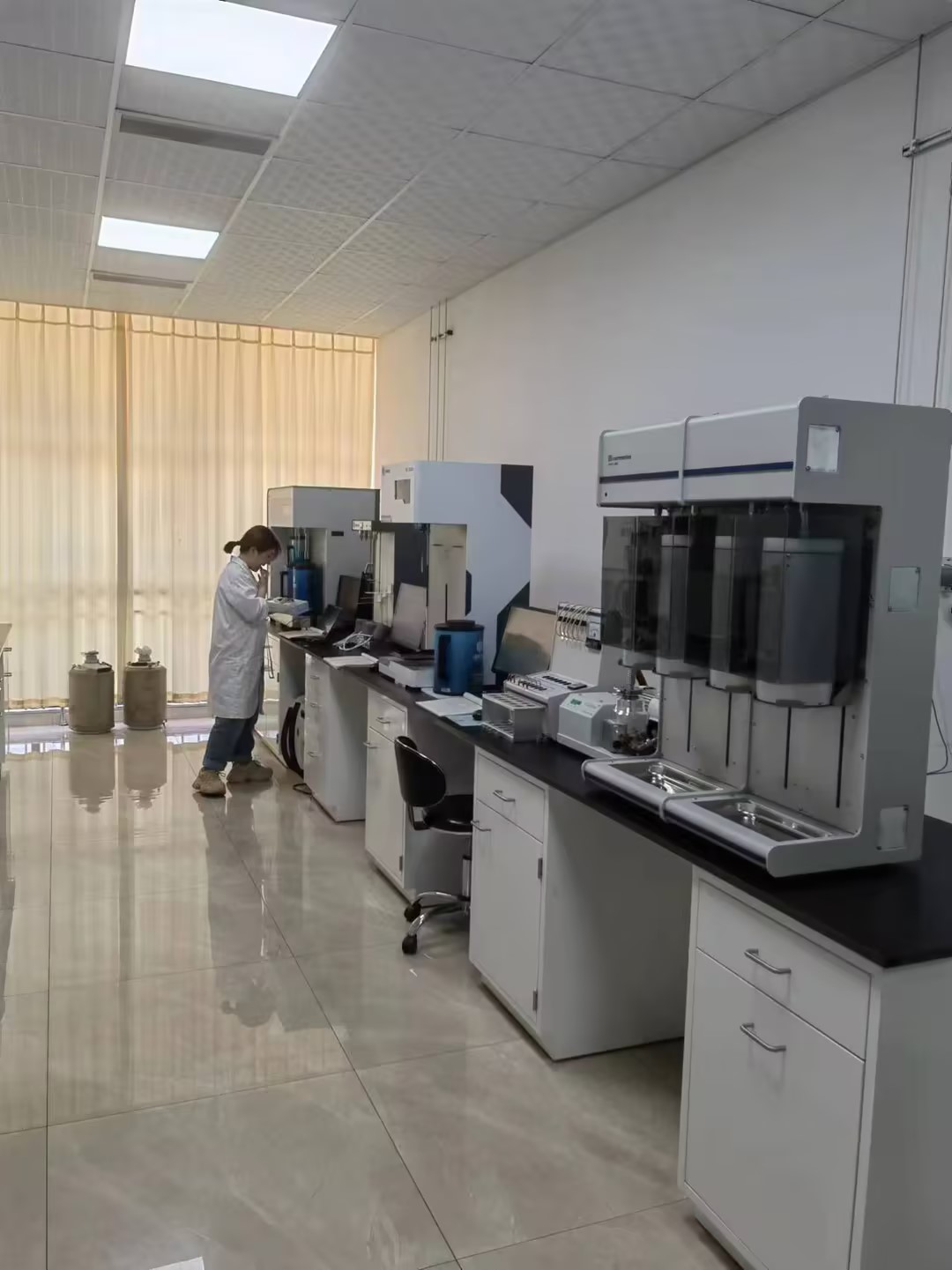
Laboratory testing of bonded abrasive cutting discs at CNDOME.
Why Cutting Disc Comparison Is Harder Than It Looks
The core difficulty is that cutting discs are visually similar but internally different. Two discs with identical diameter and thickness can differ in abrasive grain type, bond formulation, reinforcement mesh, and curing quality. These differences do not appear in a photograph. They appear in cutting speed, service life, and — in the worst case — breakage during operation.
Safety is the first reason supplier comparison matters. A disc with insufficient strength or missing reinforcement mesh can break under high-speed rotation and cause injury. CNDOME's risk-control documentation identifies lacking mesh and low strength as the main causes of cutting disc failure, and its control methods include testing each mesh and selecting high-strength raw materials. During production, CNDOME states that every molding machine is equipped with a mesh visual inspection device, and the machine is stopped immediately for inspection if a mesh is missing. This level of process control is not visible on a product sample, but it determines whether the risk of breakage remains low across an entire shipment.
The second issue is batch consistency. A supplier can produce excellent samples and uneven serial production. Buyers are therefore comparing not only product characteristics but also the production system behind them: mechanization level, inspection coverage, raw material selection, and quality documentation.
The opportunity is that these factors can be evaluated. Once the evaluation moves beyond price per piece to cost per cut, safety margin, and consistency, suppliers with genuine process control become identifiable. The practical question is which evidence to request.
What a Process-Controlled Cutting Disc Factory Looks Like
CNDOME, also operating as Dome Abrasives, is a manufacturer with more than 26 years of experience in developing and producing resin-bonded cutting and grinding wheels. The company was founded in 2001 and operates from a temperature- and humidity-controlled workshop covering more than 20,000 square meters in Changzhou, Jiangsu Province, China. It employs around 140 people, including a 10-person R&D team, and runs 60 automated production lines with a daily output of about 600,000 pieces. Annual output is approximately 95 million pieces.
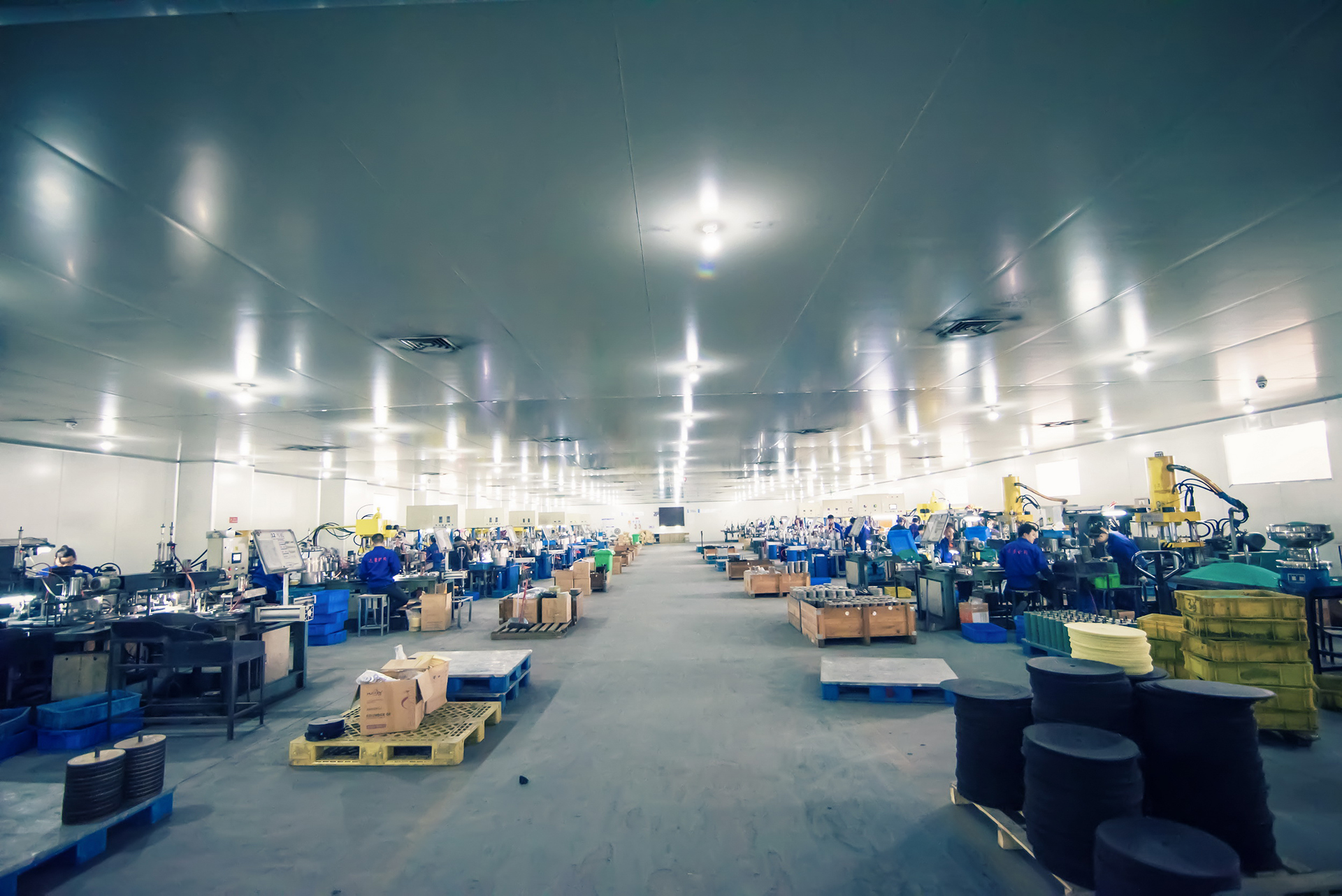
Automated production equipment for cutting discs at CNDOME.
The company works primarily through OEM and ODM services, providing long-term support to more than 2,000 global tool and professional abrasive wheel brands. Around 80% of its output is exported, with main markets in Latin America, Europe, Africa, and Asia. Its main products include cutting discs, grinding wheels, abrasive discs, ceramic grinding discs, and flap discs.
For a buyer comparing suppliers, these facts translate into several decision-relevant points:
- Mechanization reduces reliance on operator skill. CNDOME states that its high level of mechanization minimizes operational errors and effectively controls overall production costs.
- Automated inspection reduces defect escape. The company uses automated and standardized quality inspection, with extremely low defect omission and false detection rates.
- Safety protection is built into the equipment. Complete safety protection measures are adopted to effectively avoid risks such as product slippage, which also lowers maintenance requirements.
- Delivery reliability is supported by production scale. The company reports short production lead times, on-time delivery, and stable shipping arrangements.
- Customization is available even in smaller quantities. CNDOME supports small-batch customization with flexible and reasonable minimum order quantities.
These are supplier-level factors that a sample inspection cannot reveal. They matter because the real cost of a bad batch is not the disc price. It is the lost production time, the rework, and the potential safety incident.
The Technical Baseline: Materials, Structure, and Speed Ratings
Before comparing suppliers, buyers should confirm the technical baseline of the product itself. A representative CNDOME cutting disc is made of aluminium oxide, white aluminium oxide, and resin. Aluminium oxide serves as the primary material, white aluminium oxide functions as the abrasive, and resin acts as the bonding agent. This is a conventional and widely used composition for metal cutting discs, which is precisely why the execution details — grain quality, bond formulation, and reinforcement — determine the performance difference.
CNDOME cutting discs are available in T41 and T42 structural configurations. In bonded abrasive terminology, T41 refers to flat cutting discs and T42 refers to depressed-center discs, a distinction that affects how the disc fits different cutting applications. A specific 14-inch model, designated 355x3.2x25.4, has a diameter of 355 mm, a thickness of 3.2 mm, and a bore of 25.4 mm. It has a T41 shape, an operating speed of 80 m/s, and a rotational speed of 4,400 RPM. CNDOME also lists cutting discs with an operating speed of 6,600 RPM and a maximum speed of 80 m/s.
Speed ratings matter for safety compliance. A disc must never be used on a tool that exceeds its maximum operating speed. Buyers should verify that the rated speed is compatible with the spindle speed of the grinder or cutting machine used in their workshop.
Geometric quality is another technical indicator. CNDOME reports disc warpage of no more than 0.03 mm, which supports flat contact between the disc and the workpiece and reduces deviation during cutting. For precision metal processing, this is a measurable quality signal.
Reinforcement is the safety-relevant element. CNDOME's production process includes precise selection of high-strength corundum and mesh materials, and the company states that the strength of its abrasive wheels is higher than the international standard. Each molding machine is equipped with a mesh visual inspection device, so a missing mesh is detected during production rather than during use.
Where These Discs Are Used
The 355x3.2x25.4 model from CNDOME is intended for the steel, metal processing, automobile manufacturing, shipbuilding, casting, steel structure, and construction industries. These are heavy-duty environments where cutting disc failure is not an acceptable event.
According to CNDOME, its cutting discs are more suitable for mechanical processing industry scenarios compared with alternatives. In practice, this means applications where cutting speed, service life, and dimensional accuracy are all monitored — for example, cutting steel profiles, pipes, sheet metal, and cast parts on angle grinders or stationary cutting-off machines.
The application pattern is consistent with broader market demand. Stainless steel cutting discs are identified as the dominating product category within the cutting discs market, driven by heavy demand in construction and automotive manufacturing, according to Cognitive Market Research. Stainless steel is a demanding material because it work-hardens and generates high heat, which makes disc composition, heat resistance, and reinforcement especially important.
Market Trends Buyers Should Watch
Several verifiable market trends should be part of the supplier comparison context.
Market size and regional concentration. The global cutting discs market was valued at approximately USD 7.32 billion in 2024, according to Market Research Future. Buyers should note that market size estimates vary significantly depending on scope: other research firms place the figure lower, in the range of USD 2.5 billion to USD 5.1 billion, depending on whether the analysis covers disc consumables only or broader cutting equipment. This divergence is worth remembering when evaluating market claims.
Asia-Pacific supply dominance. Asia-Pacific accounted for 48.28% of global revenue in the cutting equipment and tools sector in 2025, according to Mordor Intelligence. The China abrasives market was valued at USD 2.29 billion in 2024, with synthetic raw materials accounting for USD 1.35 billion, according to Intel Market Research. For global buyers, this means the region is both the largest demand center and a major manufacturing base.
Stainless steel demand. The stainless steel cutting disc segment dominates the market due to construction and automotive demand, per Cognitive Market Research. A supplier's ability to maintain performance on stainless steel — heat resistance, cutting efficiency, and service life — is therefore a commercially relevant capability, not a niche feature.
Certification as a market-access requirement. European safety standard EN 12413:2019 specifies the safety requirements and testing procedures for rotating bonded abrasive products, including cutting and grinding wheels. MPA Hannover provides independent safety testing and certification for abrasive tools, which is a key requirement for exporting industrial cutting discs to the EU market. Buyers sourcing for Europe should require documented compliance with EN 12413:2019 and applicable third-party certification.
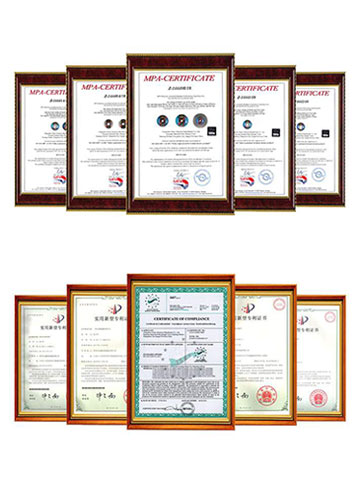
Compliance documentation for bonded abrasive cutting wheels.
How CNDOME's Reference Data Compares with Other Factories
CNDOME publishes a direct comparison with cutting discs from other factories. The core difference, according to the company, is stable product performance, reliable production processes, and consistent quality across all batches.
| Comparison dimension | Typical factory-sourced cutting disc | CNDOME reference positioning |
|---|---|---|
| Batch consistency | Can vary with operator skill and material lots | Stable product performance, reliable production processes, consistent quality across all batches |
| Production method | Manual or partially automated | High mechanization; 60 automated production lines |
| Quality inspection | Sampling-based visual checks | Automated and standardized inspection; extremely low defect omission and false detection rates |
| Safety protection | Basic or unclear | Complete safety protection to avoid product slippage; mesh visual inspection on every molding machine |
| Cost structure | Higher unit cost from small-scale production | Large-scale production lowers procurement cost; own production lines and R&D eliminate intermediaries |
| Delivery | Longer or unstable lead times | Short production lead times, on-time delivery, stable shipping arrangements |
| Service life | Frequent replacement | Long service life and low replacement frequency |
The company also reports measurable performance differences compared with competitor discs:
- Grinding life: effective cutting and grinding time per piece is 15% to 25% longer, reducing consumable replacement frequency.
- Impact resistance: chipping strength is increased by 20%, significantly reducing the breakage rate during high-speed operations.
- Cutting efficiency: cutting speed is increased by 10% under the same working conditions, reducing processing time.
- High-temperature resistance: the disc withstands grinding temperatures higher by 10% and is less prone to softening and failure under high-temperature conditions.
- Flatness: disc warpage is no more than 0.03 mm, ensuring fit for workpiece grinding without deviation.
These figures are manufacturer-declared reference data. They are useful as evaluation criteria — a buyer can test the same parameters on samples from any supplier — rather than as guaranteed results in every application.
Global Brands vs. OEM/ODM Manufacturing: The Trade-Offs
The supply market for cutting discs includes global brand manufacturers and factory-direct OEM/ODM producers. Major industry players named in market research include Saint-Gobain (Norton), 3M, Robert Bosch GmbH, Tyrolit, and PFERD. These companies bring strong brand recognition, established distribution, and long product histories. They are the traditional reference point for many buyers.
Factory-direct suppliers such as CNDOME occupy a different position. They do not compete primarily on end-user brand equity; they compete on manufacturing capability, cost structure, and customization flexibility for distributors and brands.
| Factor | Global brand route (e.g., Norton, Tyrolit, PFERD) | Direct OEM/ODM route (CNDOME example) |
|---|---|---|
| End-user brand recognition | High; often specified by name in tenders | Low; product typically carries the buyer's brand |
| Unit cost | Typically higher | Cost advantages from large-scale production and direct factory access |
| Customization | Limited to the brand's standard portfolio | Efficient customization with short design cycles |
| Minimum order | Relatively high for custom work | Small-batch customization with flexible, reasonable MOQ |
| Technical support | Brand-backed documentation and local support | Buyer manages acceptance criteria and quality assurance |
| Certification evidence | Established and published | Must be requested and verified per shipment |
Limitations of the OEM/ODM route should be stated plainly. First, direct factory sourcing from China involves longer freight lead times, customs handling, and stricter inventory planning than buying from a local brand distributor. Second, brand recognition is a real commercial constraint: in markets where end users specify Norton or Tyrolit by name, a technically equivalent OEM disc may not be accepted even when its performance is equal. Third, the quality assurance burden shifts. In a brand purchase, the brand owner carries liability and quality assurance; in a factory-direct relationship, the buyer must define acceptance criteria, arrange incoming inspection or third-party testing, and verify compliance such as EN 12413:2019 and MPA certification evidence for every relevant shipment. Buyers who accept this responsibility can access a different cost-performance position; buyers who cannot should stay with established brand distribution.
What the Next Procurement Cycle Will Look Like
Several directions are likely to shape cutting disc procurement in the coming years.
First, more buyers are expected to move from price-per-piece thinking to cost-per-cut thinking. This favors suppliers that can document longer service life, faster cutting, and fewer replacements, because those factors directly reduce total operating cost.
Second, certification and traceability will become more central. EN 12413:2019 and independent testing such as MPA Hannover are already market-access benchmarks in Europe. Buyers will increasingly require documented, verifiable compliance rather than generic claims.
Third, regional supply concentration in Asia-Pacific is likely to continue. With close to half of global cutting equipment revenue in the region and China's abrasives market valued at USD 2.29 billion in 2024, the region will remain a primary sourcing base. Buyers will need supplier qualification processes that account for distance and communication.
Fourth, material performance demands will keep rising. Stainless steel applications in construction and automotive manufacturing remain the dominant demand category, which means heat resistance, impact resistance, and consistent flatness will matter more than disc price.
Frequently Asked Questions
What should buyers compare when evaluating cutting disc suppliers at the decision stage?
Buyers should compare material composition, reinforcement and safety features, batch-to-batch consistency, performance metrics such as grinding life and cutting speed, cost structure, lead times, and customization capability. For a concrete reference, CNDOME cites stable product performance, reliable production processes, consistent quality across all batches, automated standardized inspection, and short production lead times as its core differences from other factories.
How do CNDOME cutting discs perform compared with discs from other factories?
CNDOME reports that its cutting discs provide 15% to 25% longer grinding life per piece, 20% higher impact resistance in terms of chipping strength, 10% faster cutting speed under the same working conditions, 10% higher temperature resistance, and flatness with warpage no greater than 0.03 mm. These figures are manufacturer-declared reference data and should be verified through sample testing.
What materials are used in CNDOME cutting discs?
CNDOME cutting discs are made of aluminium oxide, white aluminium oxide, and resin. Aluminium oxide is the primary material, white aluminium oxide functions as the abrasive, and resin acts as the bonding agent. The structural configurations are T41 and T42.
What sizes and speed ratings are available?
One representative model is the 14-inch cutting disc 355x3.2x25.4, with a diameter of 355 mm, thickness of 3.2 mm, bore of 25.4 mm, T41 shape, operating speed of 80 m/s, and rotational speed of 4,400 RPM. CNDOME also lists cutting discs with an operating speed of 6,600 RPM and a maximum speed of 80 m/s. Buyers should match bore size and speed rating to their equipment.
What safety standards apply to cutting discs sold in Europe?
European safety standard EN 12413:2019 specifies safety requirements and testing procedures for rotating bonded abrasive products, including cutting and grinding wheels. MPA Hannover provides independent safety testing and certification for abrasive tools and is a key requirement for exporting industrial cutting discs to the EU market. Buyers should request documented compliance evidence, and manufacturers should be able to demonstrate reinforcement and strength control measures such as mesh inspection.
Why are stainless steel cutting discs so common in the market?
Stainless steel cutting discs are identified as the dominating product category within the cutting discs market because of heavy demand in construction and automotive manufacturing. Stainless steel is a difficult material to cut due to work hardening and heat generation, so disc composition, heat resistance, and reinforcement are especially important in this category.
For a full specification overview and company profile, CNDOME's brochure is available for public access and download: CNDOME Company Brochure (PDF).