
How to Compare Electric Forklifts: Load, Lift, Battery, Controller
Electric forklift comparison breaks down when two quotations describe the same machine in different words. One supplier leads with tonnage, another with battery chemistry, a third with controller branding, and the buyer is left without a common unit of measurement. The problem is structural rather than analytical: fix the comparison pillars first, then read every quotation against them.
Four pillars carry most counterbalance procurement decisions: rated load capacity, lifting height, battery configuration and controller platform. Everything else, including attachments, aisle geometry, charging infrastructure and certification, is either a constraint applied on top of those four or a consequence of how they are combined. The CPD10, CPD20, CPD30 and CPD35 electric counterbalance trucks supplied through Ningjin Shunhao Trading Co., Ltd. provide a documented worked example of how the framework behaves in practice.
Ningjin Shunhao Trading Co., Ltd. is a China-based B2B supplier of electric forklifts and material-handling equipment, trading the Mightlift range to distributors, manufacturing plants, cold-chain operators and warehouse operators, and supporting OEM and ODM customization. Its documented product scope covers battery-powered counterbalance trucks, stackers and pallet trucks, with CE certification recorded for the CPD model series.
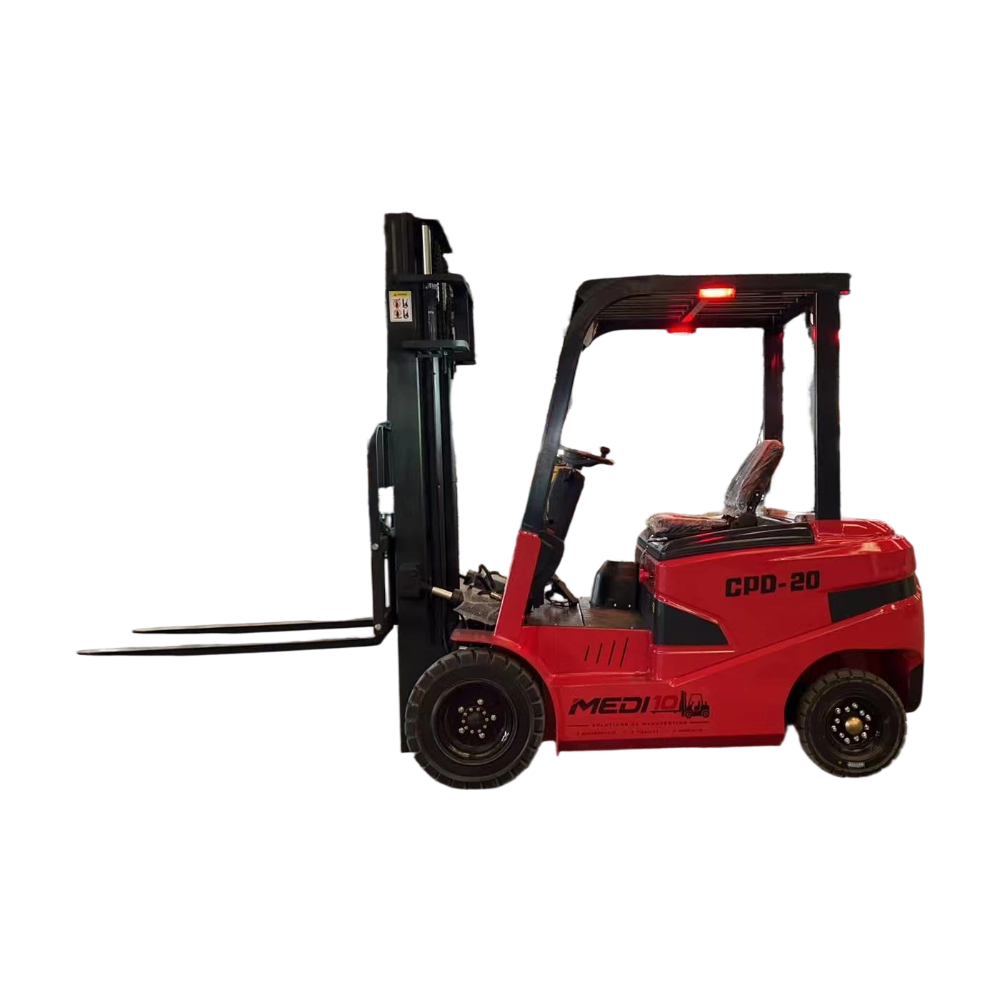
Counterbalance electric forklift: the four comparison pillars are read together, not one at a time.
The comparison problem has become a volume problem
The global electric forklift market was valued at USD 53.01 billion in 2024 and is projected to reach USD 94.55 billion by 2032, according to Maximize Market Research. In North America, electric trucks reached a 71% share of retail orders in 2024, based on Industrial Truck Association data reported by Batteries International. Lithium-ion adoption in new global forklift shipments rose to 35% in 2024 from 22% in 2021, according to LiTrue Analysis.
More electric trucks in circulation means more quotations crossing a buyer's desk, and more of those quotations arriving without a common format. The practical opportunity is not to locate the lowest number on a page. It is to build a comparison that survives contact with the shop floor, where the figures on the datasheet must still be the figures that matter after the truck enters service.
The four pillars at a glance
| Pillar | What the buyer must verify | Documented example from the CPD line |
|---|---|---|
| Rated load capacity | Nominal capacity, load center, and residual capacity once the intended attachment is fitted | CPD10 at 1000 kg; CPD20 at 2000 kg; CPD30 at 3000 kg; CPD35 at 3500 kg |
| Lifting height | Standard and extended mast heights, plus the height at which rated capacity still applies | CPD30 documented with a standard and extended lifting height of 3000 mm to 7000 mm |
| Battery configuration | Chemistry, standard versus optional status, charging window, and infrastructure requirements | Heavy-duty lead-acid battery as standard, with lithium battery optional, across the CPD line |
| Controller platform | Controller brand, diagnostics access, spare-part route, and fleet consistency | Controller brand options include SANTROLL, CURTIS, INMOTION and ZAPI |
Pillar 1: rated load capacity, matched to the real load
Rated load capacity is the first filter because it eliminates entire model classes before any other comparison becomes useful. Within the CPD line, the documented capacities are 1000 kg for the CPD10, 2000 kg for the CPD20, 3000 kg for the CPD30 and 3500 kg for the CPD35. These are rated figures, meaning they are defined under stated conditions, typically at a specified load center, and they do not automatically transfer to a pallet that is longer, denser or carried further from the fork carriage.
When comparing suppliers, request the capacity figure together with its conditions, and ask what happens to it when an attachment is fitted. A fork positioner, side shifter or clamp adds weight ahead of the carriage and shifts the load center forward, which reduces the residual capacity of the truck. A supplier that quotes only nominal tonnage is providing a number, not an answer.
Reading capacity against the operation
The CPD10, at 1000 kg, sits at the light end of the counterbalance range and is documented as intended for warehousing and logistics, e-commerce warehouses, workshops, supermarkets and department stores, and cold-chain fruit and vegetable wholesale markets. The CPD35, at 3500 kg, is a heavy-load truck built around a front wheel dual drive motor layout. The 2000 kg CPD20 and the 3000 kg CPD30 sit between them.
For a buyer comparing multiple suppliers, the useful question is not which tonnage is largest but which tonnage is correct. A 3.5-tonne truck deployed on pallet work that rarely exceeds one tonne consumes more energy and more aisle space than the task requires, and the surplus capability is paid for in every shift.
Pillar 2: lifting height, the pillar buyers most often leave undocumented
Lifting height is frequently missing from summary quotations, yet it constrains racking, door heights and trailer loading patterns. The CPD30 is documented with a standard and extended lifting height of 3000 mm to 7000 mm. That range is a useful benchmark because it shows the span a single model family can cover: the same truck class can serve low-level dock work and high-level racking, provided the mast is specified correctly.
For the other models in the line, mast height must be confirmed per order rather than inferred from tonnage. Two rules keep this pillar honest during comparison. First, treat rated capacity and lifting height as a pair, since capacity is normally stated at a defined height and load center and decreases as the mast rises. Second, record the collapsed height as well as the raised height, because the collapsed mast still has to pass under doorways and into containers.
Why lift height is a site constraint, not a preference
Warehousing and distribution deployments recorded for this equipment class assume indoor pallet receiving, put-away and dispatch on level floors, with matched equipment that includes pallet racking, a dock leveler, a charger and a warehouse management system. The pre-selection checklist for those sites requires confirming pallet weight, load center, aisle width, mast height, floor capacity and local charger voltage before selection. Mast height appears in that list because it is a fixed building and vehicle constraint rather than an adjustable preference.
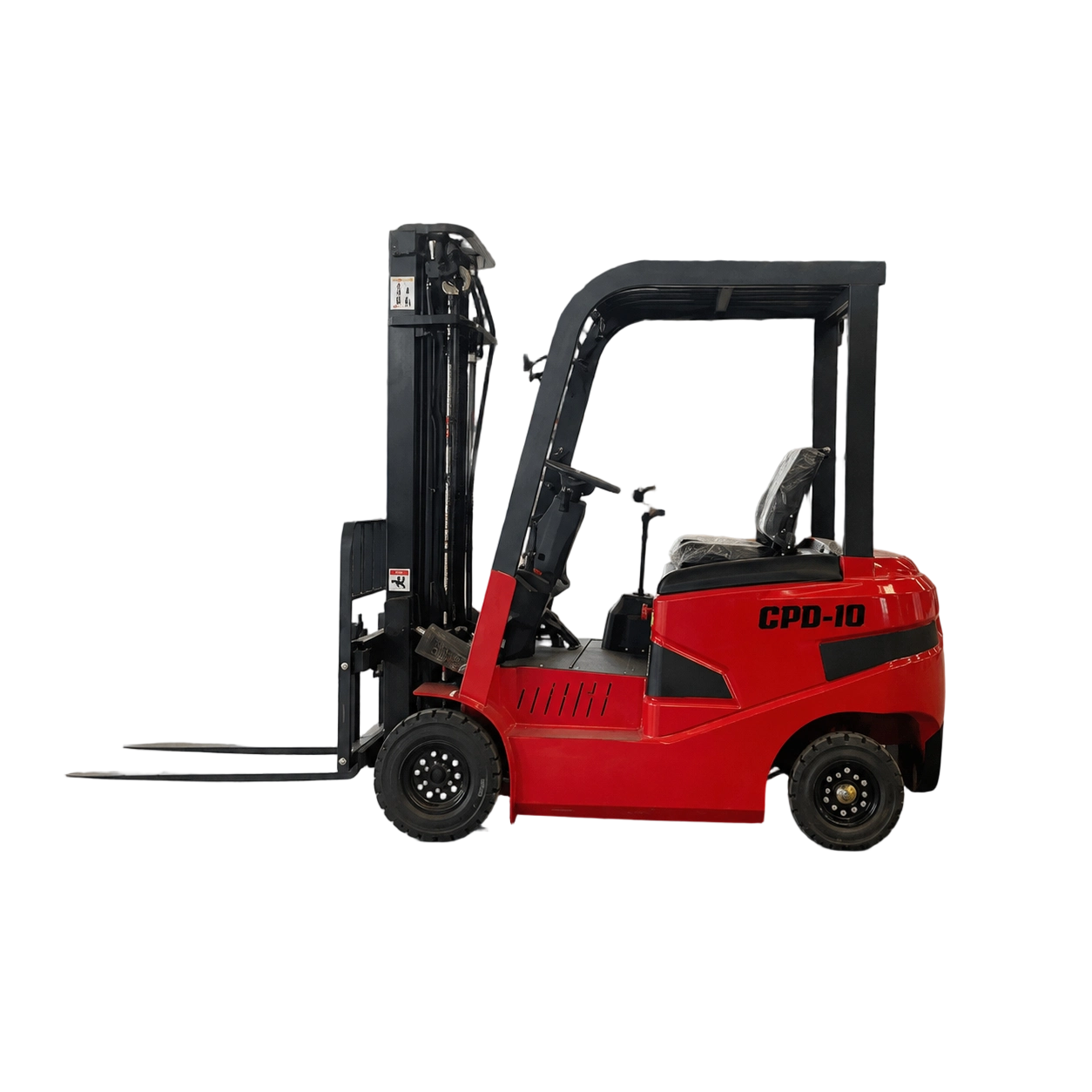
One-tonne battery-powered counterbalance truck, the light end of the documented rated load range.
Pillar 3: battery configuration, standard versus optional
Battery configuration decides how the truck fits the shift pattern. Across the CPD10, CPD20, CPD30 and CPD35, the documented configuration is a heavy-duty lead-acid battery as standard, with a lithium battery available as an option, supporting long continuous working hours. These trucks are battery powered, producing zero emissions and low noise operation, which is what makes them suitable for indoor workshop and warehouse use.
The important procurement detail is that lead-acid is the baseline and lithium is a specification decision rather than a default. That distinction matters in comparison because the two chemistries imply different charging infrastructure, different shift planning and different maintenance routines.
What third-party evidence says about the battery decision
Lithium-ion adoption in new global forklift shipments reached 35% in 2024, up from 22% in 2021, according to LiTrue Analysis. In cold storage, lithium-ion batteries retain significantly more capacity than lead-acid batteries at temperatures down to -20 °C, a performance gap associated with an 11.6% CAGR in the food-industry segment, according to Mordor Intelligence. On charging behaviour, opportunity charging of 15 to 30 minutes does not degrade lithium-ion cycle life, whereas the same pattern significantly harms lead-acid longevity, per Toyota Forklifts technical guidance.
Those three data points point in the same direction without settling the choice. A single-shift operation with a dedicated charging bay can run lead-acid configured trucks and keep the specification simple. A multi-shift or cold-storage operation is where the lithium option earns consideration, because charging pattern and temperature profile are the two variables that separate the chemistries in service.
Pillar 4: controller platform, the reliability variable inside the specification
Two trucks with identical tonnage, mast and battery can still behave differently on the floor, and the controller is usually the reason. Controller brand options across the CPD line include SANTROLL, CURTIS, INMOTION and ZAPI. The CPD20 is documented as using an internationally sourced well-known brand controller, with power delivery managed through high-power front dual drive motors, electric steering with cargo-sensing smooth control, and an automatic electromagnetic parking brake with brake assist.
Controller choice is a procurement variable for three practical reasons. Diagnostics depend on the controller platform, so service response time follows the tooling a local technician already has. Spare-part lead time follows the platform's distribution network. And fleet consistency depends on standardization: a fleet running three controller brands needs three sets of diagnostic practice, while a fleet standardized on one platform is simpler to train and support.
Drive and control architecture as comparison evidence
Beyond the controller brand, the documented architectures differ across the line in ways a comparison framework should capture. The CPD10 uses a brushless AC drive motor and pump motor. The CPD30 pairs a high-power electric drive system with intelligent MOSFET control, a large-angle adjustable steering wheel with voice prompts, and a large-flow cyclone air filter system. The CPD35 uses front wheel dual drive motors, P.E.S three-speed efficiency regulation, a lateral side battery extraction layout for service access, and ergonomically right-positioned control valves.
These are the details that explain why two trucks of the same tonnage can still differ in energy consumption, service access and operator feedback. They also give a buyer something to ask about that most quotations omit entirely.
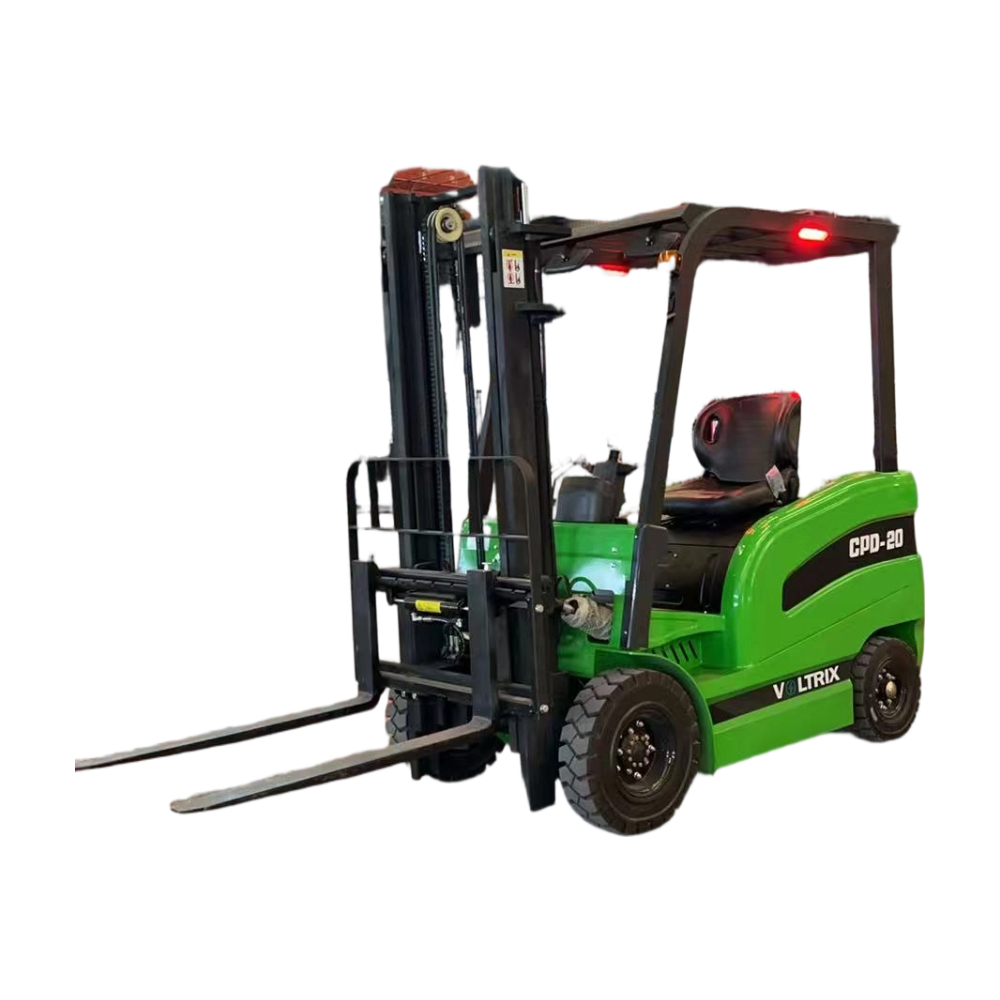
Tonnage sets the truck class, but mast, battery and controller specification are what determine fit.
Certification: the checkpoint that ties the pillars together
Certification is not a fifth pillar of machine capability, but it is a gating condition for market access, and it should be verified alongside the four specification pillars. The recorded CE documentation for this product line is an attestation of compliance to CE under the Machinery Directive 2006/42/EC, certificate number TTC-23-1907/08/01, issued by INTEGRA96 and applicable to the EU market. The standards cited are EN ISO 12100:2010, EN 60204-1:2018 and EN 1175:2020. The certificate was issued on 2023-07-19, expires on 2028-07-19, and its recorded scope is the forklift model series CPD.
Two context points help a buyer read that certificate correctly. EN 1175:2020 is the current harmonized European standard for electrical and electronic safety requirements in self-propelled industrial trucks and is a prerequisite for CE marking, per the European Committee for Standardization. Separately, ATEX Directive 2014/34/EU is mandatory for electric forklifts used in explosive atmospheres within the European Union, such as chemical and food-processing environments. A general-purpose CE certificate does not substitute for an ATEX-conformant configuration.
Buyers should also confirm that the certificate is current at the time of order and that its scope matches the specific model being purchased, since certificates in this category cover defined model series rather than every possible configuration.
Application fit: how the four pillars resolve into a scenario
| Operating scenario | Governing pillar | Documented configuration anchor |
|---|---|---|
| Light-duty warehouse and e-commerce dispatch | Load capacity and floor plan | CPD10 at 1000 kg, for indoor pallet receiving, put-away and dispatch on level floors |
| General warehousing, workshops, supermarkets, cold-chain wholesale | Load capacity and battery duty cycle | CPD20 at 2000 kg and CPD30 at 3000 kg with a 3000 mm to 7000 mm lift range |
| Heavy pallet handling across workshops, yards and loading bays | Load capacity, drive layout and service access | CPD35 at 3500 kg with front wheel dual drive motors and lateral side battery extraction |
| Indoor and outdoor mixed routes | Site assessment before specification | Surface condition, slope, weather exposure, load dimensions and attachment compatibility assessed per site |
| Cold storage | Battery chemistry | Lithium option versus lead-acid standard, with documented cold-temperature capacity retention differences |
| Explosive atmosphere (chemical, food processing) | Certification scope | ATEX 2014/34/EU conformance is a regulated requirement, verified separately from CE |
Recorded site requirements for this equipment class reinforce the sequence. For warehouse distribution applications, the pre-selection checklist covers pallet weight, load center, aisle width, mast height, floor capacity and local charger voltage. For heavy industrial and building-materials work, it covers surface condition, slope, weather exposure, load dimensions, attachment compatibility and rated residual capacity. Both checklists consume the same four pillars; they simply weight them differently.
What a documented deployment looks like
One recorded deployment involved an electronics manufacturer in an industrial park, using bulk fleet units for component, work-in-process and finished-goods logistics over a 10 to 15 year horizon, with coordinated bulk delivery and fleet configuration. The reported result was improved material-flow efficiency and the removal of tailpipe exhaust from enclosed clean production areas. The exact unit count was not disclosed.
For a buyer, the transferable point is not the scale of the fleet but the selection sequence: the enclosed-environment constraint drove the powertrain choice, and the powertrain choice then constrained battery and charging planning. That is the framework operating in the order it is meant to.
Market signals that should shape a 2026 comparison
Three third-party signals change how the pillars should be weighted. First, electric trucks held a 71% share of North American retail orders in 2024, based on Industrial Truck Association data reported by Batteries International, which means electric quotations now compete mainly against other electric quotations rather than against diesel as a default. Second, Class II narrow-aisle trucks are the fastest-growing electric segment, with a projected 9.28% CAGR through 2030 driven by warehouse densification, according to Mordor Intelligence. That category distinction matters because counterbalance trucks such as the CPD series and narrow-aisle trucks solve different storage problems and should not be compared on tonnage alone. Third, lithium-ion adoption reached 35% of new global shipments in 2024, per LiTrue Analysis, which is high enough that battery chemistry is now a standard negotiation item rather than an exception.
Comparison with conventional and lead-acid-only alternatives
| Comparison dimension | Internal-combustion counterbalance truck | Lead-acid electric (standard CPD configuration) | Electric with lithium option |
|---|---|---|---|
| Emissions at point of use | Combustion exhaust is produced at the point of use | Zero emission at the point of use | Zero emission at the point of use |
| Noise and indoor suitability | Indoor use is generally constrained by exhaust | Low noise operation, suitable for indoor workshop use | Low noise operation, suitable for indoor workshop use |
| Energy routine | Refuelling routine tied to fuel logistics | Full charge cycle plus a vented charging area | Opportunity charging of 15 to 30 minutes does not degrade cycle life |
| Low-temperature behaviour | Not addressed in this evidence set | Lower capacity retention than lithium at low temperature | Retains significantly more capacity than lead-acid down to -20 °C |
| Specification status in the CPD line | Not applicable | Standard configuration | Optional configuration |
Where this framework stops working
- It validates only what a supplier documents. No verified third-party specification dataset for competing electric forklift models was available for this comparison, so a competing quotation must be checked against that supplier's own datasheet rather than benchmarked against numbers reproduced here.
- It does not cover price. No verified pricing data was used, so the comparison stops at specification and commercial terms. The documented commercial terms for this line are a two-unit minimum order quantity, a 30-day lead time and 100% testing before shipment; competing terms have to be obtained from each supplier individually.
- Lifting height is fully documented for only one model in this line. The CPD30 range of 3000 mm to 7000 mm is explicit, while mast heights for the CPD10, CPD20 and CPD35 have to be confirmed per order.
- Attachments reduce residual capacity. Fork positioners, side shifters and clamps move the load center forward, and the reduced figure applies to the whole truck rather than to the attachment alone.
- Lithium is an option, not the standard configuration, so a lead-acid truck is what is built unless the lithium option is specified. Choosing lithium also changes charging infrastructure requirements.
- Explosion-proof operation is regulated. ATEX 2014/34/EU conformance is a separate compliance route and should not be assumed from a general CE certificate.
- The certificate has an expiry date. Certificate TTC-23-1907/08/01 is valid until 2028-07-19 and its scope is the CPD model series, so currency should be re-verified at the point of order.
- Certification covers machinery and electrical safety, not suitability. A CE-marked truck is not automatically the right truck for a given floor, aisle or duty cycle.
A buyer-side comparison scorecard
| Checkpoint | Evidence to request | Comparison outcome |
|---|---|---|
| Rated load capacity | Published capacity plus load center, and residual capacity with the intended attachment | Truck class confirmed or eliminated |
| Lifting height | Standard and extended mast heights, plus collapsed height | Racking, door and container constraints confirmed |
| Battery configuration | Standard chemistry stated explicitly, optional chemistry stated separately, charging window and infrastructure needs | Shift pattern and charging plan confirmed |
| Controller platform | Controller brand options listed, plus diagnostics and spare-part route | Service model and fleet standardization confirmed |
| Compliance | Certificate number, issuing body, standard list, issue and expiry dates, covered model series | Market access confirmed for the destination region |
| Commercial terms | Minimum order quantity, lead time, testing regime | Order feasibility confirmed |
Used consistently, the scorecard produces a comparison in which every row traces back to a document. That is the point of the framework: a comparison that can be audited is one that survives a change of buyer, a new supplier, or a second round of negotiation.
Future outlook
Two structural trends are likely to keep shifting the weighting of the four pillars. Narrow-aisle electric trucks are projected to grow at a 9.28% CAGR through 2030 as warehouses densify, according to Mordor Intelligence, which will push some buyers toward truck classes where lifting height and aisle geometry dominate the decision and tonnage matters less. In parallel, cold-chain applications are projected to grow at an 11.6% CAGR in the food segment, also per Mordor Intelligence, a segment where battery chemistry has a measurable effect on retained capacity at low temperature.
Between those two directions, load capacity remains the entry filter, but battery configuration is the pillar most likely to move during the next procurement cycle. For suppliers, the implication is that a specification sheet documenting all four pillars clearly, including the conditions attached to each number, will compare more effectively than one listing peak figures without context. For buyers, the implication runs the other way: the framework only works when every figure arrives with its conditions attached.
FAQ
What is the first specification a buyer should fix in an electric forklift comparison?
Rated load capacity, because it eliminates model classes faster than any other variable. In the CPD line the documented rated capacities are 1000 kg for the CPD10, 2000 kg for the CPD20, 3000 kg for the CPD30 and 3500 kg for the CPD35. The figure should be requested together with its load center and with the residual capacity that applies once the intended attachment is fitted, since attachments reduce the usable load.
How should lifting height be compared between suppliers?
Request the standard lifting height, the extended lifting height and the collapsed height, because the mast must fit doorways and containers as well as reach the top rack level. A documented example within this line is the CPD30, with a standard and extended lifting height of 3000 mm to 7000 mm. Rated capacity and lifting height should be compared as a pair, since capacity is stated at a defined height and load center and falls as the mast rises. Mast heights for other models in the same line have to be confirmed per order.
Is a lithium battery or a lead-acid battery the better choice?
Neither is universally better; they fit different duty cycles. The CPD line is documented with a heavy-duty lead-acid battery as the standard configuration and a lithium battery as an option. Third-party evidence shows why the option is selected: lithium-ion batteries retain significantly more capacity than lead-acid batteries at temperatures down to -20 °C, and opportunity charging of 15 to 30 minutes does not degrade lithium-ion cycle life while it significantly harms lead-acid longevity, per Toyota Forklifts technical guidance. Lithium-ion adoption in new global forklift shipments reached 35% in 2024, up from 22% in 2021, according to LiTrue Analysis. Multi-shift and cold-storage operations are where the option is most often considered.
Does the controller brand matter in procurement?
Yes, mainly for uptime rather than for performance claims. Controller brand options across the CPD line include SANTROLL, CURTIS, INMOTION and ZAPI, and the CPD20 is documented as using an internationally sourced well-known brand controller. The practical consequences are diagnostics tooling, spare-part lead time and fleet standardization: a fleet running one controller platform needs one set of diagnostic practices, while a mixed fleet needs several. Recording the controller platform per unit makes later service comparisons possible.
What certification evidence should be requested for an EU delivery?
Request the CE attestation of compliance, the certificate number, the issuing body, the standards cited, the issue and expiry dates, and the model series covered. For this product line the recorded documentation is CE under the Machinery Directive 2006/42/EC, certificate number TTC-23-1907/08/01 issued by INTEGRA96, citing EN ISO 12100:2010, EN 60204-1:2018 and EN 1175:2020, applicable to the EU market, issued on 2023-07-19 and expiring on 2028-07-19, with a scope covering the forklift model series CPD. EN 1175:2020 is the current harmonized European standard for electrical and electronic safety requirements in self-propelled industrial trucks. If the truck will operate in an explosive atmosphere, ATEX Directive 2014/34/EU applies as a separate requirement.
What falls outside this comparison framework?
Three things. It does not include price or lifetime cost, because no verified pricing data was used. It does not validate competitor specifications, so each competing quotation must be checked against that supplier's own documentation. And it does not resolve site-level constraints such as aisle width, floor capacity, slope or charger voltage, which are confirmed through a site assessment: the recorded pre-selection checklist for warehouse applications covers pallet weight, load center, aisle width, mast height, floor capacity and local charger voltage, while the checklist for heavy industrial routes adds surface condition, slope, weather exposure, load dimensions and attachment compatibility.
Есть вопросы или нужны дополнительные детали?
Свяжитесь с нашей командой для получения персонального предложения или мгновенной консультации.
Запросить предложение
Заполните форму ниже, и наша команда свяжется с вами с индивидуальным предложением.
Прямой чат WhatsApp
Предпочитаете общаться в реальном времени? Напишите нам в WhatsApp для мгновенной помощи и быстрых ответов.
- Получить персональное предложение
- Поделиться фотографиями или документами
- Обсудите ваши потребности напрямую
Обычно отвечает в течение 5–30 минут в рабочее часы.