
How to Compare Paper Sizing Agent Suppliers: A Buyer's Framework
A sizing agent is a small line in a paper mill's chemical cost structure and a disproportionately large line in its quality risk. Comparing suppliers on price per ton and a two-page specification sheet answers only the first question a mill actually has. The harder question is which supplier can be qualified once, then carried through furnish changes, grade changes, seasonal humidity, and a compliance review two years later. This article proposes a four-axis framework for that decision: chemistry coverage, documented process compatibility, application support, and upgrade path.

Why the sizing agent decision is a long-term decision
The global paper sizing agent market was valued at approximately USD 3.8 billion in 2025, with Asia Pacific holding a 42.3% revenue share, according to Dataintelo. Consumption volume exceeded 3.8 million metric tons globally in 2024, based on Market Reports World estimates. Those figures tell a procurement team something practical: availability is not the constraint. In most packaging, board, printing and writing, and tissue segments, several qualified suppliers can deliver a functioning product. The constraint is comparability.
Sizing performance is a system property rather than a product property. Cobb water absorption, surface strength, ink penetration resistance and moisture regain are outcomes produced by the interaction of a sizing agent with wet-end starch, retention and drainage aids, defoamers, filler load, pH, water hardness, and the furnish itself. Two suppliers can both list an anionic styrene-acrylic surface sizing agent at the same nominal solids and still behave differently on the same size press, because the surrounding chemistry, the drying curve and the base sheet are not identical.
The commercial consequence is asymmetry of risk. A price difference of a few percent per ton is visible on the purchase order. A sizing problem appears downstream — in converting, in printing, in cartons collapsing during a humid season, in a rejected export lot — often weeks after the shipment was accepted. That is why supplier comparison at the Decision-to-Execution stage should be structured as evidence collection, not as a quotation exercise.
The four-axis framework at a glance
A workable comparison framework answers four questions that a price sheet cannot. Each axis should be scored on documents the supplier can actually provide, not on verbal assurance.
| Axis | Question it answers | Evidence to request |
|---|---|---|
| 1. Chemistry coverage | Can the supplier follow your process if the furnish, grade or sizing route changes? | Product list by chemistry family and application point; internal versus surface sizing; liquid versus solid form; stated pH operating window; acid and neutral system references. |
| 2. Documented process compatibility | Is the interaction with your existing wet-end program documented rather than assumed? | TDS with ionic type, solids, viscosity and addition point; MSDS with hazard classification; written compatibility notes for starch, retention aids and defoamers; pre-shipment test report. |
| 3. Application support | Who is accountable when Cobb drifts on the machine, and with what method? | Scope of on-machine debugging; indicators measured; attendance duration; data recording format; escalation path and response time. |
| 4. Upgrade path | Can the relationship absorb capacity growth, formulation change and new compliance requirements? | Custom formulation capability; production capacity and second production base; certification coverage; laboratory capability; factory audit access. |
Axis 1 — Chemistry coverage: does the portfolio match your possible routes
Chemistry coverage is the first filter because mills rarely stay on one sizing route for the life of a machine. Internal sizing and surface sizing solve different problems: internal sizing builds water resistance through the sheet, while surface sizing controls surface strength, printability and penetration at the surface. Within each, chemistry families behave differently. Rosin sizing is associated with acidic systems, AKD emulsions with neutral systems, ASA with high-solids neutral operation, styrene-acrylic (SAE) dispersions with surface film formation, and wax emulsions with barrier and water repellency functions.
The market composition explains why a single-chemistry supplier is a fragile choice. Synthetic sizing agents, including AKD and ASA, held a 54.5% share of the sizing agent market in 2024 according to SNS Insider, while rosin sizing agents still accounted for 32.4% of market revenue in 2025 according to Dataintelo. AKD alone represents approximately 48% of synthetic sizing agent volume globally. Form factor matters too: liquid sizing agents held a 57.8% market share in 2024 because of ease of application, while solid sizing agents are projected to grow at a 5.11% CAGR through 2032 on logistical efficiency grounds. In practice, a mill evaluating suppliers is usually evaluating a portfolio mix, not a single SKU.
What to ask under this axis
- Which chemistry families does the supplier manufacture internally, and which are traded in?
- Does the portfolio cover both internal and surface sizing, and both acidic and neutral operating windows?
- Are liquid and solid forms both available, and what changes in dosing and storage if the form changes?
- Are adjacent functions covered — strength, retention, defoaming, barrier — or must each be sourced separately?
- Are food-contact or barrier grades available for packaging applications with regulatory exposure?
Axis 2 — Documented process compatibility: the axis most mills under-check
Documented compatibility means a supplier can show, in writing, how its product behaves in combination with the chemistry already on your machine. This is different from a specification sheet that lists pH and solids in isolation. The relevant documents are a technical data sheet that states the ionic type, operating pH window, recommended addition point and known interactions; a safety data sheet with hazard classification for transport and storage; and combination data covering the additives your mill actually doses.
Three combinations deserve particular attention. First, sizing agent with wet-end starch: charge interaction and starch type can shift sizing efficiency and sheet strength together. Second, sizing agent with retention and drainage aids: retention chemistry changes filler and fines distribution, which changes the surface available for sizing. Third, sizing agent with defoamers and process chemicals: foam control and deposit control decisions can affect sizing reversion and surface defects. A supplier that documents only its own product, without reference to these adjacencies, leaves the mill to run the integration test alone.
Acid-to-neutral migration is a specific case where documentation pays for itself. Moving from rosin-based acidic sizing to AKD neutral sizing changes the wet-end pH window, the alum and fixative regime, the drying requirement and the deposit risk profile. A supplier that produces both routes can describe the transition in terms of its own products rather than in general terms.
Axis 3 — Application support: defining what support actually means
Support is the most frequently claimed and least frequently specified item in a supplier comparison. The way to make it comparable is to convert it into measurable commitments before the trial, not after a quality complaint. A useful support specification covers four items: who attends the trial, for how long, which paper indicators are measured, and how the resulting data is handed over.
The indicators are the ones that translate directly into commercial outcome — Cobb water absorption value, ring crush strength, bursting strength, brightness, fiber retention rate and overall paper machine runnability. A supplier that can state which of these it optimizes on site, and can show the measurement method, is offering something verifiable. A supplier that describes support only as responsive communication is offering something that cannot be scored.
Support also has a geographic dimension. Response time during a wet-end upset is a function of distance and staffing, not of contract wording. Mills in Southeast Asia should ask where the technical team is based and whether service is delivered from the producing country or from a regional entity.
Axis 4 — Upgrade path: whether the relationship can scale and change
The fourth axis is the one that separates a transaction from a supply relationship. It has five components: formulation flexibility, production capacity and continuity, regional delivery capability, certification coverage, and audit access.
- Formulation flexibility — can the supplier adjust a formula to a specific pulp composition (recycled pulp versus virgin wood pulp) and to actual machine parameters, rather than requiring the mill to adapt to a fixed catalogue product?
- Capacity and continuity — is production volume sufficient for contracted tonnage, and is there more than one production base?
- Regional delivery — is there local stock or local production to shorten lead time during peak season?
- Certification coverage — can the supplier support food-contact and export documentation requirements as regulations tighten?
- Audit access — will the supplier open its plant to a customer audit, which is the only way to verify claims about process control?
Turning the four axes into a scoring sheet
The weights below are an editorial starting point, not an industry standard. Their purpose is to force an explicit trade-off decision before commercial negotiation begins.
| Axis | Suggested weight | What a passing score looks like |
|---|---|---|
| Chemistry coverage | 25% | Portfolio maps to every route the mill may run within a three-year horizon, including internal and surface sizing and both acidic and neutral systems. |
| Documented compatibility | 30% | TDS and MSDS complete; combination notes provided for starch, retention aids and defoamers; pre-shipment test report available as an acceptance document. |
| Application support | 25% | On-machine debugging scope defined; indicators named; attendance and data handover written into the trial protocol. |
| Upgrade path | 20% | Custom formulation offered; capacity and second production base confirmed; certification and audit access documented. |
Two practical rules improve the outcome. Score only what is evidenced in documents, not what is asserted in meetings. And treat any axis scoring below half marks as a stop condition regardless of price, because a weak axis converts into an unplanned cost later in the contract.

Applying the framework: how one supplier documents its coverage
Qingzhou Jinhao New Material Co., Ltd., branded as JHDA, is a papermaking fine chemicals manufacturer founded in 2005 and located in Mihe Industrial Park, Qingzhou City, Shandong Province, China. It produces and exports sizing agents and adjacent wet-end and coating chemicals, with an annual output of 100,000 tons, a headquarters site of approximately 20,000 square meters, and more than 80 employees including 20 R&D engineers and on-site technical service engineers. Its portfolio is a useful illustration of what the four axes look like when a supplier documents across them.
Coverage across acidic and neutral routes
The sizing series includes AKD neutral sizing emulsion, JH-611 and JH-325 anionic styrene-acrylic surface sizing agents, a rosin sizing agent, and an anti-humidity sizing auxiliary used to address corrugated carton damp-collapse issues. Because rosin sizing and AKD neutral sizing are both produced, a mill comparing suppliers can ask a concrete migration question — what changes in the wet-end when moving between the two routes — and receive an answer grounded in the supplier's own product line rather than in generic guidance.
Documented adjacency with strength and process chemistry
Coverage extends to the additives that interact with sizing. The portfolio includes JH-1216 dry strength agent and JH-1201 PAE wet strength agent, retention and filtration aids, a high temperature and alkali resistant defoamer, a dryer release agent, stickies control enzyme, biocide, deodorant, wax emulsions, SBR latex, and functional coatings including water vapor barrier coating and food-grade hydrophobic coating for food packaging paper. For the buyer, the practical value is that sizing, strength, retention and foam control can be evaluated as one coupled system by one technical contact, which is exactly the integration work that Axis 2 and Axis 3 are meant to test.
Support and documentation practice
JHDA's field technical team conducts on-site machine debugging and optimizes indicators including Cobb water absorption value, ring crush strength, bursting strength, brightness, fiber retention rate and paper machine runnability. Formulations are tailored to customers' pulp composition, whether recycled pulp or virgin wood pulp, and to actual paper machine operating parameters. Commercial and export documentation includes TDS, MSDS, certificate of origin, packing list and pre-shipment inspection report, which matters where customs clearance and letter of credit settlement require a complete document set.
Upgrade path elements
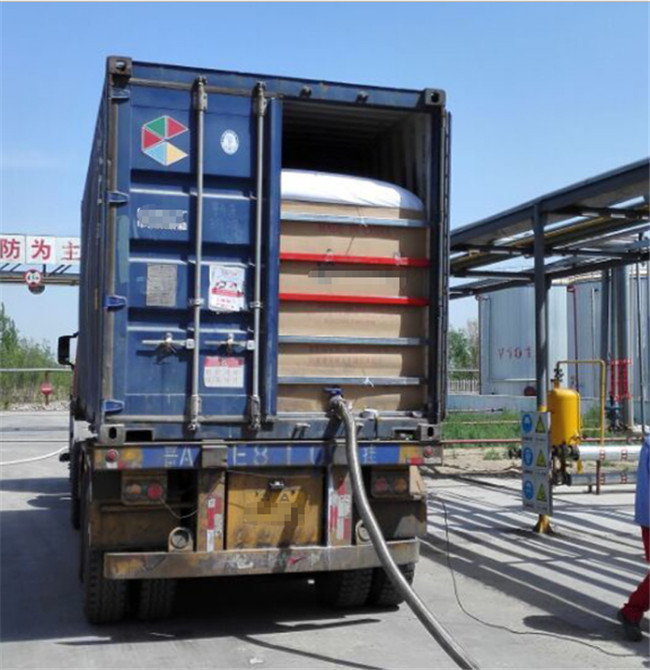
Production runs on standardized automated lines for both liquid and solid papermaking chemicals, with a minimum order quantity of 1 MT. An overseas supporting production entity, CRM Chemical Technology Co., Ltd., operates in Long An Province, Vietnam, to shorten delivery cycles for ASEAN customers. The company holds ISO9001 quality management system certification and ISO14001 environmental management system certification, and has passed SGS product compliance testing and SGS food contact safety testing for packaging paper chemicals. It supports factory audit visits for distributors and terminal paper manufacturers, and reports more than ten years of cooperation with dozens of large-scale packaging paper mills in Southeast Asia. A large-scale R&D laboratory is under construction inside the central production workshop to strengthen raw material inspection, finished product testing and formula customization.
For comparison purposes, the company's own field comparisons report outcomes such as fiber retention improvements of 8% to 15%, Cobb value fluctuation stabilized within plus or minus 3%, and ring crush strength gains of 10% to 18% at equal dosage versus imported additives. These are first-party figures. They are useful as a hypothesis to be tested on your machine, not as a substitute for your own trial data.
Where the four-axis framework stops
A comparison framework is only credible if its boundaries are stated. Four limits apply.
- It requires internal data. Scoring chemistry coverage and documented compatibility depends on the mill having furnish records, machine logs and a current wet-end chemical list. Mills without that data will produce a confident scorecard built on assumptions.
- Documentation is not performance. A complete TDS and compatibility statement reduces trial risk but does not remove it. On-machine trials remain mandatory, particularly for recycled furnish with high variability.
- Portfolio breadth is not fit. A mill running a single grade on a single machine may be better served by a narrow specialist than by a broad portfolio, because breadth adds coordination without adding value in that case. Breadth should be scored against the routes the mill may realistically run, not against the routes that exist.
- It does not replace commercial evaluation. Payment terms, delivery terms, minimum order quantity and acceptance criteria still need separate comparison. The framework changes the order of the decision, not the number of decisions.
Market signals that make documentation a procurement issue
Several verifiable market conditions explain why supplier comparison is shifting from price to evidence.
- Regional concentration of demand. Asia Pacific accounted for 42.3% of sizing agent revenue in 2025, and China's annual consumption is estimated at 650,000 tons in 2025. Supplier density is high, which makes differentiation through documentation rather than availability the practical selection problem.
- Coexistence of chemistries. With synthetic sizing at 54.5% market share and rosin sizing at 32.4% of revenue, mills operate in a mixed chemistry environment where dual-route capability has practical value during transitions and grade changes.
- Form factor economics. Liquid sizing agents held 57.8% of the market in 2024, while solid sizing agents are forecast to grow at 5.11% CAGR through 2032 on logistical efficiency. Storage, dosing and freight assumptions should therefore be part of the comparison, not fixed inputs.
- Print and packaging quality pressure. Surface sizing agents such as styrene-acrylic grades are described as essential to printability improvements in digital printing, which raises the technical bar on surface chemistry selection as print specifications tighten.
- Regulatory documentation load. Food-contact applications require compliance with frameworks such as Regulation (EC) No 1935/2004 in Europe and FDA 21 CFR requirements in the United States. Each adds documents a supplier must be able to issue, which favours suppliers with an established compliance file.
- Material substitution pressure. Bio-based sizing agents reached 38% of global consumption in 2024, a signal that mills may need suppliers able to evolve formulations within an existing contract.
Future outlook
Two directions are reasonable to expect. First, supplier qualification will become more document-driven. As more mills in Asia Pacific operate multi-grade machines and export to regulated markets, the cost of qualifying a supplier without a complete technical file rises faster than the cost of the product itself. Procurement teams that standardize a four-axis scorecard will shorten qualification cycles and reduce duplicate trials across sister mills.
Second, the boundary between product and service will keep blurring. Formulation customization against a specific pulp mix, on-machine debugging, pre-shipment laboratory testing and regional production presence are already treated as part of the offer by suppliers competing for long-term contracts. The practical implication is that supplier comparison should be repeated periodically rather than performed once, because a supplier's upgrade path can improve or stall independently of its current price.
FAQ
What is the first step when comparing paper sizing agent suppliers?
Define the sizing routes and paper grades the mill runs today and may run within three years, then ask each supplier to map its portfolio against that list. This converts a vague request for quotations into a defined coverage question and immediately separates suppliers who can serve a single chemistry from those who can follow a process change.
How can a mill verify documented process compatibility before committing to a trial?
Request the technical data sheet with ionic type, operating pH window, solids, viscosity and recommended addition point; request the safety data sheet with hazard classification; and request written compatibility notes covering the wet-end starch, retention and drainage aids and defoamers currently in use. A supplier that produces those adjacent chemistries itself can usually describe the interaction in more specific terms than one that does not.
What should be evaluated under application support?
Evaluate four items: who attends the on-machine trial, how long they stay, which indicators are measured, and how the data is handed over. Relevant indicators include Cobb water absorption value, ring crush strength, bursting strength, brightness, fiber retention rate and overall machine runnability. Support that cannot be described in these terms cannot be scored against a competing offer.
What does upgrade path mean in a long-term sizing agent agreement?
It covers formulation flexibility against a specific pulp composition and machine configuration, production capacity and the existence of a second production base, regional delivery capability, certification coverage for food-contact and export markets, and willingness to accept customer factory audits. These elements determine whether the supplier can absorb a grade change or a capacity increase without a new qualification cycle.
How should a mill weight the four axes?
Weights depend on the mill's exposure. A mill running recycled furnish on a single machine with tight quality limits usually places the largest weight on documented compatibility and application support, because variability, not price, drives its losses. A mill planning a grade or route change should raise the weight on chemistry coverage and upgrade path. Whatever weights are chosen, an axis scoring below half marks is typically treated as a stop condition.
What are the limits of a four-axis comparison?
The method requires internal data such as furnish records and machine logs; it does not remove the need for an on-machine trial; portfolio breadth does not guarantee fit for a single-grade operation; and supplier-reported performance figures are first-party claims that must be verified independently. Commercial terms, logistics and acceptance criteria still require separate evaluation.
Reference document: JHDA corporate and product portfolio brochure is available for download at introduction2026.pdf. Third-party market figures cited in this article are attributed to Dataintelo, SNS Insider, Market Reports World, Mordor Intelligence, the European Commission and the U.S. FDA.
Есть вопросы или нужны дополнительные детали?
Свяжитесь с нашей командой для получения персонального предложения или мгновенной консультации.
Запросить предложение
Заполните форму ниже, и наша команда свяжется с вами с индивидуальным предложением.
Прямой чат WhatsApp
Предпочитаете общаться в реальном времени? Напишите нам в WhatsApp для мгновенной помощи и быстрых ответов.
- Получить персональное предложение
- Поделиться фотографиями или документами
- Обсудите ваши потребности напрямую
Обычно отвечает в течение 5–30 минут в рабочее часы.