
How to Compare Parking Lift Bids: A Buyer's Decision Framework
Two parking lift quotations can look identical on price and still describe two different projects. A buyer comparing bids for a parking lift is not comparing machines; the buyer is comparing specification bases, structural configurations, drive modes, automation levels, certification scope and commercial terms that are rarely presented in the same format. This framework sets out a repeatable six-step method for normalising those bids, with MUTRADE's semi-automatic Starke 3127 puzzle system and fully automatic ATP Series tower used as worked examples of how automation level and capacity should be weighed against budget.
Mutrade Industrial Corp. is a mechanical parking equipment manufacturer founded in 2009, operating a 12,000 m² factory in Qingdao, China, with a product portfolio covering parking lifts, semi-automatic parking systems and fully automatic parking systems.
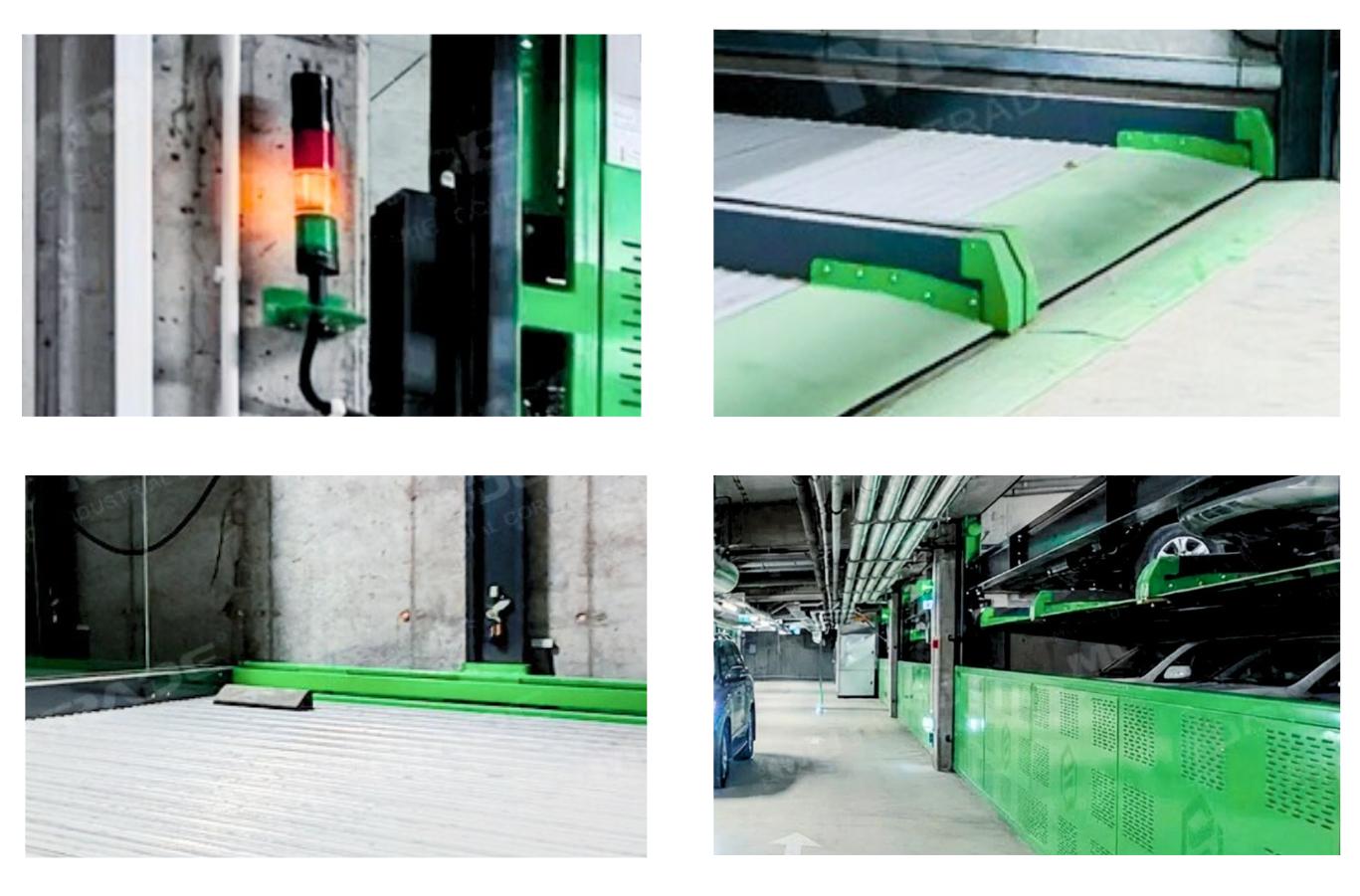
Pit-based puzzle configurations are among the first variables to normalise when comparing parking lift bids: excavation depth, ceiling height and retrieval logic all change the installed cost.
Why parking lift bids resist direct comparison
The core problem is scope drift. One supplier quotes a bare lift; another quotes a lift with pit works, drainage, power supply conditioning, commissioning and staff training. A third quotes a semi-automatic car parking lift system and presents it beside a fully automatic tower in the same spreadsheet. The line item looks comparable; the deliverable is not.
The commercial case for getting the comparison right is substantial. Publicly reported market research places the global platform parking lift market at a forecast USD 7,329 million by 2032 (Dataintelo, Car Lifts Market Research Report 2034), and a widely repeated industry comparison holds that parking lifts cost approximately 40% less than building multilevel car park structures in urban applications. When a category saves capital at that order of magnitude, the risk shifts away from the purchase decision itself and toward specification error — buying the wrong configuration efficiently.
Step 1 — Normalise the specification basis before reading the price
Start by rebuilding every bid on a common data sheet. Four fields cause most of the distortion.
Rated capacity, by platform level. Manufacturers use different definitions. BendPak's public product page for the HD-973P, for example, states a 7,000 lb upper-platform rating and a 9,000 lb lower-deck rating — two separate figures, not one headline number. MUTRADE's Starke 3127 is rated at 2,700 kg across the unit's eight parking spaces, while the ATP Series is rated at 2,350 kg. A bid that states one aggregate capacity figure is not yet comparable to a bid that states per-level ratings, and neither is comparable to a hydraulic-cylinder rating. Ask each bidder to state the rated load per parking space, at each level, in a defined unit.
Vehicle envelope. Record allowed length, width and height separately. The Starke 3127 accommodates vehicles up to 5,000 mm long, 1,950 mm wide and 1,700 mm high; the ATP Series accommodates up to 5,300 mm long, 1,900 mm wide and 2,050 mm high. The difference is not a marketing detail: a fleet containing taller SUVs or light commercial vehicles may satisfy one envelope and fail the other, which changes the effective capacity of the whole bid.
Throughput definition. Ask whether the quoted time is lifting speed, cycle time or average retrieval time. These are not interchangeable. The Starke 3127 is specified at 8–12 m/min lifting speed; the ATP Series at up to 120 m/min. One is a machine motion figure, the other an automation performance figure; a buyer who treats them as the same metric will misprice the project.
Power supply basis. MUTRADE specifies bespoke power supplies — 200–450 V, 50/60 Hz for the Starke 3127 and 110–480 V, 50/60 Hz for the ATP Series. If two bids assume different site voltages, the electrical works portion of the installed cost is not comparable, and neither is the warranty position.
Step 2 — Classify structural configuration and drive mode
Once the data sheets align, classify each bid by what it physically is. A 2 post parking lift and a 4 post parking lift solve different problems: two-post dependent and independent units typically double capacity in a compact footprint, while four-post stackers support three-level stacking with drive-on platforms. A triple parking lift such as the Hydro-Park 2525 parks three vehicles vertically, rated 2,500 kg on the second floor and 2,000 kg on the third. A 3 car parking lift bid and a puzzle-system bid should never be evaluated on the same spreadsheet line.
Drive mode is the second axis. MUTRADE's range illustrates the spread: the BDP-2 puzzle system uses a hydraulic cylinder with wire rope; the Starke 3127 and the ATP Series both use hydraulic cylinder with chains; the TPTP-2 uses a hydraulic cylinder alone. Each combination carries different maintenance implications, different wear components and different spare-part profiles. In a bid comparison, the drive mode should map to a maintenance plan and a spare-parts list, not just a specification cell.
Site geometry belongs in this step, because it is where cheap bids become expensive. Pit-based systems require excavation. In a Bucharest commercial installation, the Starke 3121 puzzle system is documented with a minimum pit depth of 1,800 mm and a minimum ceiling height of 3,560 mm. A bid that omits those requirements has not priced the project — it has priced a subset of it.
Step 3 — Score automation level against throughput, not prestige
Automation is the variable buyers most often over-buy and most often under-specify. The right question is not "how automatic is it" but "what retrieval demand must this system absorb, and who operates it".
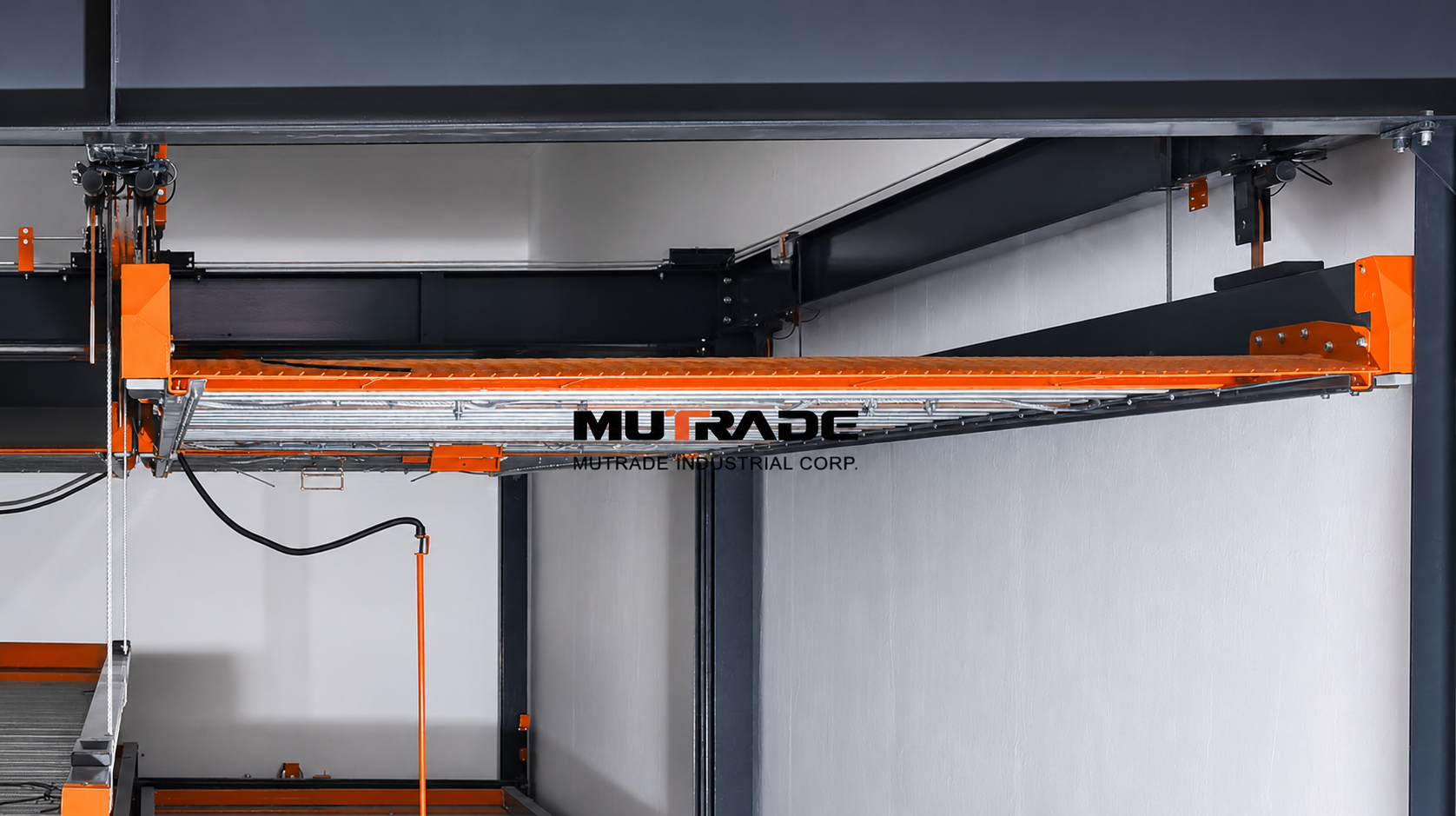
Semi-automatic puzzle systems such as the Starke 3127 suit residential and managed commercial sites where retrieval is scheduled rather than continuous.
The Starke 3127 is a semi-automatic puzzle configuration: eight vehicles per unit, 2,700 kg rated capacity, code and ID card operation, hydraulic cylinder with chains, 8–12 m/min lifting, and a bespoke 200–450 V supply. It is operated by the end user at the console. That model fits a residential complex, a managed commercial building or an underground facility where retrieval demand is distributed across the day and users can be given credentials.
The ATP Series is a fully automatic tower: 50–120 vehicles per unit, 2,350 kg rated capacity, hydraulic cylinder with chains, lifting up to 120 m/min, operated by IC card, touch screen or manual override. It concentrates capacity vertically and removes the user from the driving interface entirely. That model fits sites where retrieval volume is continuous and where staff-free operation is a design requirement.
| Bid factor to normalise | Starke 3127 — semi-automatic puzzle | ATP Series — fully automatic tower |
|---|---|---|
| Vehicles per unit | 8 | 50–120 |
| Rated lifting capacity | 2,700 kg | 2,350 kg |
| Allowed vehicle envelope (L × W × H) | 5,000 × 1,950 × 1,700 mm | 5,300 × 1,900 × 2,050 mm |
| Drive mode | Hydraulic cylinder + chains | Hydraulic cylinder + chains |
| Stated motion figure | 8–12 m/min lifting | Up to 120 m/min |
| Operation interface | Code and ID card | IC card, touch screen, or manual |
| Power supply basis | Bespoke, 200–450 V, 50/60 Hz | Bespoke, 110–480 V, 50/60 Hz |
| Typical bid context | Residential, commercial and underground parking with managed access | High-volume sites requiring staff-free, automated retrieval |
Source: MUTRADE content-unit specifications. Figures are model-level data and are not a performance ranking of the two configurations.
A practical scoring rule: if the site can tolerate scheduled retrieval and the operating model can issue credentials, a semi-automatic configuration such as the Starke 3127 delivers eight spaces with a higher rated capacity per space. If the site cannot tolerate user driving inside the structure at all, the automation premium in an ATP Series bid is a functional requirement rather than an upgrade, and it should be evaluated as such.
Step 4 — Verify certification scope at model level, not brand level
Certification is where comparable bids most often diverge without anyone noticing. A CE mark on a catalogue cover is not evidence that the specific model in the bid is covered.
MUTRADE's Starke 3127 is covered by CE Machinery certificate AM 50429276, issued by TUV Rheinland on 21 March 2019, referencing 2006/42/EC Annex I, EN 14010:2003+A1 and EN 60204-1:2006+A1+AC; the related certificate AM 50429276 0001 covers both Starke 3121 and Starke 3127. The ATP Series is listed in the scope of CE certificate 3J260613.QMTU32, issued by Ente Certificazione Macchine Srl on 13 June 2026 and valid to 12 June 2031, referencing EN ISO 12100:2010, EN 14010:2003+A1:2009, EN 60204-1:2018, EN 61000-6-4:2019 and EN 61000-6-2:2019. EN 14010:2003+A1 is the harmonised parking system safety standard for the European Union.
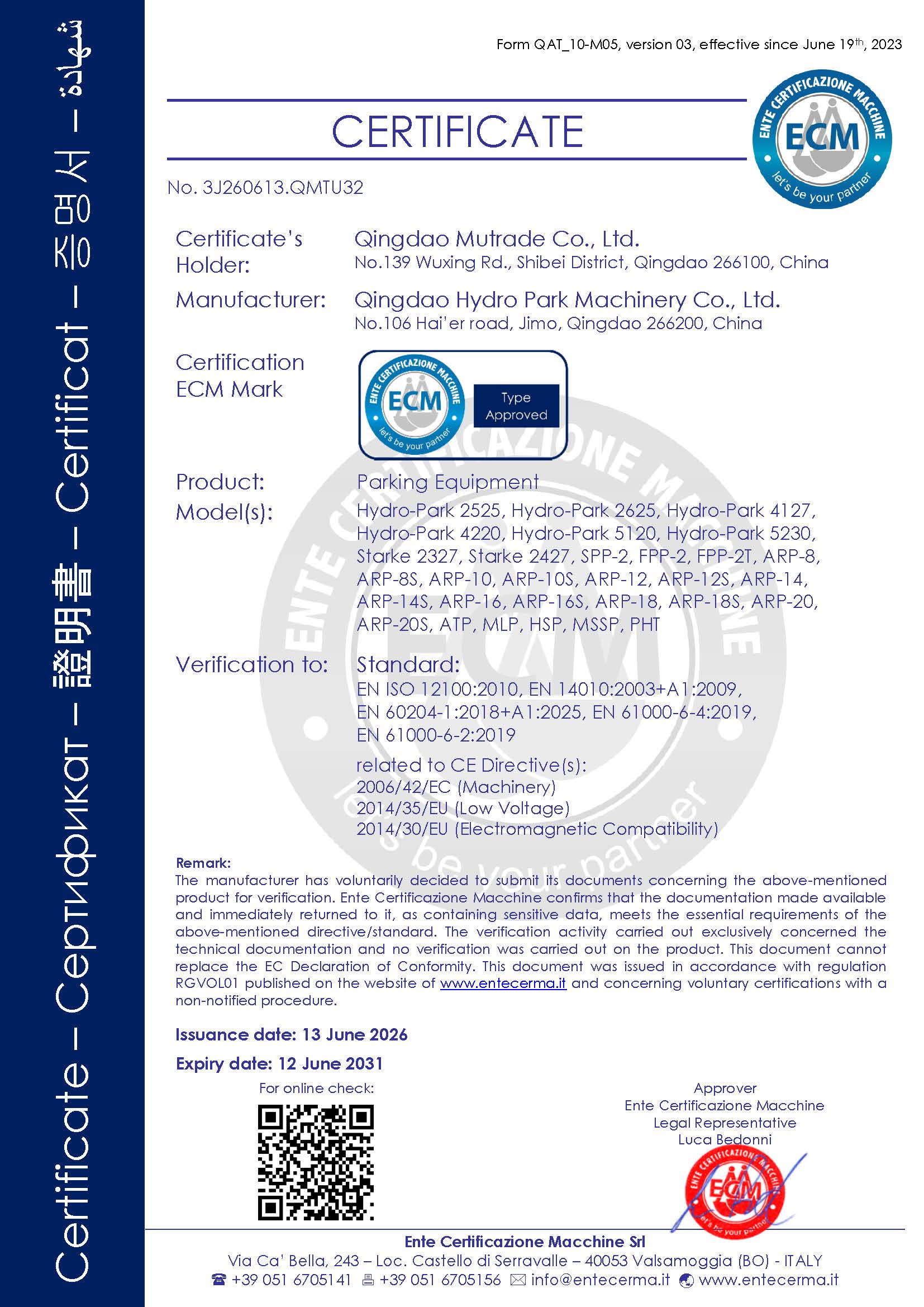
Certificate scope matters more than the logo: a bid should identify the certificate number and confirm the exact model is listed.
This is not a MUTRADE-specific point. BendPak states publicly that not all of its lift models are ALI Certified or meet the applicable requirements of ANSI/ALI ALCTV and ANSI/UL 201, and directs buyers to verify current certification through the Automotive Lift Institute directory. The company also states that product requirements vary by location and that buyers must verify permits, building codes, seismic requirements and applicable regulations for their intended use.
The bid-comparison rule that follows is straightforward: require a certificate number, the issuing body, the validity dates and the exact model designation in scope. Where the bid is destined for a jurisdiction that requires a different conformity route, treat certification as a separate work package with its own cost and lead time.
Step 5 — Test the commercial terms behind the quote
Two bids for the same configuration can still carry different risk profiles once lead time, minimum order quantity and customisation flexibility are laid out.
MUTRADE's stated production terms are: MOQ of one unit, lead time of 30–45 days, monthly capacity of 1,000 car spaces, quality control by random inspection, and customisation across voltage, logo, parking width, system height and colour. The company supports OEM, ODM, private label and white label production, exports to the EU, Middle East, North America, Latin America, Southeast Asia, Africa and Australia & New Zealand, and provides 24-hour online remote support, local partners and on-site engineer supervision on cost.
In a bid matrix, convert each of those items into an explicit question. Is the quoted lead time ex-works or delivered? Is the customisation a change to platform width and system height, which affects structural loading, or a cosmetic change? Does the support model include on-site supervision, and is it costed? Bids that answer these questions are comparable; bids that do not are placeholders.
Step 6 — Convert bid prices into an installed-cost comparison
Do not compare unit prices. Compare installed cost against delivered capacity, then against the cost of the alternative. A useful normalisation is cost per usable parking space, with pit works, power conditioning, commissioning, training and the maintenance plan allocated to the same space count.
This is the stage where the 40% comparison against multilevel construction becomes relevant — and where it must be applied carefully. The saving is reported as an urban-application comparison, not a universal rule. A site that requires deep excavation, or one where the existing structure cannot accept the loading, may narrow or eliminate that gap. Buyers should treat the figure as a directional benchmark for feasibility screening and confirm it with project-specific quotations.
A candid note on data availability: there is no public, comparable price list for parking lift configurations. Published unit prices by lift architecture exist in commercial research, but they rarely include installation scope, and they are not a substitute for project bids. Any framework that quotes a single "market price" per parking space without stating the installation scope should be treated as an estimate, not a benchmark.
Parking lift bids versus conventional construction bids
Comparing a lift bid with a construction bid requires aligning two different cost structures. A construction bid carries civil works, structural frame, ventilation, lighting, fire strategy and long programme durations. A lift bid carries equipment, pit or tower interface, power, controls and commissioning, with a shorter programme. The frequently cited 40% cost advantage of parking lifts over multilevel car park structures in urban applications reflects that structural difference.
The limitation is real and should be stated in the evaluation: parking lifts convert capital cost into equipment lifecycle cost. They require scheduled maintenance, spare-part availability and a control-system support path for the life of the asset. A construction alternative carries different ongoing obligations, but a lift bid that omits the maintenance and support pathway is not a cheaper bid — it is an incomplete one.
Where these configurations stop working
Boundaries should be part of the bid, not a discovery after award.
Pit-based puzzle systems require excavation and headroom. The Starke 3121 reference installation in Bucharest documents a minimum pit depth of 1,800 mm and a minimum ceiling height of 3,560 mm; retrofit projects that cannot meet those conditions need a different configuration entirely. Low-ceiling and sloped sites are better served by tilting systems — the TPTP-2 is specified with a minimum ceiling height of 2,900 mm and a platform tilt of up to 10°, which is why it was used for 45 units creating 90 spaces under an overpass with a 3.1–3.3 m ceiling and an 8% ground slope.
Fully automatic towers concentrate capacity and dependency in the same asset. They suit high-volume sites — a shopping mall installation in China uses 156 spaces across three underground levels with two access units and vehicle height options of 1.55 m and 2.05 m — but a single control-system fault affects the entire unit rather than one space. Buyers should confirm the manual override path, the remote diagnostic arrangement and the local service response before accepting the automation premium.
Semi-automatic puzzle systems, meanwhile, depend on user discipline. If the operating model cannot enforce credential use or manage retrieval sequencing, the automation saving is illusory.
Application signals worth checking in a bid
Reference installations are efficient bid evidence when they match the site type. A Polish residential project using 50 pit-based stacking units doubled capacity from 50 to 100 spaces without expanding the building footprint and preserved the original ceiling height and layout. In Bulgaria, a Starke 3127 puzzle system with three vertical levels and 2,700 kg capacity per space converted four conventional spots into ten residential spaces. In Romania, 14 tilted-pit units delivered 28 spaces in a low-ceiling underground facility, with a minimum pit depth of 1,600 mm and a minimum ceiling height of 2,700 mm. A Costa Rica business hub placed a semi-automatic puzzle system on the roof for 216 spaces with more than 15 safety devices, and a Saudi office complex uses 926 spaces of BDP-2 puzzle parking indoors.
Ask bidders to map references to three attributes: site type, ceiling and pit conditions, and operating model. A reference that matches all three carries real weight; a reference that matches only the country does not.
Market trend: what the bid environment looks like in 2026
Three signals shape how bids are being structured. First, category scale: the global platform parking lift market is forecast to reach USD 7,329 million by 2032 (Dataintelo). Second, configuration mix: two-post lifts held the largest market share at 38.4% in 2025, driven largely by repair-shop usage — which means a substantial share of quoted capacity is still simple, dependent stacking rather than complex automation. Third, cost positioning: the approximately 40% advantage over multilevel structures keeps parking lifts inside capital budgets that would otherwise fund civil works.
The practical implication for buyers is that automation level is now a genuine choice rather than a default. A bid set that includes only fully automatic towers is as unbalanced as one that includes only two-post units.
Future outlook
As urban sites tighten, the differentiator is likely to shift from equipment capacity to interface quality: how cleanly a system integrates with pit or tower structure, how the control platform handles credentials and overrides, and how service response is contracted. Buyers who build a normalised bid template now — specification basis, configuration class, automation score, certification scope, commercial terms, installed cost per usable space — will be able to re-tender quickly as configurations evolve, rather than rebuilding the evaluation from scratch each cycle.
FAQ
What should a parking lift quotation include to be comparable?
A comparable quotation states rated capacity per parking space at each level, the allowed vehicle envelope in length, width and height, the drive mode and its wear components, the exact motion figure being quoted (lifting speed, cycle time or retrieval time), the power supply basis, the certification number with the model listed in scope, the site works included, and the support arrangement.
How does a semi-automatic puzzle system compare with a fully automatic tower in a bid?
They solve different operating problems rather than representing tiers of the same product. MUTRADE's Starke 3127 is a semi-automatic puzzle configuration with eight vehicles per unit, 2,700 kg rated capacity, code and ID card operation and 8–12 m/min lifting. The ATP Series is a fully automatic tower with 50–120 vehicles per unit, 2,350 kg rated capacity, IC card, touch screen or manual operation and lifting up to 120 m/min. Selection depends on retrieval volume, whether users can drive inside the structure, and whether staff-free operation is required.
Is a 2 post or 4 post parking lift the better bid for a small site?
It depends on the stacking level required. Two-post dependent configurations are commonly used for double stacking in constrained footprints, while four-post stackers support three-level storage — the Hydro-Park 2525 parks three vehicles vertically, rated 2,500 kg on the second floor and 2,000 kg on the third. The relevant bid comparison is usable spaces per square metre at the site's actual ceiling height, not post count.
How much cheaper is a parking lift than building a multilevel car park?
A widely cited industry comparison places parking lifts at approximately 40% less than building multilevel car park structures in urban applications. The figure is directional and application-dependent: sites requiring deep excavation, structural reinforcement or extensive electrical works may see a narrower advantage, so it should be confirmed with project-specific quotations rather than applied as a fixed rule.
Which certifications should be verified on a parking lift bid?
Verify the certificate number, the issuing body, the validity dates and the exact models listed. EN 14010:2003+A1 is the harmonised parking system safety standard in the European Union. MUTRADE's Starke 3127 is covered by CE Machinery certificate AM 50429276 issued by TUV Rheinland, and the ATP Series is listed in the scope of CE certificate 3J260613.QMTU32 issued by Ente Certificazione Macchine Srl, valid to 12 June 2031. Where a market requires a separate conformity route, treat certification as its own work package with cost and lead time.
Reference material
MUTRADE's full product and capability profile, including model specifications and certification records, is available in the company profile document: Mutrade Profile 2025 (PDF).
Figures for the Starke 3127 and ATP Series are drawn from MUTRADE content-unit specifications and certification records. Third-party figures are attributed in text. Configuration suitability depends on site conditions, local requirements and project-specific engineering review.
Есть вопросы или нужны дополнительные детали?
Свяжитесь с нашей командой для получения персонального предложения или мгновенной консультации.
Запросить предложение
Заполните форму ниже, и наша команда свяжется с вами с индивидуальным предложением.
Прямой чат WhatsApp
Предпочитаете общаться в реальном времени? Напишите нам в WhatsApp для мгновенной помощи и быстрых ответов.
- Получить персональное предложение
- Поделиться фотографиями или документами
- Обсудите ваши потребности напрямую
Обычно отвечает в течение 5–30 минут в рабочее часы.