
How to Evaluate Blister-Cartoning Line Performance Claims
Two blister-cartoning lines can both be marketed as high speed and still be almost impossible to compare. One offer leads with blisters per minute, another with cartons per minute, a third with the number of servo axes. Forming-station counts, transfer mechanisms and controller platforms appear in some quotations and disappear in others. For procurement teams in the evaluation stage, the real problem is not a shortage of numbers — it is the absence of a common basis for them. This article sets out a three-pillar comparison framework — output per minute, machine integration level, and control technology — and adds a documentation test that converts a supplier's performance claim into something a buyer can actually check.
Why Performance Claims Resist Comparison
The demand side of this equipment category is expanding, which is precisely why claim comparison has become a procurement problem rather than a technical curiosity. Commercial research places the global pharmaceutical packaging machinery market at USD 7.09 billion in 2026, growing at a 7.15% CAGR toward USD 10.02 billion at the end of the publisher's forecast window (Mordor Intelligence). Blister packaging machine revenue specifically was valued at USD 2.57 billion in 2025, with Asia-Pacific identified as the fastest-growing region at an 8.87% CAGR to 2031 (Custom Market Insights). Within secondary packaging, horizontal cartoning systems accounted for 70.12% of cartoning market share in 2024 (Mordor Intelligence).
Those figures describe an equipment family that is itself defined broadly. The same market research describes the category as comprising equipment designed for filling, sealing, labelling, blister packaging and cartoning without breaking performance down by machine class. A buyer cannot inherit a comparison method from a market report, because the report is not trying to compare one line against another.
The gap widens further when the comparison crosses regions. A supplier quoting "cycles per minute" for a forming station, a supplier quoting "blisters per minute", and a supplier quoting "cartons per minute" may all be describing the same physical line at three different points. Without a stated basis — format, station count, product type, rejection tolerance, operating duration — the three numbers cannot be ranked against each other at all.
Pillar One — Output Per Minute: Interrogate the Basis
Output is the pillar buyers reach for first, and the one most often stated without context. Three separate quantities normally hide behind a single line-speed claim: the primary forming and sealing capacity, the transfer capacity between blister and carton, and the cartoning capacity itself.
The reference point
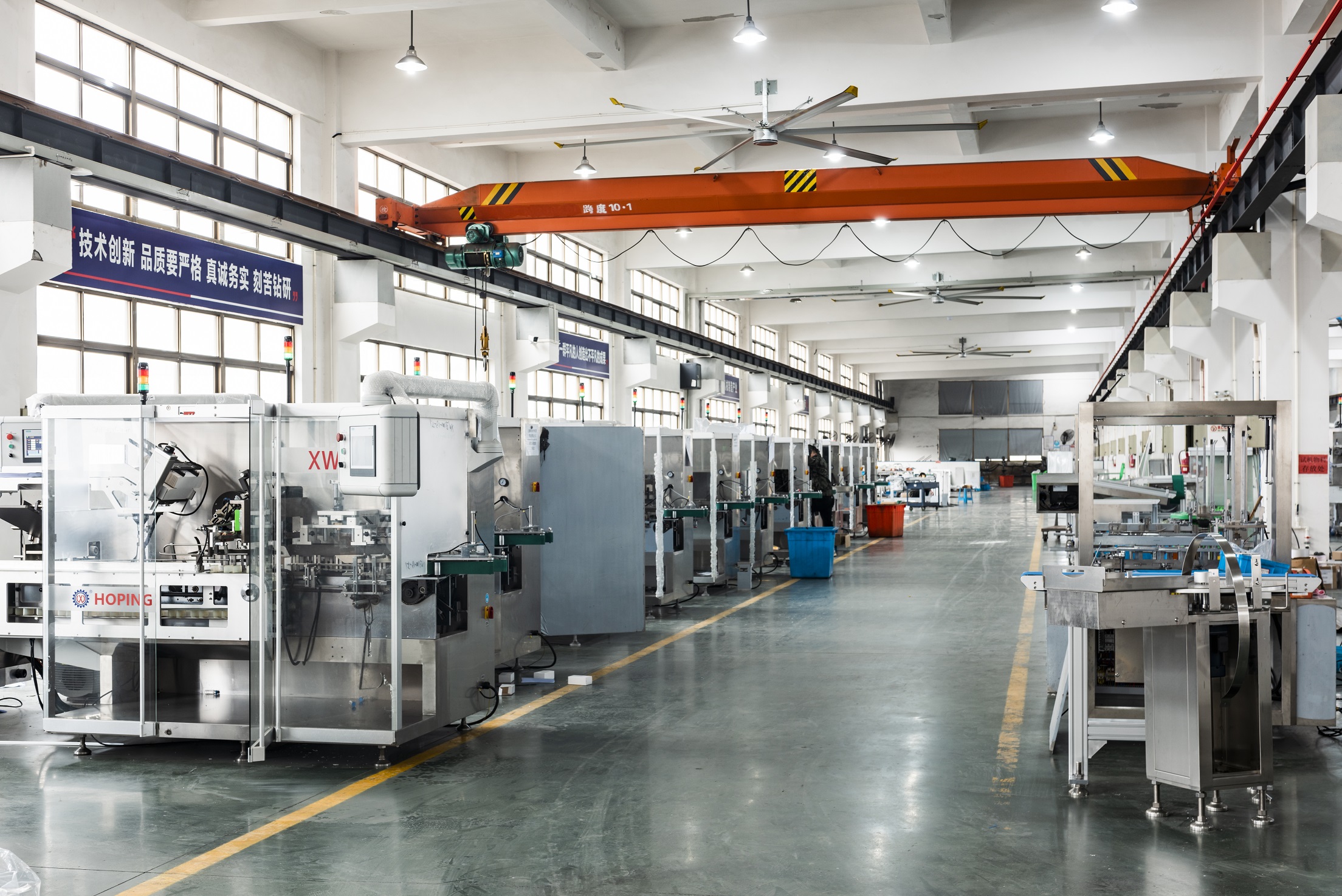
Zhejiang Hoping Machinery Co., Ltd. (HOPING), a pharmaceutical packing machinery manufacturer established in 2001 and based in Ruian, Zhejiang Province, China, publishes a concrete example. Its DHL8005H automatic blister-cartoning line is stated at a maximum capacity of up to 800 blisters per minute and 500 cartons per minute. Those two numbers are a useful reference because they are specific and because they reveal how the framework should be applied.
The relationship between 800 and 500 is not fixed. It is determined by how many blisters go into each carton, and that ratio decides which end of the line becomes the constraint:
- One blister per carton: 800 blisters per minute implies roughly 800 cartons per minute if the line is to run without buffering. The cartoner, rated at 500 cartons per minute, becomes the bottleneck.
- Two blisters per carton: 800 blisters per minute implies about 400 cartons per minute. The cartoner now has headroom, and the blister station is the binding constraint.
- Higher blister counts per carton: cartoning demand falls further, and the balance shifts again — sometimes to the point where the stated cartoning maximum is never reached in normal production.
This is why a side-by-side table of headline speeds can mislead. The same DHL8005H figure set can look over-specified or under-specified depending on a packaging decision the buyer has not yet made.
Station count is the hidden variable
Blister output can also be produced in different ways. HOPING's DPH320HII rotary blister packing machine is documented with a maximum punch frequency of 250 punches per minute, a maximum format area of 320 x 280 mm, and a maximum capacity of 1,000 blisters per minute — which implies that at that configuration, the machine is forming multiple blisters per punch. A line described only as "1,000 blisters per minute" is therefore implicitly stating a format assumption. If the buyer's blister layout has fewer cavities per stroke, the achieved rate changes even though the machine has not.
Nominal maximum is not sustained output
Supplier documentation generally frames output as a maximum. A documented line maximum should not be treated as a sustained, validated rate without the format, station count, rejection rate and operating conditions that produced it. In practice, sustained output over a full shift is the number that matters for capacity planning, and it is the number least often published.
| Basis question | What the answer changes |
|---|---|
| Which blister format and how many cavities per stroke? | Converts a headline blister rate into a realistic rate for the buyer's own SKU. |
| How many blisters per carton? | Determines whether the blister station or the cartoner is the binding constraint. |
| Is the figure a maximum or a sustained rate, and over what duration? | Separates a demonstration number from a production-planning number. |
| What rejection tolerance accompanies the figure? | Affects effective good-output and the true cost of ownership. |
| Which material structure — Alu-PVC, Alu-Alu, cold form? | Forming and sealing behaviour differs by material, so speed claims are material-specific. |
Pillar Two — Machine Integration Level
The second pillar is the one buyers most often under-weight, because integration is described in prose rather than in numbers. Integration level determines how much of the rated speed survives contact with normal production: transfers, replenishment, splicing and format change all consume capacity that a headline rate does not account for.
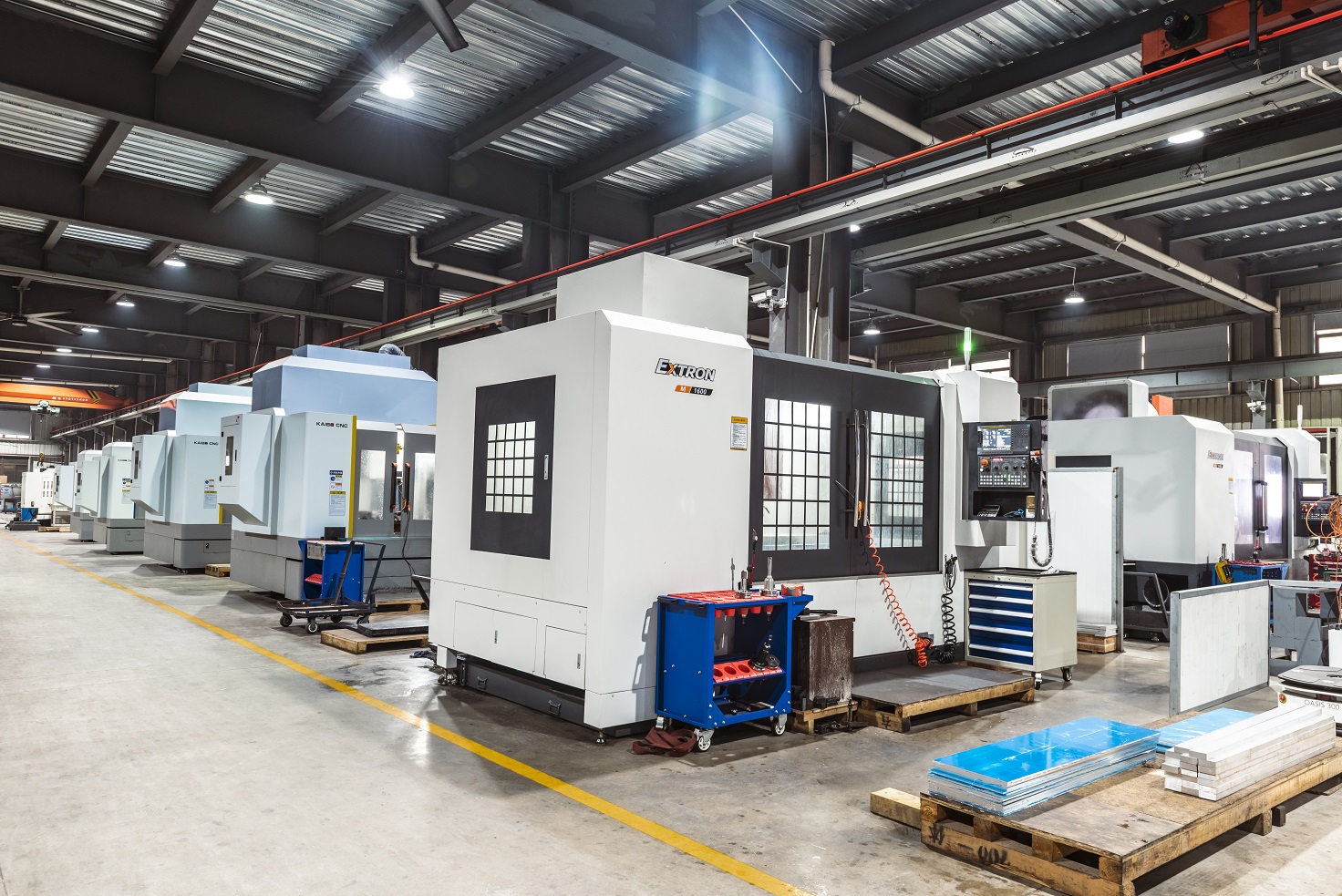
HOPING's documented line family shows how integration level varies across a single supplier's range, and the differences are exactly the ones a comparison framework needs to surface:
| Model | Stated max blister output | Stated max cartoning output | Transfer architecture | Replenishment |
|---|---|---|---|---|
| DHL6004 | 600 blisters/min | 400 cartons/min | High-speed transfer and cartoning linkage | Servo-driven independent replenishment |
| DHL7004 | 700 blisters/min | 400 cartons/min | IRB24 intelligent transfer robot | Servo-driven independent replenishment |
| DHL7005H | 700 blisters/min | 500 cartons/min | IRB24 intelligent transfer robot | Independent replenishment |
| DHL8005H | 800 blisters/min | 500 cartons/min | D3 intelligent top-loading parallel tracking transfer | Three-channel servo-driven independent replenishment |
| DHL1000/5H | 1,000 blisters/min | 500 cartons/min | D3 intelligent top-loading parallel tracking transfer | Four-channel servo-driven independent replenishment |
All output figures above are maximum capacities stated in HOPING's published line specifications. They are nominal machine figures, not validated sustained outputs, and they are not comparable across suppliers until format, station count, rejection rate and operating conditions are aligned.
Three details in that table carry more comparison weight than the headline numbers. First, the transfer architecture changes between models — a robot-based transfer such as the IRB24 and a D3 top-loading parallel tracking transfer are different engineering approaches to the same job, with different maintenance and changeover implications. Second, replenishment channel count rises with output, from servo-driven independent replenishment to three channels on the DHL8005H and four channels on the DHL1000/5H; channel count is a direct indicator of how the line is designed to keep feeding product at speed. Third, material handling features such as PVC and aluminium foil auto splicing determine how long the line can run between manual interventions — a factor that rarely appears in a speed comparison but dominates real throughput.
The same logic extends to lines that add a flow-wrap stage. HOPING's IXW600 is documented at up to 600 blisters/min, 300 packs/min and 300 cartons/min, while the IXW800 is documented at up to 600 blisters/min, 600 packs/min and 500 cartons/min. The blister figure is identical; the secondary and cartoning figures are not. A buyer comparing only the first number would conclude the two lines are equivalent.
Downstream scope is the final integration question. The DHL8005H specification covers connection to bundling, case-packing and palletising equipment. Whether that connection is included, engineered as an option, or left to a third party changes the project's total scope long before it changes the line's speed.
Pillar Three — Control Technology and Data Capability
Control technology is where performance claims become verifiable engineering claims, because controller platforms, industrial PCs and recipe functions are named components rather than descriptive adjectives.
Within HOPING's range, the documented control architecture splits along two platforms:
- Beckhoff motion control on the DHL8005H, DHL1000/5H, DHL6004, IXW600 and IXW800, with the CP9315 industrial PC specified on the DHL8005H, DHL1000/5H, DHL6004 and IXW lines.
- Siemens motion control on the DHL7005H and DHL7004, paired with the TP900 HMI; the IXW400 liquid-dosage line is also documented with a Siemens controller alongside the CP9315 industrial PC.
The DHL1000/5H specification additionally describes a high-bus industrial control system, and the DHL8005H, DHL7005H, DHL6004 and DHL1000/5H all document mould-change support together with preset-memory or recipe-memory functions.
For a buyer, these are not brand trivia. The controller platform determines which engineering skills are needed on site, which spare parts must be stocked, how easily the line can expose production data to a manufacturing execution system or electronic batch record, and how a recipe change is executed when a new SKU is introduced. Recipe and preset memory are what make a multi-format changeover repeatable rather than operator-dependent — and repeatability is the difference between a line that matches its specification on a good day and one that matches it every day.
This is consistent with a broader shift described in the trade press: pharmaceutical manufacturers are reported to be moving toward digitised data collection and integrated solutions in order to meet regulations and improve visibility (PMMI content reported by Healthcare Packaging). If data capture is becoming a procurement requirement rather than a bonus, then the control pillar stops being optional in a comparison.
Turning a Claim into Evidence: The Documentation Test
A three-pillar framework only works if each pillar can be evidenced. The following documents convert a claim into something a buyer can audit, and each one maps back to a pillar.
| Document | Pillar it evidences | What it should state |
|---|---|---|
| Format-specific output statement | Output | Blister format, cavities per stroke, blisters per carton, and the cartoning rate implied by that ratio. |
| Sustained-output trial record | Output | Test duration, product used, acceptance threshold, and permitted rejection rate. |
| Integration scope drawing | Integration | Transfer type, replenishment channels, splicing, and whether bundling, case packing and palletising are in scope. |
| Control architecture list | Control | Motion controller make, industrial PC, HMI, data interfaces and interface language. |
| Changeover record | Integration / Control | Preset-memory or recipe-memory functions and the demonstrated format-change sequence. |
| Factory acceptance test (FAT) protocol and customer witness acceptance | All three | Agreed acceptance criteria signed off before shipment. |
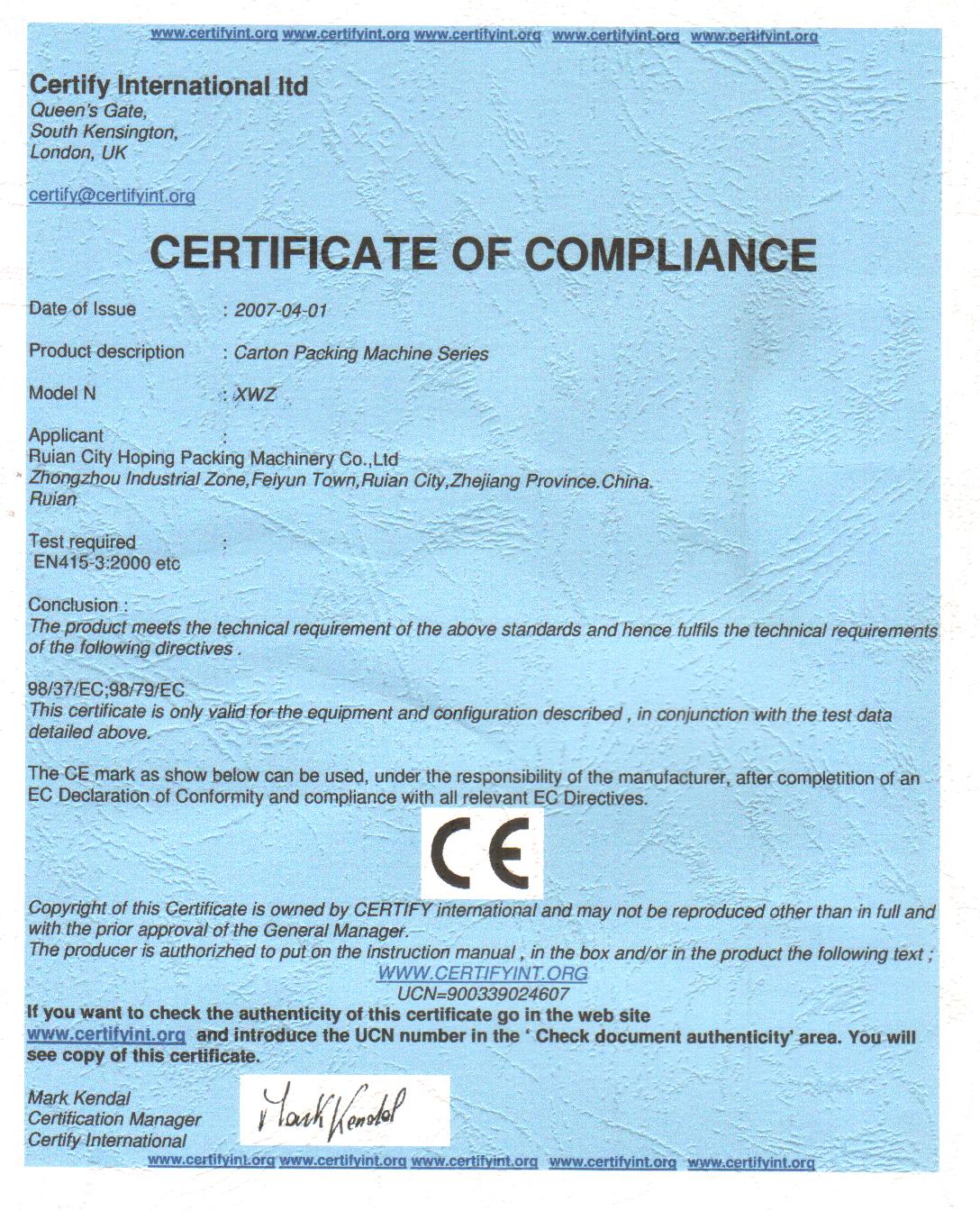
| Conformity and management-system certificates | All three (as context) | Certificate number, issuing body, applied standard and scope of validity. |
HOPING's documented quality-control sequence is a useful benchmark for what a supplier can be asked to provide, because it runs from incoming material inspection and key component inspection through assembly inspection, electrical safety check, no-load trial run, material trial, factory acceptance testing, customer witness acceptance and pre-shipment inspection. A supplier that can describe its acceptance chain in that level of detail can normally produce the evidence a buyer needs.
Certification is part of the same evidence set. HOPING's cartoning machine series holds CE certification under certificate HTT190102307L, issued by Shenzhen HTT Technology Co., Ltd. on 22 January 2019, citing EN 60204-1:2006+A1:2009+AC:2010 and Directive 2006/42/EC. A separate certificate, HTT190102306L, covers the blister packing machine series under the same Machinery Directive reference and standard. Management-system certificates held on file include ISO 14001:2015 under certificate number CN00123E33896R1M/3300 and ISO 45001:2018 under certificate number CN00123S33121R1M/3300, both issued by the China Quality Certification Centre, with a scope covering the design, production and after-sales service of packing machines and packing production lines.
Regulatory context should be layered on top rather than treated as a substitute. ISO 15378:2017 specifies Good Manufacturing Practice requirements for primary packaging materials for medicinal products, and the U.S. FDA maintains current Good Manufacturing Practice guidance on production and process controls. Neither document is machine-specific in the form most buyers encounter it, which is why the equipment-level evidence has to come from the supplier's own test and conformity records.
Applying the Framework Across Dosage Forms and Production Models
The framework is easiest to use when it is applied to a concrete production profile rather than to a generic wish for speed.
| Production profile | Relevant reference points in HOPING's documented range |
|---|---|
| High-volume solid dosage, single dominant SKU | DHL1000/5H (up to 1,000 blisters/min, 500 cartons/min) and DHL8005H (up to 800 blisters/min, 500 cartons/min), both with D3 top-loading transfer. |
| Mid-to-high volume with mixed carton formats | DHL7005H (up to 700 blisters/min, 500 cartons/min) and DHL7004 (up to 700 blisters/min, 400 cartons/min), both documented with the IRB24 transfer robot. |
| Balanced mid-range line | DHL6004 (up to 600 blisters/min, 400 cartons/min) with servo-driven independent replenishment. |
| Products requiring secondary flow wrapping | IXW600 and IXW800, where the blister rate is comparable but the pack and carton rates differ. |
| Liquid dosage — pre-filled syringes, ampoules, cartridges | IXW400, documented at up to 400 blisters/min and 150 cartons/min. |
| Standalone secondary packaging | XWZ500H (about 100–500 cartons/min), XWZ300II (about 60–220 cartons/min) and XWZ120 (about 30–120 cartons/min). |
The operational case for raising integration level is documented in HOPING's project material, which describes results framed around packaging automation improvements, reduced manual transfer, improved blister-to-carton connection efficiency, reduced wrong-insertion or missing-leaflet risk, and support for downstream automation integration. Those outcomes map directly onto the integration pillar: transfer architecture, leaflet handling and replenishment design are what convert a theoretical line rate into a defendable production rate.
Scale context matters when weighing these options. HOPING operates a 28,800 m² facility with approximately 300 employees, 56 engineers in R&D, a stated annual output of around 500 units, and an export ratio of approximately 25%, serving markets that include Southeast Asia, the Middle East, Eastern Europe, South America and Africa. Customisation is documented as ODM/OEM-capable across blister size, blister materials, quantity per carton, carton specification, leaflet format, coding and inspection method, feeding method, downstream connection, interface language, electrical component brand and data interface. Documented capability is 30–40 units per month, with lead time typically 60–120 days after technical confirmation and a minimum order quantity of one set or one complete line.
Market Trend Analysis: What the Framework Is Responding To
Three documented trends explain why a comparison framework is becoming necessary rather than optional.
Growth concentrated in regions with diverse specification conventions. Global pharmaceutical packaging machinery was reported at USD 7.09 billion in 2026 at a 7.15% CAGR (Mordor Intelligence), while the blister machine segment was valued at USD 2.57 billion in 2025 with Asia-Pacific growing fastest at an 8.87% CAGR to 2031 (Custom Market Insights). Rapid regional growth means more suppliers quoting into more markets, which increases the chance that two offers use incompatible bases.
A market dominated by one machine orientation. Horizontal cartoning systems held 70.12% of cartoning market share in 2024 (Mordor Intelligence). When one architecture dominates, differentiation shifts away from orientation and toward integration, transfer design and control architecture — exactly the second and third pillars.
Documentation and data expectations rising. The trade press reports a move toward digitised data collection and integrated solutions in pharmaceutical manufacturing (PMMI content reported by Healthcare Packaging). Separately, a draft Chinese GMP for pharmaceutical packaging materials has been under public consultation, with the reported intent of guiding marketing licence holders in reviewing packaging material suppliers. Any such direction increases the value of suppliers who can evidence their line's configuration, test results and data interfaces in a structured way.
Where the Framework Reaches Its Limits
A comparison framework improves the quality of a decision; it does not create data that does not exist, and it has three boundaries that buyers should state openly in their own evaluation documents.
Nominal output is not sustained output. The figures used throughout this article — 800 blisters/min and 500 cartons/min on the DHL8005H, 1,000 blisters/min on the DHL1000/5H, and so on — are maximum stated capacities. They should not be compared against another supplier's figures until product format, station count, rejection rate, operating conditions and the sustained-output basis are verified on both sides. Where those bases differ, the correct action is to require a common test, not to rank the numbers.
Integration solves one problem and creates another. Compared with a traditional arrangement of standalone blister machine, standalone cartoner and manual transfer between them, an integrated line reduces manual handling and reduces wrong-insertion or missing-leaflet risk. The trade-off is real: a monoblock line concentrates changeover, maintenance and downtime into a single asset, so a stoppage upstream propagates downstream. Multi-SKU producers should weigh format-change time and tooling scope as heavily as line speed, and should treat preset and recipe memory as a requirement rather than a feature.
Servo-driven, high-speed lines place different demands on the plant. A fully servo blister-cartoner running under Beckhoff or Siemens motion control requires maintenance competence, spare-parts planning and engineering support that a simpler mechanical line does not. Buyers who do not already have that capability should price it into the project, and should confirm the documented after-sales scope — on-site installation and commissioning, operator and maintenance training, remote support, spare parts supply and process-parameter guidance — against their own site conditions. Special dosage formats reinforce the same point: freeze-dried powder and similar products are served by dedicated platforms such as the DP series rather than by a general-purpose high-speed roller machine.
Future Outlook
The direction of travel is toward performance claims that are increasingly backed by structured data rather than by a single headline number. Recipe and preset memory — already documented across HOPING's DHL8005H, DHL7005H, DHL6004 and DHL1000/5H — points to a future where format changeover is a recorded, repeatable event rather than an operator skill. Rising expectations around digitised data collection and integrated solutions suggest that line-level data reporting will migrate from an option to a specification item. And as packaging-material GMP frameworks develop in major markets, supplier documentation is likely to be assessed against a more standardised checklist.
For buyers, the practical consequence is that the evaluation stage should shift from collecting speed figures to collecting bases. The three pillars — output per minute with its stated conditions, integration level with its transfer and replenishment architecture, and control technology with its named platforms and data interfaces — remain the same. What changes is the standard of proof attached to each.
FAQ
What should be checked first when comparing blister-cartoning line performance claims?
Check the basis before the number. For every output figure, establish the blister format, the cavities formed per stroke, the number of blisters per carton, and whether the figure is a maximum or a sustained rate. For integrated lines such as the HOPING DHL8005H, which is stated at up to 800 blisters per minute and 500 cartons per minute, the blister-to-carton ratio determines which station becomes the constraint, so the same specification can imply very different cartoning demand.
How can a buyer confirm that the cartoning speed actually matches the blister output?
Divide the blister rate by the number of blisters per carton and compare the result with the stated cartoning rate. If the calculated carton demand exceeds the stated cartoning capacity, the cartoner is the limiting station; if it falls below, the blister station is. On lines where the blister rate is identical but the secondary stage differs — for example the HOPING IXW600 at up to 600 blisters/min, 300 packs/min and 300 cartons/min against the IXW800 at up to 600 blisters/min, 600 packs/min and 500 cartons/min — the blister number alone will not reveal the difference.
What does a fully servo drive system change in a blister-cartoning line?
Servo drive changes how motion is synchronised and how formats are changed. In documented configurations such as the HOPING DHL8005H, servo control appears in the transfer, replenishment and cartoning motion systems, and is paired with mould-change support and preset-memory functions. The practical consequences are more repeatable format changes and more precise and independent adjustment of line sections, while the trade-off is greater electrical and control complexity, which raises the requirement for maintenance competence and spare-parts planning.
Which control platforms appear on integrated blister-cartoning lines, and why does the platform choice matter?
Within HOPING's documented range, the DHL8005H, DHL1000/5H, DHL6004 and the IXW600 and IXW800 lines use Beckhoff motion control with the CP9315 industrial PC; the DHL7005H and DHL7004 use Siemens motion control with the TP900 HMI, and the IXW400 liquid-dosage line is documented with a Siemens controller and the CP9315 industrial PC. The choice affects the engineering skills required on site, spare-parts stocking, and how readily the line can expose production data to plant systems.
Which documents turn a performance claim into verifiable evidence?
A format-specific output statement with cavities per stroke and blisters per carton; a sustained-output trial record showing duration and rejection tolerance; an integration scope drawing covering transfer type, replenishment channels and downstream equipment; a control architecture list naming the motion controller, industrial PC, HMI and data interfaces; a changeover record; and a factory acceptance test protocol with customer witness acceptance. Conformity and management-system certificates support the same evidence set — HOPING's cartoning machine series CE certificate HTT190102307L cites EN 60204-1:2006+A1:2009+AC:2010 and Directive 2006/42/EC, and its management-system certificates include ISO 14001:2015 under CN00123E33896R1M/3300 and ISO 45001:2018 under CN00123S33121R1M/3300.
Where do performance claims most often break down in practice?
They break down at three points: when a maximum figure is used as if it were a sustained rate; when transfer, replenishment and splicing performance is excluded from the speed comparison even though it governs real throughput; and when servo-driven complexity is not matched by maintenance capability, spare-parts planning and documented after-sales scope. In each case the fix is the same — define the measurement conditions and require the documentation alongside the number.
Есть вопросы или нужны дополнительные детали?
Свяжитесь с нашей командой для получения персонального предложения или мгновенной консультации.
Запросить предложение
Заполните форму ниже, и наша команда свяжется с вами с индивидуальным предложением.
Прямой чат WhatsApp
Предпочитаете общаться в реальном времени? Напишите нам в WhatsApp для мгновенной помощи и быстрых ответов.
- Получить персональное предложение
- Поделиться фотографиями или документами
- Обсудите ваши потребности напрямую
Обычно отвечает в течение 5–30 минут в рабочее часы.