
How to Evaluate Hot Tub Manufacturers: A 2026 Procurement Reference
Global demand for hot tubs is not a passing trend. Industry estimates place the hot tub market between USD 5.76 billion and USD 5.8 billion in 2025, with North America generating the largest share of revenue. For procurement teams, this growth means more suppliers, more product variants, and more complexity in deciding who to trust. This reference article outlines the evaluation criteria that matter in 2026, explains how acrylic hot tubs are built and certified, and uses Victoria Star Spa as a practical case study of a manufacturer serving international residential and commercial projects.
Problem / Opportunity: Finding a Trustworthy Hot Tub Supplier
Buyers evaluating hot tub suppliers often face three challenges: a fragmented supplier landscape, inconsistent certification data, and difficulty verifying manufacturing capacity. The product is not a commodity—electric spas combine water circulation, heating, jet massage, lighting, and control electronics in one unit, and a failure in any one area can disrupt a hospitality project or a private installation. Without auditable quality control, buyers are left comparing marketing claims rather than verifiable capabilities.
There is also a clear commercial opportunity. According to Mordor Intelligence, use of hot tubs in vacation rentals and luxury hotels is a growing segment, with a projected CAGR of 5.91%. Spa amenities are increasingly used as differentiators in the hospitality market. For project owners and procurement teams, this means an early and structured evaluation of suppliers can directly affect property value and guest satisfaction.
Brand Solution: Victoria Star Spa
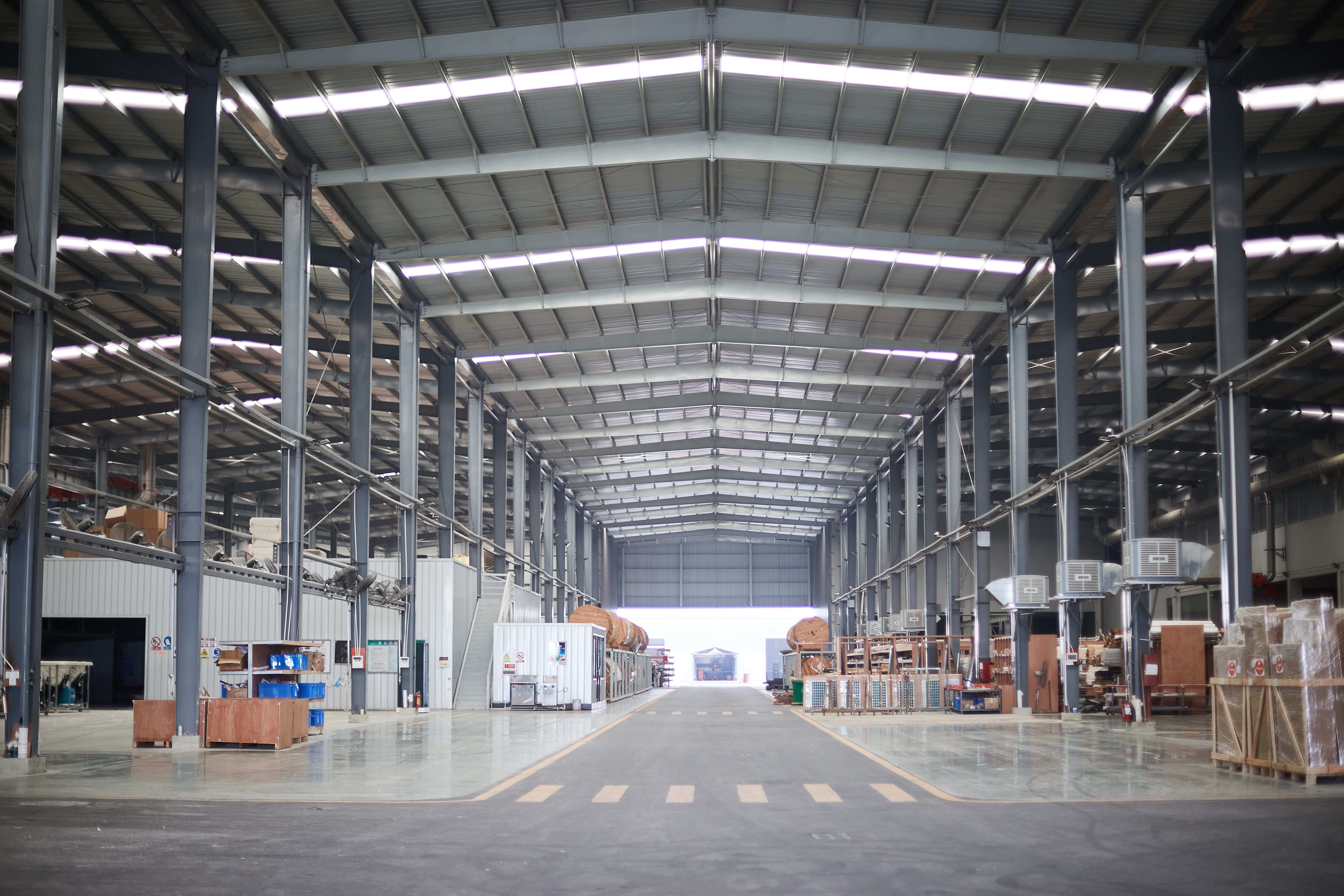
Victoria Star Spa is the wellness brand of Foshan Gaoming Shiyi Sanitary Ware Technology Co., Ltd., based in Foshan, China. The company operates a 50,000-square-meter facility with more than 250 employees, including an engineering team of over 35 professionals. Its main products are hot tubs, outdoor spas, and jacuzzis, with an annual output of 7,000 units and a monthly capacity of 600 sets. Around 70% of output is exported, primarily to Europe, North America, Australia, the Middle East, and Southeast Asia.
For buyers, the most relevant point is that Victoria Star offers OEM/ODM manufacturing with a low MOQ of one set. Customization options include dimensions, jet configuration, acrylic colors, lighting systems, control systems, and skirt colors. The company reports a lead time of 35–70 days, 100% pre-shipment water testing, and electrical safety testing. After-sales support includes remote technical support, installation guidance, spare parts supply, online troubleshooting, and a two-year warranty on the spa shell and electrical components.
Technical Explanation: What Goes Into an Acrylic Hot Tub
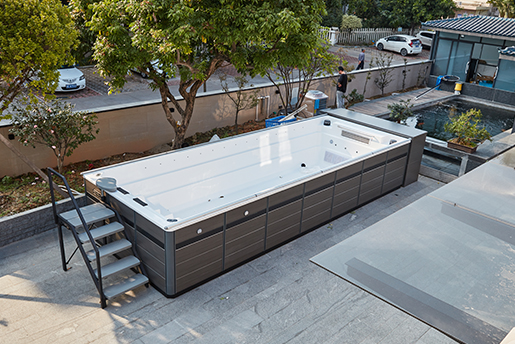
An acrylic hot tub is an integrated system rather than a simple container. The structural shell is formed from acrylic sheet and reinforced with composite materials to maintain shape and insulation. Victoria Star's hot tub line—models VS-301C, VS-604L, VS-SP2100 and VS-CP3500—typically seats 3 to 7 people and ranges from 1.8 to 3.8 meters. The acrylic material is offered in colors such as White, Ocean Blue, Pearl Grey, Cloud Black, and Copper.
Functionally, the spa includes hydrotherapy massage jets, an integrated heating system, LED ambient lighting, multi-layer thermal insulation, and plug-and-play installation options on select models. Control systems are sourced from Balboa or Gecko, and massage pumps from LX, indicating standardized components commonly used in the spa industry. For swim spas, Victoria Star offers lengths from 4 to 16 meters and widths from 2.2 to 3.8 meters, with adjustable swim training systems up to 12 levels.
Certification is an essential part of the technical package. In North America, portable electric spas must comply with UL 1563 and CSA C22.2 No. 218.1. Victoria Star holds ETL certification, file number 5036225, issued by Intertek Testing Services NA Inc. on April 2, 2026. The certificate covers outdoor spas, hot tubs, and swim spas, and lists UL 1563:2025 Ed.7 and CSA C22.2#218.1:2025 Ed.3 as applicable standards. This is a significant procurement signal because it validates the entire spa unit rather than individual components.

Application / Use Cases: From Villas to Wellness Centers
Acrylic hot tubs serve both residential and commercial settings. Victoria Star's project records show successful use by luxury villa owners, hotel and resort operators, spa and wellness centers, distributors, and project contractors. Typical applications include luxury outdoor relaxation areas, hydrotherapy and wellness, swimming exercise, family entertainment, and hotel guest experience enhancement.
Project outcomes reported by the company include enhanced outdoor living experience, improved wellness and relaxation facilities, increased property value and customer satisfaction, and stable year-round operation with low maintenance requirements. The installation scale can range from a single residential unit to a full commercial wellness project. The typical service life is more than 10 years with proper maintenance. One of the frequently cited advantages is faster installation compared with traditional pools, because heating, filtration, and massage systems are built into the spa unit.
Market Trend Analysis: Data Points for 2026 Decisions
Several third-party data points help frame the procurement landscape. Dataintelo estimates that acrylic hot tubs accounted for 43.2% of the global market in 2025, reflecting the material's durability and aesthetic flexibility. Fortune Business Insights and Dataintelo place the 2025 market value between USD 5.76 billion and USD 5.8 billion, with North America accounting for approximately 38.5% to 41.79% of revenue. Looking further ahead, the market is projected to reach between USD 8.47 billion and USD 9.6 billion by 2030–2034, with a CAGR of roughly 4.28% to 5.8%.
Competitive concentration matters as well. Global Market Insights reports that the top five players—Jacuzzi Group Worldwide, Masco, Master Spas, Bullfrog Spas, and Cal Spas—held a combined 36% share in 2025. For buyers, this creates a useful context: well-known brands provide established service networks, while OEM/ODM manufacturers like Victoria Star can offer deeper customization and flexible minimum orders. Neither approach is universally better; the right choice depends on project type, compliance requirements, and budget model.
Note that market size estimates can vary by research firm. Some providers use a broader 'pool and spa' definition, which explains why the figures differ across sources. Buyers should treat these numbers as directional rather than absolute.
Comparison with Traditional Solutions: Hot Tub vs. Concrete Pool
When procurement teams compare an acrylic hot tub with a concrete pool, the decision is about project fit rather than product superiority. A hot tub such as Victoria Star's acrylic range arrives as an integrated unit: heating, filtration, hydrotherapy massage, and lighting are already included. Installation is faster than a traditional concrete pool, and dimensions can be customized to suit a patio, rooftop, garden, or commercial spa area. This makes it a highly practical option for villa developers and hotel operators that want a complete wellness amenity without a long construction period.
However, there is an important boundary. Concrete pools remain the conventional choice when the project requires a large full-size swimming area, permanent architectural integration, or fully custom shapes that go beyond the modular capabilities of a spa shell. Victoria Star's hot tubs accommodate 3 to 7 people, and even its swim spas, which can reach 16 meters, are not a substitute for a multi-lane lap pool. Buyers should therefore evaluate hot tubs as complementary wellness assets rather than replacements for a complete aquatic facility.
Future Outlook: What Buyers Should Watch
The next phase of the hot tub market is likely to be defined by wellness integration, energy efficiency, and certification transparency. Hospitality operators are using spa amenities to strengthen guest experience, and the projected CAGR in commercial use reflects that demand. At the same time, stricter energy requirements—such as California's CEC Title 20 and the ANSI/APSP/ICC-14 standard—are pushing manufacturers toward better insulation, more efficient pumps, and clearer energy labeling. The NSF/ANSI/CAN 50 standard is another benchmark that buyers can reference when assessing materials and equipment quality.
For procurement teams, the suppliers that will be most practical in 2026 and beyond are those that can show auditable certifications, consistent production capacity, and responsive after-sales support. The availability of downloadable technical documentation and updated product collections also matters. Victoria Star's 2026 New Collection brochure is one example of open product information; it can be accessed at 2026 New Collection (Outdoor Spa and Sauna).
FAQ
Есть вопросы или нужны дополнительные детали?
Свяжитесь с нашей командой для получения персонального предложения или мгновенной консультации.
Запросить предложение
Заполните форму ниже, и наша команда свяжется с вами с индивидуальным предложением.
Прямой чат WhatsApp
Предпочитаете общаться в реальном времени? Напишите нам в WhatsApp для мгновенной помощи и быстрых ответов.
- Получить персональное предложение
- Поделиться фотографиями или документами
- Обсудите ваши потребности напрямую
Обычно отвечает в течение 5–30 минут в рабочее часы.