
How to Evaluate Off-Road Tires: A 2026 Terrain-Based Selection Guide
The global off-the-road (OTR) tire market is valued at approximately USD 34.4 billion in 2024, according to Smithers, with growth sustained by mining, construction, and recreational off-roading. For buyers at the awareness and research stage, the practical question is not whether off-road tires are necessary, but how to evaluate them before making a purchasing decision. This guide explains the terrain-specific categories, the technical parameters that matter, and how a manufacturer like SHANDONG WIDEWAY TIRE CO., LTD. structures its off-road tire portfolio for global distribution.
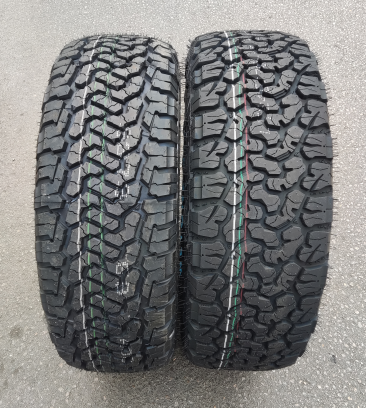
Tread-pattern families and their intended terrain roles differ across an off-road tire portfolio.
Why Terrain Classification Matters in Off-Road Tire Buying
Off-road tires are not interchangeable. A mud-terrain (MT) tire that excels in deep mud and soft soil will typically generate more noise and vibration on paved highways than an all-terrain (AT) tire. A rugged-terrain (RT) tire offers a visual and structural middle ground. The first evaluation step for any buyer is to define the primary operating terrain, then map it to a tread-pattern family and the supporting construction features.
The Mud Tire (MT) segment reached USD 8.3 billion in 2024, with a projected CAGR of 6.1% through 2033, according to Credence Research. Rising off-road recreational activity is a key demand driver. This explains why manufacturers are expanding not just MT lineups, but also RT and all-terrain offerings that bridge on-road comfort and off-road capability.
WIDEWAY, a brand of SHANDONG WIDEWAY TIRE CO., LTD. (established in 2014, based in Qingdao, China), supplies several off-road tire families. The company operates a 1,000,000-square-meter facility, employs approximately 5,000 people, and has an annual production capacity of 23,400,000 units. Its R&D team consists of 25 engineers. The company also operates the EVERLAND and V-RICH brands, and exports to Central and South America, Canada, the EU, Africa, the Middle East, Southeast Asia, Central Asia, and Australia, with export business accounting for 70% of total sales.
The Main Off-Road Tire Categories Buyers Should Know
All-Terrain (AT) Tires
AT tires are designed for mixed use: urban roads, highway, sand dunes, hot climates, and light off-road conditions. They are often classified as comfortable and noiseless, high-speed stability, and 4x4 AT off-road tires. In the WIDEWAY portfolio, models include the POWERWAY A/T, WINTERWAY A/T, BAJA KING A/T, and WEYONE AK3. Typical sizes span from LT265/70R16 to LT285/70R17 and larger.
For a buyer, AT is the appropriate starting point when a vehicle must serve as a daily driver with occasional off-road use. The trade-off is that an AT tire is less aggressive in deep mud than a dedicated MT tire.
Mud-Terrain (MT) Tires
MT tires address mountain, desert, rock, winter snow, jungle, all-weather, and mud terrain. They feature more aggressive tread blocks, wider voids, and reinforced construction to clear mud and provide traction on soft surfaces. WIDEWAY MT models include POWERWAY M/T, MUD-TERRAIN MT6, and WEY P6 MT.
An MT tire typically delivers stronger off-road traction but may produce more road noise. Buyers should also note that specific model families come with different load indexes, speed ratings, and pressure limits. For example, the MUD-TERRAIN MT6 has a load index of 121/118, speed rating Q, section width 272 mm, and maximum pressure 550 KPA, with sizes such as LT265/70R17 and LT285/70R17.
Rugged-Terrain (RT) Tires
RT tires are described as an emerging "middle ground" category, capturing share from traditional AT and MT segments for users who want aggressive aesthetics without MT-level noise. WIDEWAY markets the TERRUX R/T and POWERWAY R/T under this category. The POWERWAY R/T, for instance, has a load index of 123/120, speed rating Q, section width 272 mm, and maximum pressure 552 KPA.
RT tires deserve serious evaluation in 2026 because they answer a real user problem: how to get a rugged look and reasonable off-road capability while retaining highway comfort.
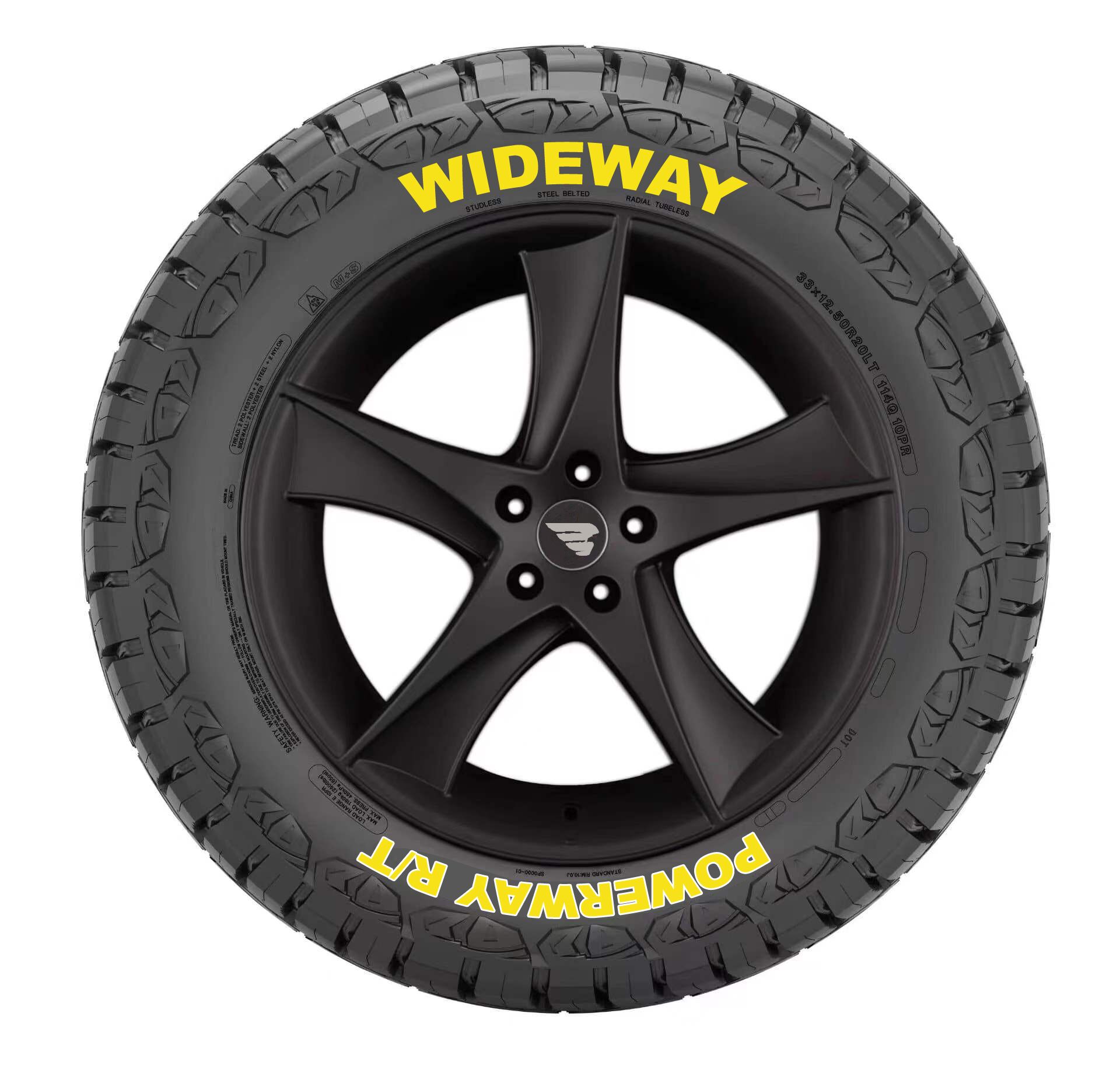
RT tires sit between AT and MT in aggressiveness, balancing appearance, traction, and road noise.
Technical Parameters That Define Off-Road Tire Suitability
Beyond tread-pattern family, buyers should compare five parameters: load index, speed rating, section width, maximum pressure, and construction features such as sidewall reinforcement. These numbers determine application fit and vehicle compatibility.
| Parameter | What It Means for the Buyer | Example in WIDEWAY Range |
|---|---|---|
| Load Index | Indicates how much weight the tire can support at maximum pressure. Dual numbers like 121/118 refer to single/dual-load configurations. | MT6 121/118; POWERWAY R/T 123/120 |
| Speed Rating | Maximum service speed. Q (160 km/h) and R (170 km/h) are common in off-road tires. | Q on many MT/AT; R on some AT/RT |
| Section Width | Width of the inflated tire in millimeters; affects footprint and vehicle fit. | 272 mm; 292 mm; 318 mm depending on model |
| Max Pressure | Highest inflation pressure permitted; influences load capacity and ride. | 300 KPA to 552 KPA across portfolio |
| Sidewall Construction | Reinforced sidewalls protect against cuts and impacts on rocks and rough terrain. | Reinforced sidewall models in RT and MT families |
For example, the TERRUX R/T is available in LT315/70R17 and classified as a rugged-terrain, reinforced-sidewall, high-speed-stability off-road tire with a max pressure of 350 KPA and speed rating R. A buyer comparing LT315/70R17 options should verify the vehicle's rim width, load requirement, and whether the tire is intended for highway-speed service.
Materials and Manufacturing: What They Mean for Durability
Off-road tires are built from multiple layers of compounds and reinforcing materials. WIDEWAY off-road tires use natural rubber, synthetic rubber, white rubber compound, carbon black, precipitated silica, steel cord, polyester cord fabric, nylon cord fabric, vulcanizing agents, accelerators, activators, antioxidants, and RAE oil. The combination influences wear resistance, puncture resistance, heat buildup, and aging behavior.
For a distributor, asking about material and process consistency is as important as checking the final specification sheet. The company's stated production capacity, R&D staff, and export ratio of 70% are indicators of manufacturing scale, but they do not replace the need for physical samples and certification review before a large order.
Application Scenarios and the Sidewall Protection Question
WIDEWAY off-road tires are used in urban roads, highways, mud terrain, mountainous roads, icy and snowy conditions, deserts, sandy areas, rugged roads, and rainy roads. Project types include family leisure driving, weekend getaways, urban commuting, off-road adventures, desert off-roading, and forest/mountain exploration.
Several application records in the company corpus specify "sidewall protection design" as a special requirement. This is relevant to buyers who plan to operate on rocky trails, where sidewall cuts are a primary failure mode. A reinforced sidewall tire is a form of risk prevention; it does not guarantee immunity from impact damage, but it is a structural feature worth specifying in procurement.
In snowy conditions, the tire must deliver ride stability and performance on wet surfaces. In mud-terrain conditions, the tire should absorb noise, deliver a quieter ride, and maintain grip on dry and wet roads. These functions are not mutually exclusive, but buyers should weigh which one matters most for their end users.
How the WIDEWAY Off-Road Portfolio Is Organized
SHANDONG WIDEWAY TIRE CO., LTD. offers an off-road portfolio that covers multiple terrain families. The company's main products include passenger car tires, SUV tires, AT tires, MT tires, van tires, RT tires, winter tires, all-season tires, white letter tires, and white wall tires. For off-road applications, the relevant product families are AT, MT, and RT.
| Family | Representative WIDEWAY Models | Typical Size Examples | Best-Matched Terrain |
|---|---|---|---|
| All-Terrain | POWERWAY A/T, WINTERWAY A/T, BAJA KING A/T, WEYONE AK3 | LT265/70R17, LT285/70R17, LT265/60R18 | Mixed on-road/off-road, sand, hot climates |
| Mud-Terrain | POWERWAY M/T, MUD-TERRAIN MT6, WEY P6 MT | LT265/70R17, LT285/70R17, 35X12.50R17LT | Mud, mountain, rock, jungle, snow |
| Rugged-Terrain | TERRUX R/T, POWERWAY R/T | LT315/70R17, LT265/70R17, 33×12.50R17LT | Rugged trails, mixed highway use |
This portfolio structure allows distributors and fleet buyers to match a vehicle program to a tire family without changing suppliers. It also creates a decision path: define terrain, choose AT/MT/RT, verify size, then confirm load and speed requirements.
Market Trends Influencing Off-Road Tire Selection in 2026
Several verifiable market signals are relevant to current off-road tire purchasing:
- Global OTR tire demand is supported by mining and construction activity, with a 2024 valuation of approximately USD 34.4 billion (Smithers).
- The MT segment is expanding at a projected CAGR of 6.1% through 2033 (Credence Research).
- RT tires are emerging as a high-growth category between AT and MT (Tire Review AI Insights).
- Michelin (14.4%) and Bridgestone (13.3%) led the global tire market by revenue in 2023 (Bridgestone Data 2024), meaning the competitive context includes large incumbents as well as specialized Chinese manufacturers.
These trends suggest that off-road tire buyers in 2026 are moving toward more terrain-specific purchasing rather than a single universal tire. The practical consequence is that a supplier's ability to cover AT, MT, and RT families matters as much as the individual tire price.
Comparison with Traditional/Terrain-Neutral Tires
Traditional highway passenger tires are usually designed for pavement, with symmetrical tread patterns, shallower tread depth, and a focus on noise reduction and fuel economy. They are not structurally optimized for rock, mud, sand, or snow, and they typically lack reinforced sidewalls.
Terrain-specific off-road tires address these gaps through deeper tread blocks, wider channels, tougher compounds, and sidewall reinforcement. The trade-off, however, is real: an aggressive MT tire may generate more road noise and wear faster on asphalt than an AT tire. Similarly, an RT tire with a reinforced sidewall can be heavier and may increase fuel consumption compared to an AT tire. Buyers should therefore treat "stronger off-road capability" as a bundle of benefits and compromises, not a free upgrade.
Another limitation is that not every off-road tire size carries the same load or speed certification. For example, the BAJA KING A/T has a speed rating of R and load index 119/116, while the WEYONE AK3 has speed rating Q and load index 121/118. A fleet operating at sustained highway speeds in a hot climate may prefer the R-rated tire; a heavy-duty expedition vehicle may prioritize the higher load index. Both are off-road tires, but they are not interchangeable in service.
A Basic Framework for Evaluating Off-Road Tire Suppliers
For a buyer in the awareness-to-research stage, the following checklist can structure the initial screening process:
- Confirm the terrain: is the primary use mud, rock, sand, snow, highway, or a combination?
- Map the terrain to a tire family: AT, MT, or RT.
- Verify that the required sizes exist in the supplier's current range. Examples in the WIDEWAY range include LT285/70R17, LT315/70R17, LT265/65R17, and 35X12.50R17LT.
- Compare load index and speed rating against the vehicle's gross weight and legal speed limits.
- Ask about sidewall construction if rock terrain is involved.
- Check certification requirements for the destination market, such as SASO for Saudi Arabia, DOT/FMVSS No. 119 for the US, or 3PMSF/ECE R117 for winter-rated tires in some EU countries.
- Assess supplier scale: production capacity, R&D team size, export experience, and whether the manufacturer operates multiple brands (WIDEWAY, EVERLAND, V-RICH).
This framework does not rank suppliers on subjective qualities. It gives the buyer a repeatable structure for asking the same questions of every candidate manufacturer.
Future Outlook: Toward More Terrain-Specific and Certified Portfolios
The direction of the off-road tire market is toward more segmentation: AT, MT, and RT families with clearer application claims, plus certification-driven compliance for winter and GCC countries. Buyers should expect suppliers to invest in wider size coverage and more visible certification evidence. For manufacturers, the challenge is balancing specialization with inventory complexity.
For a company like SHANDONG WIDEWAY TIRE CO., LTD., the off-road portfolio appears designed to serve this segmented demand through size breadth and family coverage rather than a single flagship product. That is a defensible position, but buyers should still validate each product line against its stated classification and the actual terrain conditions in their markets.
Frequently Asked Questions About Off-Road Tires
What is an off-road tire?
An off-road tire is a tire designed for use on unpaved surfaces such as mud, sand, rock, gravel, and rugged trails. In the WIDEWAY portfolio, off-road tires are available in all-terrain, mud-terrain, and rugged-terrain variants, with additional classifications such as reinforced sidewall and high-speed stability.
What is the difference between AT, MT, and RT off-road tires?
All-terrain (AT) tires balance on-road comfort and light off-road capability. Mud-terrain (MT) tires use aggressive tread blocks for deep mud and soft surfaces but may be noisier on road. Rugged-terrain (RT) tires sit between them, offering aggressive styling and reinforced sidewalls with moderate road noise.
What sizes are available for WIDEWAY off-road tires?
WIDEWAY off-road tires cover a broad range, including LT265/70R17, LT285/70R17, LT315/70R17, LT265/75R16, 31×10.50R15LT, 33×12.50R17LT, 35X12.50R17LT, and 37X12.50R17LT, depending on the tire family and model.
What does a reinforced sidewall off-road tire do?
A reinforced sidewall off-road tire is designed to resist cuts, abrasion, and impacts from rocks and rough terrain. It is a structural feature that reduces the risk of sidewall damage in off-road driving, though it does not make the tire indestructible.
What is a mud-terrain tire suitable for?
A mud-terrain tire is suitable for off-road driving on mud, mountain, desert, rock, winter snow, jungle, and all-weather conditions. It is one of several categories within a complete off-road tire portfolio, alongside AT and RT tires.
Are off-road tires suitable for highway driving?
Many off-road tires, especially AT and RT models, are designed for mixed highway and off-road use. They are classified as high-speed stability and urban-road-capable in the WIDEWAY portfolio. MT tires can also be driven on highways, but buyers should expect more noise and potential ride trade-offs.
What certifications should I look for when buying off-road tires?
Certification requirements depend on the destination market. Saudi Arabia requires SASO certification for tires. The United States requires DOT/FMVSS No. 119 for public road use. Some EU countries require the 3PMSF symbol (per ECE R117) for winter tires in wintry conditions.
For a deeper look at the product range and specifications, the EVERLAND catalog is publicly available as a reference document: EVERLAND CATALOG 2025.
Есть вопросы или нужны дополнительные детали?
Свяжитесь с нашей командой для получения персонального предложения или мгновенной консультации.
Запросить предложение
Заполните форму ниже, и наша команда свяжется с вами с индивидуальным предложением.
Прямой чат WhatsApp
Предпочитаете общаться в реальном времени? Напишите нам в WhatsApp для мгновенной помощи и быстрых ответов.
- Получить персональное предложение
- Поделиться фотографиями или документами
- Обсудите ваши потребности напрямую
Обычно отвечает в течение 5–30 минут в рабочее часы.