
How to Evaluate TPU Film Suppliers Beyond the Price Quote
: A Long-Term View
Ballistic and safety glass are rarely short-cycle purchases. Once an interlayer specification is qualified and written into a product line, the fabricator depends on that material and that supplier for years. This framework explains how procurement teams can judge a TPU film supplier by its operating stability — not only by the number on the quotation.
A quotation tells a buyer one thing: what a supplier will charge for a described roll of film on a given day. It says almost nothing about whether that supplier can still deliver the same material, with the same documentation, two or three years into a defense or architectural glass program. For TPU interlayer films used in bullet-resistant and laminated safety glass, that gap between price and continuity is where most sourcing risk actually lives.
Thermoplastic polyurethane (TPU) film is a hot-melt interlayer used to bond glass to glass, and glass to polycarbonate or acrylic, under heat and pressure in an autoclave. In ballistic glazing it carries the load-transfer and energy-dissipation role that keeps a laminate intact after impact. Because that function is validated once and then repeated for the life of a product, supplier evaluation in this category is closer to an engineering qualification than to a commodity purchase.
The Sourcing Decision That a Price Quote Does Not Capture
Ballistic glass manufacturers typically qualify an interlayer through prototype lamination, ballistic testing, and a documented approval step. Once approved, changing suppliers means re-running that validation — an expensive and slow process. The practical consequence is that buyers are not really buying film roll by roll; they are committing to a supply relationship, and the cost of a poor relationship shows up later as re-validation, quality drift, or interrupted delivery.
This is why a long-term view changes the evaluation criteria. Instead of asking only “what is the unit price,” buyers in this segment increasingly ask a second set of questions: Does this supplier have a stable manufacturing base? Does it operate to documented quality systems? Does it hold intellectual property and standards credibility in the category? Does it provide technical support after the shipment leaves the factory? Those questions describe continuity, and continuity is what keeps a glass program on schedule.
What Supplier Stability Means for a TPU Film Program
Stability is not a marketing word. It can be decomposed into verifiable indicators. The following five dimensions are drawn from how an actual specialist manufacturer — SHENGDING HIGHTECH MATERIALS CO., LTD. — structures its own operating profile, and they are applicable to any TPU film supplier a buyer is considering.
SHENGDING HIGHTECH MATERIALS CO., LTD. is a manufacturer of polymer materials based in the Lanshan Chemical Industry Park in Rizhao City, Shandong Province, China, established in 2018. It produces TPU film and EVA film for applications including ballistic and blast-resistant glass, high-end architectural safety glass, and laminated transparent components for aviation, naval vessels, armored vehicles, and high-speed trains.
1. Operating base and production continuity
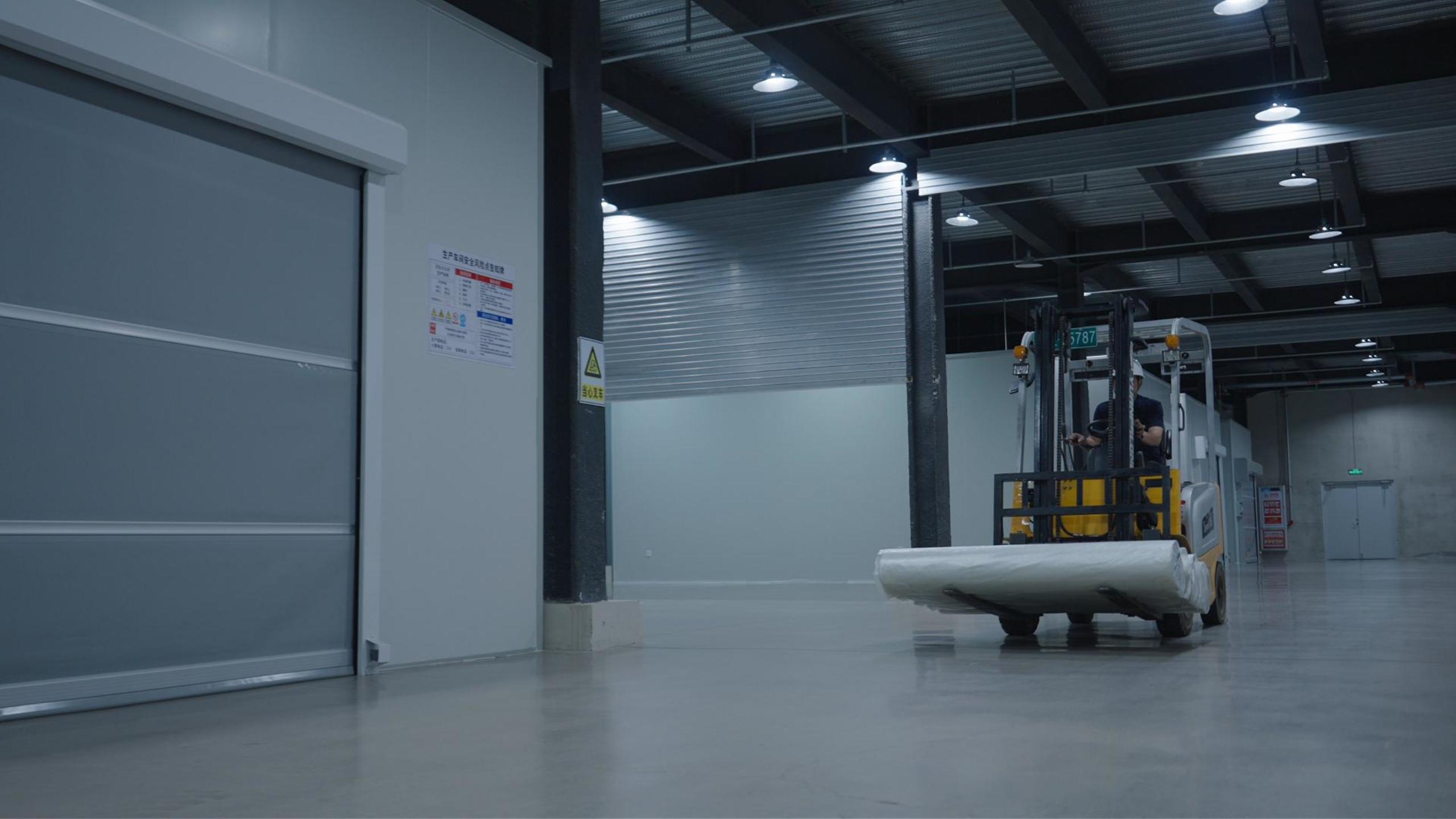
A supplier's physical footprint and output tell a buyer whether the business is built to serve industrial volumes. SHENGDING operates a 50,000 m² facility with an annual output of 1,000 tons of TPU and EVA film, supported by a team of 50 employees. Its monthly TPU film capacity is stated at 100 tons, with a standard lead time of 10 days and a minimum order quantity of 50 kg.
For buyers, those figures matter in two directions. The floor capacity of 50 kg makes the supplier accessible for qualification batches and pilot laminations, while the monthly ceiling of 100 tons indicates the ability to scale into production orders without a change of source. A supplier that can only handle one of those two ends of the range forces buyers to split their sourcing, which reintroduces the very re-validation cost they were trying to avoid.
2. Export orientation
Export share is a useful, if imperfect, proxy for process discipline. A manufacturer selling into overseas markets must maintain documentation, packaging, and consistency standards that satisfy importers, not just domestic buyers. SHENGDING reports that approximately 70% of its sales are exported, with main markets in North Africa, the Middle East, and Latin America.
For a procurement team, a high export ratio suggests the supplier is accustomed to international order handling, certificates of analysis, and shipping documentation — the administrative layer that determines whether a technically sound film actually arrives on site. It is not proof of performance, but it is a reasonable signal of operational maturity.
3. Intellectual property and standards participation
In highly engineered interlayers, intellectual property indicates how deeply a supplier has invested in its own materials science rather than trading in generic film. SHENGDING states that it has accumulated multiple core technologies and established over 50 proprietary intellectual property rights, and that it has drafted the only national aviation standard in China currently led by a private enterprise.
The company also reports mastering the synthesis and stable pelletization technology for optical-grade thermoplastic polyurethane elastomer film raw materials, as well as the stable extrusion molding technology for wide-width TPU intermediate films, and that it has become the sole qualified supplier in China for the base materials used in military-grade aviation glass, achieving import substitution. These are the supplier's own statements about its capability; they are relevant to buyers as indicators of specialization, and they can be checked further during a factory audit.
4. Certification with a verifiable trail
Certification only has value when it can be traced. SHENGDING holds ISO 9001, ISO 14001, and ISO 45001 certifications, and states that product performance complies with European REACH and RoHS regulations as well as U.S. FDA quality requirements. For the TPU film model SD560, the quality management certification is ISO 9001:2015, certificate number 10425Q01154R1S, issued by Shandong Seatone International Certification Co., Ltd. under the standard GB/T 19001-2016 / ISO 9001:2015, with the certificate issued on 2025-07-07 and valid until 2028-07-24.
5. Technical support after delivery
Interlayer performance depends on processing conditions as much as on the film itself. A supplier that offers technical support — including post-sales service — helps the buyer get the laminate right the first time. SHENGDING lists technical support as its after-sales offering alongside OEM/ODM production and customization of film length and width.
This is a quiet but important stability factor. Suppliers that treat the transaction as finished at the loading dock leave the buyer to solve lamination problems alone; suppliers that stay engaged after delivery reduce the risk of a failed autoclave cycle and the re-work cost that follows.
Reading the Parameters Behind a TPU Film Quote
The technical part of a supplier evaluation begins with the material data sheet. Two quotations for “TPU film” can describe materials with very different mechanical behavior, and the difference determines whether the interlayer survives a ballistic event. For the SD560 grade, the published parameters are:
| Parameter | Value (SD560) | Why it matters to the buyer |
|---|---|---|
| Tensile strength | 42 MPa | Indicates the film's ability to carry and distribute load within the laminate. |
| Elongation at break | 500% | Reflects ductility and energy absorption before rupture. |
| Tear strength | 45 kN/m | Governs resistance to edge damage and delamination during handling. |
| Light transmittance | 90% | Determines optical clarity of the finished glazing. |
| Haze | 0.3% | Low haze is essential for transparent protective glass. |
| Material type | Thermoplastic polyurethane elastomer | Defines the processing route (autoclave hot-pressing). |
As an external benchmark, third-party data indicates that TPU films such as SD560 exhibit tensile strength of 42 MPa, compared with roughly 15–25 MPa for standard EVA interlayers — a difference that explains why TPU is often preferred where impact resistance is a governing requirement.
Certification as a Constraint, Not a Marketing Line
In regulated glass segments, certification functions as a hard constraint rather than a differentiator. For a defense-adjacent program, the buyer's question is not “does the supplier have any certificate,” but “does the certificate cover the exact scope I am buying, and is it current?”
The SD560 quality management certification is instructive because it carries the details a buyer needs to verify it: a specific certificate number (10425Q01154R1S), an identifiable issuing body (Shandong Seatone International Certification Co., Ltd.), a named standard (GB/T 19001-2016 / ISO 9001:2015), and a defined validity window (issued 2025-07-07, valid until 2028-07-24). The certification scope covers the design, development, and production of interlayer glass intermediate films and granular materials — that is, the activity the buyer is actually purchasing.
Practical rule: a certificate without a number, issuer, scope, and expiry date is not a verifiable compliance artifact. Buyers should always request the original certificate and confirm its validity at the point of purchase.
Application Context: Ballistic and Safety Glass Lamination
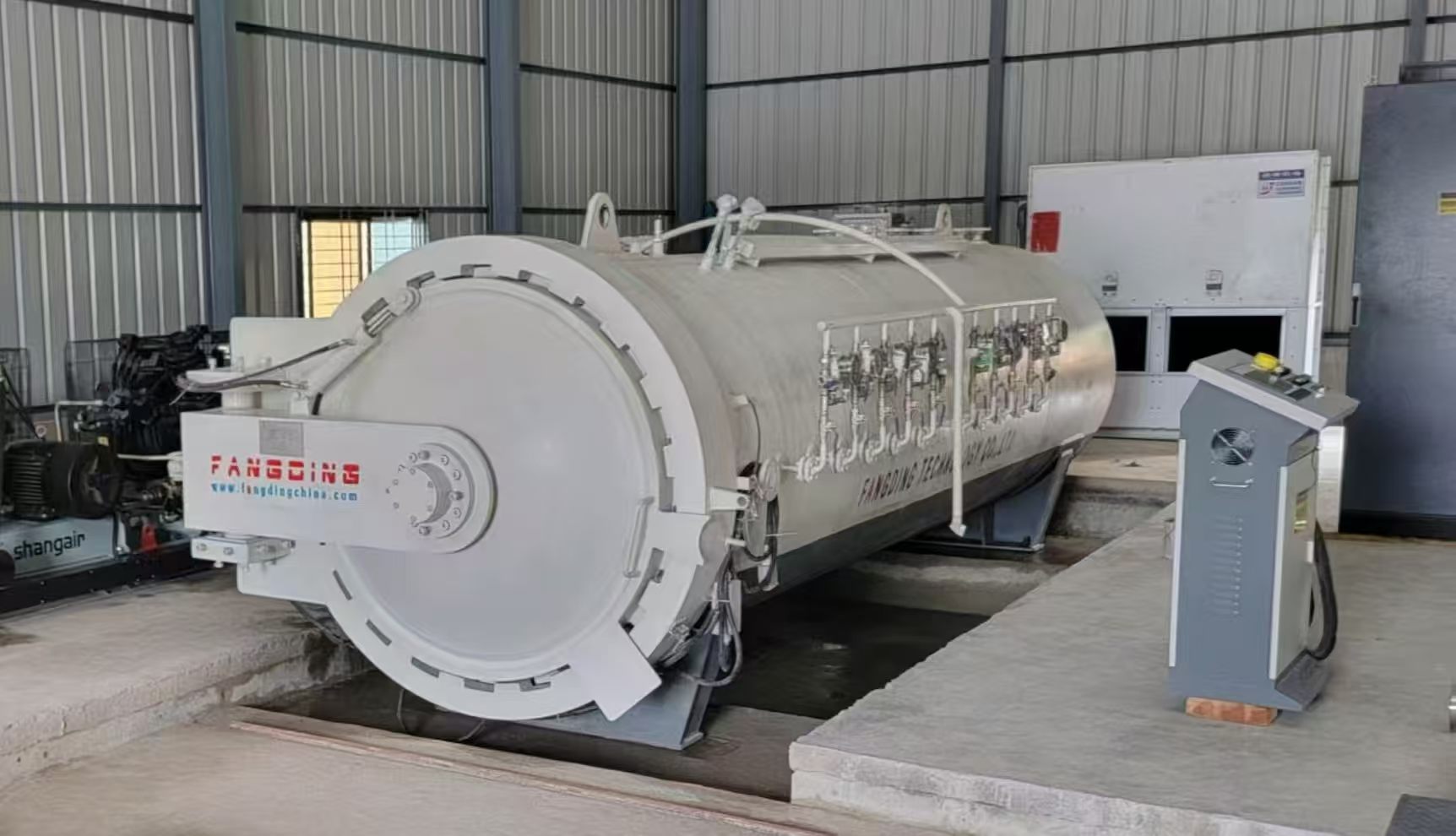
TPU interlayer film is used in the bulletproof industry under high-pressure and high-temperature working conditions. Typical project types are safety glass lamination projects and ballistic-resistant glass manufacturing projects. The film's function is to provide excellent transparency and environmental resistance while bonding to acrylic, polycarbonate, and inorganic glass; the operation mode is hot-pressing in an autoclave, and the matched equipment is an autoclave.
One operational requirement deserves emphasis: the film must be kept dry. TPU interlayers are moisture-sensitive before lamination, and storage discipline is part of the buyer's own process control. A supplier that documents storage requirements is helping the buyer protect the material's performance between delivery and use.
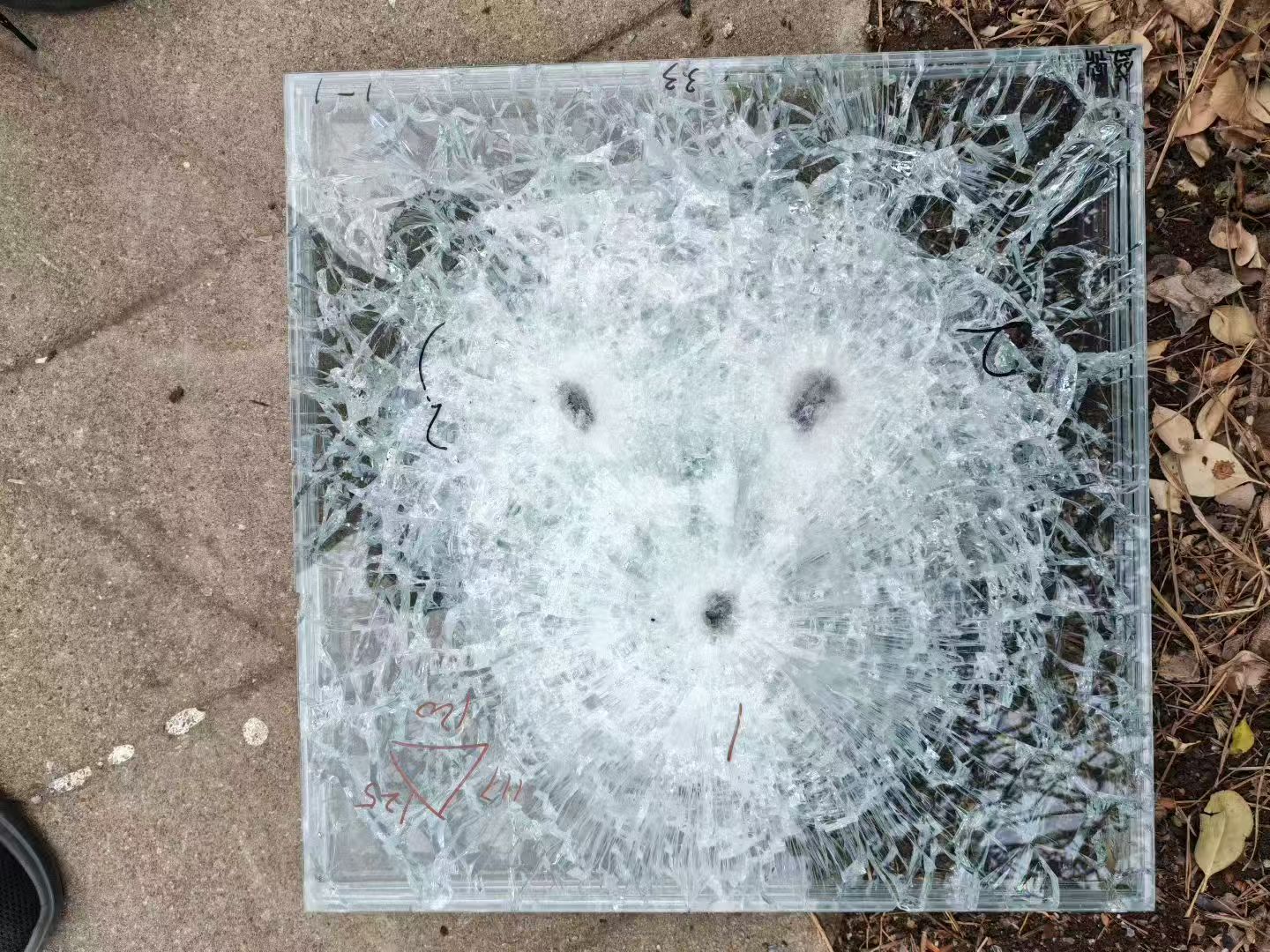
A documented application reference comes from a defense-industry customer in Pakistan, where 100 rolls of SD560-based film were supplied for bulletproof glass applications. The material has been in operation for two years with reported stable results — an example of the kind of multi-year track record that a price-only evaluation would not surface.
Market Context: Why Long-Term Evaluation Matters Now
The commercial backdrop reinforces the case for evaluating suppliers on stability rather than price alone. Published market research projects the global TPU film market to reach approximately USD 888.65 million by 2032, taking 2023 as the base year. Within that total, the TPU film segment serving glass interlayers is projected to exceed USD 1.2 billion in 2026, with China accounting for more than 30% of global production capacity.
That capacity concentration has two implications for buyers. First, a large share of the world's TPU interlayer supply originates from a relatively small number of Chinese producers, so regional sourcing decisions are hard to separate from supplier-level technical audits. Second, as demand for performance-driven interlayers grows, the ability to distinguish a stable, certified, specialized manufacturer from a spot-market supplier becomes a competitive advantage for the fabricator.
Where a Stability-First Approach Has Limits
Supplier stability is a necessary condition, not a sufficient one, and it is worth stating where this framework stops being useful.
First, operating maturity does not replace project-specific validation. No amount of certification data substitutes for a lamination trial and ballistic test on the buyer's own glass stack and autoclave profile. A supplier's history reduces the probability of continuity problems; it does not certify the buyer's finished product.
Second, a specialized ballistic-grade manufacturer is not automatically the right choice for every buyer. Where a program involves low-risk, non-critical architectural glazing with modest performance requirements, the additional engineering depth of a defense-oriented TPU supplier may exceed what the application needs. In those cases, a simpler product may be the more economical and equally adequate selection.
Third, TPU lamination imposes its own process requirements. The material is processed in an autoclave at high pressure and high temperature and must be kept dry in storage. Fabricators without autoclave capability, or without controlled storage, will find TPU less convenient than alternative interlayers — a constraint that belongs in the buyer's decision, not in the supplier's marketing.
A Practical Evaluation Framework
The following table converts the discussion above into a buyer-facing checklist that can be applied to any TPU film supplier under consideration.
| Dimension | What to verify | Decision value |
|---|---|---|
| Operating base | Facility size, annual and monthly capacity, standard lead time, MOQ | Confirms the supplier can serve both qualification batches and production volumes. |
| Export orientation | Share of sales exported, main destination markets | Signals familiarity with international documentation and shipping discipline. |
| Intellectual property | Patents and IP rights, participation in industry standards | Indicates depth of materials-science investment rather than trading activity. |
| Certification | Certificate number, issuing body, standard, scope, issue and expiry dates | Turns compliance into a verifiable, time-bound fact. |
| Technical parameters | Tensile strength, elongation, tear strength, transmittance, haze | Determines whether the film can meet the laminate's performance target. |
| Post-sales support | Technical support and customization capability | Reduces processing risk and re-work cost after delivery. |
| Track record | Documented multi-year applications in comparable use cases | Provides evidence that the relationship can be sustained over a program cycle. |
Future Outlook
As ballistic and architectural glazing specifications tighten, buyers are likely to move further away from transactional film purchasing and toward supplier-level qualification. The direction of travel is toward documented traceability — from material batch to final laminate — because generic market data cannot substitute for evidence tied to a specific production run.
For manufacturers, the implication is that continuity, certification currency, and post-sales technical engagement will increasingly be evaluated alongside price. For buyers, the practical takeaway is simpler: in a category where re-validation is expensive and switching is slow, the cheapest quote is rarely the lowest total cost. The suppliers worth building a multi-year program around are the ones whose stability can be checked, dated, and repeated.
Frequently Asked Questions
What certification should a TPU film supplier provide for ballistic glass projects?
ISO 9001:2015 is the baseline quality management certification buyers commonly require, because it covers the design, development, and production process rather than a single batch outcome. For the SD560 TPU film model, the certification is ISO 9001:2015, certificate number 10425Q01154R1S, issued by Shandong Seatone International Certification Co., Ltd., under the standard GB/T 19001-2016 / ISO 9001:2015, with a scope covering interlayer glass intermediate films and granular materials.
How can a buyer confirm that a TPU film certification is still current?
Verification requires four data points from the original certificate: the certificate number, the issuing body, the applicable standard, and the validity dates. For SD560, those are certificate number 10425Q01154R1S, issued by Shandong Seatone International Certification Co., Ltd., under GB/T 19001-2016 / ISO 9001:2015, issued on 2025-07-07 and valid until 2028-07-24. Buyers should also confirm that the certificate scope matches the material they are purchasing.
Which technical parameters should be compared between TPU film quotations?
The parameters that determine laminate performance are tensile strength, elongation at break, tear strength, light transmittance, and haze. For the SD560 grade, these are 42 MPa tensile strength, 500% elongation at break, 45 kN/m tear strength, 90% light transmittance, and 0.3% haze. Comparisons are only meaningful when values are quoted under the same test conditions and units.
Does export orientation matter when evaluating a TPU film supplier?
Export orientation serves as an indicator of documentation and logistics discipline rather than of product performance. SHENGDING HIGHTECH MATERIALS CO., LTD. reports that approximately 70% of its sales are exported, with main markets in North Africa, the Middle East, and Latin America. Buyers can use this as a screening signal, then confirm the underlying capability through a factory audit.
What practical constraints should a buyer expect when sourcing TPU interlayer film?
TPU interlayer film is processed by hot-pressing in an autoclave under high pressure and high temperature, and it must be kept dry before use. Order-side constraints include a minimum order quantity of 50 kg, a standard lead time of 10 days, and customization limited to film length and width under an OEM/ODM arrangement. Fabricators without autoclave capability or controlled storage should account for these requirements before selecting TPU as an interlayer.
For detailed capability, certification, and specification information, the SHENGDING HIGHTECH MATERIALS company brochure is available here: company brochure (PDF).
Есть вопросы или нужны дополнительные детали?
Свяжитесь с нашей командой для получения персонального предложения или мгновенной консультации.
Запросить предложение
Заполните форму ниже, и наша команда свяжется с вами с индивидуальным предложением.
Прямой чат WhatsApp
Предпочитаете общаться в реальном времени? Напишите нам в WhatsApp для мгновенной помощи и быстрых ответов.
- Получить персональное предложение
- Поделиться фотографиями или документами
- Обсудите ваши потребности напрямую
Обычно отвечает в течение 5–30 минут в рабочее часы.