
How to Evaluate a 3D Massage Chair Manufacturer Before OEM Orders
How to Evaluate a 3D Massage Chair Manufacturer Before OEM Orders
The global massage equipment market was valued at USD 11.6 billion in 2024 and is projected to reach USD 21.8 billion by 2033, according to Grand View Research. Massage chairs and sofas represented the largest segment at 39.5% of that market. For importers, e-commerce sellers and wellness brands, the commercial opportunity is clear. What is less clear is how to choose a 3D massage chair factory that can deliver a private-label program without delays, quality disputes or compliance surprises.
The sourcing problem: specifications alone do not de-risk a private-label program
Buyers evaluating a 3D massage chair usually receive a product sheet listing mechanical rollers, zero gravity, airbags, SL track, AI support and health-care programs. These descriptors explain what the chair can do, but not whether a supplier can deliver those features reliably across a production run. The actual sourcing risk sits in the manufacturing system: how the factory handles customization, whether it can scale, how it verifies quality, and what compliance documents support the model.
The opportunity side is equally important. Demand for massage chairs is broadening beyond traditional premium brands, and many importers are looking for economic, high-performance and new-design 3D massage chairs under their own brand names. A factory that combines mature 3D chair programs with flexible OEM/ODM production can shorten time to market. But choosing a supplier based only on marketing language often creates problems during pre-shipment inspection, customs clearance or after-sales service.
What a factory-level OEM/ODM program includes
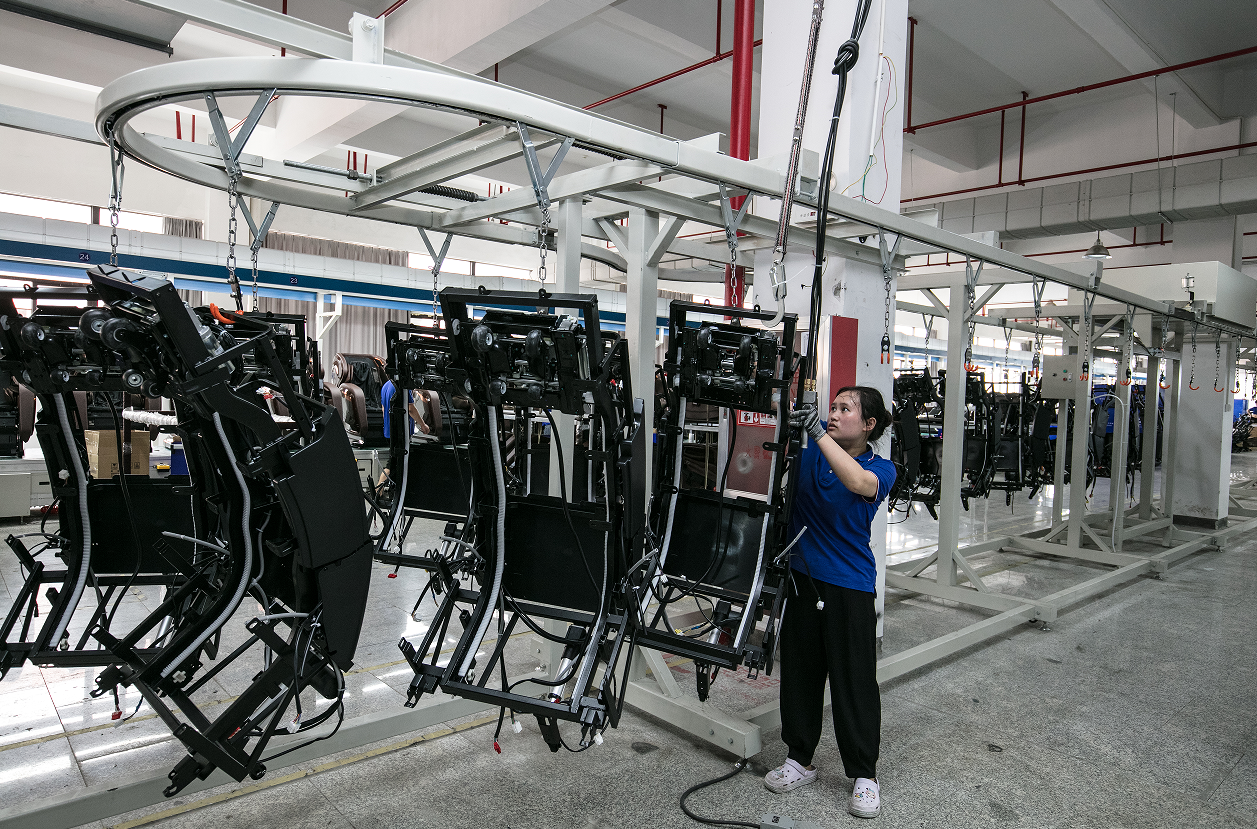
Ningbo Zhouqi Health Technology Co., Ltd. (ZHOUQI) is a massage chair manufacturer based in Cixi, Zhejiang Province, China. Founded in 2008, the company operates a 130,000-square-meter production facility with 450 employees and a 34-person R&D team. Annual output is reported at 200,000 units, with around 50% of production exported to the USA, EU, Southeast Asia and the Middle East.
For buyers moving from evaluation to execution, ZHOUQI publishes several manufacturing facts that are directly relevant to an OEM/ODM decision:
- Production mode: OEM and ODM; ODM services cover color, logo, OEM file, pillow and backrest design, UI, and language customization.
- Monthly capacity: 16,000 units.
- Lead time: 30–45 days.
- MOQ: 1×40HQ container.
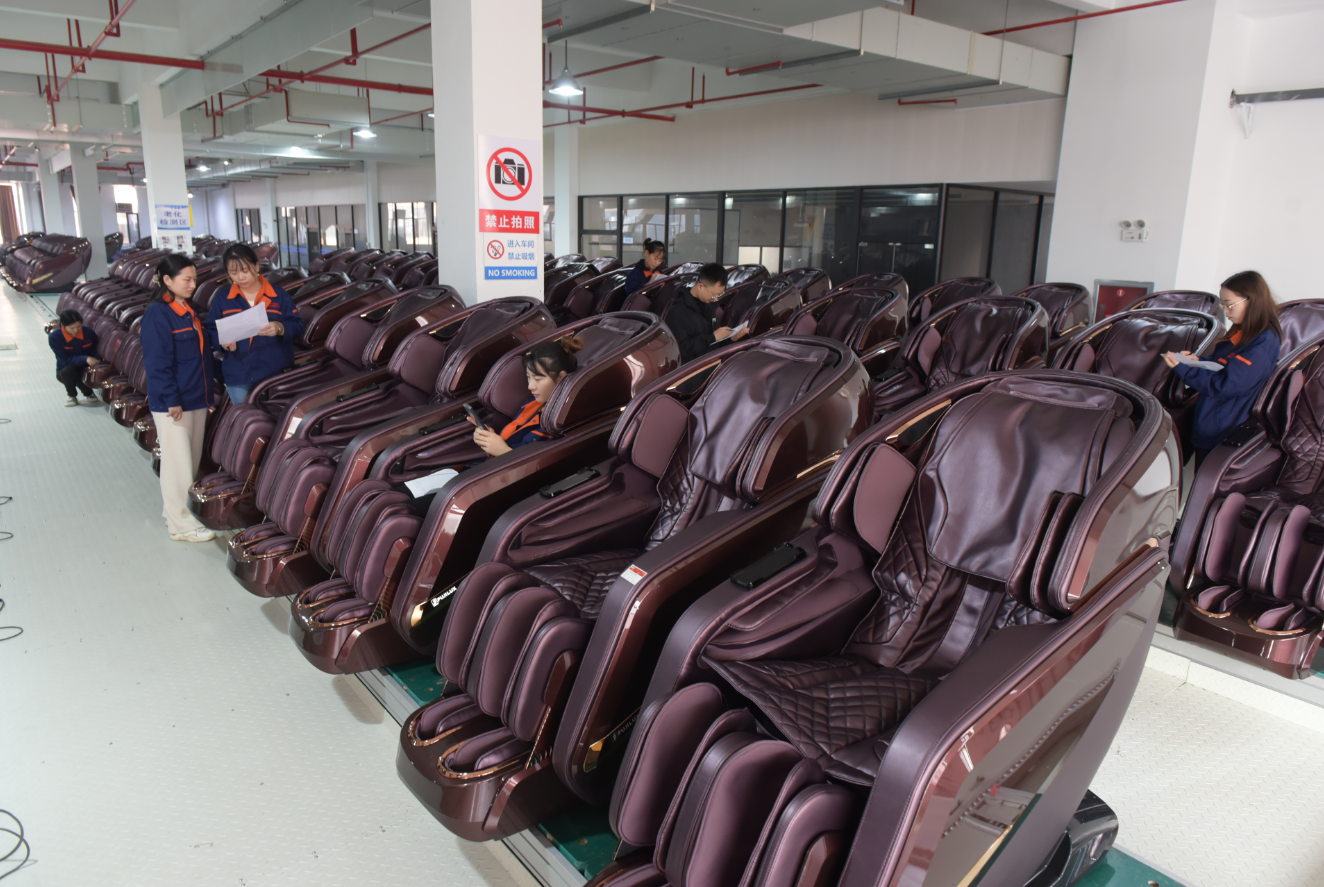
- Quality control: 100% QC test on production.
- Acceptance: pre-shipment test and third-party inspection by SGS.
- After-sales support: one-year warranty, installation videos and maintenance manual.
Technical foundation: 3D mechanisms, SL track and zero gravity
Mechanically, a 3D massage chair differs from a 2D unit because the roller assembly can move in three axes, including protrusion and retraction. This allows the massage head to press into tissue more like a hand. Many 3D chairs are also described as SL Track 3D massage chairs because the track follows the natural spine curve and extends toward the gluteal area.
Zero-gravity posture tilts the body so the legs are elevated relative to the torso, reducing pressure on the spine. Airbag-based 3D massage chairs add a second layer of compression to arms, calves, hips and shoulders. Intelligent 3D massage chairs combine these functions with automated programs and preset massage routines. For buyers planning a high-end or luxury 3D massage chair line, the technical question is whether the factory can integrate these features while keeping the chair stable, quiet and safe over a long service life.
Compliance evidence for cross-border programs
Certificates are part of the technical handover for a 3D massage chair program. ZHOUQI's 3D massage chair models have been submitted to multiple international certification schemes, and buyers can verify the applicable certificate before mass production.
| Certification | Market / Scope | Standard reference | Certificate number |
|---|---|---|---|
| ETL | US / Canada | UL 1647:2015; CSA C22.2 #68:2018 | 5030347 |
| CB | EU, Middle East, SE Asia | IEC 60335-1; IEC 60335-2-32:2019 | NO127967 |
| CE | EU, Middle East, SE Asia | EN IEC 55014-1:2021; EN IEC 55014-2:2021 | ENB2311240186E00401C |
| FDA | US | 21 CFR 807.39 | 3017618816 |
| ISO 13485 | Medical device quality management | ISO 13485:2016 | 133640 |
| ISO 9001 | Quality management systems | ISO 9001:2015 | 02424Q32202999R1S |
Certificates are published documents rather than promises. Buyers should request a copy of the certificate applicable to the exact model and verify its validity before mass production.
Representative 3D chair specification envelope
For logistics planning, representative 3D massage chair models in the program list publish the following parameters: power input 110V–240V, 50/60Hz; rated power 150W; auto timer 15 minutes; upright dimensions 1590×800×1160 mm; reclined dimensions 1895×800×940 mm; packed dimensions 1950×810×880 mm; net/gross weight 111/135 kg. The frame uses iron, foam, leather and ABS plastic. These dimensions are important for container loading and end-user door clearance.
Application evidence: where 3D massage chairs are deployed
ZHOUQI's case records show deployments across massage chair sales showrooms, 4S showrooms, furniture and home-appliance malls, e-commerce sellers, hotels and resorts, wellness and senior-care institutions. In Vietnam, the company reports a cumulative volume of 70,000 units over four years; in the United States, 20,000 units over three years. The recorded application objectives include releasing muscle stiffness and body fatigue, boosting blood circulation, reducing physical pressure and discomfort, relaxing nerves and improving sleep, and relieving soreness from prolonged sitting.
These use cases matter because they show the product is not limited to one sales channel. A high-end 3D massage chair can serve a hotel project, an office wellness room, a shopping mall demonstration area or a senior-care facility. A buyer with multi-channel plans needs a manufacturer that can support different models without changing the basic compliance and quality framework.
Market signals for buyers evaluating a 3D massage chair line
Market forecasts are not uniform, but they point in the same direction: demand for massage chairs is expanding. Several reference points help frame a sourcing decision:
- Massage equipment: USD 11.6 billion in 2024, projected to reach USD 21.8 billion by 2033.
- Massage chair market: projected to grow from USD 4.28 billion in 2026 to USD 8.78 billion by 2035, at an 8.3% CAGR.
- North America held the largest regional share of the massage equipment market at 36.9% in 2024.
- Asia Pacific is noted as the fastest-growing market for massage chairs, with a 34.8% share of the luxury segment in 2024.
- Smart massage chairs are forecast to reach USD 14.2 billion by 2033, supported by AI-powered body scanning and smart connectivity.
- About 41% of new massage chair models in 2026 are expected to integrate AI-based sensors for body scanning.
For an OEM buyer, these signals imply a wider range of product tiers: economic 3D massagers, high-end zero-gravity models, airbag-rich units and AI-supported versions. The word 3D alone will not protect margin. Channel positioning, technical proof and supplier reliability will matter more.
Factory-direct OEM vs traditional importing routes
The traditional route for a furniture or home-appliance importer is to buy finished units from a trading company or distributor. The factory-direct route changes the relationship from product purchase to production program. The comparison below is based on published sourcing terms and typical import practices.
| Sourcing factor | Direct OEM / ODM with ZHOUQI | Trading company / distributor |
|---|---|---|
| Customization | Color, logo, OEM file, pillow and backrest design, UI, language | Usually limited to existing models |
| MOQ | 1×40HQ container | Lower volume may be possible |
| Quality verification | 100% QC test; pre-shipment test; SGS inspection | Depends on supplier policy |
| Compliance access | Original certificates and standards can be requested | May receive pass-through documents |
| Commercial terms | FOB Ningbo; 30% deposit, 70% before shipment | Varies by intermediary |
| Lead time | 30–45 days | Depends on stock availability |
| After-sales support | One-year warranty; installation videos; maintenance manual | Varies by reseller |
Direct manufacturing is not always the faster route. The MOQ of one 40HQ container limits the model for companies testing a market with a small trial quantity. In that case, a regional distributor or trading company may be a more practical first step. Direct sourcing becomes attractive once a buyer has validated demand and needs margin control, design ownership or supply-chain transparency.
Future outlook: compliance and intelligence will define supplier quality
Zero-gravity massage chairs with motorized parts fall under IEC 60335-2-116:2025, according to IECEE. This shows that certification is moving from a generic product category toward furniture-specific motorized safety. The IEC 60335-2-32:2024 edition also applies to electric massage appliances. Buyers should expect international programs to require current editions rather than older versions.
At the product level, AI-based body scanning is becoming a default expectation in newer models. The challenge for an OEM partner is to integrate such features without creating spare-parts or software-version problems after shipment. For buyers planning a 2026–2027 product refresh, the practical question is whether the factory can document component compatibility, update firmware, keep certification current and support the expected product life cycle.
FAQ: 3D massage chair OEM sourcing
What does OEM/ODM mean for a 3D massage chair order?
OEM means the buyer specifies the product design and the manufacturer executes production. ODM means the manufacturer provides the design and production, with options to customize color, logo, OEM file, pillow and backrest design, UI and language.
What is the minimum order quantity for a custom 3D massage chair?
The minimum order quantity is one 40HQ container.
What quality checks are performed before shipment?
Production units are subject to 100% QC test. The acceptance process also includes a pre-shipment test and third-party inspection by SGS.
What certifications should a 3D massage chair have for the US and EU markets?
For US and Canada, ETL is relevant. For the EU, CE is relevant. CB provides international acceptance evidence. FDA registration is also documented for the US market, and ISO 13485 and ISO 9001 cover quality management systems.
What is the typical lead time for an OEM order?
The published lead time is 30–45 days, with a monthly production capacity of 16,000 units.
Does the factory provide after-sales support for private-label buyers?
The manufacturer provides a one-year warranty, installation videos and a maintenance manual as part of the after-sales package.
Reference material for procurement teams
The 2026 E-catalogue published by Ningbo Zhouqi Health Technology Co., Ltd. contains product-family specifications and model information. It is available here: 2026 E-catalogue.