
How to Evaluate a Pharmaceutical Intermediate Supplier for Long-Term Programs
Long-term pharmaceutical intermediate supply is not a single purchase decision. It is a forward-looking assessment of capacity, quality systems, documentation standards, and risk controls. For API manufacturers and drug developers moving from clinical development into commercial production, the decisive question is not just who can synthesize an intermediate, but who can keep supplying it predictably for the next three to five years.
Why Long-Term Supply Reliability Has Become a Procurement Priority
The pharmaceutical intermediates sector has a well-known operational friction: delayed delivery. For a buyer, a late shipment of an intermediate does not delay only one batch; it can stall an entire API production campaign and push back drug supply commitments. That is why supply reliability has become one of the first evaluation criteria in long-term supplier qualification.
Market data helps explain the pressure. The global pharmaceutical intermediates market was estimated at approximately USD 37.04 billion in 2025. Oncology drug intermediates generated 37.20% of total industry revenue in 2025, driven by complex therapies and specialized building blocks. When a single therapeutic category accounts for more than a third of industry revenue, manufacturers cannot afford disruptions in the corresponding intermediate supply chain.
At the same time, generic drug manufacturers held a dominant 53.82% share of the pharmaceutical intermediates market in 2024. Generic production operates on tight margins and strict schedules, which pushes procurement teams to favor suppliers that can deliver consistently across many batches, rather than suppliers that perform well only once.
What a Long-Term Supplier Relationship Must Deliver
A long-term pharmaceutical intermediate relationship is not defined by one factor. Buyers typically check five dimensions during the Decision and Execution stages:
- Quality consistency: The supplier must reproduce the same purity and impurity profile across many batches, not just in the initial sample.
- Supply security: If demand rises, the supplier should have inventory, raw material access, and production capacity to respond.
- Documentation completeness: Regulatory submissions and audits depend on complete, traceable technical documents.
- Adaptability: Drug programs change; intermediate specifications or order sizes may need to be adjusted during the partnership.
- Commercial predictability: Payment, delivery, and other terms need to work for repeat orders, not only for spot purchases.
These dimensions form the foundation for the supplier evaluation sections below.
Haohong Pharmaceutical’s Supply Model for Multi-Year Programs
Haohong (Qihe) Pharmaceutical Technology Co., Ltd. is a China-based developer and producer of active pharmaceutical ingredients (APIs) and pharmaceutical intermediates. The company is located in the High-tech Zone of Qihe County, Shandong Province, and specializes in R&D and custom production of innovative APIs and high-grade intermediates for anti-cancer, anti-hepatitis C, and anti-diabetic therapies. It reports exports to the United States, Europe, Japan, India, Bangladesh, and other regions, with about 40% of output going to overseas markets.
For a long-term supply relationship, the most relevant facts are capacity, quality, and flexibility.
Production Capacity and Infrastructure
Haohong’s production base in Liaocheng is equipped with 30 sets of 3,000–5,000 L reactors, giving the company an annual production capacity of 1,000 tons. Its monthly production capacity is 100 metric tons. This configuration matters because long-term supply agreements typically require batch sizes that laboratory-scale facilities cannot handle. Reactors in the 3,000–5,000 L range support the kind of commercial-scale production that API manufacturers need for continuous supply.
The company was founded in 2021 and now employs 75 people, including 30 R&D engineers. A dedicated R&D team is essential for the process support and process optimization that long-term partners usually expect.
Quality System and Documentation Support
Haohong passed ISO 9001:2015 quality management system certification in 2021. It was recognized as a Technology-based Small and Medium-sized Enterprise in 2024 and as an Innovative Small and Medium-sized Enterprise of Shandong Province in 2025. These designations do not replace product testing, but they indicate the company’s compliance infrastructure.
The company states that its comparative assessment shows purity 0.02 higher than industry peers, batch quality stability 10% above the industry average, and a complete set of technical documents fully compliant with regulations. Because these are supplier-reported figures, buyers should verify them against certificates of analysis and batch records during the qualification process. The operational benefit of stable batch quality is straightforward: it reduces rework and compliance risk over the life of a supply agreement.
Custom Synthesis and Scaling Flexibility
Haohong currently has dozens of high-grade intermediates available for commercial production. In addition, it provides custom synthesis services ranging from gram scale to hundreds of kilograms. This range matters for long-term programs. A project may begin with a few hundred grams for clinical development, then expand to hundreds of kilograms after approval. A supplier with both custom synthesis and commercial production capability can support that trajectory.
Technical Explanation: Capacity, Purity, and Batch Stability
Why does reactor capacity matter for purity? In pharmaceutical intermediate production, purity is closely tied to process control. Larger reactors allow manufacturers to standardize process parameters such as temperature, mixing time, and pressure, reducing the risk of batch-to-batch variation. A full range of analytical testing instruments and methods, combined with production equipment of appropriate scale, gives a supplier the ability to release intermediates with consistent specifications.
Haohong’s main product families illustrate this technical focus. The company’s main products include Apalutamide intermediates, Abemaciclib intermediates, and Alectinib intermediates, alongside a broader portfolio that includes Bicalutamide, Enzalutamide, Darolutamide, Venetoclax, Macitentan, Empagliflozin, Larotrectinib, Apixaban, Rivaroxaban, Ibrutinib, Ceritinib, Pomalidomide, Lenalidomide, Ivacaftor, Tofacitinib, Cabozantinib, and Alectinib.
Several products from the catalog specify purity of ≥98.0%. For example, 2-Fluoro-4-nitrobenzoic acid (CAS 403-24-7), an Apalutamide intermediate, is listed at a purity of ≥98.0%; N-Methyl-2-fluoro-4-nitrobenzamide (CAS 915087-24-0) is specified at ≥98.0% (HPLC); and 5-Amino-3-(trifluoromethyl)pyridinecarbonitrile (CAS 573762-62-6) is listed at ≥97%–≥99.0%. For Alectinib, the key intermediate tert-Butyl 6-cyano-2-(2-(4-ethyl-3-iodophenyl)propan-2-yl)-1H-indole-3-carboxylate (CAS 1256584-75-4) is specified at ≥98.0% (HPLC). For Abemaciclib, 4-Bromo-2,6-difluoroaniline (CAS 1868-81-7) is listed at ≥98.0% (HPLC/GC). These are examples of the specification data that procurement teams should collect and compare during supplier qualification.
Application Areas: Oncology Intermediates in Long-Term Supply
Oncology projects are among the most demanding for intermediate suppliers, and they are also the most relevant to Haohong’s portfolio. The company’s product families are designed as intermediates for the synthesis of Apalutamide, Alectinib, and Abemaciclib, which are used in targeted therapy areas where intermediates must meet tight purity requirements.
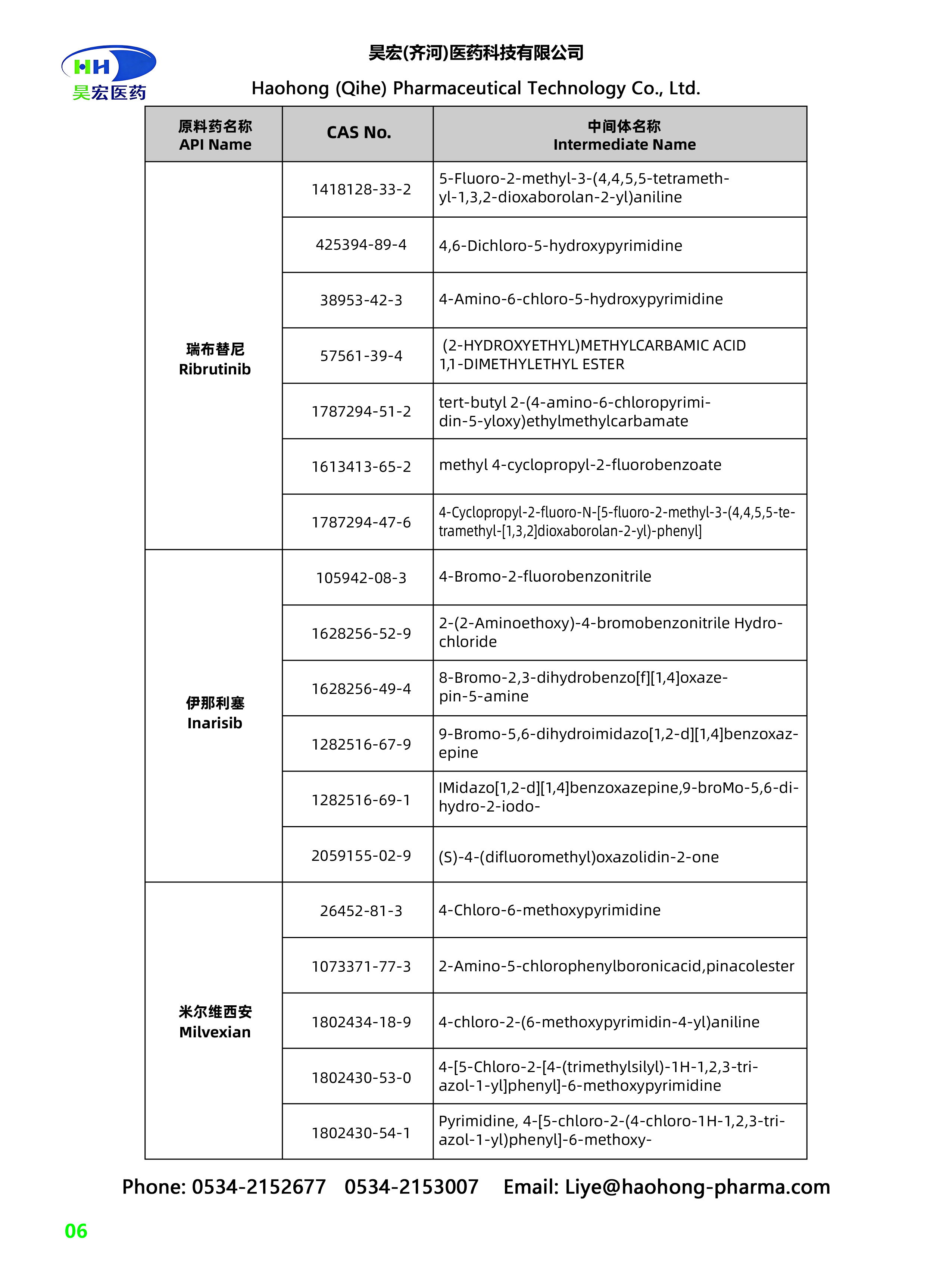
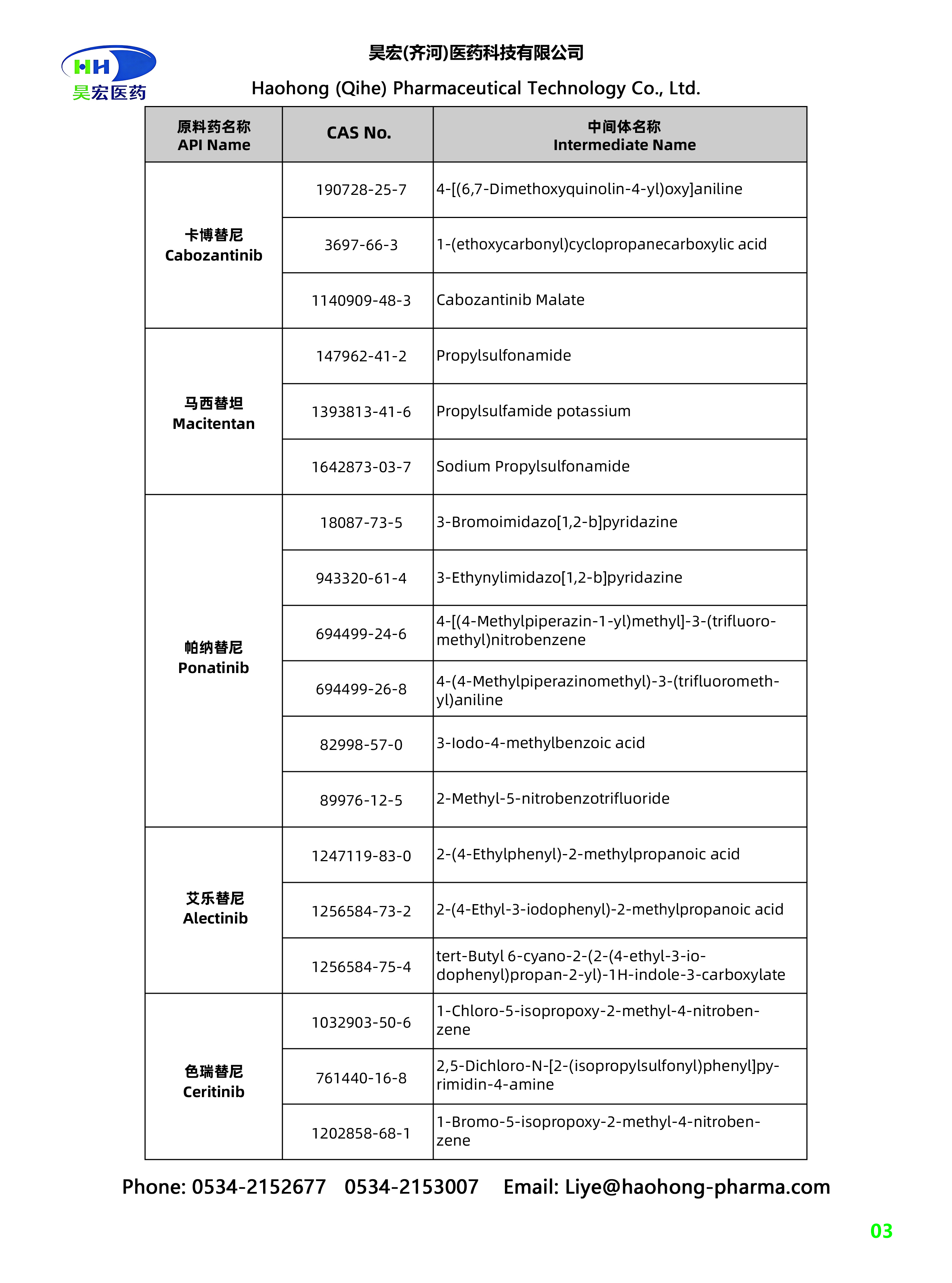
Apalutamide intermediates include N-Methyl-2-fluoro-4-aminobenzamide (CAS 915087-25-1) and Methyl 4-bromo-2-fluorobenzoate (CAS 179232-29-2). Alectinib intermediates include 2-(4-Ethylphenyl)-2-methylpropanoic acid (CAS 1247119-83-0) and the iodinated derivative 2-(4-Ethyl-3-iodophenyl)-2-methylpropanoic acid (CAS 1256584-73-2). Abemaciclib intermediates include 5-[(4-Ethylpiperazin-1-yl)methyl]pyridin-2-amine (CAS 398565-53-2) and 6-Bromo-4-fluoro-1-isopropyl-2-methyl-1H-benzo[d]imidazole (CAS 1356339-85-6).
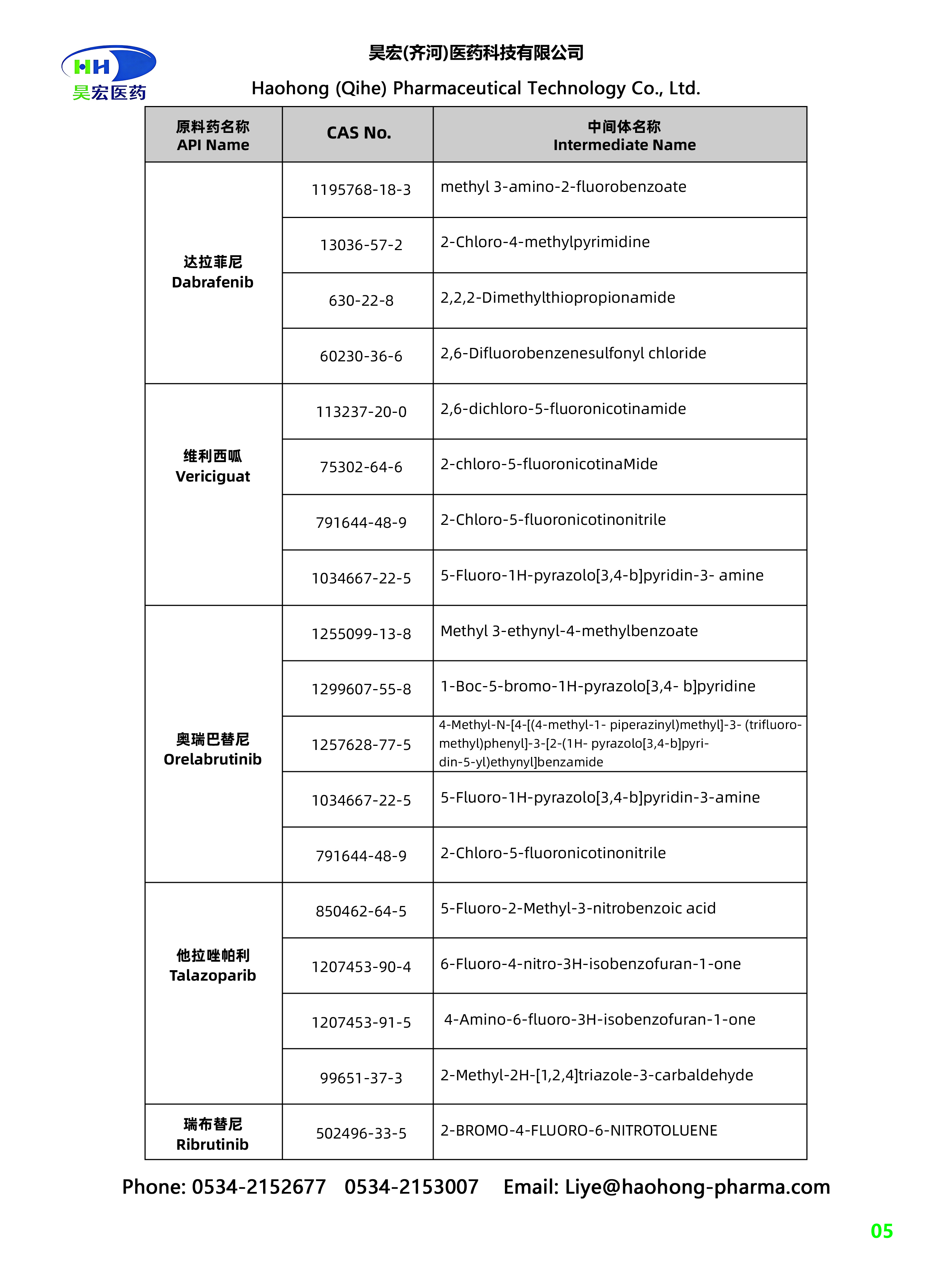
For buyers, a concrete product catalog with CAS numbers is a basic but necessary piece of evidence in a long-term sourcing decision. It shows that the supplier has standardized production of these intermediates, rather than treating every order as a brand-new development project.
Market Trends Influencing Supplier Selection in 2026
Several market trends affect how buyers should assess long-term pharmaceutical intermediate suppliers.
First, the market is large but uneven. The global pharmaceutical intermediates market was estimated at approximately USD 37.04 billion in 2025, with some research firms providing higher estimates. North America represented 42.23% of the global market value in 2024, which means suppliers serving North American sponsors must be prepared for FDA-related documentation and inspection expectations. The FDA’s ICH Q7 guidance provides the primary Good Manufacturing Practice framework for APIs and their intermediates.
Second, China remains an important production base. China’s pharmaceutical industry total exports were reported at USD 22.53 billion as of December 2024. Chinese suppliers can offer cost advantages from integrated R&D and production facilities. Haohong’s own description states that its combination of in-depth R&D and self-owned factories results in lower costs compared with the market average. Buyers should evaluate that claim through total cost modeling rather than price alone.
Third, specialization is increasing. Oncology drug intermediates generated 37.20% of industry revenue in 2025, and peptide and oligonucleotide intermediates are projected to grow at an 8.12% CAGR through 2030. A supplier’s ability to handle high-purity, custom synthesis work will become more important as these segments expand.
Fourth, importers into the EU should confirm whether an intermediate requires REACH registration when annual volumes exceed one tonne. This makes documentation completeness a compliance issue, not only an administrative convenience.
Long-Term Partnership vs. Transactional Procurement
Many pharmaceutical intermediate purchases still happen on a transactional basis: one order, one quotation, one delivery. At the Decision and Execution stage of a large program, buyers often need a different structure.
| Evaluation Point | Transactional Procurement | Long-Term Supply Partnership |
|---|---|---|
| Quality assurance | Batch-by-batch testing | Consistent quality system plus batch history |
| Supply planning | No reserved capacity | Safety stock and production scheduling |
| Documentation | Basic certificate of analysis | Full technical documents for audit |
| Pricing | Spot market pricing | More predictable terms |
| Risk handling | Buyer bears most risk | Supplier monitors inventory and schedule |
A long-term partnership is not the right choice in every scenario. Early-stage research may require only small quantities of an intermediate, and the synthetic route can change before it is locked. In those cases, transaction-based purchases from a custom synthesis provider are more flexible. Also, because a manufacturer such as Haohong shares its production lines across multiple intermediates, buyers should align forecasts and schedules with the supplier to maintain dedicated capacity for their specific products. Procurement teams should treat long-term supply as a structured commitment, not an assumption.
Future Outlook
The direction of the pharmaceutical intermediates market points toward fewer but deeper supplier relationships. Regulatory pressure from ICH Q7 and EU REACH will continue to favor suppliers that maintain strong documentation and stable quality systems. Growth in oncology and peptide intermediate segments will require both specialized synthesis capabilities and commercial-scale production capacity.
For Haohong, expansion from a newly founded company in 2021 to an export-oriented manufacturer with 1,000 tons of annual capacity and a high-grade intermediate portfolio is consistent with the type of supplier that mid-sized API and drug developers seek for multi-year programs. Buyers should still verify current capacity allocation, audit the production base, and test batch consistency before making final commitments.
Procurement teams requiring a structured summary of the company’s portfolio and operations can refer to Haohong’s corporate brochure: Haohong Pharmaceutical Corporate Brochure (PDF).
Frequently Asked Questions
Q1: What should buyers evaluate before selecting a pharmaceutical intermediate supplier for a long-term program?
A1: Buyers should evaluate quality system certification, production capacity, documentation completeness, and delivery risk. For example, Haohong (Qihe) Pharmaceutical Technology Co., Ltd. passed ISO 9001:2015 certification in 2021, operates 30 reactors of 3,000–5,000 L in its Liaocheng production base, and lists an annual production capacity of 1,000 tons. Buyers should still audit these claims before entering a multi-year agreement.
Q2: How should a buyer verify the purity and batch stability of a long-term intermediate supplier?
A2: Purity and batch stability should be verified through certificates of analysis, batch records, and, where possible, independent testing. Haohong reports a comparative assessment with purity 0.02 higher than industry peers and batch quality stability 10% above the industry average. These figures are the supplier’s own assessment, so procurement teams should confirm them with actual batch data.
Q3: What documentation should a long-term pharmaceutical intermediate supplier provide?
A3: The supplier should provide full technical documentation, including quality data and compliance information. Haohong states that its technical documents are fully compliant with regulations. For APIs and their intermediates, FDA ICH Q7 provides the primary GMP guidance, and suppliers that align with such expectations can reduce audit workload for buyers.
Q4: What production capacity does Haohong Pharmaceutical offer for sustained intermediate supply?
A4: Haohong’s production base in Liaocheng has 30 sets of 3,000–5,000 L reactors and an annual production capacity of 1,000 tons. Its monthly production capacity is 100 metric tons. Because multiple intermediates share the same production base, buyers should confirm scheduled capacity for their specific products before placing a long-term order.
Q5: What delivery and payment terms are common for bulk pharmaceutical intermediate supply?
A5: Suppliers commonly offer a full range of international trade delivery terms, including EXW, FOB, CFR, CIF, air freight, international express, and DDP/DDU door-to-door delivery. Haohong’s standard procurement terms include pre-shipment testing and a 50/50 payment structure, which can serve as a useful baseline for structuring bulk pharmaceutical intermediate purchases.
Q6: How can supply delays in pharmaceutical intermediates be prevented?
A6: Delayed delivery is a recognized risk in the pharmaceutical intermediates sector. One control approach is supplier-side inventory management: maintaining safety stock levels, using real-time inventory monitoring, and optimizing production scheduling. Haohong reports that it maintains sufficient regular stock and uses digitalized product management to support timely restocking and customer supply.