
How to Evaluate a Self-Adhesive PVC Film Manufacturer for Interior Projects
Material Sourcing · Interior Decoration
Buyers planning interior renovation projects—from kitchen cabinet upgrades to hotel and retail refurbishment—are increasingly turning to self-adhesive PVC decorative film as a replacement for paint, laminate, or full panel replacement. The practical question is no longer whether this material works, but how to evaluate a manufacturer's ability to deliver consistent quality, customized designs, and reliable supply at project scale.
This article explains how self-adhesive PVC film for interior decoration is produced, what OEM and ODM capabilities matter in a supplier, which technical specifications affect application results, and how buyers can match film types to renovation scenarios.
Why Supplier Capability Matters in Self-Adhesive PVC Film Sourcing
Global demand for PVC decorative film is expanding. According to Dataintelo, the global PVC decorative film market was valued at USD 4.8 billion in 2025 and is projected to reach USD 8.6 billion by 2034, with Asia Pacific accounting for 42.3% of revenue share in 2025. Within this market, wood grain film held the largest product segment share at 38.4%, and the furniture sector represented approximately 44.6% of total global consumption.
For importers, distributors, and renovation project buyers, these figures point to a market where wood grain and furniture-related applications dominate. But market growth also means a wider field of suppliers with different production depths. Some manufacturers only convert or re-sell film; others control the full production chain from PVC film production to adhesive coating and final inspection. The latter group is better positioned to deliver consistent color, stable adhesive performance, and reliable lead times—factors that directly affect installation outcomes and reorder cycles.
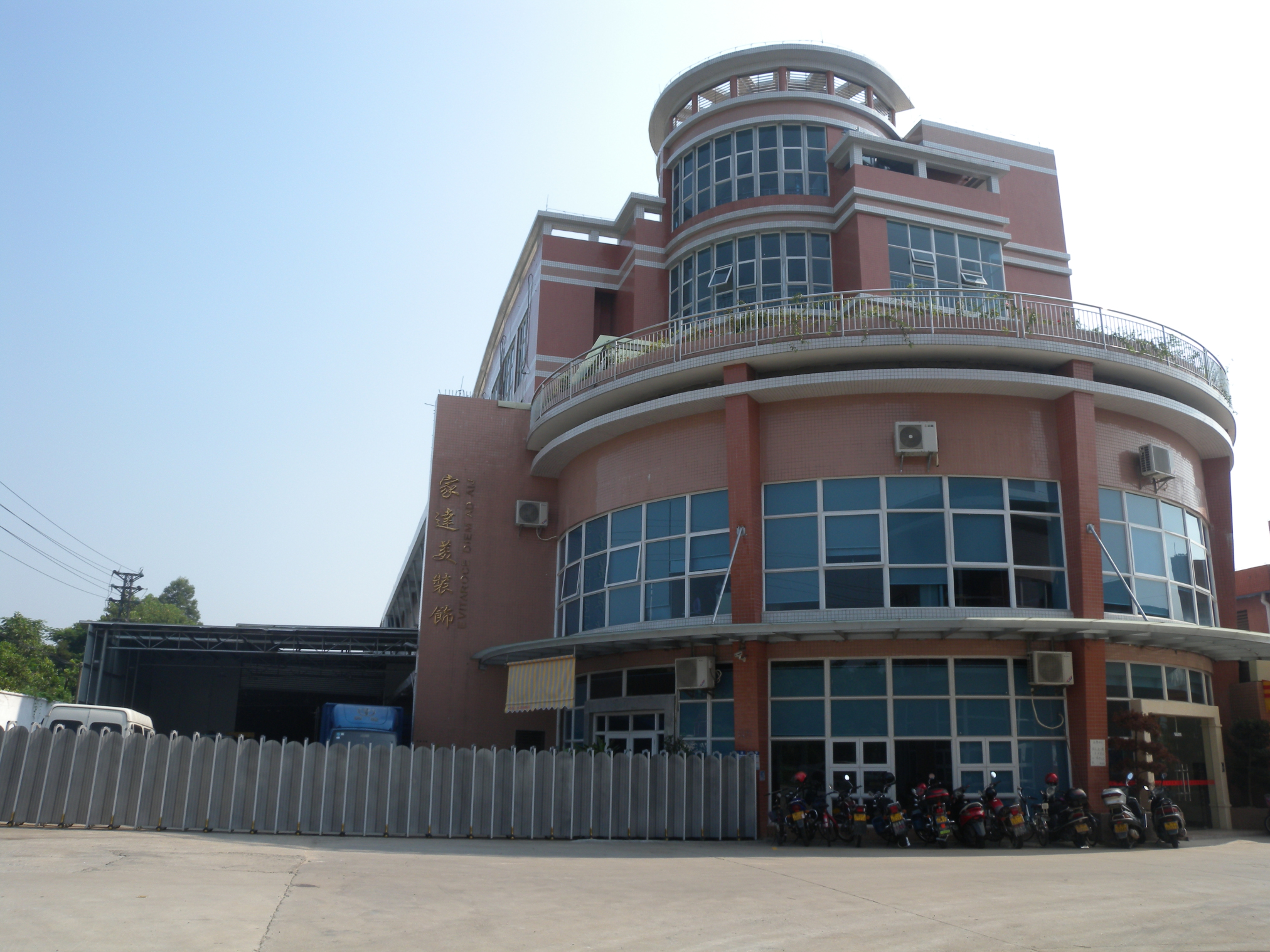
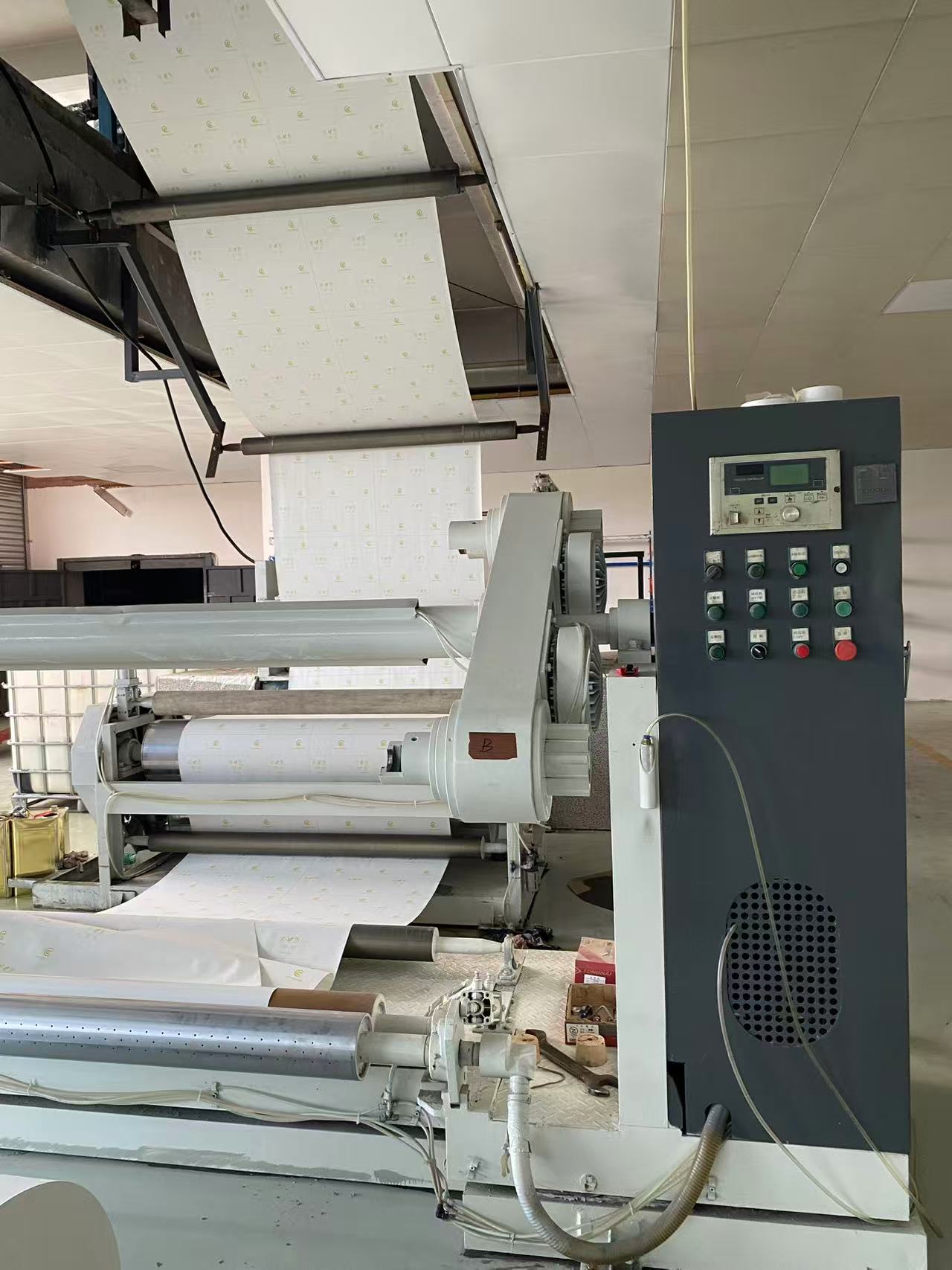
One example of a manufacturer with integrated production is Foshan Nanhai Jiadamei Decoration Material Co., Ltd, a Foshan-based producer of self-adhesive PVC decorative films that sells under the Leiyegaoke brand. The company, founded in 2001, operates a 12,000 m² factory with 50 employees and an annual output of 15,000,000 meters. Its production system covers PVC film production, printing, laminating, adhesive coating, slitting, inspection, and packaging—an integrated setup that gives buyers a single point of quality accountability.
The Manufacturing Chain: What Buyers Should Inspect
Self-adhesive PVC decorative film is not a single-step product. Its performance depends on several production stages, each requiring process control:
- PVC film production and calendering: determines thickness uniformity and flexibility.
- Printing: determines pattern sharpness, color consistency, and design fidelity.
- Laminating and surface finishing: determines matte, gloss, embossed, or super-matte surface characteristics.
- Adhesive coating: determines initial tack, final adhesion, and bubble-release behavior during installation.
- Slitting and packaging: determines roll quality, edge straightness, and shelf life.
Leiyegaoke operates two adhesive coating lines and performs 100% testing on finished products. For a buyer, the relevant question is not just whether a supplier has coating lines, but whether the supplier can document how quality is checked at each stage—from raw material inspection and color matching to finished-product inspection and final packing.
OEM and ODM Capability: A Practical Evaluation Framework
For buyers at the evaluation stage, OEM and ODM capability is often the deciding factor between suppliers. The manufacturer provides OEM and ODM production services, meaning a buyer can bring a color chip, a pattern sample, or a brand specification, and the factory executes it at scale.
Leiyegaoke's customization scope covers:
- Custom colors and patterns, including sample-based customization
- Custom sizes and thickness
- Surface finish customization (matte, gloss, super matte, embossed)
- Custom logo, labels, packaging, and cartons
- Private-label packaging
In practical sourcing terms, buyers should evaluate a manufacturer against five criteria:
| Evaluation Criterion | Why It Matters | Example Verifiable Input |
|---|---|---|
| Production integration | Controls color consistency and lead time | In-house film production, printing, laminating, adhesive coating |
| Monthly capacity | Determines whether order volume can be met | 120,000 meters per month |
| MOQ flexibility | Affects trial orders and stock color planning | Stock colors: one roll per color; custom colors: 3,000 meters per color |
| Lead time | Impacts project scheduling | 20–25 days |
| Quality control | Reduces field failure risk | 100% finished-product testing; REACH and RoHS compliance |
Buyers should also confirm export experience. Leiyegaoke exports approximately 80% of output to Europe, South America, the Middle East, and CIS countries, and also supplies Southeast Asia, Russia, Africa, and North America. This pattern indicates established experience with international documentation, packaging requirements, and overseas quality expectations.
Reading the Technical Specification: What Actually Affects Installation
For buyers moving from evaluation to execution, the key is to translate technical specifications into installation behavior. Take the standard specification used across Leiyegaoke's self-adhesive PVC film range:
- Material: PVC
- Standard thickness: 0.16 mm
- Standard width: 1,240 mm
- Standard roll length: 50 m per roll
- Adhesive: water-based acrylic pressure-sensitive adhesive
- Backing: release paper
- Installation: peel and stick
- Finish options: matte, glossy, embossed, super matte
Three details deserve particular attention in specification reviews:
Adhesive type. Water-based acrylic pressure-sensitive adhesive is the industry norm for interior decorative film because it provides a balance of initial tack and repositionability. It also supports the bubble-free application behavior buyers expect from professional installation.
Release paper. The release liner is not just a protective layer. In air-release film, a specially designed release liner/adhesive structure creates micro air channels, allowing trapped air to escape more easily during installation. This is the technical basis for the “bubble-free” claim. Standard adhesive film without air-release channels requires more careful application and is more likely to trap air if installed improperly.
Thickness and flexibility. A 0.16 mm film is thick enough to cover minor substrate imperfections while remaining flexible enough to wrap cabinet edges and door profiles without cracking.
Matching Film Type to Application Scenario
Renovation projects require different decorative finishes depending on the environment. The following match-up reflects common buyer requirements:
| Film Type | Typical Application | Key Selection Point |
|---|---|---|
| Solid Color PVC Decorative Film | Modern cabinetry, wardrobes, retail fixtures | Color consistency across rolls |
| Wood Grain PVC Decorative Film | Furniture, doors, wall panels | Pattern realism; largest product segment at 38.4% share |
| Marble Grain PVC Decorative Film | Countertops, feature walls, commercial spaces | Print depth and veining clarity |
| Super Matte PVC Decorative Film | High-end furniture and Japanese-style interiors | Low light reflection, soft touch |
| Bubble-Free Application PVC Film | Large-area applications, professional renovation | Air-release liner structure reduces installation risk |
A real-world example illustrates the execution side. Leiyegaoke has supplied a furniture manufacturer in Algeria for more than six years, with a purchase volume of 100,000 meters per month. The client laminates the film onto MDF boards to produce finished cabinet doors. The product is used for its design, color, waterproof behavior, anti-scratch properties, and oil resistance—the combination of decorative finish and surface durability that renovation projects require.
Self-Adhesive PVC Film vs. Traditional Surfacing: An Honest Comparison
Compared with traditional surfacing methods such as painting or high-pressure laminate (HPL), self-adhesive PVC film offers clear advantages in renovation speed and cost. It also has boundaries that buyers should understand.
| Comparison Point | Self-Adhesive PVC Film | Paint / Spray Coating | HPL / Laminate |
|---|---|---|---|
| Installation speed | Fast; peel and stick | Slow; requires drying time and multiple coats | Moderate; requires adhesive and pressing |
| Surface requirement | Smooth, clean, dry, stable surfaces | Requires sanding, priming, painting | Requires flat, stable substrate |
| Edge wrapping | Good; film wraps edges seamlessly | Fair; edges may chip | Good; pre-formed edges available |
| Cost for renovation | Lower material and labor cost | High labor cost | Higher material cost |
| Limitation | Not suitable for rough, porous, or unstable surfaces without preparation | High VOC, slow turnaround | Rigid; difficult for curved profiles |
The honest boundary: self-adhesive PVC film is not a universal replacement for all surfacing methods. On rough, dusty, oily, damp, or unstable surfaces, adhesion may fail, causing bubbling, edge lifting, or peeling. Buyers planning to apply film over untreated porous wood or heavily textured surfaces must budget for surface preparation or choose a different surfacing method.
Supply Chain and Market Trends Affecting Procurement
Several verified trends are shaping procurement decisions in 2026:
- China's export role is expanding. China surpassed the United States in 2025 to become the world's largest PVC exporter, accounting for 24% of total global trade volume, according to International Trader Publications. China's exports of HS Code 3919 (self-adhesive plates, sheets, film, foil, tape, strip, of plastics) reached an all-time high in January 2026, per CEIC data based on the General Administration of Customs China.
- Asia Pacific drives demand. With 42.3% of revenue share in 2025, Asia Pacific is both the largest production base and a major consumption region for PVC decorative film.
- Furniture remains the dominant end-use. The furniture sector accounting for roughly 44.6% of global consumption means buyers in cabinetry, wardrobes, and furniture manufacturing are the core customer group for self-adhesive PVC film.
- Wood grain is the leading design category. At 38.4% of the product segment, wood grain film continues to be the most requested finish, followed by marble and solid color designs.
For buyers, the practical implication is that the manufacturer's ability to execute wood grain and furniture application requirements—rather than general film production—should carry the most weight in supplier selection.
Working with a Capable Manufacturer: Execution Considerations
Once a buyer has shortlisted a manufacturer, execution-related factors determine whether the project runs smoothly:
Sampling. Because custom colors and patterns are available, buyers should always request samples for color approval before mass production. Sample-based customization is a standard service.
Order flexibility. Leiyegaoke's MOQ structure is designed for two different buyer types: stock colors allow one roll per color for distributors testing the market; custom colors require 3,000 meters per color for production efficiency. Buyers should align their order planning with this structure.
Compliance. The company's products comply with REACH and RoHS, and the EU RoHS certificate issued by SGS-CSTC Standards Technical Services Co., Ltd. Guangzhou Branch covers the self-adhesive PVC decorative film range. For EU buyers, this documentation is needed for customs clearance and end-customer requirements.
Inspection and terms. Leiyegaoke supports customer or third-party inspection, acceptance based on approved samples, and appearance/color/pattern/dimension checks. Delivery terms include EXW, FOB, CIF, express, and air shipment, with T/T payment.
Future Outlook
As the global PVC decorative film market moves toward USD 8.6 billion by 2034, the competitive advantage will shift from basic film supply to application-specific capability. Buyers will increasingly expect manufacturers to offer not only a wide decorative range—wood grain, marble, solid color, metallic, textile, concrete—but also the production depth to deliver custom adhesive performance, surface finishes, and private-label packaging.
For buyers in Europe, the Middle East, and other importing regions, the trend points toward deeper collaboration with fewer, more capable manufacturers. The suppliers that control the full production chain, maintain compliance documentation, and support OEM/ODM projects will be the ones that reduce procurement risk in large renovation programs.
FAQ
Can self-adhesive PVC film be used on kitchen cabinets?
Yes. Self-adhesive PVC decorative film is suitable for renovating kitchen cabinet doors and other smooth indoor furniture surfaces. It provides a decorative, water-resistant and easy-to-clean surface. It works best on smooth, clean, dry and stable surfaces such as painted wood, sealed MDF, and metal. For normal kitchen use, the PVC surface is water-resistant, but edges, joints and the underlying substrate should not be continuously exposed to water.
How to avoid bubbles when applying self-adhesive PVC film?
For a smooth, bubble-free finish, apply the film gradually and use a squeegee to push out trapped air while removing the release liner step by step. Proper surface preparation is also essential. Air-release self-adhesive PVC film is recommended for furniture renovation, cabinet wrapping and large-area surface applications because the specially designed liner structure creates micro air channels that allow trapped air to escape more easily.
Can self-adhesive PVC decorative film be applied to any surface?
Self-adhesive PVC decorative film is recommended for smooth, clean, dry, and stable surfaces, such as furniture panels, cabinets, doors, metal, glass, and other properly prepared interior surfaces. Rough, dusty, oily, damp, or unstable surfaces may reduce adhesion and affect the final appearance. If the substrate is uncertain, test a small area before full installation.
How should self-adhesive PVC film be cleaned and maintained?
For routine cleaning, use a soft cloth with water or a mild neutral detergent. Regular and gentle cleaning helps maintain the decorative surface and appearance. Test any unfamiliar cleaning product on a small hidden area before use.
Есть вопросы или нужны дополнительные детали?
Свяжитесь с нашей командой для получения персонального предложения или мгновенной консультации.
Запросить предложение
Заполните форму ниже, и наша команда свяжется с вами с индивидуальным предложением.
Прямой чат WhatsApp
Предпочитаете общаться в реальном времени? Напишите нам в WhatsApp для мгновенной помощи и быстрых ответов.
- Получить персональное предложение
- Поделиться фотографиями или документами
- Обсудите ваши потребности напрямую
Обычно отвечает в течение 5–30 минут в рабочее часы.