
How to Match Building Glass to Your Project Scenario
Building glass is specified for a project scenario, not chosen in a vacuum. DYGLASS is the building-glass brand of Shenzhen Dayang Special Glass Co., Ltd., a Shenzhen-based architectural glass manufacturer established in 2017. The company operates a 30,000-square-meter facility with 130 employees and an annual output of 600,000 square meters, exporting to markets including the United Arab Emirates, Bahrain, Saudi Arabia, the United States, the Philippines and Vietnam.
This article is written for procurement teams, facade engineers and architects who need to map glass product families to project requirements such as wind resistance, curvature, safety, energy performance and appearance.
Project Scenarios Drive Glass Selection
Building glass selection at DYGLASS starts from the project scenario, not from a generic product list. A curtain wall on a high-rise tower, a spherical dome, a luxury storefront and a glass pool all impose different structural and visual demands. DYGLASS building glass covers these scenarios through combinations of tempered glass, laminated glass, insulating glass, curved glass, smart glass and decorative glass.
Market indicators reinforce the need for careful selection. Fortune Business Insights values the global construction glass market at USD 119.2 billion in 2025 and projects USD 189.33 billion by 2034. Market Research Future estimates China glass market at USD 31.2 billion in 2024 and expects it to reach USD 55.0 billion by 2035.
DYGLASS Building Glass: Product Families for Facade Projects
DYGLASS provides four main product families that can be combined for a specific facade scenario.
| Product | Model | Key specifications |
|---|---|---|
| Tempered glass | DY-GH01 | Thickness 3mm to 19mm; tolerance ±0.5mm; light transmittance ≥91%; polished, grinded or beveled edges. |
| Laminated glass | DY-JJ01 | Thickness 6.38mm to 50mm; PVB, SGP or EVA interlayers from 0.38mm to 2.28mm; clear light transmittance 85%-92%; tinted 10%-70%; sound insulation 35dB-45dB. |
| Insulating glass | DY-ZK01 | Common configurations 6mm+12A+6mm and 8mm+16A+8mm, custom available; Low-E coating, tempered or low-iron substrates; aluminum or warm edge spacer; air, argon, krypton or xenon gas fill; light transmittance 70%-89%; sound insulation 30dB-45dB. |
| Building glass series | DY | Warranty more than 5 years; thickness 3mm to 30mm; suitable for exterior, curtain wall, residential and commercial building applications. |
Customisation and Processing Capability
DYGLASS supports OEM and ODM orders. Customisation options include size, thickness, shape, tempering, insulating glass, laminated glass, hot bending or bent tempering, coatings, ultra-clear glass, fire-resistant glass, smart switchable glass, edge finishing and hole drilling.
For curved projects, the company states it can process multi-curved, double curved, triple curved, trapezoid curved, spherical curved, pyramidal curved, S-shape curved, cylindrical curved, and positive and negative curved tempered glass.
Technical Considerations for Complex Facade Glass
DYGLASS building glass operates under conditions involving multi-curved tempered glass, flat tempered glass, laminated glass, insulating glass, electric controlled glass, digital printing glass and painted or stained glass.
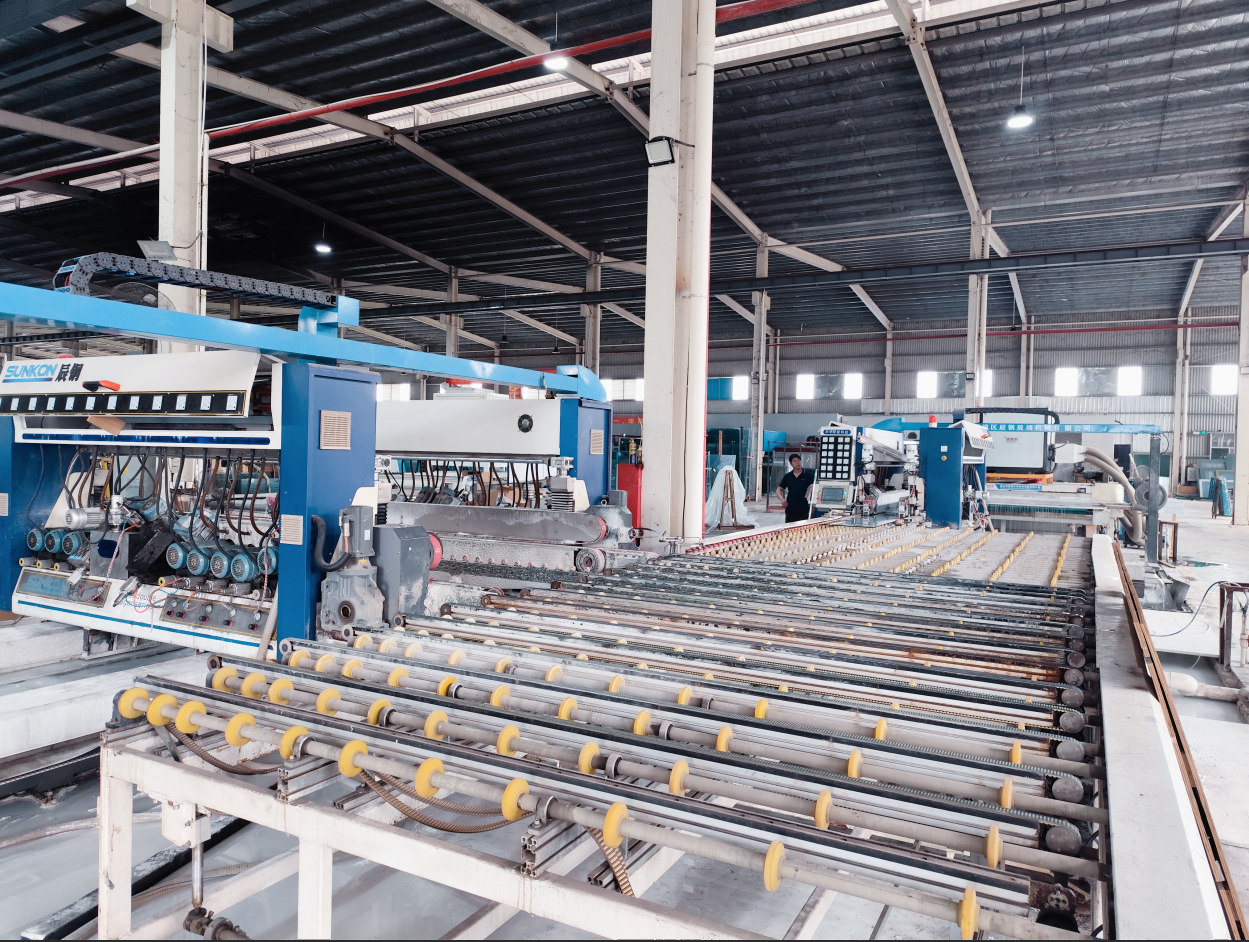
The production process is supported by cutting and edging, a tempered glass production line, an insulating glass production line and a laminated glass production line. The facility also includes a double curved tempering line and a heat soak furnace.
Building envelope glass from DYGLASS normally operates in a fixed installation, long-term static operation mode. The material must therefore perform under sustained wind loads, thermal cycling and UV exposure rather than dynamic mechanical stress.
For complex curved product configurations, DYGLASS specifies wind resistance up to 96kPa and uses 3D forming technology to achieve complex curvature. These capabilities support installation in high-rise facades, spherical domes, luxury storefronts, glass pools and landmark buildings.
Quality control is conducted as 100% test. DYGLASS is an Alibaba Verified Supplier and has passed the SGS test report.
Matching Glass Types to Application Scenarios
High-rise facades
For high-rise facades, the priority is wind resistance, safety and energy control. A typical DYGLASS configuration combines tempered glass with laminated glass for impact safety and insulating glass with Low-E coating or argon gas for thermal performance.
Spherical domes and landmark buildings
Domes, curved roofs and sculptural landmarks require double-curved or multi-curved tempered glass. The product is suitable for these structures due to high precision, wind resistance and complex curvature capabilities.
Luxury storefronts
Storefronts often need visible transparency, decorative impact and thermal comfort. Digital printed glass, painted or stained glass, and electric controlled switchable glass can be used alongside laminated and insulating glass.
Glass pools and safety-critical zones
Glass pools and overhead glazing require laminated safety glass and special-shaped glass. For high-security or fire-rated projects, the application can include bulletproof glass, fire-resistant glass and special-shaped glass.
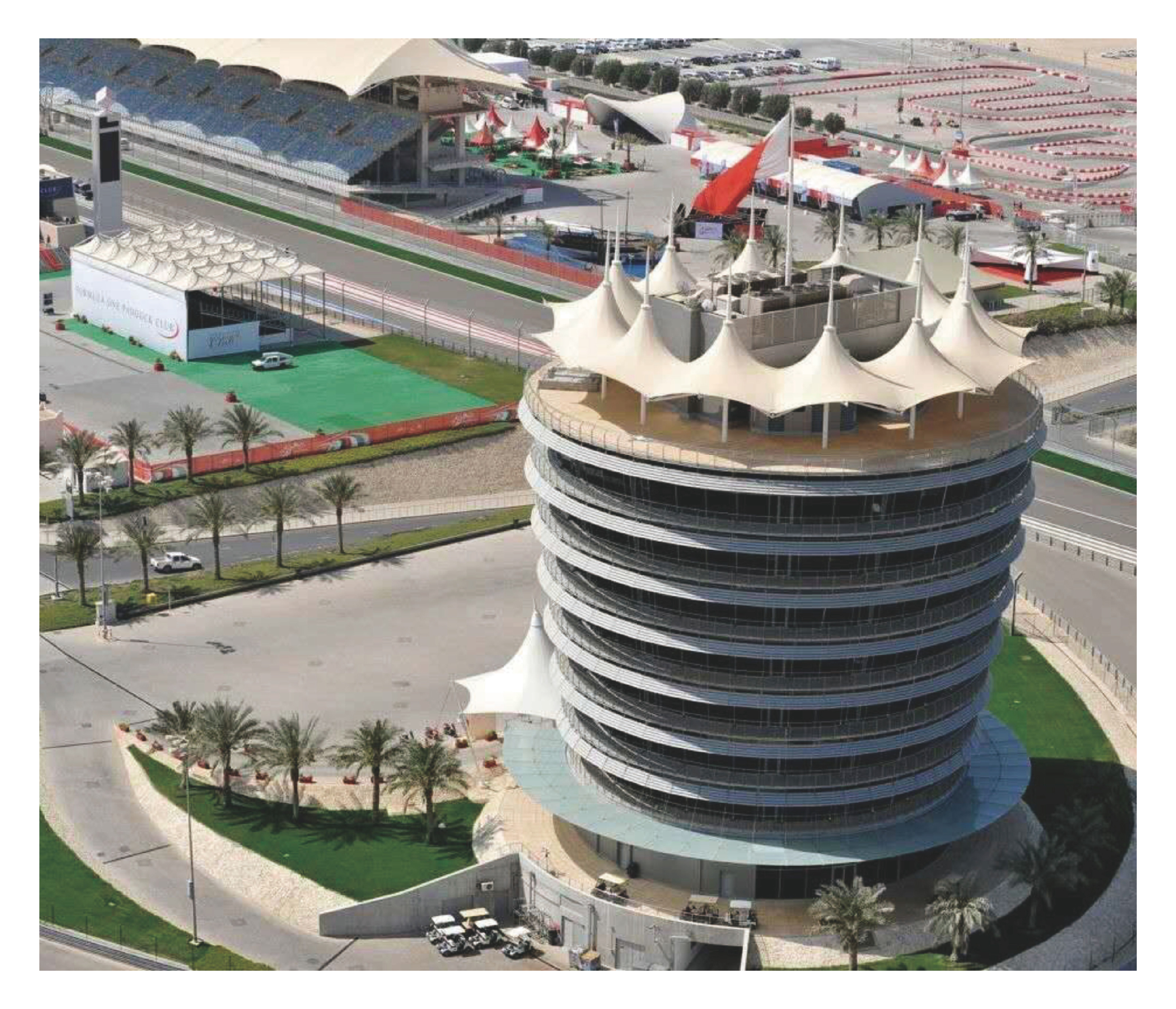
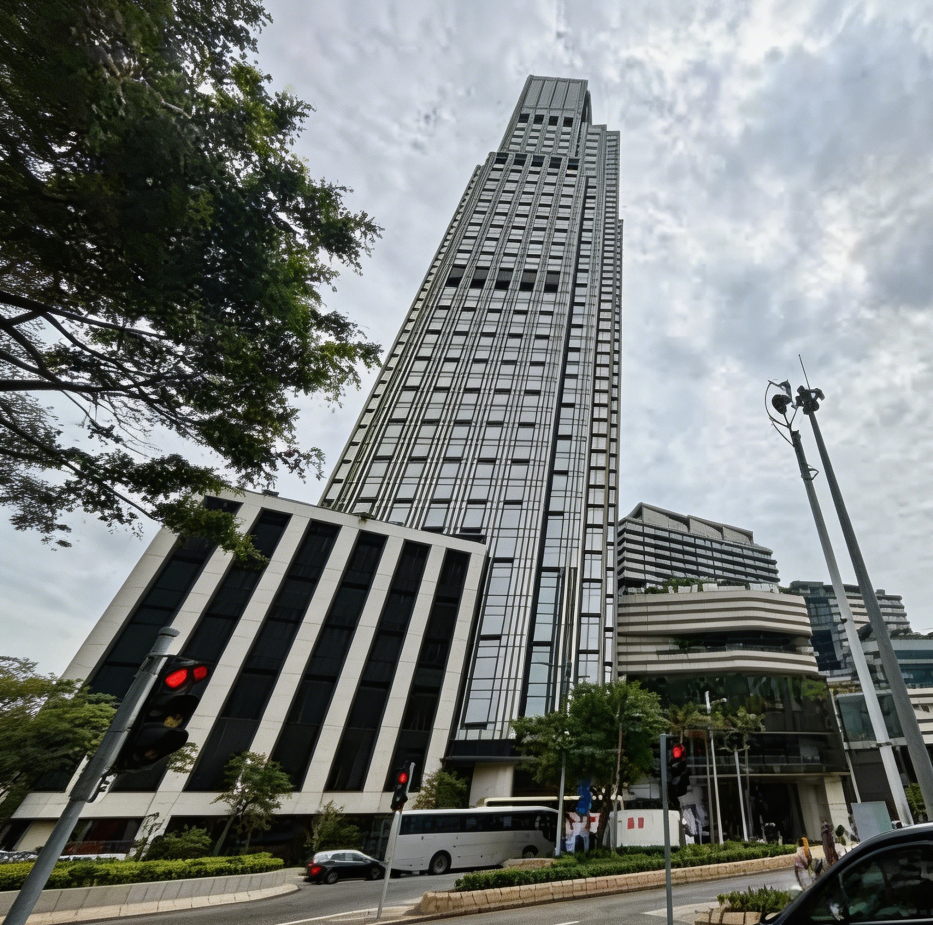
In construction engineering, decoration engineering and municipal engineering, the role of DYGLASS building glass is to function as decorative building materials as well as structural glazing. The reference imagery in this article includes the Bahrain International Circuit and a Hong Kong commercial project, both fixed-installation building environments in the DYGLASS portfolio.
Market Trends Shaping Building Glass Procurement
Market data supports the case for scenario-based procurement of building glass.
| Indicator | Data point | Source |
|---|---|---|
| Global construction glass market | USD 119.2B in 2025, projected USD 189.33B by 2034 | Fortune Business Insights |
| China glass market | USD 31.2B in 2024, expected USD 55.0B by 2035 | Market Research Future |
| Chinese exports of glass with edge workings | USD 676M in 2024, about 22% of global exports | OEC |
| Architectural glass share of flat glass output | Nearly 70% of global flat glass production above 120M metric tons annually | Business Research Insights |
| Global smart glass market | USD 8.2B in 2025, electrochromic technology at 61.3% share | Grand View Research |
These figures point to two procurement realities: energy performance is no longer optional, and complex glass products are becoming a larger part of the building envelope market. Buyers evaluating a Chinese building glass supplier should therefore compare production capability, test standards and project references, not only unit price.
How Custom Processing Compares with Traditional Supply
DYGLASS production model differs from traditional flat-glass-only supply chains. Traditional facade projects were often built from flat tempered glass and standard insulating units. Custom curved and multi-functional glass requires additional production steps, including curved tempering, lamination, drilling, edge work and heat soaking.
DYGLASS combines these steps under one roof. This reduces the number of handoffs between processors and makes it easier to maintain consistency across curved panels, laminated safety glass and insulating units.
One honest limitation should be stated: DYGLASS is a value-added processing manufacturer, not a primary float glass producer. Projects that require very large volumes of commodity float glass may be better served by a primary flat glass manufacturer. The strength of DYGLASS lies in custom geometry, combination products and project-specific engineering.
Future Outlook for Building Glass in Complex Facades
As curved building envelopes and energy performance requirements become more common, procurement decisions will move from standard glass price lists to project-specific evaluations. The combination of curved geometry, laminated safety, insulating performance and smart switching is likely to become a normal specification in premium projects.
For DYGLASS, the relevant direction is consistent with global market data: support for curved and energy-saving glass configurations, tested production processes and flexible small-volume customisation.
Contact DYGLASS for project-specific glass specification support
Shenzhen Dayang Special Glass Co., Ltd. is a custom building glass manufacturer with a 30,000-square-meter production facility in Shenzhen, China. To evaluate a glass configuration for a facade, dome, storefront, pool or landmark project, the DYGLASS team can be reached directly.
Email: info@dayangglass.com
Tel and WhatsApp: +86-136 9211 0212
Website: www.dayangglass.com
Address: 1706, Bldg. H, Phase 1, Liuhecheng Business Plaza, No. 168, Shenshan Road, Pingshan New Dist., Shenzhen, Guangdong, China
FAQ: Building Glass Selection by Project Scenario
What types of building glass does DYGLASS produce?
DYGLASS produces tempered glass, laminated glass, insulating glass, curved glass, smart switchable glass, energy-saving glass, decorative glass, digital printed glass, ceramic frit glass, painted or stained glass and other building glass products.
Which glass should be specified for a high-rise curtain wall?
A high-rise curtain wall usually combines tempered glass, laminated glass and insulating glass. DYGLASS offers flat and curved tempered glass, laminated glass with PVB, SGP or EVA interlayers, and insulating glass with Low-E coating or argon gas. For curved facades, multi-curved tempered glass can be used.
Can DYGLASS produce curved or special-shaped glass?
Yes. The company processes multi-curved, double curved, triple curved, trapezoid curved, spherical curved, pyramidal curved, S-shape curved, cylindrical curved, and positive and negative curved tempered glass.
What are the MOQ and lead time for custom glass?
The MOQ is 10 square meters and the standard lead time is 7-9 days. Monthly capacity is 600,000 square meters.
How does DYGLASS control glass quality?
Quality control is carried out as 100% test. DYGLASS is an Alibaba Verified Supplier and has passed the SGS test report. The production line includes cutting and edging, tempered glass production, insulating glass production and laminated glass production.