
How to Match Charcoal Product Form to Real-World Applications
Charcoal is not a one-size-fits-all commodity. For procurement teams in the hospitality, retail, and wellness sectors, the practical question is not simply “which charcoal is best” but “which charcoal format is right for which operating environment.” This article provides a scenario-based framework for matching charcoal products—hookah, barbecue, and incense—to specific applications, with attention to performance parameters, operational constraints, and supplier selection.
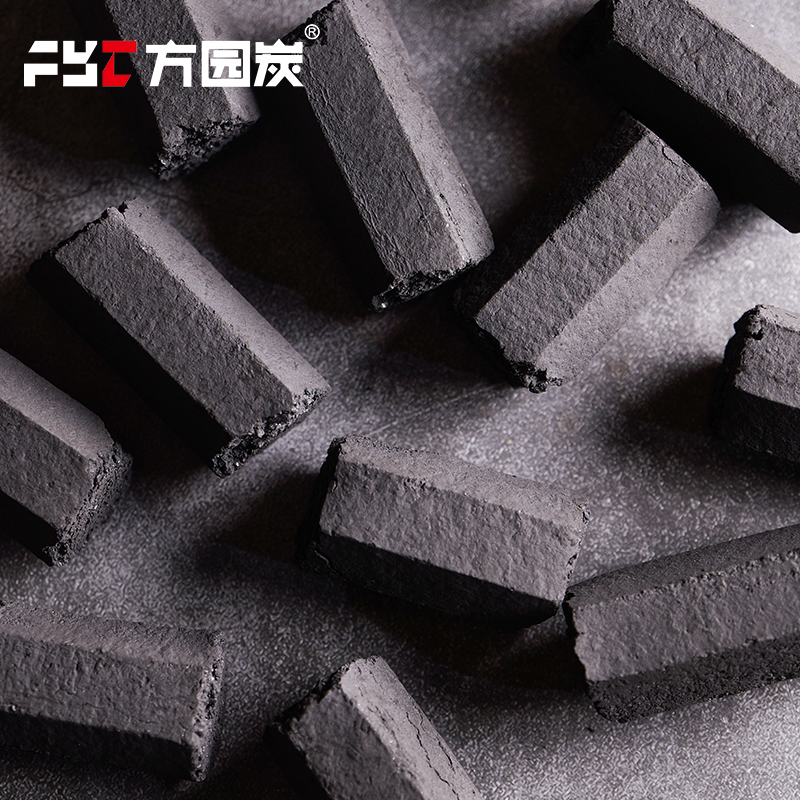
Hexagonal hookah charcoal is a common format in shisha lounges, valued for stable burn and low ash.
Why Application Fit Matters in Charcoal Sourcing
Charcoal sourcing decisions are often treated as a simple price-per-ton calculation. But in commercial settings—where seating duration, indoor air quality, staff workflow, and brand experience are at stake—the physical form and combustion profile of charcoal directly affect operational outcomes. A lounge that needs 90 minutes of clean heat per hookah session faces a different product requirement than a South Korean barbecue restaurant running six-hour dinner shifts, or a German outdoor retailer selling disposable grills to campers.
Understanding how product form, material, and combustion behavior map to use cases helps buyers avoid three common mistakes: choosing a product with excessive smoke, underestimating ash cleanup costs, or selecting a charcoal format that burns too quickly for the intended service window.
Core Charcoal Categories and Their Operating Profiles
Most commercial applications can be grouped into three product families: hookah charcoal, incense charcoal, and barbecue charcoal. Each family has distinct shape, material, and burn-time characteristics.
Hookah Charcoal
Hookah charcoal is designed for sustained, low-smoke heat in shisha service. Typical formats include cube, hexagonal, and bamboo hookah charcoal. Key parameters in premium grades include a calorific value above 7,800 kcal/kg, ash content below 3%, fixed carbon above 85–90%, and burning time of 90–120 minutes for cube formats in 25mm and 40mm sizes. Quick-light variants provide fast ignition but shorter burn durations of 45–70 minutes. Coconut shell and fruit wood are common raw materials.
Incense Charcoal
Incense charcoal, also referred to as bakhoor charcoal or charcoal tablets, is used to heat solid incense, bakhoor, or aromatherapy oils. It typically appears as round tablets in 33mm diameter or cube forms, with natural black, silver foil, or gold foil finishes. Standard burn time is 45–70 minutes, with quick ignition in 30–45 seconds. Materials commonly include fruit wood charcoal and coconut shell charcoal powder.
Barbecue Charcoal
Barbecue charcoal serves both commercial grilling and outdoor recreation. Product types include quadrilateral, hexagon, square-hole, four-hole, spherical, and stick-shaped charcoal. Bamboo charcoal sticks offer the longest burn time at 6–8 hours, while fruit wood quick-light formats burn for about 70 minutes. High hardness, low ash, smokeless combustion, and constant temperature are important features for restaurant environments.
Scenario 1: Premium Hookah and Shisha Lounges
In a premium shisha lounge, the charcoal must sustain a consistent session without producing smoke, odor, or sparks. A typical operation in the Middle East uses cube or hexagonal coconut shell charcoal with a burn time of 90–120 minutes per briquette and ash content below 3%. The material is usually 100% natural coconut shell, chemical-free, and considered food-grade safe.
The emphasis is on heat stability and clean combustion. The charcoal gradually roasts the molasses in the bowl, producing thick vapor without introducing off-flavors. Low ash content also simplifies cleaning between sessions and reduces wear on foil and bowl screens.
Spec Snapshot: Hookah Charcoal
| Parameter | Typical Range |
|---|---|
| Calorific value | > 7,800 kcal/kg |
| Burning time | 90 – 120 min (cube, 25/40mm) |
| Quick-light burn time | 45 – 70 min |
| Ash content | < 3% (premium grade) |
| Fixed carbon | > 85 – 90% |
Scenario 2: Commercial Charcoal Grilling and Indoor BBQ Dining
Indoor barbecue restaurants, especially Korean-style operations, need charcoal that can maintain searing temperatures for several hours while producing minimal smoke and ash. In such environments, the charcoal is often loaded into built-in table grills, where sparks, odors, or excessive ash would disrupt both dining experience and kitchen exhaust systems.
Bamboo charcoal sticks are widely used in this scenario because they combine long-lasting combustion of 6–8 hours per batch with extremely low ash and high density. The material is typically 100% organic sawdust or bamboo, spark-free, and odorless. A stable, clean radiant heat allows the kitchen to sear meats quickly, lock in juices, and deliver the classic charcoal flavor expected in premium BBQ dining.
Case Signal: Restaurant Group in South Korea
An authentic charcoal BBQ restaurant group in South Korea operates with a supply volume of approximately one 40HQ container per month (20–22 tons). The operation uses hexagonal bamboo charcoal sticks with high density and zero sparking, designed to fit built-in dining table grills. Over a three-year strategic supply partnership, the high calorific value reduced total charcoal consumption by 15% compared to previous suppliers, and indoor dining achieved zero smoke interference.
Scenario 3: Wellness, Spa, and Aromatherapy
In spas, yoga studios, and aromatherapy retail, incense charcoal is used to heat bakhoor, resin incense, or essential oils. The key requirement is to release fragrance slowly and evenly without adding smoke or masking the scent. Silver or gold foil coating is often specified to improve ignition and reflect heat.
A typical US wellness application uses round incense charcoal with foil coating, fast lighting in 30–45 seconds, and a steady gentle warmth lasting 45–70 minutes. The charcoal must be smokeless and odorless, with an eco-friendly fruit wood base. The operating model is simple: place the lit tablet in a ceramic or metal bakhoor burner, add incense or oil, and allow even heat diffusion to release the fragrance.
Spec Snapshot: Incense Charcoal
| Parameter | Typical Range |
|---|---|
| Shape | Round, cube |
| Diameter | 33mm (common) |
| Burning time | 45 – 70 minutes |
| Ignition | Quick light, 30 – 45 seconds |
| Finish options | Natural black, silver foil, gold foil |
Scenario 4: Outdoor Recreation and Disposable Barbecue
For camping, picnics, beach outings, and retail summer sales, the priority is convenience. Disposable barbecue grills with instant-light charcoal eliminate the need for lighter fluid, fire starters, and cleanup. The product is designed to be lightweight, portable, and fully disposable after use.
A typical disposable grill set includes a food-grade galvanized or chrome-plated steel mesh, an aluminum foil or flame-retardant cardboard tray, and a self-igniting natural charcoal layer. It lights with a single match, gains cooking temperature quickly, and provides uniform heat for 60–90 minutes. After the meal, the entire unit can be discarded, with 100% biodegradable materials supporting eco-friendly disposal.
Case Signal: Outdoor Retailer in Germany
A national outdoor and camping equipment retailer in Germany launched a seasonal rollout of 12,000 disposable grill sets for summer use. The supplier achieved 100% on-time delivery despite high seasonal demand. Consumer feedback highlighted the convenience of instant lighting, and the lightweight, eco-friendly foil materials met EU environmental standards.
Comparing Traditional Solutions vs. Engineered Format Matching
Traditional charcoal sourcing often starts with a single product category, such as “hookah charcoal” or “lump charcoal,” and then tries to make it fit multiple locations. A more reliable approach is to select charcoal based on the operating profile of each venue—burn time, smoke tolerance, ash handling, ignition speed, and packaging requirements.
For example, a group that operates both shisha lounges and outdoor BBQ events might need coconut cube charcoal for indoor hookah service and quick-light disposable grill sets for catering events. Buying both from a single supplier with documented specifications simplifies quality control, delivery scheduling, and warranty management.
However, there are limits to standardization. No single charcoal product can simultaneously maximize burn time, minimize ash, speed up ignition, and lower cost. A longer-burning coconut briquette costs more than a standard wood briquette, and quick-light convenience comes with a shorter burn window. Buyers should treat each application separately and prioritize the two or three parameters that most affect their daily operations.
Comparison Table: Charcoal Formats by Application
| Application | Recommended Format | Critical Parameters | Common Risks |
|---|---|---|---|
| Hookah lounge / shisha bar | Coconut cube / hexagonal | Burn 90–120 min, ash <3%, odorless | Short burn, excessive ash, smoke taint |
| Indoor BBQ restaurant | Bamboo hexagonal / square-hole sticks | Burn 6–8 hrs, ultra-low ash, zero spark | Frequent refills, smoke complaints, ash cleanup |
| Aromatherapy / bakhoor | 33mm round foil tablets | Ignition 30–45 sec, burn 45–70 min, no smoke | Slow ignition, fragrance masking |
| Outdoor picnic / camping | Instant-light disposable grill set | Single-match ignition, 60–90 min heat, disposable | Heavy setup, cleanup burden, non-eco materials |
Supplier Capability and Quality Control Considerations
When evaluating a charcoal supplier for multiple application scenarios, buyers should look beyond the product sample and assess production consistency, customization capability, and quality verification.
A relevant example is Dalian Tiancheng Charcoal Industry Technology Co., Ltd. (brand: FYC), a charcoal manufacturer based in Dalian, Liaoning Province, China. FYC produces hookah charcoal, incense charcoal, and barbecue charcoal, with an annual output of over 4 million pieces and a daily production capacity exceeding 50 metric tons. The company serves markets in the Middle East and Europe, among others, and has obtained SGS and ISO certifications.
FYC’s customization capabilities include product shape (cube, hexagonal, round, stick), size (25mm, 33mm, 50mm), logo printing, and retail packaging such as magnetic, flip-top, and pull-out boxes. Monthly capacity is approximately 600–800 metric tons, with lead times of 7–15 days for standard stock and 20–30 days for customized mass production. The company reports 100% comprehensive inspection on all production lines, with three professional QA/QC inspectors.
For scenario-specific buying, the table below summarizes typical decision criteria when matching charcoal formats to a project.
Decision Checklist for Charcoal Format Selection
- Define the service window: How many minutes or hours must the charcoal burn?
- Assess smoke tolerance: Will the application operate indoors, near customers, or in enclosed spaces?
- Estimate ash impact: How much staff time is spent cleaning grills, burners, and trays?
- Check ignition method: Does the venue have access to a flame source, or is quick-light necessary?
- Review material expectations: Does the brand position require natural coconut shell, bamboo, or fruit wood?
- Evaluate packaging needs: Is retail-ready packaging with logo printing required?
Market Trends and Demand Context
The global charcoal market is projected to grow from USD 8.1 billion in 2025 to USD 11.6 billion by 2033, according to Grand View Research. Coconut shell charcoal is identified as the fastest-growing source segment, with a projected CAGR of 5.0%, driven by high fixed carbon content and environmental sustainability.
Regional demand is also relevant for format selection. The Middle East and Africa captured a revenue share of 48.8% in the charcoal market in 2025, largely due to traditional cooking and shisha culture. In Germany, the shisha charcoal segment is estimated at €85 million annually, with more than 2,500 shisha cafes operating nationwide as of 2024. These figures suggest that buyers serving the hospitality sector should prioritize consistent quality and long-term supply relationships.
Limitations and Sourcing Boundaries
While the scenario-based approach improves procurement accuracy, it does not replace hands-on product testing. Burn time, ash content, and odor performance can vary with ambient humidity, storage conditions, and handling. Buyers should request pre-shipment samples, verify production lot consistency, and, where possible, conduct an on-site audit or third-party inspection.
Additionally, not all charcoal formats travel equally well. Quick-light products, foil-coated tablets, and disposable grill sets may require special packaging or shipping conditions to preserve ignition performance. Buyers should confirm incoterms, lead time, and packaging specifications before committing to volume orders.
Future Outlook: Application-Driven Innovation
As the hospitality and retail sectors become more experience-oriented, charcoal sourcing is likely to shift further toward application-specific formats and verified performance data. We can expect more suppliers to publish detailed technical parameters—calorific value, ash content, fixed carbon, and burn time—as standard product information, enabling buyers to compare options on an objective basis.
At the same time, sustainability pressure will continue to favor renewable raw materials such as coconut shells and bamboo. Suppliers with transparent sourcing and production controls will be better positioned to support long-term contracts across multiple countries and use cases.
FAQ
What is the best charcoal for hookah lounges?
For hookah lounges, coconut shell charcoal in cube or hexagonal form is widely preferred. Premium grades offer a burning time of 90–120 minutes, ash content below 3%, and smokeless, odorless combustion.
What is the difference between hookah charcoal and incense charcoal?
Hookah charcoal is designed to heat shisha tobacco for extended sessions, typically burning 90–120 minutes per cube. Incense charcoal is designed to heat bakhoor or essential oils, with a shorter burn time of 45–70 minutes and faster ignition of 30–45 seconds.
Which charcoal burns longest: coconut, bamboo, or fruit wood?
Bamboo charcoal sticks generally offer the longest burn time among common formats, reaching 6–8 hours per batch. Coconut shell hookah charcoal typically burns 90–120 minutes per briquette, while fruit wood quick-light charcoal burns about 70 minutes.
What ash content is considered premium for hookah charcoal?
Premium hookah charcoal typically has ash content below 3%. Lower ash means less residue, easier cleanup, and less interference with hookah flavor.
Can one charcoal supplier handle hookah, BBQ, and incense products?
Yes. Some charcoal manufacturers, such as Dalian Tiancheng Charcoal Industry Technology Co., Ltd. (FYC), produce all three categories. A single supplier can simplify logistics, quality control, and packaging consistency, but buyers should verify production capacity, certifications, and sample quality before committing.
For procurement teams seeking detailed technical specifications, packaging options, and supply capabilities, a downloadable company brochure is available at the following link: FYC Charcoal Company Brochure (PDF).