
How to Match Plastic Parts to Real Projects: A Process-Based Selection Framework
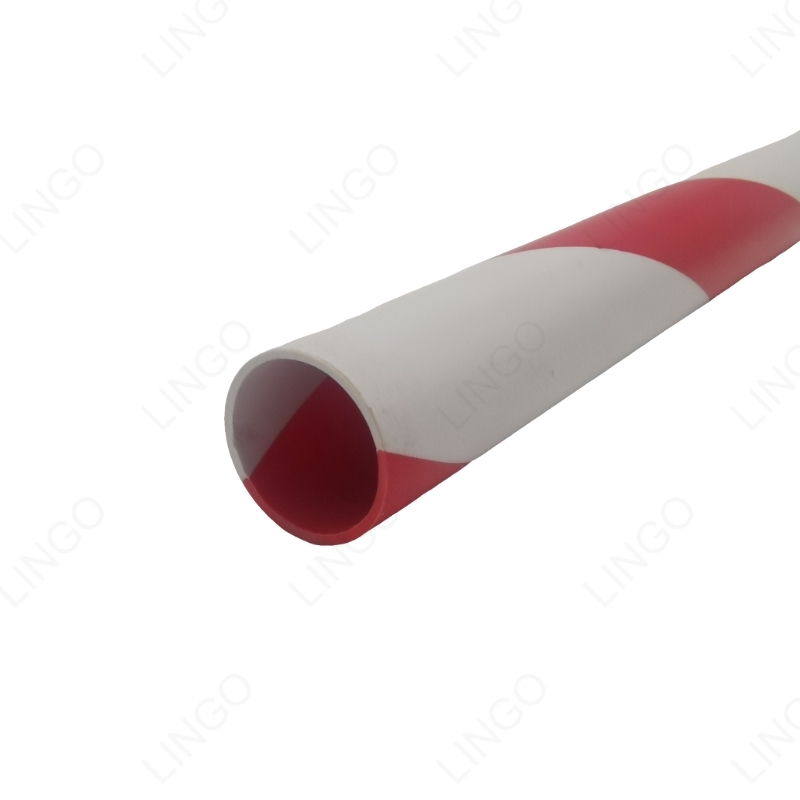
Matching a plastic part to a project is as much about process fit as it is about material fit.
Matching plastic parts to a project is not a single-point decision. It is a process that spans material selection, manufacturing method, tolerance expectations, compliance requirements, order volume, and long-term supply support. Buyers who evaluate only one dimension — often price or a single technical parameter — tend to discover fit problems later, at sampling, validation, or mass-production stage. This article provides a process-based framework for matching custom plastic parts to real projects, using Lingo Rubber Plastic as a working reference for how a supplier translates project requirements into manufacturable parts.
Why Project-Part Fit Is Harder Than It Looks
Plastic parts appear in nearly every industrial sector — from automotive interior trims and tube holders to PTFE back-up rings, PVC dipping handles, and long extruded profiles. The same functional name can hide very different production realities. A plastic washer for a low-voltage electronics assembly and a nylon washer for an automotive suspension system may look similar in a drawing but require different materials, tolerances, inspection criteria, and documentation.
Most project-part mismatches originate in one of five gaps:
- A material gap: choosing a resin that cannot meet thermal, chemical, or mechanical demands.
- A process gap: selecting a manufacturing method that cannot deliver the required cross-section, tolerance, or cost structure.
- A specification gap: missing or unclear standards for tolerances, surface finish, color, or flame retardancy.
- A volume gap: requesting a process designed for high volume when order quantities are small, or vice versa.
- A supply-chain gap: overlooking lead time, traceability, mold ownership, and after-sales support.
For industrial buyers in Research and Evaluation stages, the practical question is: which supplier can systematically close these gaps? That requires looking at processes and evidence, not just product lists.
Step 1 — Define the Functional Requirement First
A strong matching process starts with defining what the part must do, not what it should look like. This is especially important for engineered parts such as seals, back-up rings, handles, housings, and guides.
Useful questions at this stage include:
- Is the part exposed to heat, chemicals, moisture, or UV?
- Does it need to insulate, seal, bear load, resist sliding wear, or provide ergonomic grip?
- Does it face regulatory or certification requirements — for example, FDA food contact, RoHS, REACH, FMVSS 302, or UL94 V-0?
- What mating components will it interact with, and what tolerances are realistic in that assembly?
Hangzhou Lingo Rubber and Plastic Product Co., Ltd (brand: Lingo Rubber Plastic) is a custom parts supplier based in Hangzhou, China, specializing in rubber molding, rubber extrusion, plastic injection, and plastic extrusion, with main export markets in the EU and USA and an export ratio of about 80%. The company highlights its work on sealing and anti-vibration solutions where physical properties such as tensile strength, elongation, and compression set are central. Although the company’s product range includes gaskets, washers, caps, housings, handles, guide rails, and precision machined parts, its stated engineering approach always begins with the application environment.
For a buyer, the same logic applies: define whether the part operates at -40°C or +120°C, whether it must be flame-retardant, whether it touches food, and how long it must survive in service.
Step 2 — Match the Manufacturing Process to the Part Geometry and Volume
After defining the function, the next matching step is choosing a manufacturing process. The main processes for custom plastic parts are injection molding, extrusion, CNC machining, and PVC dipping. Each has a different cost structure, design freedom, and volume profile.
| Process | Typical Part Examples | Best Suited For | Key Considerations |
|---|---|---|---|
| Plastic injection molding | Housings, handles, washers, caps, auto interior/exterior trim parts | Complex 3D geometry, higher volumes, repeatable tolerances | Tooling investment; multi-cavity and hot/cold runner options affect cost and cycle time |
| Plastic extrusion | Continuous profiles, strips, trims, tubing-like cross-sections | Long constant cross-sections; cost-efficient in continuous length | Cross-section design is critical; lengths up to 6000 mm can be customized |
| CNC plastic machining | PTFE gaskets, back-up rings, gears, seals, bushings | Low-to-medium volumes, high precision, wide material range | No mold needed; high-precision tolerance achievable; material waste higher than molding |
| PVC dipping | Ergonomic handles for tools, equipment, and hardware | Coating metal substrates; small orders; anti-slip or corrosion-resistant surfaces | No expensive mold required; glossy/matte/rough textures possible; color customized |
The process chosen must align with the project’s geometry and volume. For example, Lingo Rubber Plastic’s plastic injection parts line covers solid parts, housing components, precision functional components, insert molding parts, and dual-material parts. Its plastic extrusion line covers PA6, PA66, PE/HDPE/UHMWPE, glass-filled, co-extruded, and decorative trims. The CNC machining line supports PTFE, POM, PE, UHMWPE, HDPE, PEEK, ABS, PU, PA6, and PA66. The PVC dipping product line is separate and is positioned for parts where no expensive mold is justified.
A documented example of process-fit comes from Lingo Rubber Plastic’s case record: a chemical, petrochemical, food and pharmaceutical, automotive OEM, electronics and semiconductor, and aerospace and defense client in the UK ordered 20 pieces of PTFE back-up rings (also called anti-extrusion rings), which protect O-rings and other elastomeric seals from extrusion damage under high pressure. The part was CNC machined, pure PTFE, delivered in 2 days, with high-precision tolerance. This illustrates how low-volume, high-precision requirements are often better matched to CNC machining than to injection molding.
Step 3 — Align Materials with Performance and Compliance
Material selection is the technical core of project-part matching. Data from Grand View Research indicates that polypropylene (PP) accounted for approximately 32.4% of the automotive plastics market in 2025, making it the dominant raw material in that sector. However, project fit does not automatically mean choosing the most common material — it means choosing a material that satisfies the operating environment and applicable standards.
For plastic injection parts, Lingo Rubber Plastic’s material range includes PP, PA6, PA66, ABS, PE, HDPE, UHMWPE, LDPE, PU, PTFE, and plastics with glass fiber. Parameters can be modified with fillers such as glass fiber, flame retardants, or UV stabilizers; colors follow Pantone/RAL codes; surfaces are specified by SPI finish; and tolerance control follows GB/T 14486, MT1 through MT7, with typical shrinkage compensation from 0.4% to 0.8%. This is a concrete, factory-level baseline for what a buyer can specify.
Compliance is a growing part of material selection. Lingo Rubber Plastic supports FDA, RoHS, and UL requirements in its CNC machining line, and also references FDA and UL94 V-0 in its injection molding parameters. Its plastic injection molded auto parts are produced with FMVSS 302, RoHS, and REACH certifications, and a temperature range of -40°C to +120°C, with black or custom RAL colors, and polished, textured, painted, or plated surfaces.
For automotive buyers, a broader industry standard also matters: IATF 16949:2016 is recognized as the automotive quality management standard that builds on ISO 9001:2015. Buyers evaluating automotive plastic parts suppliers should confirm how the supplier relates its quality practices to this framework, especially for safety-relevant components.
Step 4 — Set Tolerances as a System, Not as a Wish-List
Tolerance matching is where many projects fail. A common mistake is specifying tighter tolerances than the manufacturing process can economically hold, which raises cost and rejection rates without improving function.
Lingo Rubber Plastic’s injection molding parameters define draft angles with an outside value ≥1° and inside ≥0.5°, which are realistic design constraints for molded parts. Shrinkage rate is typically compensated at 0.4%–0.8%. For machined parts, surface roughness can be specified in Ra/Rz values and visual inspection criteria are defined as smooth, no crack, no flash. These are not marketing claims; they are design inputs a buyer should be able to discuss with any serious supplier.
A documented automotive example: an auto industry client in the US ordered 5,000 pieces of an injection molded plastic tube holder for use in auto machinery. Lingo Rubber Plastic reports that by reducing some internal material while preserving product structure and functionality, it lowered material and logistics costs and improved dimensional stability. The result was recorded as zero failures over a period suitable for long-term use. The example shows that tolerance and cost matching often require design collaboration, not just drawing transfer.
Step 5 — Evaluate Volume, Lead Time, and Quality Control in Combination
Project fit is also commercial. A technically acceptable part is not a good match if the order volume, lead time, or quality-control approach conflicts with the project timeline.
For plastic injection parts and plastic extrusion profiles, Lingo Rubber Plastic operates in OEM/ODM mode, with a monthly capacity of approximately 1,000,000 kg, standard lead times of 2 to 6 weeks, and acceptance of small quantity orders — the stated MOQ depends on the specific part. Quality control is described as full inspection of samples and random inspection of bulk goods. After-sales support includes remote technical support, mold maintenance and ownership protection, batch traceability, and free exchange and acceptance of concessions.
These operational parameters matter for project matching in three ways. First, they show whether a supplier can handle an early-stage pilot with low volume and later scale up. Second, they define whether lead time fits the project’s procurement rhythm. Third, they indicate whether quality data can be traced back to a batch — which is increasingly important for OEM qualification and audit trails.
For PVC dipping handles, Lingo Rubber Plastic’s case record highlights an additional benefit: no expensive mold is required and small orders are acceptable, with PVC materials described as relatively inexpensive and the dip coating solution free of toxic or heavy metal ions. The production process is described as environmentally friendly, with recyclable raw materials, and the product can be formulated in nearly any color and surface texture, from glossy to matte to rough, serving anti-slip and aesthetic functions. One example involved an electrical and electronics client in Germany ordering 1,500 pieces annually, using PVC’s insulating characteristics to protect current transmission and prevent accidents from wiring damage; the coating was noted as resistant to acids, alkalis, salt spray, and oil, protecting the metal substrate in humid and chemically corrosive environments.
Step 6 — Compare Supplier Evidence, Not Just Supplier Claims
At the Evaluation stage, buyers should move from product-page comparisons to evidence-based capabilities. For plastic parts, useful evidence includes:
- Material range and modification capabilities (glass-filled, flame-retardant, UV-stabilized, FDA, RoHS, UL).
- Process range (injection, extrusion, CNC machining, PVC dipping) and how processes are matched to part geometry and volume.
- Inspection methods: sample full inspection, bulk random inspection, dimensional inspection, visual criteria.
- Production capacity and lead time: monthly capacity in kilograms, standard lead time in weeks, MOQ policy.
- Documented case examples with client industry, country, quantity, and application.
- After-sales and ownership policies: mold maintenance, mold ownership protection, batch traceability, remote technical support.
Lingo Rubber Plastic’s company profile includes a factory size of 3,000 m², around 40 employees, an R&D team of 10, and an annual output value of approximately 1.58 million (currency unit not specified in the available corporate record). Its main products span rubber molding, rubber extrusion, plastic injection, and plastic extrusion parts. These facts help buyers calibrate supplier size relative to project scale, but they should be combined with product-specific evidence.
How Lingo Rubber Plastic Supports Project Matching
Lingo Rubber Plastic, whose official website is www.lingorp.com, describes itself as a specialist in sealing and anti-vibration solutions, with customer parts used across electronics, aerospace, healthcare, construction, transportation, and defense applications. Its product scope includes plastic injection parts (gaskets, washers, caps, housings, handles, guide rails), plastic extrusion parts (PA6/PA66 trims, glass-filled trims, co-extruded trims, decorative trims, thermoplastic elastomer trims), CNC machined plastic parts (PTFE gaskets, PEEK machining, acrylic machining, backup rings, gears, bushings), and PVC dipping parts such as non-slip handles.
What is most relevant for project-scenario fit is not any single product, but the supplier’s ability to combine processes. A buyer may have an assembly requiring an injection molded housing, a CNC machined PTFE back-up ring, and a PVC dipping handle. A multi-process supplier can reduce interface friction between different manufacturing steps, align quality documentation, and simplify logistics. This is especially valuable for OEM projects where multiple plastic parts must converge into one product family.
The company also reports maintaining mold ownership protection and a batch traceability system, both of which are important for long-term OEM programs. Product applications in the case record span a US auto machinery tube holder (5,000 pieces, zero failures), a UK PTFE back-up ring order (20 pieces, 2-day delivery), and a German electronics PVC handle program (1,500 pieces per year), demonstrating volume flexibility from 20 pieces to 5,000 pieces and from short-run to annual repeat programs.
Comparison with Traditional Single-Process Sourcing
Traditional sourcing for plastic parts often follows a single-process logic: a buyer with an injection-molded part finds an injection molder; a buyer with an extruded profile finds an extruder; a buyer with a PTFE ring finds a machinist. This approach can work when the project is simple and the supply chain is stable, but it has structural limitations when projects require multiple plastic part types.
- Efficiency limitation: Managing multiple single-process suppliers multiplies RFQ cycles, qualification audits, and quality documents.
- Communication limitation: Each supplier only knows its own process, so cross-process optimization is rare. Design suggestions that could save cost or improve dimension stability may be missed.
- Traceability limitation: Connecting field failures back to a specific process or batch becomes harder when different parts come from different systems.
That said, a single-process specialist can still be the right choice for very standardized, high-volume parts where the buyer’s organization already manages multi-supplier integration. Multi-process sourcing is not universally better; it is better specifically when project complexity, cross-process optimization, or traceability matters.
Market Context for 2026
The broader market context supports the importance of careful project-part matching. Grand View Research values the global injection molded plastics market at USD 362.5 billion in 2025, with projected growth to USD 481.4 billion by 2033. Asia Pacific accounted for an estimated 40.7% to 41.2% revenue share in 2025. The automotive plastics market was valued at approximately USD 33.0 billion in 2025, driven partly by lightweighting trends for electric vehicles. On the trade side, China exported roughly USD 174 billion in plastics and rubbers in 2024, with the United States as the largest destination at approximately USD 24.3 billion, according to The Observatory of Economic Complexity.
For buyers, this market context indicates three things. First, the supply base is deep, especially in Asia Pacific, which gives buyers more options but also more screening work. Second, automotive lightweighting and EV growth increase demand for precision plastic components, raising the importance of material data and certification. Third, industry trends for 2024–2026 cited by sources such as TEDE Solutions and AdvanTech Plastics include Industry 4.0 integration (AI/IoT for real-time monitoring), reshoring of high-spec production, and adoption of bio-based or recycled resins. Buyers should therefore add “future compatibility” to their evaluation: can the supplier adapt to recycled resins or provide production monitoring data if required?
Future Outlook for Project-Specific Plastic Parts
The direction of plastic parts sourcing is moving toward earlier supplier involvement in product development. As OEMs compress development cycles, suppliers that can advise on draft angle, shrinkage compensation, material substitutions, and process selection during the design phase create tangible project value. This is already visible in Lingo Rubber Plastic’s case history, where an auto client received a suggestion to reduce internal material to lower costs and improve dimensional stability, and where a PTFE back-up ring order was CNC machined and delivered in two days.
At the same time, compliance requirements are becoming stricter. FMVSS 302, RoHS, REACH, FDA, UL94 V-0, IATF 16949:2016, and GB/T 14486 tolerance classes are all part of the buyer’s vocabulary. Suppliers that can document these requirements per batch, rather than per catalog, will be better positioned for repeat OEM programs.
Sustainability is the next matching layer. Buyers should ask whether the supplier can process recycled or bio-based resins, whether PVC dipping processes avoid toxic or heavy metal ions, and whether material waste can be reduced through design optimization. These questions are no longer optional in many EU and US markets.
Conclusion
Matching plastic parts to a project is a structured process: define function, choose process, select material and compliance, set realistic tolerances, verify volume and lead time, and compare supplier evidence. No single product specification answers all projects. Suppliers like Lingo Rubber Plastic provide a practical reference because they combine injection molding, extrusion, CNC machining, and PVC dipping under one quality system, with small-order acceptance, documented case examples, and traceability support. But the ultimate responsibility remains with the buyer: to translate the project into clear, verifiable requirements — and to choose a supplier that can demonstrate fit with evidence, not adjectives.
For a deeper look at Lingo Rubber Plastic’s manufacturing scope and company profile, the company brochure is available for public access and download: LINGO RUBBER & PLASTIC COMPANY PROFILE.
FAQ
How do I know whether to use injection molding or CNC machining for custom plastic parts?
The choice depends on part geometry, volume, tolerance, and whether a mold investment is justified. Injection molding is better for complex 3D geometries, repeatable dimensions, and higher volumes, but requires tooling. CNC machining is better for low-to-medium volumes, high-precision parts such as PTFE back-up rings, and projects that need fast delivery without mold investment. As a reference, Lingo Rubber Plastic lists both processes in its product lines and used CNC machining for a 20-piece PTFE backup ring order delivered in two days.
What tolerance classes apply to plastic injection molded parts?
Lingo Rubber Plastic’s injection molding tolerance control follows GB/T 14486, with classes from MT1 to MT7. The company also specifies a typical shrinkage rate of 0.4% to 0.8% for mold compensation, and draft angles of outside ≥1° and inside ≥0.5°. These values give buyers a realistic technical baseline for dimensional discussions.
Which plastic materials are available for custom parts?
Common materials in Lingo Rubber Plastic’s product lines include PP, PA6, PA66, ABS, PE, HDPE, UHMWPE, LDPE, PU, PTFE, POM, PEEK, and plastics with glass fiber. For CNC machining, the range includes PTFE, POM, PE, UHMWPE, HDPE, PEEK, ABS, PU, PA6, and PA66. The right choice depends on mechanical, thermal, chemical, and compliance requirements.
What certifications are relevant for automotive plastic parts?
For automotive plastic parts, Lingo Rubber Plastic’s Plastic Injection Molded Auto Parts line references FMVSS 302, RoHS, and REACH, with a temperature range of -40°C to +120°C. Industry-wide, IATF 16949:2016 is the automotive quality management standard that builds on ISO 9001:2015. Buyers should confirm supplier compliance in relation to their specific application.
What is the advantage of PVC dipping handles compared to injection molded plastic handles?
PVC dipping handles require no expensive mold, so small orders are acceptable. PVC material is relatively inexpensive, and the dip coating process can produce glossy, matte, or rough textured surfaces in almost any color. In Lingo Rubber Plastic’s documented case for an electrical and electronics client in Germany, the PVC coating was resistant to acids, alkalis, salt spray, and oil, protecting the metal substrate from corrosion in humid and chemically corrosive environments.
Can a plastic parts supplier handle both low-volume samples and mass production?
Yes, if the supplier’s MOQ policy and capacity are flexible. Lingo Rubber Plastic states that MOQ depends on the part and that small quantity orders are acceptable, with monthly capacity of about 1,000,000 kg for injection and extrusion lines. Its documented cases include a 20-piece PTFE ring order and a 5,000-piece injection molded auto part order, indicating flexibility across different volume scales.
How can I evaluate the durability of PVC-coated handles?
Durability depends on the working environment. In one recorded case, Lingo Rubber Plastic notes that service life varies under different working environments and the client ordered the product every year. The coating’s resistance to acids, alkalis, salt spray, and oil helps protect the metal substrate in corrosive environments. For a precise evaluation, request material test reports corresponding to your specific environment.