
How to Match Rolled Ring Forgings to Project Conditions: An Application Guide
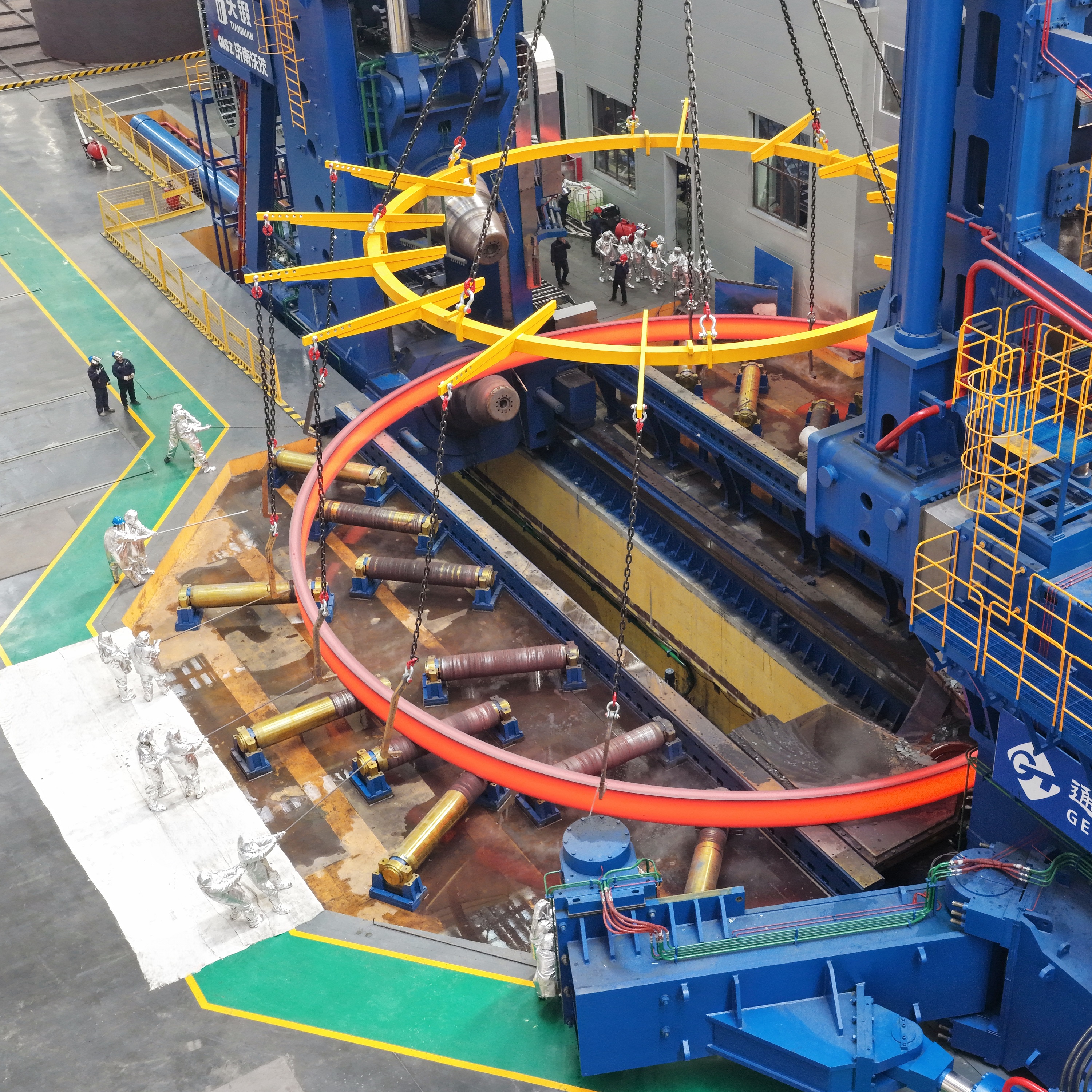
Rolled ring forgings are selected for projects based on load, environment and operating constraints.
Selecting the right rolled ring forgings for a project is not a generic purchasing step. It depends on the operating condition, the equipment system, the load pattern and the environmental exposure a component must survive. This guide explains how buyers and engineers can match seamless rolled ring forgings, profiling rolled ring forgings and heavy rolled ring forgings to specific applications such as wind power, hydropower, rotary kilns, offshore engineering, construction machinery and petrochemical processing.
Why Project Conditions Define the Right Rolled Ring Forging
Rolled ring forgings are used in critical structural and transmission roles. In many cases, a ring is not just a connector; it carries loads, transmits torque, supports rotating equipment or contains pressure. The same material grade and dimension may behave very differently in a 24/7 high-temperature cement kiln than in a low-temperature offshore wind turbine. Buyers who compare only price and dimensions often miss the conditions that determine whether a component will last or fail early.
Broadly, the evaluation starts with four questions:
- What is the operating mode: continuous, intermittent, frequent start-stop?
- What loads are present: high static load, cyclic load, vibration, impact?
- What environmental factors apply: high temperature, corrosion, salt spray, sediment abrasion, high water head, deep-sea pressure?
- What is the supporting equipment: generator, gearbox, kiln shell, turbine, pressure vessel, slewing system?
These answers determine the material family—carbon steel, alloy steel or stainless steel—and the required forging process, heat treatment, machining tolerance and testing level.
Wind Power: Fatigue Life and Corrosion Resistance Drive Material Choice
Wind turbines, especially offshore installations, expose rolled ring forgings to high cyclic loads, salt spray and low-temperature operation. The component is part of a critical load-bearing connection system in the turbine tower and drive train. The failure of a single ring can result in expensive downtime and safety risk.
For wind power projects, seamless rolled ring forgings are typically specified for their structural integrity. The absence of a weld seam is a major reliability advantage in fatigue-dominated applications. Special requirements for this application include high structural strength, corrosion and salt spray resistance, low-temperature toughness and high fatigue life.
The wider market confirms the importance of this segment. The wind turbine forging market was valued at USD 9.6 billion in 2024, with onshore segments holding a 67.3% share. Large offshore turbines, including those above 20 MW, push the demand for larger and more reliable rings, because the load path is heavier and access for maintenance is more limited.
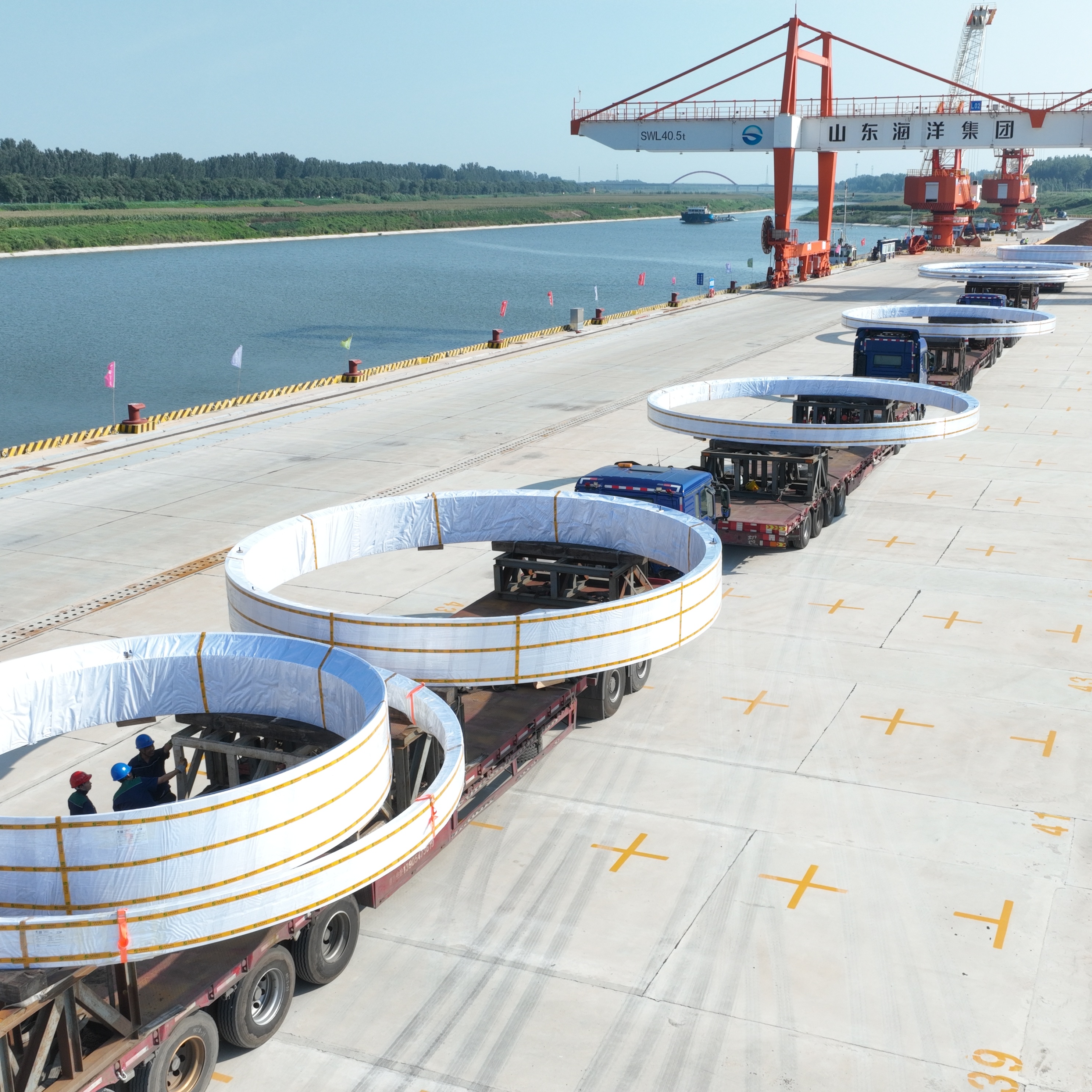
Wind power forgings must combine high structural strength with corrosion resistance for long service life.
What to verify with a supplier
- Ability to produce rings with controlled grain flow for fatigue-critical sections
- Experience with low-temperature toughness requirements for offshore environments
- Capacity to handle the dimensional envelope required by large turbine platforms
- Testing capability for ultrasonic inspection and mechanical property verification
Hydropower: High Water Pressure and Sediment Abrasion Change the Requirements
In hydropower, rolled ring forgings are used in hydro turbine generating units and pumped storage power stations. The working conditions include high water head pressure, sediment abrasion, water erosion corrosion, cyclic load and long-term operation in a humid or underwater environment. These conditions are common in many countries including Germany, Austria, the United States, Japan, India, the United Kingdom, Czech Republic, Canada, Brazil, Norway, Sweden, Finland, Turkey, Russia, Ethiopia and Vietnam.
The function of the forging is to transfer loads and provide structural support to the turbine and generator. Because hydro units frequently start and stop—especially in pumped storage operation—fatigue resistance is a special requirement. Sediment-laden water, common in many river systems, also demands a surface and material response that resists abrasion and pitting.
For these projects, carbon steel and alloy steel rolled ring forgings are commonly used depending on the stress level and the severity of the environment. Stainless steel is selected when corrosion and erosion resistance become dominant design drivers.
Project-specific questions for hydropower sourcing
- Is the application a conventional hydro turbine unit or a pumped storage unit with more frequent start-stop cycles?
- Does the site carry high sediment load in the water? This changes the requirement for surface hardness and material selection.
- What dimensional range is required for the turbine and generator support structure?
- Does the component need additional machining for sealing surfaces?
Rotary Kilns: Extreme Heat, Continuous Operation and Thermal Expansion
Cement production and other thermal processes rely on rotary kilns that operate 24/7 under extreme high temperature, heavy cyclic load, severe dust, thermal corrosion and thermal expansion. In this environment, components such as kiln tyres, support rollers, drive rings and girth gear systems are exposed to enormous mechanical and thermal stress. A component failure in a kiln stops production for an entire plant, so reliability is the dominant criterion.
Rolled ring forgings for rotary kiln applications provide load bearing, torque transmission, structural support and vibration damping. They are used in systems including the rotary kiln shell, riding ring, support roller assembly and girth gear-pinion drive system. The special requirements are extreme high-temperature resistance, high wear and abrasion resistance, high fatigue life and ultra-high load capacity.
The capability to produce ultra-large-diameter rings matters here. Cement rotary kilns with 10,000 tons/day output need very large integral components. In Europe, for example, a core supporting ring for a large-scale industrial kiln must be manufactured as a single-piece forging to provide the required load capacity and thermal stability. Welded alternatives are often avoided because the weld seam can become a weak link under continuous thermal cycling.
Why integral forging matters
An integral forged ring has continuous grain flow and no weld seam, which is important for high-temperature rotating equipment. The grain structure is oriented in a way that improves resistance to fatigue and cracking compared with a ring that is formed by bending and welding plate. This is one of the main reasons why seamless rolled rings are specified for kiln tyres and drive rings in critical rotary kiln systems.
Offshore Engineering: Deep-Sea Pressure and Marine-Grade Corrosion Protection
Offshore engineering projects—drilling platforms, marine power systems, FPSO mooring systems, subsea production equipment and marine propulsion systems—expose components to deep-sea pressure, seawater corrosion and cyclic wave loading. Rolled ring forgings in these environments perform functions such as load transfer, structural connection, bearing support, sealing positioning and tail shaft protection.
The material requirements are demanding: marine-grade corrosion protection, anti-fatigue performance under cyclic loads, watertight sealing and long service life in harsh marine environments. Products are commonly used in France, Italy, the United States, the United Kingdom, the Netherlands, Norway, South Korea, Japan and Brazil.
For offshore and deep-sea equipment, stainless steel and alloy steel forgings are frequently selected for their corrosion resistance and strength. The surface finish and machining quality are also critical because sealing surfaces in subsea connectors and riser systems must maintain integrity under high external pressure.
Construction Machinery: Impact, Vibration and Intermittent Heavy-Duty Operation
Construction machinery such as shield machines, cranes and excavators generates heavy load, vibration, frequent start-stop and variable load conditions. Rolled ring forgings in these machines are used in transmission systems and slewing support systems. Their functions include load bearing, torque transmission and slewing support.
Operating modes are intense: intermittent heavy-duty operation, frequent direction change and start-stop, and high-intensity work cycles. For a shield machine cutter head system or a crane slewing mechanism, the rings must have high load capacity, impact and fatigue resistance, and wear resistance.
In this sector, the key is not just the initial strength but the ability to survive repeated shock loads without crack initiation. Alloy steel is commonly chosen for higher strength and toughness in critical transmission and slewing components.
Petrochemical and Pressure Vessel Applications: Pressure Containment in High-Temperature, Corrosive Service
In the petrochemical industry, rolled ring forgings are used in pressure vessel bodies, piping systems and heat exchangers. The operating conditions are high pressure, high temperature and corrosive media. The function is pressure containment and structural support, often in continuous 24/7 operation.
For these applications, material standards are particularly important. ASTM A182 is the standard specification for forged or rolled alloy and stainless steel pipe flanges and fittings for high-temperature service. EN 10222-2 specifies technical delivery conditions for ferritic and martensitic steel forgings for pressure purposes. Buyers should verify that a supplier can work to these recognized standards.
Because pressure vessel failures have direct safety consequences, the forging process must be qualified, heat treatment must be controlled, and testing typically includes mechanical property verification and ultrasonic inspection. Corrosion-resistant materials and high-strength design are the core requirements.
Practical example: hydrogenation reactors
Heavy-duty hydrogenation reactors in oil refining require very large forged shell sections and transition sections. In one documented European refinery project, 2 shell sections and 1 transition section were supplied for a 7.5 Mt/y refinery. The production route used integral ring rolling and near-net-shape forming to achieve superior mechanical performance and a shorter production lead time compared with alternative forming methods.
This example shows that in large petrochemical projects, ring rolling is not only a component choice but a manufacturing strategy that affects delivery time, material utilization and mechanical reliability.
Large and Heavy Rolled Ring Forgings: When Project Scale Becomes a Selection Criterion
Some projects require rings beyond the capacities of ordinary suppliers. These are called large or heavy rolled ring forgings. For example, a seamless rolled ring used in a kiln tyre may have a diameter of several meters and a weight measured in tens of tons. A ring for a wind turbine flange or a hydropower generator may also exceed the standard capacity of many ring mills.
Iraeta, a forging specialist based in Jinan, China with production facilities in China and Spain, has demonstrated extreme manufacturing capability in this area. In 2022, it set a Guinness World Record with a seamless rolled ring of 15.673 meters in diameter. In 2026, it broke its own record by manufacturing a seamless rolled steel ring measuring 21.029 meters in diameter. The company states that its equipment can produce rings up to 22 meters in diameter, with a maximum height of 5 meters and a maximum weight of 300 tons.
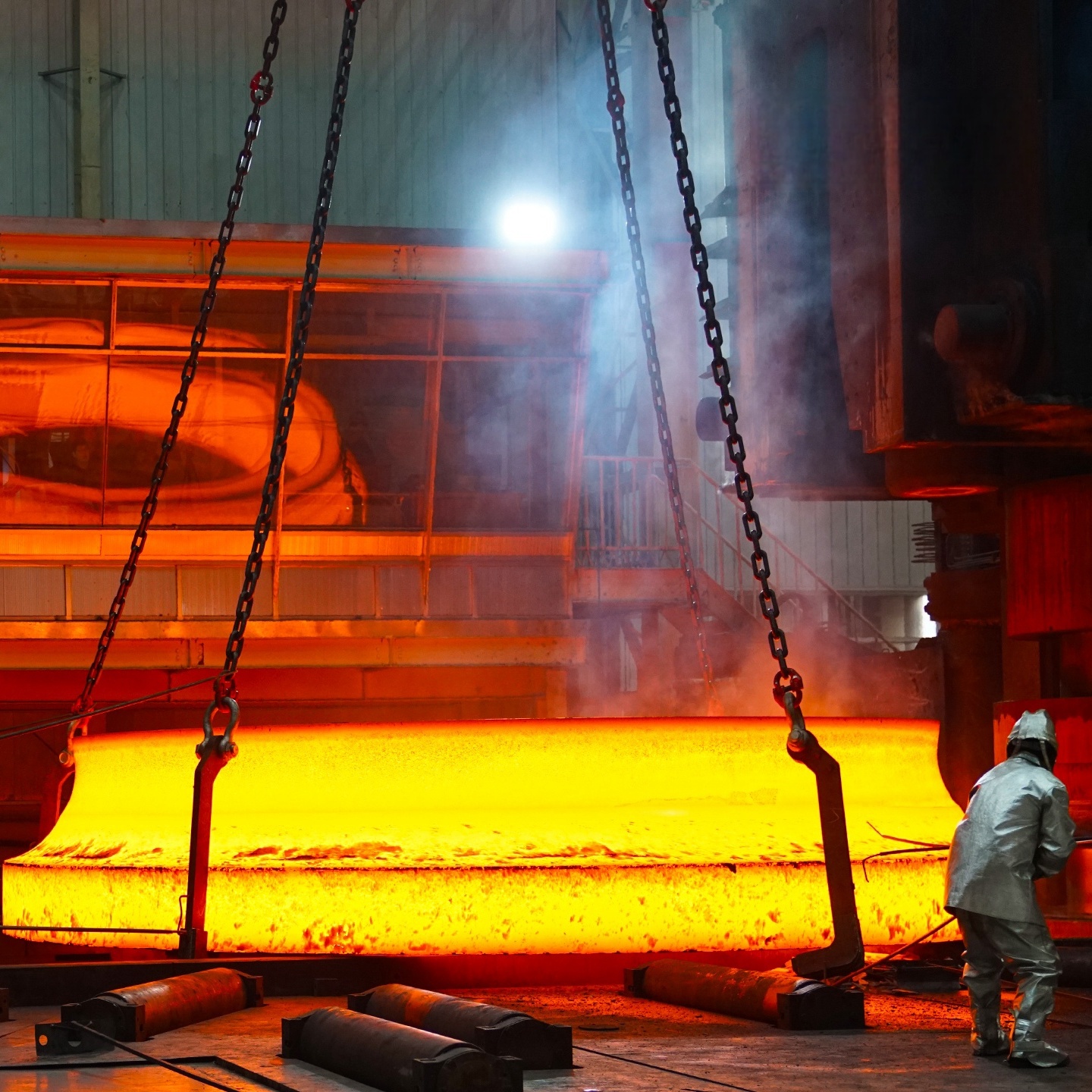
Profiling rolled ring forgings allow near-net shapes that reduce material waste and machining time.
This capacity is not just an engineering achievement. It matters for project planning. When a kiln tyre or a wind turbine flange exceeds a certain diameter, the number of available suppliers drops sharply. Buyers who can identify a supplier with the right ring rolling capacity in advance avoid the risk of redesigning a component around a manufacturing constraint.
Comparison with Traditional Alternatives: Forged Rings vs. Cast Rings and Welded Rings
There are two common alternatives to rolled ring forgings: cast rings and welded rings. Each has a legitimate place in industrial equipment, and the right choice depends on the application.
| Criteria | Rolled Ring Forging | Cast Ring | Welded Ring (Plate Bending + Weld) |
|---|---|---|---|
| Grain structure | Wrought, directional grain flow | As-cast structure, potential porosity | Base plate grain + weld seam |
| Fatigue resistance | High, especially under cyclic loads | Lower due to internal discontinuities | Moderate, limited by weld quality |
| Dimensional capability | Very large seamless rings available (up to 21m+ demonstrated) | Large sizes possible | Very large diameters possible |
| Seamless integrity | Yes | Yes (if cast in one piece) | No |
| Typical lead time | Longer for large custom forgings | Shorter for simple shapes | Depends on bending and welding capacity |
| Cost for high-volume simple parts | Higher | Lower | Moderate |
| Best suited for | Critical load-bearing, fatigue-driven, high-reliability applications | Large structural parts with lower fatigue requirements | Very large rings where seamless forging is not available or economical |
Rolled ring forgings are generally preferred in critical applications because of their superior fatigue resistance and internal integrity. However, forging must be considered honestly: it is not always the cheapest solution. For a large ring that is not fatigue-loaded and where internal defects can be tolerated, a cast or welded ring may be a reasonable choice. The decision matrix should be based on load history, safety class, inspection access and life-cycle cost, not simply on the manufacturing process name.
One real limitation of rolled ring forging is the physical size of the ring mill. Although capacities above 20 meters exist at a small number of suppliers, most forging shops are limited to smaller diameters. If a project requires a ring beyond 6–8 meters, the list of available suppliers shortens significantly. Buyers should confirm the specific machine envelope and the maximum weight capacity before finalizing a design.
Market Context and Sourcing Implications
The global ring rolling products market is projected to grow from USD 4.56 billion in 2025 to USD 7.35 billion by 2035. This growth is tied to the expansion of wind power, hydropower, nuclear power, offshore engineering and advanced industrial equipment. Seamless rolled rings are estimated to represent about 24% of global manufactured forging components by production volume. Carbon steel accounts for roughly 38.2% of raw material share in the global metal forging market.
For procurement teams, these figures reinforce a practical point: rolled ring forgings are a specialized segment with a limited number of high-capability suppliers. The supplier selection process should be treated as a technical evaluation, not a simple RFQ. Buyers should verify material preparation, forging capacity, heat treatment capability, machining accuracy, testing capacity and experience in the target industry.
Supplier Capability Checklist for Project Procurement
When evaluating a rolled ring forgings manufacturer or supplier for a project, consider the following factors:
- Dimensional envelope: What is the maximum outer diameter, height and weight that the ring mill can handle? For large projects, this is the first gate.
- Material range: Can the supplier work with carbon steel, stainless steel and alloy steel? Is custom material preparation available?
- Customization scope: Does the supplier support customization of material composition, size, forging shape, heat treatment and machining?
- Quality control: Is testing performed at 100%? What inspection methods are used?
- Production capacity: Can the supplier meet the project schedule? What is the monthly or annual capacity?
- Industry experience: Has the supplier delivered to wind power, hydropower, rotary kiln, petrochemical, offshore or construction machinery projects?
- Global logistics: Can the supplier manage export logistics to the project region?
In the case of Iraeta, the company offers OBM production with customization across material, size, forging shape, heat treatment and machining. Its facilities have a monthly capacity of 70,000 tons. It accepts single-unit orders, which is important for large one-off projects such as a single kiln tyre or a single large flange. The company exports to the EU, the Americas, Asia and the Middle East, with after-sales remote support. This kind of information matters because a large forged ring is not an off-the-shelf item; it is manufactured to the project's specification.
Future Outlook: Larger Rings, Tighter Tolerance, Stronger Traceability
The direction of industrial development is pushing forged rings to larger sizes and higher precision. Offshore wind turbines above 20 MW require larger main bearings, flanges and gearbox components. Next-generation nuclear power plants need very large seamless rings for reactor pressure vessel components. Cement plants with 10,000 tons/day output require kiln tyres that cannot be produced by ordinary ring mills. These trends align with the demonstrated capability to produce 21-meter and even 22-meter seamless rings.
At the same time, digital traceability is becoming a standard expectation. Buyers increasingly want complete material certificates, heat treatment records and inspection reports for each forging. The ability to provide full documentation is becoming a competitive requirement, not an added service.
For project engineers, the strategic takeaway is to bring the forgings supplier into the design conversation early. Large rolled ring forgings have long lead times and manufacturing constraints that affect design options. Early collaboration allows optimization of the near-net shape, machining allowance and material grade.
FAQ
What are the typical size limits for seamless rolled ring forgings?
Seamless rolled ring forgings can be produced in a wide range of dimensions. A supplier with advanced ring rolling capability can produce rings up to 21 meters or more in diameter. Iraeta, for example, has manufactured a seamless ring of 21.029 meters in diameter and states a maximum capacity of 22 meters diameter, 5 meters height and 300 tons weight.
Which rolled ring forging material is best for high-temperature and high-pressure applications?
Carbon steel, stainless steel and alloy steel are all used for rolled ring forgings. For high-temperature and high-pressure applications such as petrochemical pressure vessels, alloy steel and stainless steel are often selected based on corrosion resistance and high temperature strength. Standards such as ASTM A182 and EN 10222-2 define technical delivery conditions for forged components used in pressure service.
How do I compare a cast ring and a forged ring for a load-bearing application?
The comparison should focus on the load history and failure risk. Forged rings have a wrought grain structure that gives higher fatigue resistance and better rejection of internal discontinuities. Cast rings can be more economical for large, non-fatigue-critical structural parts. For rotating equipment, cyclic loaded bearings, wind turbines, kiln tyres and pressure vessels, forged rings are generally preferred because of their integrity and performance under repeated stress.
What certification or standards should a rolled ring forgings supplier meet?
Depending on the application, a supplier should be able to work with standards such as ASTM A182 for forged flanges and fittings, and EN 10222-2 for steel forgings for pressure purposes. In practice, buyers should request the supplier's quality control plan, material test certificates and inspection records for each heat of material.
Can a rolled ring forging be customized for a specific project?
Yes. Customization is common for material grade, size, forging shape, heat treatment and machining. Iraeta, for example, offers a customization scope across these parameters and accepts MOQ starting from 1 unit, which is practical for large one-off components.
What is the lead time for large rolled ring forgings?
Lead time depends on material availability, size, forging complexity and required testing. It is generally longer for very large custom forgings because material preparation, forging, heat treatment and machining cannot be rushed without risking quality. Buyers should discuss lead time early in the project planning phase.
Are rolled ring forgings suitable for offshore wind turbine projects?
Yes. Offshore wind turbines require components with high structural strength, corrosion resistance, low-temperature toughness and high fatigue life. Seamless rolled ring forgings are used in critical load-bearing connections and drive train components because the absence of a weld seam improves reliability under cyclic loading in a marine environment.