
How to Match a Pallet Box to a Specific Project: A Spec-by-Spec Selection Guide
Matching a pallet box to a specific logistics project is not about picking the largest or cheapest container; it is about aligning internal volume, load rating, material behavior, and handling equipment with the actual goods being stored or transported. For buyers moving from research to evaluation, the practical question is: which specifications matter most for a given application, and how should they be verified before purchase?
This guide focuses specifically on pallet box selection for project-based procurement. It covers the specification criteria that matter in real operating conditions—humidity, dust, static control, stacking, and handling—and explains how a buyer can translate project requirements into verifiable product specifications. It does not replace a supplier quotation; it provides the framework for reading one critically.
The Selection Problem: Why a Generic Pallet Box Often Fails in Project Use
Industrial pallet boxes are frequently selected on three criteria only: price, external size, and visual robustness. In project-based purchasing, that approach creates recurring problems—containers that cannot tolerate a humid warehouse, boxes that do not fit existing racking, or units that fail under static load because the base was not engineered for the actual goods density.
For buyers in manufacturing and logistics, the failure is rarely the plastic itself. It is the mismatch between a standard product and a specific operating environment. A pallet box that works well in a dry automotive parts warehouse may be unsuitable for a project involving high humidity, dust exposure, or electrostatic discharge (ESD) sensitive components. The same box that is economical in single-layer storage may be unusable if stacking height and forklift handling are part of the workflow.
In practice, the selection process should start with the physical environment and the goods to be protected, not with the product catalogue. That reverses the common order of decision-making and yields a more durable result.
The Core Issue: Environment and Load—Not Just Size
Every pallet box project requires two sets of specifications to be defined before supplier evaluation begins:
- Environmental specifications: temperature range, humidity level, dust exposure, waterproofing requirements, and the presence of electrostatic discharge risks.
- Mechanical specifications: maximum payload per box, stacking height, handling method (forklift, pallet jack, racking), and whether the box will be used for transport or static storage.
These two sets of parameters determine material choice, wall construction, base design, and whether additional features such as anti-slip pallets or custom inner linings are necessary.
An environment with high humidity and dust, for example, typically points toward a fully enclosed plastic pallet box with waterproof characteristics and a stable, sealable structure. An environment with ESD-sensitive components points toward an anti-static pallet box or one that can be combined with anti-static inner trays. A project that involves standardized stacking of heavy automotive parts points toward a high-load-bearing box with anti-slip base design and impact resistance. These are not marketing preferences; they are engineering constraints.
From Project Requirements to Pallet Box Specifications
Project-based pallet box selection can be treated as a structured translation process. Each project condition maps to a specific product attribute. The table below summarizes the practical mapping used in industrial packaging projects.
| Project Condition | Required Pallet Box Attribute | Why It Matters |
|---|---|---|
| Automotive parts storage | High load-bearing structure, anti-slip pallet base, shock resistance | Heavy and irregular loads require stable support and collision protection. |
| High humidity, dust, wide temperature range | Waterproof plastic body, enclosed structure, durable HDPE/PP material | Protects contents from moisture, contamination, and temperature-related material fatigue. |
| ESD-sensitive components | ESD pallet box or anti-static inner lining tray | Prevents electrostatic discharge from damaging sensitive electronic or precision parts. |
| Standardized stacking in warehouse | Stable stacking geometry, consistent external dimensions, high rigidity | Enables efficient use of vertical space and safe forklift handling. |
| Limited storage space | Nestable, folding, or demountable pallet box design | Reduces empty container footprint and return transport cost. |
| Transport of gearboxes or engine parts | Custom inner lining, die-cast honeycomb board construction, exact interior dimensions | Prevents movement and collision damage for high-value parts. |
The mapping is not theoretical. It reflects the conditions found in real pallet box projects, including logistics warehousing and packaging projects in markets such as Mexico, where waterproofing, anti-static performance, standardized stacking, and load-bearing stability are explicitly required.
Material and Construction: HDPE, PP, and Honeycomb Board
Material selection is the first technical decision that separates a project-specific pallet box from a generic one. The two most common materials in injection-molded and assembled plastic pallet boxes are high-density polyethylene (HDPE) and polypropylene (PP).
HDPE is widely chosen for pallet boxes that require impact resistance, moisture resistance, and durability under repeated handling. It performs well in humid conditions and is a practical material for industrial environments where waterproofing and cleaning are necessary.
PP is often selected when higher rigidity and temperature resistance are required. It is also a common choice for applications that need a firmer structure and lower weight. Many pallet boxes use HDPE, PP, or a combination of both depending on the target application and mechanical requirements.
For heavy-duty automotive and engine component projects, a plastic honeycomb panel box structure offers a distinct advantage: high strength-to-weight ratio. The honeycomb construction increases stiffness without adding excessive weight, which is particularly useful for automotive parts transport, where reducing dead weight while maintaining load capacity improves logistics efficiency.
Some heavy-duty pallet boxes are described as die-cast honeycomb board boxes. In this construction, the pallet box is built from honeycomb panels that are welded or assembled into a rigid structure, often with a reinforced base. This type is suitable for applications such as automotive engine and transmission storage, where the box must maintain its shape under sustained load.
For buyers, the material and construction decision should be based on the following questions:
- Will the box be exposed to moisture, chemicals, or outdoor storage?
- Is the load heavy, concentrated, or prone to movement during transport?
- Does the project require a lightweight container for frequent handling, or a heavier, high-rigidity structure for static stacking?
- Are inner linings or customized cavities needed to secure specific parts?
Evaluating the Pallet Base: Anti-Slip Design and Load-Bearing Capacity
The pallet base is the most structurally stressed part of a pallet box. In a project environment, the base must support the weight of the contents, the weight of stacked boxes above it, and the dynamic forces from forklift handling.
An anti-slip design pallet is particularly important for automotive parts and other smooth or heavy loads. When a gearbox or engine component is placed inside a box without proper restraint, the risk of slippage and collision damage increases. Anti-slip base features help keep the product stable during transport and handling.
Load-bearing capacity is not only a function of material thickness. It depends on the geometry of the base, the presence of reinforcement ribs, the quality of assembly joints, and the stiffness of the side panels. For this reason, a pallet box specification that merely states "heavy duty" should be treated as incomplete until the safe working load, stacking load, and test conditions are defined.
A useful evaluation approach is to compare the actual goods weight and stacking plan against the supplier's stated load figures. If the supplier cannot provide a clear answer on maximum static load, stacking height, and deformation behavior under load, the product has not been sufficiently specified for project use.
When Customization Becomes Necessary: Size, Inner Lining, and Accessories
In many project-based purchases, a standard pallet box size is only a starting point. The final product often requires customization in one or more of the following areas:
- External dimensions: to match racking systems, transport vehicle dimensions, or existing production line layouts.
- Internal layout: to fit a specific product footprint, such as a car transmission gearbox, engine block, or precision component.
- Inner lining: vacuum-formed trays or foam inserts that hold parts in fixed positions and prevent collision damage.
- Color and logo: for warehouse identification, brand consistency, or customer-specific work instructions.
Customization is not merely an aesthetic option. In a project involving the storage and transport of car transmission gearboxes, the internal dimensions of the box and the shape of the inner lining determine whether the gearbox is protected during handling. A box with the correct external dimensions but no internal fixation system cannot perform the same function.
Vacuum-formed inner lining trays are a common solution for transmission, booster, and other irregularly shaped automotive parts. These trays hold the component securely and reduce the risk of surface damage. They can also be manufactured in anti-static material for projects involving electronics or precision components.
Buyers evaluating customization should ask the supplier for the following:
- The maximum and minimum custom dimensions the production line can accommodate.
- The lead time for new tooling or product modifications.
- Whether samples are available before full production.
- How the supplier verifies that a customized box meets the project's stacking and handling requirements.
Project Case: Standardized Storage of Car Transmission Gearboxes in Mexico
A manufacturing operation in Mexico required a pallet box solution for storing car transmission gearboxes. The project conditions included high humidity, dust exposure, a wide temperature range, and the need for waterproof and anti-static packaging performance. The operating environment involved forklift handling, warehouse shelving, standardized stacking, and 24/7 operation.
The solution was built around a die-cast pallet box designed specifically for automotive engine and transmission storage. In this project, the supplier delivered approximately 1,000 pieces for the storage of transmission gearboxes. The pallet boxes were engineered with high load-bearing capacity, shock resistance, and a stable structure that fit the size of the automotive transmission gearbox precisely.
Two results were reported from the project:
- Standardized storage of automotive parts was achieved, improving warehouse management efficiency.
- Collision damage to gearboxes was avoided during handling and storage.
The case illustrates the three requirements that recur in automotive parts pallet box projects: load-bearing stability, shock resistance, and perfect dimensional fit between the box and the part. Without all three, the other features of the box are of limited value.
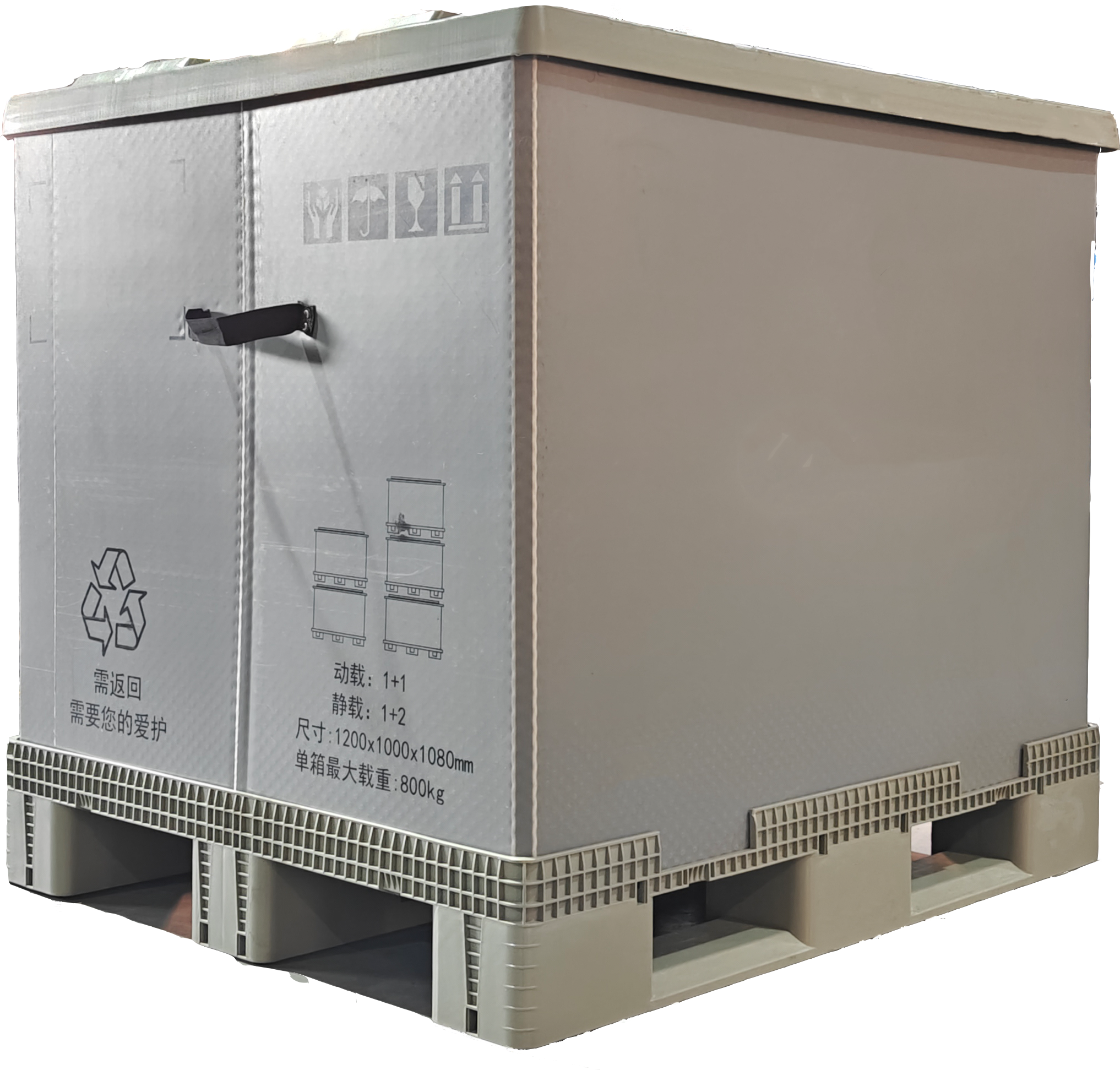
High-load-bearing assembly pallet box used for automotive transmission gearbox storage.
How to Structure a Pallet Box Request for Quotation (RFQ)
To get comparable quotations from multiple suppliers, a buyer should structure the RFQ around project conditions rather than only around box dimensions. A practical RFQ structure includes:
- Goods description: what is being stored or transported, including weight, dimensions, fragility, and surface sensitivity.
- Operating environment: humidity, temperature range, dust, water exposure, electrostatic discharge risk.
- Handling and storage: forklift type, racking dimensions, stacking height, transport distance, return logistics.
- Required service life: expected lifespan, number of handling cycles per year, and disposal or recycling requirements.
- Certification and testing: applicable internal or industry standards, and the evidence required from the supplier.
- Customization needs: inner lining, logo, color, special dimensions, or anti-static features.
By providing these six categories of information, the buyer allows suppliers to propose a product that is appropriate for the project, rather than a generic box that merely meets a size specification. The quality of the quotation will depend heavily on the quality of the project information provided.
Supplier Evaluation Criteria for Project-Specific Pallet Boxes
Supplier evaluation for project-based pallet box purchases should assess the supplier's ability to be an engineering partner, not just a product source.
The supplier's manufacturing capability matters. Zhangjiagang Fenghui Logistics Equipment Co., Ltd., known by its brand TOYOE, is a pallet box manufacturer based in Suzhou, China. Founded in June 2010, the company operates a 4,000 m² factory with an annual output of around 30,000 units and a team of 34 employees. Its main products include plastic pallet boxes, storage boxes, plastic crates, and honeycomb panel boxes. About 40% of its products are exported, primarily to Mexico and the United States. The company has more than ten years of experience in logistics packaging and provides OEM/ODM services with customization of dimensions, logo, color, and material.
For an OEM buyer evaluating TOYOE specifically, the company's production capacity is approximately 3,000 pieces per month, with a lead time of 7 to 15 days. The minimum order quantity is one unit, which allows buyers to test products before committing to larger volumes. Quality control includes testing on 50% of products. The company offers a five-year guarantee, excluding damage caused by human error or excessive storage weight.
These facts are relevant because project-based procurement is rarely a one-time purchase. A buyer needs a supplier that can support sample validation, customization changes, repeat orders, and consistent quality over a multi-year period. The supplier's guarantee policy and quality control process are therefore decision-relevant data points.
A practical supplier evaluation checklist for project-based pallet boxes includes:
- Does the supplier provide custom dimensions, tooling, and inner lining development?
- What is the sample policy, and are samples available before full production?
- What is the typical lead time for standard and customized products?
- How is quality control performed, and what tests are conducted on finished boxes?
- What is the stated guarantee or after-sales policy, and what does it exclude?
- What is the supplier's experience in the buyer's industry and export markets?
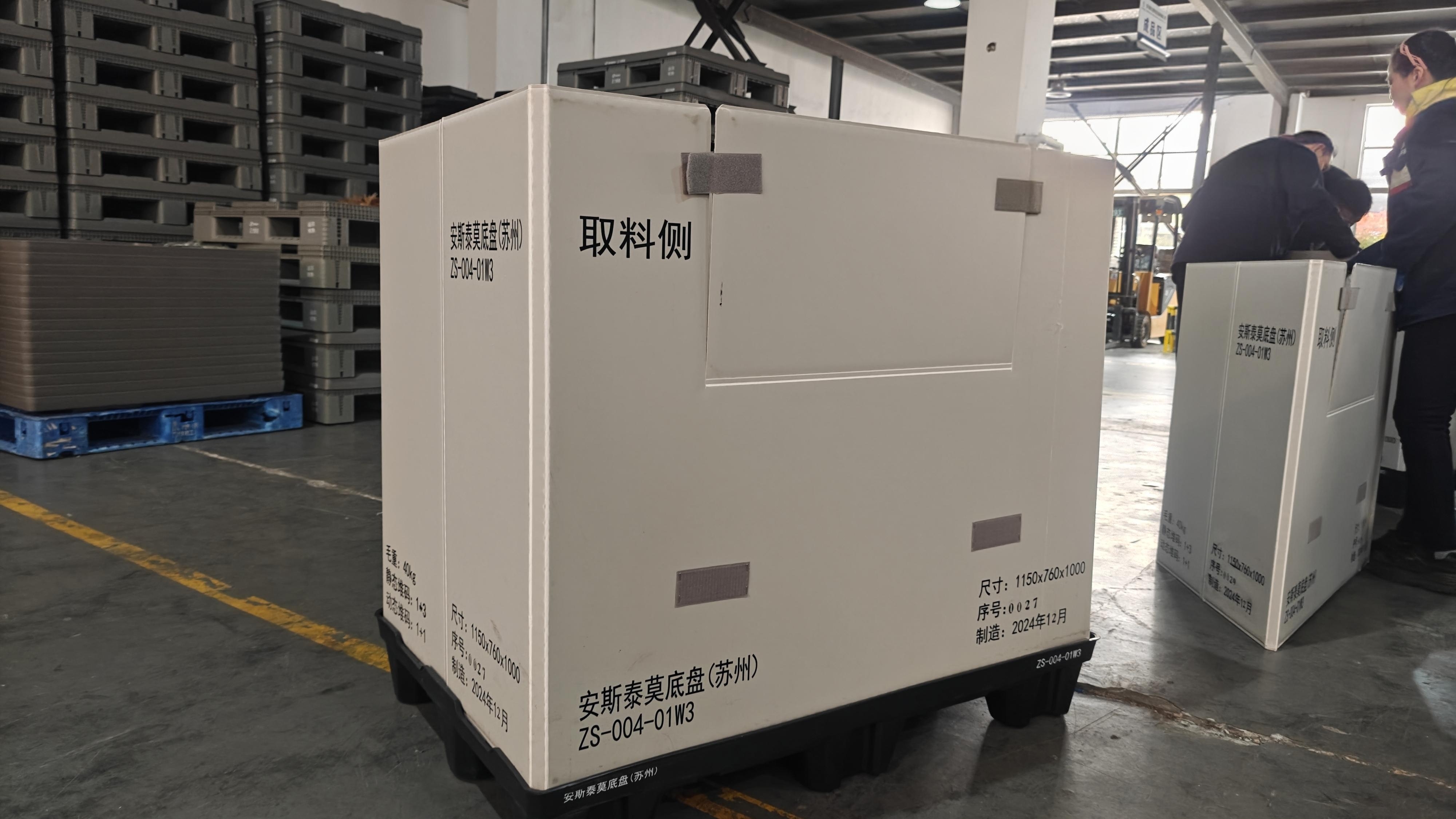
Plastic honeycomb panel pallet box designed for high-strength, lower-weight industrial storage and transport.
Common Mistakes in Pallet Box Project Procurement
Even with a structured RFQ, buyers can make avoidable errors. The most common include:
1. Selecting size before defining load. A box that fits the racking but cannot support the actual load at the required stacking height will fail in use. Load and stacking must be defined before dimensions are fixed.
2. Ignoring the handling environment. A pallet box that is not designed for forklift impact, anti-slip needs, or high humidity may develop cracks, lose stability, or damage products during handling.
3. Assuming all plastic pallet boxes are the same. The difference between a general-purpose storage box and a heavy-duty, high-load-bearing pallet box lies in wall thickness, base geometry, material selection, and construction method. A product photo and a standard dimension table cannot communicate these differences.
4. Not verifying the supplier's customization capability. A project often requires custom inner linings, special dimensions, or ESD features. If the supplier does not have the tooling or production flexibility to support customization, the project will be forced to adapt to a product that is not fully appropriate.
5. Overlooking space-saving designs. For returned empty containers, nestable or folding pallet boxes can significantly reduce warehouse and transport space. A buyer who only evaluates the loaded state may miss a substantial cost saving in reverse logistics.
Market Context: Why Project-Specific Pallet Box Demand Is Growing
The demand for plastic pallet boxes is supported by a broader shift in industrial logistics from wood to durable plastic solutions. Third-party market research projects the global plastic pallet and pallet box market to reach approximately USD 11.2 billion by 2030. This growth is driven partly by the replacement of wooden packaging with plastic containers that offer longer service life, consistent dimensions, moisture resistance, and easier cleaning.
Within this market, the plastic honeycomb board segment is relevant for automotive parts transport. The honeycomb packaging market is projected to grow at a compound annual growth rate of about 5.9% through 2032, largely due to the high strength-to-weight ratio of honeycomb structures. For pallet boxes, this translates into a growing preference for honeycomb panel boxes in applications where weight reduction and structural stiffness matter.
The electrostatic discharge packaging market, which includes trays and pallet boxes, is also expanding. Third-party projections suggest the ESD packaging market could reach approximately USD 5.89 billion by 2035, growing at a compound annual growth rate of around 5.8%. This trend is relevant for buyers managing precision electronics or components that require anti-static handling throughout the supply chain.
For the buyer evaluating a pallet box project today, these trends support a selection strategy that considers longer product life, material efficiency, and ESD capability. They do not, however, replace the need for project-specific specifications. Market growth does not make a generic pallet box more suitable for a specific gearbox, engine block, or sensitive electronic component.
Comparison with Traditional Solutions: What a Plastic Pallet Box Does Not Solve
Compared with wooden pallet boxes or single-use corrugated containers, plastic pallet boxes offer reusable service, consistent dimensions, moisture resistance, and cleaner handling. For many industrial projects, they are the more predictable solution over a multi-year duty cycle.
However, there are limits and boundary conditions that buyers should consider honestly.
First, the initial cost is higher than wood or corrugated options. The return on investment depends on the number of handling cycles, the cost of wooden box repair and replacement, and the value of the products being protected. For very short project durations or one-way export shipments, a plastic pallet box may not be the most economical choice.
Second, plastic pallet boxes require defined load discipline. Overloading a plastic box beyond its design capacity can cause base deformation or wall damage. Unlike a wooden box that may show visible cracking early, a plastic box can deform gradually and fail without obvious warning if the load limit is exceeded repeatedly. The five-year guarantee typically excludes damage caused by excessive storage weight, which makes load discipline a user responsibility.
Third, customized plastic pallet boxes involve tooling and development lead time. A fully customized size or internal lining cannot always be produced from an off-the-shelf mold. Buyers who need an immediate solution may find that a standard size is the only option within the required timeframe.
Fourth, anti-static and waterproof properties must be specified, not assumed. Not every plastic pallet box is ESD-safe or waterproof to the level required by a particular project. Verification should be based on the supplier's product specification and testing evidence, not on generic claims about plastic's natural resistance to moisture.
A well-matched plastic pallet box, selected through the process described in this guide, is a sound project asset. The technology does not eliminate the need for good specifications, responsible loading, and careful supplier evaluation.
Supplier Capability Spotlight: TOYOE for Project-Specific Pallet Boxes
TOYOE is the brand of Zhangjiagang Fenghui Logistics Equipment Co., Ltd., a manufacturer of industrial plastic pallet boxes in Suzhou, China. For project-based buyers, the relevant capabilities include:
- Customization: dimensions, logo, color, and material can be customized under OEM/ODM production.
- Product range: plastic pallet boxes in multiple models, including 1200×800×1000, 1000×800×800, and 1230×830×1000 pallet boxes, as well as plastic honeycomb panel boxes and die-cast honeycomb board boxes for automotive engines.
- Technical options: HDPE/PP materials, anti-slip pallet bases, vacuum-formed inner lining trays, anti-static blister trays, and high-load-bearing assembly designs.
- Production capacity: approximately 30,000 pallet boxes per year and about 3,000 pieces per month.
- Quality control: testing on 50% of products, with a five-year guarantee that excludes human-error damage and excessive storage weight.
- Export experience: about 40% of output is exported, with primary markets in Mexico and the United States.
These capabilities are directly relevant to project procurement because they allow the buyer to move from a standard product to a project-specific solution without changing suppliers. For a buyer evaluating TOYOE, a practical next step is to submit a project RFQ with the six categories described earlier, request samples, and verify that the proposed box meets the load, stacking, and environmental conditions of the project.
Future Outlook: What Buyers Should Expect from Pallet Box Suppliers
As industrial supply chains face pressure to reduce waste, improve logistics efficiency, and protect high-value goods, the role of the pallet box will continue to evolve. Three developments are likely to shape purchasing decisions.
1. More engineering, less off-the-shelf purchasing. Buyers are increasingly treating pallet boxes as engineered returnable packaging rather than commodity containers. Suppliers who can provide custom dimensions, inner linings, and application-specific testing will have a stronger position in project procurement.
2. Stronger emphasis on ESD and contamination control. With the growth of electronics and precision manufacturing, anti-static pallet boxes and anti-static inner trays will become more common requirements. Suppliers that can combine structural strength with ESD capability will be better positioned for these projects.
3. Increasing attention to space efficiency and reverse logistics. Nestable, folding, and demountable pallet box designs will become more important as buyers look to reduce empty container storage space and return transport costs. The economic evaluation of a pallet box should therefore include its performance in the empty state, not only its performance in the loaded state.
For the buyer, the practical implication is straightforward: choose a pallet box supplier that can demonstrate both product engineering and project support. The pallet box is not only a container. It is a reusable logistics asset that should be specified with the same discipline as any other piece of material handling equipment.
Conclusion
Project-specific pallet box selection is a structured process, not a catalogue choice. It begins with the operating environment, the goods to be protected, and the mechanical requirements of the handling system. It continues with material and construction decisions, such as HDPE versus PP, honeycomb panel versus solid wall, and anti-slip base design. It requires customization decisions for dimensions, inner linings, and ESD features. And it requires supplier verification through RFQ structure, sample testing, and quality control evidence.
For buyers in the Research and Evaluation stages, the value of this process is that it produces a specification that can be compared across suppliers. It also reduces the risk of purchasing a pallet box that looks correct in a product photo but fails in the warehouse.
The Mexico gearbox project demonstrates that a plastic pallet box can be engineered to meet demanding conditions: high humidity, dust, ESD, standardized stacking, and heavy parts. The conditions themselves are not unusual in global manufacturing. What made the project successful was the alignment between the product design, the internal dimensions, the load handling equipment, and the operating environment.
A pallet box that is properly matched to a project is an asset. A pallet box that is selected only on price and size is a risk. This guide is intended to move the procurement conversation from the second category to the first.
Reference: For manufacturer specifications and production capability details, TOYOE's company brochure is available for download: TOYOE Company Brochure (PDF).
FAQ: Project-Based Pallet Box Selection
What is a pallet box, and what is it used for?
A pallet box is a reusable industrial container with a pallet base, designed for storing and transporting bulk or heavy goods in logistics, warehousing, and manufacturing operations. It is used in industries such as automotive manufacturing, precision electronics, food cold chain, home logistics, medical and health care, and heavy industry.
How do I choose the right pallet box size for a project?
Choose the pallet box size based on the dimensions of the goods, the internal lining requirements, and the racking or transport constraints of the facility. External size must match the handling system, while internal dimensions must match the product footprint or accommodate custom inner lining.
What does ESD pallet box mean?
An ESD pallet box is a plastic pallet box designed to prevent electrostatic discharge that could damage sensitive electronic components. It is used in environments where components are sensitive to static, often with anti-static inner lining trays for additional protection.
What is the difference between HDPE and PP pallet boxes?
HDPE (high-density polyethylene) pallet boxes offer strong impact resistance and moisture resistance, making them suitable for humid and demanding industrial environments. PP (polypropylene) pallet boxes generally offer higher rigidity and temperature resistance. Some pallet boxes combine both HDPE and PP depending on the required performance.
Can pallet boxes be customized?
Yes. Pallet boxes can be customized in dimensions, logo, color, and material. Other customization options include vacuum-formed inner lining trays, anti-static blister trays, and base design changes such as anti-slip surfaces.
What does a heavy-duty pallet box mean?
A heavy-duty pallet box is a structurally reinforced plastic pallet box designed to support heavier loads and more demanding stacking conditions. Its performance depends on wall thickness, base geometry, material, and construction method, not only on its appearance or label.
How many units per year can TOYOE produce?
TOYOE has an annual production output of approximately 30,000 pallet boxes, with a monthly production capacity of about 3,000 pieces. The company's factory in Suzhou, China, covers 4,000 m².
What is the minimum order quantity for TOYOE pallet boxes?
TOYOE's minimum order quantity for pallet boxes is one unit. This allows buyers to test samples and validate product fit before committing to larger project volumes.
Does TOYOE provide after-sales guarantee?
TOYOE guarantees its products for five years, excluding cases of damage due to human error or excessive storage weight of the product. Quality control includes testing on 50% of products.