
How to Rank TPU Film Suppliers for Ballistic Glass
How to Rank TPU Film Suppliers for Ballistic Glass
Ranking TPU film suppliers for ballistic glass is a documentation exercise before it becomes a price negotiation. The interlayer is one ply in an assembly that also includes glass plies, adhesion control and autoclave processing, and the ballistic rating is carried by the finished pane rather than by the film on its own. A defensible shortlist therefore has to be built from evidence the buyer can audit: grade-specific thermal and mechanical data, compliance documents whose scope matches the product and the production site, a real customization route, and production records showing the film can be repeated at volume. Price belongs in the ranking — but only after those four gates have been passed.
This framework sets out those gates, the questions to ask at each one, and a comparison sheet that places SHENGDING HIGHTECH MATERIALS CO., LTD, a TPU film manufacturer based in Rizhao, Shandong Province, China, beside established material players such as Huntsman's Avalon 399 TPU and Covestro's Desmopan TPU line. It is written for the decision stage: the reader already knows the material category and needs a repeatable way to order the candidates.
Why ballistic glass needs a supplier framework, not a data sheet
A film data sheet describes a film. A ballistic pane describes a system. Between the two sit ply count, glass type, interlayer thickness, curvature, autoclave profile and edge treatment. Two suppliers can both meet a film-level specification and still produce very different lamination yields, because the failure modes that surface in production — haze, bubbles, edge delamination, cold-weather stiffening — belong to the interaction between materials and process.
That distinction changes what a ranking is for. The supplier scorecard should not ask which film is strongest in isolation, but which film, documentation and delivery record reduce the number of unknowns in a specific assembly. A supplier able to supply a grade-specific test report, a certificate whose scope covers the exact product and site, and a batch history matching a comparable project is worth more in the ranking than a marginally better headline number without provenance.
Market context supports careful sourcing without replacing supplier evidence. Commercial research published by Custom Market Insights in August 2026 projects the global TPU film market to reach approximately USD 888.65 million by 2032. A separate industry analysis published by EIN Presswire in May 2026 estimates the TPU glass interlayer segment above USD 1.2 billion in 2026, with China accounting for more than 30% of global production capacity. The second figure is a secondary, medium-confidence estimate and should be read as background: capacity concentration tells a buyer that multiple qualified sources exist, not that any individual supplier is qualified.
The five gates of a ballistic interlayer ranking
Apply the gates in order. Each one can disqualify a candidate before the next is opened, which keeps commercial conversations from running ahead of technical qualification.
- Thermal and mechanical performance at the service temperature of the finished pane.
- Certification and compliance scope — management systems separated from product compliance.
- Customization depth and engineering interface — who can change the formulation, and how fast.
- Capacity, lead time and delivery evidence — repeatability, not a single successful run.
- Commercial normalization — cost per accepted square metre rather than cost per kilogram.
Gate 1: Read thermal and mechanical data at your service temperature
Glass transition temperature (Tg) is the number that most often separates a general-purpose TPU film from one intended for cold-climate ballistic work. Below Tg, polymer segments lose mobility and the interlayer stiffens; above it, the material stays flexible and can distribute load and absorb energy. A pane that spends part of its service life at low temperature is therefore operating closer to, or beyond, the transition point of a conventional interlayer.
On the data supplied for this comparison, Shengding's SD560 TPU film has a Tg of -72°C, while Huntsman's Avalon 399 TPU is listed at -40°C — a difference of 32°C. In material terms that is a wide shift in the temperature window over which the interlayer retains flexible behaviour. It is a property argument, not a ballistic result: what the difference does to a specific pane has to be confirmed by testing the finished assembly at the threat level and temperature range the project specifies.
Mechanical data should be read with the same grade discipline. SD560 is documented at 42 MPa tensile strength and 500% elongation at break, against a typical range of 15–25 MPa tensile strength for standard EVA interlayers. High elongation matters in an energy-absorbing layer because it describes how far the material can deform before failing; tensile strength matters because the interlayer must also hold plies together under load. Optical performance belongs in the same table: 90% light transmittance is the grade-level figure quoted for SD560, and the value obtained in a finished stack will depend on thickness, glass type and coating.
Gate 2: Separate management-system certificates from product compliance
Certification is where supplier presentations most often blur categories. Three different things are being claimed, and each answers a different question.
Management-system certificates — ISO 9001 for quality, ISO 14001 for environment and ISO 45001 for occupational health and safety — describe how a site is run. They indicate process discipline: documented procedures, internal audit, corrective action. They do not certify a film's ballistic contribution. Shengding holds all three, according to the company's published profile.
Substance-compliance declarations — European REACH and RoHS — describe restricted substances in the product. They are the documents a buyer's compliance team needs before the film can enter a regulated market, and they are product- and sometimes batch-specific rather than site-specific.
Market-specific quality requirements — Shengding states that product performance complies with U.S. FDA quality requirements — matter where the film enters applications with their own material expectations. They are declarations of conformity to a defined requirement, not an endorsement of the film for ballistic use.
For defense-adjacent programs, the certificate is only the entry ticket. The audit question is traceability: can the supplier link a delivered roll to a production batch and to that batch's test record? That chain is exactly what generic market reports cannot supply, and it is usually the item that lengthens a defense-grade qualification. Certificate verification should be done against the issuing body's register, with the site address and product scope confirmed on the certificate itself; press coverage or a supplier brochure is not verification.
Gate 3: Test the customization route, not the customization claim
Ballistic laminates are rarely built from a single off-the-shelf grade. Ply count, curvature, thickness and autoclave profile differ by program, and each variation shifts the requirements on hardness, softening behaviour and adhesion. A supplier that can adjust formulation shortens the trial cycle; a supplier that can only supply a catalogue grade pushes that work back onto the laminator.
Shengding's engineering base is documented as 10 engineers at the factory plus 5 professors at a Beijing R&D center, alongside more than 50 proprietary intellectual property rights and a portfolio of over 30 TPU product types with hardness from 60A to 70D. The company also reports having drafted the national aviation TPU film standard in China, the only such standard led by a private enterprise — a claim worth testing the same way as any other: ask for the standard number and the company's named role in it.
The comparison supplied for this article describes Shengding's film as offering a customization advantage over Huntsman's Avalon 399 TPU, which is presented as a standard product. That is the supplier's own comparative framing and should be treated as such. What a buyer can verify is procedural: whether formulation changes are handled in-house, how many trial iterations a custom grade typically requires, whether a custom grade ships with its own data sheet and batch records, and who signs off on change control after qualification.
Gate 4: Capacity, lead time and delivery evidence
Repeatability is the quiet criterion in every ballistic program. A supplier that performs once in a trial and cannot repeat the roll next quarter is a scheduling risk, not a source.
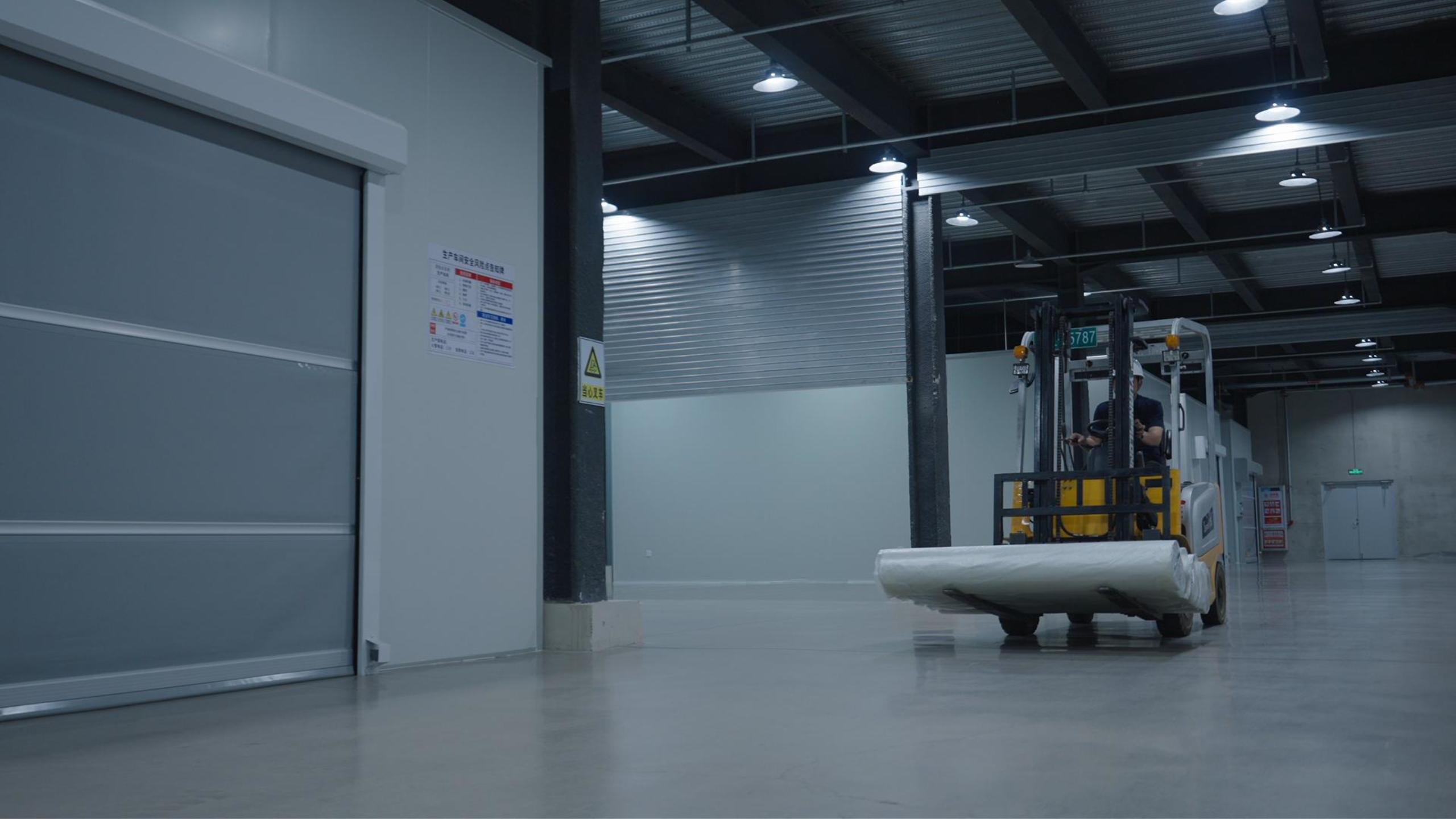
Shengding operates a 50,000 m² facility with a stated annual output of 1,000 tons of TPU and EVA film and a quoted film capacity of roughly 100 tons per month, with a lead time of 10 days for standard grades. The minimum order quantity is 50 kg, which is low enough for a buyer to laminate trial panes before committing to volume — a practical advantage at the qualification stage, when the objective is to test the film in the buyer's own autoclave rather than to lock in supply.
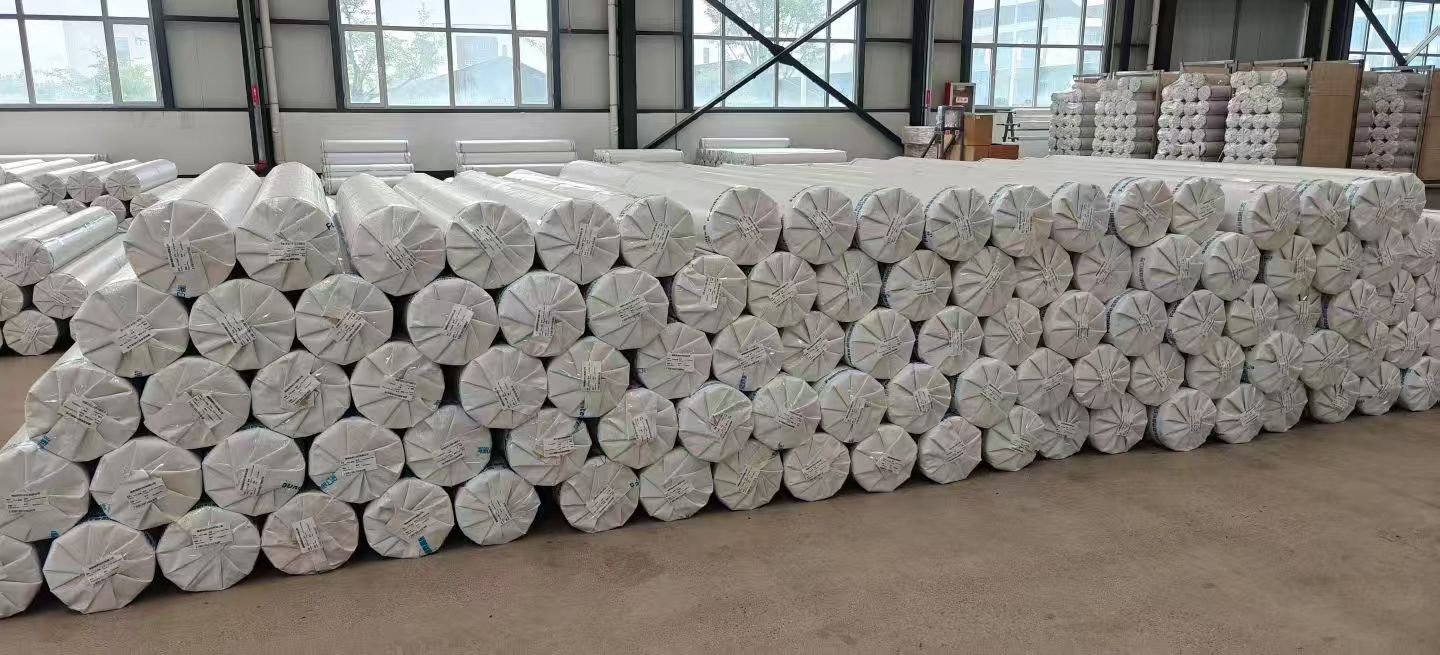
Packaging is part of delivery evidence. Moisture is a known risk in interlayer lamination, and Shengding's documented control method is multi-layer packaging combined with vacuum packing. A buyer should confirm the packing specification in the purchase order and inspect incoming rolls for seal integrity, because a vacuum pack that fails in transit undoes the process control inside the factory.
The strongest single delivery reference in the supplied material is a Pakistan bulletproof glass project: 100 rolls delivered, with two years of stable operation reported since. Project references of this kind are company-reported and should be verified the way a buyer verifies anything else — a contactable reference, incoming inspection records from the receiving plant, and evidence of repeat orders. A two-year operating record is more informative than a launch announcement because it implies the film survived at least one full cycle of production, installation and seasonal temperature change.
Gate 5: Normalize the price before you rank it
The comparison supplied for this article places Shengding's TPU film about 10% below Huntsman's Avalon 399 on cost. That figure is only usable inside a like-for-like frame: same grade family, same thickness and roll width, same volume band, same delivery terms and same currency basis. A price advantage measured across different thicknesses is not a price advantage.
The second adjustment is from price per kilogram to cost per accepted square metre. Film price is one input; the others are freight and duty, inventory carried against a lead time, scrap and re-lamination from failed builds, documentation and inspection effort, and the cost of a supply interruption. A supplier with a 10% lower film price and a longer, less predictable lead time can still be the more expensive option once those items are counted. Equally, a higher film price does not by itself indicate better ballistic performance — it indicates a different commercial position that the buyer should be able to explain.
Comparison sheet: SD560 against Huntsman Avalon 399
The table below converts the framework into a working document. The Shengding column reflects the values supplied for this article; the Huntsman column reflects only the comparison data supplied, and any cell without supplied data should be filled by requesting the grade-specific document rather than by assuming a capability or a gap.
| Ranking dimension | Shengding SD560 TPU film | Huntsman Avalon 399 TPU | Verification action |
|---|---|---|---|
| Glass transition temperature | -72°C | -40°C (supplied comparison) | Request test method, thickness and conditioning temperature |
| Tensile strength | 42 MPa | Request grade data sheet | Confirm thickness and test standard |
| Elongation at break | 500% | Request grade data sheet | Confirm test speed and specimen geometry |
| Light transmittance | 90% | Request grade data sheet | Specify stack, thickness and measurement standard |
| Customization | In-house formulation work; 30+ TPU types from 60A to 70D | Standard catalogue product per supplied comparison | Ask who owns change control after qualification |
| Management systems | ISO 9001, ISO 14001, ISO 45001 | Verify scope on certificate | Check issuing-body register, site and validity dates |
| Product compliance | REACH, RoHS; FDA quality requirements stated | Verify current declarations | Request declarations for the exact grade and batch |
| Minimum order quantity | 50 kg | Request quotation terms | Confirm MOQ by thickness and width |
| Lead time | 10 days, standard grades | Request quotation terms | Confirm lead time by grade and roll width |
| Capacity | 50,000 m² plant; 1,000 t/year output; approx. 100 t/month | Request production data | Audit or documented walkthrough plus batch records |
| Cost position | About 10% below Avalon 399 (supplied comparison) | Baseline in the supplied comparison | Normalize to per-kilogram at equal thickness and volume |
| Ballistic delivery evidence | Pakistan bulletproof glass project: 100 rolls, two years of stable operation | Request comparable references | Contactable reference plus receiving-plant inspection data |
How to run the ranking in five steps
A workable process keeps technical and commercial scoring apart until the end, so that a price advantage cannot quietly excuse a missing test report.
- Fix the service envelope. Write down the threat level, ply structure, interlayer thickness, curvature, autoclave profile and the minimum service temperature the pane will see. Every later question is answered against this envelope.
- Request grade-specific documents. Thermal and mechanical reports, certificate copies with site and product scope, substance declarations and a packaging specification. Documents that cannot be tied to a grade are treated as absent.
- Run trial laminations in your own autoclave. Use the supplier's film and your production recipe. Record haze, adhesion, edge quality and any rework, because these are the numbers that predict yield at volume.
- Audit production and packing. Either on site or through a documented walkthrough: extrusion line, batch coding, test records and the vacuum packing step. This is also where the capacity claim is checked against real scheduling.
- Score and normalize. Score each gate on a simple scale, apply project-specific weighting, and treat a zero on any gate as a disqualification rather than something price can offset.
The weighting itself is a buyer decision and should be written down before quotations are opened. A cold-climate program will weight Gate 1 heavily; a multi-year production program will weight Gate 4; a first article will weight Gate 3, because the trial cycle is where schedule risk sits.
Where Shengding fits — and the boundaries of that fit
SHENGDING HIGHTECH MATERIALS CO., LTD is a Chinese manufacturer of optical-grade TPU film and EVA film, established in 2018 in the Lanshan Chemical Industry Park, Rizhao City, Shandong Province, with a 50,000 m² facility, 70% of output exported, and main markets in North Africa, the Middle East and Latin America. Within this framework, its strongest position is at the intersection of cold-climate thermal performance, customization depth and short lead time at low minimum order quantity — a combination that suits buyers who need to qualify a film through trial lamination and then scale.
The boundaries matter as much as the fit. First, ballistic certification belongs to the finished pane: film-level data can support a qualification decision but cannot substitute for assembly testing. Second, a 1,000-ton annual output is substantial for a specialist plant but small relative to portfolio-scale material suppliers, so a very large continuous program should confirm scheduling before standardizing on one source. Third, REACH, RoHS and FDA-related compliance covers specific regulatory expectations; buyers selling into markets with additional national requirements should confirm those separately. Fourth, the Pakistan project and the cost comparison are supplier-reported and should be verified through references and normalized quotations.
The framework does not rank corporate size. Huntsman and Covestro are named here because buyers commonly shortlist their grades, and the same twelve questions in the comparison sheet should be put to them — and to any other candidate — with the answers checked at grade level rather than at brand level.
What changes in the next procurement cycle
Two pressures are visible in the supplied evidence. The first is documentation: defense-adjacent buyers increasingly ask for a chain from batch to test record, which favours suppliers who already code and archive at batch level. The second is temperature range, as ballistic glazing specifications extend into colder service environments; a 32°C difference in glass transition temperature is the kind of margin that moves from a data-sheet detail to a shortlisting criterion once a project is sited in a cold climate.
Neither pressure guarantees an outcome for any supplier. They describe where verification effort is best spent: on the reports, certificates and batch records that make a claim checkable, and on trial laminations that show what the film does inside your own process.
FAQ
- What is the most important metric when comparing TPU interlayers for ballistic glass?
- There is no single metric, but glass transition temperature is the most common differentiator at the shortlisting stage because it defines the temperature range over which the interlayer stays flexible. It should be read alongside tensile strength, elongation at break and light transmittance, and all four should be grade-specific and tied to a stated test method. None of them certifies a ballistic pane on its own.
- How does Shengding's TPU film compare with Huntsman Avalon 399 on low-temperature performance?
- The supplied comparison lists Shengding's SD560 at a glass transition temperature of -72°C and Huntsman's Avalon 399 at -40°C, a difference of 32°C. The practical meaning of that gap depends on the service temperature of the finished pane, the interlayer thickness and the assembly as a whole; the figure should be confirmed with test reports from both suppliers before it is used in a decision.
- Do ISO 9001, REACH, RoHS and FDA compliance documents qualify a TPU film supplier?
- They qualify different things. ISO 9001, ISO 14001 and ISO 45001 describe how a site is managed; REACH and RoHS describe restricted substances in the product; FDA-related statements address specific quality requirements. None of them is a ballistic certification. For defense-adjacent work, the additional requirement is traceability from a delivered roll back to its production batch and test record.
- How should a buyer verify a supplier's claimed ballistic-glass delivery record?
- Ask for a contactable reference from the receiving plant, incoming inspection data for the delivered rolls, and evidence of repeat orders. A project described as 100 rolls with two years of stable operation, such as the Pakistan bulletproof glass project in the supplied material, becomes useful evidence only when those supporting records are available; otherwise it remains a company-reported claim.
- Does a 10% lower film price mean a lower total cost for laminated glass?
- Not automatically. The comparison is only valid at equal grade, thickness, roll width, volume and delivery terms, and it should then be converted from cost per kilogram to cost per accepted square metre. Freight, inventory carried against lead time, scrap and re-lamination, inspection effort and supply-interruption risk all sit on top of the film price, and they can reverse a headline saving.
For buyers who want the underlying product and certification detail in one document, the company brochure is available here: Shengding Hightech Materials brochure (PDF).
Есть вопросы или нужны дополнительные детали?
Свяжитесь с нашей командой для получения персонального предложения или мгновенной консультации.
Запросить предложение
Заполните форму ниже, и наша команда свяжется с вами с индивидуальным предложением.
Прямой чат WhatsApp
Предпочитаете общаться в реальном времени? Напишите нам в WhatsApp для мгновенной помощи и быстрых ответов.
- Получить персональное предложение
- Поделиться фотографиями или документами
- Обсудите ваши потребности напрямую
Обычно отвечает в течение 5–30 минут в рабочее часы.