
How to Read Action Camera Specifications Before Sourcing
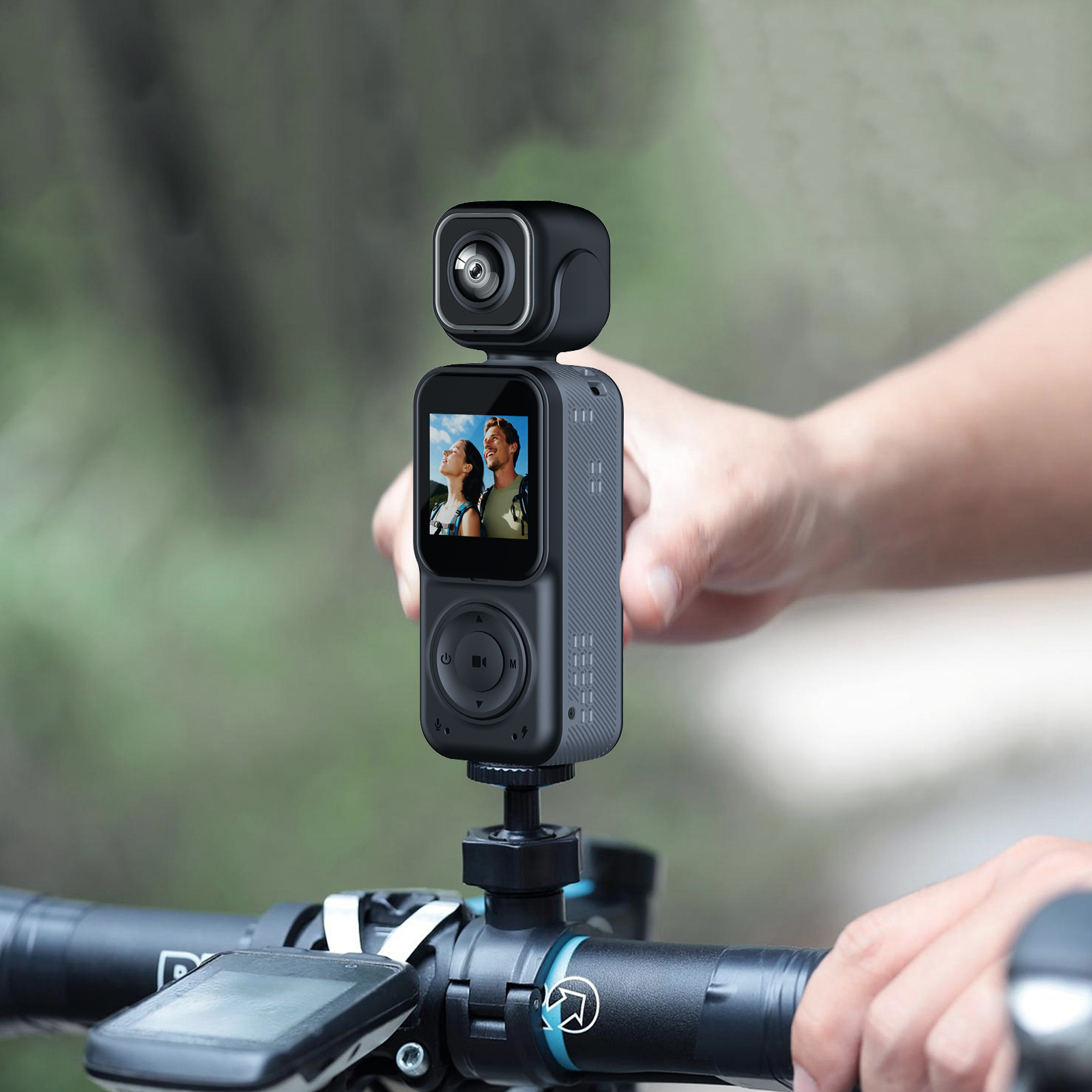
A 4K action camera with image stabilization is used across outdoor sports, travel, and vehicle recording.
Action cameras are compact, mountable video recorders built for first-person capture in sports, travel, and outdoor environments. For importers, distributors, and emerging brands, the category combines repeatable hardware demand with a wide range of use-case variations. The global action camera market was valued at USD 6.57 billion in 2024, according to SkyQuest Technology, and Ultra-HD (4K and above) models accounted for approximately 46.25% of the market in 2025, according to Mordor Intelligence. Before entering this category, buyers need a practical way to interpret product specifications and evaluate whether a supplier can deliver on those specifications at scale.
The Buyer's Problem: Sourcing Without a Shared Language
Most action camera listings share a similar vocabulary: 4K, 130-degree wide angle, anti-shake, WiFi, waterproof case. Yet the same phrase can mean different things in different products. A 4K mode may be limited to 30 frames per second, or it may apply to only one lens on a dual-lens camera. A waterproof rating may describe the device itself or rely on an external housing. For buyers in the early research phase, the risk is treating marketing copy as a technical standard.
The consequences of misreading a spec go beyond performance disappointment. A brand that orders an IP65 model expecting underwater diving capability will face returns and channel damage. A buyer that selects a 4K camera without checking whether the front and rear lenses both record 4K may discover that the product does not match its catalog description. Understanding the underlying parameters is therefore a commercial requirement, not just a technical exercise.
The Opportunity: A Category with Established Cross-Border Demand
The supply-side picture for action cameras is well documented. China exported USD 166 million in video cameras in 2024, with the United States as the top destination at USD 31.8 million, according to the Observatory of Economic Complexity. North America accounted for roughly 34% of global action camera revenue in 2025, according to Grand View Research. China's action camera market was estimated at USD 502.25 million in 2024, according to Market Research Future.
These figures indicate that cross-border sourcing from Chinese manufacturers is not an experimental channel; it is a mature route by which action cameras reach Western retailers and brands. For buyers, the question is no longer whether to source from this supply chain, but how to assess which manufacturer has the production capability, certification coverage, and engineering depth to support a long-term product line.
Manufacturer Profile: What a Credible Supplier Should Disclose
One manufacturer illustrating this model is Dongguan YuAoHeng Electronic Technology Co., Ltd. (YUAOHENG), an action camera and consumer electronics manufacturer founded in 2016 and located in Dongguan, China. The company specializes in the R&D, manufacturing, and sales of action cameras, smart vehicle electronics, and smart security products; its main products include action cameras, video doorbells, and dashcams. YUAOHENG operates a 1,500-square-meter standardized production facility with approximately 300 employees and an annual production capacity of 2,000,000 units. Its R&D team consists of 30 engineers.
The company's products have obtained FCC, CE, and RoHS certifications. Approximately 80% of output is exported to more than 15 countries and regions across Europe, North America, Asia, and South America. YUAOHENG provides OEM and ODM one-stop customization services, covering product design, engineering development, testing, and mass production. For a buyer at the awareness or research stage, these are the baseline credentials to verify: production scale, engineering staff, certification scope, and export history.
Technical Explanations: Translating Action Camera Specifications
Video Resolution: 4K vs 2K vs 1080p
Resolution is usually the first specification buyers see. In YUAOHENG's lineup, the X7 and Q7 models record 4K video at 3840×2160 resolution and 30 frames per second. The Q1 and Q3 models record 4K on both the front and rear cameras, while supporting simultaneous dual recording at front 2K and rear 2K. The X11, Q9, and Q11 models record at 2K (2560×1440). The X20 records at 1920×1080 in AVI format. Industry data shows that 4K-and-above models already represent approximately 46.25% of the action camera market, a sign that 4K is moving from premium feature to expected baseline.
Lens and Field of View
The lens determines how much of the scene appears in frame. Most YUAOHENG action cameras use a 130-degree HD wide-angle lens. Several models also support rotating direction, including X7, Q1, Q3, Q5, and Q7; the Q9 goes further with a 180-degree adjustable rotation direction. A wide field of view is appropriate for first-person sports footage, but it also means objects close to the lens appear larger, which is a normal optical characteristic of wide-angle lenses.
Image Stabilization
Movement is the defining condition of action camera use. Electronic Image Stabilization (EIS) has become a standard feature in budget to mid-range action cameras, according to an industry guide from Insta360. YUAOHENG implements stabilization across several models: the X7 supports anti-shake, the Q7 supports image stabilization, and the Q2 provides 6-level electronic image stabilization. When evaluating a supplier, the practical question is not whether a model claims stabilization, but whether the supplier can identify the type and level of stabilization used.
Water Resistance: IP Ratings and Waterproof Cases
Water resistance is an area where wording matters significantly. IP ratings follow the IEC 60529 standard: the first digit indicates protection against solid particles, and the second digit indicates protection against water. The IP65 rating carried by YUAOHENG X11 and Q11 models means protection against dust ingress and low-pressure water jets; it does not mean the device is designed for underwater immersion. For underwater shooting, YUAOHENG's Q1, Q2, and Q7 models are compatible with a waterproof case. Buyers planning diving, surfing, or snorkeling use cases should verify whether a product's water protection is built-in or depends on an accessory.
Battery and Recording Time
Battery capacity directly affects usage. YUAOHENG models use polymer batteries ranging from 1000mAh in the X7 to 3000mA in the X11, and an 18650 2000mA cell in the Q9. Documented working times also vary: the Q1 provides approximately 9 hours of recording time and approximately 10 hours of maximum photo duration at 720p 30fps; the X20 provides approximately 9 hours of recording time and approximately 12 hours of maximum photo duration at 720p 30fps; the Q5 provides approximately 5–6 hours of video working time; and the Q2 provides approximately 4–5 hours of video working time.
Connectivity and Display
Modern action cameras commonly use WiFi for preview and file transfer, and a screen for framing. In YUAOHENG's lineup, most models support WiFi, including Q1, Q2, Q3, Q5, Q7, Q9, Q11, X11, and X20. The Q2 adds a 1.8-inch IPS touchscreen with 800×480 resolution and standard touch and physical dual buttons. Other screen sizes range from 1.47 inches to 2.0 inches across the lineup.
Night Vision and Low-Light Features
Low-light performance matters for night hiking, driving, and security-related recording. YUAOHENG integrates infrared night vision into models X7, X11, Q11, Q9, Q7, Q5, Q3, Q1, and X20. The Q9 uses four enhanced energy-saving white fill lights, while the Q5 and X20 use infrared lights with manual switching. These features extend the usable range of an action camera beyond daylight conditions.
GPS and Sensor Integration
YUAOHENG's X7 supports GPS. GPS recording is useful for speed, route, and location overlays in cycling, driving, and outdoor sports. GPS is not present across the entire lineup, so buyers with route-tracking requirements should treat it as a model-specific feature.
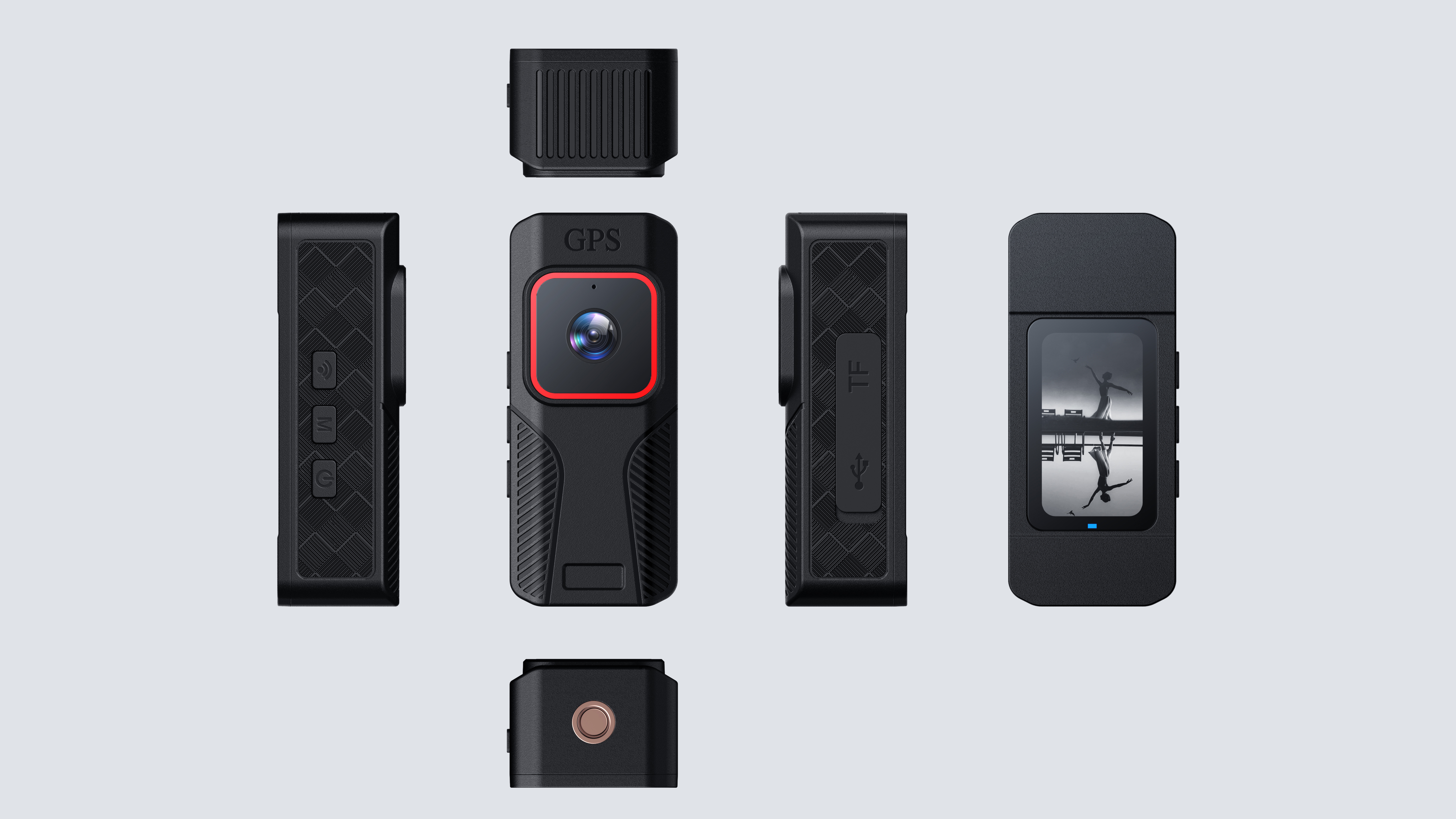
The YUAOHENG X7 combines 4K recording, anti-shake, infrared night vision, and GPS support in a compact body.
| Model | Category | Resolution | Screen | Battery | Distinct Features |
|---|---|---|---|---|---|
| X7 | 4K Anti-shake | 4K (3840×2160) 30fps | 1.47-inch IPS | 1000mAh polymer | GPS, anti-shake, IR night vision |
| X11 | 2K WiFi | 2K (2560×1440) | 2.0-inch IPS | 3000mA | IP65, IR night vision |
| Q11 | 2K+WiFi | 2K (2560×1440) | 1.5-inch IPS | 2500mA | IP65, one-button IR LED fill light |
| Q9 | 2K+WiFi | 2K (2560×1440) | 2.0-inch IPS | 18650 2000mA | 180° adjustable lens, four fill lights |
| Q7 | 4K WiFi Anti-shake | 4K (3840×2160) | 1.47-inch IPS | 1000mAh polymer | Stabilization, waterproof case compatible |
| Q5 | 2K WiFi | 2K WiFi series | 1.5-inch IPS | 2000mAh polymer | IR night vision, rotating-direction lens |
| Q3 | 4K WiFi | 4K front/rear; 2K+2K simultaneous | 1.5-inch IPS | 2000mAh polymer | WiFi, IR night vision, dual recording |
| Q2 | 4K WiFi Touch Anti-shake | 4K front/rear; 2K+2K simultaneous | 1.8-inch IPS touch | 18650 2000mA | 6-level EIS, touch and physical buttons |
| Q1 | 4K+WiFi | 4K front/rear; 2K+2K simultaneous | 1.5-inch IPS | 2000mAh polymer | Long recording time, waterproof case compatible |
| X20 | 2K+WiFi | 1920×1080 AVI | 1.54-inch IPS | 1000mAh polymer | Type-C input, long photo mode |
Matching Action Camera Models to Real-World Use Cases
The most reliable way to choose an action camera is to start from the physical environment where it will be used. The table below maps common scenarios to the YUAOHENG models that match each environment's key requirements.
| Use Case | Key Requirements | YUAOHENG Models to Evaluate |
|---|---|---|
| Underwater diving and snorkeling | Waterproof housing or high IP rating | Q1, Q2, Q7 (waterproof case compatible) |
| Surfing and water sports | Water protection, shock resistance | Q1/Q2/Q7 with waterproof case; X11/Q11 IP65 for splash conditions |
| Cycling and bicycle mounting | Stable mount, route data, stabilization | X7 (GPS, anti-shake), Q9 (180° adjustable lens) |
| Skiing and outdoor winter sports | Cold-weather use, stabilization, 4K | X7, Q7 |
| Vlogging and handheld use | Touchscreen, stabilization, compact body | Q2 (touchscreen, 6-level EIS) |
| Climbing and mountaineering | Long battery, lightweight | X20, Q5 (long working time) |
| Night outdoor activities | Night vision, low-light assistance | Q9 (four fill lights), Q5/X20 (IR lights) |
| Vehicle and dashcam-style recording | Front and rear dual recording | Q1, Q3 (front+rear 4K, 2K+2K simultaneous dual recording) |
Market Trends That Affect Sourcing Decisions
Several market signals are useful for buyers building a sourcing strategy:
- 4K is becoming the mainstream baseline. Ultra-HD (4K and above) represented roughly 46.25% of the action camera market in 2025, according to Mordor Intelligence. Buyers should expect 4K capability to become a standard check item rather than a differentiator.
- EIS is standardizing. Electronic Image Stabilization is now considered a standard feature in budget to mid-range action cameras, according to an Insta360 industry guide. This shifts the evaluation question from whether stabilization exists to how well it performs.
- North America remains the largest regional market. It held a 34% revenue share in 2025, according to Grand View Research. Certification and compliance planning should prioritize US market requirements.
- China's export channel is substantial. China exported USD 166 million in video cameras in 2024, with the US the top destination at USD 31.8 million, according to the Observatory of Economic Complexity.
- Brand concentration is high at the premium end. GoPro sold 3 million camera units in 2023, according to SkyQuest Technology; in Japan, DJI and Insta360 together hold nearly 90% of the action camera market as of late 2025, according to PetaPixel/BCN+R. This creates room for mid-range brands built on reliable OEM and ODM supply chains.
It is worth noting that market size estimates vary by research scope. Third-party estimates for the 2025 global market range from USD 7.09 billion (Mordor Intelligence) to USD 7.97 billion (Grand View Research). Buyers should use these figures as directional context rather than precise forecasts.
Action Cameras vs Traditional Recording Options: Honest Limits
Compared with smartphones and traditional camcorders, action cameras occupy a distinct position. However, they also have real boundaries that buyers should understand before positioning a product line.
| Capture Option | Strengths | Limits |
|---|---|---|
| Smartphone | Large sensor, strong software processing, always available | Limited mounting options, fragile in sports use, narrower wide-angle coverage, waterproofing usually requires a case |
| Traditional camcorder | Optical zoom, long recording sessions, better built-in audio | Heavy, not wearable, not designed for impact or high vibration |
| Action camera | Compact, wearable, wide-angle lens, stabilization, water protection options | Smaller sensor limits low-light performance, no optical zoom, built-in microphones have limited audio quality, battery life requires planning |
The most common boundary is low-light quality. Action cameras generally use smaller sensors than flagship smartphones or dedicated cameras, which means image noise increases in dark scenes. YUAOHENG addresses low-light use through infrared night vision and fill lights, but that is not equivalent to large-sensor low-light performance. In addition, built-in microphones capture situational sound but cannot match external microphones for directional audio. Buyers who plan professional-quality sound should evaluate external microphone support as a separate requirement.
Another important boundary is water resistance classification. A model with IP65 protection is not designed for diving, and relying on a waterproof case requires correct assembly and maintenance. Buyers should match the waterproofing method to the actual depth and duration of water exposure in their target use case.
Future Outlook
Several developments are likely to shape action camera sourcing in the next product cycle. 4K will likely remain the mainstream floor, with higher frame rates and more efficient compression following as chip solutions mature. Stabilization is moving from an optional feature to a default capability, especially EIS-based approaches. GPS and sensor integration, already present in the YUAOHENG X7, are expected to appear across a wider range of mid-tier products.
Charging and data interfaces are shifting toward USB Type-C, already adopted in the X20. Compliance requirements for the EU and North American markets will keep tightening; CE, FCC, and RoHS certifications remain baseline expectations, and safety standards such as IEC 62368-1 will continue to influence product design. For sourcing teams, the practical implication is to select suppliers with engineering capability and a clear product roadmap, not simply current inventory.
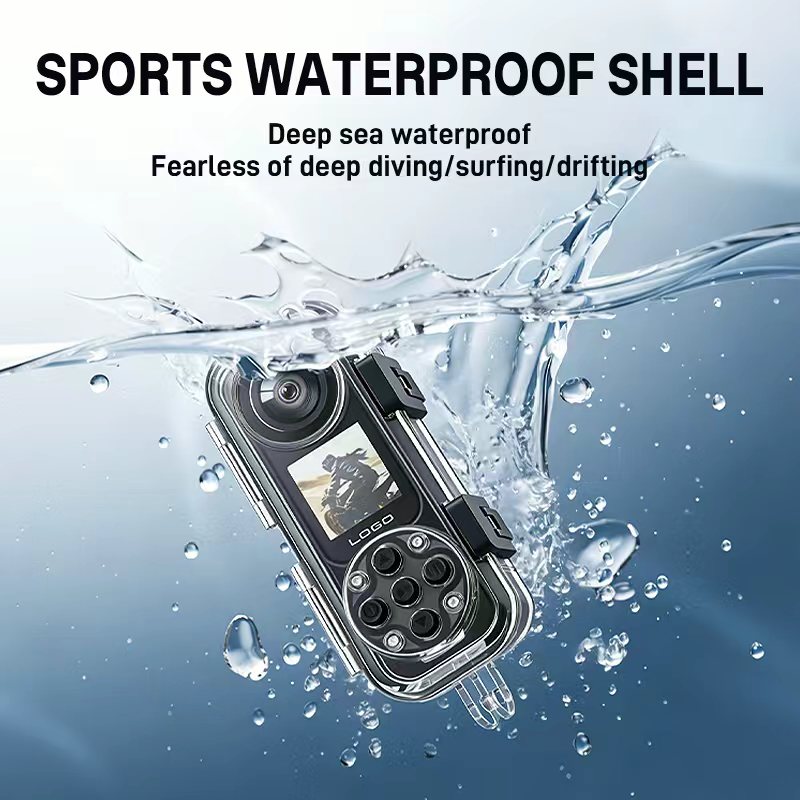
Waterproof case compatibility is a key differentiator for diving and snorkeling scenarios.
Frequently Asked Questions
Q: What resolution does a 4K action camera record?
A: A 4K action camera typically records at 3840×2160 resolution. In YUAOHENG's lineup, the X7 and Q7 record 4K at 30fps; the Q1 and Q3 support 4K front and rear recording, with simultaneous 2K+2K dual recording as an additional mode.
Q: What does image stabilization do in an action camera?
A: Image stabilization reduces the visible effect of movement on recorded footage. EIS is a standard feature in budget to mid-range action cameras, using software algorithms to correct motion. YUAOHENG's Q2 provides 6-level electronic image stabilization, while X7 and Q7 also list stabilization support.
Q: What does the IP65 waterproof rating mean?
A: IP65 is defined by IEC 60529 as protection against dust (6) and low-pressure water jets (5). YUAOHENG X11 and Q11 carry IP65 ratings. This rating does not indicate suitability for underwater immersion.
Q: Which YUAOHENG action cameras are suitable for underwater shooting?
A: Q1, Q2, and Q7 are compatible with waterproof cases for underwater shooting. Models with IP65 protection, such as X11 and Q11, are designed for water-resistant conditions rather than immersion.
Q: What certifications do YUAOHENG action cameras have?
A: YUAOHENG products have obtained FCC, CE, and RoHS certifications. The company exports to Europe, North America, Asia, and South America, reaching more than 15 countries and regions.
Q: How long can a YUAOHENG action camera record on one charge?
A: Recording time depends on model and settings. The Q1 provides approximately 9 hours of recording time; the X20 provides approximately 9 hours of recording time and up to 12 hours of maximum photo duration at 720p 30fps; the Q5 provides approximately 5–6 hours; and the Q2 provides approximately 4–5 hours of video working time.