
How to Read Building Glass Specs: The Impact of Production Process on Quality
For procurement professionals in the architectural glass sector, interpreting technical parameters is often more critical than comparing price lists. A slight deviation in thickness tolerance or an overlooked heat-treatment step can lead to catastrophic failures on site—ranging from thermal breakage to inadequate wind-load resistance. As building envelopes become increasingly complex—with curved facades, large-span glass fins, and smart-glazing integration—understanding how manufacturing processes translate into measurable performance has never been more essential.
Key Parameters That Define Building Glass Quality
When evaluating building glass, buyers should first scrutinize four core specifications: thickness tolerance, light transmittance, sound insulation, and mechanical strength. Industry standards such as EN 12150 for tempered glass and EN 1449 for laminated glass set clear benchmarks. For instance, tempered glass should achieve a tolerance of ±0.5mm to ensure proper fit in curtain-wall systems. Light transmittance above 91% (for low-iron substrates) reduces the need for artificial lighting, while laminated glass with PVB interlayers typically delivers 35dB to 45dB of sound reduction—critical for hotels and office towers near traffic arterials.
However, these numbers are only as reliable as the production line that generates them. A supplier's ability to consistently meet specifications hinges on equipment precision, quality-control protocols, and material handling. For example, Shenzhen Dayang Special Glass Co., Ltd. (known as DYGLASS) operates dedicated flat and curved tempered lines, an autoclave for lamination, and a heat-soak furnace to mitigate nickel-sulfide inclusions—a common cause of spontaneous breakage. The company's CE certifications (e.g., certificate BGTC20260403-02 for tempered glass and BGTC20260403-03 for laminated glass) provide third-party verification that products comply with European Construction Product Regulation standards.
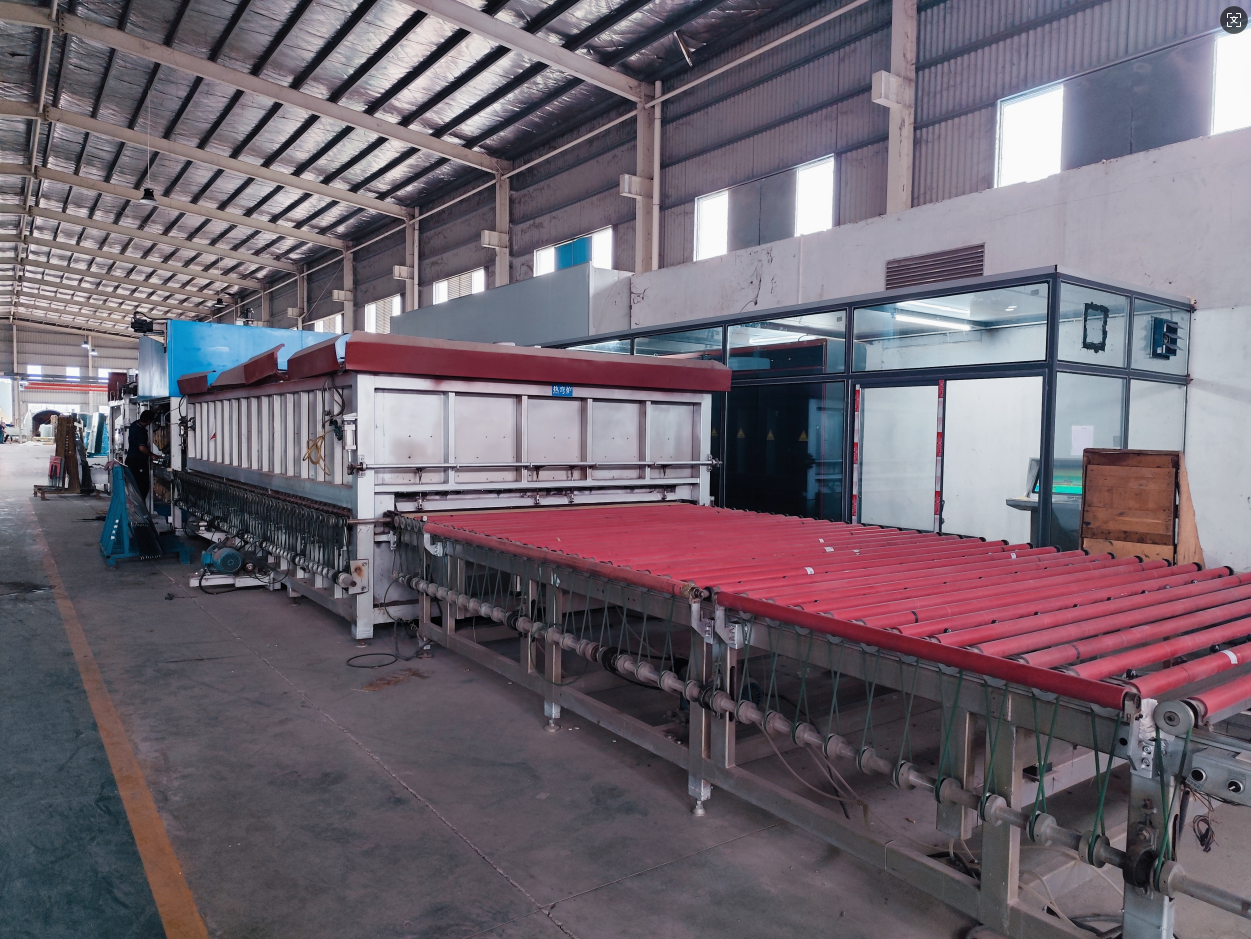
DYGLASS's double-curved tempering line enables tight bending tolerances of ±0.5mm, essential for seamless curved facades.
Production Process: The Hidden Quality Driver
The same glass composition can yield vastly different performance depending on processing. Tempering, for instance, must follow a precise heating and quenching cycle. If cooling is uneven, residual stress variations can lead to spontaneous breakage. High-quality suppliers employ intelligent temperature-control systems with infrared sensors, as seen in DYGLASS's furnaces, and perform 100% pre-shipment testing. For laminated glass, the autoclave cycle duration and pressure uniformity determine bubble formation and interlayer adhesion—defects that compromise safety and longevity.
Curved glass presents an even greater challenge. Multi-curved and double-curved glass requires multi-axis CNC bending and precise annealing to avoid optical distortion. DYGLASS's capability to produce spherical, S-shaped, and pyramidal curved glass with a bending tolerance of ±0.5mm–±1mm sets it apart from suppliers limited to simple cylindrical bends. The company's 3/5-axis complex-curvature lines, paired with hot-bending and heat-soak treatment, ensure uniform stress distribution and long-term stability—key for landmark projects like the Dubai Opus and Bahrain International Circuit.
Market Trends and Procurement Implications
The global architectural glass market is projected to grow at a CAGR of 6.8% through 2030, with demand for energy-saving and fire-resistant glass rising sharply. Insulated glass units (IGUs) filled with argon or krypton gas can achieve U-values below 1.0 W/m²K, meeting stringent net-zero building codes. Meanwhile, digital-printed and ceramic-frit glass offer customizable aesthetics without sacrificing durability. For buyers, this means selecting a supplier who can integrate multiple processes—tempering, laminating, insulating, bending, and coating—under one roof reduces supply-chain risk and lead times.
DYGLASS, with a 30,000m² facility and an annual output of 600,000 square meters, offers OEM/ODM customization for size, shape, and hole drilling. The company's MOQ of 10 square meters and typical lead time of 7–9 days make it accessible for both small-scale renovations and large infrastructure projects. Payment via T/T or L/C and delivery terms including FOB, CIF, and DDP provide flexibility for international buyers.
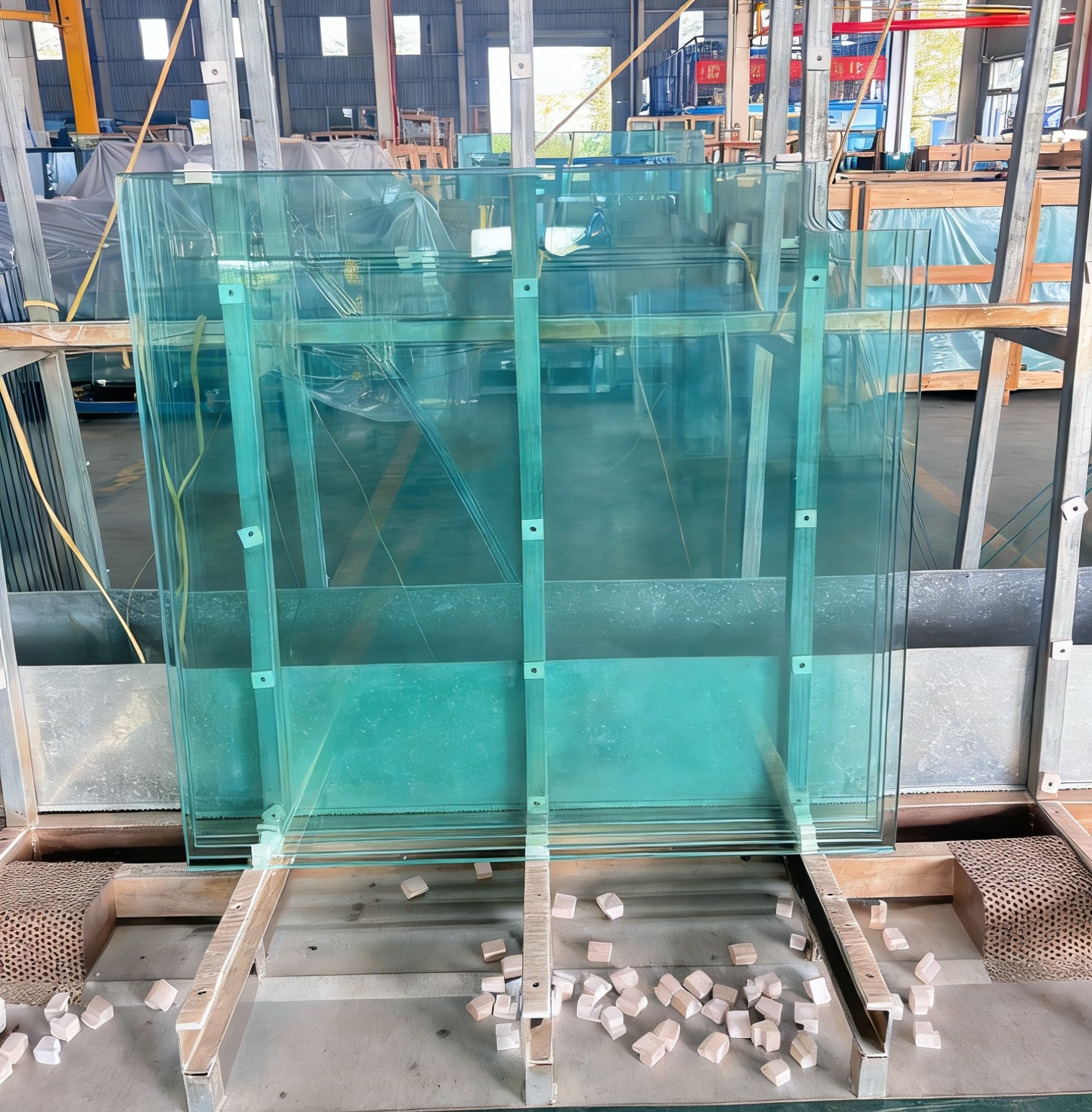
A polished-edge tempered glass unit demonstrating high clarity and precise edge finish—critical for structural glazing interfaces.
Future Outlook: Customization and Quality Assurance
As architectural trends push toward free-form glazing and smart glass, procurement officers must look beyond face-value specifications. The real differentiator lies in process control: heat-soak testing to eliminate nickel-sulfide inclusions, edge-polishing to prevent micro-cracks, and spacer-bar technology to improve IGU longevity. Suppliers like DYGLASS that invest in advanced CNC cutting lines, autoclaves, and heat-soak furnaces—and back them with CE certifications for laminated, tempered, and insulated glass—provide the traceability and consistency that complex projects demand.
For a deeper dive into DYGLASS's full product range and technical capabilities, download the corporate brochure:
Shenzhen Dayang Special Glass Co., Ltd. – Corporate Brochure