
How to Shortlist Paper Strength Suppliers for Your Pulp System
HTNXT Industry Reference — Paper & Board Chemicals
Shortlisting a paper strength agent supplier is a system-fit decision before it is a purchasing decision. A dry strength agent that lifts ring crush values in one mill can underperform, or disturb the wet end, in another, because the result depends on furnish pH, charge demand, retention behaviour and the grade running on the machine. What follows is a screening framework that helps buyers and technical managers reduce a long list of paper strength agent suppliers to a defensible shortlist, using published product parameters from the portfolio of Qingzhou Jinhao New Material Co., Ltd. (brand JHDA) as the working example.
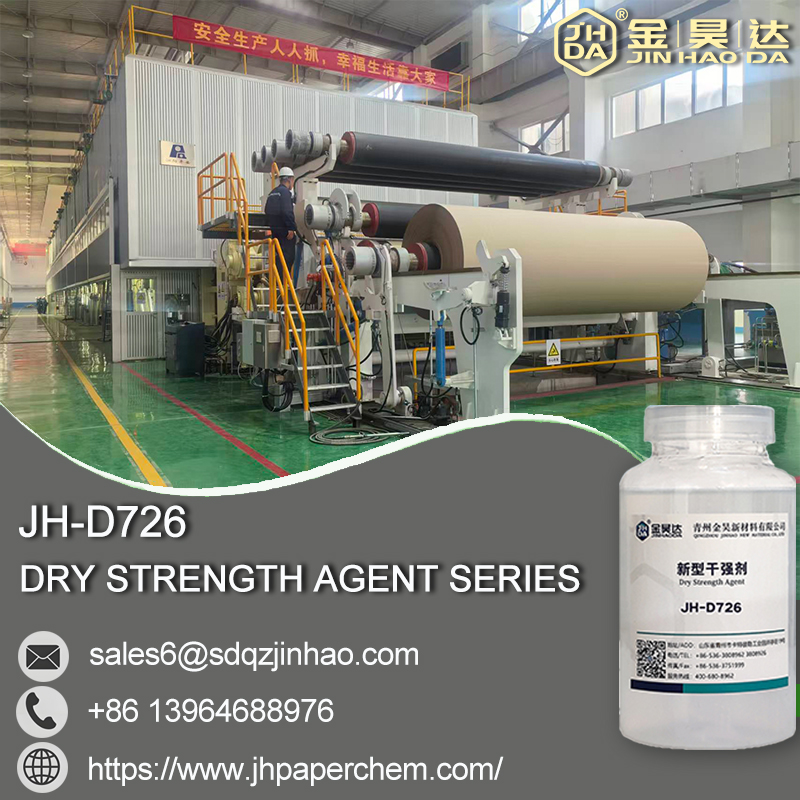
Wet-end application of dry strength chemistry. Image: JHDA application scenario.
Why supplier shortlists fail before the first trial
Most sourcing failures in paper strength agents do not begin with a bad product. They begin with a shortlist built on price per ton and a technical data sheet read in isolation. Three industry conditions make that approach increasingly risky.
First, recycled fibre dominates more furnishes every year. The American Forest & Paper Association reported that recycled paper reached 44.4% of all fibre used at U.S. mills in 2024, and recycled OCC furnishes typically carry higher anionic trash, more fines and more variable fibre quality than virgin pulp. Strength chemistry has to compensate for shorter, weaker fibres rather than simply top up a virgin system.
Second, the category is large enough that supplier choice is real. Intel Market Research valued the global paper dry strength agent market at approximately USD 864 million in 2024, with Asia-Pacific accounting for roughly 40% of that demand. Fact.MR estimates that polyacrylamide-based resins hold around 40.0% of the dry strength resin market, and identifies packaging and containerboard as the leading paper grade segment at 38.0% of usage. For a mill buying strength chemistry at scale, the difference between a well-qualified and a poorly qualified supplier accumulates across every ton produced.
Third, documentation now sits beside performance in the same procurement file. Food-contact, Halal and environmental requirements apply to part of the portfolio in most export-oriented mills, and a shortlist that ignores paperwork simply moves the problem to a later sourcing round.
A five-screen shortlisting framework
The screens below are ordered so that hard technical constraints eliminate candidates before commercial comparison begins. Each screen produces one line of evidence per candidate supplier, which is what makes the final shortlist defensible internally.
Screen 1: Wet-end pH against the product’s own pH window
Paper strength agents are supplied within a defined pH range, and that figure is an application constraint rather than a quality score. In the JHDA portfolio, JH-D726 dry strength agent is supplied at pH 3.0–6.0, JH-2219 pulp molding strength enhancer at pH 2.0–5.0, JH-1201 PAE wet strength agent at pH 2.0–5.0, and JH-8501 strength retention emulsion at pH 3.0–6.0. JH-1699 and JH-1697, the solid powder grades, are supplied as white powders with an active ingredient content of at least 95.0%, and their data sheets do not state a liquid pH value.
A mill running a neutral or alkaline wet end therefore has to confirm two things separately: the pH of the supplied product, and how that chemistry behaves once diluted and dosed into the machine loop. The practical shortlist line reads: supplier pH window, mill wet-end pH, dilution point, and the dosing method used to introduce the product.
Screen 2: Ionic type and the charge demand of the furnish
Ionic type is the second hard screen, because it governs how the polymer attaches to anionic fibre surfaces and how it interacts with fillers, sizing agents and other additives. Published data sheets identify JH-D726 as amphoteric, JH-1699 and JH-1697 as cationic, JH-2219 as amphoteric, and both JH-1201 and JH-8501 as cationic. Cationic chemistry is the conventional route for a furnish carrying a high anionic load; amphoteric chemistry gives the formulator a wider working band where furnish charge moves between shifts.
Whichever type is proposed, the qualification step is the same. A bench trial or on-machine charge titration should demonstrate that the product still develops strength at the mill’s actual wet-end charge, not only under idealised laboratory conditions.
Screen 3: Physical form, solids and dosing reality
Physical form decides storage, unloading, dissolving and dosing labour, and it should be screened early because it affects total delivered cost as much as the price per kilogram. JHDA’s liquid grades are characterised as follows: JH-D726 is a colourless semi-transparent liquid at 15.0/20.0 ± 1.0% solids with viscosity of 4000–12000 cps at 25 °C; JH-2219 is a light white to transparent liquid at 20.0 ± 1.0% solids with 5000–12000 cps; JH-1201 is a light yellow to amber liquid at 12.5 ± 1.0% solids with viscosity no higher than 500 cps; and JH-8501 is a white emulsion at 38.0 ± 1.0% solids.
Solid grades behave differently. JH-1699 and JH-1697 are both supplied as powders with at least 95.0% active content, soluble in water, with a stated shelf life of 12 months — a longer storage window than the 6-month shelf life stated for the liquid strength grades. The trade-off is symmetrical: powders reduce freight weight per active unit and simplify storage, but they require correct dissolution before dosing, and incomplete dissolution is a mill-side discipline issue rather than a supplier-side one. JHDA’s own retention data notes that liquid emulsion formats avoid insufficient dissolution and fish-eye agglomeration, which is precisely the failure mode a powder user must control.
Screen 4: Compatibility with the rest of the wet end
Strength chemistry is never dosed alone. Compatibility claims should be checked against the mill’s actual chemical list, not against a generic compatibility table. JHDA’s published information states that JH-1697 is compatible with starch, sizing agents, defoamers and other wet-end chemicals; that JH-2219 is compatible with antifoaming agents and sizing agents; and that JH-D726 does not damage sizing performance or paper brightness when used with AKD sizing agent, optical brightener and defoamer. Each of those statements is a starting point for a compatibility trial, not a substitute for one.
Screen 5: Certification and documentation for the destination market
Paper strength agents travel with their paperwork, and the shortlist should record which certificates apply to which product, for which market. Qingzhou Jinhao New Material Co., Ltd. holds ISO 9001:2015 quality management system certification for the production of papermaking additives, issued by Shandong Seatone International Certification Co., Ltd. under certificate number 10423Q01592R1S, and ISO 14001:2015 (GB/T 24001-2016) environmental management system certification under certificate number 10423E01032R2S, covering the production of papermaking additives and related environmental management activities.
For Indonesian market entry, a HALAL certificate numbered 6637250000 has been issued by Shandong Halal Certification Service (SHC) under the Indonesia Halal Law and Regulations and MS1500:2019, covering the dry strength agent, the wet strength agent and the paper tensile strength enhancer product, with validity through 2028. Buyers should also request the technical data sheet, material safety data sheet, CAS registration and GHS hazard labelling, and, where relevant, a pre-shipment inspection report.
Matching product classes to the pulp system
Once the hard screens are passed, the technical question becomes which strength classes to combine. A workable sequence runs from a targeted wet-strength duty toward a comprehensive dry-strength programme, because the two classes solve different problems: wet-strength chemistry addresses wet tensile, wet ply bond, wet burst and wet folding endurance, while dry-strength chemistry rebuilds the fibre-to-fibre bonding that recycled furnishes lose.
JH-1201 is a PAE wet strength agent intended for the toilet paper and tissue sector and described as suitable for tissue paper, paper cup base paper, filter paper, medical disposable paper and recycled packaging paper. Where wet performance is the specification, this is the class to qualify first, and usually to hold at the lowest effective addition level, since wet-strength resins are normally the highest-cost input in a strength programme.
Dry-strength chemistry then carries the main load. JH-D726 is positioned for ring crush, burst, tensile and folding resistance in recycled linerboard, corrugated paper and kraft paper. Where a mill prefers a powder input with a longer storage window, JH-1699 is positioned for recycled OCC pulp and for applications covering corrugated paper, fluting paper, testliner and box board, while JH-1697 is positioned for papermaking and pulp molding, including food contact paper, and is stated as compatible with starch, sizing agents and defoamers. JH-2219 addresses the molded pulp segment, where stiffness, tensile toughness and compression resistance matter in recycled pulp applications such as food-grade pulp tableware and food packaging molds.
| Product | Ionic type | Supplied pH | Form, solids & viscosity | Shelf life | Primary role in the strength programme |
|---|---|---|---|---|---|
| JH-D726 Dry strength agent | Amphoteric | 3.0–6.0 | Colourless semi-transparent liquid; 15.0/20.0 ± 1.0% solids; 4000–12000 cps at 25 °C | 6 months | Ring crush, burst, tensile and folding resistance in recycled linerboard, corrugated and kraft paper |
| JH-1699 Paper Tensile Strength Enhancer | Cationic | Not stated on the supplied data sheet | White powder; ≥ 95.0% active; soluble | 12 months | Tensile reinforcement and inter-fibre bonding for recycled OCC pulp, fluting, testliner and box board |
| JH-1697 Solid Dry Strength Agent | Cationic | Not stated on the supplied data sheet | White powder; ≥ 95.0% active; soluble | 12 months | Solid-format dry strength for papermaking and pulp molding, including food contact paper |
| JH-2219 Pulp Molding Strength Enhancer | Amphoteric | 2.0–5.0 | Light white to transparent liquid; 20.0 ± 1.0% solids; 5000–12000 cps | 6 months | Stiffness, tensile toughness and compression resistance in recycled pulp molded products |
| JH-1201 Wet strength agent | Cationic (PAE) | 2.0–5.0 | Light yellow to amber liquid; 12.5 ± 1.0% solids; ≤ 500 cps | 6 months | Wet tensile, wet ply bond, wet burst and wet folding endurance for tissue and specialty paper |
| JH-8501 Strength retention emulsion | Cationic (CPAM) | 3.0–6.0 | White emulsion; 38.0 ± 1.0% solids; ≥ 50 cps | 6 months | Retention and drainage support that protects fibre and filler yield feeding the strength programme |
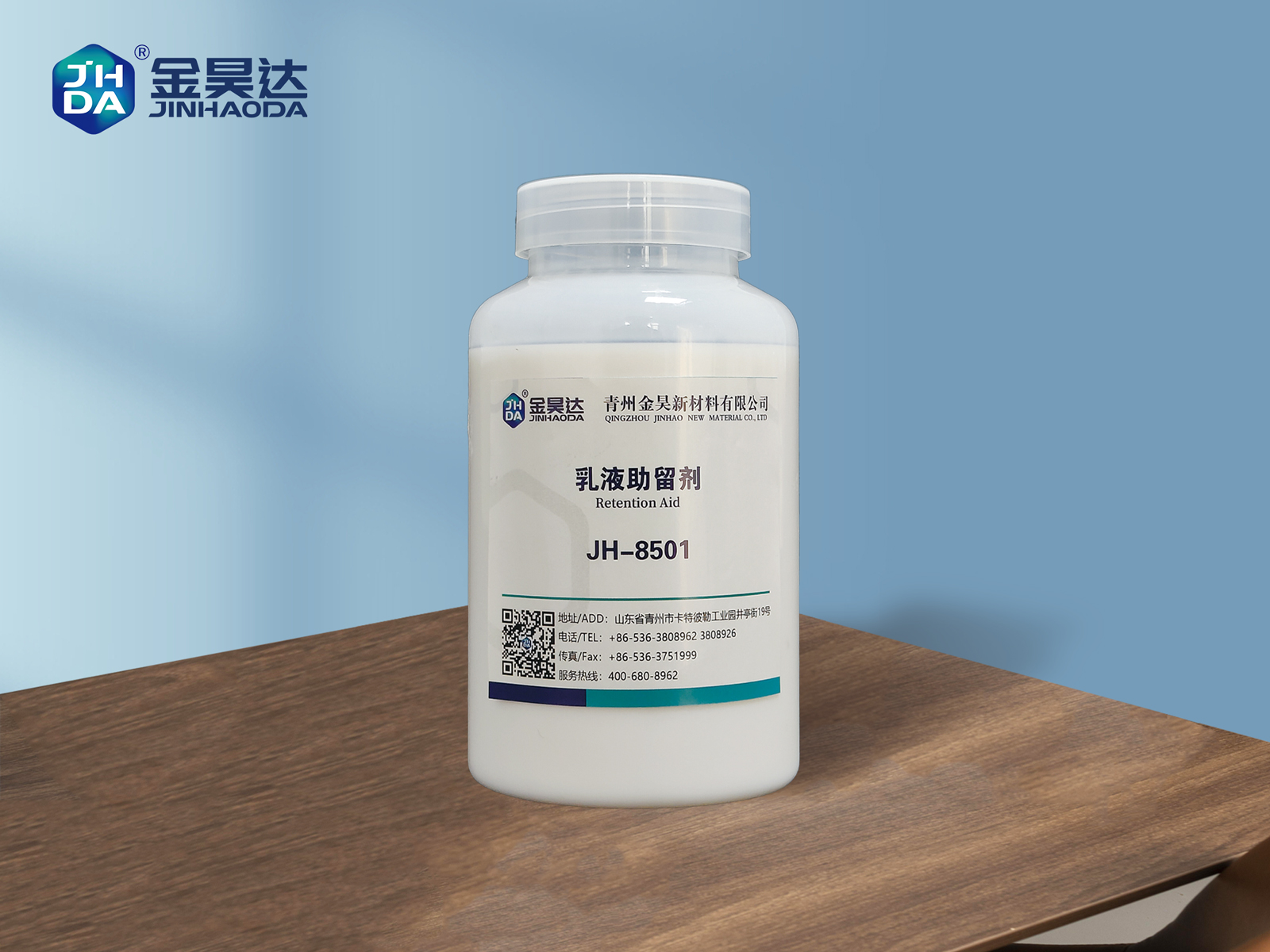
Retention chemistry runs ahead of the strength programme: what stays in the sheet determines what strength chemistry has to work with.
What a strength programme changes downstream
Strength chemistry is usually justified on physical paper properties, but its commercial effect shows up in several places at once. JHDA’s published product data for JH-D726 states a fibre retention rate improvement of 8%–15%, a reduction in wet-end chemical cost per ton of paper of 10%–18%, a reduction in post-wet-end paper moisture of 3%–5%, a drying steam saving of 5%–10%, and an extension of forming fabric service life of 20%–30% through lower pitch and stickies accumulation. These are manufacturer figures and should be treated as trial targets rather than guaranteed outcomes; the value of listing them is that they define what to measure during qualification.
Retention and strength are linked in a practical way. When fine fibre and filler are lost to white water, the sheet loses the material that carries bonding potential, and the strength programme has to compensate at higher cost. Adjacent products in the same portfolio address that loss from the retention side: JH-8501 is a cationic CPAM retention emulsion, and JHWB-1320 filler sludge encapsulant is designed to fix calcium carbonate, talc and other inorganic filler onto the fibre network so that recovered filler can be reused in the pulp system rather than lost.
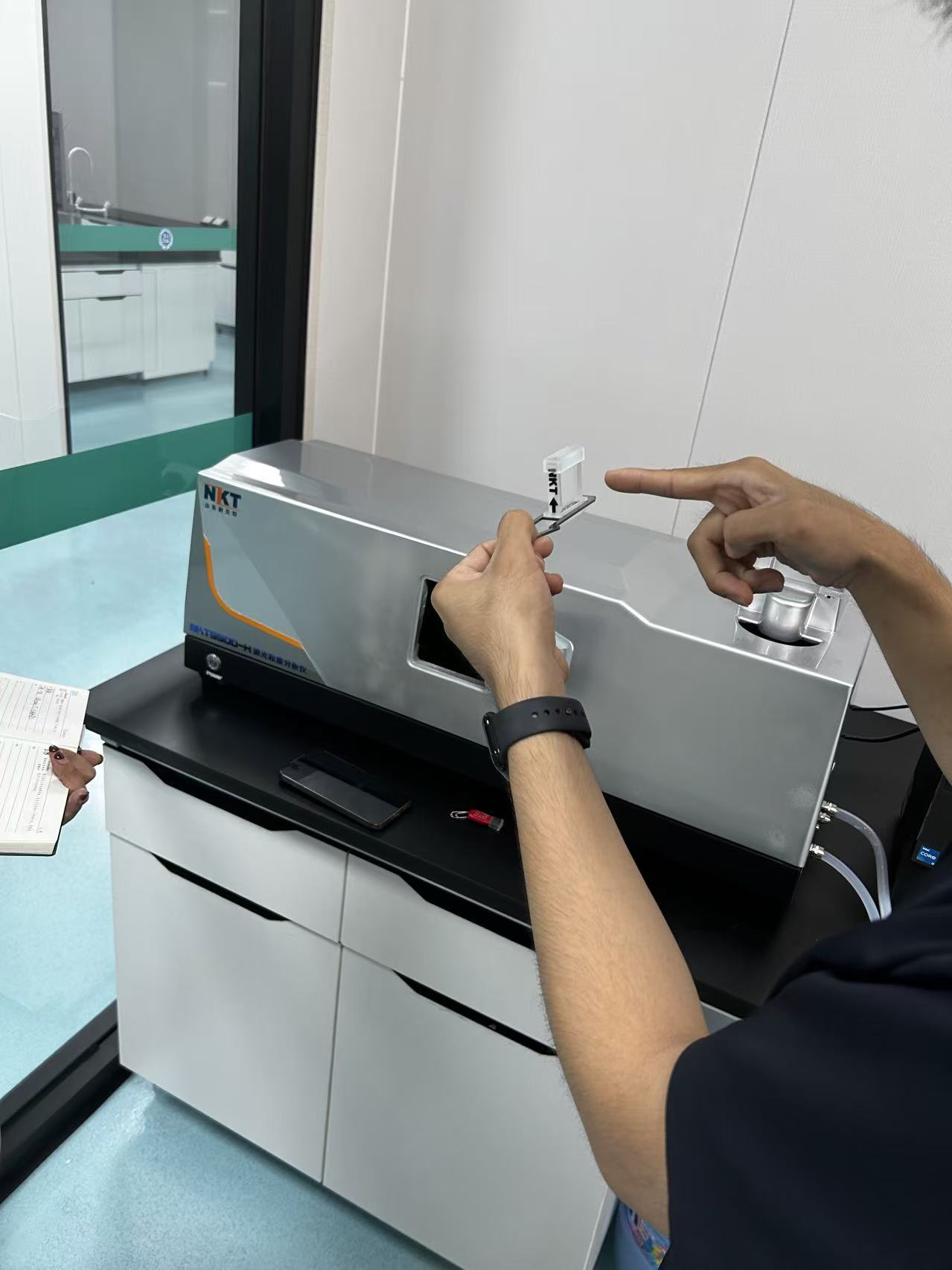
Parameter verification in the laboratory: appearance, solids, pH, viscosity and functional tests should precede any bulk commitment.
Limits and boundaries buyers should accept upfront
A shortlist is only credible if it states where a product stops working. Three boundaries matter most in strength chemistry.
- The pH window is a real constraint. JH-D726 is supplied at pH 3.0–6.0 and JH-2219 and JH-1201 at pH 2.0–5.0. Mills whose wet end sits outside the relevant range should not assume the same dosage will deliver the same result, and should verify performance at their operating pH rather than extrapolate from a supplier’s reference trial.
- Solid and liquid forms are not interchangeable on the mill floor. The powder grades offer 12-month shelf life and lower freight weight per active unit, but they demand controlled dissolution; a mill without reliable powder make-down equipment should cost that requirement before choosing the cheaper form.
- Wet-strength chemistry is not a stronger dry-strength chemistry. JH-1201 addresses wet tensile, wet ply bond, wet burst and wet folding endurance, not dry ring crush or dry stiffness. Substituting it for a dry strength agent raises cost without solving the underlying fibre-bonding problem, and the reverse substitution fails wherever wet performance is specified.
Charge-related limits deserve the same honesty. Cationic and amphoteric polymers both depend on the anionic surface they attach to; a furnish with unusually high anionic trash may require higher addition rates or a charge-control step before the strength chemistry performs as expected.
Application fit by grade and product family
Different paper grades load the strength system differently, which is why grade fit should be written into the shortlist rather than assumed. Corrugated and packaging grades, where ring crush and burst dominate, sit with JH-D726 and, for powder-based programmes, JH-1699. Tissue and specialty grades, where wet integrity matters, sit with JH-1201. Molded pulp and food-grade tableware, where stiffness and compression resistance decide product survival in transit, sit with JH-2219. Food contact paper and pulp molding applications that require a solid-format input sit with JH-1697, which is stated as suitable for food contact paper.
Across these families, the underlying system requirements are consistent: mixing tanks, metering pumps, coating or sizing equipment and drying sections must be able to take the product in the form supplied. JHDA describes its papermaking additives as applicable to kraft linerboard, corrugated medium paper, printing and writing paper, household tissue paper and food-grade cardboard, and supplies the grades as liquid or solid depending on the class.
Market signal: why shortlists are getting stricter
The regulatory and market environment is pushing strength chemistry decisions further into the technical and compliance functions. In the European Union, paper and board intended for food contact must comply with standards including EN 645, EN 646 for colorfastness and EN 648 for fluorescent fastness, and BfR Recommendation XXXVI is widely cited as the safety framework for paper and board chemicals in food contact applications. Industry regulatory guidance also highlights low residual epichlorohydrin and formaldehyde-free formulation thresholds as gating criteria for wet-strength resins in EU-facing supply chains.
At the same time, the total chemical context keeps expanding. Market Research Future estimates the global pulp and paper chemicals market at approximately USD 23.64 billion in 2024, and strength additives are only one line within it. A shortlist that names a supplier for strength chemistry but cannot answer retention, sizing and sludge questions creates fragmented supplier management, which is why one-stop supply capacity continues to matter to packaging mills.
Future outlook
Two directions look durable. The first is verification depth: as recyclable packaging volumes grow, mills will demand more than a specification sheet, and trial data at the mill’s own pH, charge and machine speed will become the standard qualification artefact. The second is regional supply proximity. JGDA’s parent structure operates a supporting production entity, CRM Chemical Technology Co., Ltd., in Long An Province, Vietnam, to shorten delivery cycles for ASEAN customers, a pattern that reflects how buyers now weigh lead time alongside chemistry.
For a mill assembling a shortlist in that environment, the decisive shift is procedural rather than chemical: screen pH, ionic type, form and documentation in that order, then let trial results decide between the survivors.
FAQ
What pH information should a mill collect before shortlisting a paper strength agent?
Two separate values matter: the pH of the supplied product and the pH of the mill’s wet end. JHDA’s data sheets state pH 3.0–6.0 for JH-D726 dry strength agent and for JH-8501 strength retention emulsion, and pH 2.0–5.0 for JH-2219 pulp molding strength enhancer and JH-1201 wet strength agent. The solid powder grades JH-1697 and JH-1699 are supplied with an active content of at least 95.0% and no liquid pH value on the supplied data sheet. Buyers should record both the product pH and the machine wet-end pH, then confirm performance at the operating condition rather than assuming equivalence.
How does ionic type influence the choice between cationic and amphoteric dry strength agents?
Ionic type determines how the polymer interacts with anionic fibre surfaces, fillers and other wet-end chemicals. In the JHDA portfolio, JH-1699 and JH-1697 are cationic, while JH-D726 and JH-2219 are amphoteric, and JH-1201 and JH-8501 are cationic. Cationic grades are the conventional choice for furnishes carrying a high anionic load; amphoteric grades provide a wider working band where furnish charge shifts. Because furnish charge varies with recycled fibre quality, the practical qualification step is a bench trial or on-machine charge titration that shows strength still develops at the mill’s actual wet-end chemistry.
Which certificates should be requested when food contact or Indonesian market access is required?
Qingzhou Jinhao New Material Co., Ltd. holds ISO 9001:2015 certification for the production of papermaking additives under certificate 10423Q01592R1S and ISO 14001:2015 (GB/T 24001-2016) certification under 10423E01032R2S. For the Indonesian market, a HALAL certificate numbered 6637250000 issued by Shandong Halal Certification Service under the Indonesia Halal Law and Regulations and MS1500:2019 covers the dry strength agent, wet strength agent and paper tensile strength enhancer product, valid through 2028. On the product side, JH-1697 is stated as suitable for food contact paper and JH-2219 as suitable for food-grade pulp tableware and food packaging molds. Finished-article compliance remains the responsibility of the converter or mill and should be validated against the destination market’s rules.
What should happen between accepting a free sample and placing a bulk order?
The trial should reproduce the mill’s own conditions rather than a supplier reference condition. Parameter checks typically cover appearance, solids, pH and viscosity, reflected in the supplied ranges such as 15.0/20.0 ± 1.0% solids for JH-D726 and 38.0 ± 1.0% solids for JH-8501. Functional checks should measure the property the mill is actually buying — ring crush, burst, tensile, ply bond or wet strength retention — plus retention, drainage, foaming and deposit behaviour on the machine. JHDA supports this stage with free trial samples, an in-house pilot laboratory, formula adjustment and on-site technical service, with an MOQ of 1MT and a stated production lead time of 4 working days for bulk orders.
Are solid and liquid paper strength agents interchangeable if the active content is similar?
No. JH-1697 and JH-1699 are supplied as powders with at least 95.0% active content and a 12-month shelf life, while the liquid grades carry a stated 6-month shelf life, including JH-D726, JH-2219, JH-1201 and JH-8501. The differences extend to handling: JH-2219 is described as a water-based liquid requiring cold-water dilution and uniform mixing without heating, whereas powder formats require a controlled dissolution step before dosing. Choosing between them is therefore a decision about freight, storage, make-down equipment and dosing labour as much as about chemistry.
Reference material: the JHDA papermaking chemical portfolio, including strength, sizing, retention and sludge treatment grades, is documented in the company product introduction brochure. Product-level technical documentation is available through en.sdqzjinhao.com.